

OBD-II Code B0413: Air Temperature Control #1 Circuit Malfunction
The Ultimate Expert Guide to Diagnosing and Fixing B0413
- Code B0413 indicates a failure in the driver's side temperature blend door actuator circuit, locking the air output to either full hot or full cold.
- A repetitive clicking noise from the dashboard on startup confirms the actuator's internal plastic gears are stripped and require a $30 to $150 replacement part.
- Labor costs dominate this repair, ranging from $250 to $800, because accessing the driver's side actuator often requires 4 to 8 hours of dashboard disassembly.
- After installing a new actuator, you must perform an HVAC system recalibration using a bi-directional scan tool or by disconnecting the battery for 15 minutes to clear the code permanently.
What Does B0413 Mean?

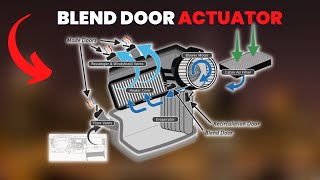
Code B0413 signifies the HVAC control module detected an electrical fault in the primary (driver's side) temperature blend door actuator circuit. This actuator is a small electric motor that moves a door to blend hot and cold air. The code triggers when the module loses the expected electrical signal or position feedback from this actuator.
Technical definition: The SAE/ISO definition is "Temperature Control #1 Circuit Range/Performance". This indicates the feedback circuit for the driver's side air temperature actuator is sending an out-of-range signal, is open, or is shorted. On GM vehicles, a two-digit symptom code (e.g., 02, 05, 61) often accompanies B0413 to specify the exact electrical fault.
Can I Drive With B0413?
Yes, But With Caution. Driving with a B0413 code will not damage your engine or transmission. However, your ability to control the driver's side cabin temperature is disabled. In cold or humid weather, the inability to defrost the windshield severely impairs visibility, creating a critical safety hazard.
Common Causes

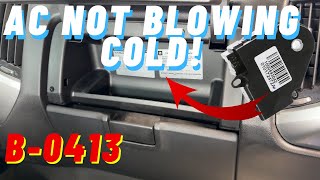
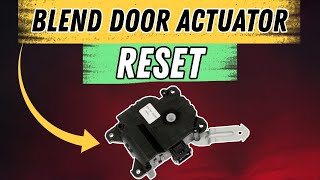
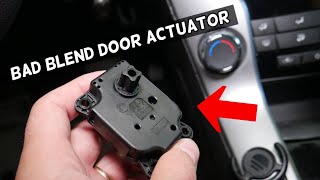
- Failed Temperature Blend Door Actuator (Very Common) — The internal plastic gears strip or the motor burns out, causing the actuator to stick or report an incorrect position to the HVAC module.
- Wiring Harness or Connection Fault (Common) — Wires leading to the actuator fray, short, or develop an open circuit. Loose or corroded connectors at the actuator or HVAC module interrupt the signal.
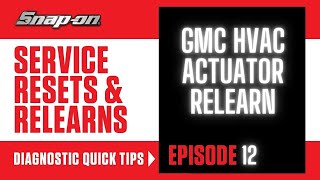
- Software or Calibration Glitch (Common) — The HVAC module loses track of the actuator's position. A system recalibration often resolves this without requiring parts replacement. 🎬 Watch: How to perform a GMC HVAC actuator relearn procedure.
- Failed HVAC Control Module (Less Common) — The computer module fails internally, stopping the correct voltage output or failing to read the return signal from the actuator.
- Sticking or Broken Blend Door (Rare) — The physical door inside the HVAC case breaks or jams with debris, preventing actuator movement.
- Low System Voltage (Very Rare) — A weak battery or failing alternator drops system voltage, causing erratic HVAC controller behavior and false actuator codes.
Symptoms

- Driver's Side Temperature Stuck — Air from the driver's side vents is stuck on full hot or full cold and ignores temperature dial adjustments.
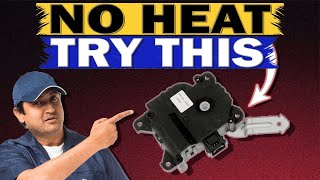
- Dashboard Clicking or Grinding — A repetitive clicking or ticking sound behind the dashboard, especially on startup, indicates stripped actuator gears. 🎬 See how to fix that annoying dashboard clicking noise fast.
- Mismatched Dual-Zone Temperatures — The driver's side temperature drastically differs from the passenger's side.
- Unresponsive HVAC Controls — The climate control panel blinks or becomes inoperative due to an HVAC module fault.
Diagnostic Flowchart

Tap your situation to follow the diagnostic path that matches what you're seeing on this code.
Common Fixes & Costs
- Replace Temperature Blend Door Actuator
— Parts: $30-$150, Labor: $250-$800, ~2.5 hr book time
(Intermediate)
Chevrolet Silverado / GMC Sierra (2007-2013): OEM GM 89018677 (Alt: Dorman 604-126, ACDelco 15-73597)
Chevrolet Silverado / GMC Sierra (2014+): OEM GM 89018365 (Alt: Dorman 604-287, ACDelco 15-74122)
Ford F-150 (2009-2014): OEM Ford DL3Z-19E616-A (Alt: Dorman 604-252, Motorcraft YH-1933) - Recalibrate HVAC System — Parts: $0, Labor: $0-$125, ~0.5 hr book time (DIY)
- Repair Wiring Harness or Connector — Parts: $5-$50, Labor: $150-$400, ~2 hr book time (Professional)
- Replace HVAC Control Module — Parts: $200-$500, Labor: $100-$200, ~1.5 hr book time (Professional)
- Reprogram HVAC Control Module — Parts: $0, Labor: $100-$250, ~1 hr book time (Professional)
Used vs. New Parts: Buying Guide
When a used part is worth it: Buying a used blend door actuator is never recommended. This is a high-wear part with internal plastic gears known to fail. The high labor cost for replacement makes it a poor gamble to install a used part.
Donor-vehicle mileage cap: roughly under 20000 miles for the part to have meaningful remaining life.
Donor quality checklist:
- If forced to buy used, only select from a very low-mileage vehicle wrecked for non-related reasons.
- Verify the exact part number matches.
- Avoid parts from vehicles with signs of water intrusion.
Decision logic:
- If The labor to access the part is more than 2 hours → Always buy a new OEM or high-quality aftermarket part. The risk of repeat labor costs far outweighs the savings on a used part.
- If The actuator is easily accessible (under 1 hour of labor) → A used part is still risky, but less financially catastrophic if it fails. New is still strongly preferred.
- If Part has known wear-out failure mode (plastic gears) → Favor new. Many aftermarket parts feature improved gear materials over the original OEM design.
Warranty tradeoff: Used parts from a salvage yard typically have a 30-90 day warranty, which does not cover labor costs. New aftermarket parts usually offer a limited lifetime warranty. OEM parts have a 1-2 year warranty.
Worst-case if a used part fails: $300-$1000 if a used part fails after installation, primarily due to the cost of repeating the labor-intensive replacement procedure.
What Happens If You Wait — Timeline
- Immediate: Code B0413 is set. The driver's side temperature control is lost, stuck either hot or cold. A repetitive clicking noise begins. (MPG impact: 0%% · Added cost: $0)
- First cold or humid weather event: The comfort issue becomes a critical safety hazard. The inability to direct hot air to the windshield prevents effective defrosting, severely impairing visibility. (MPG impact: 0%% · Added cost: $0)
- 1-3 months: The constant clicking noise becomes a significant annoyance. A continuously running but stuck actuator motor creates a minor parasitic battery drain. (MPG impact: 0%% · Added cost: $0 - $50 (for battery testing or charging))
- 3+ months: No additional mechanical damage is expected. The failure is stable. The primary consequence is the ongoing safety risk of not having a functional defroster. (MPG impact: 0%% · Added cost: $0)
Cost of Not Fixing It
- Immediate: Loss of temperature control on the driver's side. Inability to defrost the windshield creates a critical safety hazard in cold or humid weather. (Added cost: $0)
- 1-6 months: Continuous clicking from the dashboard. A continually running but seized actuator motor contributes to a parasitic battery drain. (Added cost: $0 - $50 (for battery testing/charging))
- 6+ months: No direct damage to other major components is likely. The primary cost is enduring the comfort and safety issues until the inevitable repair is performed. (Added cost: $0)
Diagnosis Steps
- Verify Symptom and Scan for Codes
Confirm the temperature control issue on the driver's side. Use an OBD-II scanner capable of reading Body ('B') codes to confirm B0413 is present. Note any GM symptom codes like '02' (Short to Ground), '05' (Short to Battery/Open), or '61' (Actuator Stuck) for critical diagnostic clues.
Tools: OBD-II Scanner (Body Code Capable) (Beginner) - Locate and Listen to the Actuator
Locate the driver's side temperature blend door actuator, often found low on the center stack near the driver's footwell. Have a helper change the temperature setting while you listen. A loud clicking/grinding sound confirms stripped internal gears. No sound suggests an electrical issue or seized motor.
Tools: Flashlight (Beginner) - Attempt an HVAC System Recalibration
Before disassembly, try to fix a potential logic error with a recalibration. Use a bi-directional scan tool to command the 'HVAC Actuator Learn' function. Alternatively, disconnect the battery's negative terminal for 15 minutes to force a system reset.
Tools: Bi-directional Scan Tool or Wrench (for battery) (Beginner) - Inspect the Wiring and Connector
Visually inspect the wiring harness and connector at the actuator. Look for chaffed wires, corrosion on the pins, or a connector that isn't fully seated. Gently wiggle the connector to see if it causes any change in behavior.
Tools: Flashlight, Inspection Mirror (Intermediate) - Pro Tip: Analyze Advanced Scan Tool Data
Using a bi-directional scan tool, monitor live data for 'Driver Temperature Actuator Commanded Position' and 'Actual Position'. Command the actuator from 0% to 100%. The 'Actual' value must closely follow the 'Commanded' value. If it gets stuck or reads erratically, it confirms a circuit or actuator fault.
Tools: Bi-directional Scan Tool (Advanced) - Advanced Test: 5-Volt Reference Circuit
With the actuator unplugged and ignition ON, use a multimeter to test between the 5V reference circuit terminal at the connector and a known good ground. The reading must be between 4.8 and 5.2 volts. A lower reading suggests a short to ground or an open wire to the HVAC module.
Tools: Multimeter, Vehicle-Specific Wiring Diagram (Advanced) - Advanced Test: Ground Reference Circuit
With the ignition OFF, test the resistance between the low reference (ground) circuit terminal at the connector and the vehicle's chassis ground. The reading must be less than 10 ohms. Higher resistance indicates an open in the ground circuit, causing incorrect sensor readings.
Tools: Multimeter (Advanced) - Test the Actuator Motor Directly
If the reference voltage and ground are good, test the actuator's motor. Using a 9V battery, carefully apply power to the motor control pins on the actuator. Reversing the polarity makes the motor run in the opposite direction. If the motor doesn't move, the actuator is internally dead.
Tools: 9V Battery with test leads (Advanced) - Confirm Blend Door Movement
After removing the actuator, manually move the blend door's linkage by hand. It must move smoothly through its full range of motion. If the door is stuck or broken, the HVAC case requires disassembly.
Tools: Basic hand tools (sockets, screwdrivers) (Advanced)
When This Code Triggers (Freeze-Frame Conditions)
- System Voltage: 11-14V (Ignition ON, Engine running or OFF)
- HVAC Command Status: Change Requested (Driver adjusts temperature dial or automatic climate control requests a change)
- Actuator Feedback: Out of Range / No Change (The HVAC module does not see the expected voltage change from the actuator's position sensor after commanding a move)
- Fault Timer: > 5 seconds (The mismatch between the commanded position and the actual position persists for several seconds)
Related Codes
- B0423 — This is the direct counterpart to B0413, but for the passenger side ('Temperature Control #2'). B0413 points to the driver's side, while B0423 points to the passenger's.
- B0408 — This code, 'Temperature Control #1 Circuit Actuator Stuck', often appears alongside B0413. B0408 specifically points to a mechanical problem where the actuator is physically jammed.
- GM Symptom Codes (e.g., :02, :05, :61) — On GM vehicles, B0413 is appended with a symptom code. B0413:02 means 'Short to Ground', B0413:05 means 'Short to Battery or Open Circuit', and B0413:61 means 'Actuator Stuck'.
- B0228 — This code relates to the recirculation door actuator. Seeing B0228 along with B0413 suggests a wider problem, such as a failing HVAC module or a compromised 5-volt reference circuit.
- B1325 — This code indicates 'Device Power Low Voltage'. If the HVAC control module isn't receiving proper voltage, it cannot operate the actuators correctly and sets B0413.
Climate & Environmental Factors
- Extreme Temperatures (Hot or Cold): Extreme weather makes the failure symptoms immediately obvious. Plastic components of the actuator become brittle in extreme cold, increasing the likelihood of gear failure over many cycles.
- High Humidity / Cold Weather: A failed actuator stuck in a cold or recirculating mode prevents the windshield from defrosting effectively, severely impairing driver visibility. This elevates the repair from a comfort issue to a safety-critical one.
How to Talk to a Mechanic About This Code
Say this: "I have a B0413 code and the driver's side A/C is stuck on one temperature. I'd like to schedule a diagnostic. Please check for the clicking sound, and if you recommend replacing the actuator, I'd like to know the labor time involved before you start, as I know access can be difficult."
This signals that you understand the common failure, the primary symptom, and the main cost driver (labor). It prompts the shop to provide a specific labor quote upfront and shows you're an informed customer.
Avoid saying:
- My A/C is broken.
- There's a weird noise in my dash.
- Just fix whatever's wrong with the climate control.
Questions to ask before authorizing the repair:
- Did you confirm the actuator is the point of failure, or is it the wiring or control module?
- What is the total estimated cost, and how much of that is labor versus the part itself?
- If the dashboard needs to be removed, what is the book time for that labor?
- Does the repair estimate include the mandatory HVAC system recalibration after the new part is installed?
- What is the warranty on both the part and your labor?
Where to Take It: Dealer vs Independent vs Chain
- Dealer:
Recommended only if the vehicle is under warranty or if initial diagnosis points to a complex control module issue. For a straightforward actuator replacement, they are the most expensive option.
Best for: Vehicles still under warranty, Complex electrical issues where multiple modules are failing, When a specific Technical Service Bulletin (TSB) exists for the problem
Downsides: Highest labor rates, often 1.5-2x more than independent shops., Defaults to full dashboard removal per official procedure, even when a known shortcut exists, leading to inflated labor costs. (Typical cost: +50% vs. baseline) - Independent Shop:
Best fit for most cases. An experienced independent technician is familiar with this failure and uses well-known shortcuts to reduce labor time. Ensure they have a scanner capable of reading 'B' codes and performing the final recalibration.
Best for: Out-of-warranty vehicles where cost is a major factor., Common, well-documented problems like blend door actuators., Shops with good reviews that specialize in your vehicle's make or in-dash electrical work.
Downsides: Quality and diagnostic capability vary widely., May lack the latest manufacturer-specific software for module programming if that turns out to be the issue. (Typical cost: +0% vs. baseline) - Chain Shop:
AVOID. This repair requires specific diagnostic capabilities (reading B-codes, live data, recalibration) that are beyond the scope of a typical chain shop's focus on rapid, simple services.
Best for: Simple, routine maintenance like oil changes and tires.
Downsides: Technician skill is highly variable., Often lack the advanced diagnostic tools needed to properly diagnose and recalibrate HVAC systems., Business model pressures technicians to upsell, potentially leading to misdiagnosis of specific electrical faults. (Typical cost: -10% vs. baseline)
When to Walk Away From the Repair
If the estimated repair cost for the B0413 fault exceeds 40-50% of your car's current private-party value, pause and evaluate your options.
- Car worth $8000, fix is $900: Fix it. This repair cost is well within a reasonable limit for a functional vehicle, especially considering the safety aspect of the defroster.
- Car worth $3500, fix is $1500: Borderline. The repair is approaching 50% of the car's value. Get a second opinion to ensure the diagnosis is correct and the labor estimate is fair before proceeding.
- Car worth $2000, fix is $1200: Walk away. The repair cost is over 50% of the vehicle's value. It is not economically sensible to invest this much unless the car has significant sentimental value.
What Scan Tool You Need for This Code
Minimum: A scanner that reads Body ('B') codes from the HVAC module. A basic engine code reader will NOT see code B0413.
A standard $20 OBD-II reader only checks for Powertrain ('P') codes that turn on the Check Engine Light. B0413 is a Body code stored in the HVAC or Body Control Module, making it invisible to basic scanners.
Budget: BlueDriver Pro (~$119) — Confirms the B0413 code is present and reads its definition. Reads enhanced codes (including Body, ABS, Airbag) for major brands and views live data to see if the actuator is responding.
Mid-range: XTOOL D7 or Autel MaxiCOM MK808S (~$250-400) — Offers bi-directional control, allowing you to command the actuator to move from hot to cold and watch the live data response. Crucially, it performs the mandatory 'HVAC Actuator Recalibration' after the repair.
Professional: Autel MaxiHVAC series or similar (~$500-1500+) — Provides full OEM-level diagnostics. Performs advanced bi-directional control and recalibrations, and integrates wiring diagrams and step-by-step diagnostic procedures directly into the tool.
Rent vs buy: For a one-time B0413 diagnosis, renting is not viable as parts stores only rent basic code readers. If you plan to do the repair yourself, buying a mid-range bi-directional scanner is a wise investment for the mandatory recalibration step.
How to Clear the Code After You Fix It
- Use an OBD-II scan tool to clear 'B' codes from the HVAC module.
- Perform an HVAC actuator recalibration procedure using a scan tool or by disconnecting the battery for 15 minutes.
- Cycle the ignition and operate all HVAC controls through their full range to confirm proper operation.
Drive cycle (~10 minutes): A specific driving pattern is not required. After clearing the code and performing a recalibration, start the engine and let it run for 2-3 minutes. Operate the temperature control from full hot to full cold several times. The history code self-clears after 50-100 fault-free ignition cycles.
Readiness monitors affected: None (if cleared with a scanner), All monitors (if cleared by disconnecting battery)
Before emissions retest: drive at least 100 miles to fully set monitors.
Watch out for:
- Clearing the code without performing a recalibration causes the code to return immediately.
- Disconnecting the battery to clear the code resets all emissions readiness monitors, causing an immediate smog test failure until a full drive cycle is completed.
Will This Fail Emissions / State Inspection?
No — by itself this code doesn't fail OBD inspection (but it can keep readiness monitors from setting, which causes a separate fail).
- General Note: Body codes like B0413 do not illuminate the Check Engine Light (MIL) and are not checked during a standard OBD-II emissions test. This code alone will not cause a smog check failure.
- California: A B0413 code will not fail the smog check. However, if you disconnect the battery to reset the HVAC system, all OBD-II readiness monitors are cleared. You will fail the test if the monitors are not 'Ready'.
- New York: The NYS inspection scans for OBD-II faults that trigger the MIL. Since B0413 does not trigger the MIL, it will not cause a failure. Clearing the code by disconnecting the battery resets readiness monitors and leads to a failure.
- Texas: The OBD-II scan looks for MIL status and powertrain codes. A B0413 code will not cause a failure.
Most Commonly Affected Vehicles
- Chevrolet Silverado / Tahoe / Suburban (2007-2019) — Extremely common failure. The driver-side actuator (B0413) often requires accessing from the passenger side by removing the glove box and radio/modules as a shortcut to avoid full dash removal.
- GMC Sierra / Yukon / Acadia (2007-2019) — Mechanically identical to their Chevrolet counterparts, these models suffer the same high failure rate and have the same difficult repair procedures.
- Cadillac Escalade / CTS (2007-2019) — These share the same faulty actuator design. The B0413 code is frequently seen, often with specific symptom bytes like :05 (Open/Short to Battery) or :61 (Stuck).
- Ford F-150 / Expedition (2009-2014) — On F-150s, the passenger side actuator is relatively easy, but the driver's side actuator requires extensive dashboard disassembly, drastically increasing labor costs.
- Chevrolet Equinox (2008-2017) — The temperature actuator is a known failure point, with symptoms and diagnostic procedures being identical to other GM models.
- Honda Civic / CR-V (2006-2012) — Honda calls this part the 'Air Mix Control Motor'. These models have a built-in self-diagnostic mode activated by pressing the recirculation and rear defogger buttons.
- Kia / Hyundai Sportage / Tucson / Santa Fe (2011-2016) — These models are prone to the classic clicking noise from the dash caused by a failing temperature actuator with stripped plastic gears.
- Jeep Grand Cherokee (2011-2021) — Dual-zone climate control models are known for blend door actuator failures, leading to one side blowing hot while the other blows cold.
Manufacturer-Specific Notes
- General Motors (Chevy, GMC, Cadillac): The official repair procedure for the driver's side actuator specifies complete dashboard removal (8+ hours). A widely used technician shortcut involves accessing it from the passenger side by removing the glove box and radio, reducing time to 2-4 hours.
- General Motors (Chevy, GMC, Cadillac): A recalibration is mandatory after replacing an actuator. The most reliable method is to use a scan tool to initiate the 'actuator learn' procedure.
- General Motors (Chevy, GMC, Cadillac): If you replace the entire HVAC Control Module, it must be programmed to the vehicle using specific software (e.g., GM's SPS) to function correctly.
- Ford: TSB 23-2115 addresses lack of heating/cooling on F-150s and Super Duty trucks. The fix involves removing the climate control housing to replace cams and lubricate the door bearing surface, indicating a mechanical design issue beyond just the actuator motor.
- Honda: Many Honda models feature a built-in HVAC diagnostic. Pressing and holding the recirculation and rear defogger buttons while turning the key ON runs a self-test and flashes the recirculation light to indicate specific fault codes.
Real Owner Stories
2014 Chevy Silverado - Clicking Noise & DIY Fix
Owner experienced a constant clicking noise from the dashboard and the driver's side A/C blowing warmer air than the passenger side. A scan revealed code B0413.
What they tried:
- The dealer quoted 6-8 hours of labor to remove the entire dashboard.
- Owner researched online and found a technician shortcut to access the actuator by removing the glove box, HMI module, and an auxiliary BCM.
Outcome: Using the shortcut, the owner replaced the driver's side blend door actuator in a few hours, saving significant labor costs. After a recalibration, the clicking stopped and temperature control was restored.
Lesson: For many GM trucks, a widely documented shortcut exists to replace the driver's side actuator without full dashboard removal, turning an expensive professional job into a manageable DIY project.
2017 Chevy Equinox - Misdiagnosed 'No Heat' Issue
Vehicle had no heat in the cabin. A previous auto shop replaced the thermostat, but the problem persisted.
What they tried:
- A technician verified hot coolant was reaching the heater core, ruling out a coolant flow issue.
- Using a scanner capable of reading 'B' codes, he found B0413-05 (Temperature Control Circuit Open) stored in the HVAC module.
Outcome: The technician replaced the faulty temperature blend door actuator located behind the glove box. After calibrating the new part, heat was restored. The original thermostat replacement was unnecessary.
Lesson: Always scan for body ('B') codes with a capable scanner before assuming a common mechanical cause. Proper electronic diagnosis saves money on unneeded parts.
2011 GMC Acadia - Code Returns After Actuator Replacement
An owner replaced multiple actuators, but HVAC problems and codes, including B0413, continued to reappear after recalibration.
What they tried:
- Replaced the driver's side, passenger side, and mode door actuators, but faults persisted.
- A forum expert suggested that with multiple simultaneous actuator codes, the problem is rarely all actuators failing at once.
Outcome: The root cause was a poor electrical connection at the main HVAC control module harness. Inspecting and securing the harness connector behind the HVAC control head resolved all codes.
Lesson: If multiple actuator codes appear at once or return after replacing parts, suspect a shared systemic issue like a bad ground or a loose main connector at the HVAC module.
2014 Ram 1500 - Parasitic Battery Drain
Owner experienced a dead battery overnight. After replacing the battery, they heard a motor running inside the dash even with the truck turned off.
What they tried:
- Cycling the temperature controls from hot to cold temporarily stopped the noise, but the battery drain continued.
- Other users confirmed a failing blend door actuator, stuck in a loop trying to move, causes a parasitic battery drain.
Outcome: Replacing the faulty blend door actuator stopped the continuous motor operation and resolved the battery drain.
Lesson: An unexplained parasitic battery drain, especially when accompanied by a faint clicking or motor sound from the dash after the car is off, is often caused by a failing HVAC actuator.
How to Prevent This Code From Triggering
- Replace Cabin Air Filter Annually (Once per year or every 15,000 miles) — A clogged filter restricts airflow and allows debris to enter the HVAC case. This debris physically jams the blend doors, causing the actuator gears to strip under strain.
- Cycle HVAC Controls Periodically (Monthly) — Regularly moving the temperature doors through their full range prevents the pivots from seizing due to lack of use, keeping the actuator gears and motor active.
- Maintain Battery and Charging System Health (Ongoing) — Low system voltage causes electronic modules to behave erratically, leading to incorrect commands that set actuator codes or prevent proper calibration.
Frequently Asked Questions
What does the clicking noise behind my dashboard mean?
A repetitive clicking or popping noise behind the dashboard indicates stripped plastic gears inside the blend door actuator. The motor is trying, and failing, to move the blend door. This requires replacing the actuator assembly.
Can I replace a blend door actuator myself?
It depends entirely on the vehicle model. Some actuators sit right behind the glove box and take 30 minutes to swap. Others require complete dashboard removal, making it a job strictly for professionals.
Why is the labor cost so high to replace a cheap part?
The high labor cost stems from the actuator's physical location. While the part costs under $50, technicians often need 4 to 8 hours to remove dashboard panels, reinforcement bars, and modules to reach it.
I replaced the actuator but the code B0413 came back. What now?
You likely skipped the mandatory HVAC recalibration procedure, meaning the system hasn't learned the new part's position. Alternatively, the replacement part is defective, or the physical blend door inside the dash is jammed.
What is the difference between B0413 and B0423?
B0413 refers to the driver's side temperature control circuit in a dual-zone climate system. B0423 refers to the passenger's side circuit. They point to two completely separate actuators.
Do I need a special scanner to read code B0413?
Yes, a basic $20 OBD-II scanner only reads Powertrain ('P') codes that trigger the Check Engine Light. B0413 is a Body ('B') code stored in the HVAC module. You need a mid-range scanner capable of reading ABS, SRS, and Body codes.
How long does it take to replace a blend door actuator?
Replacement time ranges from 30 minutes to over 8 hours. Accessible passenger-side actuators take under an hour. Driver-side actuators often require full dashboard removal, taking a professional a full day.
Key Takeaways
- Code B0413 indicates a failure in the driver's side temperature blend door actuator circuit, locking the air output to either full hot or full cold.
- A repetitive clicking noise from the dashboard on startup confirms the actuator's internal plastic gears are stripped and require a $30 to $150 replacement part.
- Labor costs dominate this repair, ranging from $250 to $800, because accessing the driver's side actuator often requires 4 to 8 hours of dashboard disassembly.
- After installing a new actuator, you must perform an HVAC system recalibration using a bi-directional scan tool or by disconnecting the battery for 15 minutes to clear the code permanently.
Helpful Videos



The information in this article is provided for general reference and educational purposes only. Vehicle specifications, procedures, and part compatibility can vary by production date, trim level, and region. Always consult your vehicle's factory service manual and verify part numbers before purchasing or performing repairs. Safety-critical components such as airbags, seat belts, and braking systems should be installed by a qualified professional.
- 🎬 Helpful Videos
- What Does B0413 Mean?
- Can I Drive With B0413?
- Common Causes
- Symptoms
- Diagnostic Flowchart
- Common Fixes & Costs
- Used vs. New Parts: Buying Guide
- What Happens If You Wait — Timeline
- Cost of Not Fixing It
- Diagnosis Steps
- When This Code Triggers (Freeze-Frame Conditions)
- Related Codes
- Climate & Environmental Factors
- How to Talk to a Mechanic About This Code
- Where to Take It: Dealer vs Independent vs Chain
- When to Walk Away From the Repair
- What Scan Tool You Need for This Code
- How to Clear the Code After You Fix It
- Will This Fail Emissions / State Inspection?
- Most Commonly Affected Vehicles
- Manufacturer-Specific Notes
- Real Owner Stories
- 2014 Chevy Silverado - Clicking Noise & DIY Fix
- 2017 Chevy Equinox - Misdiagnosed 'No Heat' Issue
- 2011 GMC Acadia - Code Returns After Actuator Replacement
- 2014 Ram 1500 - Parasitic Battery Drain
- How to Prevent This Code From Triggering
- Frequently Asked Questions
- What does the clicking noise behind my dashboard mean?
- Can I replace a blend door actuator myself?
- Why is the labor cost so high to replace a cheap part?
- I replaced the actuator but the code B0413 came back. What now?
- What is the difference between B0413 and B0423?
- Do I need a special scanner to read code B0413?
- How long does it take to replace a blend door actuator?
- Key Takeaways
- 🎟️ Get 5% Off