

OBD-II Code B0408: Climate Control Temperature Fault
What B0408 means, why it triggers, and how to fix it
- Code B0408 indicates a failure in the driver's side temperature control circuit, pointing to a broken blend door actuator in over 80% of cases.
- A repetitive clicking or grinding noise from behind the dashboard combined with air stuck on full hot or cold confirms stripped plastic gears inside the actuator.
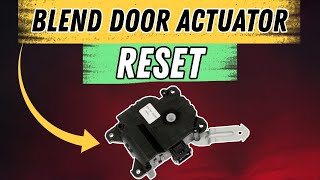
- Before buying parts, perform a free 15-minute system reset by disconnecting the negative battery terminal to rule out a temporary HVAC software glitch.
- Repair costs range from $150 for an easily accessible actuator behind the glovebox to over $1,000 if the repair requires complete dashboard removal.
What Does B0408 Mean?

Code B0408 means the Body Control Module (BCM) or HVAC Control Module detected a fault in the driver's side temperature control circuit. This usually points to a failed temperature blend door actuator—a small electric motor that moves a dashboard door to blend hot and cold air. The code triggers when the module commands the door to a specific position, but the internal feedback sensor reports the door is elsewhere.
Technical definition: The SAE/ISO definition for B0408 is 'Temperature Control #1 (Main/Front) Circuit Malfunction.' The HVAC module detected an electrical fault (open, short to ground, or short to voltage) in the driver's side temperature actuator circuit, or the door's actual position does not match the commanded position. The module sees this as a stalled motor or an out-of-range position reading (e.g., outside the 5-250 count range on GM models).
Can I Drive With B0408?
Yes. Yes, you can drive with code B0408. It affects heating and A/C temperature regulation but does not threaten engine operation. However, if the system gets stuck on a setting that prevents the defroster from clearing the windshield in cold or wet climates, it creates a hazardous driving condition.
Common Causes

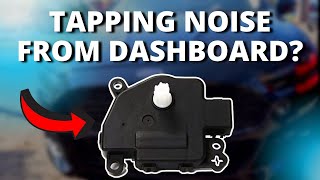
- Failed Temperature Blend Door Actuator (Very Common) — The small electric motor or its internal plastic gears fail from wear and tear, causing it to get stuck or lose its ability to move the blend door. This is the root cause in the vast majority of B0408 cases.
- HVAC Control Module Software Glitch (Common) — A temporary software error or loss of calibration within the HVAC module causes it to incorrectly flag a B0408 code. This frequently happens after a battery disconnect or replacement.
- Damaged Wiring Harness or Connector (Common) — Wires leading to the blend door actuator fray, break, or short due to rubbing against sharp dashboard components. Connector pins also corrode from moisture, interrupting the signal.
- Jammed or Broken Blend Door (Less Common) — The actuator functions properly, but the physical door it controls is stuck. Debris falling into the vents or warped plastic inside the HVAC case causes this mechanical bind.
- Failed Sunload Sensor (Rare) — A faulty sunload sensor on the dashboard sends erroneous data to the HVAC module, contributing to improper temperature management and triggering B0408 as a secondary effect.
- Faulty HVAC Control Module (Rare) — An internal fault in the module's driver circuit prevents it from sending the correct voltage signals to the actuator or properly reading the feedback signal.
- Overheating Head Unit (Specific Chevrolet Models) (Rare) — In some Chevrolet vehicles, B0408 indicates a 'DIS Temperature Sensor Signal Error in Head Unit.' This triggers when a sensor in the radio/display unit overheats, unrelated to the blend door. 🎬 Watch this diagnostic walkthrough for code B0408 on a Pontiac.
Symptoms

- Driver's Side Air Stuck on Hot or Cold — The driver's side vents blow only hot air regardless of the A/C setting, or only cold air when heat is desired. Turning the temperature knob has no effect.
- Clicking or Grinding Noise from Dashboard — A repetitive clicking, popping, or grinding sound emits from behind the dashboard when starting the car or adjusting the temperature. This confirms broken gears inside the actuator.
- Defroster Fails to Clear Windshield — The system cannot direct warm air to the windshield for defrosting, creating a severe visibility hazard in cold or humid conditions.
- Automatic Climate Control Fails — When set to 'Auto,' the system fails to maintain the selected cabin temperature because it cannot accurately blend hot and cold air.
Diagnostic Flowchart
Tap your situation to follow the diagnostic path that matches what you're seeing on this code.
Common Fixes & Costs
- Perform HVAC Actuator Recalibration — Parts: $0, Labor: $0-$150, ~0.5 hr book time (DIY)
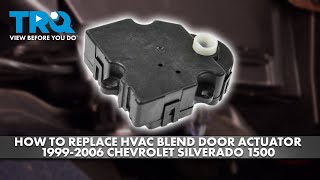
- Replace Blend Door Actuator
— Parts: $30-$150, Labor: $150-$1000, ~1.5 hr book time
(Intermediate)
Chevrolet Silverado / GMC Sierra (2003-2014): OEM ACDelco/GM: 89018365, 15887320 (Alt: Dorman: 604-106)
Ford F-150 (2009-2014): OEM Motorcraft: DL3Z-19E616-A (Alt: Dorman: 604-252)
Dodge / Ram 1500 (2009-2018): OEM Mopar: 68448026AA (Alt: Dorman: 604-029) - Repair Wiring Harness or Connector — Parts: $10-$50, Labor: $150-$400, ~2.0 hr book time (Professional)
- Repair/Replace HVAC Case or Blend Door — Parts: $100-$400, Labor: $1000-$2500, ~10.0 hr book time (Professional)
- Replace Sunload Sensor — Parts: $40-$80, Labor: $50-$150, ~0.5 hr book time (DIY)
DIY vs Professional
- Perform HVAC Actuator Recalibration — Beginner:
Tools: 10mm wrench to disconnect the battery. - Replace Blend Door Actuator — Beginner:
Tools: Basic socket set (5.5mm, 7mm, 8mm), Torx bits, screwdrivers, flashlight, and trim removal tools. - Repair Wiring Harness or Connector — Beginner:
Tools: Multimeter, wiring diagrams, wire strippers, crimpers, soldering iron, heat shrink tubing. - Repair/Replace HVAC Case or Blend Door — Beginner:
Tools: Complete professional toolset, A/C refrigerant recovery and recharge machine.
Used vs. New Parts: Buying Guide
When a used part is worth it: Buying a used blend door actuator never makes sense. The part fails due to wear on internal plastic gears. Given the low cost of a new part and the high labor cost for replacement, a new part with a warranty is mandatory.
Donor quality checklist:
- Do not buy used actuators.
- Match the part number exactly; mode, blend, and recirculation actuators look identical but are not interchangeable.
- Favor OEM parts or top-tier aftermarket brands (Dorman) over cheap online options.
Decision logic:
- If The labor to access the part is more than 1 hour. → Always buy new OEM. The risk of a cheap part failing and requiring a repeat of expensive labor is too high.
- If The actuator is easily accessible behind the glove box. → A high-quality aftermarket part (e.g., Dorman) is a cost-effective choice.
Warranty tradeoff: Aftermarket new parts usually come with a 1-year to limited lifetime warranty. OEM parts carry a 1-2 year warranty.
Worst-case if a used part fails: $1000+ if a cheap part fails after installation, requiring a full repeat of dashboard removal labor.
What Happens If You Wait — Timeline
- 0-1 month: Intermittent clicking from the dashboard on startup. Temperature control still works most of the time as the stripped gear teeth occasionally catch. (MPG impact: 0%% · Added cost: $0)
- 1-3 months: Clicking becomes frequent and loud. Temperature control becomes unreliable, getting stuck on hot or cold for entire drive cycles. (MPG impact: 0%% · Added cost: $0)
- 3-6 months: The actuator fails completely. The clicking stops as the motor burns out. The driver's side temperature is permanently stuck, compromising defroster performance. (MPG impact: 0%% · Added cost: $0)
- 6+ months: A continuously running actuator creates a parasitic draw, draining the battery if the vehicle sits for long periods. (MPG impact: 0%% · Added cost: $0-$150 (potential battery replacement))
Cost of Not Fixing It
- Immediate: Loss of driver-side temperature control, resulting in discomfort. The system remains stuck on full heat or full cold. (Added cost: $0)
- 0-3 months: Severe safety hazard if the defroster becomes inoperable, impairing visibility in cold or humid weather. Continuous clicking causes driver distraction. (Added cost: $0)
- 3+ months: The actuator motor burns out completely from constantly trying to move a stuck door. A continuously running actuator occasionally creates a parasitic draw, draining the battery. (Added cost: $0-$150 (potential battery replacement if drained repeatedly))
Diagnosis Steps

- Attempt a System Reset/Recalibration
Perform a 'soft reset' before buying parts. Disconnect the negative battery terminal for 15 minutes. Reconnect it, turn the ignition to 'ON' (engine off), and wait 3 minutes without touching the climate controls to allow the system to self-calibrate.
Tools: 10mm wrench or socket (Beginner) - Verify the Symptom and Scan for Codes
Confirm the temperature control issue on the driver's side. Use an OBD-II scanner capable of reading Body ('B') codes to verify B0408 is present. Note if it is current or historical.
Tools: OBD-II Scanner (Body code capable) (Beginner) - Listen for Actuator Noise
Turn the ignition on (engine off). Turn the climate control on and slowly adjust the driver's temperature from full cold to full hot. Listen for clicking or grinding noises behind the dash. If you hear clicking, the actuator gears are stripped and the unit requires replacement.
Tools: None (Beginner) - Locate and Inspect the Actuator and Wiring
Find the driver's temperature actuator on the lower HVAC case, typically accessible from the driver or passenger footwell. Visually inspect the actuator, its connector, and nearby wiring for frayed insulation or corroded pins.
Tools: Flashlight, Trim removal tools (Intermediate) - Analyze Live Data with a Bi-Directional Scan Tool
Navigate to the BCM/HVAC module on an advanced scan tool. Select 'Active Tests' and command the 'Driver Temp Door' through its range. Monitor the 'Position Count'. If the tool commands movement but the position value remains static, the actuator or its circuit has failed.
Tools: Bi-Directional Scan Tool (Advanced) - Test the Actuator Circuit with a Multimeter
Disconnect the actuator. With the key on, probe the harness connector. You must find a 5V reference, a solid ground (<10 ohms), and a position signal wire. As you change temperature settings, the control module sends varying voltage to the control circuits. If voltage is missing, trace the wiring back to the module.
Tools: Digital Multimeter, Vehicle-specific wiring diagram (Advanced) - Test the Blend Door Movement Manually
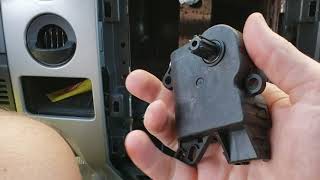
With the actuator removed, grasp the blend door's shaft. Rotate it by hand. It must move smoothly through its full range with slight resistance. If it feels stuck or crunches, the door is broken inside the HVAC case, requiring dashboard removal.
Tools: 5.5mm or 7mm socket, Ratchet (Intermediate)
When This Code Triggers (Freeze-Frame Conditions)
- HVAC Module Status: ON (The code triggers when the climate control system is active.)
- Ignition Voltage: 9-16 Volts (A stable voltage is required for the HVAC module to operate and run diagnostics.)
- Commanded vs. Actual Position: > 4-5 counts difference (The fault sets when the module commands the actuator to move, and the feedback signal shows a discrepancy.)
- Actuator Position Signal: < 7 or > 250 counts (The code sets if the position sensor signal falls outside its valid electrical range, indicating an open or shorted circuit.)
Related Codes
- B0418 — The direct counterpart to B0408, referring to the passenger-side blend door actuator. If the passenger side has incorrect temperature, look for B0418.
- B0248 / B0263 — Relates to the mode door actuator, which directs air to the floor, dash vents, or defrost. Does not affect air temperature.
- B0268 — Points to a fault with the fresh air/recirculation door actuator. Does not affect temperature.
- B0409 — A GM-specific code for 'Air Mix Door #1 Range Error'. Points to the door's movement being out of expected range due to calibration issues or mechanical obstruction.
Climate & Environmental Factors
- Extreme Temperatures (Hot or Cold): Extreme heat and cold make the plastic internal gears of the actuator brittle, leading to stripped teeth. Hot climates require constant A/C use, accelerating wear.
- High Humidity: Humid environments introduce moisture into the actuator's electrical connector, causing pin corrosion and intermittent electrical signals.
How to Talk to a Mechanic About This Code
Say this: "I have a B0408 code and the driver's side temperature is stuck. I need a diagnostic to confirm if it's the blend door actuator, a calibration issue, or a wiring fault. Please check the actuator's movement and circuit before recommending replacement."
This signals you understand the common causes and prevents a shop from immediately quoting an expensive repair without proper diagnosis.
Avoid saying:
- 'My AC is broken, can you fix it?'
- 'I hear a clicking in my dash.'
- 'Just replace the blend door actuator.'
Questions to ask before authorizing the repair:
- Did you confirm the actuator is receiving power and ground but not moving?
- If you command it with a scan tool, does the position value change?
- Before you install the new part, will you verify the blend door itself moves freely by hand?
- What is the warranty on the part and your labor?
Where to Take It: Dealer vs Independent vs Chain
- Dealer:
Take the vehicle to a dealer only if the repair requires full dashboard removal or a specific software flash.
Best for: Vehicles under warranty, Complex repairs requiring dashboard removal, Cases where a known Technical Service Bulletin (TSB) requires a software update
Downsides: Significantly higher labor rates and parts costs., May recommend replacing an entire HVAC case when a simpler fix is possible. (Typical cost: +50% vs. baseline) - Independent Shop:
Best fit for most B0408 scenarios, offering a good balance of cost and quality for actuator replacement.
Best for: Out-of-warranty vehicles where cost is a major factor., Common repairs like an accessible blend door actuator replacement.
Downsides: Quality varies; vet shops based on reviews and ASE certifications., May lack manufacturer-specific diagnostic tools for complex recalibrations. (Typical cost: +0% vs. baseline) - Chain Shop:
Not recommended. They lack the advanced diagnostic tools to properly test the circuit or perform recalibrations.
Best for: Simple, routine maintenance like oil changes or tires.
Downsides: Technician skill varies dramatically., High pressure to upsell services; frequently misdiagnose complex electrical issues. (Typical cost: -10% vs. baseline)
When to Walk Away From the Repair
If the estimated repair cost for the B0408 code exceeds 40-50% of your car's private-party value, pause and reconsider the repair. This is especially true if the fix requires dashboard removal.
- Car worth $4000, fix is $2000: Walk away. A $2000 repair for a dash-out job is 50% of the car's value and not a sound investment.
- Car worth $12000, fix is $450: Fix it. An accessible actuator replacement for $450 is well below the threshold and restores important functionality.
- Car worth $2500, fix is $350: Fix it, especially if you can DIY. The cost is low relative to the car's value and makes the car much easier to sell.
What Scan Tool You Need for This Code

Minimum: A scanner that reads manufacturer-specific Body ('B') codes from the HVAC or Body Control Module.
A basic $20 OBD-II reader only checks for 'P' (Powertrain) codes and will not see the B0408 code at all.
Budget: BlueDriver Pro (~$99) — Reads and clears 'B' codes like B0408 on many vehicles, allowing you to confirm the code. Lacks bidirectional control.
Mid-range: Foxwell NT510 Elite (~$180) — Provides full system diagnostics and bidirectional control to run the 'Actuator Recalibration' special function, fixing software glitches.
Professional: Autel MaxiCOM MK808S (~$380) — Offers full bidirectional control to test and command the blend door actuator directly and run specific HVAC relearn procedures.
Rent vs buy: Auto parts stores do NOT rent scanners capable of reading 'B' codes or performing bidirectional functions. Buying a midrange tool like the Foxwell NT510 Elite is a cost-effective investment.
How to Clear the Code After You Fix It
- Reconnect the new actuator and any removed components.
- Reconnect the battery or reinstall the HVAC fuse.
- Turn the ignition to the 'ON' position (do not start engine) and wait 3 minutes without touching climate controls to allow the system to self-calibrate.
- Use an OBD-II scan tool to clear the B0408 code from the BCM/HVAC module.
Drive cycle (~5 minutes): A specific drive cycle is not required. The primary requirement is an ignition cycle recalibration. Start the vehicle and test the temperature controls from full hot to full cold to confirm the repair.
Readiness monitors affected: None
Watch out for:
- Failing to allow the system to recalibrate after reconnecting power causes the new actuator to operate incorrectly and immediately set a code.
- Clearing the code with a scanner does not fix the problem if the underlying mechanical issue remains.
Will This Fail Emissions / State Inspection?
No — by itself this code doesn't fail OBD inspection (but it can keep readiness monitors from setting, which causes a separate fail).
- California: A B0408 code will NOT cause a smog check failure. CARB inspections focus on 'P' (Powertrain) codes that affect emissions.
- New York: The NYS DMV inspection will not fail a vehicle for a 'B' (Body) code like B0408.
- Texas: In counties requiring emissions testing, a B0408 code will not cause a failure.
Most Commonly Affected Vehicles
- Chevrolet Silverado, Tahoe, Suburban, Avalanche (2003-2014) — Extremely common issue. B0408 almost always indicates the driver's side temperature actuator. A recalibration procedure involving pulling the HVAC fuse often fixes software glitches on 2003-2006 models.
- GMC Sierra, Yukon (2003-2014) — Mechanically identical to Chevrolet counterparts, suffering from the same frequent blend door actuator failures.
- Ford F-150, Explorer (2009-2022) — Experience identical failures but store code B1081:07. The 2009-2014 F-150s are notorious for this issue. TSB 23-2115 applies to 2015-2022 models for binding doors.
- Dodge / Ram Ram 1500/2500/3500 (2009-2018) — Presents as one side blowing cold while the other is hot. The driver's side actuator is easier to replace, while the passenger side frequently requires dashboard removal.
- Nissan Rogue, Murano, Altima (2008-2018) — The component is called the 'Air Mix Door Motor.' Failure is common, especially on the Rogue, where the driver-side motor is accessible from the footwell.
- Hyundai Santa Fe, Sonata (2013-2020) — Known for the classic symptom of one side blowing hot while the other blows cold, pointing to a failed blend door actuator.
- Pontiac G6 (2005-2010) — Prone to code B0408 caused by a failed actuator or a physically broken blend door inside the HVAC case.
Manufacturer-Specific Notes
- General Motors (Chevrolet, GMC, Cadillac, Pontiac): B0408 almost always means the driver's side temperature actuator. A specific recalibration procedure exists for 2003-2007 trucks involving pulling the HVAC1 fuse to let the system relearn.
- Ford: Ford uses code B1081:07 for the same failure. TSB 23-2115 exists for 2015-2022 F-Series trucks indicating a known issue with binding doors or cams, requiring lubrication rather than just actuator replacement.
- Dodge / Chrysler / Ram: Known for both actuator failure and the plastic blend doors breaking. A self-calibration initiates automatically by disconnecting the battery for 15 minutes.
- Nissan/Infiniti: A non-responsive 'air mix door motor' resets by turning the ignition ON and holding the 'Auto' and 'Recirculate' buttons simultaneously for several seconds.
Real Owner Stories
2012 Chevy Impala with clicking dash and dead battery
Owner experienced a dead battery. After jump-starting, a constant clicking noise emitted from the dashboard, even with the car off. The A/C was not working correctly.
Outcome: The owner identified the faulty driver's side blend door actuator as the source of the noise and the parasitic battery drain. Replacing the actuator resolved both the B0408 code and the battery drain issue.
Lesson: A clicking blend door actuator creates a parasitic draw that drains the battery, even when the vehicle is off. The clicking noise is a definitive symptom of a mechanically failed actuator.
2006 Pontiac G6 with B0408 and no heat
The car blew cold air only and had a B0408 code. The driver could not get any heat.
Outcome: The owner discovered another door had broken off inside the HVAC case and jammed the blend door. The fix required cutting an access panel into the plastic HVAC housing to remove the broken piece, avoiding a costly dash removal.
Lesson: Code B0408 means the actuator is 'jammed,' not just failed. Always check for free movement of the blend door by hand after removing the actuator to avoid misdiagnosing a broken HVAC case.
2013 Ram 1500 with driver's side blowing cold
In -25°C weather, the driver's side vents blew cold air while the passenger side blew hot on a dual-zone climate control system.
Outcome: The top half of the heater core (feeding the passenger side) was clear, while the bottom half (feeding the driver's side) was blocked. The ultimate fix was replacing the heater core.
Lesson: On dual-zone climate systems, one side hot and one side cold points to a clogged heater core, not just a bad actuator. If an actuator replacement fails, investigate coolant flow.
2014 Ram owner with intermittent temperature control
The temperature control suddenly switched from hot to cold with a single click of the control knob; no in-between adjustment was possible.
Outcome: The owner performed a forced 'blend door actuator calibration' using the scan tool. This recalibrated the actuator's learned positions, restoring normal temperature control without replacing parts.
Lesson: If the actuator isn't clicking but behaves erratically, a software calibration issue is highly likely. A forced recalibration with an advanced scan tool fixes the problem for $0.
How to Prevent This Code From Triggering
- Cycle HVAC Controls Regularly (Monthly) — Moving the temperature from full hot to full cold prevents the actuator's internal gears and the blend doors from seizing due to lack of use.
- Perform a Proactive Recalibration (After any battery disconnect/replacement) — When the vehicle loses power, the HVAC module loses actuator positions. Proactively waiting 3 minutes with key-on, engine-off prevents false codes.
- Maintain Stable Battery Voltage (Ongoing) — A weak battery causes voltage drops during startup calibration, interrupting the process and setting a B0408 code.
Frequently Asked Questions
Can I just pull a fuse to reset the B0408 code?
Yes, this is a valid first step. Pulling the HVAC fuse for 10 minutes forces the control module to lose its memory and initiate a recalibration sequence upon restart. This fixes temporary software glitches but cannot repair a mechanically failed actuator.
Why is the repair cost so high for a small plastic part?
The cost is almost entirely labor, as the actuator part itself only costs $30 to $150. On some vehicles, the actuator is accessible behind the glove box, but others require removing the entire dashboard. A dash-out repair easily pushes the total bill over $1,000.
I replaced the actuator, but the problem is still there. What's next?
This indicates the actuator was not the root cause. The most likely culprits are a physically broken blend door inside the HVAC case or a wiring issue. Always test the door's movement by hand before installing a new actuator to rule out a jammed door.
Is B0408 the same as P0408?
No, this is a critical distinction. B0408 is a Body ('B') code for the climate control system, while P0408 is a Powertrain ('P') code for the Exhaust Gas Recirculation (EGR) sensor circuit. Always verify the prefix letter to avoid diagnosing the wrong system.
Could a weak battery cause code B0408?
Yes, a weak battery causes voltage drops during startup when the HVAC system calibrates. This interrupts the calibration, causing the module to lose the door's position and set a fault code. Charging the battery and performing a reset often fixes this.
Should I use a cheap aftermarket actuator?
Many technicians advise against the cheapest aftermarket options due to high failure rates and calibration issues. Using a quality OEM part (Mopar, AC Delco) or a top-tier aftermarket brand like Dorman ensures longevity. You do not want to repeat a labor-intensive dashboard repair because a $15 part failed.
Why doesn't my cheap scanner see the B0408 code?
Basic OBD-II scanners only read 'P' (Powertrain) codes from the engine control unit. B0408 is a 'B' (Body) code stored in the Body Control Module (BCM) or HVAC module. You need an advanced scanner capable of accessing all vehicle modules to read and clear this code.
What does it mean if I hear a clicking noise but the temperature still works sometimes?
A clicking noise is the classic sign of an actuator with stripped internal plastic gears. It works intermittently when the remaining gear teeth happen to catch, but complete failure is imminent. The motor is spinning, but the stripped teeth slip instead of moving the door.
Key Takeaways
- Code B0408 indicates a failure in the driver's side temperature control circuit, pointing to a broken blend door actuator in over 80% of cases.
- A repetitive clicking or grinding noise from behind the dashboard combined with air stuck on full hot or cold confirms stripped plastic gears inside the actuator.
- Before buying parts, perform a free 15-minute system reset by disconnecting the negative battery terminal to rule out a temporary HVAC software glitch.
- Repair costs range from $150 for an easily accessible actuator behind the glovebox to over $1,000 if the repair requires complete dashboard removal.
Helpful Videos


The information in this article is provided for general reference and educational purposes only. Vehicle specifications, procedures, and part compatibility can vary by production date, trim level, and region. Always consult your vehicle's factory service manual and verify part numbers before purchasing or performing repairs. Safety-critical components such as airbags, seat belts, and braking systems should be installed by a qualified professional.
- 🎬 Helpful Videos
- What Does B0408 Mean?
- Can I Drive With B0408?
- Common Causes
- Symptoms
- Diagnostic Flowchart
- Common Fixes & Costs
- DIY vs Professional
- Used vs. New Parts: Buying Guide
- What Happens If You Wait — Timeline
- Cost of Not Fixing It
- Diagnosis Steps
- When This Code Triggers (Freeze-Frame Conditions)
- Related Codes
- Climate & Environmental Factors
- How to Talk to a Mechanic About This Code
- Where to Take It: Dealer vs Independent vs Chain
- When to Walk Away From the Repair
- What Scan Tool You Need for This Code
- How to Clear the Code After You Fix It
- Will This Fail Emissions / State Inspection?
- Most Commonly Affected Vehicles
- Manufacturer-Specific Notes
- Real Owner Stories
- 2012 Chevy Impala with clicking dash and dead battery
- 2006 Pontiac G6 with B0408 and no heat
- 2013 Ram 1500 with driver's side blowing cold
- 2014 Ram owner with intermittent temperature control
- How to Prevent This Code From Triggering
- Frequently Asked Questions
- Can I just pull a fuse to reset the B0408 code?
- Why is the repair cost so high for a small plastic part?
- I replaced the actuator, but the problem is still there. What's next?
- Is B0408 the same as P0408?
- Could a weak battery cause code B0408?
- Should I use a cheap aftermarket actuator?
- Why doesn't my cheap scanner see the B0408 code?
- What does it mean if I hear a clicking noise but the temperature still works sometimes?
- Key Takeaways
- 🎟️ Get 5% Off