

Ultimate Guide to OBD-II Code B0223: Recirculation Door Actuator Circuit
The Most In-Depth B0223 Guide: What it means, why it triggers, and exactly how to fix it.
- Code B0223 indicates a failed HVAC recirculation door actuator or its wiring, most frequently found on 2006-2014 General Motors vehicles.
- Listen for a rhythmic clicking sound from behind the passenger-side dashboard on startup to instantly confirm a stripped actuator gear.
- Attempt a free HVAC recalibration by pulling the 10-amp HVAC fuse for 60 seconds before buying any replacement parts.
- Do not confuse B0223 with P0223; B0223 is a body code for climate control, while P0223 is a powertrain code for the throttle position sensor.
- Repair costs range from $150 for a DIY-friendly Chevy Impala to over $700 at a dealership for a Jeep Wrangler due to extensive dashboard disassembly.
- A stuck recirculation door disables the windshield defroster's ability to pull in dry air, creating a severe visibility hazard in cold or humid weather.
What Does B0223 Mean?

B0223 is a Body Diagnostic Trouble Code (DTC) signifying the vehicle's main computer detected an electrical malfunction in the HVAC recirculation door actuator circuit. This actuator is a small electric motor controlling a flap that switches the climate system between drawing in fresh outside air and recirculating cabin air. When set, the HVAC control module cannot control or verify this door's position.
Technical definition: The official SAE definition for B0223 is "Recirculate Position Command Circuit Malfunction". It frequently includes a two-digit failure sub-code specifying the electrical fault, such as "05: Short to Battery" or "06: Low Voltage/Open". On General Motors vehicles, sub-code "B0223 61" indicates the HVAC module determined the actuator is mechanically stuck after failing to see movement during its self-test. The module determines door position by counting motor pulses (0-255 counts); if the pulse count fails to change after two commanded attempts, the code sets.
Can I Drive With B0223?

Yes, But With Caution. You can drive the vehicle, but climate control performance is compromised. The primary safety risk is a non-functional defroster. In cold or humid weather, the inability to pull in dry outside air causes the windshield to fog rapidly, reducing visibility to dangerous levels in minutes. This makes driving unsafe until the fault is repaired.
Common Causes

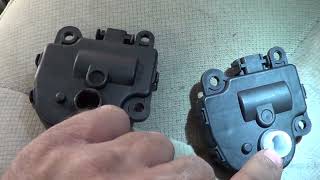
- Faulty Recirculation Door Actuator (Very Common) — This is the number one cause. The small plastic gears inside the actuator assembly 🎬 Watch: See how to replace a clicking Chevy recirculation actuator. strip or break over time, leading to a characteristic clicking noise as the motor tries and fails to move the door. The internal electric motor also burns out from age or resistance.
- Wiring or Connector Issue (Common) — The wiring harness connected to the actuator suffers damage from chafing, pinching, or age, resulting in an open circuit, a short to ground, or a short to power. Connector pins also corrode, back out, or fit loosely, creating intermittent faults that log history codes.
- Failed HVAC Module Recalibration (Common) — On startup, the HVAC control module commands the actuator to sweep its full range to learn the door's end points. If the module fails to detect the expected movement due to a temporary voltage drop or software glitch, it sets this code after two failed attempts.
- Obstruction Jamming the Recirculation Door (Less Common) — Debris such as leaves, paper, pens, or a collapsed cabin air filter falls into the HVAC housing and physically blocks the recirculation door's path. This causes the actuator motor to strain, fail its self-test, and eventually burn out.
- Faulty Replacement Part (Less Common) — Cheap aftermarket actuators are sometimes defective out of the box or lack perfect compatibility with the vehicle's HVAC module pulse-counting logic, leading to immediate failure and the return of the B0223 code.
- Faulty HVAC Control Module (Rare) — The HVAC control module itself fails internally and stops sending the correct voltage commands. Consider this only after exhaustively ruling out the actuator, wiring, and physical obstructions.
- Blown Fuse (Rare) — A blown fuse for the HVAC control system disables the actuator circuit. This is typically a symptom of a larger electrical short circuit that caused the fuse to blow initially.
Symptoms
 🎬 See this guide on replacing actuators behind the dashboard., revealing the HVAC housing where the recirculation actuator is mounted." loading="lazy" style="max-width:100%;height:auto;border-radius:6px;display:block;box-shadow:0 2px 8px rgba(0,0,0,0.1);" />
- Clicking, Tapping, or Grinding Noise from the Dashboard — A rhythmic clicking sound behind the passenger-side glove box when the vehicle starts or the recirculation button is pressed. This is the definitive sign of stripped plastic gears inside the actuator.
- HVAC System Stuck on Fresh Air or Recirculated Air — The dashboard button to switch between fresh and recirculated air fails to work. The system remains permanently stuck in the position it was in when the failure occurred.
- Poor Defroster Performance and Foggy Windows — If stuck on recirculated air, the system cannot pull in dry, fresh air. This traps moisture inside the cabin, making it extremely difficult to clear a foggy or icy windshield.
- Inconsistent Airflow Temperature — Because the system cannot regulate the air source, the A/C feels less cold in summer, or the heat feels less hot in winter, as it blends with unwanted outside air.
- Unusual Odors from Vents — If stuck in recirculation mode, the cabin air becomes stale and musty. If stuck in fresh air mode, you constantly smell exhaust fumes or outside odors.
- HVAC Commanded vs. Actual Position Mismatch (scan-tool only — no driver-felt sign) — On a bi-directional scan tool, the live data for the commanded recirculation door position fails to match the actual position reported by the actuator's feedback sensor.
Diagnostic Flowchart
Tap your situation to follow the diagnostic path that matches what you're seeing on this code.
Common Fixes & Costs
- HVAC System Recalibration — Parts: $0, Labor: $0-$150, ~0.5 hr book time (DIY)
- Replace Recirculation Door Actuator
— Parts: $30-$100, Labor: $150-$700, ~1.5 hr book time
(Intermediate)
Chevrolet Impala (2006-2013): OEM GM 22754988 (Alt: Dorman 604-108, ACDelco 15-74122)
Chevrolet Silverado (2007-2014): OEM GM 23317452 (Alt: Dorman 604-125, ACDelco 15-74122)
Jeep Wrangler JK (2011-2018): OEM Mopar 68080867AA (Alt: Dorman 604-029, Four Seasons RW728VS) - Remove Obstruction from HVAC Housing — Parts: $0, Labor: $150-$300, ~1.5 hr book time (DIY)
- Repair Damaged Wiring or Connector — Parts: $5-$30, Labor: $150-$350, ~2.0 hr book time (Advanced)
- Replace HVAC Control Module — Parts: $200-$600, Labor: $150-$300, ~1.5 hr book time (Professional)
Used vs. New Parts: Buying Guide
When a used part is worth it: Never buy a used recirculation door actuator. The primary failure mode is wear on the internal plastic gears, meaning a used part has a significant portion of its life already consumed. Given the low cost of new aftermarket parts ($30-$80) and the high labor cost for replacement, the risk of premature failure outweighs the savings.
Donor-vehicle mileage cap: roughly under 10000 miles for the part to have meaningful remaining life.
Donor quality checklist:
- Only consider parts from a very low-mileage wrecked vehicle.
- Ensure the part number is an exact match; visual similarities are deceiving.
- Avoid parts from regions with extreme temperatures, which make plastics brittle.
Decision logic:
- If The labor to access the part is significant (e.g., Jeep Wrangler JK) → Always buy a new, high-quality OEM or reputable aftermarket part to avoid repeating the labor.
- If The part is easily accessible (e.g., Chevy Impala) and budget is the absolute priority → A used part is a gamble, but the risk is lower since repeating the labor is fast.
- If The vehicle is older and has multiple actuator failures → Replace all accessible actuators with new parts simultaneously to save on future labor.
Warranty tradeoff: Used parts typically have a 30-day warranty. New aftermarket parts come with a 1-year to limited lifetime warranty. New OEM parts carry a 1-2 year warranty.
Worst-case if a used part fails: 150-700
What Happens If You Wait — Timeline
- 0-2 months: Intermittent clicking noise from the dashboard on startup, lasting 10-30 seconds as the HVAC module attempts and fails recalibration. Recirculation function works sporadically. Code B0223 is stored. (MPG impact: 0% · Added cost: 0)
- 2-6 months: Clicking becomes constant whenever the ignition is on. The actuator gears are completely stripped. The recirculation door is permanently stuck in one position. The noise is a significant annoyance. (MPG impact: 0% · Added cost: 0)
- 6-12 months: A major safety risk emerges. If stuck in 'recirculate', the defroster becomes ineffective, causing the windshield to fog dangerously. If stuck in 'fresh air', the A/C is less effective in hot weather. (MPG impact: 0% · Added cost: 0)
- 12+ months: The actuator motor burns out, stopping the clicking noise, but the door remains stuck. The continuous electrical fault puts long-term thermal stress on the driver circuit inside the HVAC control module. (MPG impact: 0% · Added cost: 200-800)
Cost of Not Fixing It
- Immediate: Inability to defog the windshield effectively if stuck in recirculation mode, creating a serious safety hazard in humid or cold weather. (Added cost: 0)
- 0-6 months: Constant clicking noise from the dashboard causes major annoyance. The actuator motor eventually burns out completely, stopping the noise but leaving the door permanently stuck. (Added cost: 0)
- 6+ months: A continuously failing actuator motor puts long-term thermal stress on the driver circuit within the HVAC control module, potentially destroying the module. (Added cost: 200-800)
Diagnosis Steps
- Confirm the Symptom and Listen for the Noise
Turn the ignition to 'On' (engine off). Press the air recirculation button on and off. Listen for a clicking noise from behind the passenger side dashboard. The sound's location confirms the fault is with the recirculation actuator and not a blend or mode door.
Tools: Your ears and hands (Beginner) - Check Related Fuses
Consult your owner's manual to locate fuses for the HVAC system (often labeled HVAC, ECAS, or with a climate control symbol). Visually inspect and test the relevant fuses with a multimeter. Replace any blown fuses.
Tools: Owner's manual, fuse puller, multimeter (Beginner) - Perform an HVAC System Recalibration
The module sometimes loses track of the door position due to a software glitch. Pull the main HVAC fuse for 60 seconds, reinstall it, start the engine, and wait 2 minutes without touching any climate controls. The system will self-calibrate. If the code clears and function returns, the issue is resolved.
Tools: Fuse puller or scan tool (Beginner) - Scan for Codes and Review Live Data
Use a bi-directional OBD-II scanner to confirm code B0223 and check for sub-codes (e.g., B0223-01). Monitor live data PIDs for 'Recirc Door Commanded Position' and 'Recirc Door Actual Position'. Command the actuator to move; if the 'Commanded' value changes but the 'Actual' value does not, the actuator or circuit is faulty.
Tools: Bi-directional OBD-II Scan Tool (Intermediate) - Access and Inspect the Actuator, Wiring, and Housing
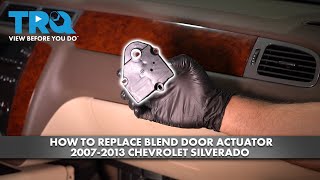
Remove the glove box assembly to access the recirculation actuator. Inspect the actuator, electrical connector, and wiring for damage or corrosion. Remove the actuator and try to move the door linkage by hand. It must pivot smoothly. If it binds, use an inspection mirror to find and remove debris inside the HVAC housing.
Tools: Trim removal tools, screwdriver set, socket set, flashlight, inspection mirror (Intermediate) - Test the Actuator Circuit with a Test Lamp
Disconnect the actuator. Connect an automotive test lamp between the two control terminals in the harness connector. Use your scan tool to command the actuator open and closed. The test lamp must blink, proving the HVAC module is sending power and ground signals. If it blinks but the actuator fails to work, the actuator is dead.
Tools: Bi-directional Scan Tool, automotive test lamp (Advanced) - Test Circuit Voltages with a Multimeter
With the connector unplugged and key on, probe the terminals. For 2-wire systems, command the door to 'Fresh'; one pin reads 12V and the other 0V. Command to 'Recirc'; the polarity reverses. For 5-wire systems, verify the 5V reference, low reference (< 5 ohms to ground), and ensure the signal wire sweeps between 0.5V and 4.5V as the door moves. Missing voltages indicate a wiring or module failure.
Tools: Multimeter, vehicle-specific wiring diagram, T-pins (Advanced)
When This Code Triggers (Freeze-Frame Conditions)
- Ignition Status: ON (The fault is detected during the HVAC module's self-test and calibration routine, which runs for 40-60 seconds immediately after the ignition turns on.)
- HVAC Command: Recirculation button pressed (The code sets when the driver presses the recirculation button, and the module fails to see the expected change in door position from its feedback sensor.)
- Battery Voltage: 11-14V (Normal operating voltage is expected. Extreme low voltage causes erratic module behavior, but B0223 specifically points to the actuator circuit.)
- Time Since Ignition On: 0-60 seconds (The fault logs during the initial power-up sequence as the HVAC module commands all actuators to sweep their full range.)
Related Codes
- B0229 — This code for 'Recirculate Position Feedback Circuit Malfunction' points to a problem with the signal the actuator sends back to the module. B0223 is the command fault; B0229 is the feedback fault. They often appear together, pointing definitively to a faulty actuator or connector.
- B022A — This code is for the 'Recirculate Position Command 2 Circuit'. Some GM vehicles use two separate command circuits for redundancy. If B0223 and B022A appear together, the actuator itself is the culprit. If only one code is present, it suggests a fault in that specific wire.
- B0408 / B0418 — These codes are for the driver (B0408) and passenger (B0418) temperature blend door actuators. B0223 affects the air source; B0408/B0418 affect the air temperature. A clicking from the center dash combined with temperature problems points to these codes.
- B0233 — This code refers to the 'Air Flow Control Circuit', controlling the Mode Door actuator (directing air to the floor, vents, or defrost). B0223 is for the fresh/recirc button; B0233 is for the mode selection button.
Climate & Environmental Factors
- Cold Weather: Extreme cold makes the plastic components and gears inside the actuator brittle and susceptible to breaking during the high-stress startup calibration sequence. Failures are highly noticeable in cold weather when defroster performance is critical.
- High Humidity: In humid climates, a failure of the recirculation door (stuck in recirculate mode) becomes immediately dangerous due to rapid windshield fogging. Humidity does not cause the mechanical failure, but it makes the symptom severe.
How to Talk to a Mechanic About This Code
Say this: "I have a B0223 code and a constant clicking noise from behind the glove box. I'd like a diagnostic to confirm if the recirculation door actuator has failed or if there's a wiring issue. Please check for physical obstructions before quoting a replacement."
This shows you've done your research and pinpoints the likely component. Mentioning the specific noise and location helps the technician start in the right place, and asking them to check for debris prevents an immediate, expensive parts quote.
Avoid saying:
- 'My A/C is making a weird noise.' (Too vague)
- 'My check engine light is on.' (The B0223 code does not trigger the check engine light)
- 'Just fix the clicking sound.' (Leads to replacing the part without checking for a simpler cause like a wiring fault or obstruction)
Questions to ask before authorizing the repair:
- Did you visually inspect the actuator and confirm it is the source of the noise?
- Did you test the wiring and connector going to the actuator?
- Did you check if the recirculation door moves freely by hand?
- Does the repair estimate include performing an HVAC system recalibration after the new part is installed?
- What is the warranty on the part and the labor?
Where to Take It: Dealer vs Independent vs Chain
- Dealer:
Take it to a dealer only if the vehicle is under warranty or if the actuator is buried deep in the dashboard requiring specialized teardown knowledge.
Best for: Vehicles under warranty, Complex electrical issues where the HVAC control module itself is suspected, Repairs on vehicles where the actuator is extremely difficult to access (e.g., Jeep Wrangler JK)
Downsides: Highest labor rates, Unwilling to use aftermarket parts to save costs (Typical cost: +50% vs. baseline) - Independent Shop:
Best fit for most situations. A reputable independent mechanic diagnoses and replaces a faulty actuator efficiently and more affordably than a dealer.
Best for: Most out-of-warranty vehicles, Common failures where the diagnosis is straightforward (e.g., clicking noise points directly to the actuator)
Downsides: Quality varies, so check reviews and look for ASE certification, May lack specialized tools for module programming if that becomes necessary (Typical cost: +0% vs. baseline) - Chain Shop:
AVOID for this repair. This is not a simple parts-swap job and requires diagnostic skill beyond what is typical for a chain shop.
Best for: Simple, unrelated maintenance like oil changes or tires
Downsides: Technician skill varies widely, Lack the in-depth diagnostic tools for body electrical codes, Inexperienced with the labor-intensive dashboard disassembly required for some vehicles (Typical cost: -10% vs. baseline)
When to Walk Away From the Repair
If the estimated repair cost exceeds 50% of your car's private-party value, seriously consider selling or trading it in rather than repairing it.
- Car worth $4000, fix is $600: Fix it. The repair cost is well below the 50% threshold and restores a key safety feature.
- Car worth $2500, fix is $800: Borderline. This repair is 32% of the car's value. If the rest of the car is in good shape, it is likely worth fixing.
- Car worth $3000, fix is $2000: Walk away. The repair cost is 67% of the car's value. It is not economical to proceed.
What Scan Tool You Need for This Code
Minimum: A code reader that reads Body (B-codes) and clears them. A basic engine-only (P-code) scanner will not see B0223.
The cheapest $20 scanners only read powertrain (P-codes) for the check engine light. They cannot communicate with the HVAC module, making them useless for this B-code. You need a tool that scans Body, ABS, and SRS systems.
Budget: BlueDriver Pro (~$90) — Confirms the B0223 code and reads enhanced codes from the HVAC module on many GM, Ford, and Chrysler vehicles. It clears the code after repair but cannot perform the bidirectional recalibration.
Mid-range: Foxwell NT510 Elite / NT530 (~$160) — The ideal DIY tool. It offers full-system diagnostics to read and clear B-codes. Crucially, it has bidirectional control to command the actuator during testing and runs the specific HVAC actuator recalibration function.
Professional: Autel MaxiCOM MK808S (~$500) — Provides professional-level, full-system diagnostics. It has robust bidirectional capabilities for testing and performs the HVAC recalibration procedure on a wide range of vehicles.
Rent vs buy: Auto parts stores do NOT rent scanners with B-code and bidirectional capabilities. Their free loaner tools are basic engine code readers. For this job, you must buy a capable scanner like the Foxwell or Autel.
How to Clear the Code After You Fix It
- Use an OBD-II scan tool to clear the B0223 code.
- Perform a mandatory HVAC system recalibration.
- Test all HVAC functions (recirculation, mode, temperature) to confirm the repair.
Drive cycle (~5 minutes): A powertrain drive cycle is not required. The essential procedure is the HVAC recalibration. Pull the HVAC fuse for 60 seconds, reinstall it, start the vehicle, and wait for 120 seconds without touching any climate controls while the system self-calibrates. Alternatively, use a bi-directional scan tool to initiate the recalibration command.
Readiness monitors affected: None. Body codes do not affect powertrain emissions readiness monitors.
Watch out for:
- Clearing the code without fixing the root cause results in the code returning immediately upon the next ignition cycle.
- Forgetting to perform the HVAC recalibration after replacing the actuator makes a brand-new part appear faulty.
- Touching the climate controls during the recalibration process interrupts it and causes incorrect operation.
Will This Fail Emissions / State Inspection?
No — by itself this code doesn't fail OBD inspection (but it can keep readiness monitors from setting, which causes a separate fail).
- California: This code does NOT cause a smog check failure. California's test focuses on powertrain (P-codes) and the Malfunction Indicator Lamp (MIL), which B0223 does not illuminate.
- New York: This code does NOT cause an emissions inspection failure. The NYVIP3 inspection checks for MIL illumination and powertrain-related DTCs.
- Texas: This code does NOT cause an emissions inspection failure. Texas OBD-II inspections fail based on the status of the Check Engine Light and emissions-related P-codes.
Most Commonly Affected Vehicles
- Chevrolet Impala (2006-2013) — Extremely common failure. The recirculation actuator is located behind the glove box and is a well-documented, easy DIY replacement.
- Chevrolet Silverado, Suburban, Tahoe (2007-2014) — These trucks are known for various actuator failures. The fuse-pull recalibration method is a mandatory first step for any HVAC issue on these models.
- Pontiac Grand Prix (2004-2008) — Shares the GM W-body platform and HVAC components with the Chevrolet Impala, making it equally susceptible to this actuator failure.
- Buick LaCrosse, Regal (2006-2013) — Shares a GM platform that experiences common issues with the recirculation actuator, covered in extensive GM service procedures.
- Jeep Wrangler (JK) (2011-2018) — Notorious for this failure. The actuator is buried deep within the dashboard, making replacement labor-intensive. Real-world dealer quotes are routinely in the $600-$800 range.
- Saab 9-3 (2003-2011) — Built on a GM platform, these vehicles use a similar HVAC system and stepper motors. B0223 is a documented code in SAAB-specific diagnostic procedures.
- Ford F-150, Explorer, Focus (1996-Present) — Critical Distinction: Ford vehicles rarely use B0223. A visually similar powertrain code, P0223, is very common and refers to the Throttle Position Sensor. Do not confuse the two.
- Subaru Legacy, Outback (2005-2009) — Critical Distinction: On these Subaru models, B0223 means 'CAN-HS VDC/ABS NO-RECEIVE DATA'. It is a serious network communication failure, NOT an HVAC issue. Diagnosis requires checking the CAN bus network.
Manufacturer-Specific Notes
- General Motors (Chevrolet, Buick, Pontiac, Saab): For these brands, B0223 almost exclusively refers to the recirculation door actuator circuit. Service manuals provide detailed diagnostic trees based on sub-codes (01, 06, 61) to pinpoint electrical vs. mechanical faults. GM has issued several Technical Service Bulletins indicating a pattern of HVAC component issues.
- Subaru: On many models (especially 2005-2009 Legacy/Outback), B0223 is a 'CAN-HS VDC/ABS NO-RECEIVE DATA' code. It indicates a CAN bus communication network failure, not an HVAC problem. The repair involves diagnosing the vehicle's network and ABS module, not dashboard components.
- Ford, Honda, Nissan, Toyota: These manufacturers rarely use the B0223 code. Technicians must be careful not to confuse it with the extremely common powertrain code P0223, which indicates a 'Throttle/Pedal Position Sensor Circuit High' fault. The first letter of the DTC is crucial.
- Chrysler, Dodge, Jeep: While the recirculation actuator failure is common on models like the Jeep Wrangler, the specific DTC B0223 is not as frequently stored as it is on GM vehicles. Diagnosis relies heavily on the audible clicking symptom from behind the glove box.
Real Owner Stories
2008 Chevy Impala, ~150k miles - The Classic DIY Fix
Owner heard a loud, rhythmic clicking noise from behind the glove box when starting the car. A scan confirmed code B0223.
What they tried:
- Removed the glove box to get a better listen.
- Placed a hand on the recirculation actuator and felt the clicking vibration, confirming the faulty part.
Outcome: Replaced the recirculation door actuator (Dorman 604-108) in under an hour using basic tools. The part cost $40. The clicking noise was eliminated and HVAC function was restored.
Lesson: On common GM vehicles, this is an accessible and inexpensive DIY repair. Listening for the click and feeling the part is a reliable way to confirm the diagnosis before buying anything.
2017 Jeep Wrangler JKU - The Expensive, Labor-Intensive Repair
Owner noticed the rear defroster light blinked for 20 seconds on startup, and the recirculation button was unresponsive.
What they tried:
- Suspected the main HVAC control module and replaced it, but the problem persisted.
- Narrowed it down to the recirculation door actuator, but found it buried deep in the dashboard and inaccessible for a DIY repair.
Outcome: Took the vehicle to a dealer. The total cost for diagnosis and replacement of the actuator was $650, with the vast majority being labor due to the difficult location.
Lesson: On vehicles like the Jeep Wrangler, the part is cheap but the labor is extreme. Always research the specific location and labor time for your vehicle before deciding to tackle the job yourself.
2010 Chevy Silverado - Misdiagnosis and Wasted Parts
A/C was blowing warm. Owner assumed it was a blend door issue and heard clicking. Multiple HVAC codes were present, including B0223 and B0408.
What they tried:
- Replaced the temperature blend door actuator.
- Replaced the recirculation actuator.
- The problem continued because the owner threw parts at the problem instead of diagnosing.
Outcome: The owner discovered the free HVAC recalibration procedure for GM trucks. They pulled the 'HVAC/ECAS' 10-amp fuse for 60 seconds, reinstalled it, and started the truck. The system recalibrated itself, and all HVAC functions returned to normal.
Lesson: Always try the simple, free fixes first. On GM vehicles, a fuse-pull recalibration resolves many HVAC codes that appear to be hardware failures.
2020 Chevy Trax - Dealer Parts Cannon
A/C fan was not turning on and code B0223 was present.
What they tried:
- Took the car to the dealership for repair.
Outcome: The dealership replaced the blower motor. The problem returned. Then they replaced the HVAC control module. Less than 24 hours later, the issue came back. The dealer was throwing expensive parts at the issue without a correct diagnosis.
Lesson: Code B0223 points to the recirculation actuator circuit, not the blower motor. If a shop replaces a part that doesn't match the code's description and the problem returns, challenge the diagnosis.
How to Prevent This Code From Triggering
- Replace the Cabin Air Filter regularly. (Every 12-15,000 miles or as recommended by the manufacturer.) — A clogged or collapsing cabin air filter sheds debris into the HVAC housing, physically obstructing the recirculation door. Keeping the filter clean prevents foreign object damage.
- Cycle the Recirculation Function Periodically. (Once a month.) — Regularly using the recirculation button moves the actuator through its full range of motion. This prevents the internal gears and the door itself from seizing up due to inactivity.
- Avoid Rapid, Repetitive Temperature/Mode Changes. (Daily habit.) — Constantly and rapidly cycling between hot/cold or different modes puts maximum stress on the small plastic gears inside all HVAC actuators. Smooth, deliberate adjustments prolong their mechanical life.
- Address Water Leaks Immediately. (As needed.) — Water leaking into the dashboard area from a bad windshield seal drips onto electrical connectors, causing corrosion, electrical faults, and premature actuator failure.
Frequently Asked Questions
What is a recirculation door actuator and what does it do?
It is a small electric motor with plastic gears that opens and closes a door inside your dashboard. This door determines if your climate system pulls in fresh air from outside or recirculates the air already inside the cabin.
Is B0223 the same as P0223?
No, they are completely different. B0223 is a 'Body' code related to the HVAC recirculation actuator, primarily on GM vehicles. P0223 is a 'Powertrain' code for the Throttle Position Sensor, common on Ford and Nissan vehicles.
What is an HVAC recalibration and why is it necessary?
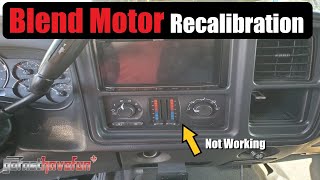
Recalibration is a process where the HVAC control module re-learns the open and closed endpoints of all actuator doors. It is mandatory after replacing an actuator or disconnecting the battery. Initiate it by pulling the HVAC fuse for a minute, starting the car, and waiting without touching the controls.
What are the most common mistakes when diagnosing B0223?
The biggest mistake is replacing the actuator without checking the fuses first. Second, failing to pinpoint exactly which actuator is clicking, as there are several in the dash. Third, installing a new part without checking for physical debris blocking the door.
Can I fix a B0223 code myself?
Yes, on many GM cars like the Chevy Impala where the actuator is easily accessible behind the glove box. No, on vehicles like the Jeep Wrangler JK where the actuator is buried deep in the dash, requiring professional disassembly.
Why is my defroster not working properly with this code?
To effectively defog a windshield, the system must pull in fresh, drier air from outside. If your recirculation door is stuck closed, it recycles the humid air already inside the car, hindering its ability to clear the windows.
Will clearing the code with a scanner fix the problem?
No. B0223 indicates a persistent hardware or electrical circuit problem. The HVAC module runs its self-test on the next ignition cycle, detects the same fault, and the code returns immediately.
Key Takeaways
- Code B0223 indicates a failed HVAC recirculation door actuator or its wiring, most frequently found on 2006-2014 General Motors vehicles.
- Listen for a rhythmic clicking sound from behind the passenger-side dashboard on startup to instantly confirm a stripped actuator gear.
- Attempt a free HVAC recalibration by pulling the 10-amp HVAC fuse for 60 seconds before buying any replacement parts.
- Do not confuse B0223 with P0223; B0223 is a body code for climate control, while P0223 is a powertrain code for the throttle position sensor.
- Repair costs range from $150 for a DIY-friendly Chevy Impala to over $700 at a dealership for a Jeep Wrangler due to extensive dashboard disassembly.
- A stuck recirculation door disables the windshield defroster's ability to pull in dry air, creating a severe visibility hazard in cold or humid weather.
Helpful Videos

The information in this article is provided for general reference and educational purposes only. Vehicle specifications, procedures, and part compatibility can vary by production date, trim level, and region. Always consult your vehicle's factory service manual and verify part numbers before purchasing or performing repairs. Safety-critical components such as airbags, seat belts, and braking systems should be installed by a qualified professional.
- 🎬 Helpful Videos
- What Does B0223 Mean?
- Can I Drive With B0223?
- Common Causes
- Symptoms
- Diagnostic Flowchart
- Common Fixes & Costs
- Used vs. New Parts: Buying Guide
- What Happens If You Wait — Timeline
- Cost of Not Fixing It
- Diagnosis Steps
- When This Code Triggers (Freeze-Frame Conditions)
- Related Codes
- Climate & Environmental Factors
- How to Talk to a Mechanic About This Code
- Where to Take It: Dealer vs Independent vs Chain
- When to Walk Away From the Repair
- What Scan Tool You Need for This Code
- How to Clear the Code After You Fix It
- Will This Fail Emissions / State Inspection?
- Most Commonly Affected Vehicles
- Manufacturer-Specific Notes
- Real Owner Stories
- 2008 Chevy Impala, ~150k miles - The Classic DIY Fix
- 2017 Jeep Wrangler JKU - The Expensive, Labor-Intensive Repair
- 2010 Chevy Silverado - Misdiagnosis and Wasted Parts
- 2020 Chevy Trax - Dealer Parts Cannon
- How to Prevent This Code From Triggering
- Frequently Asked Questions
- What is a recirculation door actuator and what does it do?
- Is B0223 the same as P0223?
- What is an HVAC recalibration and why is it necessary?
- What are the most common mistakes when diagnosing B0223?
- Can I fix a B0223 code myself?
- Why is my defroster not working properly with this code?
- Will clearing the code with a scanner fix the problem?
- Key Takeaways
- 🎟️ Get 5% Off