

OBD-II Code B0116: Side Airbag Circuit Fault
What B0116 means, why it triggers, and how to fix it
- Code B0116 disables your entire 360-degree airbag system due to an open circuit in the driver's side seat airbag (squib).
- Inspect the yellow wiring harness under the driver's seat first, as loose pins or water corrosion cause over 80% of B0116 faults.
- Never test airbag resistance with a standard multimeter; use a 2.0-3.5 ohm SRS diagnostic resistor to safely isolate the fault without triggering deployment.
- You must use an SRS-capable OBD-II scanner to clear the B0116 hard code after repair, as the dashboard warning light will not reset automatically.
What Does B0116 Mean?

B0116 indicates the Supplemental Restraint System (SRS) module detects an 'open' (a break or disconnection) in the driver's side airbag circuit. This circuit includes the side airbag in the seat bolster (the squib), the under-seat wiring harness, and the control module.
Technical definition: SAE/OBD-II defines B0116 as "Open in Side Squib (LH) Circuit". The 'squib' is the pyrotechnic initiator that deploys the airbag, and '(LH)' designates the left-hand (driver's) side. On specific 2018+ General Motors vehicles, B0116 indicates a fault with the "Camera Washer Actuator," an unrelated ADAS component.
Can I Drive With B0116?
Yes, But With Caution. You can physically drive the vehicle, but it is not safe. An active B0116 code disables the entire airbag system as a fail-safe measure. In a collision, zero airbags will deploy, dramatically increasing the risk of serious injury or death. This condition causes an automatic failure in states with mandatory safety inspections.
Common Causes

- Faulty wiring or connector under the driver's seat (Very Common) — Constant seat movement damages the under-seat wiring or causes the metal terminal pins to slowly back out of the plastic connector housing, breaking the circuit.
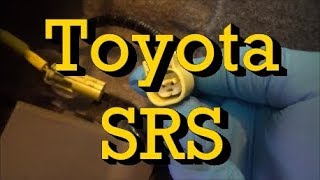
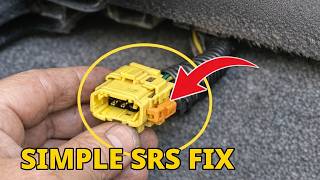
- Water damage and corrosion in the connector (Common) — Spilled liquids or clogged sunroof drains pool water under the seat. This moisture wicks into the yellow SRS connector, corroding pins and creating an open circuit. 🎬 Watch: How to clean and repair a wet under-seat connector.
- Failed driver's side seat airbag (squib) (Common) — The pyrotechnic squib inside the seat bolster airbag assembly fails internally, breaking the circuit permanently.
- Pressure from aftermarket seat covers (Less Common) — Overly tight seat covers place constant physical strain on the seat bolster's internal airbag wiring, eventually snapping the delicate wires.
- Failed SRS/Airbag control module (Rare) — The main SRS computer fails internally. Rule out all wiring and squib issues before replacing this expensive module.
- Failed Camera Washer Actuator (GM specific) (Rare) — On modern GM vehicles equipped with ADAS, this code flags a broken washer fluid motor for the front-facing camera, completely unrelated to the airbag system.
Symptoms

- Airbag warning light is on or flashing — The dashboard airbag icon stays illuminated or blinks continuously.
- Message on the instrument cluster — Vehicles display a "Service Airbag System" or "Check SRS Airbag" warning in the Driver Information Center.
- Failed state safety inspection — An active airbag warning light results in an automatic failure of vehicle safety inspections in strict states like CA, VA, and MA.
- Front camera washer not working — On newer GM models, the feature to clean the front driver-assist camera fails to spray fluid.
Diagnostic Flowchart

Tap your situation to follow the diagnostic path that matches what you're seeing on this code.
Common Fixes & Costs
- Repair or replace wiring connector under the driver's seat — Parts: $20-$80, Labor: $150-$300, ~1.5 hr book time (Intermediate)
- Replace the driver's side seat airbag assembly — Parts: $400-$1000, Labor: $300-$600, ~2.5 hr book time (Professional)
- Replace the SRS/Airbag Control Module — Parts: $200-$600, Labor: $300-$500, ~2 hr book time (Professional)
- Replace the Camera Washer Actuator (GM specific) — Parts: $50-$150, Labor: $100-$200, ~1 hr book time (Intermediate)
- Reset the SRS Control Module after a collision — Parts: $0, Labor: $50-$150, ~0.5 hr book time (Professional)
Used vs. New Parts: Buying Guide
When a used part is worth it: For a side airbag module, a used OEM part from a certified recycler is a safe, cost-effective alternative to new OEM. For the SRS control module, a used unit is viable only if sent to a professional service for VIN reprogramming.
Donor-vehicle mileage cap: roughly under 100000 miles for the part to have meaningful remaining life.
Donor quality checklist:
- Verify the donor vehicle was not involved in a collision and airbags did not deploy.
- Purchase only from certified automotive recyclers who guarantee the part is tested.
- Match the part number exactly. SRS components are highly specific to make, model, year, and trim.
Decision logic:
- If The part is an airbag or seatbelt pretensioner → Buy new OEM or certified used OEM. Never buy aftermarket airbags.
- If The part is the SRS Control Module → Buy new and have it programmed by the dealer, OR buy a used module and send it to a reputable reset service.
- If The part is a wiring pigtail or connector → New OEM or aftermarket pigtails are inexpensive and recommended over splicing wires from a junkyard harness.
Warranty tradeoff: Used airbags from certified sellers typically include a 30-90 day warranty. New OEM parts carry a 1-year warranty. A used part carries the risk of requiring repeat labor if faulty.
Worst-case if a used part fails: $300-800 if a used airbag or control module is faulty after installation, covering repeat labor and a second replacement part.
What Happens If You Wait — Timeline
- Immediately: The SRS module detects the open circuit during startup. The airbag warning light illuminates, and the entire SRS is disabled. (MPG impact: 0%% · Added cost: $0 (Immediate safety risk is the primary cost))
- 0-6 months: The safety system remains inactive. Continued exposure to humidity worsens minor corrosion, turning an intermittent fault into a permanent hard fault. (MPG impact: 0%% · Added cost: $0-$150 (A simple cleaning becomes an expensive harness repair))
- At next safety inspection: The vehicle fails its state safety inspection in strict jurisdictions, preventing registration renewal. (MPG impact: 0%% · Added cost: $150-$1500 (The full cost of the required repair))
- Long-Term (if ignored): Unaddressed water intrusion that caused the connector to corrode leads to mold in the carpet or rust on the floor pan. (MPG impact: 0%% · Added cost: $500+ (Cost for mold remediation or rust repair))
Cost of Not Fixing It
- Immediate: The entire vehicle airbag system is disabled. In a collision, zero airbags deploy, dramatically increasing the risk of serious injury or death. (Added cost: N/A (Safety Risk))
- At Next State Inspection: The vehicle automatically fails safety inspections in strict states, preventing legal registration renewal until repaired. (Added cost: $150 - $1500+ (Cost of required repair))
- Long-Term: Ignoring the light leads to a false sense of security. The primary safety system remains non-functional. (Added cost: N/A (Safety Risk))
Diagnosis Steps
- Verify the Code with an SRS-Capable Scanner
Use an OBD-II scanner that reads Supplemental Restraint System (SRS) codes to confirm B0116. Basic $20 engine code readers cannot see SRS faults.
Tools: SRS-capable OBD-II Scanner (Beginner) - Visually Inspect Under the Driver's Seat
Locate the bright yellow SRS wiring harness and connector under the driver's seat. Check for disconnected plugs, green/white corrosion, pinched wires, or debris interfering with the harness.
Tools: Flashlight (Beginner) - Check for Technical Service Bulletins (TSBs)
Search online for TSBs related to your vehicle's make, model, year, and code B0116. Manufacturers release specific wire harness repair procedures for known issues (e.g., Toyota T-SB-0069-12).
Tools: Internet access (Beginner) - Perform a 'Wiggle Test'
With the ignition ON (engine off), gently wiggle the yellow connector and wiring harness under the seat while an assistant watches the airbag light. If the light flickers, you have isolated a poor connection.
Tools: Assistant (Intermediate) - Disconnect Battery and Clean the Connector
CRITICAL SAFETY STEP: Disconnect the negative battery terminal and wait 30 minutes to discharge the SRS backup capacitor. Disconnect the yellow under-seat connector, clean both sides with electrical contact cleaner, and reconnect securely.
Tools: Wrench set, electrical contact cleaner (Intermediate) - Test the Circuit with an SRS Resistor Tool (Advanced)
Unplug the harness from the seat airbag. Plug a 2.0-3.5 ohm SRS diagnostic resistor into the vehicle-side harness connector. Reconnect the battery and clear codes. If B0116 stays away, the seat airbag itself is faulty. If B0116 returns, the fault is in the wiring or SRS module.
Tools: SRS diagnostic resistor tool (2.0-3.5 ohm), SRS-capable scanner (Advanced) - Check Squib Circuit Resistance (Advanced)
With the battery disconnected and the harness unplugged from the SRS module, use a digital multimeter to check circuit resistance. Measure through the wiring to the seat connector and back. A reading of 'OL' confirms a broken wire in the harness.
Tools: Digital multimeter, vehicle-specific wiring diagram (Advanced) - Isolate the Faulty Component
If the resistor test points to the airbag, replace the airbag assembly. If the resistor test shows wiring is the issue, meticulously trace the wiring from the SRS module to the seat connector to find the break, requiring interior trim removal.
Tools: Service manual, trim removal tools (Professional)
When This Code Triggers (Freeze-Frame Conditions)
- System State: Key-On Self-Test (The SRS module performs a primary check of all components for six seconds after the ignition turns 'ON'. A fault detected here immediately sets the code.)
- System Monitoring: Constant Check (The SRS module continuously monitors circuits for electrical changes. B0116 triggers instantly while driving if a connection loosens.)
- Fault Type: Open Circuit (The module detects infinite or out-of-range high resistance on the driver's side squib circuit.)
Related Codes
- B0111 — The direct counterpart to B0116. B0111 indicates an 'Open in Side Squib (RH) Circuit,' referring to the passenger side. Causes and repairs are identical.
- B0115 — Indicates a 'Short in Side Squib (LH) Circuit.' While B0116 points to a break, B0115 suggests the circuit's wires are touching each other or shorted to ground.
- B1193 — Indicates 'Crash Data Stored' in the SRS module. If seen alongside B0116, a collision event occurred and the module is locked. It must be professionally reset.
- B0110 - B0114 — These codes relate to the Left Hand (LH) side squib circuit, indicating different electrical faults like Short to Ground (B0113) or Short to Battery (B0114).
Climate & Environmental Factors
- High Humidity / Water Intrusion: Moisture from rain, spills, or damp carpets enters the under-seat SRS connector, causing pin corrosion. This increases resistance, triggering code B0116.
- Extreme Temperature Cycles (Hot/Cold): Repeated cycling between hot and cold causes plastic connector housings and metal pins to expand and contract at different rates, leading to loose connections.
How to Talk to a Mechanic About This Code
Say this: "I have an airbag warning light on, and my scanner shows code B0116, pointing to the driver's side airbag circuit. I'd like to schedule a diagnostic to confirm the cause, starting with the under-seat connector."
This signals you are an informed customer. It directs the technician to the most likely cause, saving diagnostic time, and prevents them from suggesting unrelated repairs.
Avoid saying:
- My airbag light is on, can you just turn it off?
- Just fix whatever is wrong with the airbag system.
- I need the cheapest possible fix for this light.
Questions to ask before authorizing the repair:
- Did you perform a 'wiggle test' on the under-seat connector to see if the fault was intermittent?
- If the connector is the problem, do you recommend repairing the existing connector, soldering the wires directly, or replacing the pigtail?
- If you believe the airbag module (squib) itself is bad, did you isolate the fault using a diagnostic resistor test?
Where to Take It: Dealer vs Independent vs Chain
- Dealer:
Recommended if the issue requires module programming or if the vehicle is covered by a warranty or recall.
Best for: Vehicles under warranty or covered by a specific recall/TSB for this issue., Complex cases requiring SRS module replacement and programming., Newer GM vehicles where B0116 indicates a camera washer issue.
Downsides: Highest labor rates, typically 1.5-2x more than independent shops., Defaults to replacing entire assemblies instead of performing targeted connector repairs. (Typical cost: +50% vs. baseline) - Independent Shop:
Best fit for most B0116 scenarios. An experienced independent technician easily diagnoses and repairs the common under-seat wiring fault for significantly less than a dealer.
Best for: Out-of-warranty vehicles where the cause is the common under-seat connector., Cost-conscious owners wanting a reliable diagnosis and repair., Shops with ASE-certified technicians specializing in electrical systems.
Downsides: May lack manufacturer-specific tools to program a new SRS control module. (Typical cost: +0% vs. baseline) - Chain Shop:
AVOID for this code. Airbag system repair requires expertise not typically found at chain shops.
Best for: Simple, unrelated maintenance like oil changes or tires.
Downsides: Technicians lack specialized training for SRS systems., Not equipped for complex electrical diagnostics or repairs. (Typical cost: -10% vs. baseline)
When to Walk Away From the Repair
If the estimated repair cost for the airbag system exceeds 40-50% of the car's private-party value, sell the car 'as-is' or trade it in.
- Car worth $5000, fix is $2200: Walk away. The repair cost is nearly half the car's value. Sell the car with full disclosure of the issue.
- Car worth $12000, fix is $300: Fix it. A simple connector repair is a small fraction of the vehicle's value and restores a critical safety feature.
- Car worth $2500, fix is $1500: Walk away. The repair cost is too high relative to the car's low value. The car is worth more as a 'mechanic's special'.
What Scan Tool You Need for This Code
Minimum: A scanner that reads and clears Supplemental Restraint System (SRS) / Airbag codes. A basic $20 engine code reader will NOT work.
A standard OBD-II scanner only communicates with the engine control module (ECU). The B0116 code is stored in the separate SRS/Airbag module.
Budget: Foxwell NT630 Plus / Autel AutoLink AL619 (~$90) — Reads and clears SRS/Airbag codes, allowing you to diagnose B0116 and turn off the light after repair.
Mid-range: BlueDriver Pro Scan Tool (~$120) — Connects to your smartphone via Bluetooth. Reads and clears SRS codes on most major brands and provides freeze frame data.
Professional: Autel MaxiCOM MK808 / Launch CRP919E (~$500-700) — Offers full system diagnostics, including bidirectional control to test components. Essential for diagnosing module-level problems.
Rent vs buy: Auto parts stores do NOT rent out SRS-capable scanners due to liability. Buying a budget SRS-capable scanner costs less than a single diagnostic fee at a shop.
How to Clear the Code After You Fix It
- Ensure the physical fault (e.g., wiring, airbag) is repaired.
- Reconnect the negative battery terminal.
- Turn the ignition to the 'ON' position (without starting the engine).
- Connect an SRS-capable OBD-II scan tool to the diagnostic port.
- Navigate to the Supplemental Restraint System (SRS) menu.
- Select 'Clear Codes' or 'Erase Faults'.
- Turn the ignition off for 30 seconds, then turn it back on. The airbag light illuminates for a 6-second self-test and then turns off.
Drive cycle (~10 minutes): An SRS drive cycle verifies the repair. After clearing the code, a 10-minute test drive with a mix of turns and stops confirms the light does not return. The SRS module's self-check is nearly instantaneous at startup.
Readiness monitors affected: None. Readiness monitors relate to emissions systems, not the SRS.
Watch out for:
- Using a basic OBD-II code reader fails to access the SRS module.
- Disconnecting the battery does not clear a hard SRS fault code.
- If the airbag light returns immediately after clearing, the underlying electrical fault remains unfixed.
- Failing to wait 30 minutes after disconnecting the battery risks personal injury or system damage.
Will This Fail Emissions / State Inspection?
No — by itself this code doesn't fail OBD inspection (but it can keep readiness monitors from setting, which causes a separate fail).
- California: An illuminated airbag light is an automatic failure of the mandatory Vehicle Safety Systems Inspection (VSSI) required for revived salvage vehicles. For standard smog checks, it is not part of the emissions test.
- New York: The NY DMV considers an illuminated airbag warning lamp an advisory item. It is noted on the report but does NOT cause rejection of the safety inspection.
- Texas: The airbag system is not an inspected item under Texas state law for a standard safety inspection. A vehicle passes with the airbag light on.
Most Commonly Affected Vehicles
- Toyota Sienna (2004-2009) — Extremely common. Toyota issued TSBs T-SB-0069-12 and T-SB-0162-10 with specific wire harness repair procedures. Toyota also issued a Warranty Enhancement Program for this issue.
- Chevrolet / GMC Silverado, Sierra, Tahoe, Suburban (2014-2019) — The under-seat connector is a frequent failure point. A permanent fix is to eliminate the connector entirely by soldering the wires directly.
- Volkswagen Golf, Jetta, Passat (2005-2011) — Represented by VAG-specific codes 01217 (driver) and 01218 (passenger). The cause is almost always a poor connection in the plug under the seat.
- Toyota 4Runner (2003-2009) — Service manuals specifically list B0116 as an open in the driver's side squib circuit, traced to the under-seat connector.
- Lexus GX470 (2003-2009) — Owners frequently report this code with a flashing airbag light. The cause is typically the under-seat wiring harness.
- Hyundai / Kia Various Models (2007-2014) — Airbag codes are frequently traced back to a high-resistance failure in the clock spring assembly behind the steering wheel.
- Honda Pilot, Accord (2003-2012) — A code for high resistance in the passenger-side indicator light circuit triggers the SRS light, caused by a failing LED bulb in the dashboard switch assembly.
Manufacturer-Specific Notes

- Toyota/Lexus: The most common manufacturer for this code. Toyota issued service bulletins (e.g., T-SB-0069-12) with specific wire harness repair kits and extended warranty coverage.
- General Motors: On newer ADAS models, GM reuses code B0116 to indicate a fault with the 'Camera Washer Actuator'. For 2008-2013 SUVs, GM issued recall 14V118 to address side airbag connector corrosion by soldering the wires.
- Volkswagen/Audi: Uses proprietary codes 01217 (driver) and 01218 (passenger) for the same side airbag circuit fault. A common DIY fix is to cut out the connector and solder the wires directly.
- Honda: An SRS light is sometimes caused by high resistance in the 'passenger airbag off' indicator light on the dashboard due to a failing LED bulb.
Real Owner Stories
2006 Toyota Sienna CE with flashing airbag light
Airbag light started flashing after the 6-second startup check. A scan revealed code B0111 (passenger side equivalent of B0116).
Outcome: After reconnecting the battery and clearing codes, the light stayed off. The issue was a simple poor connection at the under-seat plug.
Lesson: Always start with the simplest fix. For B0116/B0111, clean the under-seat connector after following proper safety procedures.
2014 Chevy Silverado with B0116
Airbag light came on with code B0116. Wiggling the connector under the driver's seat made the light flicker, confirming a connection issue.
Outcome: After disconnecting the battery, the owner cut the connector out, soldered the wires directly matching colors, and insulated each connection with heat-shrink tubing. The code cleared permanently.
Lesson: For vehicles known for faulty connectors, bypassing the failure point by soldering the wires is a durable long-term solution.
2019 GM vehicle with B0116 and no airbag symptoms
The airbag light was on with code B0116, but the owner noticed the button to wash the front ADAS camera stopped working.
Outcome: Diagnosis confirmed the fault was the camera washer motor. The actuator was replaced, and the code cleared.
Lesson: Always check for manufacturer quirks. On specific modern GM cars, B0116 points to a minor camera washer fault, not a safety system failure.
2005 Lexus GX470 with flashing airbag light
A flashing airbag light appeared with code B0116. The yellow connector under the driver's seat appeared clean and connected.
Outcome: The test determined the fault was internal to the side airbag squib itself. The driver's side seat airbag assembly was replaced.
Lesson: If cleaning the connector fails, a professional resistor test quickly determines if the expensive airbag or the wiring is the culprit.
How to Prevent This Code From Triggering
- Keep the area under the front seats clear (Constant habit) — Items stored under the seat snag or damage the delicate yellow SRS connector and wiring harness, causing an open circuit.
- Apply dielectric grease to the connector (Once, or after any disconnection) — A thin layer of non-conductive dielectric grease repels moisture and prevents corrosion on the pins.
- Periodically check for and clear sunroof drains (Annually) — Clogged sunroof drains cause water to overflow and collect on the vehicle's floor, soaking the SRS connectors underneath.
- Secure the under-seat harness (Once) — Securing the wiring harness with zip ties prevents it from getting pinched in the seat tracks or stressed by seat movement.
Frequently Asked Questions
Is it safe to drive with code B0116?
You can physically operate the vehicle, but it is not safe. The airbag warning light indicates the entire Supplemental Restraint System (SRS) is disabled. Zero airbags will deploy in an accident.
Can I fix a B0116 code myself?
You can check and clean the under-seat connector if you disconnect the battery and wait 30 minutes first. Never test an airbag's resistance with a standard multimeter, as the current triggers deployment. Leave complex wiring or module repairs to professionals.
Will clearing the code make the airbag light go away?
You can clear the code with an SRS scanner, but if the electrical fault exists, the module detects it on its next self-check and the light returns instantly. The physical fault must be repaired first.
What is the cost to fix code B0116?
A repair shop charges $150-$300 to diagnose and clean or bypass a corroded connector. Replacing a failed side airbag costs $600-$1500 at a dealership. The rare GM camera washer repair is typically under $300.
I fixed the wiring, but the airbag light is still on. What's next?
An SRS light will not turn off by itself. The fault codes are stored as 'hard codes' and must be cleared with an SRS-capable scanner. If the code returns instantly after clearing, the repair failed or another fault exists.
Why is the airbag wiring connector yellow?
Manufacturers use bright yellow for all SRS wiring as a universal safety standard. This warns technicians to follow special safety procedures, like disconnecting the battery, before working on them.
What is a 'squib'?
A 'squib' is the small pyrotechnic initiator inside an airbag module. When the SRS unit detects a crash, it sends current to the squib, igniting a propellant to inflate the airbag. An 'open in the squib circuit' means a broken wire leading to this igniter.
Key Takeaways
- Code B0116 disables your entire 360-degree airbag system due to an open circuit in the driver's side seat airbag (squib).
- Inspect the yellow wiring harness under the driver's seat first, as loose pins or water corrosion cause over 80% of B0116 faults.
- Never test airbag resistance with a standard multimeter; use a 2.0-3.5 ohm SRS diagnostic resistor to safely isolate the fault without triggering deployment.
- You must use an SRS-capable OBD-II scanner to clear the B0116 hard code after repair, as the dashboard warning light will not reset automatically.
Helpful Videos

The information in this article is provided for general reference and educational purposes only. Vehicle specifications, procedures, and part compatibility can vary by production date, trim level, and region. Always consult your vehicle's factory service manual and verify part numbers before purchasing or performing repairs. Safety-critical components such as airbags, seat belts, and braking systems should be installed by a qualified professional.
- 🎬 Helpful Videos
- What Does B0116 Mean?
- Can I Drive With B0116?
- Common Causes
- Symptoms
- Diagnostic Flowchart
- Common Fixes & Costs
- Used vs. New Parts: Buying Guide
- What Happens If You Wait — Timeline
- Cost of Not Fixing It
- Diagnosis Steps
- When This Code Triggers (Freeze-Frame Conditions)
- Related Codes
- Climate & Environmental Factors
- How to Talk to a Mechanic About This Code
- Where to Take It: Dealer vs Independent vs Chain
- When to Walk Away From the Repair
- What Scan Tool You Need for This Code
- How to Clear the Code After You Fix It
- Will This Fail Emissions / State Inspection?
- Most Commonly Affected Vehicles
- Manufacturer-Specific Notes
- Real Owner Stories
- 2006 Toyota Sienna CE with flashing airbag light
- 2014 Chevy Silverado with B0116
- 2019 GM vehicle with B0116 and no airbag symptoms
- 2005 Lexus GX470 with flashing airbag light
- How to Prevent This Code From Triggering
- Frequently Asked Questions
- Is it safe to drive with code B0116?
- Can I fix a B0116 code myself?
- Will clearing the code make the airbag light go away?
- What is the cost to fix code B0116?
- I fixed the wiring, but the airbag light is still on. What's next?
- Why is the airbag wiring connector yellow?
- What is a 'squib'?
- Key Takeaways
- 🎟️ Get 5% Off