

OBD-II Code B0115: A Comprehensive Guide to Airbag & Circuit Malfunctions
What B0115 Means, Why It Triggers, and How to Fix It
- Code B0115 disables your entire airbag system, leaving you unprotected in a crash; driving with this active code is a severe safety risk.
- Over 50% of B0115 triggers stem from a loose yellow connector under the front seats or a broken wire in the door jamb, costing under $250 to fix.
- Manufacturer definitions vary wildly; while Toyota uses B0115 for a side airbag fault, newer Ford and GM models use it for a broken camera washer or USB port.
- Never probe airbag connectors with a standard multimeter or test light, as the tool's internal voltage instantly deploys the airbag and causes severe injury.
What Does B0115 Mean?
DTC B0115 indicates the vehicle's primary safety computer, the Supplemental Restraint System (SRS) or Occupant Restraint Controller (ORC), detects a critical electrical fault in a component circuit. Most commonly, this points to high or low resistance in a side airbag or curtain airbag 'squib' circuit. A squib is the pyrotechnic igniter that deploys the airbag. Due to this fault, the entire airbag system deactivates as a fail-safe measure. On newer GM, Ford, and Jeep models, this code repurposes for unrelated systems like a 'Camera Washer Actuator' or 'USB Port', making a manufacturer-specific scanner essential for accurate diagnosis.
Technical definition: The SAE/ISO definition for B0115 translates to "Side Squib (Left or Right) Circuit Short/Open" or "Curtain Airbag Squib Circuit Resistance Above/Below Threshold." The SRS module constantly monitors squib resistance, expecting a specific value between 1.5 and 3.5 ohms. If the measured resistance is too high (open circuit or corrosion) or too low (short circuit), the module flags the circuit, logs B0115, and illuminates the airbag warning light. In non-airbag contexts, the Body Control Module (BCM) detects an open or short in the camera washer pump motor or USB power supply circuit.
Can I Drive With B0115?
No — Do Not Drive. The vehicle will drive, but it is unsafe. Code B0115 signifies the entire Supplemental Restraint System (SRS) is disabled. In an accident, the airbags and seatbelt pretensioners will not deploy, drastically increasing the risk of serious injury or death. Driving with this light on means you have lost critical crash protection. Furthermore, insurance companies investigate active SRS lights post-collision and deny coverage for related injuries if the system was knowingly disabled.
Common Causes
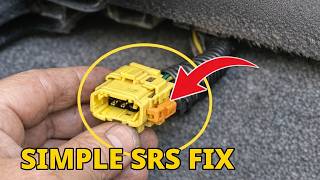
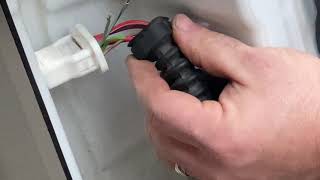
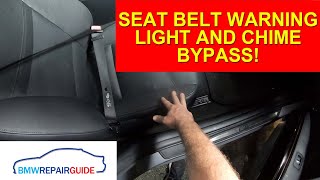
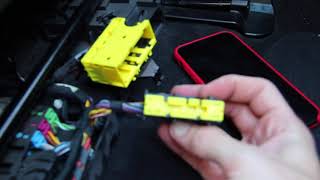
- Damaged Wiring or Loose Connectors Under Seat (Very Common) — The wires leading to the side airbags, particularly the bright yellow connectors under the front seats, are highly susceptible to damage. Items sliding under the seat, aggressive vacuuming, or repeated seat adjustments 🎬 Watch: How to fix a loose under-seat SRS connector after detailing. unplug connectors or chafe wires, causing an open or short circuit.
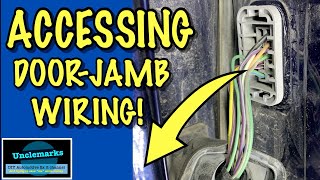
- Broken Wires in Door Jamb Harness (Common) — For vehicles with side impact sensors or airbags in the doors, the wiring harness passing through the flexible rubber boot between the door and the car body is a major weak point. Constant opening and closing fatigues the wires, leading to breaks that trigger B0115.
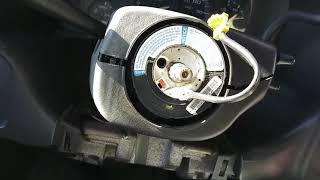
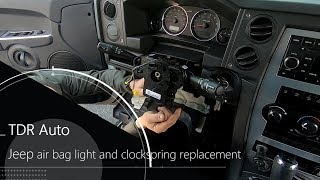
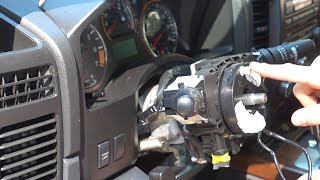
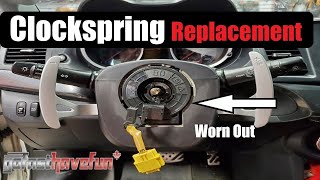
- Faulty Clock Spring (Common) — The clock spring is a coiled ribbon of wires in the steering column maintaining the connection for the driver's airbag, horn, and steering wheel controls. Over time, this ribbon fatigues and breaks, causing high resistance or an open circuit.
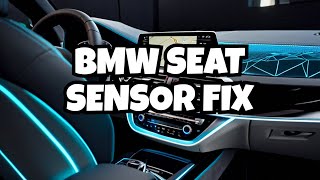
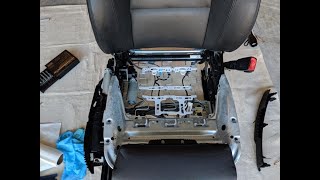
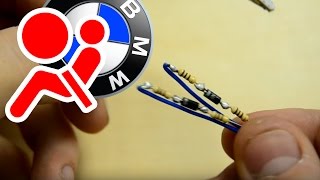
- Failed Passenger Occupancy Mat Sensor (BMW/Mercedes) (Common) — On many German models, the passenger seat features an occupancy sensor mat to detect a passenger's weight. This mat develops cracks in its internal circuits from routine use, 🎬 Watch: How to install a BMW seat occupancy sensor bypass. triggering an SRS fault and disabling the passenger airbag.
- Low Battery Voltage or Poor Ground (Less Common) — The SRS module requires stable voltage. A failing battery, corroded battery terminals, or a poor chassis ground causes voltage drops during startup, setting spurious SRS codes.
- Defective Airbag or Squib (Less Common) — The airbag module's internal igniter (squib) fails its own resistance check. This internal fault requires replacing the entire airbag module.
- Faulty Side Impact Sensor (Rare) — Sensors located in the doors or B-pillars detect side collisions. These sensors fail internally or suffer from corroded connectors in wet climates, leading to a fault code.
- Failed or Corroded SRS Control Module (Rare) — Water leaks from bad windshield seals or clogged sunroof drains corrode the main SRS control module pins. Alternatively, the computer fails internally. This requires module replacement and dealer programming.
Symptoms
- Airbag Warning Light is On — The primary symptom. The light, resembling a person with a seatbelt and an airbag or simply reading 'SRS', remains steadily illuminated.
- Message on Instrument Cluster — Vehicles display a secondary warning message like "Service Airbag System", "SRS Fault", or "Passenger Airbag Off".
- Horn, Cruise, or Radio Buttons Not Working — If the airbag light is on and steering wheel-mounted controls fail simultaneously, 🎬 See this walkthrough on replacing a faulty clock spring. a faulty clock spring is the definitive cause.
- Passenger Airbag 'OFF' Light Stays On — If the passenger airbag status indicator remains 'OFF' with an adult in the seat, it indicates a fault with the occupant classification system.
- Camera Washer Not Working — If the vehicle defines B0115 as a camera washer fault, the primary symptom is a dirty view from the camera with no spray activating when commanded.
Diagnostic Flowchart
Tap your situation to follow the diagnostic path that matches what you're seeing on this code.
Common Fixes & Costs
- Repair Wiring or Secure Connector — Parts: $0-$50, Labor: $125-$250, ~1.5 hr book time (Intermediate)
- Replace Clock Spring
— Parts: $200-$750, Labor: $150-$300, ~2 hr book time
(Intermediate)
: OEM
: OEM - Replace Passenger Occupancy Sensor (BMW)
— Parts: $150-$400, Labor: $400-$800, ~4.5 hr book time
(Professional)
: OEM - Replace Side Airbag Module — Parts: $400-$1200, Labor: $100-$200, ~1.5 hr book time (Professional)
- Replace SRS Control Module — Parts: $500-$900, Labor: $150-$400, ~2 hr book time (Professional)
Used vs. New Parts: Buying Guide
When a used part is worth it: For non-pyrotechnic parts like wiring harnesses, a used part from a non-accident vehicle is cost-effective. For the SRS Control Module, a used unit is viable ONLY if sent to a specialist for resetting and reprogramming to your VIN.
Donor-vehicle mileage cap: roughly under 60000 miles for the part to have meaningful remaining life.
Donor quality checklist:
- Verify the donor vehicle was not involved in a collision.
- Match part numbers exactly, as many SRS components are VIN-specific.
- Avoid buying used pyrotechnic devices like airbag modules or seatbelt pretensioners. It is illegal for commercial resale in many states and extremely dangerous.
Decision logic:
- If The part is an airbag, squib, or seatbelt pretensioner → buy new OEM only. Never install a used explosive component.
- If The part is a clock spring for a vehicle >100k miles → buy new aftermarket or OEM. A used clock spring has significant wear and fails soon.
- If The part is an SRS Control Module → a used module sent for professional resetting is a good budget option; a new module requires expensive dealer programming.
Warranty tradeoff: Used parts typically have a 30-90 day warranty. New aftermarket parts carry a 1-year to limited lifetime warranty. New OEM parts have a 1-year/12,000-mile warranty.
Worst-case if a used part fails: $300-$600 if a used electronic part fails prematurely, requiring repeat labor costs plus the price of another part.
What Happens If You Wait — Timeline
- Immediate (0 days): The SRS light illuminates. The SRS control module detects the electrical fault, logs code B0115, and immediately disables the entire airbag and pretensioner system as a fail-safe. (MPG impact: 0%% · Added cost: $0)
- 1-6 months: An intermittent fault becomes a permanent 'hard fault' due to vibration. A simple fix like re-seating a connector evolves into a complex wiring repair as pins get damaged from arcing. (MPG impact: 0%% · Added cost: $150-$300 (A simple connector reseat becomes a wiring pigtail repair))
- At next state inspection: The vehicle automatically fails its mandatory safety inspection. The car cannot be legally registered or sold until the repair is made. (MPG impact: 0%% · Added cost: $50-$200 (For re-inspection fees and potential fines))
- In case of an accident: The airbags and seatbelt pretensioners will not deploy, drastically increasing the risk of serious injury or death. The insurance company denies coverage for personal injuries, citing negligence. (MPG impact: 0%% · Added cost: $10,000 - $1,000,000+ (Uncovered medical bills, liability, and total loss of vehicle value))
Cost of Not Fixing It
- Immediate: Total failure of the Supplemental Restraint System (SRS). No airbags or seatbelt pretensioners deploy in an accident, drastically increasing the risk of severe injury or death. (Added cost: N/A (Safety Risk))
- Next State Inspection: Guaranteed failure of the vehicle's safety inspection in states that require one. The vehicle cannot be legally registered or sold. (Added cost: $50-$200 in re-inspection fees and fines.)
- In Case of Accident: Potential denial of insurance coverage for personal injuries. Insurance companies argue that knowingly driving with a disabled safety system constitutes negligence. (Added cost: Potentially thousands to hundreds of thousands in uncovered medical bills and liability.)
Diagnosis Steps
- Read the Specific Manufacturer Fault Code
Use a professional-grade OBD-II scanner capable of reading SRS codes. Document the exact code and its full definition (e.g., 'LH Curtain Squib Circuit Open' vs. 'Camera Washer Actuator Short to Ground').
Tools: SRS-capable OBD-II Scanner (Beginner) - Check Battery Voltage and System Grounds
Verify the vehicle's battery health. Use a multimeter to check the battery voltage; it must be above 12.4V with the engine off and maintain above 10.0V during cranking. Low voltage during startup sets spurious SRS codes.
Tools: Multimeter (Beginner) - Perform a Thorough Visual Inspection
With the vehicle OFF, look under both front seats for the bright yellow airbag connectors. Ensure they are securely plugged in and the wiring is not pinched. Check the door jamb harnesses for broken wires inside the rubber boot.
Tools: Flashlight (Beginner) - Test Clock Spring Functions
Check if the horn, cruise control, and steering wheel-mounted buttons work correctly. If any are inoperative alongside the airbag light, the clock spring requires replacement.
Tools: None (Beginner) - Perform a 'Wiggle Test'
With a scan tool connected and viewing live SRS data, carefully wiggle the related connectors and wiring harness. If the fault status changes from 'Active' to 'History' or the resistance value fluctuates, you located an intermittent connection.
Tools: SRS-capable OBD-II Scanner (Intermediate) - Check Circuit Continuity
DANGER: Disconnect the negative battery terminal and wait 30 minutes. Unplug the connector at the suspect airbag and the SRS module. Use a multimeter to test for breaks in the wire between the module and the component, and check for shorts to ground.
Tools: Multimeter, Vehicle-Specific Wiring Diagram, Trim Removal Tools (Advanced) - Test Clock Spring via Shorting-Bar
DANGER: Battery must be disconnected. Disconnect the clock spring connector at the base of the steering column. At the steering wheel side, check for continuity across the two pins of the airbag connector. Lack of continuity confirms the ribbon cable is broken.
Tools: Multimeter (Advanced) - Isolate the Fault with a Resistor
DANGER: Professional only. After disconnecting the component, insert a special SRS-safe resistor (2.0-2.5 ohms) into the vehicle-side connector to simulate a good airbag. Reconnect the battery and clear codes. If B0115 disappears, the airbag component is faulty. If it returns, the fault is in the wiring or module.
Tools: SRS Load Resistor Tool (2.0-2.5 Ohm) (Professional) - Measure Squib Resistance
DANGER: Battery must be disconnected. NEVER use a standard multimeter to measure resistance directly on an airbag squib unless explicitly instructed by the service manual. The meter's internal voltage deploys the airbag. Resistance typically measures between 1.5 and 3.5 ohms.
Tools: High-Impedance Multimeter, Manufacturer Service Manual (Professional)
When This Code Triggers (Freeze-Frame Conditions)
- System Voltage: 11.5V - 14.5V (The SRS module constantly monitors voltage. The code sets during the initial Key-On Self-Test if voltage is low, or during operation if there is a voltage spike.)
- Fault Status: Active/Present (Indicates the fault is currently happening. An 'intermittent' or 'history' status means the fault occurred previously but is not currently detected.)
- Ignition Cycles Since Fault: 0 (This counter increments each time the vehicle is started. A low number indicates a recent fault.)
- Circuit Resistance: <1.0 Ohms or >4.0 Ohms (A professional scanner views the live resistance of the specific squib circuit. The code sets when this value goes outside the normal 1.5-3.5 Ohm range.)
Related Codes
- B0114 — The direct counterpart to B0115, typically indicating a fault on the opposite side of the vehicle (e.g., 'RH Curtain Squib Circuit Open').
- B0116 — Indicates a 'short to ground' in the same circuit, whereas B0115 indicates an open or short to positive. Seeing both pinpoints the nature of the electrical fault.
- B0028 — Relates to the right side airbag system, pointing specifically to the 'Right Side Airbag Deployment Control' circuit rather than the squib itself.
- U0151 — A communication code ('Lost Communication With Restraints Control Module'). Seeing both points to a failing SRS module that is malfunctioning internally and unable to communicate on the CAN bus.
Climate & Environmental Factors
- High Humidity / Water Intrusion: Moisture is a primary catalyst for corrosion on electrical connectors. Water seeping into the cabin compromises under-seat connectors or the main SRS module, causing increased resistance that triggers B0115.
- Cold Weather: Extreme cold causes metal contacts within connectors to contract, leading to intermittent open circuits. It also reduces battery cranking power, causing voltage drops that the SRS module misinterprets as a system fault.
- Road Salt: Salty mist entering the cabin coats electrical components. Salt acts as an electrolyte that dramatically accelerates corrosion when combined with moisture, leading to premature failure of SRS wiring.
How to Talk to a Mechanic About This Code
Say this: "I have an airbag warning light on, and my scanner shows code B0115. I'd like to schedule a diagnostic appointment. I've already checked the under-seat connectors, so I'd like you to focus on checking for the specific manufacturer definition and inspecting common failure points like the clock spring or door harness wiring."
This signals that you are an informed customer. It directs the technician's diagnostic time efficiently, shows you won't be easily upsold, and establishes that you expect a logical diagnostic process rather than just replacing expensive parts.
Avoid saying:
- 'My airbag light is on, can you just fix it?'
- 'I think I need a new airbag.'
- 'Just do whatever it takes to turn the light off.'
Questions to ask before authorizing the repair:
- What was the specific definition of the B0115 code on your professional scanner?
- How did you isolate the fault? Did you perform a wiggle test or use a load resistor to confirm the failed part?
- If it's a wiring issue, will the repair involve a new pigtail or a solder and heat-shrink repair?
- What is the warranty on this specific repair, including both parts and labor?
Where to Take It: Dealer vs Independent vs Chain
- Dealer:
Best for: Vehicles under warranty or with a known safety recall (e.g., GM 14030, BMW seat mat)., Complex repairs requiring module programming (e.g., new SRS module)., High-end or German vehicles where specialized tools are mandatory.
Downsides: Highest labor rates, often 1.5-2x more than independent shops., Defaults to module replacement instead of more nuanced wiring repairs. (Typical cost: +50% vs. baseline) - Independent Shop:
Best fit for most scenarios. A reputable independent shop with strong electrical diagnostic skills handles the vast majority of B0115 causes more affordably than a dealer.
Best for: Out-of-warranty vehicles with common B0115 causes like a bad clock spring or broken wire., Owners seeking a better value and a more personal relationship with their mechanic.
Downsides: Shop quality and diagnostic skill vary widely; ensure they have an SRS-capable scanner and good reviews for electrical work., Lacks access to the latest dealer-only programming software for brand new models. (Typical cost: +0% vs. baseline) - Chain Shop:
AVOID. Airbag system repair is a safety-critical task requiring specialized tools and expertise. The risk of misdiagnosis or improper repair is too high at a generalist chain shop.
Best for: Simple, unrelated jobs like oil changes or tires.
Downsides: Technician skill for complex electrical and safety systems is inconsistent., Business model encourages upselling and rapid parts replacement over careful diagnosis., Lacks the advanced SRS-capable scanners needed for accurate diagnosis. (Typical cost: -10% vs. baseline)
When to Walk Away From the Repair
If the estimated repair cost exceeds 50% of the car's current private-party value, seriously consider selling the car as-is. An active airbag light makes a car unsafe and significantly reduces its value.
- Car worth $4000, fix is $1200: Borderline. The repair is 30% of the car's value. Get a second opinion to confirm the diagnosis before proceeding.
- Car worth $12000, fix is $900: Fix it. This repair is well below the threshold and restores a critical safety feature.
- Car worth $2500, fix is $1500: Walk away. The repair cost is 60% of the vehicle's value. It is not economically sensible to proceed.
What Scan Tool You Need for This Code
Minimum: A scanner that reads and clears codes from the SRS (Supplemental Restraint System) module. A basic engine-only code reader will NOT work.
A standard $20-$50 code reader only communicates with the Engine Control Unit (ECU). It cannot see 'B' (Body) codes like B0115, making it completely blind to the airbag system.
Budget: Autel MaxiLink ML629 / BlueDriver Pro (~$99) — Reads and clears SRS, ABS, Engine, and Transmission codes. The BlueDriver provides repair reports with potential fixes. This is sufficient to get the specific B0115 definition and reset the light after a repair.
Mid-range: Foxwell NT630 Plus (~$150) — In addition to reading/clearing SRS codes, it displays live data for SRS components. This allows you to perform a 'wiggle test' while watching resistance values, which is extremely helpful for finding intermittent wiring faults.
Professional: Autel MaxiCOM MK808S (~$450-600) — Provides full, OE-level diagnostics for all vehicle modules, including SRS. It offers bidirectional control to test components, advanced live data graphing, and special functions like module coding required after replacing an SRS module or passenger seat sensor.
Rent vs buy: Most auto parts store loaner tools are basic code readers that CANNOT read SRS codes. For a one-time B0115 diagnosis, buying a budget pick like the Autel ML629 is the most cost-effective option, as it is cheaper than a single diagnostic fee at most shops.
How to Clear the Code After You Fix It
- Ensure the physical fault (e.g., broken wire, bad component) is properly repaired.
- Reconnect all SRS components and the vehicle battery.
- Use an SRS-capable OBD-II scan tool to erase the B0115 fault code from the SRS module.
- Turn the ignition off, then on again, and verify the airbag warning light performs its self-test and turns off permanently.
Drive cycle: An SRS code does not require a drive cycle. After clearing the code with a scanner, the system self-tests instantly upon the next key-on event. If the light stays off after starting the car, the repair is confirmed.
Readiness monitors affected: None
Watch out for:
- Disconnecting the battery will NOT clear a hard SRS fault code; a specific scan tool is required.
- The code returns instantly if the root cause of the high or low resistance is not fully repaired.
- Using a basic engine code reader fails to see or clear SRS codes.
Will This Fail Emissions / State Inspection?
No — by itself this code doesn't fail OBD inspection (but it can keep readiness monitors from setting, which causes a separate fail).
- California: An illuminated airbag warning light is an automatic failure of the state's mandatory Vehicle Safety Systems Inspection (VSSI) required for revived salvage vehicles.
- New York: An illuminated airbag light is immediate grounds for safety inspection failure.
- Texas: An illuminated airbag light is a reason for failure during the annual safety inspection. State regulations list the SRS system as a mandatory inspection item.
Most Commonly Affected Vehicles
- Toyota Sienna (2005-2010) — Prone to faults in the side squib circuit wiring, often related to the sliding door harness or underseat connectors.
- Toyota Corolla (2001-2007) — Known for issues with the side squib LH circuit traced back to floor harness wiring faults. Also affected by a spiral cable recall.
- Dodge ProMaster (2018-2024) — Commonly reports 'passenger head bag circuit resistance above threshold' faults. Check connectors at the curtain airbag first.
- Chevrolet / GMC Silverado / Sierra, Acadia, Traverse (2007-2014) — Frequent issues with broken wires in the door jamb harness and corrosion at under-seat connectors. Subject to safety recall 14V-118 (GM #14030).
- Ram 1500 (2009-2018) — Clock spring failures are a frequent issue, leading to airbag faults and disabled steering wheel controls.
- BMW 3-Series (E90), 5-Series (E60), X5 (E70) (2006-2013) — High failure rate of the passenger seat occupancy mat. BMW issued an extended warranty for this part for 15 years / unlimited miles.
- Honda Pilot, Accord (2005-2012) — Known for faults related to the passenger airbag OFF indicator light assembly. A burned-out bulb creates a high-resistance fault in the SRS system.
- Hyundai Elantra, Sonata (2011-2016) — Experience faults with front impact sensors or wiring. Check for corrosion on sensor connectors located behind the front bumper.
Manufacturer-Specific Notes
- Toyota / Fiat / Dodge: B0115 almost always refers to a fault in a side or curtain airbag squib circuit. Toyota issued multiple recalls for faulty spiral cables (clock springs) causing these SRS faults.
- BMW: The primary cause is the failure of the passenger seat occupancy mat. BMW issued a 15-year / unlimited mileage warranty extension (Service Bulletin B01 09 14) for this specific part on many 2006-2013 models.
- General Motors / Ford: On newer models, B0115 defines a fault with the 'Camera Washer Actuator'. However, on 2007-2014 GM trucks, airbag codes are frequently caused by wiring issues covered under safety recall 14V-118.
- Jeep: On specific Jeep models, B0115 confusingly refers to a fault in the USB Port power supply. Always trust the definition from a high-quality scan tool over a generic online search.
Real Owner Stories
2011 GMC Acadia at 115K miles
Airbag light came on intermittently, then stayed on. 'Service Air Bag' message displayed.
What they tried:
- Checked under-seat connectors; they seemed secure.
- Mechanic read a B0115 code pointing to a side impact airbag circuit.
- Mechanic quoted $800 to replace the side airbag module.
Outcome: Owner researched online and found GM Safety Recall 14030 describing the exact symptoms. Took the vehicle to a GM dealer, who removed the faulty connectors and soldered the wires per the recall procedure at no cost. The light remains off.
Lesson: For GM SUVs from 2007-2014, always check for Safety Recall 14030 before paying for side airbag repairs. A free, permanent fix is often available.
2008 BMW 328i (E90) at 85K miles
Airbag light and passenger restraint system malfunction warning appeared. The passenger airbag 'OFF' light was always on.
What they tried:
- Independent shop diagnosed a faulty passenger seat occupancy mat sensor.
- Shop quoted $1,200 for the repair, requiring seat and upholstery removal.
Outcome: Owner found forum posts mentioning a warranty extension. Called a BMW dealer with the VIN and confirmed the vehicle was covered by BMW's 15-year/unlimited mileage warranty for the OC3 seat sensor mat. The dealer replaced the sensor for free.
Lesson: On 2006-2013 BMWs, the passenger seat mat is the most common SRS fault. Always check with a dealer about warranty extensions before paying for this expensive repair.
2009 Toyota Corolla at 130K miles
Airbag light came on. Shortly after, the horn and steering wheel radio controls stopped working.
What they tried:
- Owner suspected the clock spring due to the combination of symptoms.
- Purchased an aftermarket clock spring online for $45.
- Followed a DIY video to replace the part, disconnecting the battery and removing the steering wheel.
Outcome: The DIY replacement took 2 hours. After reassembly, the airbag light was cleared with a scanner, and the horn and steering wheel controls functioned perfectly.
Lesson: When an airbag light is accompanied by the failure of other steering wheel functions, the clock spring is the culprit. For experienced DIYers, this is a cost-effective repair.
2015 Ford F-150 with 70K miles
Airbag light was on. A generic code reader pulled B0115. Owner assumed a side airbag issue.
What they tried:
- Spent an hour wiggling under-seat connectors with no change.
- Took it to a shop with a professional scanner.
- Scanner revealed the manufacturer-specific definition was 'Camera Washer Actuator Short to Ground'.
Outcome: The problem had nothing to do with airbags. The front camera's washer pump motor failed. The part cost $60 and was replaced in 30 minutes. The code cleared and did not return.
Lesson: Never assume a generic code definition is correct on newer Ford, GM, or Jeep vehicles. B0115 repurposes for non-SRS components. A full-system scan is essential.
How to Prevent This Code From Triggering
- Keep the area under front seats clear (Always) — Prevents water bottles or umbrellas from sliding into and damaging the delicate SRS connectors and wiring. This is the #1 cause of B0115.
- Be gentle when vacuuming under seats (During every interior cleaning) — Aggressively jamming a vacuum wand under the seat snags and unplugs an SRS connector or chafes the wiring, creating an instant fault.
- Apply dielectric grease to key connectors (Once, or when a connector is serviced) — Applying dielectric grease to weather-pack seals provides a moisture-proof barrier, preventing the corrosion that leads to high-resistance faults.
- Periodically inspect door jamb harnesses (Annually) — The rubber boot covering wires between the door and body becomes brittle. Squeezing it and checking for stiffness helps spot wire fatigue before wires break completely.
- Maintain battery health (Every 3-5 years) — A weak battery causes voltage to drop below the required threshold during engine start-up, falsely triggering SRS codes. Replacing an aging battery prevents these spurious faults.
Frequently Asked Questions
Is it safe to drive with code B0115?
No, it is extremely unsafe. The vehicle's computer disables the entire airbag system to prevent accidental deployment when this fault is active. In a crash, no airbags will deploy.
Will clearing the B0115 code fix the problem?
No. B0115 indicates a 'hard fault' in a safety system. Clearing the code only makes the light disappear for a few seconds before the SRS module re-runs its self-test and turns the light back on.
Can a weak car battery cause an airbag light?
Yes, a weak battery dropping below 10V during engine cranking triggers false SRS codes. The sensitive SRS module misinterprets this voltage drop as a system fault. Test and replace batteries older than 4 years before pursuing expensive airbag diagnostics.
Will an airbag light from B0115 cause me to fail a state inspection?
In most jurisdictions with safety inspections (like Texas, Virginia, and New York), an illuminated airbag warning light is an automatic failure. The vehicle cannot be legally registered or sold until repaired.
Can I fix B0115 myself?
You can safely perform visual checks on under-seat connectors at home. However, testing wires or disconnecting components requires strict safety protocols because airbags are explosive devices. Leave invasive diagnostics to professionals to prevent accidental deployment and severe injury.
Does B0115 mean my airbag will deploy randomly?
No. The system is designed to fail in a safe mode. When a fault like B0115 is detected, the SRS control module disables the entire system precisely to prevent unintended deployment.
How much will it cost to fix B0115?
Expect to pay $100-$200 for an initial diagnostic scan. Simple wiring repairs cost $150-$400, while replacing a clock spring or BMW seat sensor ranges from $450 to $1,200. Replacing the main SRS control module often exceeds $1,000 including programming.
Key Takeaways
- Code B0115 disables your entire airbag system, leaving you unprotected in a crash; driving with this active code is a severe safety risk.
- Over 50% of B0115 triggers stem from a loose yellow connector under the front seats or a broken wire in the door jamb, costing under $250 to fix.
- Manufacturer definitions vary wildly; while Toyota uses B0115 for a side airbag fault, newer Ford and GM models use it for a broken camera washer or USB port.
- Never probe airbag connectors with a standard multimeter or test light, as the tool's internal voltage instantly deploys the airbag and causes severe injury.
Helpful Videos

The information in this article is provided for general reference and educational purposes only. Vehicle specifications, procedures, and part compatibility can vary by production date, trim level, and region. Always consult your vehicle's factory service manual and verify part numbers before purchasing or performing repairs. Safety-critical components such as airbags, seat belts, and braking systems should be installed by a qualified professional.
- 🎬 Helpful Videos
- What Does B0115 Mean?
- Can I Drive With B0115?
- Common Causes
- Symptoms
- Diagnostic Flowchart
- Common Fixes & Costs
- Used vs. New Parts: Buying Guide
- What Happens If You Wait — Timeline
- Cost of Not Fixing It
- Diagnosis Steps
- When This Code Triggers (Freeze-Frame Conditions)
- Related Codes
- Climate & Environmental Factors
- How to Talk to a Mechanic About This Code
- Where to Take It: Dealer vs Independent vs Chain
- When to Walk Away From the Repair
- What Scan Tool You Need for This Code
- How to Clear the Code After You Fix It
- Will This Fail Emissions / State Inspection?
- Most Commonly Affected Vehicles
- Manufacturer-Specific Notes
- Real Owner Stories
- 2011 GMC Acadia at 115K miles
- 2008 BMW 328i (E90) at 85K miles
- 2009 Toyota Corolla at 130K miles
- 2015 Ford F-150 with 70K miles
- How to Prevent This Code From Triggering
- Frequently Asked Questions
- Is it safe to drive with code B0115?
- Will clearing the B0115 code fix the problem?
- Can a weak car battery cause an airbag light?
- Will an airbag light from B0115 cause me to fail a state inspection?
- Can I fix B0115 myself?
- Does B0115 mean my airbag will deploy randomly?
- How much will it cost to fix B0115?
- Key Takeaways
- 🎟️ Get 5% Off