

OBD-II Code B0113: Driver-Side Seatbelt Pretensioner Circuit Fault
The Ultimate 2026 Guide: What B0113 means, why it triggers, and how to fix it for good
- Code B0113 disables your entire airbag and seatbelt safety system, making the vehicle unsafe to drive anywhere except a repair shop.
- Over 70% of B0113 triggers stem from a loose or corroded yellow connector under the driver's seat, which costs under $50 to fix.
- Always disconnect the negative battery terminal and wait 30 minutes before touching any yellow SRS connectors to prevent accidental airbag deployment.
- A standard $20 engine code reader cannot clear B0113; you must use an SRS-capable OBD-II scanner to read and reset the airbag module.
- Verify your code prefix: B0113 is a body code for the airbag system, completely unrelated to the P0113 powertrain code for the engine intake air sensor.
What Does B0113 Mean?
B0113 means the vehicle's Supplemental Restraint System (SRS) module detects an electrical fault in the driver-side seatbelt pretensioner circuit. The pretensioner uses a small explosive charge (squib) to instantly tighten the seatbelt during a crash. This code indicates the computer cannot communicate with or control that charge, disabling the entire safety system as a precaution. While typically the pretensioner, some manufacturers use B0113 for a camera washer actuator, making a model-specific scan essential.
Technical definition: The SAE/ISO definition for B0113 is 'Driver/Side Squib (LH) Circuit Open' or 'Short to Ground'. The specific fault type is identified by a two-digit suffix (e.g., B0113-13 for Open Circuit, B0113-0E for Low Resistance). It consistently points to an electrical problem in the driver-side pretensioner squib circuit. A healthy squib circuit typically has a resistance between 2.0 and 4.0 ohms.
Can I Drive With B0113?
No — Do Not Drive. The vehicle operates mechanically, but driving is extremely unsafe. This code signifies the entire Supplemental Restraint System (SRS) is disabled. In a collision, none of the airbags will deploy and the seatbelt pretensioners will not activate. Driving must be limited to reaching a repair facility immediately.
Common Causes
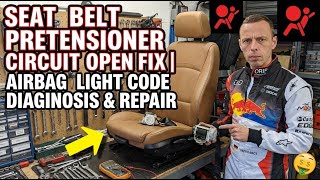
- Loose or damaged under-seat connector (Very Common) — Constant seat movement chafes, stretches, or unplugs the yellow connector under the seat 🎬 Watch: How to diagnose and fix a pretensioner circuit open. On GM vehicles, a broken or missing Connector Position Assurance (CPA) clip frequently causes this connection to vibrate loose.
- Corroded connector pins (Common) — Spilled drinks or cabin moisture corrode the electrical connector pins under the seat, causing high resistance and triggering an open circuit fault.
- Faulty seatbelt pretensioner assembly (Common) — The pretensioner's internal explosive squib fails, requiring a full buckle or retractor replacement.
- Faulty clock spring (Less Common) — If steering wheel controls (horn, radio buttons) also fail, the clock spring is broken. This coiled cable connects the steering wheel's electronics to the vehicle.
- Improper previous SRS wiring repairs (Less Common) — Attempted repairs using solder instead of approved crimp connectors introduce high resistance or break under vibration, causing the fault to reappear.
- Water damage to the SRS/SDM module (Rare) — Water intrusion from clogged sunroof drains or underbody leaks corrodes the main airbag control module mounted under the seat or center console.
- Faulty SRS/Airbag control module (Rare) — The control module fails internally. Suspect this only after eliminating all wiring and pretensioner faults.
Symptoms
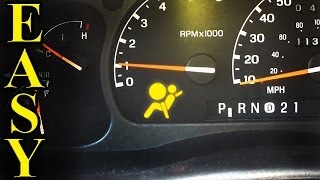
- Airbag warning light or Restraint System message on dashboard — The SRS light stays illuminated, or a 'Service Airbag System' message appears on the instrument cluster. This is the primary and often only symptom.
- Seatbelt is slow to retract, stuck, or locked — A failing pretensioner mechanism causes the seatbelt retractor to jam, retract slowly, or lock up completely.
- Flashing airbag light — On older Fords and Lexus models, the airbag light flashes a two-digit code (e.g., 3-3) to indicate the specific fault before staying solid.
- Steering wheel controls not working — If the clock spring is the root cause, the horn, radio controls, and cruise control buttons fail simultaneously with the airbag light.
Diagnostic Flowchart
Tap your situation to follow the diagnostic path that matches what you're seeing on this code.
Common Fixes & Costs
- Repair wiring or replace connector/CPA clip under the seat — Parts: $5-$30, Labor: $150-$250, ~1.5 hr book time (Intermediate)
- Replace the seatbelt pretensioner assembly — Parts: $150-$400, Labor: $150-$300, ~1.8 hr book time (Professional)
- Mail-in rebuild service for original pretensioner — Parts: $79-$119, Labor: $100-$200, ~1.8 hr book time (DIY)
- Replace the clock spring — Parts: $100-$350, Labor: $150-$400, ~1.8 hr book time (Professional)
- Replace the SRS (Airbag) Control Module — Parts: $200-$1000, Labor: $150-$350, ~2.0 hr book time (Professional)
Used vs. New Parts: Buying Guide
When a used part is worth it: Buying a used pyrotechnic safety device from a junkyard is strongly discouraged due to unknown history (moisture exposure, drops, flood damage).
Donor quality checklist:
- Avoid all used/salvage yard pretensioners.
- The only acceptable non-new option is having your original unit professionally rebuilt by a service using OEM parts with a warranty.
Decision logic:
- If Safety is the top priority → Buy a new OEM part from a dealer to guarantee 100% correct function and compatibility.
- If Budget is a concern and the original part is physically intact → Send your original pretensioner to a professional rebuilding service. This is safer than a junkyard part.
- If You find a pretensioner on a non-dealer website → Verify it is a new OEM part or a professionally rebuilt unit. Avoid counterfeit parts.
Warranty tradeoff: Used/Junkyard: No warranty or 30-day functional warranty. Rebuilt Service: Typically lifetime warranty on the repair. New OEM: 12-month or greater parts warranty.
Worst-case if a used part fails: $300-$600 if a used part is faulty (repeat labor + proper replacement), plus the incalculable cost of failing to deploy in an accident.
What Happens If You Wait — Timeline
- Immediate (Key-On): The SRS module detects the electrical fault during its self-test. The airbag light illuminates, and the entire SRS system is disabled as a fail-safe. (MPG impact: 0%% · Added cost: $0 (Immediate loss of passive safety systems))
- 1 week - 6 months: Continued driving with a 100% disabled SRS system. Prolonged exposure to risk. Vehicle fails annual safety inspection in strict states. (MPG impact: 0%% · Added cost: $20-$100 (Failed inspection, re-inspection fees, or citations))
- During a minor collision: The seatbelt pretensioner does not activate to remove slack, and airbags do not deploy. Occupants strike the steering wheel or dashboard, causing minor to moderate injuries. (MPG impact: 0%% · Added cost: $500 - $10,000+ (Medical bills, increased insurance premiums, personal injury claims))
- During a major collision: Complete failure of the SRS system to deploy results in a catastrophic increase in the risk of severe, life-altering injury or death. (MPG impact: 0%% · Added cost: Incalculable. Total failure of the vehicle's primary safety system.)
Cost of Not Fixing It
- Immediate: The entire Supplemental Restraint System (SRS) is disabled. No airbags or seatbelt pretensioners deploy in a collision, dramatically increasing the risk of serious injury or death. (Added cost: N/A (Severe safety risk))
- 0-12 months: Continued risk of SRS system failure in an accident. Failure of state safety inspection in states where an airbag light is cause for rejection. (Added cost: $20-$100 (Potential cost of a failed inspection, re-inspection fees, or citations))
- 12+ months: The primary consequence remains the extreme safety risk. There is no escalating mechanical damage to other components. (Added cost: Immeasurable in the event of an accident.)
Diagnosis Steps
- Scan for Codes and Check TSBs
Use an SRS-capable OBD-II scanner to confirm B0113 and note any suffix (e.g., -13, -0E). Search for Technical Service Bulletins (TSBs) for your specific make and model related to this code.
Tools: SRS-capable OBD-II Scanner (Beginner) - SAFETY FIRST: Disconnect the Battery
Disconnect the negative battery terminal and wait exactly 30 minutes. This depowers the system's backup capacitors and prevents accidental airbag or pretensioner deployment while you work.
Tools: Wrench set (Beginner) - Inspect and Reseat the Under-Seat Connector
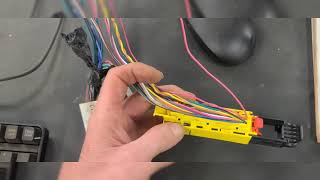
Locate the yellow connector under the driver's seat. Inspect for pinched wires, missing CPA clips, or green/white corrosion on the pins. Clean pins with contact cleaner, replace the CPA clip if broken, and firmly reseat the connector until it clicks.
Tools: Flashlight, Electrical contact cleaner (Intermediate) - PRO TIP: Use a Load Resistor for Diagnosis
Unplug the harness from the seatbelt pretensioner and insert a 2.0-3.3 ohm SRS testing resistor into the vehicle-side connector. Reconnect the battery and clear codes. If B0113 disappears, the pretensioner is faulty. If B0113 returns, the fault is in the wiring or SRS module.
Tools: SRS testing resistor set (2-3.3 ohm), SRS-capable OBD-II Scanner (Advanced) - Test Circuit Resistance with a Multimeter
With the battery disconnected and pretensioner unplugged, measure resistance across the two pins on the pretensioner squib. A healthy unit reads 2.0-4.0 ohms. An 'OL' (Open) or near-zero (Short) reading confirms a failed pretensioner. WARNING: Never apply voltage or use the continuity beep function on a squib.
Tools: Digital Multimeter (Advanced) - Advanced: Monitor Live Data PIDs
Using a bi-directional scan tool, monitor the live data PID for 'Driver Pretensioner Resistance'. Wiggle the under-seat harness. If the resistance spikes to 'OL' (>4.8 ohms) or drops below 2.0 ohms while wiggling, you have located an intermittent wiring break or short.
Tools: Advanced Bi-Directional Scan Tool (Advanced) - Check the Clock Spring (If Applicable)
If steering wheel controls are dead, remove the steering wheel airbag (battery disconnected) and test for continuity through the clock spring's airbag circuit wires.
Tools: Trim removal tools, Socket set, Multimeter (Advanced) - Reconnect and Clear Codes
After repairs, reconnect the battery. Use the SRS scanner to clear B0113. Cycle the ignition off and on, wait 30 seconds, and verify the airbag light turns off after its 6-second self-check.
Tools: SRS-capable OBD-II Scanner (Beginner)
When This Code Triggers (Freeze-Frame Conditions)
- Ignition Status: ON (The fault is detected during the SRS module's power-on self-test.)
- System Voltage: 11.5-14.5V (Normal battery voltage is present during the key-on, engine-off self-test.)
- Time Since Key-On: < 10 seconds (The SRS light illuminates almost immediately after starting the car if the fault is present.)
- Vehicle Speed: 0 mph (The code is set during the stationary self-check before the vehicle is driven.)
Related Codes
- B0113-13 / B0113-04 — Manufacturer-specific suffixes for B0113 indicating an 'Open Circuit'. The SRS module sees infinite or high resistance (>4.8 Ohms), usually from a disconnected plug or broken wire.
- B0112 / B0113-0E — Indicates low resistance or a 'Short to Ground' in the driver-side squib circuit. Resistance is below the specified range (<2.0 ohms), caused by pinched wires or an internal fault.
- B0114 — Indicates the driver-side squib circuit is 'Shorted to Battery Voltage' (B+). The SRS module detects voltage on the circuit when there should be none.
- B0117 / B0118 — Equivalent codes (Open / Short to Ground) for the passenger side (Right Hand) squib circuit. Having both sides simultaneously points to a central SRS module issue.
Climate & Environmental Factors
- High Humidity / Water Intrusion: Spilled drinks, window leaks, or high ambient humidity corrode connector pins under the seat or the SRS control module's circuit board, triggering open circuit faults.
- Road Salt (Salt Belt Regions): Salt-laden moisture tracked into the cabin accelerates corrosion of wiring, connectors, and floor-mounted SRS modules.
- Extreme Temperature Cycles: Extreme shifts from hot to cold cause electrical connectors to expand and contract, loosening pin connections and creating intermittent open circuits.
How to Talk to a Mechanic About This Code
Say this: "I have an airbag light on, and my scanner shows a B0113 code for the driver-side seatbelt pretensioner. Please inspect and test the under-seat connector and wiring harness for an open or short before quoting a replacement of the pretensioner assembly."
This signals you are aware of the most common, inexpensive failure point. It directs the technician to perform a proper diagnosis instead of defaulting to the most expensive part replacement.
Avoid saying:
- 'My airbag light is on, can you fix it?'
- 'Just replace the part the code points to.'
- 'I heard it's just a loose wire, can you just plug it back in?'
Questions to ask before authorizing the repair:
- Did you find the fault in the wiring/connector or in the pretensioner itself?
- If the pretensioner needs replacement, is a new OEM part the only option, or do you work with reputable rebuild services?
- What is the resistance reading on the pretensioner squib circuit?
- Will you show me the damaged part or wiring after the repair is complete?
- What is your warranty on both the parts and labor for this SRS repair?
Where to Take It: Dealer vs Independent vs Chain
- Dealer:
A safe, but expensive, choice. Best for warranty work or if an independent shop cannot resolve the issue.
Best for: Vehicles under warranty, Complex cases involving the SRS module or manufacturer-specific quirks, When you want a guaranteed OEM-part-only repair
Downsides: Highest labor rates and part markups., May default to full assembly replacement rather than diagnosing a simple wiring fix. (Typical cost: +50% vs. baseline) - Independent Shop:
Best fit for most cases. A reputable independent shop with SRS experience diagnoses and repairs common B0113 causes effectively and affordably.
Best for: Out-of-warranty vehicles where cost is a factor., Diagnosing common issues like the under-seat connector or wiring., Shops with ASE-certified technicians in electrical and SRS systems.
Downsides: Quality varies greatly. Must vet the shop's reputation., May lack specialized tools for module programming if that is the root cause. (Typical cost: +0% vs. baseline) - Chain Shop:
AVOID. SRS repair is a safety-critical task requiring specialized knowledge beyond the scope of general lube/brake shops.
Best for: Oil changes, tires, and brakes.
Downsides: Technician experience with complex electrical or SRS diagnostics is low., High pressure to upsell and misdiagnose issues. (Typical cost: -10% vs. baseline)
When to Walk Away From the Repair
If the estimated repair cost exceeds 50% of the car's private-party value, critically evaluate the decision. Because B0113 represents a total failure of the safety system, this repair cannot be deferred. The calculation is 'Repair Cost vs. The Cost of Replacing the Vehicle with an Equally Safe One'.
- Car worth $4000, fix is $800: Fix it. It is impossible to buy another safe, reliable car for $800. This repair restores critical safety.
- Car worth $12000, fix is $1500: Fix it. The repair cost is a small fraction of the vehicle's value and is essential for safety.
- Car worth $2500, fix is $1500: Borderline. If the car is otherwise in excellent condition, repair it. If it has other pending issues, sell 'as-is' with full disclosure.
What Scan Tool You Need for This Code
Minimum: An OBD-II scanner that reads and clears Supplemental Restraint System (SRS) 'B' codes. A basic engine code reader will not work.
A standard $20 scanner only reads 'P' (Powertrain) codes. It cannot communicate with the SRS module to see B0113 or clear the airbag light.
Budget: Autel AutoLink AL619 / Foxwell NT630 Plus (~$70-120) — Reads and clears engine, ABS, and SRS codes. Confirms the B0113 fault and clears the light after repair.
Mid-range: BlueDriver Pro Bluetooth Scanner (~$100-150) — Connects to a smartphone to read/clear SRS codes. Offers live data graphing, useful for wiggling wires to find an intermittent connection.
Professional: Autel MaxiCOM MK808 / Foxwell NT809 (~$450-800) — Offers full-system, bi-directional diagnostics. Reads manufacturer-specific SRS codes and views live data PIDs for circuit resistance.
Rent vs buy: Auto parts store loaner tools typically CANNOT read SRS codes. You must buy your own SRS-capable scanner or pay a shop $100-$150 for a diagnostic scan.
How to Clear the Code After You Fix It
- Perform the physical repair (e.g., reconnect connector, replace pretensioner).
- Reconnect the battery.
- Use an SRS-capable OBD-II scan tool to select 'Clear Codes' or 'Erase DTCs' in the SRS module.
- Turn the ignition off, then back on. The SRS light illuminates for a 6-second bulb check and turns off. If it stays off, the repair is successful.
Drive cycle (~1 minutes): A drive cycle is not required. The SRS module confirms the repair success during its self-test at the next key-on event. Disconnecting the battery will NOT clear this code.
Readiness monitors affected: None
Watch out for:
- Using a basic scanner that cannot communicate with the SRS module.
- Attempting to clear the code before fixing the physical fault (it returns immediately).
- Confusing an SRS self-test with an emissions drive cycle.
Will This Fail Emissions / State Inspection?
No — by itself this code doesn't fail OBD inspection (but it can keep readiness monitors from setting, which causes a separate fail).
- California: An airbag warning light will NOT cause a failure of the California Smog Check, which focuses on emissions systems.
- New York: An illuminated airbag warning light is an advisory during the NYS safety inspection but is NOT a cause for failure.
- Texas: As of 2025, annual safety inspections are eliminated for non-commercial vehicles. The remaining emissions test does not check the airbag light.
Most Commonly Affected Vehicles
- GM (Chevrolet, GMC) Silverado, Sierra, Cruze, Tahoe, Suburban (2007-2015) — Extremely common issue caused by a broken Connector Position Assurance (CPA) retainer (GM Part #88988974) on the under-seat connector, per TSB #08-09-41-002H.
- Ford Escape, Expedition, F-150 (2002-2014) — Prone to under-seat wiring issues. The airbag light flashes a Light Flash Code (LFC) 33 for the driver's side pretensioner before staying solid.
- Toyota Sequoia, Tundra, Avalon (2001-2004) — On the 2001-2004 Sequoia, code B0113/42 specifically indicates a short to battery positive in the *passenger side* (RH) squib circuit, a notable manufacturer deviation.
- Dodge / Chrysler / Jeep Various models (2008-2018) — Uses variation B0001-13 for an open circuit in the driver airbag squib stage 1. Frequently caused by a faulty clock spring.
- Nissan Murano, Titan, Altima (2003-2009) — Caused by chafed wiring under the seat or a faulty pretensioner unit. Related code B1013 points to the driver's side airbag module.
- Hummer H2, H3 (2003-2010) — Shares the GM platform and under-seat wiring issues. Definition may appear as 'Side impact module — Right Rear high circuit voltage below threshold' on generic scanners.
- Honda Accord, Civic (2003-2012) — Frequently points to an internal failure of the seat belt buckle's pretensioner, requiring full buckle assembly replacement.
Manufacturer-Specific Notes
- General Motors (GM): TSB #08-09-41-002H advises replacing the Connector Position Assurance (CPA) clip rather than the whole harness. In stubborn cases, technicians eliminate the connector and splice wires directly using approved crimp connectors.
- Ford: The airbag light flashes a two-digit Light Flash Code (LFC) before staying on (e.g., 3-3 for a pretensioner fault). This diagnoses the circuit without a scanner.
- Toyota: On early 2000s Sequoias, Toyota uses B0113 to refer to the passenger side (RH) circuit. Always verify the code definition with a model-specific repair manual.
- BMW: Highly sensitive to resistance changes. While under-seat connectors fail, the passenger seat occupancy sensor mat is a far more common failure point triggering the airbag light.
Real Owner Stories
2011 Chevy Silverado 1500 - The 'Easy Fix'
Airbag light stayed on. A scan confirmed a B0113 code for the driver's pretensioner.
What they tried:
- Checked under the driver's seat and found the yellow connector loose.
- Disconnected the battery, waited 30 minutes, unplugged and replugged the connector until it clicked.
- Added a small zip-tie around the connector to prevent vibration loosening.
Outcome: Reconnected the battery and started the truck. The airbag light performed its 6-second check and turned off. Total cost: $0.05 for a zip-tie.
Lesson: Always check the simplest solution first. The under-seat connector is the most common failure point and often just needs reseating.
2008 Ford F-150 - Misdiagnosis and Wasted Money
Airbag light flashed code 3-3 (driver pretensioner fault) before staying solid. Owner assumed the pretensioner failed.
What they tried:
- Purchased and installed a new seatbelt buckle/pretensioner assembly for over $200 without further diagnosis.
- Airbag light remained on with the same code.
Outcome: A mechanic found corrosion inside the vehicle-side yellow connector causing high resistance. They cleaned the pins with contact cleaner and secured the connection. The light went out. The original pretensioner was fine.
Lesson: Never replace a component without confirming it is the failure point. Using an SRS test resistor proves if the fault is in the wiring or the part, saving hundreds of dollars.
2007 Chevy Cruze - The Unusual Clock Spring Cause
B0113 airbag light came on simultaneously with intermittent horn and steering wheel radio control failures.
What they tried:
- Inspected under-seat wiring and found no issues.
- Replaced the seatbelt pretensioner, but the code and symptoms persisted.
Outcome: A mechanic diagnosed the clock spring in the steering column. When it failed, it broke circuits for the horn, radio buttons, AND the driver's airbag/pretensioner, triggering B0113. Replacing the clock spring ($150 part, $200 labor) fixed all issues.
Lesson: Pay attention to co-occurring symptoms. If steering wheel functions fail alongside the airbag light, the clock spring is the likely culprit.
How to Prevent This Code From Triggering
- Avoid storing items under the driver's seat (Daily habit) — Objects like water bottles or tools roll under the seat and snag, pinch, or disconnect the fragile SRS wiring harness.
- Be mindful during seat adjustments (As needed) — Repeatedly moving the seat to extreme limits stretches and fatigues the harness wires, eventually causing an 'Open Circuit' fault.
- Clean up spills immediately and thoroughly (Event-driven) — Liquids seeping into the carpet reach SRS connectors or the main module, causing pin corrosion and high resistance faults.
- Install a protective wire loom or shield (One-time installation) — Adding a flexible split-loom conduit provides a physical barrier against kicks or snags that damage exposed under-seat wiring.
Frequently Asked Questions
What's the difference between a B0113 and a P0113 code?
A 'B' code (B0113) refers to a Body Control Module fault for the airbag/SRS system. A 'P' code (P0113) refers to a Powertrain Control Module fault for the Engine Intake Air Temperature Sensor. They are completely unrelated problems.
My scanner says B0113 is a 'Camera Washer Actuator'. Is that correct?
On certain newer vehicle platforms, B0113 is assigned to the front camera washer circuit. However, for most vehicles from the 2000s-2010s, it refers to the driver's seatbelt pretensioner. Always use a high-quality scan tool that provides manufacturer-specific definitions.
What does the '-13' or '-0E' at the end of my B0113 code mean?
These are fault type identifiers. Suffixes like '-13' or '-04' mean 'Open Circuit' (broken wire or unplugged connector). Suffixes like '-0E' or '-12' mean 'Circuit Resistance Below Threshold' or 'Shorted'. This tells you exactly what electrical failure to look for.
What are the most common misdiagnosis mistakes for B0113?
The most common mistake is replacing the expensive seatbelt pretensioner without testing the circuit. The problem is usually a simple wiring or connector issue under the seat. Use an SRS testing resistor to safely bypass the pretensioner and confirm if it is actually faulty before spending money.
Can I just clear the B0113 code to turn the airbag light off?
You can clear the code with a proper scanner, but it returns instantly if the electrical fault is not fixed. The SRS module performs a self-test every time the car starts and immediately re-logs the fault.
Is it safe to work on the airbag system myself?
It is safe only if you disconnect the negative battery terminal and wait 30 minutes before touching any yellow SRS connectors. This discharges backup power and prevents accidental deployment.
Will my airbags still work with code B0113?
No. When the SRS module detects a critical fault, it illuminates the warning light and disables the entire safety system. None of the airbags or pretensioners will deploy in an accident.
Why can't I just solder the SRS wires?
Soldering is strictly prohibited for SRS wiring repairs because it introduces high resistance that triggers faults. Solder is also brittle and cracks under vehicle vibration. Always use manufacturer-approved, insulated crimp connectors for SRS repairs.
Why is the connector for the pretensioner always yellow?
The automotive industry uses yellow sheathing and connectors for all Supplemental Restraint System (SRS) wiring. This is a universal visual warning that you are working with a safety-critical, potentially explosive circuit.
Can I use a part from a junkyard to fix this?
Buying a used pyrotechnic safety component with an unknown history is a significant risk. For safety systems, a new OEM part or a professionally rebuilt and certified unit is the only recommended repair.
Key Takeaways
- Code B0113 disables your entire airbag and seatbelt safety system, making the vehicle unsafe to drive anywhere except a repair shop.
- Over 70% of B0113 triggers stem from a loose or corroded yellow connector under the driver's seat, which costs under $50 to fix.
- Always disconnect the negative battery terminal and wait 30 minutes before touching any yellow SRS connectors to prevent accidental airbag deployment.
- A standard $20 engine code reader cannot clear B0113; you must use an SRS-capable OBD-II scanner to read and reset the airbag module.
- Verify your code prefix: B0113 is a body code for the airbag system, completely unrelated to the P0113 powertrain code for the engine intake air sensor.
Helpful Videos
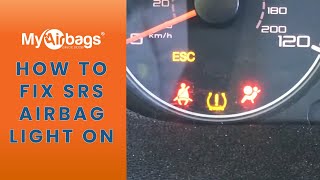

The information in this article is provided for general reference and educational purposes only. Vehicle specifications, procedures, and part compatibility can vary by production date, trim level, and region. Always consult your vehicle's factory service manual and verify part numbers before purchasing or performing repairs. Safety-critical components such as airbags, seat belts, and braking systems should be installed by a qualified professional.
- 🎬 Helpful Videos
- What Does B0113 Mean?
- Can I Drive With B0113?
- Common Causes
- Symptoms
- Diagnostic Flowchart
- Common Fixes & Costs
- Used vs. New Parts: Buying Guide
- What Happens If You Wait — Timeline
- Cost of Not Fixing It
- Diagnosis Steps
- When This Code Triggers (Freeze-Frame Conditions)
- Related Codes
- Climate & Environmental Factors
- How to Talk to a Mechanic About This Code
- Where to Take It: Dealer vs Independent vs Chain
- When to Walk Away From the Repair
- What Scan Tool You Need for This Code
- How to Clear the Code After You Fix It
- Will This Fail Emissions / State Inspection?
- Most Commonly Affected Vehicles
- Manufacturer-Specific Notes
- Real Owner Stories
- 2011 Chevy Silverado 1500 - The 'Easy Fix'
- 2008 Ford F-150 - Misdiagnosis and Wasted Money
- 2007 Chevy Cruze - The Unusual Clock Spring Cause
- How to Prevent This Code From Triggering
- Frequently Asked Questions
- What's the difference between a B0113 and a P0113 code?
- My scanner says B0113 is a 'Camera Washer Actuator'. Is that correct?
- What does the '-13' or '-0E' at the end of my B0113 code mean?
- What are the most common misdiagnosis mistakes for B0113?
- Can I just clear the B0113 code to turn the airbag light off?
- Is it safe to work on the airbag system myself?
- Will my airbags still work with code B0113?
- Why can't I just solder the SRS wires?
- Why is the connector for the pretensioner always yellow?
- Can I use a part from a junkyard to fix this?
- Key Takeaways
- 🎟️ Get 5% Off