

OBD-II Code B0104: Airbag Circuit Malfunction
What B0104 means, why it triggers, and how to fix it
- Code B0104 completely disables your vehicle's airbag system, meaning it will not deploy in a crash.
- Over 80% of B0104 codes stem from a corroded front impact sensor or damaged yellow wiring harnesses under the front seats.
- On 2003-2007 GM trucks and SUVs, B0104 specifically indicates a failed passenger-side front impact sensor, contrary to the standard OBD-II definition.
- You must use an SRS-capable OBD-II scanner to read and clear this code; a standard $20 engine code reader will show zero faults.
What Does B0104 Mean?

Code B0104 means your car's Sensing and Diagnostic Module (SDM) detected an electrical fault in the airbag system. This disables the supplemental restraint system (SRS) and illuminates the airbag warning light. While the standard definition points to a short circuit to power, on many vehicles it indicates a communication failure with a specific impact sensor.
Technical definition: The formal SAE/ISO definition for code B0104 is "Short to B+ in Driver-Side Air Bag Module Squib Circuit." This means the driver's airbag inflator circuit is receiving unwanted voltage. However, General Motors uses this code to signify a fault with a front impact sensor, not the airbag squib itself.
Can I Drive With B0104?
No — Do Not Drive. This code completely disables the airbag system. The airbags will not deploy in a crash, drastically increasing the risk of severe injury or death.
Common Causes

- Faulty Front Impact Sensor (Very Common) — Front impact sensors, located near the radiator, fail from corrosion or physical damage. On GM vehicles, the internal metal sleeve corrodes, splitting the plastic case and allowing moisture to destroy the electronics. This triggers the code after sending repeated 'Not OK' messages.
- Damaged Wiring or Corroded Connectors (Very Common) — The thin wires leading to airbag components fray, pinch, or corrode over time. Items shoved under front seats (water bottles, umbrellas) frequently damage the sensitive yellow airbag connectors. Moisture intrusion also corrodes connector pins, disrupting the electrical signal.
- Defective Clock Spring (Common) — The clock spring is a coiled ribbon cable in the steering column that maintains electrical contact 🎬 See how a faulty clock spring causes code B0104 for the airbag and horn while the wheel turns. This cable breaks or shorts over time, causing an open circuit or short to power.
- High Resistance in Airbag Component (Less Common) — On European makes like Peugeot or Fiat, B0104 indicates high resistance or an open circuit in an airbag ignition module, rather than a short to power.
- Faulty Airbag Control Module (SDM/SRS Module) (Rare) — The main computer for the airbag system fails internally, often due to water intrusion under the seats or center console. This is the least likely cause and requires professional diagnosis.
Symptoms

- Airbag Warning Light is On — The light stays illuminated on the dashboard permanently.
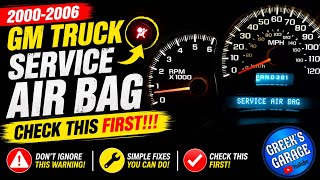
- "Service Airbag" Message — A text warning displays on the driver information center, common on GM vehicles.
- Horn or Steering Wheel Controls Fail — If the clock spring is the root cause, the horn, cruise control, and radio buttons on the steering wheel stop working.
- Unusual Smell or Smoke — In rare cases of a severe short circuit, you will notice a burning plastic smell or see smoke coming from the steering column.
- Airbag Light Returns Immediately After Clearing (also visible on scanner) — Clearing the code with a scanner fails; the light returns instantly, indicating an active 'hard fault' requiring physical repair.
Diagnostic Flowchart

Tap your situation to follow the diagnostic path that matches what you're seeing on this code.
Common Fixes & Costs
- Replacing the Front Impact Sensor — Parts: $100-$250, Labor: $100-$150, ~1 hr book time (DIY)
- Cleaning and Securing Connectors — Parts: $10-$20, Labor: $50-$150, ~0.5 hr book time (DIY)
- Repairing Damaged Wiring — Parts: $10-$30, Labor: $100-$300, ~2 hr book time (Intermediate)
- Replacing the Clock Spring — Parts: $100-$300, Labor: $150-$250, ~1.5 hr book time (Intermediate)
- Replacing the Airbag Control Module — Parts: $400-$1000, Labor: $150-$300, ~1.5 hr book time (Professional)
DIY vs Professional
- Replacing the Front Impact Sensor — Beginner:
- Cleaning and Securing Connectors — Beginner:
- Repairing Damaged Wiring — Beginner:
- Replacing the Clock Spring — Beginner:
- Replacing the Airbag Control Module — Beginner:
Used vs. New Parts: Buying Guide
When a used part is worth it: For a front impact sensor, a used part makes sense if sourced from a reputable auto recycler and guaranteed functional. It is a budget-friendly option for older vehicles where new OEM parts are cost-prohibitive.
Donor-vehicle mileage cap: roughly under 100000 miles for the part to have meaningful remaining life.
Donor quality checklist:
- Verify the donor vehicle was not involved in a front-end or flood-related incident.
- Visually inspect the used sensor for any cracks in the plastic housing, which indicates internal corrosion.
- Match the part number exactly.
- Ask for a warranty or return period (typically 30-90 days).
Decision logic:
- If The part is a critical internal component like the airbag module or clock spring → Buy new OEM or a remanufactured unit from a specialist. The risk of used part failure is too high.
- If The part is an external sensor and the cost of a new OEM part is more than 3x the cost of a guaranteed used part → A used part is a reasonable choice, accepting the risk of a shorter lifespan.
- If The vehicle is newer or has low mileage → Buy new (OEM or reputable aftermarket like Dorman) to maximize longevity and warranty coverage.
Warranty tradeoff: Used parts typically offer a 30-90 day functional warranty. New aftermarket parts offer warranties from 1-year to limited lifetime. New OEM parts offer a 1-year/12,000-mile warranty.
Worst-case if a used part fails: $150-$300. If a used sensor fails shortly after installation, you pay for a replacement part and labor again.
What Happens If You Wait — Timeline
- Immediate (First Key-On): The SRS module performs a self-test, detects the electrical fault, illuminates the airbag warning light, and disables the entire airbag system. A 'hard code' is stored. (MPG impact: 0%% · Added cost: $0)
- 0 days - Ongoing: The vehicle is driven with a non-functional airbag system. There is no further mechanical degradation, but the risk of serious injury or death in a crash is constant and significantly elevated. (MPG impact: 0%% · Added cost: N/A (Incalculable Safety Risk))
- Next State Inspection: The vehicle fails its annual safety inspection in many states due to the illuminated airbag light, preventing legal registration renewal until the fault is repaired. (MPG impact: 0%% · Added cost: $100-$500+ (Cost of repair to pass inspection, plus potential fines))
- In Case of Accident: A collision occurs, and the airbags and seatbelt pre-tensioners do not deploy. This is the difference between a minor incident and a fatal one. Legal liability for passenger injuries increases for knowingly driving with a disabled safety system. (MPG impact: 0%% · Added cost: N/A (Potential for catastrophic personal and financial cost))
Cost of Not Fixing It
- Immediate: The entire Supplemental Restraint System (airbags, pre-tensioners) is disabled and will not deploy in a crash, drastically increasing the risk of serious injury or death. (Added cost: N/A (Safety Risk))
- Ongoing: The vehicle fails the safety inspection portion of a state vehicle inspection in many jurisdictions, preventing legal registration renewal. (Added cost: Potential fines or inability to legally drive the vehicle.)
- Long-term: There are no direct escalating mechanical costs. The cost remains the complete loss of the vehicle's primary passive safety system. (Added cost: N/A (Safety Risk))
Diagnosis Steps
- Read the Fault Codes
Use an SRS-capable OBD-II scanner to confirm B0104 is active. A basic $20 engine scanner will show zero codes. Note any specific sub-codes or manufacturer descriptions.
Tools: SRS-capable OBD-II Scanner (Beginner) - Visually Inspect Wiring and Connectors
Check the distinctive yellow wiring harnesses under the front seats, in the steering column, and behind the front bumper. Look for frayed wires, loose connections, green corrosion, or objects jammed under the seats.
Tools: Flashlight (Beginner) - Perform GM Sensor Swap (GM Vehicles Only)
On GM trucks, B0104 points to the passenger sensor. Disconnect the battery, then swap the driver-side (Sensor 1) and passenger-side (Sensor 2) front impact sensors. Reconnect and rescan. If the code changes to B0101, the sensor is faulty.
Tools: 10mm socket/wrench, OBD-II Scanner (Intermediate) - Check Live Data PIDs
Using an advanced scan tool, view the SRS module's live data stream for 'Driver/Passenger Airbag Resistance'. Wiggle wiring harnesses or move seats; a sudden jump or drop in the 1.5-3.5 ohm reading indicates an intermittent connection.
Tools: Advanced SRS Scan Tool (Advanced) - Measure Component Circuit Resistance
Disconnect the battery and wait 10 minutes. Unplug the suspect component and measure circuit resistance with a multimeter. A healthy squib circuit reads between 1.5 and 3.5 ohms; anything outside this range confirms a wiring or component fault.
Tools: Multimeter, Vehicle-Specific Wiring Diagram (Advanced) - Test Circuit for Short to Power
Disconnect the battery, component, and SDM. Set a multimeter to Volts DC, ground the black lead, and probe the signal wire with the red lead while the ignition is ON (engine OFF). Any voltage reading above 0V confirms a short to power.
Tools: Multimeter, vehicle-specific wiring diagram (Advanced) - Test the Clock Spring
Disconnect the battery, remove the driver's airbag and steering wheel. Use a multimeter to test for continuity through each wire in the clock spring as you rotate it. Resistance must remain low and stable.
Tools: Multimeter, socket set, trim removal tools, torque wrench (Advanced) - Diagnose Airbag Control Module
If all wiring, connectors, clock spring, and sensors test good, the Airbag Control Module has failed. A professional must verify this using advanced bi-directional scan tools.
Tools: Professional diagnostic tools (Professional)
When This Code Triggers (Freeze-Frame Conditions)
- System State: Key-On, Engine-Off (The code is set during the initial power-on self-test (POST) that the SRS module performs every time the ignition is turned on.)
- Battery Voltage: 11.5V - 14.5V (The fault is detected regardless of battery voltage, though very low voltage (<10.5V) sets erroneous codes.)
- Vehicle Speed: 0 mph (As a 'hard fault' detected during self-test, it is logged before the vehicle is in motion.)
- Fault Type: Current/Active (B0104 is an active fault, meaning the airbag light illuminates instantly at startup and will not clear until the physical problem is repaired.)
Related Codes
- B0101 — On GM vehicles, B0101 indicates a fault with the driver-side front impact sensor ('Sensor 1'). Swapping the driver and passenger sensors is the best way to confirm if the sensor itself is the failed component.
- B0103 — Indicates a 'Short to Ground' in the driver-side airbag circuit, whereas B0104 indicates a 'Short to Power'. A B0103 fault shows continuity to ground, while a B0104 fault shows unexpected voltage.
- B0102 — On GM systems, B0102 means 'Incorrect Electronic Front End Sensor 1 Installed'. This sets when the SDM communicates with the sensor but receives an ID that doesn't match its memory.
- B1000 — Indicates a general 'ECU Malfunction' where a control module failed an internal self-test. If present alongside B0104, it strongly points to the Airbag Control Module (SDM) being the root cause.
Climate & Environmental Factors
- High Humidity and Moisture: Moisture intrusion from rain, flooding, or high ambient humidity causes corrosion on sensor connectors, wiring, and internal airbag module circuit boards, leading to shorts or high resistance.
- Road Salt (Salt Belt Regions): Road salt accelerates corrosion significantly. Front impact sensors mounted behind the grille are highly vulnerable to salt spray, which corrodes internal metal components and cracks the sensor housing.
- Extreme Temperature Cycles: Swings between hot and cold cause electrical connectors to expand and contract, loosening connections over time and creating intermittent high-resistance faults.
How to Talk to a Mechanic About This Code
Say this: "I have an airbag light on and my scanner shows code B0104. Since it's a [Your Vehicle's Make/Model], I understand common causes are the front impact sensors or under-seat wiring. Please start the diagnosis by inspecting those simple-to-fix areas first."
This signals you are an informed consumer. It directs the technician to the most probable and cheapest fixes first, preventing them from immediately quoting a costly module or clock spring replacement without proper diagnostic steps.
Avoid saying:
- 'My airbag light is on, can you just fix it?' (This is too vague and invites expensive guesswork.)
- 'Just replace whatever you think is broken.'
- 'I heard it's probably the clock spring, can you just replace that?' (Don't suggest a specific, expensive repair without a diagnosis.)
Questions to ask before authorizing the repair:
- Did you find the fault in the wiring, a connector, or the sensor itself?
- If it's a GM truck, did you perform the sensor swap test to confirm the sensor is bad before recommending replacement?
- Can you show me the corroded connector or damaged wire you found?
- Before we replace the expensive airbag control module, are you 100% certain all external wiring, connectors, and sensors have been tested and are good?
- What is the warranty on this specific repair, for both the parts and labor?
Where to Take It: Dealer vs Independent vs Chain
- Dealer:
Necessary for airbag control module replacement. A safe, but most expensive, option for all other diagnostics and repairs related to B0104.
Best for: Vehicles under warranty., Complex repairs requiring VIN-programming of a new airbag control module., Diagnosing obscure, manufacturer-specific electrical issues.
Downsides: Highest labor rates, typically 1.5x to 2x more than an independent shop., Defaults to replacing entire assemblies instead of repairing a simple wire or connector. (Typical cost: +50% vs. baseline) - Independent Shop:
Best choice for most B0104 repairs. A reputable independent shop easily handles sensor, wiring, and clock spring issues. Ensure they have an SRS-capable scan tool.
Best for: Out-of-warranty vehicles., Common, well-documented fixes like front impact sensor replacement, wiring repair, and clock spring replacement., Owners seeking better value and a more personal service relationship.
Downsides: Quality and expertise vary greatly; look for ASE certification and good reviews., May not own the expensive, specialized tools required for module programming. (Typical cost: +0% vs. baseline) - Chain Shop:
Not recommended. Diagnosing and repairing a critical safety system like airbags must be left to a specialist or a trusted, experienced independent shop.
Best for: Simple, routine maintenance like oil changes or tires.
Downsides: Technician skill and experience with complex electrical systems are highly variable., Airbag systems are critical safety equipment; this is not the place to take risks with a potentially inexperienced technician. (Typical cost: -10% vs. baseline)
When to Walk Away From the Repair
If the estimated repair cost for the airbag system exceeds 40-50% of your car's private-party value, seriously consider selling the car 'as-is' or trading it in.
- Car worth $4000, fix is $2200: Walk away. The repair cost is over 50% of the car's value. It's not economically sensible to proceed.
- Car worth $12000, fix is $800: Fix it. The repair cost is well below the threshold and restores a critical safety feature, preserving the vehicle's value.
- Car worth $2500, fix is $400: Borderline, but likely worth fixing. A $400 repair makes the car safe and sellable for its full value, which is much better than its value with a known safety defect.
What Scan Tool You Need for This Code

Minimum: An OBD-II scanner that reads and clears SRS (Airbag) system codes.
A standard $20 engine code reader cannot communicate with the Airbag Control Module (SRS/SDM). It reports 'no codes found' even when the airbag light is on. You need a tool specifically advertised with SRS/Airbag functionality to diagnose B0104.
Budget: Autel AutoLink AL619 / ML629 (~$95) — Reads and clears codes from the SRS (Airbag), ABS, Engine, and Transmission modules. It tells you that code B0104 is present and allows you to clear it after a repair.
Mid-range: BlueDriver Bluetooth Pro or Foxwell NT710/NT809 (~$120) — In addition to reading/clearing SRS codes, these tools offer live data streaming. This allows you to see airbag component resistance values in real-time, invaluable for diagnosing intermittent wiring issues by wiggling connectors.
Professional: Autel MaxiCOM MK808 / Launch CRP919E (~$450-700) — Provides full, professional-level diagnostics, including bi-directional control to test components, advanced coding functions for module replacement, and access to all manufacturer-specific data.
Rent vs buy: Buy. Auto parts stores like AutoZone or O'Reilly's offer free code reading or loaner tools, but these are almost always basic engine code readers that CANNOT read airbag codes. To diagnose a B0104, you must purchase your own SRS-capable scanner.
How to Clear the Code After You Fix It
- Disconnect the negative battery terminal and wait at least 10 minutes for system capacitors to discharge.
- Perform the physical repair (e.g., replace sensor, fix wiring).
- Reconnect the battery.
- Use an SRS-capable OBD-II scan tool to clear the fault code from the airbag control module.
Drive cycle (~1 minutes): An extensive drive cycle is not required. After clearing the code, turn the ignition off, then turn it back to the 'On' position. The airbag module performs its self-test. If successful, the airbag light illuminates for a few seconds and turns off.
Watch out for:
- Simply disconnecting the battery will not clear a hard SRS fault code; a scan tool is required.
- Using a standard engine code reader that cannot communicate with the SRS module.
- If the light returns immediately after clearing, the root cause of the electrical fault has not been fixed.
Will This Fail Emissions / State Inspection?
Yes — this code typically fails an OBD-II emissions inspection.
- California: An airbag light will NOT fail the emissions (smog) check. However, it is a critical safety failure and the vehicle is not considered safe to operate.
- New York: An illuminated airbag warning light is an advisory item. It will be noted on the safety inspection report but is NOT grounds for failure.
- Texas: The airbag system is not an inspected item. A vehicle with an active airbag light WILL pass the Texas state safety inspection.
- General Note: Many states with comprehensive safety inspections (e.g., Virginia, Pennsylvania, Massachusetts) will fail a vehicle for an illuminated airbag light.
Most Commonly Affected Vehicles
- Chevrolet Silverado 1500/2500HD (2003-2007) — Extremely common issue with front impact sensors corroding and failing. B0104 indicates the passenger side sensor. Original part numbers 15103522, 10370149, or AA10028 are interchangeable.
- GMC Sierra, Yukon (2003-2007) — Shares the same platform and front impact sensor failure issue as the Chevrolet Silverado and Tahoe. The 2007 'Classic' (GMT800) models are heavily affected.
- Chevrolet Tahoe / Suburban (2003-2007) — Prone to front impact sensor failure due to corrosion from road salt and moisture. The sensor swap diagnostic is highly effective for these models.
- Cadillac Escalade (2003-2007) — Susceptible to the front impact sensor issue causing B0104. Uses the same interchangeable sensor part numbers (15103522, 10370149).
- Ford F-150 (2009-2014) — Often experiences this code due to corroded wiring in the harness or a faulty clock spring.
- Honda Civic (2012-2015) — Triggered by pinched wiring harnesses or issues requiring a specific 'SRS module reset' with a capable scan tool; a simple 'DTC clear' is not sufficient.
- Toyota Camry (2018-2019) — Experiences a persistent B0104 code caused by an internal failure of the main airbag control module.
- Fiat Grande Punto (2005-2018) — On this model, B0104 is defined as 'Passenger Airbag Resistance High', pointing to a resistance fault rather than a short circuit.
Manufacturer-Specific Notes
- General Motors (Chevrolet, GMC, Cadillac): For many 2003-2007 trucks and SUVs, B0104 specifically refers to the passenger-side front impact sensor ('Sensor 2'), contrary to the SAE definition which points to the driver's side. The code sets after the SDM receives four consecutive 'NOK' (Not OK) messages.
- Ford: A weak battery with voltage below 10.5V sets random fault codes in the airbag module. Always test the battery before starting expensive airbag system diagnostics.
- Peugeot/Citroen/Fiat: B0104 is defined as 'Passenger airbag ignition module fault, Resistance too High,' pointing to an open circuit or high resistance issue rather than a short to power.
- Honda: After an SRS repair, simply clearing the DTC is not enough. A specific 'SRS Module Reset' or 'Clear SRS Data' function must be performed with a high-level scan tool to turn off the warning light.
Real Owner Stories
2005 Chevy Silverado 1500 - Classic Sensor Failure
The 'Service Airbag' message appeared on the dash, and the airbag light was on constantly. A scan with a Launch CRP123 scanner revealed code B0104, pointing to the passenger-side front impact sensor.
Outcome: A new sensor was purchased online for $118. After replacing the bad sensor (now on the driver's side), the code was cleared and did not return. Total cost for a DIY fix was $230, including the cost of the scanner.
Lesson: On GM trucks, always perform the 'sensor swap' diagnostic. It's a free, definitive test that prevents you from replacing good parts and confirms the sensor is the true root cause of the B0104 or B0101 code.
2015 Honda Accord - Misdiagnosis after a previous repair
The airbag warning light came on, and a scan showed code B0104. The vehicle had recently been in for other, unrelated service work.
Outcome: It was discovered that the airbag wiring harness had been pinched and damaged during the previous repair job. The damaged section of the wiring was professionally replaced, and the code was cleared, resolving the issue.
Lesson: If a fault code appears shortly after a vehicle has been serviced, always suspect an error from the recent repair. Connectors can be left loose or wiring can be accidentally pinched or damaged.
2014 Peugeot Boxer Van - An Unusual 'High Resistance' Fault
A commercial van with a single passenger seat (converted from a bench) had a persistent airbag light. A scanner showed code B0104-1B: 'Passenger airbag ignition module fault, Resistance too High'.
Outcome: The owner was left trying to diagnose a high-resistance fault in a circuit for an airbag that wasn't physically installed. The issue points to a problem in the wiring leading to the connector or the airbag control module's expectation of a specific resistance value.
Lesson: On many European vehicles (like Peugeot, Fiat), B0104 means 'High Resistance' instead of the typical 'Short to Power'. This completely changes the diagnostic approach from looking for unwanted voltage to searching for a broken wire, corroded connector, or incorrect bypass resistor.
Corvette with Under-Seat Wiring Damage
An intermittent, and then permanent, airbag light appeared. The owner removed the driver's seat to inspect the common yellow connector and found the wires had been completely severed by the seat's movement mechanism.
Outcome: The consensus was that a careful repair using heat-shrink butt connectors is acceptable for a clean wire break. It's crucial to disconnect the battery and ensure the shorting bar inside the connector is correctly re-installed to prevent accidental deployment during service.
Lesson: Don't just check if the under-seat connector is plugged in; inspect the full length of the harness visible under the seat for damage. Wires can be pinched, chafed, or completely cut by the seat's movement over time.
How to Prevent This Code From Triggering
- Keep Under-Seat Area Clear (Constant habit) — Prevents water bottles, tools, or other objects from being pushed into the sensitive yellow airbag connectors and wiring when the seat is moved, avoiding physical damage.
- Apply Dielectric Grease to Exposed Connectors (Once, or during any related service) — Applying a small amount of dielectric grease to the seals of connectors, like the front impact sensors, blocks moisture and road salt from reaching the metal pins, preventing corrosion.
- Periodically Clean Front Impact Sensors (Every 1-2 years, especially in Salt Belt regions) — Gently washing road salt and grime off the front impact sensors and their wiring slows down the corrosion process that causes the sensor housings to crack and fail.
- Secure Under-Seat Wiring (Once, during inspection) — If the airbag harness under the seat has too much slack, use a zip-tie to secure it to a fixed point on the seat frame. This prevents the harness from getting caught in the seat tracks.
- Address Water Leaks Promptly (As needed) — Fixing leaks from windshields, sunroofs, or door seals prevents water from saturating carpets and reaching the Airbag Control Module, which causes catastrophic corrosion and failure.
Frequently Asked Questions
Is it safe to drive my car with code B0104?
No. When this code is present, the entire airbag system is disabled as a safety precaution. In the event of an accident, the airbags will not deploy.
Can I just reset the airbag light myself?
You can clear the code with an SRS-capable scanner, but it will immediately return if the underlying electrical fault is not fixed. Resetting the light does not make the airbags functional. Disconnecting the battery will not clear a hard fault.
What are the most common misdiagnosis mistakes for B0104?
The top mistakes are using a basic engine code reader that cannot access the SRS module, and immediately replacing parts without inspecting the yellow under-seat connectors. On GM vehicles, failing to perform the free 'sensor swap' test leads to unnecessary module replacements.
What is the difference between B0103 and B0104?
They are opposite faults. B0104 indicates a 'Short to Power (B+),' meaning the circuit is receiving unwanted voltage. B0103 indicates a 'Short to Ground,' meaning the circuit is incorrectly connected to the vehicle's chassis.
Can a weak battery cause airbag codes?
Yes. A failing battery causes low voltage, which triggers random, erroneous codes in sensitive electronic modules, including the airbag system. Test the battery before diagnosing complex circuit faults.
Where is the front impact sensor located?
On most trucks and SUVs, the sensors are bolted to the radiator core support or a crossmember behind the front grille. They are typically small plastic boxes with a yellow electrical connector.
Why is the airbag wiring harness always yellow?
The bright yellow color is a universal safety standard identifying wiring for the Supplemental Restraint System (SRS). It warns technicians to handle these components only after disconnecting the battery for at least 10 minutes.
Key Takeaways
- Code B0104 completely disables your vehicle's airbag system, meaning it will not deploy in a crash.
- Over 80% of B0104 codes stem from a corroded front impact sensor or damaged yellow wiring harnesses under the front seats.
- On 2003-2007 GM trucks and SUVs, B0104 specifically indicates a failed passenger-side front impact sensor, contrary to the standard OBD-II definition.
- You must use an SRS-capable OBD-II scanner to read and clear this code; a standard $20 engine code reader will show zero faults.
Helpful Videos


The information in this article is provided for general reference and educational purposes only. Vehicle specifications, procedures, and part compatibility can vary by production date, trim level, and region. Always consult your vehicle's factory service manual and verify part numbers before purchasing or performing repairs. Safety-critical components such as airbags, seat belts, and braking systems should be installed by a qualified professional.
- 🎬 Helpful Videos
- What Does B0104 Mean?
- Can I Drive With B0104?
- Common Causes
- Symptoms
- Diagnostic Flowchart
- Common Fixes & Costs
- DIY vs Professional
- Used vs. New Parts: Buying Guide
- What Happens If You Wait — Timeline
- Cost of Not Fixing It
- Diagnosis Steps
- When This Code Triggers (Freeze-Frame Conditions)
- Related Codes
- Climate & Environmental Factors
- How to Talk to a Mechanic About This Code
- Where to Take It: Dealer vs Independent vs Chain
- When to Walk Away From the Repair
- What Scan Tool You Need for This Code
- How to Clear the Code After You Fix It
- Will This Fail Emissions / State Inspection?
- Most Commonly Affected Vehicles
- Manufacturer-Specific Notes
- Real Owner Stories
- 2005 Chevy Silverado 1500 - Classic Sensor Failure
- 2015 Honda Accord - Misdiagnosis after a previous repair
- 2014 Peugeot Boxer Van - An Unusual 'High Resistance' Fault
- Corvette with Under-Seat Wiring Damage
- How to Prevent This Code From Triggering
- Frequently Asked Questions
- Is it safe to drive my car with code B0104?
- Can I just reset the airbag light myself?
- What are the most common misdiagnosis mistakes for B0104?
- What is the difference between B0103 and B0104?
- Can a weak battery cause airbag codes?
- Where is the front impact sensor located?
- Why is the airbag wiring harness always yellow?
- Key Takeaways
- 🎟️ Get 5% Off