

OBD-II Code B0101: Driver-Side Airbag Circuit Fault
What B0101 means, why it triggers, and how to fix it
- Code B0101 disables your driver's side airbag, creating a critical safety risk in a frontal collision.
- A broken clock spring causes over 80% of B0101 codes in Toyota and Hyundai vehicles, often simultaneously disabling the horn and steering wheel controls.
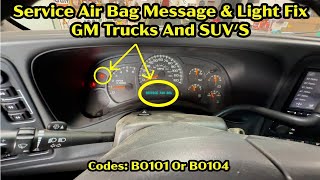
- On 2003-2013 GM trucks and SUVs, a corroded front impact sensor near the radiator is the primary culprit, verifiable by swapping it with the passenger-side sensor.
- Always clean and re-seat the yellow SRS connectors under the driver's seat before authorizing a $1,000+ airbag module replacement.
What Does B0101 Mean?

Code B0101 indicates the Supplemental Restraint System (SRS) module detected a broken electrical connection (open circuit) to the driver's side airbag. Without this connection, the module cannot deploy the airbag, so it disables the system as a safety precaution.
Technical definition: The official SAE/ISO definition is "Open in Driver-Side Air Bag Module Squib Circuit". The 'squib' is the explosive charge that inflates the airbag. An 'open' means a break in the wiring, resulting in infinite electrical resistance.
Can I Drive With B0101?
No — Do Not Drive. The vehicle is mechanically operational, but the B0101 code confirms the driver's airbag is disabled. It will not deploy in a frontal collision, dramatically increasing the risk of serious injury or death. This is a critical safety failure requiring immediate attention.
Common Causes

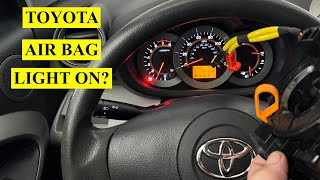
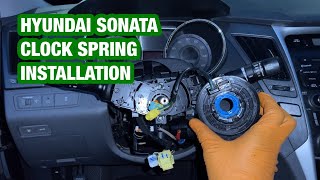
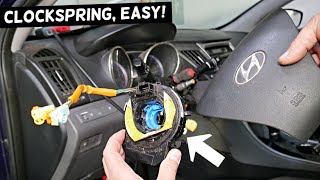
- Faulty Clock Spring (Spiral Cable) (Very Common) — The clock spring is a coiled ribbon of wires inside the steering column that maintains an electrical connection for the airbag and horn while the wheel turns. Over time, these wires fatigue and snap, creating an open circuit. This is the leading cause for Toyota, Lexus, and Hyundai/Kia vehicles. 🎬 See this step-by-step Toyota and Lexus clock spring replacement.
- Faulty Front End Impact Sensor (Primarily GM, VW) (Common) — On many General Motors and Volkswagen vehicles, this code points to the driver's side front impact sensor (Sensor 1). Mounted near the radiator, these sensors are exposed to road salt and moisture, frequently failing due to internal corrosion or broken connector wires.
- Wiring or Connector Problem (Common) — The yellow SRS connectors between the control module, clock spring, and airbag can become damaged, corroded, or disconnected. This frequently happens under the front seats due to dirt and movement, or behind the dash after stereo or alarm installations.
- Defective Driver's Airbag Module (Less Common) — The airbag unit in the steering wheel contains the inflator charge (squib). While rare, the internal wiring of the squib itself can fail, creating an open circuit.
- Faulty Seat Belt Tension Sensor (Subaru) (Less Common) — On specific Subaru models, a fault in the seat belt pre-tensioner sensor triggers an airbag system fault that presents as a B0101 code. The sensor is integrated into the seat belt assembly.
- Weak or Failing Car Battery (Rare) — Low battery voltage during engine cranking causes electronic modules, including the SRS controller, to report erroneous fault codes. A B0101 triggered by low voltage will not return after the battery is replaced and the code is cleared.
- Failed Airbag Control Module (SRS/SDM) (Rare) — The main computer controlling the airbag system can fail internally. A faulty module incorrectly reports a B0101 code even when the wiring and sensors are perfectly intact.
Symptoms

- Airbag Warning Light On — A red or amber airbag light (often an icon of a person with an airbag) remains constantly illuminated on the dashboard.
- Horn Not Working — Because the horn's wiring passes through the clock spring, a broken clock spring causes the horn to fail simultaneously with the airbag.
- Steering Wheel Controls Inoperative — Buttons on the steering wheel for the radio, cruise control, or phone stop working, as they rely on the same clock spring connection.
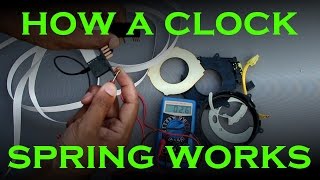
- Clicking or Grinding Noise from Steering Column — A physically shattered clock spring creates an audible clicking, rubbing, or grinding sound when the steering wheel is turned. 🎬 Watch: A pro shows you how to diagnose a faulty clock spring.
- Driver's Airbag Disabled (scan-tool only — no driver-felt sign) — The primary consequence of this code is that the driver's front airbag will not deploy in an accident.
Diagnostic Flowchart

Tap your situation to follow the diagnostic path that matches what you're seeing on this code.
Common Fixes & Costs
- Replace Clock Spring
— Parts: $75-$350, Labor: $150-$300, ~1.5 hr book time
(Intermediate)
Toyota Corolla/Camry: OEM 84306-0E010, 84306-04080 (Alt: Dorman 525-658)
Hyundai/Kia Sonata/Elantra: OEM 93490-3X040 (Alt: Standard Motor Products CSP138) - Replace Front Impact Sensor
— Parts: $70-$250, Labor: $60-$150, ~1 hr book time
(DIY)
Chevrolet Silverado/Tahoe (2003-2007): OEM 85598007 (Alt: Dorman 590-200A) - Clean or Re-seat Connectors — Parts: $0, Labor: $100-$200 (diagnostic labor), ~1 hr book time (Beginner)
- Repair Wiring or Connector — Parts: $10-$30, Labor: $150-$300, ~1.5 hr book time (Intermediate)
- Replace Airbag Control Module (SRS/SDM) — Parts: $200-$800, Labor: $150-$350 (labor and programming), ~2 hr book time (Professional)
DIY vs Professional
- Clean or Re-seat Connectors — Beginner:
Tools: Flashlight, electronic contact cleaner. - Replace Front Impact Sensor (GM) — Beginner:
Tools: Socket set (10mm or 13mm), flashlight. - Replace Clock Spring — Beginner:
Tools: Socket set, torque wrench, steering wheel puller, trim removal tools. - Repair Wiring or Connector — Beginner:
Tools: Multimeter, wire strippers, soldering iron, heat shrink tubing, wiring diagrams. - Replace Airbag Module or SRS Control Module — Beginner:
Tools: Professional diagnostic scan tool, vehicle-specific service manual.
Used vs. New Parts: Buying Guide
When a used part is worth it: A used OEM front impact sensor from a non-collision vehicle is a cost-effective option for older GM vehicles.
Donor-vehicle mileage cap: roughly under 80000 miles for the part to have meaningful remaining life.
Donor quality checklist:
- Verify the donor vehicle was not in a collision.
- Avoid high-mileage clock springs, as the internal ribbon cable wears out from use.
- Match the part number exactly; steering wheel controls are vehicle-specific.
- Inspect sensor connectors for green corrosion.
Decision logic:
- If Part is a clock spring → Buy new OEM. Aftermarket clock springs fail prematurely, and the labor to replace them twice negates any savings.
- If Part is a front impact sensor and budget is tight → A used OEM sensor is reliable if it is clean, free of corrosion, and from a non-collision vehicle.
- If Part is the airbag module itself → Never buy used. It is an explosive device. Buy new OEM only.
Warranty tradeoff: Used parts have a 30-90 day warranty. New aftermarket parts have a 1-year warranty but inconsistent quality. New OEM parts are the most reliable.
Worst-case if a used part fails: $200-$500 if a cheap aftermarket clock spring fails prematurely, requiring repeat labor.
What Happens If You Wait — Timeline
- Immediate (First Key-On): The SRS module detects the open circuit and sets code B0101. The airbag warning light illuminates. The driver's side airbag is completely disabled. (MPG impact: 0%% · Added cost: $0)
- First Vehicle Inspection: The vehicle automatically fails safety inspections in strict states (like Virginia), preventing legal registration renewal. (MPG impact: 0%% · Added cost: $50-$200 in fines and fees)
- In Case of Minor/Moderate Accident: The airbag fails to deploy. The driver's head and chest strike the steering wheel, causing preventable injuries like concussions or facial fractures. (MPG impact: 0%% · Added cost: $50,000+ in medical bills)
- In Case of Severe Accident: Non-deployment of the airbag dramatically increases the risk of severe, life-altering injuries or death. (MPG impact: 0%% · Added cost: Potentially infinite)
Cost of Not Fixing It
- Immediate: The driver's side airbag is disabled and will not deploy in a frontal collision. (Added cost: N/A)
- Ongoing: The vehicle will fail mandatory state safety inspections, preventing legal registration renewal. (Added cost: $50-$200 (ticket fines, re-inspection fees))
- In case of accident: Failure of the airbag to deploy leads to severe, preventable injuries or death. (Added cost: Potentially infinite (medical bills, loss of life, legal liability))
Diagnosis Steps
- Scan for Codes and Check for TSBs
Use an OBD-II scanner capable of reading SRS codes to confirm B0101 is active. Check for manufacturer Technical Service Bulletins (TSBs) for your specific VIN, as they provide known fixes and extended warranty information.
Tools: SRS-capable OBD-II Scanner (Beginner) - Test Horn and Steering Wheel Buttons
Press the horn and test all steering wheel-mounted buttons. If they are dead alongside the airbag light, the clock spring is the definitive culprit.
Tools: None (Beginner) - Visual Inspection of Connectors
Inspect the bright yellow SRS wiring connectors under the dash, at the steering column base, and under the front seats. Ensure they are tightly seated. For GM or VW vehicles, inspect the front impact sensor on the radiator support for green corrosion or broken wires.
Tools: Flashlight (Beginner) - Swap Front Impact Sensors (GM Vehicles Only)
On GM trucks/SUVs, swap the driver's side (Sensor 1) and passenger's side (Sensor 2) front impact sensors. Clear the codes. If the code changes to B0104 (Sensor 2), the sensor you moved is defective.
Tools: Socket set (10mm/13mm) (Intermediate) - Advanced: Measure Circuit Resistance
DANGER: Never use a multimeter on the airbag module itself; it supplies enough current to deploy the airbag. Disconnect the battery for 30 minutes. Disconnect the driver's airbag and SRS module. Measure the resistance of the squib circuit through the harness. A healthy circuit reads below 1.0 ohm. 'OL' (Over Limit) confirms an open circuit.
Tools: Multimeter, vehicle-specific wiring diagrams, insulated probes (Advanced) - Advanced: Test Clock Spring Continuity
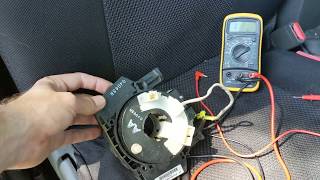
With the battery and airbag disconnected, test for continuity through the clock spring's airbag pins while slowly rotating the steering wheel lock-to-lock. An open circuit (OL) at any point during rotation confirms the clock spring is broken.
Tools: Multimeter, basic hand tools (Advanced) - Professional: Use Live Data and Dummy Resistors
Use a bidirectional scan tool to read the squib circuit resistance directly from the SRS module (normal is 2.0-4.0 ohms). Plug a calibrated 2.2-ohm dummy resistor into the circuit in place of the airbag. If the code clears, the wiring is good, isolating the fault to the airbag module itself.
Tools: Professional bidirectional scan tool, 2.2-ohm dummy resistor (Professional) - Test Wiring and Module
Check the entire wiring harness from the SRS control module to the clock spring for breaks. This requires a professional with wiring diagrams and a breakout box to test pins directly at the module.
Tools: Multimeter, wiring diagrams, breakout box (Professional)
When This Code Triggers (Freeze-Frame Conditions)
- SRS System State: Fault Present (The code sets during the initial key-on self-test when the SRS module checks circuit integrity.)
- Ignition Cycle Counter: Varies (Indicates how many times the vehicle has been started since the fault was first detected.)
- Driver Squib Circuit Resistance: Over Limit / Open (The module measures infinite or extremely high resistance, confirming a break in the circuit.)
- System Voltage: 11.5-14.5V (The fault is logged under normal operating voltage; very low voltage sets different codes.)
Related Codes
- B0102 — Indicates a 'Short Circuit' in the same driver's side airbag squib circuit, whereas B0101 indicates an 'Open Circuit'. Both point to the same components, but B0102 means wires are touching ground rather than broken.
- B0104 — The code for the passenger side front impact sensor (Sensor 2) on GM vehicles. Swapping the driver and passenger sensors to see if the code changes to B0104 is a definitive diagnostic test.
- B0151 — Indicates 'Front End Sensor 1/2 Mismatch' on GM vehicles. Appears alongside B0101 if the SRS module receives conflicting data between the two front impact sensors.
- P0101 — A powertrain code for 'Mass Air Flow (MAF) Sensor' completely unrelated to the airbag system. Commonly confused with B0101 due to the identical numbering.
Climate & Environmental Factors
- High Humidity / Road Salt (Rust Belt): Moisture and salt seep into front impact sensors (GM vehicles) or under-seat connectors, causing corrosion that creates an open circuit. The corrosion physically cracks the sensor's housing.
- Extreme Cold: Plastic and wiring become brittle in extreme cold. This causes the fine ribbon cable inside an older clock spring to snap when the wheel is turned sharply.
How to Talk to a Mechanic About This Code
Say this: "I have an airbag light on and my scanner shows code B0101 for the driver-side airbag circuit. My horn and steering wheel buttons are also not working, so I suspect it's the clock spring. I'd like to schedule a diagnostic to confirm."
This signals you've done your research and guides the technician toward the most likely cause, preventing them from starting with an expensive airbag module diagnosis.
Avoid saying:
- 'My airbag light is on, can you fix it?' (Too vague, invites costly diagnosis).
- 'Just replace the airbag.' (The airbag module itself is rarely the cause).
- 'I heard it's the sensor, just change that.' (Leads to unnecessary repairs if you have a non-GM vehicle).
Questions to ask before authorizing the repair:
- Did you confirm an open circuit in the clock spring, sensor, or wiring?
- If you are recommending replacing the clock spring, did you test the horn and steering wheel controls?
- If you are recommending a wiring repair, can you show me where the break or corrosion is?
- What is the warranty on the parts and labor for this specific repair?
Where to Take It: Dealer vs Independent vs Chain
- Dealer:
Recommended only if the vehicle is under warranty or if an independent shop has failed to diagnose the issue.
Best for: Vehicles under warranty or covered by a recall/extended warranty (e.g., Hyundai/Kia clock springs)., Complex cases where a new SRS module needs programming.
Downsides: Highest labor rates, typically 1.5-2x more than an independent shop., May default to replacing more components than necessary. (Typical cost: +50% vs. baseline) - Independent Shop:
Best fit for most B0101 repairs. An experienced independent mechanic diagnoses and replaces a clock spring or impact sensor efficiently.
Best for: Out-of-warranty vehicles with common B0101 causes like a clock spring or front impact sensor., Cost-conscious owners who want a reliable repair without dealer prices.
Downsides: Quality varies greatly; ensure the shop employs ASE-certified technicians., May lack manufacturer-specific diagnostic tools for complex module issues. (Typical cost: +0% vs. baseline) - Chain Shop:
AVOID for this code. Airbag system repair is a safety-critical task requiring specialized knowledge.
Best for: Simple, unrelated maintenance like oil changes or tires.
Downsides: Technician skill for diagnostics is highly inconsistent., High pressure to upsell services., Lack the specific expertise required for airbag system repairs. (Typical cost: -10% vs. baseline)
When to Walk Away From the Repair
If the estimated repair cost exceeds 50% of the car's private-party value, seriously consider selling the car as-is.
- Car worth $4000, fix is $800: Fix it. The repair cost is well within a reasonable range to restore a critical safety feature.
- Car worth $3000, fix is $1800: Walk away. The repair cost is over 50% of the car's value.
- Car worth $15000, fix is $1200: Fix it. This is a routine cost for a modern vehicle and necessary for safety and resale value.
What Scan Tool You Need for This Code
Minimum: A scanner that reads and clears Supplemental Restraint System (SRS) codes. Basic engine-only code readers will not work.
A standard $20 OBD-II scanner only reads 'P' (Powertrain) codes. It cannot communicate with the SRS module where the B0101 code is stored.
Budget: Autel AutoLink AL619 (~$80) — Reads and clears codes from the Engine, ABS, and SRS systems. It retrieves the B0101 code and clears it after the repair.
Mid-range: BlueDriver Pro (~$100) — Connects to your smartphone via Bluetooth, reads SRS codes, provides freeze-frame data, and offers a database of verified fixes.
Professional: Autel MaxiCOM MK808 / MK808Z (~$450-550) — Offers full-system diagnostics, including live data streaming to see resistance values in the airbag circuit. It performs active tests to pinpoint the fault quickly.
Rent vs buy: Auto parts stores offer free code scanning, but their loaner tools often cannot read SRS codes. You will likely need to buy your own capable scanner or pay for a professional diagnosis.
How to Clear the Code After You Fix It
- Ensure the physical repair is complete and all connectors are locked.
- Reconnect the battery.
- Use an SRS-capable OBD-II scan tool to clear the fault codes from the airbag module.
- Cycle the ignition off, then on, and verify the airbag warning light illuminates for a few seconds and then turns off permanently.
Drive cycle: No drive cycle is required. The fault clears immediately via scan tool if the repair is successful. If the fault remains, the light reappears instantly upon the next key cycle.
Readiness monitors affected: None. Readiness monitors relate to emissions, not the SRS system.
Watch out for:
- Disconnecting the battery will NOT clear a B0101 code.
- Basic $20 OBD-II code readers cannot communicate with the SRS module to clear this code.
- If the light returns immediately, the root cause of the open circuit was not fixed.
Will This Fail Emissions / State Inspection?
No — by itself this code doesn't fail OBD inspection (but it can keep readiness monitors from setting, which causes a separate fail).
- California: An airbag light will NOT cause a failure of the emissions-only smog check.
- New York: An illuminated airbag warning lamp is an advisory item only and is NOT cause for rejection of a safety inspection.
- Texas: An airbag light is NOT an inspected item and will not cause a failure of the state safety inspection.
- Virginia: An illuminated airbag light WILL cause an automatic failure of the state safety inspection.
Most Commonly Affected Vehicles
- Chevrolet Silverado, Suburban, Tahoe (2003-2013) — Highly prone to front impact sensor failure due to corrosion. The sensor swap diagnostic (swapping with the passenger side B0104 sensor) is extremely effective.
- Toyota Corolla, Camry, RAV4 (2002-2012) — Clock spring failure is the primary cause of a B0101 code. Toyota officially refers to the part as the 'Spiral Cable Sub-Assy'.
- Hyundai / Kia Sonata, Elantra, Forte, Optima, Sorento (2011-2018) — Clock spring failure is a known issue. Hyundai/Kia issued extended warranties (Campaign TXXA, TXXJ) covering vehicles for 15 years/unlimited miles.
- Lexus RX330, RX350, RX400h (2004-2009) — Frequently experience clock spring (spiral cable) failures leading to an airbag light with code B0101.
- Ram 1500 (2009-2018) — The clock spring is a known failure point, with replacement costs being relatively high.
- Subaru Outback, Legacy (2005-2010) — Uniquely defined on some models as 'BATT P/SUPPLY MALFUNCTION CONT.', indicating an issue with the airbag system's power supply circuit rather than the squib.
- Volkswagen Jetta, Passat (2011-2018) — The equivalent code is B101A15. This usually points to a failed front crash sensor due to broken wires right at the connector.
- Nissan Altima (2013-2018) — Frequently misdiagnosed with expensive failures when the actual issue is a dirty connector for the Occupant Classification System under the passenger seat.
- Chevrolet Corvette (2005-2013) — A TSB for 2005 models indicates excessive horn use triggers B0101 if the horn bracket is loose. A special coverage program (15643) exists for faulty under-seat wiring connectors.
Manufacturer-Specific Notes
- General Motors (Chevrolet/GMC): B0101 on GM vehicles points to the 'Front End Sensor 1' (driver's side impact sensor), not the clock spring. Diagnosis must start with inspecting this sensor for corrosion.
- Toyota / Lexus: Defined as 'Open in D Squib Circuit'. The failure point is almost exclusively the clock spring, which Toyota calls the 'Spiral Cable'.
- Subaru: On models like the 2005 Legacy, B0101 is defined as 'BATT P/SUPPLY MALFUNCTION CONT.', indicating an open in the airbag system's power supply control circuit.
- Kia / Hyundai: Clock spring failures are covered by extended warranties (Campaign TXXA/TXXJ) up to 15 years/unlimited miles. Owners should contact a dealer for free diagnosis and repair.
- Chevrolet Corvette: TSB #05-09-41-005 indicates pressing the horn repeatedly sets a B0101 code if the horn's mounting bracket is loose and vibrating.
Real Owner Stories
2005 Chevy Silverado 1500 - Easy Fix
The 'Service Airbag' message appeared with code B0101, pointing to the front driver's side sensor.
What they tried:
- The owner swapped the driver's side sensor (Sensor 1) with the passenger's side sensor (Sensor 2).
- After clearing the codes, a new scan showed code B0104 (front end sensor 2) was active, and B0101 was gone.
Outcome: The code moved with the sensor, confirming the sensor was faulty. The owner replaced it with a new part, permanently clearing the light.
Lesson: On GM trucks, swapping the driver and passenger side sensors is a highly effective, no-cost diagnostic step to confirm a bad sensor before buying parts.
2007 Toyota Camry - Classic Misdiagnosis Averted
Airbag light came on, and the horn and steering wheel radio controls stopped working simultaneously. Scan showed code B0101.
What they tried:
- A repair shop quoted over $1000 for a new airbag module.
- The owner researched the symptoms and realized the dead horn and buttons pointed directly to the clock spring.
Outcome: The owner had an independent mechanic replace only the clock spring for under $400. The repair fixed all symptoms and cleared the code.
Lesson: A B0101 code accompanied by a dead horn and steering wheel buttons guarantees a failed clock spring. Reject initial diagnoses that jump to expensive modules.
2011 Chevy HHR - The Under-Seat Connector
A persistent 'Service Airbag' message appeared shortly after purchasing the used vehicle.
What they tried:
- The owner focused on the large yellow connector under the driver's seat.
- After disconnecting the battery, they unplugged the connector, cleaned the pins with electronic contact cleaner, and gently scuffed them to ensure a fresh contact surface.
Outcome: The 'Service Airbag' light went away permanently. The problem was simply an oxidized connection creating high resistance.
Lesson: Before replacing expensive parts, disconnect the battery and clean major SRS connectors, especially those under the front seats.
How to Prevent This Code From Triggering
- Apply Dielectric Grease to Exposed Connectors (Every 2-3 years) — Applying non-conductive dielectric grease to the rubber seals of front impact sensors prevents water and road salt from causing corrosion.
- Perform Regular Battery Maintenance (Annually) — A weak battery causes voltage drops during startup, leading to erroneous SRS fault codes. Keep terminals clean and replace batteries over 5 years old.
- Avoid Over-Rotating the Steering Wheel During Service (During steering/suspension work) — If the steering linkage is disconnected, turning the wheel beyond its normal limits snaps the delicate ribbon cable inside the clock spring. Always secure the steering wheel during front-end work.
- Be Mindful of Under-Seat Area (Daily habit) — Forcefully shoving items under the front seats snags or dislodges the sensitive airbag wiring harnesses located there.
Frequently Asked Questions
What does 'squib circuit' mean?
The 'squib' is the small explosive device that ignites a chemical reaction to rapidly inflate the airbag. The 'squib circuit' is the complete electrical path from the airbag control module to that device.
Is it safe to drive with code B0101?
No. While the car drives normally, the B0101 code means the driver's airbag is deactivated. It will not protect you in a frontal collision and must be repaired immediately.
Can a low car battery cause code B0101?
Yes. A weak battery causes low voltage conditions during startup, leading the sensitive SRS module to generate false error codes. Test your battery's health before proceeding with expensive module repairs.
My shop quoted thousands to fix code B0101. Is that normal?
Yes, but be cautious. While full system replacements cost thousands, B0101 is often caused by a $200 clock spring or a dirty under-seat connector. Always demand a detailed diagnostic breakdown before authorizing major module replacements.
I got a B0101 code right after another repair was done. Are they related?
Yes. The airbag system relies on wiring under the dash, steering column, and seats. If you recently installed a stereo or moved seats, check for accidentally disconnected yellow SRS connectors in those areas.
Can I replace the clock spring or airbag sensor myself?
Replacing a GM front impact sensor is a manageable DIY job, but replacing a clock spring requires removing the explosive airbag module. Leave clock spring and module repairs to professionals to avoid accidental deployment. Always disconnect the battery for 30 minutes before touching SRS components.
Why did my horn and cruise control stop working at the same time as the airbag light came on?
This is the classic symptom of a failed clock spring. The clock spring carries signals for the airbag, horn, and steering wheel buttons. When it breaks, all these functions fail simultaneously.
Will disconnecting the battery clear the B0101 code?
No. The airbag system stores fault codes in permanent memory. The code must be cleared with an SRS-capable scan tool after the physical repair is completed.
Key Takeaways
- Code B0101 disables your driver's side airbag, creating a critical safety risk in a frontal collision.
- A broken clock spring causes over 80% of B0101 codes in Toyota and Hyundai vehicles, often simultaneously disabling the horn and steering wheel controls.
- On 2003-2013 GM trucks and SUVs, a corroded front impact sensor near the radiator is the primary culprit, verifiable by swapping it with the passenger-side sensor.
- Always clean and re-seat the yellow SRS connectors under the driver's seat before authorizing a $1,000+ airbag module replacement.
Helpful Videos

The information in this article is provided for general reference and educational purposes only. Vehicle specifications, procedures, and part compatibility can vary by production date, trim level, and region. Always consult your vehicle's factory service manual and verify part numbers before purchasing or performing repairs. Safety-critical components such as airbags, seat belts, and braking systems should be installed by a qualified professional.
- 🎬 Helpful Videos
- What Does B0101 Mean?
- Can I Drive With B0101?
- Common Causes
- Symptoms
- Diagnostic Flowchart
- Common Fixes & Costs
- DIY vs Professional
- Used vs. New Parts: Buying Guide
- What Happens If You Wait — Timeline
- Cost of Not Fixing It
- Diagnosis Steps
- When This Code Triggers (Freeze-Frame Conditions)
- Related Codes
- Climate & Environmental Factors
- How to Talk to a Mechanic About This Code
- Where to Take It: Dealer vs Independent vs Chain
- When to Walk Away From the Repair
- What Scan Tool You Need for This Code
- How to Clear the Code After You Fix It
- Will This Fail Emissions / State Inspection?
- Most Commonly Affected Vehicles
- Manufacturer-Specific Notes
- Real Owner Stories
- 2005 Chevy Silverado 1500 - Easy Fix
- 2007 Toyota Camry - Classic Misdiagnosis Averted
- 2011 Chevy HHR - The Under-Seat Connector
- How to Prevent This Code From Triggering
- Frequently Asked Questions
- What does 'squib circuit' mean?
- Is it safe to drive with code B0101?
- Can a low car battery cause code B0101?
- My shop quoted thousands to fix code B0101. Is that normal?
- I got a B0101 code right after another repair was done. Are they related?
- Can I replace the clock spring or airbag sensor myself?
- Why did my horn and cruise control stop working at the same time as the airbag light came on?
- Will disconnecting the battery clear the B0101 code?
- Key Takeaways
- 🎟️ Get 5% Off