

OBD-II Code B0100: Front Impact Sensor 'A' Circuit Malfunction
What B0100 means, why it triggers, and how to fix it
- Code B0100 completely disables your Supplemental Restraint System (SRS), meaning zero airbags will deploy during a collision.
- A corroded or internally failed driver-side front impact sensor located behind the front grille causes over 70% of B0100 codes.
- Swapping the driver and passenger front impact sensors is a definitive, zero-cost diagnostic test on GM vehicles to isolate a bad sensor.
- You must use an SRS-capable OBD-II scanner to read and clear this code; disconnecting the battery does not reset a hard airbag fault.
What Does B0100 Mean?

B0100 means the car's main safety computer, the Airbag Control Module (SDM or ECU), detects a communication problem with the primary front impact sensor, designated as 'Sensor 1' on the driver's side. This sensor detects a frontal collision and sends a deployment signal to the control module. Because of this fault, the computer shuts down the entire airbag system as a safety precaution, illuminating the airbag warning light on your dashboard.
Technical definition: The official SAE/ISO definition for B0100 is "Front End Sensor Performance" or "Air Bag Sensor Assembly Malfunction." This indicates the Sensing and Diagnostic Module (SDM) failed to receive a valid identification message from the front end impact sensor within 5 seconds of power-up, lost communication entirely, or detected an internal sensor diagnostic failure. The SDM stores the code and disables the airbag system.
Can I Drive With B0100?

No — Do Not Drive. It is not safe to drive with an active B0100 code. When the airbag warning light is on, the vehicle's computer disables the entire Supplemental Restraint System (SRS) as a fail-safe. In a collision, the airbags will not deploy and seatbelt pretensioners will not activate, significantly increasing the risk of serious injury or death for all occupants. Continuing to drive causes no further mechanical damage, but it renders a critical safety system useless. Additionally, a vehicle with an active airbag warning light automatically fails safety inspections in many jurisdictions.
Common Causes

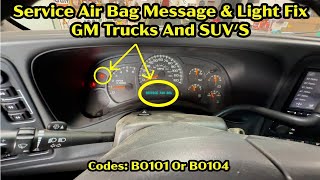
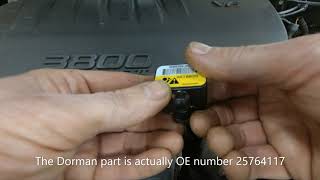
- Faulty Front Impact Sensor (Very Common) — The sensor fails internally due to age, vibration, or physical damage. Located in a vulnerable position at the front of the vehicle (e.g., on the radiator core support 🎬 Watch: How to replace a front impact sensor on GM trucks.), road debris, minor impacts, or chemical contamination easily damage these sensors.
- Corroded or Damaged Wiring/Connector (Very Common) — The wiring and connector for the front impact sensor are exposed to weather, salt, and moisture. Corrosion builds up on the pins, causing a poor connection, or wires break and short out, interrupting the signal.
- Faulty Airbag Control Module (SDM/ECU) (Common) — The main computer controlling the airbags fails due to internal circuit damage, voltage spikes, or cabin water leaks. On vehicles like Fiat/Peugeot vans, this is the primary cause of the B0100 code.
- Faulty Clock Spring (Common) — The 'clock spring' is a rotary electrical connector in the steering column. Internal wires break from repeated steering wheel rotation, causing an open circuit that triggers a B0100 code, often accompanied by a dead horn.
- Stored 'Crash Data' in Module (Less Common) — After an accident, the control module permanently stores 'crash data'. If the module is not reset with specialized equipment, it sets codes like B0100 and keeps the airbag light on, even with new sensors installed.
- Water Intrusion (Less Common) — Moisture entering the sensor's connector or the airbag control module causes short circuits and corrosion. This is a known issue on GM trucks and Fiat-based motorhomes where moisture wicks up the carpet to the module.
- Low or Unstable Battery Voltage (Rare) — A failing battery or improper jump-starting causes the Airbag Control Module to store fault codes when it fails to communicate with sensors during the startup self-test.
- Incorrect Sensor Installed (Rare) — Installing a replacement sensor with the wrong part number for the vehicle's VIN prevents the SDM from recognizing its ID message, leading to a fault code.
Symptoms

- Airbag Warning Light On — The dashboard light depicting a person with an airbag stays lit after the initial startup check.
- Airbags Are Disabled — The entire Supplemental Restraint System (SRS) is inactive and will not deploy in a crash. This is the most critical consequence of the code.
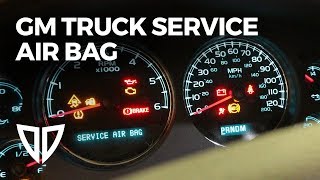
- "Service Airbag" Message — The instrument cluster or driver information center displays a text warning indicating a fault in the SRS system.
- Horn or Steering Wheel Controls Inoperative — If the fault stems from a damaged clock spring, the horn, radio controls, or cruise control buttons on the steering wheel stop working.
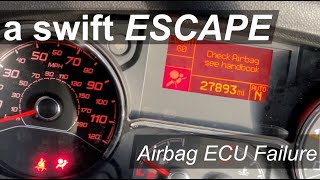
- Flashing Odometer/Mileage Display — On Fiat, Peugeot, and Citroen vehicles, an airbag module problem causes the mileage display to flash continuously 🎬 See how to diagnose and replace a corrupt Fiat airbag ECU. as an additional warning.
Diagnostic Flowchart
Tap your situation to follow the diagnostic path that matches what you're seeing on this code.
Common Fixes & Costs
- Replace the Front Impact Sensor — Parts: $50-$250, Labor: $75-$150, ~0.8 hr book time (DIY)
- Repair or Replace Damaged Wiring/Connector — Parts: $10-$50, Labor: $100-$250, ~1.5 hr book time (Intermediate)
- Replace the Airbag Control Module — Parts: $200-$800, Labor: $150-$300 (plus programming), ~2.5 hr book time (Professional)
- Reset the Airbag Control Module — Parts: $0, Labor: $50-$150 (mail-in service), ~1.5 hr book time (Professional)
- Replace the Clock Spring — Parts: $60-$450, Labor: $125-$300, ~1.5 hr book time (Professional)
DIY vs Professional
- Replace Front Impact Sensor — Beginner:
- Repair or Replace Damaged Wiring/Connector — Beginner:
- Replace the Airbag Control Module — Beginner:
- Reset the Airbag Control Module — Beginner:
- Replace the Clock Spring — Beginner:
Used vs. New Parts: Buying Guide
When a used part is worth it: For an older vehicle, a used OEM front impact sensor from a certified auto recycler is a cost-effective option. However, due to the safety-critical nature of the part, this approach carries inherent risks.
Donor-vehicle mileage cap: roughly under 100000 miles for the part to have meaningful remaining life.
Donor quality checklist:
- Verify the part comes from a certified recycler (e.g., ARA member) following proper handling protocols.
- Ensure the part number is an exact match for your vehicle's VIN; similar-looking sensors fail to communicate correctly.
- Avoid parts from vehicles showing water damage or stored with broken windshields, as moisture destroys sensor electronics.
- Never buy used airbags or sensors from unverified online marketplaces due to the high risk of counterfeit parts.
Decision logic:
- If The part is a sensor, module, or clock spring for the SRS system → New OEM is the safest choice, followed by a new high-quality aftermarket part. Used is the highest risk option.
- If The vehicle is over 10 years old and budget is the primary concern → A used sensor from a reputable source is a plausible alternative to driving with disabled airbags.
Warranty tradeoff: New OEM or aftermarket parts include a warranty of one year or longer. Used parts from a recycler carry a 30-90 day functional warranty.
Worst-case if a used part fails: $150-$300 if a used sensor fails after the warranty period, requiring repeat labor and a second replacement part.
What Happens If You Wait — Timeline
- Immediate (0 seconds): The airbag module detects the fault during its initial self-test. The airbag warning light illuminates, and the entire SRS system is disabled. (MPG impact: 0%% · Added cost: $0 - The primary cost is the immediate loss of the vehicle's passive safety system.)
- First Drive Cycle to First State Inspection: The vehicle operates normally but without functional airbags. The vehicle automatically fails any mandatory state safety inspection. (MPG impact: 0%% · Added cost: $20-$70 for the failed inspection, plus the repair cost.)
- 1-12 months: Corrosion on the sensor or connector spreads up the wiring harness, turning a simple sensor fix into an expensive harness repair. (MPG impact: 0%% · Added cost: $250-$800 if corrosion damages the wiring harness, requiring a new harness section.)
- Ongoing: The safety risk remains critical. A minor collision results in severe injury or death due to non-deployment of airbags. (MPG impact: 0%% · Added cost: N/A - The cost is measured in occupant safety risk.)
Cost of Not Fixing It
- Immediate: The entire Supplemental Restraint System (SRS) is disabled. Airbags will not deploy and seatbelt pretensioners will not activate in a crash. (Added cost: N/A - This is a critical safety failure. The risk of serious injury or death increases significantly.)
- 0-12 months: The vehicle automatically fails the safety inspection portion of a state vehicle inspection in jurisdictions that require it. (Added cost: $20-$70 for the failed inspection test, plus the mandatory repair cost.)
- Ongoing: Continued operation without a primary passive safety system. If the root cause is corrosion, the damage spreads to nearby circuits and harnesses over time. (Added cost: $250-$800 if corrosion destroys the wiring harness, requiring a full harness replacement instead of a simple sensor swap.)
Diagnosis Steps
- Read Codes with an SRS-Capable Scanner
Use an OBD-II scanner capable of reading SRS (airbag) codes. A basic engine code reader cannot see 'B' (Body) codes. Confirm B0100 is present and note codes like B0103 (passenger sensor) or B1001 (configuration error) for diagnostic clues.
Tools: SRS-Capable OBD-II Scanner (Beginner) - Visually Inspect the Front Impact Sensor and Connector
Locate the front impact sensor (Sensor 1/Driver Side), often on the radiator core support behind the grille. Disconnect the battery and wait 15 minutes. Unplug the sensor's yellow connector and check for green or white corrosion on the pins, frayed wires, or physical damage to the housing.
Tools: Flashlight, Wrench set (Beginner) - Perform the 'Sensor Swap' Test (GM and others)
On vehicles where the left (B0100) and right (B0103) sensors are identical, swap their positions. Clear the codes and rescan. If the code changes to B0103, the sensor is definitively faulty. If B0100 remains, the problem is in the wiring or the control module.
Tools: Wrench set, SRS-Capable OBD-II Scanner (Intermediate) - Inspect the Wiring Harness
Trace the wiring from the impact sensor back toward the main harness and firewall. Look for pinched, chafed, or broken wires, paying close attention to areas where the harness rubs against the frame or engine components.
Tools: Flashlight, Trim removal tools (Intermediate) - Check for Water Damage Near the Airbag Module
Locate the airbag control module (under the center console, front seats, or behind the dash). Check the surrounding carpet and the module for water stains, rust, or corrosion indicating internal failure due to moisture intrusion.
Tools: Flashlight, Trim removal tools (Intermediate) - [PRO TIP] Test the Sensor Circuit for Shorts and Opens
Disconnect the sensor and the airbag control module. Using a multimeter set to resistance, check both wires in the sensor circuit for a short to ground. Turn the ignition on (engine off) and check for a short to voltage. Finally, check for continuity between the two wires to see if they are shorted together. All tests must show an open circuit (OL).
Tools: Multimeter, Vehicle-specific wiring diagram (Advanced) - [PRO TIP] Perform a Harness Integrity Test
Keep the module and sensor disconnected. At the airbag module's connector, use a jumper wire to connect the two pins for the front impact sensor circuit. Go to the sensor connector at the front of the vehicle and measure the resistance between the two pins. A good harness shows under 1 ohm. High resistance or an open circuit (OL) confirms a broken wire.
Tools: Multimeter, Jumper wire, Vehicle-specific wiring diagram (Advanced) - Test the Clock Spring (Toyota and others)
If a faulty clock spring is suspected, disconnect the airbag and the clock spring connector at the base of the steering column. Measure the resistance of the D+ and D- wires through the clock spring while slowly turning the steering wheel lock to lock. Resistance must remain under 1.0 ohm. Spikes or open circuits indicate a broken internal wire.
Tools: Multimeter, Vehicle-specific service manual (Advanced) - [PRO TIP] Measure Airbag Circuit Resistance
With the battery disconnected and the component unplugged, measure its resistance. Most airbag squib/igniter circuits have a specific resistance between 1.5 and 3.5 ohms. Readings below 1.0 ohm indicate a short; readings above 4.0 ohms indicate an open circuit. Never test an airbag component with a multimeter unless following a manufacturer-approved procedure to prevent accidental deployment.
Tools: High-impedance Digital Multimeter, Vehicle-specific service manual (Advanced)
When This Code Triggers (Freeze-Frame Conditions)
- Ignition Status: ON / RUN (The fault is detected during the initial key-on self-test.)
- System Voltage: 9-16V (The self-test runs at normal battery voltage. Low or unstable battery voltage during startup triggers SRS communication faults.)
- Time After Power-Up: < 10 seconds (The airbag module performs a complete system check immediately after the ignition turns on, setting the code if the sensor fails this check.)
- Vehicle Speed: 0 mph (The fault registers while the vehicle is stationary, before driving begins.)
Related Codes
- B0103 — This is the code for the passenger side (right) front impact sensor ('Sensor 2'). B0100 is for the driver's side. If the sensors are identical, swap them; if the code changes to B0103, the sensor is faulty.
- B1001 — This 'Option Configuration Error' code appears with B0100 on GM vehicles. It indicates the SDM does not recognize the sensor, often occurring after replacing a part with an incorrect version or if the SDM is failing.
- B0101 — A severe code meaning 'Discard Front End Sensor'. The SDM has identified an internal, unrecoverable fault in the sensor. B0100 is a communication failure, while B0101 is a direct command to replace the sensor.
- B0102 — This code means 'Incorrect Front End Sensor Installed.' It sets if a replacement sensor's identification message does not match what the SDM expects for that specific vehicle VIN.
Climate & Environmental Factors
- High Humidity & Moisture: High humidity causes condensation inside sealed electronic components. This moisture leads to internal corrosion on circuit boards, disrupting electrical signals and triggering fault codes.
- Road Salt & Winter Conditions: Road salt is extremely corrosive to exposed electrical components. Front impact sensors and connectors, located at the front of the vehicle, are highly susceptible to this corrosion, making it the leading cause of B0100 failures on GM trucks.
How to Talk to a Mechanic About This Code
Say this: "I have an airbag warning light on, and my scanner shows code B0100 for the driver's side front impact sensor. I'd like to schedule a diagnostic to confirm if the issue is the sensor, the wiring, or the module itself."
This guides the technician toward a specific diagnostic path, preventing them from shotgunning parts and focusing them on the most likely causes of a B0100 code.
Avoid saying:
- 'My airbag light is on, can you just reset it?'
- 'I have a B0100, just replace the front sensor.'
- 'Just do whatever it takes to get the light off.'
Questions to ask before authorizing the repair:
- What specific diagnostic steps did you perform to isolate the fault?
- If the sensor is bad, did you test the wiring to the sensor to rule out a harness issue?
- If the module needs replacement, does the new one require VIN programming and is that included in the quote?
- Will you use a new OEM, aftermarket, or used part for the repair?
- What is the warranty on the parts and labor for this specific SRS repair?
Where to Take It: Dealer vs Independent vs Chain
- Dealer:
Recommended if the diagnosis points to a faulty airbag control module requiring programming, or if the vehicle is under warranty.
Best for: Vehicles under warranty., Complex cases involving module replacement and VIN programming., Manufacturer-specific quirks that independent shops miss.
Downsides: Highest labor rates and part costs., Defaults to replacing an expensive module when a wiring repair or reset service fixes it. (Typical cost: +50% vs. baseline) - Independent Shop:
Best fit for diagnosing and replacing faulty sensors and repairing wiring. Ensure the shop is ASE-certified.
Best for: Out-of-warranty vehicles where the cause is a common failure (e.g., corroded sensor on a GM truck)., Diagnosing wiring and sensor-level faults., Owners looking for a balance of cost and expertise.
Downsides: Shop must have an SRS-capable scan tool and technicians experienced with safety systems., Lacks tools to program a new airbag module, requiring a dealer trip. (Typical cost: +0% vs. baseline) - Chain Shop:
AVOID for diagnosis and complex repairs like module or clock spring replacement. Only consider for a simple, pre-diagnosed impact sensor replacement.
Best for: Not recommended for primary diagnosis of SRS faults.
Downsides: Technician skill with complex electrical and safety systems varies dramatically., Lacks advanced diagnostic tools required for SRS modules and programming., High pressure to sell parts leads to replacing a sensor when the fault is in the wiring. (Typical cost: -10% vs. baseline)
When to Walk Away From the Repair
If the estimated repair cost for this critical safety system exceeds 50-60% of the car's private-party value, weigh the cost against selling the car 'as-is' with full disclosure.
- Car worth $4000, fix is $1500: Fix it. The repair cost is significant but well below the vehicle's value, and fixing it restores a critical safety feature.
- Car worth $3000, fix is $2000: Walk away. The repair cost is too close to the car's total value. It is not economical to repair.
What Scan Tool You Need for This Code
Minimum: A scanner that reads and clears SRS/Airbag 'B' codes. A basic engine-only OBD-II reader will NOT work.
A standard $20 code reader cannot communicate with the Supplemental Restraint System (SRS) module. It shows 'no codes' even when the airbag light is on. You need a tool specifically advertised with SRS capabilities to see the B0100 code.
Budget: Autel AutoLink AL619 (~$75) — Reads and clears engine, ABS, and SRS (airbag) codes on most major vehicle brands. It identifies the B0100 code and allows you to clear it after the repair.
Mid-range: BlueDriver Pro or Foxwell NT510 Elite (~$100-160) — Offers live data streaming for SRS components and some bidirectional controls. The Foxwell NT510 Elite offers advanced, OE-level functions for specific brands.
Professional: Autel MaxiCOM MK808 / MK906BT (~$500-1200) — Provides full bidirectional control, allowing a technician to command modules and run system tests. Required for programming a new airbag control module with the vehicle's VIN.
Rent vs buy: Most auto parts stores do NOT rent out scanners with SRS capabilities due to liability. Buying a budget-level SRS-capable scanner is a worthwhile investment.
How to Clear the Code After You Fix It
- Ensure the underlying fault (bad sensor, wiring, or module) is fully repaired.
- With the ignition off, reconnect the vehicle's battery.
- Use an SRS-capable OBD-II scan tool to connect to the Airbag Control Module.
- Select the function to 'Clear DTCs' or 'Reset Codes'. Disconnecting the battery does not clear this code.
- Cycle the ignition off, then on. The airbag light illuminates for its 6-second self-test and then turns off. If it stays on, the fault persists.
Drive cycle (~10 minutes): The SRS system does not require a complex drive cycle. Its readiness is confirmed during the key-on self-test. A short 10-minute drive ensures the light does not return intermittently.
Readiness monitors affected: None. SRS systems do not use emissions control readiness monitors.
Watch out for:
- Using a basic engine code reader that cannot communicate with the SRS module.
- Failing to fix the root cause; clearing the code only turns the light off for a few seconds until the next self-test fails.
- Assuming a scan tool can clear internal module faults (common on Fiat/Peugeot), which require professional bench-top reprogramming.
Will This Fail Emissions / State Inspection?
No — by itself this code doesn't fail OBD inspection (but it can keep readiness monitors from setting, which causes a separate fail).
- General Rule: An illuminated airbag light is a SAFETY issue, not an EMISSIONS issue. It causes a failure in states with a safety inspection, but passes in states with an emissions-only (smog check) inspection.
- California: The airbag light is a safety concern and causes a failure of the safety portion of the inspection. It does not cause a failure of the OBD-II emissions (smog) test.
- New York: According to NYS DMV regulations, an illuminated airbag light is an ADVISORY item. It is noted on the inspection report but does NOT cause a failure of the safety inspection.
- Texas: As of 2025, annual safety inspections are eliminated for most non-commercial vehicles. In counties requiring emissions testing, the airbag light is not inspected and does not cause a failure.
Most Commonly Affected Vehicles
- Chevrolet / GMC / Cadillac Tahoe, Yukon, Suburban, Silverado, Escalade, Avalanche (2003-2007) — Extremely common issue caused by corrosion of the front impact sensors on the radiator support. The left (driver) sensor is B0100, right (passenger) is B0103.
- Fiat / Peugeot / Citroen Ducato, Boxer, Relay (especially motorhomes) (2006-2024) — B0100 (often B0100-49) points to an internal failure of the TRW airbag control module, frequently caused by moisture or low battery voltage from sitting for long periods.
- Kia Forte (2014-2018) — Part number 95910-B0100 refers to the airbag control module itself, indicating an internal module fault is a known cause for this code.
- Toyota Sienna, Highlander, Echo (2000-2008) — Code B0100 (B0100/13) indicates a short in the 'D Squib' circuit, which includes the driver's airbag, clock spring, and wiring to the Airbag Control Unit.
- Nissan Altima, Sentra, Rogue, Versa, Titan (2013-2017) — A massive recall (NHTSA 16V244000) addresses faults with the Occupant Classification System (OCS) that disable the passenger airbag. The underlying issues of faulty sensors and wiring are widespread.
- SAAB 9-5, 9-3 (2006-2007) — The workshop manual defines B0100 as 'Front Collision Sensor Left, open circuit or short to ground/B+' or 'Front Left Sensor, Faulty Communication'.
- Chevrolet Equinox (2005-2006) — Frequently cited for B0100 caused by failure of the single front impact sensor located on the radiator support. The Dorman replacement part is 590-208.
- Buick LeSabre (2000-2005) — Triggers code B0100 due to a failed front impact sensor on the radiator support. The mounting bolt has a left-hand thread, complicating removal.
Manufacturer-Specific Notes
- General Motors (GM): B0100 refers to the driver's side front impact sensor ('Sensor 1'), while B0103 refers to the passenger's side ('Sensor 2'). These identical sensors are known to fail from being over-tightened at the factory, cracking the plastic housing.
- Toyota: Code B0100 (B0100/13) frequently indicates an internal fault within the main airbag computer (ECU) or a short in the driver-side 'D Squib' circuit, which includes the clock spring.
- Fiat / Peugeot / Citroen: This code (B0100-49) on the Ducato/Boxer/Relay van platform points directly to an internal failure of the airbag control module, often due to low battery voltage from infrequent use.
- Nissan: Widespread airbag system faults focus on the Occupant Classification System (OCS) sensor in the passenger seat. The diagnostic process of checking connectors, voltage, and system calibration is identical for B0100.
- Ford and Others: In rare instances, manufacturers use the B0100 code for a fault in the HVAC system for a 'Cleaning Air Blower Actuator A' sensor. Always confirm the code definition with an SRS-capable scanner.
Real Owner Stories
2005 GMC Yukon with B0100 after sudden temperature change.
The 'Service Airbag' message appeared after a rapid temperature swing from 50°F to 90°F in a damp garage. The scanner showed B0100 and B1001 (Option Configuration Error).
What they tried:
- Visually inspected the area under the seat for water damage but found none.
- Suspected a wiring or sensor issue exacerbated by humidity and temperature changes.
Outcome: The cause was a failing driver's side front impact sensor on the radiator support. The B1001 code often appears with sensor communication faults on GM trucks.
Lesson: Sudden humidity or temperature changes expose borderline failing front impact sensors. Code B1001 alongside B0100 reinforces a communication fault with the sensor.
2006 Toyota Land Cruiser with Airbag Light and non-working horn.
Purchased the vehicle with the airbag light on and a dead horn. Cruise control and radio buttons functioned correctly. The owner suspected a bad clock spring.
What they tried:
- Replaced the clock spring with a new OEM part from a Toyota dealership.
- The new part did not fix the airbag light or the horn.
Outcome: A dealer diagnostic revealed code B0101 (Open in Squib Circuit), indicating the new OEM clock spring was defective from the factory.
Lesson: If a B0100 or related code on a Toyota is accompanied by a dead horn, the clock spring is the primary suspect. If a new part fails to fix it, the new part itself may be faulty.
2017 Fiat Ducato Motorhome with flashing mileage and airbag light.
The airbag warning light illuminated and the odometer display began flashing. MultiECUScan software revealed fault code B0100-49, indicating an internal ECU failure.
What they tried:
- Attempted to find a repair service for the airbag module (ECU).
- Sourced a new, updated ECU (Part No. 00046858205) online.
Outcome: The owner replaced the airbag ECU under the center floor console. A 'Proxy Alignment' procedure using MultiECUScan software integrated the new module, successfully clearing the fault.
Lesson: On Fiat Ducato motorhomes, B0100-49 means the airbag module failed due to low battery voltage. Replacement requires performing a 'Proxy Alignment' with specialized software.
2006 Cadillac Escalade with B0103, misdiagnosed as wiring.
Airbag light was on with code B0103 (passenger side front impact sensor). The owner wanted to confirm the sensor was bad before buying parts.
What they tried:
- Performed the 'sensor swap' test, moving the identical driver (B0100) and passenger (B0103) sensors.
- After swapping and clearing codes, the scanner showed code B0100.
Outcome: The fault code moved with the sensor, proving the passenger side sensor was bad. The owner installed a new sensor (Dorman 590-200) on the driver's side to fix the new B0100 code.
Lesson: The 'sensor swap' is the most powerful diagnostic step for B0100/B0103 codes on GM vehicles. If the code follows the sensor, the sensor is definitively the problem.
How to Prevent This Code From Triggering
- Apply Dielectric Grease to Connectors (During any related service or inspection.) — Applying non-conductive dielectric grease to the weather seal of exposed sensor connectors seals out moisture and road salt, preventing corrosion.
- Regular Undercarriage Washing (Every 1-2 weeks during winter in salt-belt regions.) — Frequent washing removes corrosive road salt and brine from the frame, sensors, and wiring harnesses, slowing down electrical corrosion.
- Annual Rust-Proofing Application (Once per year, ideally in the spring.) — Oil-based rust-proofing spray creeps into seams and protects electrical components and ground points from moisture and salt.
- Maintain Battery Health and Voltage (Ongoing.) — Low battery voltage during startup triggers internal airbag module faults (B0100-49) on Fiat Ducato motorhomes. Using a battery tender prevents voltage drops.
Frequently Asked Questions
Will my airbags work with code B0100?
No. When code B0100 is active, the vehicle's computer disables the entire airbag system as a safety measure. The airbags will not deploy in an accident until you repair the fault and clear the code.
Is it safe to drive with an active B0100 code?
No. Driving without functional airbags dramatically increases the risk of serious injury or death in a collision. It also guarantees a failed safety inspection in states that require one.
Can I fix code B0100 myself?
If the cause is a simple-to-access front impact sensor, an intermediate DIYer can replace it. You must disconnect the battery for 30 minutes before touching any airbag components. If the problem involves the module, clock spring, or wiring, stop DIY and take the vehicle to a professional shop.
How much does it cost to fix code B0100?
Costs depend entirely on the root cause. A mail-in airbag module reset costs $50-$150, while replacing a single front impact sensor ranges from $120 to $450 for parts and labor. Replacing a clock spring or the main airbag module costs $300 to over $1,000 including mandatory programming.
I replaced the sensor, but the B0100 code came back. What's next?
First, re-check the wiring and connector for hidden corrosion, as a new sensor cannot fix a bad wire. Second, verify you installed the exact correct part number for your VIN. If both are good, the Airbag Control Module (SDM) likely has an internal fault requiring a professional reset or replacement.
Can I swap the left and right front impact sensors to test them?
Yes, on many vehicles like GM trucks, the left (B0100) and right (B0103) front impact sensors use the identical part number. Swapping their positions is a powerful diagnostic test. If your B0100 code changes to a B0103 code, it confirms the sensor itself is faulty.
Will clearing the code with a scanner fix the problem?
No. Clearing the code only turns the light off for a few seconds. The control module performs a self-test on the next startup, immediately detects the hard fault again, and triggers the code and warning light.
What is the difference between B0100 and B0103?
B0100 refers to a communication failure with the front impact sensor on the driver's side (Sensor 1). B0103 indicates the exact same fault, but for the sensor on the passenger's side (Sensor 2).
Key Takeaways
- Code B0100 completely disables your Supplemental Restraint System (SRS), meaning zero airbags will deploy during a collision.
- A corroded or internally failed driver-side front impact sensor located behind the front grille causes over 70% of B0100 codes.
- Swapping the driver and passenger front impact sensors is a definitive, zero-cost diagnostic test on GM vehicles to isolate a bad sensor.
- You must use an SRS-capable OBD-II scanner to read and clear this code; disconnecting the battery does not reset a hard airbag fault.
Helpful Videos

The information in this article is provided for general reference and educational purposes only. Vehicle specifications, procedures, and part compatibility can vary by production date, trim level, and region. Always consult your vehicle's factory service manual and verify part numbers before purchasing or performing repairs. Safety-critical components such as airbags, seat belts, and braking systems should be installed by a qualified professional.
- 🎬 Helpful Videos
- What Does B0100 Mean?
- Can I Drive With B0100?
- Common Causes
- Symptoms
- Diagnostic Flowchart
- Common Fixes & Costs
- DIY vs Professional
- Used vs. New Parts: Buying Guide
- What Happens If You Wait — Timeline
- Cost of Not Fixing It
- Diagnosis Steps
- When This Code Triggers (Freeze-Frame Conditions)
- Related Codes
- Climate & Environmental Factors
- How to Talk to a Mechanic About This Code
- Where to Take It: Dealer vs Independent vs Chain
- When to Walk Away From the Repair
- What Scan Tool You Need for This Code
- How to Clear the Code After You Fix It
- Will This Fail Emissions / State Inspection?
- Most Commonly Affected Vehicles
- Manufacturer-Specific Notes
- Real Owner Stories
- 2005 GMC Yukon with B0100 after sudden temperature change.
- 2006 Toyota Land Cruiser with Airbag Light and non-working horn.
- 2017 Fiat Ducato Motorhome with flashing mileage and airbag light.
- 2006 Cadillac Escalade with B0103, misdiagnosed as wiring.
- How to Prevent This Code From Triggering
- Frequently Asked Questions
- Will my airbags work with code B0100?
- Is it safe to drive with an active B0100 code?
- Can I fix code B0100 myself?
- How much does it cost to fix code B0100?
- I replaced the sensor, but the B0100 code came back. What's next?
- Can I swap the left and right front impact sensors to test them?
- Will clearing the code with a scanner fix the problem?
- What is the difference between B0100 and B0103?
- Key Takeaways
- 🎟️ Get 5% Off