

OBD-II Code B0092: Passenger Presence System / Left Side Restraints Sensor Fault
What B0092 means, why it triggers, and how to fix it
- Code B0092 disables the passenger or side airbags, requiring immediate repair to restore critical crash protection.
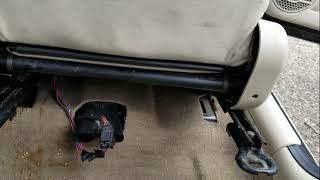
- Inspect the yellow SRS wiring harness under the passenger seat for pinches or loose connections before buying replacement parts.
- Dry out a moisture-soaked passenger seat cushion for 48 hours before assuming the Occupant Classification System (OCS) mat is permanently dead.
- Replacing a passenger seat sensor requires a mandatory $100-$200 zero-point calibration using a professional bi-directional scan tool.
- Never probe SRS sensor connectors with a multimeter unless explicitly directed by the factory service manual, as the voltage triggers accidental airbag deployment.
What Does B0092 Mean?

Code B0092 indicates the Supplemental Restraint System (SRS) module detects a fault in the Passenger Presence System (OCS) or a side impact sensor. The OCS uses seat sensors to weigh occupants and enable the passenger airbag. On Ford, Honda, and Nissan vehicles, this code specifically flags the 'Left Side Restraints Sensor 2,' a side impact sensor located in a door or pillar.
Technical definition: The SAE/ISO definition for B0092 is 'Passenger Presence System Performance' or 'Left Side Restraints Sensor 2'. The SRS control module detects a malfunction, invalid data, or a loss of communication with the sensor circuit. Manufacturer definitions vary: Ford uses 'Left Side Restraints Sensor 2', Honda uses sub-code B0092-87 for 'Left Side Impact Sensor (second)', and Nissan uses 'Rear Side Air Bag Satellite Sensor LH'.
Can I Drive With B0092?
No — Do Not Drive. Driving is possible, but strongly advised against. This code indicates a critical airbag system failure. In a crash, the passenger or side airbag will fail to deploy, drastically increasing the risk of serious injury or death. The cost of ignoring this is severe personal injury and legal liability.
Common Causes

- Damaged Wiring or Loose Connectors (Very Common) — The wiring harness connecting the sensor to the SRS module routes under the seat or through door pillars. Seat movement pinches wires, trim panels chafe them, and stored items damage them. Connectors also loosen or corrode, degrading the signal.
- Faulty Passenger Presence Sensor (OCS) Mat (Very Common) — The pressure-sensitive mat embedded in the passenger seat cushion fails from internal wear, stress fractures, or moisture. Spilled drinks, interior shampooing, or rain entering an open window short-circuits the mat.
- Faulty Side Impact Sensor (Common) — On Ford, Honda, and Nissan vehicles, B0092 points directly to a side impact satellite sensor in the B-pillar, C-pillar, or front door. These sensors fail internally from age or physical collision damage.
- Objects Interfering with Seat Sensor (Less Common) — Heavy items like groceries or backpacks on the passenger seat, or objects wedged underneath, skew sensor readings. Electronic devices like charging laptops also disrupt the electric field of newer sensors.
- Incorrect Sensor Calibration (Less Common) — Replacing a seat, cushion, or OCS sensor requires re-calibration using a professional scan tool. Skipping this step triggers a fault code because the baseline 'empty seat' reading is missing.
- Swapped Wiring Harness Connectors (Rare) — Following unrelated repairs like dashboard removal, technicians sometimes swap physically similar SRS sensor connectors. This is a documented issue on Nissan models.
- Faulty SRS Control Module (Rare) — The SRS computer itself fails due to internal hardware degradation, corrupted software, or CAN bus communication loss, causing it to falsely report a sensor issue.
Symptoms

- Airbag Warning Light is On — A solid red or yellow airbag light on the instrument cluster indicates an active SRS system fault.
- Passenger Airbag "OFF" Light Stays On — The indicator light showing 'Passenger Airbag OFF' remains illuminated even when an adult is properly seated, confirming the system disabled the airbag.
- Warning Message on Information Display — The driver information screen displays a specific text warning, such as 'Service Airbag System' or 'Restraint System Fault'.
- Audible Chime at Startup — A chime or series of beeps sounds when starting the vehicle to alert the driver to the SRS fault.
Diagnostic Flowchart
Tap your situation to follow the diagnostic path that matches what you're seeing on this code.
Common Fixes & Costs
- Repair Damaged Wiring or Clean Connector — Parts: $5-$25, Labor: $150-$350, ~1.5 hr book time (Intermediate)
- Replace Side Impact Sensor — Parts: $70-$350, Labor: $120-$250, ~1.2 hr book time (Intermediate)
- Replace Passenger Presence Sensor Mat — Parts: $150-$500, Labor: $200-$400, ~2.5 hr book time (Professional)
- Recalibrate the OCS/PPS — Parts: $0, Labor: $100-$200, ~0.8 hr book time (Professional)
- Replace and Program SRS Control Module — Parts: $800-$1500, Labor: $350-$550, ~2.0 hr book time (Professional)
DIY vs Professional
- Repair Damaged Wiring or Clean Connector — Beginner: No
Tools: Digital Multimeter, wiring diagrams, wire strippers, solder, heat shrink, trim removal tools. - Replace Side Impact Sensor — Beginner: No
Tools: SRS-capable scan tool, socket set, trim removal tools. - Replace Passenger Presence Sensor Mat — Beginner: No
Tools: Socket set, Torx bits, hog ring pliers, advanced scan tool. - Recalibrate the OCS/PPS — Beginner: No
Tools: Bi-directional scan tool with SRS calibration functions.
Used vs. New Parts: Buying Guide
When a used part is worth it: Used OEM side impact sensors from certified recyclers are cost-effective for vehicles over 10 years old. Avoid used OCS seat mats due to hidden wear and moisture damage.
Donor-vehicle mileage cap: roughly under 75000 miles for the part to have meaningful remaining life.
Donor quality checklist:
- Verify the donor vehicle was not involved in a collision that stressed the component.
- Ensure the part is a genuine OEM part, not a counterfeit.
- Buy only from certified recyclers who offer a warranty.
- Match the part number exactly; SRS components are highly specific.
Decision logic:
- If The part is an electronic sensor (side impact sensor) and the vehicle is over 10 years old → A certified used OEM part offers good value.
- If The part is a wear item (OCS seat mat) or the vehicle is under 5 years old → Buy new OEM to ensure longevity and avoid premature failure.
- If The part is part of a known recall (e.g., Toyota OCS sensor) → Do not buy any part; take it to the dealer for the free recall remedy.
Warranty tradeoff: Used parts from recyclers typically have a 30-90 day warranty. New aftermarket parts offer a 1-year to limited lifetime warranty. New OEM parts carry the manufacturer's 12-month warranty.
Worst-case if a used part fails: $200-$500. If a used sensor is faulty, you pay for diagnostic and labor costs a second time.
What Happens If You Wait — Timeline
- 0-1 week: The airbag/SRS warning light illuminates and stays on. The system is immediately disabled. An audible chime sounds at startup. (MPG impact: 0%% · Added cost: $0)
- 1 week - 3 months: The vehicle continues to operate normally, but the passenger and side airbags will not deploy in a collision. (MPG impact: 0%% · Added cost: $0)
- 3-12 months: The vehicle automatically fails its annual state safety inspection in many jurisdictions. The vehicle becomes illegal to operate on public roads. (MPG impact: 0%% · Added cost: $50-$200 in failed inspection fees and potential fines.)
- In case of an accident: A collision occurs where airbags should have deployed, but they do not. The owner faces potential legal liability for knowingly operating a vehicle with a disabled safety system. (MPG impact: 0%% · Added cost: Potentially thousands to millions in medical bills and legal liability.)
Cost of Not Fixing It
- Immediately: Passenger and side airbags are disabled and will not deploy in a crash, increasing the risk of fatal injury. (Added cost: N/A - Safety Risk)
- Next State Inspection: Automatic failure of safety inspections in states like New York, Texas, and Virginia. (Added cost: $50-$200 in re-inspection fees.)
- In Case of Accident: Catastrophic personal injury and severe legal liability for knowingly operating a vehicle with disabled safety systems.
Diagnosis Steps
- Perform a System Reset and Check for Obstructions
Remove all items from the passenger seat and underneath it. Turn the vehicle off, have an adult sit upright and centered in the seat, and restart the car. Wait two minutes to see if the system re-detects the occupant and clears the light.
Tools: None (Beginner) - Read Codes with an SRS-Capable Scanner
Use an OBD-II scanner capable of accessing the Restraints Control Module (RCM). Confirm B0092 is active and note any manufacturer-specific sub-codes (e.g., B0092-87 on Honda) that detail the fault type.
Tools: SRS-capable OBD-II Scanner (Beginner) - Perform a Visual Inspection of Wiring
Disconnect the battery for 15 minutes to depower the SRS. Visually inspect the yellow wiring harness under the passenger seat and at the relevant door/B-pillar sensor. Look for pinched wires, chafing, and loose connectors. Gently push connectors together to ensure they lock.
Tools: Flashlight, Trim removal tools (Intermediate) - Check for Technical Service Bulletins (TSBs)
Search online for your vehicle's year, make, model, and 'B0092 TSB'. Manufacturers frequently release bulletins for known issues, such as GM's TSB for pinched under-seat wiring.
Tools: Internet access (Intermediate) - [PRO TIP] View Live Sensor Data
Navigate to the SRS module's live data stream using an advanced scan tool. Observe the 'Occupant Weight' PID. An empty seat reads 0 lbs, increasing realistically when someone sits. Frozen or irrational values indicate a sensor or wiring issue.
Tools: Advanced Bi-directional Scan Tool (Advanced) - [PRO TIP] Test the Sensor Circuit with a Multimeter
Following the service manual, disconnect the sensor and SRS module. Check for continuity (under 5 Ohms) on the signal and ground wires. Verify the reference voltage (typically 5V) with the key on. Stop DIY diagnosis and take the vehicle to a shop if you lack the exact wiring diagram.
Tools: Digital Multimeter, Vehicle-specific wiring diagram (Advanced) - [ADVANCED] Test Sensor Resistance
Test the internal resistance of a disconnected side impact sensor if permitted by the service manual. WARNING: Never probe a sensor unless explicitly authorized by the manufacturer; improper probing damages sensors and risks airbag deployment.
Tools: Digital Multimeter, Vehicle-specific service manual (Advanced) - [PRO TIP] Induce an Opposite Fault Code
Use a resistor to simulate a valid sensor, or short the circuit to see if the code changes to 'short circuit'. If the module reports the induced fault correctly, the module is functional and the problem lies in the wiring or sensor.
Tools: Digital Multimeter, Resistor pack, Wiring diagram (Professional) - Isolate and Test the Sensor
If wiring passes all tests, replace the sensor. Seat mats require removing the seat and upholstery. Side impact sensors require removing interior trim panels.
Tools: Basic hand tools, Trim removal tools (Professional)
When This Code Triggers (Freeze-Frame Conditions)
- System State: Key ON (The SRS module performs a self-test every time the ignition is turned to the 'ON' position.)
- Self-Test Duration: ~6 seconds (The airbag light illuminates for about six seconds at startup for a primary check. If a fault like B0092 is detected, the light stays on.)
- Vehicle Speed: 0 MPH (The fault is most often detected and the code is set during the initial stationary self-check before the vehicle is driven.)
- System Monitoring: Continuous (After the initial check, the SRS module constantly monitors the sensor circuits. An intermittent fault triggers the code at any time while driving.)
Related Codes
- B0081 — Indicates an internal fault detected by the Passenger Presence System (PPS) module. On GM vehicles, B0092 means the main SRS module lost communication with the PPS, while B0081 pinpoints the PPS failure.
- B0093 — Relates to the front door satellite sensor. Seeing B0092 and B0093 together indicates a shared wiring problem or swapped connectors.
- B0096 — Indicates a fault with the 'Left Side Restraints Sensor 1'. If present with B0092, suspect a wider side impact circuit issue or a failing SRS module.
- B0074 — Relates to the second-row side airbag sensor. Multiple sensor codes point to a central power, ground, or SRS module failure.
Climate & Environmental Factors
- High Humidity and Moisture: High ambient humidity accelerates OCS sensor failure. A massive Toyota recall (NHTSA 23V-865) addressed cracked capacitors short-circuiting in humid environments. Direct moisture from spills or interior shampooing also destroys OCS mats.
- Cold Weather: Extreme cold makes wiring insulation brittle, increasing the likelihood of cracks or breaks in flexing harnesses under the passenger seat, leading to intermittent open circuits.
How to Talk to a Mechanic About This Code
Say this: "I have an airbag light on and a B0092 code. Before replacing any sensors, please perform a thorough visual inspection of the wiring and connectors under the passenger seat and at the relevant side impact sensor location. Also, please check for any TSBs related to this code for my vehicle."
This signals you know the most common causes are simple wiring issues, not expensive sensor failures. It directs the technician to perform a proper diagnostic process instead of just swapping parts.
Avoid saying:
- 'My airbag light is on, can you fix it?'
- 'Just replace the sensor the code is for.'
- 'Do whatever you think is best.'
Questions to ask before authorizing the repair:
- Did you find a specific wiring issue, or is the sensor itself confirmed bad?
- If the sensor is being replaced, does the new one require a calibration procedure?
- Can you show me the damaged wire or the faulty part?
- What is the warranty on this specific repair and the new part?
Where to Take It: Dealer vs Independent vs Chain
- Dealer:
Best for: Vehicles under warranty or covered by a recall (like the 2020-2022 Toyota OCS recall)., Complex cases requiring mandatory OCS/PPS calibration after repair., When you want guaranteed use of OEM parts and manufacturer-specific diagnostic tools.
Downsides: Significantly higher labor rates and parts costs., Less willing to perform simpler, cost-effective repairs like fixing a wire instead of replacing a whole harness. (Typical cost: +50% vs. baseline) - Independent Shop:
Best fit for most out-of-warranty repairs, provided the shop is well-regarded and ASE-certified. Always confirm they are equipped and comfortable working on SRS systems.
Best for: Out-of-warranty vehicles where the cause is likely a common issue like a broken wire or a known TSB., Getting a second opinion on an expensive dealer quote., Owners who have a trusted relationship with a local mechanic.
Downsides: Shop quality and technician experience with SRS systems varies greatly., May not have the expensive, specialized tools required for OCS calibration on all makes and models. (Typical cost: +0% vs. baseline) - Chain Shop:
AVOID. The risk of improper repair, misdiagnosis, or failure to calibrate the system is too high for a critical safety feature like airbags.
Best for: Generally not recommended for SRS system diagnostics and repair.
Downsides: Technicians often lack the specialized training for complex safety systems., High pressure to sell parts leads to misdiagnosis., Unlikely to have the necessary tools for post-repair calibration. (Typical cost: -10% vs. baseline)
When to Walk Away From the Repair
If the estimated repair cost exceeds 50% of the car's private-party value, critically evaluate the repair. However, an airbag fault makes the car unsafe to drive and difficult to sell legally without full disclosure and a liability release.
- Car worth $4000, fix is $2200: Walk away. The repair cost is over half the car's value. It's not economically viable to fix.
- Car worth $15000, fix is $1200: Fix it. The repair cost is well below the threshold and restores a critical safety function, preserving the vehicle's value and utility.
- Car worth $2500, fix is $800: Borderline. This is a significant percentage of the car's value. Get a second opinion to ensure the diagnosis is correct before proceeding.
What Scan Tool You Need for This Code

Minimum: A scanner that reads and clears Supplemental Restraint System (SRS/Airbag) codes. A basic engine code reader will not work as it cannot access the airbag control module.
A $20 engine code reader cannot communicate with the SRS module. It shows 'no codes' even when the airbag light is on, leading to a dead end.
Budget: Autel AutoLink AL619 (~$85) — Reads and clears engine, ABS, and SRS (airbag) codes for most major vehicle brands. It tells you the specific B0092 code and allows you to clear the light after a repair.
Mid-range: BlueDriver Pro (~$120) — Connects to your smartphone via Bluetooth. Reads and clears SRS codes and provides repair reports with verified fixes for your specific vehicle. Offers live data graphing to help diagnose sensor issues.
Professional: Foxwell NT680 Pro / Autel MaxiCOM MK808 (~$350-550) — Offers full-system diagnostics, live data, and crucial bi-directional controls. These tools perform advanced service functions like the Occupant Classification System (OCS) zero-point calibration required after replacing a seat sensor.
Rent vs buy: Auto parts stores like AutoZone typically do NOT lend out scanners capable of reading SRS codes due to liability. Buying a budget SRS-capable scanner is a worthwhile investment. If the repair requires calibration, that function is only found on professional-level tools, making a shop visit necessary.
How to Clear the Code After You Fix It
- Ensure the underlying fault is completely repaired.
- Reconnect battery if it was disconnected for safety.
- Use an SRS-capable OBD-II scan tool to access the Restraints Control Module (RCM).
- Select the 'Clear Codes' or 'Erase DTCs' function.
Drive cycle (~1 minutes): An SRS drive cycle is instantaneous. Turn the ignition to 'ON'. The airbag light illuminates for 6 seconds and turns off. If it stays on, the repair failed or the code was not cleared.
Readiness monitors affected: None. SRS faults do not affect emissions readiness monitors.
Watch out for:
- Using a basic engine code reader that cannot communicate with the SRS module.
- Failing to fix the root cause, which causes the light to reappear immediately after clearing.
- Believing that disconnecting the battery clears a hard SRS fault code.
Will This Fail Emissions / State Inspection?
No — by itself this code doesn't fail OBD inspection (but it can keep readiness monitors from setting, which causes a separate fail).
- California: An airbag light does not fail a smog test, but remains a critical safety hazard.
- New York: An illuminated SRS light is grounds for immediate safety inspection failure.
- Texas: The airbag warning light is checked during safety inspections and causes an automatic failure.
Most Commonly Affected Vehicles
- General Motors (Chevrolet, GMC) Silverado, Sierra, Tahoe, Suburban, Avalanche (2003-2014) — Prone to pinched PPS wiring under the passenger seat frame (TSB #02-09-41-002A).
- Ford Focus, F-150, Fusion, Edge, Escape (2012-2018) — B0092 almost always refers to the 'Left Side Restraint Sensor 2' in the door or B-pillar. The system is self-healing, but codes require manual clearing.
- Toyota/Lexus Camry, Corolla, Highlander, Avalon, RAV4, ES, RX (2020-2022) — Subject to safety recall NHTSA 23V-865 for a manufacturing defect in the OCS sensor causing short circuits.
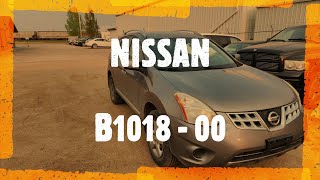
- Nissan Altima, Murano, Frontier, Sentra, Rogue (2013-2017) — OCS sensor mat failures are common and subject to recalls (e.g., 16V244000). Swapped connectors after dash repairs also trigger this code.
- Honda/Acura Various (2010-2019) — B0092 pairs with sub-codes like -87 or -92, indicating a fault with the 'Left Side Impact Sensor (second)' in the B-pillar.
- Saturn Ion, Vue (2003-2007) — Notorious for passenger seat cushion sensors failing after interior cleaning or spills. Drying the mat sometimes resolves the issue.
- Chrysler/Dodge/Jeep Various (2005-2015) — Gel-filled sensor mats in the passenger seat leak or break internal contacts over time, requiring full mat replacement.
- Hyundai/Kia Elantra, Sonata, Optima, Sorento (2011-2018) — Suffer from OCS sensor mat failures due to wear, spills, or wiring damage under the seat.
Manufacturer-Specific Notes

- General Motors: TSB #02-09-41-002A addresses PPS wiring harnesses pinched by the seat frame. The sensor is highly sensitive to moisture from steam cleaning.
- Toyota/Lexus: Recall 23V-865 covers 1 million 2020-2022 vehicles for faulty OCS sensors. The remedy prioritizes vehicles in high-humidity states.
- Ford: B0092 refers to the side impact sensor, not the seat sensor. The airbag light turns off after replacing the part, but the code remains stored.
- Nissan: Subject to massive OCS recalls (e.g., R1607). Technicians frequently misdiagnose swapped SRS connectors during dash repairs as failed sensors.
Real Owner Stories
2004 Chevrolet Silverado 1500 with 'Service Airbag' message
Owner purchased the truck with the airbag light on. Found that the wiring harness from the passenger seat was missing entirely.
What they tried:
- Researched online and found a common issue is a loose or pinched wiring harness under the passenger seat.
- Inspected under the seat to find no connector coming from the seat at all, just the floor-side harness.
- Used a scan tool which revealed multiple SRS codes, including B0092 and B0083.
Outcome: The previous owner swapped the seats and failed to reconnect the SRS wiring. The fix required sourcing the correct seat-side harness and resetting the system.
Lesson: When buying a used vehicle with an airbag light, be suspicious of modifications like custom seats. Always scan for multiple codes; B0092 and B0083 together indicate a disconnected harness.
2013 Ford Focus after DIY door repair
Airbag light appeared immediately after the owner replaced the window regulator in the driver's side door.
What they tried:
- Scanned the car and found code B0092, which on a Ford points to the 'Left Side Restraint Sensor 2'.
- Disconnected the car battery for over an hour as a safety precaution.
- Removed the door panel again and inspected the side impact sensor's wiring connector.
Outcome: The owner discovered they had not fully seated the sensor's connector during reassembly. After properly connecting it, the airbag light went off by itself.
Lesson: If an SRS fault appears after a repair, the cause is almost certainly related to the work just performed. Ensure connectors click and lock.
2006 Saturn Vue with intermittent B0092
Airbag light would come on, often after the interior was cleaned or on humid days. The code was B0092.
What they tried:
- Initial diagnosis pointed to a faulty OCS sensor mat, a common issue on Saturns due to moisture.
- Owner found that the part was discontinued and a used replacement would be a gamble.
- Removed the passenger seat cushion and let the sensor mat and foam dry indoors for several days.
Outcome: After reinstalling the dried-out seat cushion, the fault cleared and did not return, confirming the issue was moisture intrusion.
Lesson: For OCS/PPS related B0092 codes, always consider moisture as a primary cause. Drying the seat cushion indoors for several days resolves moisture intrusion without replacing parts.
2016 Nissan Frontier with multiple airbag codes after a harness replacement
Vehicle was in a fire, and the dash wiring harnesses were replaced by a shop. The airbag light was flashing, with codes B0093 and B0094 present.
What they tried:
- The shop had already replaced the sensors, but the codes remained.
- A diagnostic technician suspected swapped connectors, a known issue on Nissans.
- By carefully checking wiring diagrams, the technician found two sensor connectors plugged into the wrong places.
Outcome: After swapping the connectors to their correct positions, the codes were cleared, and the airbag light went out.
Lesson: If B0092 or related codes appear after major dash or wiring work, suspect swapped connectors before replacing any parts. Verify connector locations after major dash work.
How to Prevent This Code From Triggering
- Be mindful of items placed under the passenger seat. (Daily habit) — Objects sliding under the seat snag, pinch, or disconnect the sensitive SRS wiring harness, causing an open or short circuit.
- Use caution when cleaning vehicle interiors. (During cleaning) — Avoid excessive water, shampoo, or steam on the passenger seat cushion. Moisture soaks into the foam and short-circuits the delicate OCS sensor mat.
- Install protective wire loom or barriers under seats if pets or children are frequent passengers. (One-time install) — Small feet kick at wires, and pets chew on them. Adding a plastic barrier or wrapping the harness in split-loom tubing prevents physical damage.
- Periodically check for rodent activity in and around the vehicle. (Seasonally, especially in winter) — Rodents chew on soy-based insulation used on modern vehicle wiring. Nests or chewed wires under seats or in pillars cause SRS faults.
- Do not place heavy, wet, or electronic items on the passenger seat. (Daily habit) — Heavy backpacks stress the OCS sensor mat. Wet items introduce moisture. Laptops create electrical interference that disrupts sensor readings.
Frequently Asked Questions
What's the difference between a Passenger Presence Sensor and a Side Impact Sensor?
A Passenger Presence Sensor (OCS) is a weight-sensitive mat in the seat that controls the front passenger airbag. A Side Impact Sensor is an accelerometer in a door or pillar that deploys side and curtain airbags. Code B0092 refers to either, depending on the vehicle make.
What are the most common mistakes when diagnosing a B0092 code?
The biggest mistake is replacing a sensor without testing the circuit, as the issue is often a broken wire or dirty connector. Failing to disconnect the battery for 15 minutes before working on SRS components is a critical safety error.
My dealer quoted thousands to fix the airbag light. Is this normal?
Dealership quotes for SRS modules or complete seat replacements are high, but second opinions are vital. Independent shops frequently find the actual cause is a damaged wire or dirty connector requiring only a few hours of labor.
Can I fix a B0092 code myself?
Basic visual inspections and checking for obstructions are DIY-friendly. However, replacing sensors, testing circuits, and performing mandatory post-repair calibrations require professional tools and expertise. Improper DIY repairs risk accidental airbag deployment.
Will the airbag light go off by itself after the fix?
On some vehicles like Fords, the light turns off automatically after replacing a faulty sensor. On most cars, the code is permanently stored in the SRS module and requires an SRS-capable scan tool to clear.
Why did the airbag light come on after I detailed my car?
Passenger presence sensor mats are highly sensitive to moisture. Shampooing seats, steam cleaning, or spilling liquids short-circuits the embedded sensor, triggering the B0092 code.
Can I just reset the airbag light at home?
Disconnecting the battery does not reset an airbag light. The fault code is stored in non-volatile memory and requires an SRS-capable scan tool to erase. If the root cause remains, the light returns immediately.
Key Takeaways
- Code B0092 disables the passenger or side airbags, requiring immediate repair to restore critical crash protection.
- Inspect the yellow SRS wiring harness under the passenger seat for pinches or loose connections before buying replacement parts.
- Dry out a moisture-soaked passenger seat cushion for 48 hours before assuming the Occupant Classification System (OCS) mat is permanently dead.
- Replacing a passenger seat sensor requires a mandatory $100-$200 zero-point calibration using a professional bi-directional scan tool.
- Never probe SRS sensor connectors with a multimeter unless explicitly directed by the factory service manual, as the voltage triggers accidental airbag deployment.
Helpful Videos

The information in this article is provided for general reference and educational purposes only. Vehicle specifications, procedures, and part compatibility can vary by production date, trim level, and region. Always consult your vehicle's factory service manual and verify part numbers before purchasing or performing repairs. Safety-critical components such as airbags, seat belts, and braking systems should be installed by a qualified professional.
- 🎬 Helpful Videos
- What Does B0092 Mean?
- Can I Drive With B0092?
- Common Causes
- Symptoms
- Diagnostic Flowchart
- Common Fixes & Costs
- DIY vs Professional
- Used vs. New Parts: Buying Guide
- What Happens If You Wait — Timeline
- Cost of Not Fixing It
- Diagnosis Steps
- When This Code Triggers (Freeze-Frame Conditions)
- Related Codes
- Climate & Environmental Factors
- How to Talk to a Mechanic About This Code
- Where to Take It: Dealer vs Independent vs Chain
- When to Walk Away From the Repair
- What Scan Tool You Need for This Code
- How to Clear the Code After You Fix It
- Will This Fail Emissions / State Inspection?
- Most Commonly Affected Vehicles
- Manufacturer-Specific Notes
- Real Owner Stories
- 2004 Chevrolet Silverado 1500 with 'Service Airbag' message
- 2013 Ford Focus after DIY door repair
- 2006 Saturn Vue with intermittent B0092
- 2016 Nissan Frontier with multiple airbag codes after a harness replacement
- How to Prevent This Code From Triggering
- Frequently Asked Questions
- What's the difference between a Passenger Presence Sensor and a Side Impact Sensor?
- What are the most common mistakes when diagnosing a B0092 code?
- My dealer quoted thousands to fix the airbag light. Is this normal?
- Can I fix a B0092 code myself?
- Will the airbag light go off by itself after the fix?
- Why did the airbag light come on after I detailed my car?
- Can I just reset the airbag light at home?
- Key Takeaways
- 🎟️ Get 5% Off