

OBD-II Code B0091: Front End Sensor 1 / Left Side Restraints Sensor 1 Fault
The Ultimate Guide to Diagnosing and Fixing DTC B0091
- Code B0091 disables the primary impact sensor circuit, meaning the associated airbags will not deploy in a crash.
- The most frequent cause is a corroded front impact sensor, particularly on 2007-2014 GM trucks exposed to road salt and moisture.
- Always disconnect the negative battery terminal and wait 15 minutes before touching any yellow-harnessed airbag components to prevent accidental deployment.
- Swapping the left and right front impact sensors is a definitive, zero-cost diagnostic step to confirm a failed sensor before spending $70-$350 on a replacement.
- Diagnosis requires an SRS-capable scan tool to read manufacturer-specific suffix codes (like GM's -39 or Ford's :93) that pinpoint the exact electrical fault.
What Does B0091 Mean?

B0091 indicates the vehicle's Supplemental Restraint System (SRS) detected a circuit malfunction in 'Front End Sensor 1' or 'Left Side Restraints Sensor 1'. These sensors detect the force and direction of a collision and signal the control module to deploy the airbags. When this code sets, the system disables the associated airbag to prevent accidental deployment and illuminates the dashboard warning light.
Technical definition: The SAE/ISO definition for B0091 is "Front End Sensor 1 Circuit Malfunction." The Restraints Control Module (RCM) or Sensing and Diagnostic Module (SDM) detected an electrical fault in the sensor's 2-wire circuit. Faults include an open circuit, short to ground, short to voltage, internal sensor failure, or invalid serial data.
Can I Drive With B0091?
Yes, But With Caution. You can physically drive the vehicle, but the airbag system is compromised and will not function as designed in a collision. When code B0091 is active, the SRS control module intentionally disables the affected airbag circuit as a failsafe. In a frontal or side impact, the airbags connected to this sensor will not deploy, significantly increasing the risk of serious injury. Get this repaired immediately.
Common Causes

- Faulty Front or Side Impact Sensor (Very Common) — The sensor itself is the most frequent point of failure. On many vehicles, particularly 2007-2014 GM trucks, the front impact sensor mounts in a location exposed to road spray. Internal corrosion cracks the plastic housing, allowing water to destroy the sensitive electronics.
- Corroded or Loose Connector (Common) — The electrical connector plugging into the sensor develops corrosion or vibrates loose. Visible green or white crusty buildup on the connector pins prevents a stable electrical connection. GM vehicles frequently suffer from 'fretting corrosion' at these terminals.
- Damaged Wiring Harness (Common) — Wires leading to the impact sensor suffer damage from road debris, improper collision repairs, or chafing against the frame. This results in frayed wires (an open circuit) or worn insulation causing a short to ground or voltage.
- Low Battery Voltage (Uncommon) — A weak battery or failing alternator causes voltage drops across the vehicle. The SRS module is highly sensitive to voltage and interprets fluctuations during its startup self-check as a sensor fault, triggering a false B0091 code.
- Faulty Restraints Control Module (RCM/SRS Module) (Less Common) — The main airbag computer occasionally fails. Internal issues like a cracked solder joint or memory corruption prevent the module from correctly interpreting the signal from a perfectly good sensor.
- Incorrect Sensor Installed (Rare) — Airbag components are vehicle-specific. Installing a sensor from a different model or year results in the SRS module failing to recognize it, setting a fault code with a specific suffix (like :3A) indicating 'Incorrect Component Installed'.
Symptoms

- Airbag Warning Light On — The airbag or SRS warning light remains illuminated on the instrument cluster after the initial startup check.
- Intermittent Airbag Light — The airbag light turns on and off as the vehicle moves and the faulty circuit connection is disturbed, strongly pointing to a wiring or connector problem.
- Passenger Airbag Disabled Light — A fault in the SRS system causes the 'Passenger Airbag Off' indicator to illuminate as a safety measure, even if a passenger is present.
- Failed Safety Inspection — In jurisdictions requiring vehicle safety inspections, an active airbag warning light is an automatic failure.
Diagnostic Flowchart
Tap your situation to follow the diagnostic path that matches what you're seeing on this code.
Common Fixes & Costs
- Replace Front/Side Impact Sensor
— Parts: $70-$350, Labor: $60-$170, ~0.8 hr book time
(DIY)
Chevrolet Silverado / GMC Sierra (2007-2014 Front): OEM 13502744 (Alt: Dorman 590-271)
Ford F-150 (2009-2014 Front): OEM AL3Z-14B004-A (Alt: Carquest Premium CTC1195) - Clean Connector and Apply Dielectric Grease — Parts: $5-$15, Labor: $50-$100, ~0.5 hr book time (DIY)
- Repair Wiring Harness or Connector — Parts: $10-$50, Labor: $150-$300, ~2 hr book time (Intermediate)
- Replace SRS Control Module — Parts: $700-$1300, Labor: $150-$300, ~1.5 hr book time (Professional)
- Professional Diagnostic Inspection — Parts: $0, Labor: $100-$250, ~1.5 hr book time (Professional)
Used vs. New Parts: Buying Guide
When a used part is worth it: Buying a used impact sensor is NOT recommended due to safety criticality. It should only be considered for older, low-value vehicles where a new OEM part is discontinued, and must be sourced from a non-crashed donor.
Donor-vehicle mileage cap: roughly under 60000 miles for the part to have meaningful remaining life.
Donor quality checklist:
- Verify the donor vehicle was not in a collision.
- Match the part number EXACTLY.
- Inspect the used sensor for corrosion, cracks in the plastic housing, or bent pins.
- Avoid parts from flood-damaged or rust-belt vehicles.
Decision logic:
- If The part is for a safety-critical system like airbags → Buy new OEM or high-quality aftermarket. The cost savings of a used part do not outweigh the safety risk.
- If Budget is the absolute primary concern and you accept the risk → A used sensor from a low-mileage, non-crashed donor is a possibility, but carries no guarantee of longevity.
Warranty tradeoff: Used parts typically have a 30-day warranty covering only the part. New aftermarket parts offer 1-year warranties. New OEM parts carry the manufacturer's warranty.
Worst-case if a used part fails: $200-$400 if a used sensor fails after installation, plus the incalculable cost of it failing in an accident.
What Happens If You Wait — Timeline
- 0 Seconds: The SRS module detects a circuit fault during startup. The airbag warning light illuminates, and the corresponding airbag circuit is disabled. (MPG impact: 0%% · Added cost: $0)
- Immediate & Ongoing: The vehicle operates without a key safety component, significantly increasing the risk of serious injury or death in a collision. (MPG impact: 0%% · Added cost: Incalculable personal safety risk.)
- First State Inspection: The vehicle fails its annual safety inspection, preventing legal registration renewal until repaired. (MPG impact: 0%% · Added cost: $150-$250 diagnostic fee plus repair costs.)
Cost of Not Fixing It
- Immediate: The airbag circuit related to the faulty sensor is disabled. In a collision, it will not deploy, significantly increasing the risk of serious injury or death. (Added cost: N/A)
- Ongoing: The vehicle automatically fails any state safety inspection checking for an illuminated airbag light, preventing legal registration renewal. (Added cost: $20-$50 (failed inspection fee))
Diagnosis Steps

- Read the Full Fault Code
Use an OBD-II scanner capable of accessing the SRS/airbag module. Record the full B0091 code, including suffix digits (e.g., B0091:11, B0091-39). Suffixes provide critical clues: ':11' means short-to-ground, while ':93' means 'No Operation'.
Tools: SRS-capable OBD-II Scanner (Beginner) - Perform a Visual Inspection
Locate the relevant impact sensor. 'Front End Sensor 1' is typically on the radiator core support. 'Left Side Restraints Sensor 1' is often in the driver's door or B-pillar. Look for a cracked sensor housing, water intrusion, and green/white corrosion on the connector.
Tools: Flashlight, Inspection Mirror (Beginner) - SAFETY FIRST: Depower the SRS System
Before touching any sensor, connector, or wiring in the airbag system, disconnect the negative battery terminal. Wait exactly 15 minutes. This discharges the backup power capacitors within the SRS module, preventing accidental airbag deployment.
Tools: Wrench set (Beginner) - Clean and Reseat the Connector
With the system depowered, unplug the sensor's electrical connector. Use electrical contact cleaner and a small nylon brush to clean the connector and sensor pins. Reseat the connector firmly until it clicks. Reconnect the battery and clear the codes.
Tools: Electrical contact cleaner, Small brush (Intermediate) - Swap Sensors (If Applicable)
If the vehicle has identical left and right front impact sensors (common on GM trucks), swap their positions. Disconnect the battery, swap the sensors, reconnect, and clear codes. If the code changes from B0091 (Sensor 1) to B0096/B0097 (Sensor 2), the sensor itself is definitively faulty.
Tools: Socket set (Intermediate) - Check for a Short to Ground
Using a multimeter set to Ohms, disconnect both the sensor and the SRS module. On the harness connector for the sensor, place one probe on the signal wire terminal and the other on a clean chassis ground. A reading under 10,000 ohms indicates a short to ground in the harness.
Tools: Multimeter, Vehicle-specific wiring diagram (Advanced) - Check for an Open Circuit
With the sensor and SRS module disconnected, check for continuity. Probe the signal wire terminal at the sensor connector and the corresponding terminal at the SRS module connector. Resistance should be under 2 ohms. An 'OL' reading indicates a broken wire.
Tools: Multimeter, Vehicle-specific wiring diagram (Advanced) - Analyze Live Sensor Data
View the live data stream from the SRS module using an advanced scan tool. A healthy sensor reports an 'OK' status. If the sensor shows 'Faulted' or data drops out while wiggling the harness, it confirms a wiring or connector issue.
Tools: Advanced SRS Scan Tool (Advanced)
When This Code Triggers (Freeze-Frame Conditions)
- Ignition Status: ON (The fault is almost always detected during the power-on self-test (POST) when the ignition is first turned on.)
- System Voltage: 9-16 Volts (The SRS module monitors system voltage. A low voltage reading in freeze frame indicates a battery or charging system issue triggered the code.)
- Component Status: Open Circuit / Short to Ground (Advanced scanners show the specific status the module detected from the sensor circuit, such as 'Open' or 'Shorted'.)
Related Codes
- B0091 with suffixes (:02, :04, :3A, :71, -39, :93) — Manufacturer-specific digits provide crucial diagnostic direction. For GM, :02 is 'Short to Ground' and -39 is 'Internal Failure'. For Ford, :93 means 'No Operation'. Always use a scanner that reads suffixes.
- B0096 / B0097 — Codes for the 'Right Side Restraints Sensor'. If you get B0091 and a right-side code simultaneously, it's unlikely both sensors failed. Focus on a shared cause like a wiring harness problem or SRS module fault.
- B0092 — Code for 'Left Side Restraints Sensor 2'. Refers to a secondary sensor on the same side. B0091 and B0092 together point to an issue affecting the entire left side sensor circuit.
Climate & Environmental Factors
- Road Salt (Winter Climates): Salty spray significantly accelerates corrosion of the impact sensor and electrical wiring. This is the primary reason for the high failure rate on GM trucks where the sensor mounts exposed on the radiator support.
- Humidity and Moisture: High humidity and heavy rain seep into the sensor housing or connector, causing corrosion on the internal circuit board or pins, leading to short circuits.
- Extreme Temperatures: Extreme cold causes electrical connectors to contract, creating loose connections. Extreme heat causes expansion, stressing connections over time and leading to intermittent faults.
How to Talk to a Mechanic About This Code
Say this: "I have an airbag warning light on, and my scanner shows code B0091. Please start with a visual inspection of the front-left impact sensor and connector for corrosion, and test the wiring harness for continuity before recommending a sensor replacement."
Directs the technician to follow a logical diagnostic procedure instead of immediately replacing the most expensive part, showing you understand wiring issues are common causes.
Avoid saying:
- My airbag light is on, just fix it.
- I think I need a new airbag sensor, can you replace it?
Questions to ask before authorizing the repair:
- Did you find any corrosion or wiring damage during the visual inspection?
- Did you perform a continuity test on the wiring harness?
- Does this repair require any programming or calibration after the part is installed?
Where to Take It: Dealer vs Independent vs Chain
- Dealer:
Recommended only if the initial diagnosis points towards a faulty SRS module or if the vehicle is under warranty.
Best for: Vehicles under warranty., Complex cases requiring SRS control module replacement and programming.
Downsides: Highest labor rates., May replace the entire module rather than diagnose a nuanced wiring issue. (Typical cost: +40% vs. baseline) - Independent Shop:
Best fit for the majority of cases. An experienced independent mechanic easily diagnoses common causes at a fair price.
Best for: Most B0091 repairs, especially sensor replacement and wiring diagnostics., Out-of-warranty vehicles.
Downsides: May lack dealer-specific tools to program a new SRS module if needed. (Typical cost: +0% vs. baseline) - Chain Shop:
AVOID. Airbag system repairs require precision not typically found at chain shops focused on high-volume maintenance.
Downsides: Technicians lack specialized training for airbag systems., Business model encourages quick parts replacement over in-depth diagnostics. (Typical cost: -10% vs. baseline)
When to Walk Away From the Repair
If the airbag system repair cost exceeds 40% of your car's current private-party value, critically evaluate the investment.
- Car worth $5000, fix is $2200: Walk away or sell as-is. The repair cost is nearly half the car's value. Selling a car with an active airbag light is difficult, but better than sinking more money into it.
- Car worth $15000, fix is $400: Fix it. This is a relatively inexpensive repair that restores a critical safety feature and the full value of your vehicle.
What Scan Tool You Need for This Code
Minimum: A scanner that reads and clears codes from the SRS (Supplemental Restraint System) module. A basic engine-only code reader will NOT work.
The B0091 code is stored in the SRS control module, not the Engine Control Unit. A standard $20 scanner only talks to the ECU.
Budget: Autel AutoLink AL619 (~$100) — Reads and clears engine, ABS, and SRS codes on most major vehicle models. Retrieves the B0091 code and definition for basic diagnosis.
Mid-range: BlueDriver Pro Bluetooth Scanner (~$120) — Connects to your smartphone to read/clear SRS codes and display live data, useful for diagnosing intermittent wiring issues.
Professional: Autel MaxiCOM MK808 (~$350-450) — Full-system scanner offering deep diagnostics. Reads manufacturer-specific SRS suffixes, views live data streams, and performs bidirectional tests.
Rent vs buy: Auto parts store Loan-A-Tool scanners typically do NOT read SRS codes due to liability. You must purchase your own SRS-capable scanner or pay a shop.
How to Clear the Code After You Fix It
- Ensure the physical fault (bad sensor, broken wire) is properly repaired.
- Reconnect the battery if disconnected.
- Use an SRS-capable OBD-II scan tool to access the Restraints Control Module.
- Select the function to 'Clear DTCs'. A standard engine code reader will not work.
Drive cycle (~1 minutes): The SRS system does not require a complex drive cycle. After clearing the code, turn the ignition off, wait 10 seconds, and turn it back on. The SRS module performs its self-test immediately. If the light illuminates and goes out, the repair was successful.
Readiness monitors affected: None
Watch out for:
- Using a basic engine code reader that cannot communicate with the SRS module.
- Failing to fix the root cause before clearing the code, causing the light to return immediately.
- Assuming disconnecting the battery will clear a 'hard fault' from the SRS module's memory.
Will This Fail Emissions / State Inspection?
No — by itself this code doesn't fail OBD inspection (but it can keep readiness monitors from setting, which causes a separate fail).
- California: An illuminated airbag light is a safety failure. While it won't fail the emissions (smog check) portion, a vehicle cannot be certified as safe and may not have its registration renewed until repaired.
- New York: An illuminated airbag warning lamp is an advisory item, not an automatic failure for a standard safety inspection. However, individual shops may refuse to pass a vehicle with a known safety fault.
- Texas: An illuminated airbag light is NOT part of the official safety inspection criteria and will not cause a failure. Note: Safety inspections are eliminated for non-commercial vehicles in Texas as of 2025.
Most Commonly Affected Vehicles
- Chevrolet Silverado, Suburban, Tahoe (2007-2014) — Extremely common issue. The front impact sensors (Part # 13502744) are highly prone to corrosion, causing the plastic case to split. Swapping the left and right sensors is a definitive diagnostic trick.
- GMC Sierra, Yukon (2007-2014) — Mechanically identical to Chevrolet counterparts, suffering from the exact same front impact sensor corrosion. Suffix codes like B0091-39 indicate an internal sensor failure.
- Ford F-150 (2009-2014) — B0091 often refers to the 'Left Side Restraints Sensor 1' located in the driver's door. Wiring issues in the door jamb molex connector are a frequent cause. Suffix B0091:93 means 'No Operation'.
- Honda Odyssey (2011-2017) — Sets a B0091-87 code, specifically indicating 'No Signal' from the left side impact sensor. Diagnosis requires checking the B-pillar wiring harness.
- Nissan Altima, Rogue (2013-2023) — Nissan refers to these as 'Satellite Sensors'. Depending on the model, B0091 points to a front, rear, or side airbag satellite sensor.
Manufacturer-Specific Notes
- General Motors (Chevy/GMC): The front impact sensor is infamous for failing due to corrosion. A steel sleeve inside the sensor rusts and expands, cracking the outer plastic housing. Always check for TSBs on 'fretting corrosion' at the connector.
- Ford: Ford defines B0091 as 'Left Side Restraints Sensor 1' and uses two-digit suffixes like :11 (short to ground) or :93 (no operation) to specify the exact fault. Diagnosis relies heavily on these suffixes.
- Honda: Honda uses the suffix -87 (B0091-87) to mean 'No Signal Received' from the sensor. The fault frequently lies in the wiring harness rather than the sensor itself.
Real Owner Stories
2011 Chevy Silverado with B0091-39 at 110K miles
Airbag light came on during a wet week. The code was B0091-39, indicating an internal sensor failure.
What they tried:
- Visually inspected the front left impact sensor and found the plastic casing cracked open from corrosion.
- Swapped the left and right front impact sensors.
- Cleared codes. The code changed to B0097 (Right Front Sensor), confirming the sensor was the problem.
Outcome: Replaced the faulty sensor with a new ACDelco part (#13502744) for $90. The owner torqued the new sensor, applied dielectric grease, and the light stayed off.
Lesson: On GM trucks, inspect the front sensor for a cracked case immediately. Swapping the left and right sensors is a definitive, no-cost diagnostic step.
2013 Ford F-150 with intermittent B0091:93
Airbag light came on intermittently during rain. Scanned a B0091:93 'No Operation' code, pointing to the driver's door impact sensor.
What they tried:
- Cleared the code, but it returned, suggesting a connection issue.
- Disconnected the large 'molex' connector in the driver's door jamb and inspected it for corrosion.
Outcome: The connector looked clean, but after unplugging and firmly reseating it, the intermittent fault disappeared. The problem was a micro-break in the connection sensitive to moisture.
Lesson: Intermittent airbag faults correlating with weather are often wiring issues. For Ford B0091:93, always inspect the door jamb connector before replacing the sensor.
How to Prevent This Code From Triggering
- Apply Dielectric Grease to Connectors (Whenever a connector is exposed or during service) — Seals electrical connectors from moisture, dirt, and salt, preventing corrosion on the pins which is a primary cause of B0091.
- Annual Undercarriage Cleaning (Once per year, especially after winter in salt-belt regions) — Power-washing the undercarriage and radiator support removes corrosive salt buildup, extending the life of exposed impact sensors.
Frequently Asked Questions
Is it safe to drive with code B0091?
While the vehicle's engine operates normally, it is not safe. The B0091 code means a critical part of your airbag system is disabled. In an accident, the affected airbags will not deploy, drastically increasing the risk of injury.
Can I fix code B0091 myself?
Replacing a faulty sensor is within the ability of an experienced DIYer. You MUST disconnect the battery and wait 15 minutes before working on any airbag component. Stop and consult a professional if the issue requires tracing complex wiring faults.
Will clearing the code turn off the airbag light?
You can clear the code with an SRS scanner, but the light will return immediately on the next startup if the physical fault remains. The SRS module performs a self-test every time you turn the key.
What's the difference between B0091 and B0092?
B0091 refers to the primary 'Sensor 1' on the left side (front or door). B0092 refers to a secondary 'Sensor 2' on the left side, typically located further back in a pillar.
Does code B0091 mean all my airbags are disabled?
Not necessarily. The SRS module disables the specific circuit associated with the faulty sensor to prevent accidental deployment. Other independent airbag circuits may remain functional, but the system's overall integrity is compromised.
Can a bad clock spring cause a B0091 code?
It is highly unlikely. A bad clock spring causes codes related to the driver's steering wheel airbag circuit (e.g., B0001). Code B0091 is specific to an impact sensor circuit wired independently of the clock spring.
I found a used SRS module online for cheap. Can I use it?
No. Used SRS modules are programmed with the donor vehicle's VIN and may contain locked crash data. A new module must be installed and professionally programmed to your vehicle to guarantee safety system integrity.
Key Takeaways
- Code B0091 disables the primary impact sensor circuit, meaning the associated airbags will not deploy in a crash.
- The most frequent cause is a corroded front impact sensor, particularly on 2007-2014 GM trucks exposed to road salt and moisture.
- Always disconnect the negative battery terminal and wait 15 minutes before touching any yellow-harnessed airbag components to prevent accidental deployment.
- Swapping the left and right front impact sensors is a definitive, zero-cost diagnostic step to confirm a failed sensor before spending $70-$350 on a replacement.
- Diagnosis requires an SRS-capable scan tool to read manufacturer-specific suffix codes (like GM's -39 or Ford's :93) that pinpoint the exact electrical fault.
Helpful Videos
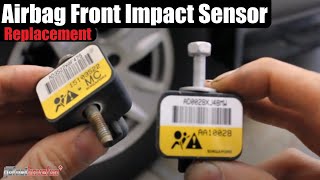
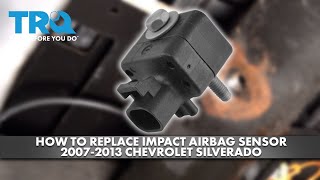

The information in this article is provided for general reference and educational purposes only. Vehicle specifications, procedures, and part compatibility can vary by production date, trim level, and region. Always consult your vehicle's factory service manual and verify part numbers before purchasing or performing repairs. Safety-critical components such as airbags, seat belts, and braking systems should be installed by a qualified professional.
- 🎬 Helpful Videos
- What Does B0091 Mean?
- Can I Drive With B0091?
- Common Causes
- Symptoms
- Diagnostic Flowchart
- Common Fixes & Costs
- Used vs. New Parts: Buying Guide
- What Happens If You Wait — Timeline
- Cost of Not Fixing It
- Diagnosis Steps
- When This Code Triggers (Freeze-Frame Conditions)
- Related Codes
- Climate & Environmental Factors
- How to Talk to a Mechanic About This Code
- Where to Take It: Dealer vs Independent vs Chain
- When to Walk Away From the Repair
- What Scan Tool You Need for This Code
- How to Clear the Code After You Fix It
- Will This Fail Emissions / State Inspection?
- Most Commonly Affected Vehicles
- Manufacturer-Specific Notes
- Real Owner Stories
- 2011 Chevy Silverado with B0091-39 at 110K miles
- 2013 Ford F-150 with intermittent B0091:93
- How to Prevent This Code From Triggering
- Frequently Asked Questions
- Is it safe to drive with code B0091?
- Can I fix code B0091 myself?
- Will clearing the code turn off the airbag light?
- What's the difference between B0091 and B0092?
- Does code B0091 mean all my airbags are disabled?
- Can a bad clock spring cause a B0091 code?
- I found a used SRS module online for cheap. Can I use it?
- Key Takeaways
- 🎟️ Get 5% Off