

OBD-II Code B0090: Left Front Impact Sensor Circuit Malfunction
The Ultimate 2026 Guide: What B0090 means, why it triggers, and how to fix it for good
- Code B0090 disables your entire airbag system immediately, making the vehicle unsafe to drive until the left front impact sensor circuit is repaired.
- Check the sensor connector first; over 50% of B0090 codes trigger because a mechanic forgot to plug the sensor back in after replacing a front bumper or radiator.
- Swap the left and right front impact sensors before buying parts; if the code changes to B0091, the sensor is dead, but if it stays B0090, you have a wiring or module issue.
- Always disconnect the negative battery terminal and wait 15 minutes before touching any SRS components to prevent accidental and dangerous airbag deployment.
What Does B0090 Mean?

Code B0090 indicates a fault in the electrical circuit for the left front impact sensor. This sensor detects frontal collisions and signals the airbags to deploy. When active, the Supplemental Restraint System (SRS) disables all airbags as a fail-safe to prevent accidental deployment.
Technical definition: The formal SAE/OBD-II definition for code B0090 is "Left Frontal Restraints Sensor". It indicates that the Restraints Control Module (RCM) has detected an open circuit, short to ground, short to voltage, or an invalid/missing signal from the left front impact sensor.
Can I Drive With B0090?
No — Do Not Drive. Do not drive with this code. The airbag system is completely disabled. Your airbags and seatbelt pretensioners will not deploy in a crash, significantly increasing the risk of serious injury or death.
Common Causes

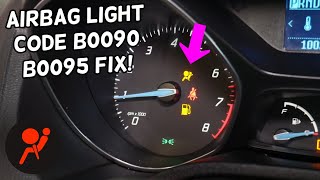
- Sensor connector unplugged after previous repair (Very Common) — Mechanics frequently forget to plug the sensor back in after replacing a front bumper, radiator, or headlights. Always check this first if the vehicle was recently serviced. 🎬 Watch: How to fix B0090 on a Ford Focus
- Damaged or corroded wiring harness and connector (Very Common) — The sensor's location at the front of the vehicle makes its wiring highly vulnerable to damage from minor collisions, road debris, and corrosion from road salt and moisture.
- Faulty left front impact sensor (Common) — The internal accelerometers of the sensor fail due to age, moisture intrusion, or manufacturing defects, causing it to send incorrect signals or no signal at all. 🎬 Watch: How to locate the front crash impact sensor
- Faulty Restraints Control Module (RCM/SRS Module) (Less Common) — The main computer module that reads the sensor's data can fail due to internal faults, corrupted software, or communication errors.
- Low battery voltage or poor ground connections (Uncommon) — A weak vehicle battery or a high-resistance ground strap causes low system voltage, triggering spurious faults in sensitive electronic modules like the SRS system.
- Blown SRS fuse (Uncommon) — The SRS system operates on a dedicated power supply. A blown fuse prevents the sensor and module from functioning.
Symptoms

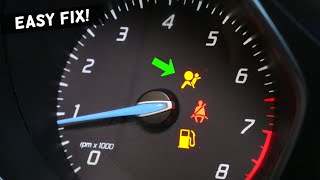
- Airbag warning light is on — The airbag or SRS warning light illuminates and stays on the dashboard after the initial startup check.
- "Service Airbag" or "Check Airbag" message — The driver information center displays a text message warning about a fault in the airbag system.
- Failed safety inspection — An active airbag warning light is an automatic failure for mandatory vehicle safety inspections in most jurisdictions.
- Airbags will not deploy (scan-tool only — no driver-felt sign) — The vehicle's airbag system is deactivated. In the event of a collision, the airbags and seatbelt pretensioners will not activate.
Diagnostic Flowchart

Tap your situation to follow the diagnostic path that matches what you're seeing on this code.
Common Fixes & Costs
- Reconnect or Secure Sensor Connector — Parts: $0, Labor: $0 - $75, ~0.5 hr book time (DIY)
- Clean or Replace Sensor Pigtail Connector — Parts: $15-$60, Labor: $100-$200, ~1.5 hr book time (Intermediate)
- Replace Left Front Impact Sensor — Parts: $70-$250, Labor: $75-$150, ~1.2 hr book time (Intermediate)
- Repair Wiring Harness — Parts: $10-$50, Labor: $150-$300, ~2.5 hr book time (Advanced)
- Replace SRS Control Module — Parts: $700-$1500+, Labor: $150-$300, ~2 hr book time (Professional)
Used vs. New Parts: Buying Guide
When a used part is worth it: Buying used is NOT recommended for safety-critical electronic parts like an impact sensor. The part's history is unknown and could have non-visible damage from a prior accident.
Donor quality checklist:
- Avoid salvage yards for electronic safety components.
- Ensure the part number matches exactly; slight variations are incompatible.
- Never buy a sensor that appears physically damaged or shows signs of corrosion.
Decision logic:
- If The part is a front impact sensor → Always buy a new OEM or reputable aftermarket part. The safety risk is not worth the minor cost savings.
- If Budget is extremely tight and the alternative is driving with no repair → A used sensor from a certified auto recycler is a last resort, but professional installation and testing are critical.
Warranty tradeoff: Used parts from salvage yards typically have a 30-day warranty covering only the part. New OEM and high-quality aftermarket sensors come with a 1-year or longer warranty.
Worst-case if a used part fails: $150-$300 if a used part fails after install (repeat labor costs), plus the incalculable cost of the airbag system not deploying in a crash.
What Happens If You Wait — Timeline
- Immediately: Code B0090 is set, the airbag warning light turns on, and the entire SRS system is disabled as a fail-safe. Airbags will NOT deploy in a crash. (Added cost: $0 (Incalculable safety risk))
- First Vehicle Inspection: The vehicle fails its mandatory safety inspection in jurisdictions that check for an active airbag light, resulting in fines or registration denial. (Added cost: $20-$50 (Re-inspection fees))
- 1-6 Months of Neglect: If the root cause is moisture, corrosion spreads from the connector pins into the copper wire itself. The green crust of copper sulfate increases resistance, making diagnosis harder. (Added cost: $150-$300 (Requires a new wiring pigtail and labor to splice it in))
- 6+ Months of Neglect: Corrosion wicks up the wiring harness under the insulation, potentially damaging a larger section of the harness or shorting out the SRS control module. (Added cost: $500-$1500+ (Requires replacement of a major wiring harness section or the RCM))
Cost of Not Fixing It
- Immediately: The vehicle's airbag system and seatbelt pretensioners are disabled. In the event of a crash, they will not deploy. (Added cost: N/A (Safety Risk))
- First State Inspection: The vehicle automatically fails the safety inspection portion in many states due to the illuminated airbag warning light. (Added cost: $20-$50 (Re-inspection fee))
- 1-12+ months: If the cause is water intrusion, corrosion spreads to other nearby wiring or components, causing broader electrical failures. (Added cost: $200-$1000+)
Diagnosis Steps
- Read the Trouble Codes
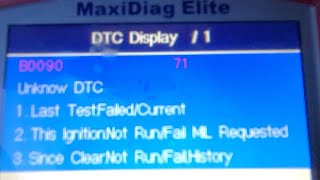
Use an OBD-II scanner capable of reading SRS/airbag codes to confirm B0090 is active. Note any manufacturer-specific sub-codes (e.g., B0090:11, B0090-87) for crucial diagnostic clues.
Tools: SRS-capable OBD-II Scanner (Beginner) - Visually Inspect the Sensor and Wiring
Locate the left front impact sensor on the radiator support or behind the front bumper. Look for obvious damage, cracks, or frayed wires. Confirm the sensor is plugged in securely.
Tools: Flashlight, Trim removal tools (Beginner) - Check and Clean the Connector
Disconnect the negative battery terminal and wait 15 minutes. Disconnect the sensor's electrical connector. Inspect the pins for corrosion or moisture. Clean with electrical contact cleaner and apply dielectric grease before reconnecting.
Tools: 10mm Wrench, Electrical Contact Cleaner, Dielectric Grease (Intermediate) - Test by Swapping Sensors
Swap the left and right front impact sensors. Clear the codes and see if the fault changes to B0091 (right side). If it does, the sensor is faulty. If the code remains B0090, the problem is in the wiring or control module.
Tools: Socket set, SRS-capable OBD-II Scanner (Intermediate) - PRO TIP: Test Sensor with Live Data
Connect an advanced scan tool and view live data for the left front impact sensor. With the ignition on, gently tap the sensor with a screwdriver handle. A healthy sensor shows a rapid voltage spike. A flat reading points to a faulty sensor or wiring.
Tools: Advanced diagnostic scan tool (Advanced) - Check for Voltage and Ground at the Connector
With the ignition on and sensor unplugged, use a multimeter to test the connector harness. Check for a reference voltage (often ~5V) on one pin and a good ground (near 0Ω resistance) on the other. No voltage or ground points to a wiring or RCM problem.
Tools: Multimeter, Vehicle-specific wiring diagram (Advanced) - Test Circuit Resistance
With the battery disconnected and both the sensor and RCM unplugged, measure the resistance between the two wires in the harness. The reading should be greater than 10,000 ohms (no short). Then, check the resistance of each individual wire from end to end; it should be less than 0.5 ohms (good continuity).
Tools: Multimeter, Vehicle-specific wiring diagram (Advanced) - PRO TIP: Analyze with an Oscilloscope
Connect an oscilloscope to the sensor's signal wire. A functioning sensor produces a clean, stable waveform that changes predictably with vibration. A flat line or erratic pattern confirms a failed sensor.
Tools: Oscilloscope, Wiring diagram (Professional) - Check the SRS Control Module
If the sensor and wiring are confirmed good, diagnose the SRS control module. This requires a professional-grade scan tool to check for communication errors or internal faults requiring replacement.
Tools: Advanced diagnostic scan tool, Manufacturer service information (Professional)
When This Code Triggers (Freeze-Frame Conditions)
- Fault Status: Active/Confirmed (The fault is currently present during the SRS module's self-test at ignition-on.)
- Module Voltage: 11.5V - 14.5V (Indicates the battery voltage supplied to the SRS control module at the time the fault was detected.)
- Ignition Cycle Counter: 0-255 (Shows the number of times the vehicle has been started since the fault code was first logged.)
- Occurrence Counter: 1-255 (Tracks how many times the specific fault condition has been detected by the SRS module.)
Related Codes
- B0091 — This code is for the 'Right Front Impact Sensor'. If you swap the left and right sensors and the code changes from B0090 to B0091, it confirms the sensor itself is faulty.
- B0095 — Another code for the 'Right Frontal Restraints Sensor', commonly used on Ford vehicles. It is treated exactly the same as B0091.
- U0170 — Means 'Lost Communication With Restraints Control Module'. If seen with B0090, the primary fault is with the SRS module itself or its power/ground supply, not the sensor.
- B00D5 — Relates to the 'Restraint System Passenger Disable Indicator'. On Ford trucks, it can appear alongside B0090, indicating a broader SRS system issue.
Climate & Environmental Factors
- Road Salt / High Humidity: Saltwater spray from winter roads is highly corrosive and penetrates electrical connectors. This causes pins to corrode and wires to short or open, interrupting the signal from the sensor.
- Cold Weather: Extreme cold causes plastic connectors and wire insulation to become brittle and crack, creating entry points for moisture. It also causes intermittent changes in electrical resistance.
How to Talk to a Mechanic About This Code
Say this: "I have an airbag light on and my scanner shows code B0090 for the left front impact sensor. I'd like to schedule a diagnostic. Can you please start by inspecting the wiring and connector for damage or corrosion before recommending a new sensor or module?"
This signals you've done research and guides the technician toward a logical, cost-effective diagnostic process. It prevents them from immediately quoting an expensive part without checking simple failure points.
Avoid saying:
- 'My airbag light is on, can you fix it?' (Too vague; invites a high quote for a worst-case scenario.)
- 'Just replace the sensor.' (A command, not a request for diagnosis. The sensor may not be the problem.)
- 'I have no idea what's wrong, just do whatever it takes.' (An open invitation for unnecessary up-selling.)
Questions to ask before authorizing the repair:
- What were the results of the visual inspection of the wiring and connector?
- If you are recommending a new sensor, did you swap it with the right-side sensor to confirm it was the point of failure?
- If you are recommending a new SRS control module, can you show me the test results proving the wiring and sensor are good?
- Does this repair require any module programming, and is that included in the quote?
- What is the warranty on the parts and labor for this specific repair?
Where to Take It: Dealer vs Independent vs Chain
- Dealer:
Recommended if the SRS control module needs to be replaced or programmed, or if the vehicle has a known, complex TSB. Otherwise, an independent shop is more cost-effective.
Best for: Vehicles under warranty., Complex manufacturer-specific quirks (e.g., GM rollover sensor issue)., Repairs requiring SRS control module replacement and programming.
Downsides: Highest labor rates and part costs., May be quicker to replace entire components rather than perform detailed wiring repairs. (Typical cost: +50% vs. baseline) - Independent Shop:
Best fit for most B0090 scenarios. An experienced independent technician handles the most common causes (wiring, connector, sensor) far more affordably than a dealer.
Best for: Out-of-warranty vehicles where cost is a factor., Common fixes like sensor replacement, connector cleaning, or wiring harness repair., Shops with ASE-certified technicians specializing in electrical diagnostics.
Downsides: Quality and expertise vary widely., May lack the expensive, manufacturer-specific tools to program a new SRS module. (Typical cost: +0% vs. baseline) - Chain Shop:
AVOID for B0090 diagnosis and repair. The safety-critical nature of the airbag system requires diagnostic expertise not typically found at chain shops.
Best for: Simple, non-safety-critical repairs like oil changes or tires.
Downsides: Technician skill varies dramatically., Often lack advanced diagnostic tools and specific training for complex SRS issues., High pressure to meet sales targets leads to misdiagnosis. (Typical cost: -10% vs. baseline)
When to Walk Away From the Repair
If the estimated repair cost exceeds 50% of the car's private-party value, consider selling the vehicle. However, you must legally disclose the airbag fault to the buyer.
- Car worth $4000, fix is $1800: Walk away. The repair cost is approaching half the car's value. Selling the car 'as-is' with full disclosure is a more financially sound decision.
- Car worth $15000, fix is $450: Fix it. This is a relatively minor cost to restore a critical safety feature on a valuable vehicle.
- Car worth $2500, fix is $250: Fix it. The cost is low and makes the car safe and sellable for its full value.
What Scan Tool You Need for This Code
Minimum: A scanner that can read and clear Supplemental Restraint System (SRS) / Airbag codes. A basic engine code reader will NOT work.
A standard $20-$50 OBD-II scanner only accesses the Powertrain Control Module. The B0090 code is stored in the separate SRS Control Module, requiring a more advanced tool.
Budget: Autel AutoLink AL619 (~$80) — Reads and clears codes from the SRS, ABS, Engine, and Transmission modules. It provides the specific B0090 code and its definition.
Mid-range: Foxwell NT630 Plus / BlueDriver Pro (~$120-180) — Reads/clears SRS codes and displays live data from the SRS sensors. This allows you to see the sensor's output in real-time to confirm if it is working.
Professional: Autel MaxiCOM MK808 / Foxwell NT716 (~$450-600) — Offers bi-directional control for active tests on the SRS system and performs programming functions necessary if the SRS control module needs replacement.
Rent vs buy: Auto parts stores offer free loaner tools, but their basic scanners typically CANNOT read SRS/airbag codes. You will likely need to purchase your own SRS-capable scanner or pay a shop for a diagnostic.
How to Clear the Code After You Fix It
- Ensure the underlying fault has been physically repaired.
- Reconnect the negative battery terminal if it was disconnected.
- Use an SRS-capable OBD-II scan tool to connect to the Restraints Control Module.
- Select the 'Clear Fault Codes' or 'Reset SRS Module' function.
- Turn the ignition off, then on again, and verify the airbag warning light illuminates for a few seconds and then turns off.
Drive cycle (~5 minutes): An SRS 'drive cycle' is a verification test. After clearing the code, start the vehicle. The SRS module performs a self-test at every startup. If the light stays off after the initial 5-7 second bulb check, the repair is successful. No extended driving is required.
Readiness monitors affected: None
Watch out for:
- Disconnecting the battery will NOT clear a B0090 code; it is a hard code stored in memory.
- Using a standard engine code reader will not work; it cannot communicate with the SRS module.
- If the root cause is not fixed, the code reappears immediately on the next ignition cycle.
Will This Fail Emissions / State Inspection?
No — by itself this code doesn't fail OBD inspection (but it can keep readiness monitors from setting, which causes a separate fail).
- California: An airbag light does not affect the emissions (smog) test. However, it is a safety defect and the vehicle is not legally roadworthy.
- New York: An illuminated airbag warning lamp is an advisory item, not a cause for rejection of the safety inspection. The owner is informed, but it does not cause an automatic failure.
- Texas: The airbag system is not a required inspection item in Texas. A vehicle passes the state safety inspection even with the airbag light on.
Most Commonly Affected Vehicles
- Chevrolet Silverado / Suburban / Tahoe (2007-2018) — Extremely common issue due to the sensor's exposed location behind the bumper. On 2007-2014 models, code B0090 may incorrectly point to the rollover sensor (ROS).
- GMC Sierra / Yukon (2007-2018) — Shares the same platform and sensor design as Chevrolet models, making it equally susceptible to corrosion and the ROS diagnostic quirk.
- Ford F-150 / Focus / Fusion (2009-2018) — Prone to this code, often with sub-codes like B0090:11. On the Focus (2011-2018), sensors are on the upper radiator support and are often left unplugged after service.
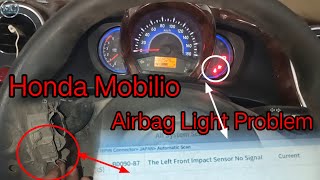
- Honda Odyssey / Accord / Civic / Pilot (2011-2022) — Often appears with sub-code B0090-87 ('No Signal'). Water intrusion into the connector is a known issue.
- Acura ILX (2016-2017) — Acura TSB 18-016 was issued for code B0090-87. A wire diameter variance allows water into the connector, requiring replacement of the sensor and engine harness.
- Hyundai Sonata / Santa Fe / Elantra (2011-2020) — Front impact sensors are located on the upper radiator support, making them susceptible to damage or being left unplugged during service.
- Nissan Murano / Qashqai / X-Trail (2003-2018) — Triggered by improper front bumper installation that misaligns or damages the sensor.
- Dodge Ram / Charger / Caravan (2008-2020) — Code B0090-12 indicates an improper ECU shutdown or recovery event, rather than a primary sensor fault.
Manufacturer-Specific Notes
- General Motors (GM): On 2007-2014 trucks and SUVs, B0090 misleadingly refers to a fault with the vehicle's rollover sensor (ROS), not the front impact sensor. This requires diagnosis with a GM-specific scan tool.
- Ford: Ford uses specific sub-codes like B0090:11 (circuit short to ground) or B0090:93 (no operation) to pinpoint the exact electrical fault.
- Acura / Honda: Honda uses sub-code B0090-87 ('No Signal'). TSB 18-016 for the 2016-2017 Acura ILX notes water enters the connector due to a wire variance, requiring a new sensor and harness.
- Dodge / Chrysler / Jeep: Code B0090-12 indicates an 'ECU RESET or RECOVERY OCCURED'. The module detected an improper shutdown on the previous key cycle, usually caused by a power supply issue to the module.
Real Owner Stories
Ford Focus with B0090 & B0095 After Service
The airbag light appeared immediately after having work done on the front of the car. A scan showed B0090 (Left) and B0095 (Right) front sensor codes.
What they tried:
- Owner suspected an issue from the recent repair and inspected the front end.
Outcome: The mechanic forgot to plug the two front impact sensors back in. The sensors are located on the radiator support and are easily missed during reassembly. Reconnecting them fixed the issue instantly.
Lesson: If the airbag light appears directly after the vehicle was serviced, the most likely cause is a disconnected sensor. Always check for unplugged connectors before attempting complex diagnostics.
2016 Acura ILX with SRS Light and B0090-87
SRS light appeared on the dash. A dealership scan initially and incorrectly blamed the passenger seat belt buckle.
What they tried:
- Owner replaced the seat belt buckle for $70, but the light returned.
- A second scan by the owner revealed the true code: B0090-87 (No signal from the left front impact sensor).
Outcome: The issue was related to Acura TSB 18-016. A variance in wire diameter on 2016-2017 ILX models allows water to enter the sensor connector, causing corrosion. The fix required replacing both the sensor and the engine compartment wire harness.
Lesson: Always check for Technical Service Bulletins (TSBs) related to your specific code and vehicle. Known manufacturing defects can save you from misdiagnosis and unnecessary repairs.
2013 Ford F-150 with Airbag Light
The airbag light came on and stayed on. A scan revealed code B0090:93B, indicating 'Left Frontal Restraints Sensor No Operation'.
What they tried:
- Took it to a dealership, who diagnosed a failed Restraints Control Module (RCM).
- Owner purchased a used RCM and had the dealer program it.
- The code B0090 returned immediately after the RCM replacement.
Outcome: The initial diagnosis was incorrect. The problem was a damaged wiring harness between the sensor and the module.
Lesson: Don't automatically replace the expensive control module. A faulty sensor or wiring is far more common. Always test the sensor and wiring before condemning the computer.
2008 Chevrolet Suburban with B0090 Code
Airbag light came on, and a scan tool showed code B0090.
What they tried:
- Owner was confused because online resources pointed to a front impact sensor, but testing showed it was fine.
Outcome: On many 2007-2014 GM trucks and SUVs, code B0090 misleadingly refers to a fault with the vehicle's rollover sensor (ROS), not the front impact sensor. The diagnostic procedure involves checking communication from the ROS.
Lesson: Be aware of manufacturer-specific quirks. For these GM models, B0090 requires a different diagnostic path. A standard interpretation leads to wasted time.
How to Prevent This Code From Triggering
- Apply Dielectric Grease to Connectors (During any repair or inspection) — Applying a small amount of non-conductive dielectric grease to the connector seal blocks moisture and oxygen, preventing pin corrosion.
- Perform an Undercarriage Wash After Winter (Once per year (early spring)) — Road salt is extremely corrosive. A thorough undercarriage wash removes salt deposits from the radiator support and wiring harnesses, reducing corrosion risks.
- Apply a Corrosion Inhibitor Spray (Once per year (before winter)) — Lanolin-based sprays like Fluid Film create a self-healing barrier that displaces moisture and prevents rust from forming around electrical components.
Frequently Asked Questions
Is it safe to drive my car with code B0090?
No. When the airbag light is on due to code B0090, the entire airbag system is disabled as a safety measure. Your airbags will not deploy in an accident, which is a major safety risk.
What are common misdiagnosis mistakes for code B0090?
The most common mistake is immediately replacing the impact sensor without testing it or the wiring. Swapping the left and right sensors is a simple way to confirm if the sensor is the problem. Another pitfall is ignoring simple issues like an unplugged connector after a recent repair.
Does an airbag sensor need to be programmed?
Front impact sensors are simple input devices and do not require programming. However, if the SRS Control Module is replaced, the new module absolutely must be programmed to your vehicle's specific VIN and configuration.
Can a weak car battery cause the B0090 code?
Yes. A weak or failing battery causes low voltage across the vehicle's electrical system. Sensitive electronics, including the SRS module, malfunction and generate fault codes when they do not receive the proper voltage.
Can I fix code B0090 myself?
DIY repair is only recommended for those with experience in automotive electrical diagnosis. Working on the airbag system is dangerous, as accidental deployment causes serious injury. Always disconnect the battery for at least 15 minutes before working on any SRS component.
Will disconnecting the battery clear the B0090 code?
No. B0090 is a hard fault stored in the SRS module's non-volatile memory. The light returns immediately on the next startup until the fault is properly repaired and the code is cleared with an SRS-capable scan tool.
What does the 'Subfault' in the B0090 definition mean?
The term 'Subfault' indicates that the main code has more specific information available. This is often seen on Ford or Honda vehicles, where a secondary code (like ':11' or '-87') specifies the exact nature of the problem, such as a short to ground or missing signal.
How much does it cost to diagnose a B0090 code?
Most repair shops charge a diagnostic fee to read SRS codes and perform an initial inspection. This typically costs between $100 and $180. This fee is often applied toward the final repair cost if you have the shop do the work.
Key Takeaways
- Code B0090 disables your entire airbag system immediately, making the vehicle unsafe to drive until the left front impact sensor circuit is repaired.
- Check the sensor connector first; over 50% of B0090 codes trigger because a mechanic forgot to plug the sensor back in after replacing a front bumper or radiator.
- Swap the left and right front impact sensors before buying parts; if the code changes to B0091, the sensor is dead, but if it stays B0090, you have a wiring or module issue.
- Always disconnect the negative battery terminal and wait 15 minutes before touching any SRS components to prevent accidental and dangerous airbag deployment.
Helpful Videos


The information in this article is provided for general reference and educational purposes only. Vehicle specifications, procedures, and part compatibility can vary by production date, trim level, and region. Always consult your vehicle's factory service manual and verify part numbers before purchasing or performing repairs. Safety-critical components such as airbags, seat belts, and braking systems should be installed by a qualified professional.
- 🎬 Helpful Videos
- What Does B0090 Mean?
- Can I Drive With B0090?
- Common Causes
- Symptoms
- Diagnostic Flowchart
- Common Fixes & Costs
- Used vs. New Parts: Buying Guide
- What Happens If You Wait — Timeline
- Cost of Not Fixing It
- Diagnosis Steps
- When This Code Triggers (Freeze-Frame Conditions)
- Related Codes
- Climate & Environmental Factors
- How to Talk to a Mechanic About This Code
- Where to Take It: Dealer vs Independent vs Chain
- When to Walk Away From the Repair
- What Scan Tool You Need for This Code
- How to Clear the Code After You Fix It
- Will This Fail Emissions / State Inspection?
- Most Commonly Affected Vehicles
- Manufacturer-Specific Notes
- Real Owner Stories
- Ford Focus with B0090 & B0095 After Service
- 2016 Acura ILX with SRS Light and B0090-87
- 2013 Ford F-150 with Airbag Light
- 2008 Chevrolet Suburban with B0090 Code
- How to Prevent This Code From Triggering
- Frequently Asked Questions
- Is it safe to drive my car with code B0090?
- What are common misdiagnosis mistakes for code B0090?
- Does an airbag sensor need to be programmed?
- Can a weak car battery cause the B0090 code?
- Can I fix code B0090 myself?
- Will disconnecting the battery clear the B0090 code?
- What does the 'Subfault' in the B0090 definition mean?
- How much does it cost to diagnose a B0090 code?
- Key Takeaways
- 🎟️ Get 5% Off