

OBD-II Code B0083: A Comprehensive Guide to Airbag System Faults
The Ultimate Resource for Understanding, Diagnosing, and Fixing B0083
- Code B0083 disables your entire airbag system, meaning zero airbags will deploy in a crash.
- On 2007-2020 GM vehicles, a cracked or corroded front impact sensor behind the grille causes over 80% of B0083 codes.
- You must use an SRS-capable OBD-II scanner costing $100 or more to read the critical 2-digit symptom byte (like -39 or -05) required for accurate diagnosis.
- Always disconnect the negative battery terminal and wait exactly 15 minutes before touching any yellow SRS connectors to prevent accidental airbag deployment.
What Does B0083 Mean?

Code B0083 signifies the Sensing and Diagnostic Module (SDM) detected a critical electrical fault within the airbag system. While generic definitions point to a 'Second Row Seatbelt Load Limiter', on most vehicles—especially General Motors—this code specifies a failed Left Front Impact Sensor or driver's Seat Position Sensor. The airbag warning light illuminates immediately, and the entire airbag system shuts down as a fail-safe.
Technical definition: The SAE/ISO definition for B0083 is 'Left Front Impact Sensor Circuit Fault' or 'Second Row Center Seatbelt Load Limiter Deployment Control'. On GM, Vauxhall, and Opel vehicles, it specifically flags the driver's side Front Impact Sensor or Seat Position Sensor circuit. The code includes a 2-digit symptom byte (e.g., B0083-39) specifying the exact electrical fault, such as an internal failure (-39) or an open circuit (-05).
Can I Drive With B0083?
No — Do Not Drive. Driving with code B0083 is a severe safety risk. This code indicates a critical fault causing the Sensing and Diagnostic Module (SDM) to disable the entire Supplemental Restraint System (SRS). In a crash, zero airbags will deploy and seatbelt pretensioners remain deactivated. The vehicle's mechanical operation is unaffected, but passive safety systems are completely offline.
Common Causes

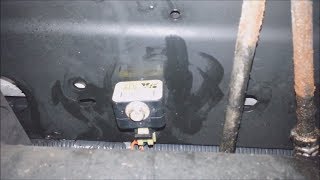
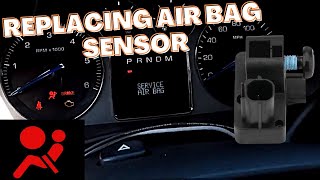
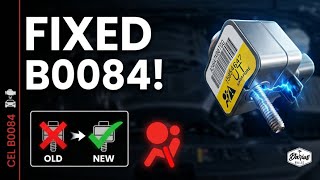
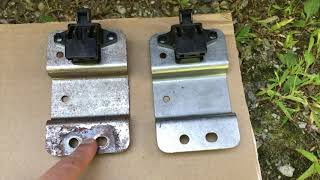
- Failed or Cracked Front Impact Sensor (Very Common) — On many trucks and SUVs, front impact sensors mount low on the radiator support behind the grille. Constant exposure to moisture and road salt rusts internal components, cracking the plastic housing and destroying the electronics. 🎬 Watch: How to replace a corroded GM front impact sensor.
- Damaged Under-Seat Wiring Harness (Very Common) — Years of sliding the driver or passenger seat forward and backward stretches, chafes, or unplugs the yellow SRS connectors. This creates an open or short circuit, triggering the code.
- Corroded Connector Pins (Common) — Electrical connectors for front impact sensors and under-seat sensors develop corrosion on the pins. This creates high resistance, which the SDM interprets as a fault, often leading to a misdiagnosed sensor.
- Incorrect Component Installed (Common) — A mid-year design change occurred for 2007-2008 GM front impact sensors. Installing the wrong sensor part number for the vehicle's specific build date sets a B0083-3A code immediately, even with a brand new part.
- Failed Seat Position Sensor (Less Common) — Located on the seat track, this sensor informs the SDM of the seat's proximity to the dashboard to adjust airbag deployment force. The internal Hall effect sensor fails, sending an incorrect or missing signal. 🎬 See this walkthrough for replacing the driver's seat position sensor.
- Faulty Seat Belt Pretensioner (Rare) — The pretensioner is a pyrotechnic device that tightens the seatbelt during a crash. An electrical fault within this circuit disables the entire SRS system.
- Water Intrusion in BCM/SDM (Rare) — Sensor data routes through the Body Control Module (BCM) on some vehicles. Water leaks from a clogged sunroof drain pool under the carpet, damaging the BCM or SDM and causing complex SRS codes.
- Faulty Airbag Control Module (SDM) (Very Rare) — The main computer controlling the airbag system fails rarely. All other possibilities, including wiring and sensors, must be exhaustively ruled out before condemning the module.
Symptoms

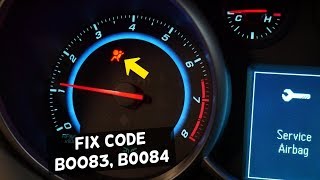
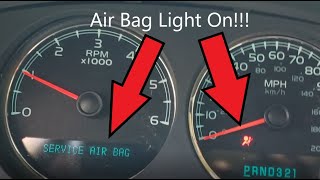
- Airbag Warning Light On — A continuously illuminated airbag warning light (an icon of a person with an airbag) appears on the instrument cluster.
- "Service Airbag" Message — Most vehicles display a text warning on the Driver Information Center (DIC) alongside the warning light.
- Failed Safety Inspection — An active airbag warning light constitutes an automatic failure for mandatory vehicle safety inspections in many jurisdictions.
- Horn or Steering Wheel Controls Inoperative — If the fault relates to the clock spring in the steering column, you lose function of the horn, cruise control, or radio buttons.
- Airbags Disabled (scan-tool only — no driver-felt sign) — This is a critical, invisible symptom. Code B0083 confirms the airbag system is deactivated as a safety measure and will not function in a collision. 🎬 Watch: A mechanic explains B0083 and B0084 fault codes.
Diagnostic Flowchart
Tap your situation to follow the diagnostic path that matches what you're seeing on this code.
Common Fixes & Costs
- Replacing a Front Impact Sensor — Parts: $50-$250, Labor: $100-$200, ~1.0 hr book time (DIY)
- Repairing Under-Seat Wiring Harness — Parts: $10-$30, Labor: $125-$250, ~1.5 hr book time (Intermediate)
- Replacing a Seat Position Sensor — Parts: $50-$150, Labor: $100-$200, ~1.0 hr book time (Intermediate)
- Replacing a Seat Belt Pretensioner Assembly — Parts: $200-$450, Labor: $150-$300, ~1.8 hr book time (Professional)
- Replacing the Airbag Control Module (SDM) — Parts: $400-$800, Labor: $150-$300, ~2.0 hr book time (Professional)
DIY vs Professional
- Replacing a Front Impact Sensor — Beginner: yes
Tools: Basic socket set (10mm, 13mm, 15mm), Torx sockets (T20, T30) or E-Torx (E5), ratchet, flashlight, torque wrench (in-lbs). - Repairing Under-Seat Wiring Harness — Beginner: no
Tools: Soldering iron, solder, heat shrink tubing, wire strippers, digital multimeter, flashlight. - Replacing a Seat Position Sensor — Beginner: no
Tools: Socket set, ratchet, trim removal tools, flashlight. May require unbolting the seat from the floor. - Replacing a Seat Belt Pretensioner or SDM — Beginner: no
Tools: Advanced scan tool for programming, professional-grade tools.
Used vs. New Parts: Buying Guide
When a used part is worth it: Due to the critical safety nature and high failure rate from corrosion, buying a used front impact sensor is strongly discouraged. The small cost savings do not justify the risk of installing a compromised part.
Donor-vehicle mileage cap: roughly under 10000 miles for the part to have meaningful remaining life.
Donor quality checklist:
- If considering used, it MUST be an exact part number match.
- Avoid parts from vehicles in the 'Rust Belt' or coastal areas due to high risk of corrosion.
- Never buy a sensor from a vehicle that was in a frontal collision.
Decision logic:
- If The part is a front impact sensor (the most common fix). → Always buy new from a reputable OEM or aftermarket supplier. The risk of a used part failing is too high.
- If The part is a less common component like a seat track or connector pigtail. → A used part from a low-mileage, non-accident vehicle is acceptable if a new part is unavailable.
Warranty tradeoff: Used SRS components typically have a 30-day warranty at best. New aftermarket parts offer at least a 1-year warranty, while new OEM parts carry the manufacturer's warranty.
Worst-case if a used part fails: $150-$550 if a used sensor is faulty or fails shortly after installation, requiring a second repair.
What Happens If You Wait — Timeline
- Immediately: The airbag warning light illuminates and the 'Service Airbag' message appears. The Sensing and Diagnostic Module (SDM) disables the entire Supplemental Restraint System (SRS). (MPG impact: 0%% · Added cost: $0)
- 0-12 months: The primary consequence is the immediate and ongoing loss of all airbag and pretensioner functionality. The risk of severe injury or death in a crash is drastically increased. (MPG impact: 0%% · Added cost: N/A (Represents unquantifiable safety risk))
- At the next state inspection: The vehicle fails its mandatory safety inspection in most jurisdictions due to the illuminated airbag light, resulting in fines and the inability to legally register the vehicle. (MPG impact: 0%% · Added cost: $50 - $300 (Fines, re-inspection fees, plus the eventual cost of repair))
- In case of an accident: An insurance company denies a claim or argues negligence, claiming the driver knowingly operated the vehicle with a disabled safety system. (MPG impact: 0%% · Added cost: Potentially thousands in liability or denied claims)
Cost of Not Fixing It
- Immediately: The entire Supplemental Restraint System (SRS) is disabled. No airbags deploy in a crash, and seatbelt pretensioners fail to activate. This drastically increases the risk of severe injury or death. (Added cost: N/A)
- During ownership: The vehicle automatically fails mandatory state safety inspections in many jurisdictions. This prevents you from legally registering and driving the vehicle. (Added cost: $150 - $1000+)
- In case of an accident: An insurance company denies a claim or argues negligence if it is proven you knowingly drove with a disabled safety system. This leads to significant financial liability. (Added cost: Potentially thousands in liability)
Diagnosis Steps

- Read the Full Code with a Capable Scanner
Use an OBD-II scanner that reads SRS/airbag codes ('B' codes). A standard engine code reader will not work. Record the full code, including the two-digit 'symptom byte' (e.g., B0083-05), as this is crucial for accurate diagnosis.
Tools: SRS-capable OBD-II Scanner (Beginner) - Inspect Front Impact Sensor
Locate the front impact sensor for the side indicated by the code (B0083 is typically the left/driver side). They mount on the radiator support behind the grille. Look for obvious signs of corrosion, green or white crust, and cracks in the plastic housing. A cracked sensor is a failed sensor.
Tools: Flashlight (Beginner) - Inspect Under-Seat Wiring
If the code definition points to a seat position sensor, slide the driver's seat fully forward and backward. Look underneath for any pinched, stretched, or disconnected wires. Ensure the bright yellow connectors are fully seated and locked.
Tools: Flashlight (Intermediate) - Check Connectors and Pins
SAFETY WARNING: Disconnect the negative battery terminal and wait at least 15 minutes before touching any airbag components. Carefully disconnect the relevant sensor connector. Inspect the pins inside both the sensor and the harness connector for corrosion, moisture, or being bent.
Tools: Socket set, Flashlight (Intermediate) - Test by Substitution
After verifying the wiring is intact, confirm a bad sensor by replacing it with a known-good part. On many GM SUVs from 2015-2020, the left and right front sensors are identical; swap them and see if the code changes from B0083 to B0084. If the code follows the sensor, the sensor is faulty.
Tools: 10mm socket, Replacement sensor (Intermediate) - Check Live Sensor Data (Pro Tip)
Navigate to the SRS module's live data stream on an advanced scan tool. Look for the parameter related to the suspect sensor. The data should read 'OK'. If it reads 'Fault', 'Not OK (NOK)', or is unresponsive, it points towards a sensor or wiring issue.
Tools: Advanced Bi-Directional Scanner (Advanced) - Test Circuit Resistance (Pro Tip)
With the battery disconnected and both the sensor and SDM unplugged, use a multimeter to test the wiring harness. Test for resistance between the signal circuit terminal at the sensor connector and the corresponding terminal at the SDM connector. A good wire has less than 1.0 ohm of resistance. WARNING: Never perform resistance measurements on the sensor itself.
Tools: Digital Multimeter, Vehicle-specific wiring diagram (Advanced) - Test Circuit Voltage (Pro Tip)
With the battery reconnected, SDM plugged in, and sensor UNPLUGGED, carefully test for voltage. The signal circuit at the harness connector should have a specific reference voltage (typically around 5V). If the voltage is out of range, test for a short to voltage or ground. NEVER use a test light.
Tools: Digital Multimeter, Vehicle-specific wiring diagram (Advanced)
When This Code Triggers (Freeze-Frame Conditions)
- System Status: Fault Present (The code sets during the initial key-on self-test. The SDM checks all components for proper resistance and communication.)
- Ignition Voltage: 9-16 Volts (The fault logs when the ignition is on and system voltage is within the normal operating range.)
- Fault Duration: > 375 milliseconds (For an open circuit fault (B0083-05), the code sets if the SDM has not received a valid message from the sensor for more than 375 milliseconds.)
- Component Status: Not OK (NOK) (For an internal failure (B0083-39), the code sets when the SDM receives a 'Not OK' status message from the sensor itself.)
Related Codes
- B0084 — This is the direct companion code to B0083. On GM vehicles, B0083 refers to the left (driver) side, while B0084 refers to the right (passenger) side for the same component. The diagnostic procedure is identical.
- B0083 39 — The '39' is a symptom byte indicating an 'Internal Electronic Failure'. This strongly suggests the sensor itself failed internally and needs replacement.
- B0083 05 — The '05' symptom byte indicates a 'High Voltage or Open' circuit. This points the diagnosis toward a broken wire, unplugged connector, or corrosion in the connector pins.
- B0083 3A — The '3A' symptom byte means 'Incorrect Component Installed'. This code sets if the SDM receives an ID from the sensor that doesn't match what it expects.
Climate & Environmental Factors
- Road Salt and Humidity: This is the primary environmental driver for B0083 failures. In regions with winter road salting or high coastal humidity, moisture and salt spray attack the sensor mounted on the radiator support. This accelerates corrosion, cracking the housing and failing the electronics.
- Electromagnetic Interference (EMI): Strong external EMI from sources like aviation radar causes history codes like B0083 to set in some 2010-2012 GM models without a real fault. The fix involves an SDM software update.
How to Talk to a Mechanic About This Code
Say this: "I have an airbag light on, and my scanner shows code B0083 with a symptom byte of [e.g., -39 or -05]. Based on my vehicle [Make, Model, Year], this points to either the left front impact sensor or the wiring under the driver's seat. I'd like to schedule a diagnostic to confirm which it is."
This signals you have narrowed down the likely causes. It directs the technician to the specific area, saving diagnostic time and preventing them from suggesting unrelated repairs. Mentioning the symptom byte shows a higher level of understanding.
Avoid saying:
- 'My airbag light is on, can you just clear it?'
- 'I have an airbag code, just replace the sensor.'
- 'Just fix whatever is wrong with the airbag system.'
Questions to ask before authorizing the repair:
- Did you find a cracked sensor, corroded connector, or a wiring fault? Can you show me?
- If the sensor needs replacement, what is the cost for an OEM part versus a quality aftermarket part like Dorman?
- Does your shop warranty parts and labor for this type of SRS repair?
- Will you be clearing the code and confirming the light stays off after the repair?
Where to Take It: Dealer vs Independent vs Chain
- Dealer:
Best for: Vehicles still under warranty (the SRS system is often covered for 5 years/60,000 miles)., Complex cases involving manufacturer-specific quirks, TSBs, or potential recalls., When the fault requires SDM reprogramming.
Downsides: Highest labor rates and OEM part prices, often 1.5-2x more than independent shops., Defaults to replacing an entire assembly when a simpler wiring repair suffices. (Typical cost: +50% vs. baseline) - Independent Shop:
Best fit for most out-of-warranty vehicles. An experienced independent shop diagnoses and repairs the common causes of B0083 effectively and at a lower cost than the dealer.
Best for: Out-of-warranty vehicles where cost is a major factor., Common, well-documented issues like the B0083 front impact sensor or under-seat wiring fault., Building a long-term relationship with a trusted mechanic.
Downsides: Shop quality and expertise with SRS systems varies greatly. Vet shops by looking for ASE certifications. (Typical cost: +0% vs. baseline) - Chain Shop:
AVOID for B0083 diagnosis. They are not the right choice for accurately diagnosing a safety-critical system fault.
Best for: Simple, routine maintenance like oil changes or tires.
Downsides: Technician skill varies dramatically; many lack experience with complex SRS diagnostics., High pressure to upsell leads to misdiagnosis or unnecessary part replacement., Lacks the specific scan tools or expertise for airbag system faults. (Typical cost: -10% vs. baseline)
When to Walk Away From the Repair
If the estimated repair cost exceeds 40-50% of the car's private-party value, consider selling or trading it in. However, because B0083 is a critical safety failure, the decision is not purely financial.
- Car worth $4000, fix is $500: Fix it. The repair cost is well below the threshold and restores a critical safety feature.
- Car worth $3000, fix is $1800: Walk away. The repair cost is over 50% of the car's value. It is not economical to invest this much into an older vehicle, even for a safety issue.
- Car worth $8000, fix is $1200: Borderline, but likely worth fixing. The cost is below the 40% threshold and ensures the vehicle is safe to operate. Get a second opinion on the repair cost before proceeding.
What Scan Tool You Need for This Code
Minimum: A scanner that reads and clears Supplemental Restraint System (SRS/Airbag) codes. A basic engine code reader that only handles 'P' codes will NOT work for B0083.
A standard $20-$50 scanner cannot communicate with the airbag control module. It shows 'no codes' even when the airbag light is on. You need a tool specifically advertised with SRS or Airbag diagnostic capabilities to see 'B' codes and the crucial symptom byte.
Budget: BlueDriver Pro or Foxwell NT630 Plus (~$120) — Reads and clears SRS codes, shows live data, and provides repair reports. This gets the specific B0083 sub-code (e.g., -39, -05) to guide your diagnosis and clear the light after repair.
Mid-range: Autel ML629 / Autel Diaglink (~$150) — Provides full system diagnostics (Engine, ABS, SRS, Transmission). These handheld units are fast, reliable, and give clear code definitions for serious DIYers.
Professional: Autel MaxiCOM MK808 / Launch CRP919 (~$450-700) — Offers full bidirectional control, all-system scanning, and numerous service functions. A tool at this level accesses OEM-level diagnostic functions and live data streams.
Rent vs buy: Most auto parts stores do NOT rent scanners capable of reading SRS codes. Buying a budget-pick scanner that reads Engine, ABS, and SRS codes is a smart investment that pays for itself after one use.
How to Clear the Code After You Fix It
- Reconnect battery after waiting at least 15 minutes.
- Use an SRS-capable OBD-II scan tool to clear the fault codes from the SDM.
- Turn the ignition off, then start the vehicle and verify the airbag light performs its self-check and stays off.
Drive cycle (~10 minutes): The SRS system does not require a complex drive cycle. After clearing the code, the SDM performs a self-test at every startup. If the repair was successful, the light remains off. A short 10-minute test drive confirms the fix.
Watch out for:
- Disconnecting the battery will not clear a hard fault code from the SDM's memory.
- If the root cause of the fault is not fixed, the code returns immediately on the next startup self-test.
- Using a standard engine code reader that cannot access the SRS module fails to clear the B0083 code.
Will This Fail Emissions / State Inspection?
No — by itself this code doesn't fail OBD inspection (but it can keep readiness monitors from setting, which causes a separate fail).
- California: An airbag light does not affect the emissions (smog) test itself. However, a technician refuses to test the vehicle for safety reasons, and it fails a separate safety inspection.
- New York: An illuminated airbag warning lamp is checked during the safety inspection. It is an advisory item only and is not cause for rejection, though individual shops refuse to pass a vehicle on safety grounds.
- Texas: An airbag light is not an item on the Texas state safety inspection checklist and does not cause a failure.
Most Commonly Affected Vehicles
- Chevrolet Silverado, Tahoe, Suburban, Avalanche (2007-2014) — These models are notorious for front impact sensor failures due to corrosion. For 2007-2008 models, using the wrong sensor for the 9/17/2007 production change sets a B0083-3A code.
- GMC Sierra, Yukon, Yukon XL (2007-2014) — Shares the same platform and front impact sensor failure problem as its Chevrolet counterparts.
- Cadillac Escalade, Escalade ESV/EXT (2007-2020) — Front impact sensors are highly prone to failure from corrosion. On 2015-2020 models, the left and right sensors are identical, allowing them to be swapped for diagnosis.
- Chevrolet Cruze, Sonic (2008-2016) — Frequently experiences B0083 due to faults with the front impact sensors or their wiring connectors located on the radiator support.
- Chevrolet Colorado (2004-2012) — On these trucks, the code points to a faulty driver's seat position sensor or the wiring harness under the seat.
- Vauxhall / Opel Corsa D/E (2006-2019) — Sets code B0083 for a faulty front impact sensor. The T20 Torx bolts holding the sensor have a left-hand thread, meaning you turn them clockwise to loosen.
- Holden Commodore (VE) (2006-2013) — Sets B0083-3A or B0084-3A if incorrect aftermarket or wrong model year front impact sensors are installed.
- Honda Various Models (2005-2015) — Honda vehicles of this era commonly experience an airbag light for a 'high resistance' fault caused by a failed passenger airbag status indicator light assembly.
Manufacturer-Specific Notes
- General Motors (Chevrolet, GMC, Cadillac): Ignore the generic 'seatbelt' definition. B0083 almost always refers to the Left Front Impact Sensor or the driver's Seat Position Sensor. The front impact sensors are a maintenance item due to their high failure rate from corrosion.
- General Motors (Chevrolet, GMC, Cadillac): GM changed the design of the front impact sensors and bumper bar on 9/17/2007. Using the wrong sensor design for the vehicle's build date causes a B0083 or B0084 code with a '3A' symptom byte.
- Vauxhall / Opel: On some models like the Corsa, the front impact sensor is secured with T20 Torx bolts that have a left-hand thread. Technicians attempting to remove them by turning counter-clockwise strip the bolt head.
- General Motors: For some 2010-2012 models, strong external electromagnetic interference (EMI) causes history codes B0083-B0088 to set without a true fault. The fix is to reprogram the SDM with updated software.
Real Owner Stories
2007 GMC Yukon with B0084 (Right Side Sensor)
The 'Service Airbag' light came on the dashboard. A scan revealed code B0084, pointing to the right front impact sensor.
What they tried:
- The owner visually inspected the sensor behind the grille and found the plastic housing cracked.
- They purchased a new Dorman 590-203 sensor for $85.
Outcome: After disconnecting the battery, the owner replaced the sensor using a 10mm socket. The airbag light went off on its own after the repair, confirming the fix.
Lesson: For GM trucks of this era, a cracked sensor housing is a near-certain failure. Visual inspection is a powerful first step. Do not over-tighten the bolt on the new sensor, as it cracks the new plastic housing.
2008 Chevy Colorado with B0084 (Driver Seat Position Sensor)
Airbag light appeared, and a scanner showed code B0084, which on this model points to the driver's seat position sensor circuit.
What they tried:
- The owner inspected the wiring under the driver's seat and found no visible damage.
- Based on forum research suggesting a single code points to the sensor rather than the harness, they purchased a new GM sensor (Part #19121283).
Outcome: The owner disconnected the battery, unbolted the sensor plate from the seat track with a 13mm socket, swapped the sensor, and reinstalled. The airbag light stayed off.
Lesson: On Colorado/Canyon trucks, B0083/B0084 relates to seat sensors, not front impact sensors. If only one code is present, the sensor itself is the primary suspect.
2007 Chevy Silverado Classic with B0083 after stereo install
Immediately after having a subwoofer box installed, which required removing the front seats, the 'Service Airbag' light came on. A scan showed B0083 for the passenger seat position sensor circuit.
What they tried:
- The owner checked the yellow connectors under the passenger seat and they appeared fully plugged in.
- Clearing the code with a scanner resulted in the code immediately returning.
Outcome: The owner took the truck back to the audio installation shop. The shop found a bent pin inside one of the connectors that occurred during seat re-installation. Properly re-seating the connector resolved the issue.
Lesson: If a B0083 code appears immediately after work involving the seats, the cause is a disturbed connector or damaged wire. Even if a connector looks seated, a pin is often bent or not making full contact.
How to Prevent This Code From Triggering
- Apply Dielectric Grease to Connectors (Anytime a relevant part is serviced or accessed) — Applying non-conductive dielectric grease to the weather pack seal of front impact sensor and under-seat connectors blocks moisture and prevents corrosion.
- Inspect and Secure Under-Seat Wiring (Annually or when detailing the vehicle's interior) — Checking that under-seat wiring is not pinched by seat tracks prevents chafing and stretching. Use zip ties to loosely secure dangling wires away from moving parts.
- Keep Vehicle Interior Dry (Ongoing) — Addressing water leaks from sunroof drains or window seals prevents water from pooling under the carpet and destroying the BCM or SDM.
- Clean Area Around Front Impact Sensors (During every oil change or tire rotation) — Rinsing the area around the front impact sensors on the radiator support washes away accumulated road salt and grime that accelerates corrosion.
Frequently Asked Questions
Is it safe to drive my car with code B0083?
No, it is not safe. The entire airbag system is offline and will not deploy in an accident. This drastically increases the risk of serious injury or death.
What does the little number after the code mean (e.g., B0083-3A)?
That is the symptom byte, which provides critical diagnostic clues. For example, '-39' means internal sensor failure, while '-05' indicates an open circuit like a broken wire. A '-3A' means you installed the wrong part for your vehicle.
Why is my airbag light still on after replacing the sensor?
You likely have a wiring issue, installed the wrong part number for your vehicle's build date, or need to clear the code with an SRS-capable scanner. The physical problem must be resolved before the light stays off. The system self-checks on startup and detects unresolved faults immediately.
Can I swap the left and right front impact sensors to test them?
Yes, on many vehicles the left and right sensors are identical. Swapping them changes a B0083 code to a B0084 code if the sensor is faulty. This definitively confirms a bad sensor without needing a multimeter.
What is the most common misdiagnosis for B0083?
The most common mistake is replacing a sensor without inspecting the wiring and connector pins for corrosion. A broken wire or corroded connector causes the exact same code. On 2007-2008 GM trucks, installing the wrong design revision of the sensor is another major pitfall.
Can I fix code B0083 myself?
A confident DIYer can replace a front impact sensor or check under-seat wiring. Always disconnect the negative battery terminal and wait 15 minutes before starting work. If multimeter testing is required, leave this repair to a certified professional.
Will clearing the code with a scanner turn off the airbag light?
You can clear the code with an SRS scanner, but if the electrical fault remains, the SDM detects it on the next startup. The light illuminates immediately until the physical repair is complete. You cannot trick the system into passing a safety inspection.
How much does it cost to fix code B0083?
A simple wiring repair costs $150-$250 at a shop. Replacing a front impact sensor typically costs $150-$450 for parts and labor. A more complex issue like a failed SDM exceeds $800.
Why are airbag system connectors always bright yellow?
Bright yellow is the universal industry standard for Supplemental Restraint System (SRS) wiring. It visually warns technicians they are handling a sensitive, potentially dangerous circuit. This color-coding prevents accidental tampering that triggers airbag deployment.
Key Takeaways
- Code B0083 disables your entire airbag system, meaning zero airbags will deploy in a crash.
- On 2007-2020 GM vehicles, a cracked or corroded front impact sensor behind the grille causes over 80% of B0083 codes.
- You must use an SRS-capable OBD-II scanner costing $100 or more to read the critical 2-digit symptom byte (like -39 or -05) required for accurate diagnosis.
- Always disconnect the negative battery terminal and wait exactly 15 minutes before touching any yellow SRS connectors to prevent accidental airbag deployment.
Helpful Videos


The information in this article is provided for general reference and educational purposes only. Vehicle specifications, procedures, and part compatibility can vary by production date, trim level, and region. Always consult your vehicle's factory service manual and verify part numbers before purchasing or performing repairs. Safety-critical components such as airbags, seat belts, and braking systems should be installed by a qualified professional.
- 🎬 Helpful Videos
- What Does B0083 Mean?
- Can I Drive With B0083?
- Common Causes
- Symptoms
- Diagnostic Flowchart
- Common Fixes & Costs
- DIY vs Professional
- Used vs. New Parts: Buying Guide
- What Happens If You Wait — Timeline
- Cost of Not Fixing It
- Diagnosis Steps
- When This Code Triggers (Freeze-Frame Conditions)
- Related Codes
- Climate & Environmental Factors
- How to Talk to a Mechanic About This Code
- Where to Take It: Dealer vs Independent vs Chain
- When to Walk Away From the Repair
- What Scan Tool You Need for This Code
- How to Clear the Code After You Fix It
- Will This Fail Emissions / State Inspection?
- Most Commonly Affected Vehicles
- Manufacturer-Specific Notes
- Real Owner Stories
- 2007 GMC Yukon with B0084 (Right Side Sensor)
- 2008 Chevy Colorado with B0084 (Driver Seat Position Sensor)
- 2007 Chevy Silverado Classic with B0083 after stereo install
- How to Prevent This Code From Triggering
- Frequently Asked Questions
- Is it safe to drive my car with code B0083?
- What does the little number after the code mean (e.g., B0083-3A)?
- Why is my airbag light still on after replacing the sensor?
- Can I swap the left and right front impact sensors to test them?
- What is the most common misdiagnosis for B0083?
- Can I fix code B0083 myself?
- Will clearing the code with a scanner turn off the airbag light?
- How much does it cost to fix code B0083?
- Why are airbag system connectors always bright yellow?
- Key Takeaways
- 🎟️ Get 5% Off