

B0081 on 2007-2011 GMC Yukon Denali: Passenger Presence System Fault Causes and Fixes
Code B0081 on a 2007-2011 GMC Yukon Denali indicates a fault in the passenger airbag's weight detection system. The most common cause is a failed sensor mat in the passenger seat cushion or its wiring. This is a critical safety issue that requires professional diagnosis and calibration after repair.
- B0081 is a critical safety code that disables the passenger airbag.
- Do not attempt a DIY repair unless you are an experienced technician with access to a professional scan tool for SRS systems.
- The most likely cause is a faulty sensor mat in the passenger seat cushion or damaged wiring underneath the seat.
- Always check wiring and connectors under the seat before replacing any expensive components.
- Any repair involving the replacement of a PPS component requires a special calibration procedure to ensure the system works correctly.
What's Unique About the 2007-2011 Gmc YUKON DENALI
On this generation of GM trucks and SUVs (GMT900 platform), the B0081 code is a well-documented issue. The primary culprit is often the sensor mat embedded in the seat foam, or the wiring harness connected to it, which can become damaged from the repeated stress of passengers getting in and out. However, GM has issued multiple Technical Service Bulletins acknowledging that the issue is frequently not the sensor itself, but a communication fault. TSB PIT4874B states, 'In most cases, this DTC will set due to a communication fault and does not always require a module replacement.' It directs technicians to meticulously check connectors and wiring before condemning any expensive components.
Diagnostic Flowchart
Tap your situation to follow the diagnostic path that matches what you're seeing on this vehicle.
Symptoms You May Notice
- Service Airbag warning light illuminated on the dashboard
- Passenger airbag 'OFF' indicator is lit, even when an adult is in the seat
- Replacing the main airbag computer (SDM) when the fault is in the seat sensor or its wiring. A GM-specific TSB explicitly warns technicians: 'DO NOT replace the Passenger Presence System (PPS) module or Sensing and Diagnostic Module (SDM) for this concern' until proper diagnostics, like checking connectors, are performed.
Most Likely Causes
- Failed Passenger Presence System (PPS) Sensor Mat 🔴 High Probability The sensor mat is a flexible electronic grid embedded in the seat foam. Over time, the repeated flexing and pressure from occupants can cause the internal circuits to break or short out. The wiring from the mat can also get pinched or damaged where it passes through the seat frame.
How to confirm: A professional scan tool can read the live data from the PPS to see if it's registering weight correctly. If the readings are erratic or absent, and the wiring is intact, the sensor mat is likely faulty. A user on 'tahoe yukon forum' reported replacing the sensor mat only to have the code remain, emphasizing the need to rule out wiring first.
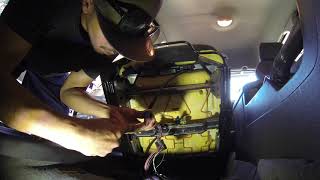
Typical fix: The sensor mat is typically replaced. 🎬 See this walkthrough on how to DIY repair the sensor mat. On many GM vehicles, this part is integrated with the seat cushion foam, requiring the replacement of the entire bottom seat cushion. After replacement, the system must be re-calibrated using a 'rezero' or 'relearn' procedure with a scan tool.
Est. part cost: $250-$500 - Wiring or Connector Issues 🟡 Medium Probability The wiring harness for the PPS is located under the passenger seat and is susceptible to damage from items stored under the seat, corrosion from moisture, or simply from the seat being moved back and forth repeatedly. The yellow connectors are part of the SRS system and are a common point of failure.
How to confirm: A visual inspection of the connectors and wiring under the passenger seat is the first step. TSB PIT4874B specifically advises technicians to inspect all connectors between the PPS and SDM for being fully seated, and states that 'cycling the connection will correct the concern' in many cases. A multimeter can be used to check for continuity in the wires.
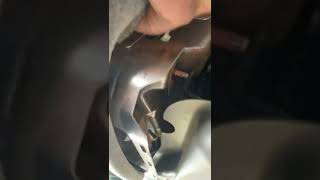
Typical fix: Repairing the damaged section of wire or cleaning/re-seating the connector. In some cases, a connector pigtail may need to be replaced. Following the advice of TSB PIT4874B by simply unplugging and firmly reconnecting all related connectors can often resolve the issue. 🎬 Watch: This common fix shows how to clean and reseat connectors.
Est. part cost: $20-$100 - Faulty Passenger Presence System (PPS) Module ⚪ Low Probability While less common than sensor or wiring failure, the electronic module that interprets the sensor's signals and communicates with the main SDM can fail.
How to confirm: This is typically diagnosed by a process of elimination. If the sensor mat and wiring have been tested and confirmed to be good, the module becomes the primary suspect. TSB PIT4874B specifically directs technicians to inspect the PPS module's powers and grounds before replacement.
Typical fix: Replacement of the PPS module, which is usually located under the passenger seat. This also requires a calibration procedure.
Est. part cost: $150-$300
Rare But Worth Checking
- Faulty Sensing and Diagnostic Module (SDM): The main airbag control unit (SDM) is rarely the cause for this specific code, but it is a possibility. Multiple TSBs explicitly warn technicians: 'DO NOT replace the Passenger Presence System (PPS) module or Sensing and Diagnostic Module (SDM) for this concern' until all other diagnostics are performed. The SDM only reports the fault from the PPS; it is not usually the source of it.
- Incorrectly Installed or Defective Replacement Part: TSB PIT5671 highlights a scenario where a B0081 SYM4B code ('Calibration Not Learned') appears immediately after a new PPS kit is installed. This is due to a known supplier quality issue with some service parts. The fix requires obtaining a qualified part through a specific GM channel (SPAC). This can be a frustrating dead-end for DIYers or shops unaware of this specific bulletin.
Diagnosis Steps
- Connect a professional-grade scan tool capable of reading SRS/airbag codes to confirm B0081 is active and check for any other related codes, paying close attention to the two-digit symptom code (e.g., 0F, 71).
- Following the guidance of TSB PIT4874B, visually inspect all wiring and connectors under the passenger seat, especially the main yellow SRS connectors. Disconnect and firmly reconnect them to ensure they are fully seated.
- Using the scan tool, access the live data for the Passenger Presence System. Observe the weight/pressure readings while the seat is empty and then with varying amounts of weight.
- If the readings are illogical or do not change, and connectors are confirmed to be good, the problem is likely with the sensor mat or its immediate wiring.
- If the wiring appears intact, follow the vehicle-specific service manual procedure to test the resistance of the sensor mat circuits.
- If the sensor mat and wiring test good, the next step is to inspect the PPS module itself for power, ground, and communication.
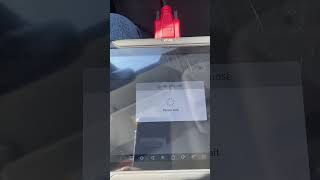
- If a part is replaced (sensor, module), perform the 'Passenger Presence System Rezeroing' or 'Relearn' procedure using the scan tool. This step is mandatory for the system to function correctly and requires the passenger seat to be completely empty. 🎬 Watch: How to perform the mandatory rezero procedure with a scan tool.
Parts You'll Likely Need
- Passenger Presence System Sensor Kit
(OEM #20972507)— This is the most common failure point. The kit often includes the sensor mat which is embedded in the seat cushion and sometimes the PPS module. Part number should be verified with VIN.
Trusted brands: ACDelco, Dorman
OEM price range: $350-$500
Aftermarket price range: $250-$400 - Passenger Seat Cushion with Sensor
(OEM #23313739 (replaces 23118112))— The sensor mat is often integrated into the lower seat cushion foam, making this assembly the required replacement part. Part number should be verified with VIN.
Trusted brands: ACDelco (Genuine GM)
OEM price range: $300-$450
Aftermarket price range: N/A
Related Codes That Often Appear With This One
- B0074 — This code is for 'Flex Mat Sensor Performance' and often appears with B0081 because both relate to the functionality of the passenger seat sensor mat.
Technical Service Bulletins (TSBs) & Recalls
- PIT4874B: Provides diagnostic direction for DTC B0081, focusing on communication/connector faults over component failure.
- PIT5671: Addresses issues with B0081 SYM4B appearing after a PPS kit replacement, pointing to supplier quality issues with service parts.
- 07-09-41-002: Explains that the SDM sets B0081 to report a fault from the PPS, and diagnostics should always start at the PPS.
Platform-Specific Known Issues
- TSB #PIT4874B: Directly addresses DTC B0081, stating it is often a communication fault, not a failed part. It instructs technicians to thoroughly inspect and cycle all related electrical connectors before replacing the SDM or PPS modules.
- TSB #PIT5671: Highlights a specific scenario where the B0081 SYM4B code ('Calibration Not Learned') appears *after* a PPS kit has been replaced. This indicates a known supplier quality issue with some replacement parts, requiring a special order process through GM's SPAC department to get a qualified component.
Mechanic-Grade Diagnostic Values
- PPS Module Data Line Voltage — expected: A fluctuating signal between 0.2V and 5V, with an average reading of around 2.1V - 2.2V on a standard multimeter.. Failure: No voltage, a steady 0V, or a steady 5V indicates a communication failure or a short in the data circuit.
- PPS Module Power and Ground — expected: Pin 1 (Red/White wire) should have battery voltage. Pin 5 (Black/White wire) should have good continuity to ground.. Failure: Lack of voltage on Pin 1 or high resistance to ground on Pin 5 indicates a power supply or ground circuit issue preventing the module from operating.
Hidden / Shadow Codes Worth Checking
- B0081 00: Passenger Presence Module Erratic. This is a general fault code set by the SDM when the PPS module reports an internal fault. (see via GM-specific scan tool (Tech2, GDS2) in the SDM module.)
- B0081 3A: Passenger Presence Module Incorrect Component Installed. The SDM has received a message from the PPS indicating a mismatch between the two modules. (see via GM-specific scan tool (Tech2, GDS2) in the SDM module.)
- B0081 4B: Passenger Presence Module Calibration Not Learned. The PPS module sets this code when it has not learned its calibration values. This is common after a part replacement or if a defective new part is installed. (see via GM-specific scan tool (Tech2, GDS2) in the PPS module.)
- B0081 5A: Passenger Presence Module Plausibility Failure. The PPS module sets this when it has lost communication with the SDM. (see via GM-specific scan tool (Tech2, GDS2) in the PPS module.)
- B0081 71: Invalid Serial Data Received. The SDM sets this when it receives invalid data from the PPS module, often pointing to a wiring or connection integrity issue. (see via GM-specific scan tool (Tech2, GDS2) in the SDM module.)
- B0081 39: Passenger Presence System Sensor Internal Electronic Failure. This points more directly to a failure within the sensor mat itself. (see via GM-specific scan tool (Tech2, GDS2) in the PPS module.)
Scan Tool Commands That Help
- GM Tech2 / GDS2: Re-Zero Passenger Presence System (or 'Passenger Presence Sensor Learn') — This procedure is mandatory after replacing the PPS sensor, seat cushion, or PPS module. It calibrates the empty seat to a zero-weight value. All other SRS/PPS DTCs must be cleared before this procedure will run successfully.
- GM Tech2: Menu Path: Body > Passenger Presence System > Special Functions > Re-Zero Passenger Presence System — This is the specific menu navigation path on a Tech2 scanner to access the re-zero function for the PPS.
Wiring & Ground Locations
- G302 — Under the right side (passenger side) of the passenger seat.. This is a primary ground point for components under the passenger seat. A loose or corroded G302 can cause intermittent or total failure of the Passenger Presence System module.
- G301 — Under the left side (driver side) of the passenger seat.. Another ground located under the passenger seat that should be inspected for integrity, as it can affect electronics in that area.
- G304 — At the base of the right-side (passenger) 'B' pillar, behind the trim panel.. While further from the seat, this ground serves the body harness on the passenger side and could be a factor if under-seat grounds are confirmed to be good.
- X2 Connector — The electrical connector at the Passenger Presence System (PPS) sensor mat itself.. Multiple TSBs point to this specific connector becoming loose or having poor terminal contact due to harness strain, which is a direct cause of B0074 and B0081 codes.
Real Owner Repair Stories
- YouTube video by 'Camaro with b0081...' (2010 Chevrolet Camaro (similar GM PPS design)) — Airbag light on with code B0081 symptom 00.
❌ Tried (didn't work) Initial diagnosis pointed away from simple connection issues.
✅ What actually fixed it The harness for the passenger presence sensor pad had rubbed through on the metal seat rail from occupants getting in and out of the car. The final fix was replacing the entire sensor pad assembly and then performing the 'Sensor Learn' procedure with a capable scan tool. - YouTube video by 'How to diy fix/repair...' (2009 Pontiac G6 (similar GM PPS design)) — Airbag light on with code B0081-71 'invalid data'.
❌ Tried (didn't work) Initial inspection did not immediately reveal the fault.
✅ What actually fixed it After checking continuity with a multimeter, two wires in the pigtail harness leading to the PPS module were found to have an internal break. The wires were damaged from the seat moving back and forth. The fix was to cut out the bad section of wire and solder in new pieces, which restored communication and cleared the code.
OEM Part Supersession History
23118112→23313739— Standard part revision and update by the manufacturer.
Heads up: The new part number (23313739) is the correct replacement for the old one. Using the old number may result in sourcing old stock. Always verify with VIN, but 23313739 is the current service part.
Helpful Videos
We Have This Part in Stock



The information in this article is provided for general reference and educational purposes only. Vehicle specifications, procedures, and part compatibility can vary by production date, trim level, and region. Always consult your vehicle's factory service manual and verify part numbers before purchasing or performing repairs. Safety-critical components such as airbags, seat belts, and braking systems should be installed by a qualified professional.
- Gmc YUKON DENALI:
- 🎬 Helpful Videos
- 🛍️ Shop This Part
- What's Unique About the 2007-2011 Gmc YUKON DENALI
- Diagnostic Flowchart
- Symptoms You May Notice
- Most Likely Causes
- Rare But Worth Checking
- Diagnosis Steps
- Parts You'll Likely Need
- Related Codes That Often Appear With This One
- Technical Service Bulletins (TSBs) & Recalls
- Platform-Specific Known Issues
- Mechanic-Grade Diagnostic Values
- Hidden / Shadow Codes Worth Checking
- Scan Tool Commands That Help
- Wiring & Ground Locations
- Real Owner Repair Stories
- OEM Part Supersession History
- 🎟️ Get 5% Off