

B0074 on 2009-2012 Chevrolet Traverse: Passenger Airbag Sensor Causes and Fixes
On a 2009-2012 Traverse, code B0074 almost always means the passenger seat occupancy sensor (the mat inside the cushion) has failed. This disables the passenger airbag. The fix requires replacing the sensor mat and recalibrating the system with a GM Tech 2 scan tool. Before replacing, check for electronic devices on the seat and inspect under-seat connectors.
- B0074 means your passenger airbag is OFF. Prioritize this repair for passenger safety.
- Before any repair, remove EVERYTHING from the passenger seat, ensure it's dry, and check under-seat connectors. This can sometimes be a free fix.
- Permanent OEM repair almost always involves replacing the sensor mat inside the seat cushion at a significant cost ($700-$1300).
- This is not a simple DIY fix. The system requires special tools (GM Tech 2) for recalibration after the part is replaced to ensure it works in a crash.
- A low-cost (sub-$100) aftermarket 'emulator' is a popular but compromised workaround that forces the airbag to always be armed.
What's Unique About the 2009-2012 Chevrolet TRAVERSE
The first-generation Traverse and its GM Lambda platform siblings (Acadia, Enclave, Outlook) are highly susceptible to this code due to a specific design and manufacturing vulnerability. The sensor's flexible tail, where it connects to the wiring, can become sharply creased or pinched during the seat's assembly process (specifically, during the 'hog-ringing' of the upholstery). Over time, normal passenger weight and movement flex this damaged area, causing an open or high-resistance circuit. Additionally, the system's capacitance-based sensing can be fooled by electronic devices like laptops, cell phones, or even a technician's scan tool placed on the seat, which is documented in GM TSB 08-09-41-007I.
Diagnostic Flowchart
Tap your situation to follow the diagnostic path that matches what you're seeing on this vehicle.
Symptoms You May Notice
- "Service Airbag" message on the driver information center (DIC)
- Airbag warning light is on
- Passenger airbag status indicator shows "OFF" even when an adult is seated
- Seat belt reminder may chime even when the seat is empty (if an emulator is used or the system is malfunctioning in a specific way)
- Replacing the main airbag module (SDM) when the fault is in the seat sensor.
- Replacing the seat sensor when the cause is only temporary interference from an object on the seat.
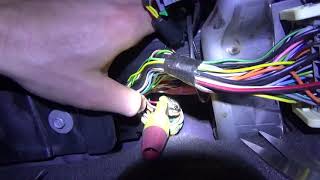
- Replacing the seat sensor before checking for a simple loose connector 🎬 Watch: Troubleshooting GM airbag communication and wiring issues at the PPS module itself.
Most Likely Causes
- Failed Passenger Presence Sensor Mat 🔴 High Probability A GM Technical Service Bulletin (16-NA-145) details how the sensor tail is often creased or pinched between the cushion and trim tie-downs during factory assembly. This creates a weak point that fails from the stress of normal use (passenger ingress/egress, knee-loading), causing an open circuit (B0074 0D) or high resistance (B0074 0E).
How to confirm: A professional scan tool that can read SRS/PPS codes is needed to confirm B0074 with sub-codes like 0D or 0E. After removing the seat cover, a visual inspection will often reveal a distinct, sharp crease in the sensor mat's flexible tail where it exits the foam cushion.
Typical fix: Replace the passenger presence sensor, which is sold as an assembly with the seat cushion foam. The seat must be removed and its upholstery taken off. 🎬 See this walkthrough for sensor locations and seat repair tips After installation, the system must be recalibrated with a GM Tech 2 or equivalent.
Est. part cost: $300-$700 - Electronic Device Interference or Wet Seat 🟡 Medium Probability The PPS sensor works by detecting capacitance, not just weight. As per TSB 08-09-41-007I, the sensor's electric field can be disrupted by conductive objects like laptops, cell phones, large liquid containers, or even a technician's scan tool placed on the seat. A wet seat cushion can also cause this specific fault, typically logging a B0074 0F.
How to confirm: The code will be B0074 with a suffix of '0F'. Remove any and all items from the passenger seat, ensure it is completely dry, and clear the code. If the code does not return after several ignition cycles, this was the cause.
Typical fix: Remove the electronic device or object. If the seat is wet, allow it to dry completely (may take 24-48 hours). Clear the DTCs. No parts replacement is necessary if the code stays cleared.
Est. part cost: $0 - Damaged or Loose Wiring / Connectors ⚪ Low Probability Wiring under the seat can be damaged by items stored there or by repeated seat movement. More specifically, TSB 17-NA-010 notes that the main X2 connector at the PPS module itself can become loose, or the harness can be improperly routed and stressed, causing an intermittent connection.
How to confirm: Before replacing the sensor, disconnect the battery. Visually inspect all wiring under the passenger seat. Firmly press on the main electrical connector at the PPS module and listen for an audible 'click' indicating it is fully seated. Wiggle the connectors while monitoring the code status with a scan tool.
Typical fix: Repair any damaged wiring. Re-secure the loose PPS module connector. Ensure the harness is routed freely and not stressed. If this resolves the issue, a 'Passenger Presence System Preload Test' (recalibration) should still be performed.
Est. part cost: $0-$50
Diagnosis Steps
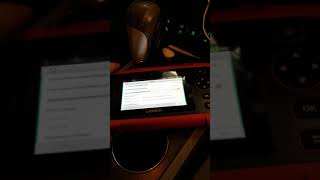
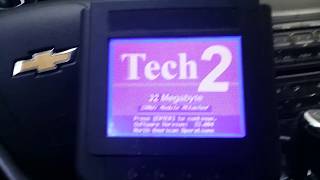
- Read Codes with a Professional Scanner: Use a scan tool capable of reading Body/SRS codes (like a GM Tech 2) to confirm B0074 is present and note any suffix (e.g., 0D, 0E, 0F). 🎬 Watch: How to use a Tech 2 to check SRS codes
- Check for Interference (Code B0074 0F): If the code is B0074 0F, remove ALL items from the passenger seat (laptops, phones, bags, etc.) and ensure the seat cushion is not wet. Clear the codes and see if the fault returns. If it does not, the issue is resolved.
- Inspect Under-Seat Connectors: Disconnect the battery. Visually inspect all wiring under the passenger seat. Per TSB 17-NA-010, locate the main PPS module and firmly press on its primary connector to ensure it is fully seated (listen for a click). Check for chafing or damage.
- Confirm Sensor Failure: If the code is a hard fault (like 0D or 0E), wiring appears okay, and the connector is secure, the passenger presence sensor mat has almost certainly failed internally.
- Replace and Recalibrate: The official fix is to replace the sensor/cushion assembly. After replacement, the system MUST be recalibrated ('Re-Zero Passenger Presence System') using a GM Tech 2 or Tech2Win software to function correctly.
Parts You'll Likely Need
- Airbag Front Passenger Presence Module With Sensor
(OEM #25981950)— This is the sensor mat embedded in the seat cushion that fails, causing the B0074 code. It is the primary point of failure and is typically sold as one unit with the foam cushion.
Trusted brands: ACDelco, GM Genuine Parts
OEM price range: $450-$800
Aftermarket price range: $300-$500
Related Codes That Often Appear With This One
- B0081 — B0081 is a general code for a Passenger Presence System fault. B0074 is a more specific code that often appears alongside B0081 to pinpoint the exact nature of the circuit failure (e.g., open, high resistance, erratic).
Technical Service Bulletins (TSBs) & Recalls
- 08-09-41-007I: Addresses DTC B0074 0F being set by electronic devices (laptops, phones) or conductive objects on the front passenger seat due to capacitance field interference.
- 16-NA-145: Describes how a sharp crease in the passenger presence sensor tail, created during manufacturing, can cause an open/high resistance fault (DTC B0074 0D or 0E), requiring sensor replacement.
- 17-NA-010: While for a different model, its principles are relevant. It advises checking for a loose main PPS module connector or stressed wiring harness before replacing parts for B0074/B0081 codes.
Platform-Specific Known Issues
- A known issue, documented in TSB 16-NA-145, involves the sensor tail getting creased during seat assembly, which leads to premature failure from flexing.
- Owners frequently report dealer repair quotes in the $900-$1200 range, leading many to seek aftermarket bypass modules.
Mechanic-Grade Diagnostic Values
- PPS Sensor Signal Circuit Voltage — expected: 0.05 V - 4.5 V. Failure: Voltage is less than 0.05V or greater than 4.5V for 500 milliseconds.
- PPS Sensor 5-Volt Reference Circuit Voltage — expected: 4.5 V - 9.1 V. Failure: Voltage is less than 4.5V or greater than 9.1V for 500 milliseconds.
- PPS Sensor Low Reference Circuit Amperage — expected: < 25 mA. Failure: Amperage is 25mA or greater for 500 milliseconds.
Hidden / Shadow Codes Worth Checking
- B0074 00: Passenger Presence Sensor Circuit Malfunction. This indicates the PPS module has detected a disconnection from the sensor mat. (see via GM Tech 2, GDS2, or equivalent professional SRS scan tool.)
- B0074 0D: Passenger Presence Sensor Resistance Above Threshold. This indicates high resistance or an open circuit, often from a broken wire in the sensor mat tail. (see via GM Tech 2, GDS2, or equivalent professional SRS scan tool.)
- B0074 0E: Passenger Presence Sensor Resistance Below Threshold. This indicates low resistance or a short circuit in the sensor mat. (see via GM Tech 2, GDS2, or equivalent professional SRS scan tool.)
- B0074 0F: Passenger Presence Sensor Erratic. This is often triggered by a wet seat or interference from electronic devices on the seat. (see via GM Tech 2, GDS2, or equivalent professional SRS scan tool.)
Scan Tool Commands That Help
- GM Tech 2 / GDS2 / Professional Scan Tool: Passenger Presence System Rezero / Setup / Learn — This function is mandatory after replacing the PPS sensor mat, the PPS module, or the seat cushion. It establishes a new zero-weight baseline for the empty seat. The system will not function correctly until this is performed.
Wiring & Ground Locations
- Passenger Presence System (PPS) Module — Under the front passenger's seat, often riveted or attached to the seat frame/spring assembly.. This module receives the signal from the sensor mat and communicates with the main airbag computer (SDM). Its connector is a key test point.
- PPS Module Connector — At the PPS module under the passenger seat.. This is where you can test for power, ground, and data signals. Pin 1 (Red/White) is Battery Power, Pin 5 (Black/White) is Ground, and Pin 17 (Dark Green) is the serial data line.
- PPS Sensor Connector — Under the passenger seat, attached to the seat bottom with a metal clip. It is a black connector, often with a purple or white insert.. This is the direct connection to the sensor mat that fails. The wires on the sensor side are typically white, yellow, red, and brown (for the 4-wire version). A visual inspection here can reveal damage.
- PPS Ground — Under the passenger seat.. A poor ground connection to the PPS module can cause various erratic faults. While a specific G-point isn't commonly cited, ensuring the ground wire (Black/White at Pin 5) has good continuity to the chassis is a critical diagnostic step.
Real Owner Repair Stories
- Go-Parts research on similar GM platforms (2009 Pontiac G6 (uses a similar GM PPS system)) — Airbag light on with code B0081-71 'Invalid Data', which is often paired with B0074.
❌ Tried (didn't work) Suspecting the pigtail connector or the PPS module itself.
✅ What actually fixed it The mechanic identified that the sensor pad harness had rubbed through on the metal seat frame from normal use. The final fix was to replace the entire passenger presence sensor pad assembly and then perform the 'Sensor Learn' (Rezero) procedure with a scan tool.
OEM Part Supersession History
20822817→25981950, 20933923, 20863388— Part revisions and consolidation for the sensor/cushion assembly.
Heads up: Visual confirmation of the under-seat connector is highly recommended before ordering, as different connectors were used even within the same model year range.84081348, 84192527, 84291505→84381565— Part revision for a newer generation, but illustrates the supersession process.
Heads up: These parts are for later model vehicles and are not compatible with the 2009-2012 Traverse.
Helpful Videos
Used OEM Parts in Stock


New Aftermarket Parts Available


The information in this article is provided for general reference and educational purposes only. Vehicle specifications, procedures, and part compatibility can vary by production date, trim level, and region. Always consult your vehicle's factory service manual and verify part numbers before purchasing or performing repairs. Safety-critical components such as airbags, seat belts, and braking systems should be installed by a qualified professional.
- Chevrolet TRAVERSE:
- 🎬 Helpful Videos
- 🛍️ Shop This Part
- What's Unique About the 2009-2012 Chevrolet TRAVERSE
- Diagnostic Flowchart
- Symptoms You May Notice
- Most Likely Causes
- Diagnosis Steps
- Parts You'll Likely Need
- Related Codes That Often Appear With This One
- Technical Service Bulletins (TSBs) & Recalls
- Platform-Specific Known Issues
- Mechanic-Grade Diagnostic Values
- Hidden / Shadow Codes Worth Checking
- Scan Tool Commands That Help
- Wiring & Ground Locations
- Real Owner Repair Stories
- OEM Part Supersession History
- 🎟️ Get 5% Off