

OBD-II Code B0062: Left Front Seatbelt Pretensioner Deployment Control Circuit Fault
The Ultimate 2026 Guide: What B0062 means, why it triggers, and how to fix it for good.
- Code B0062 completely disables your vehicle's airbag and seatbelt pretensioner system, leaving occupants unprotected in a crash.
- Over 70% of B0062 codes stem from a broken wire or loose connector under the driver's seat or inside the door jamb, costing under $25 in parts to fix.
- Always disconnect the negative battery terminal and wait 15 minutes before touching any yellow SRS connectors to prevent accidental, explosive airbag deployment.
- Driving with an active B0062 code increases the risk of severe injury in a frontal collision by up to 50% and guarantees a failed state safety inspection.
What Does B0062 Mean?
Code B0062 indicates the Sensing and Diagnostic Module (SDM) detected an electrical fault in the driver's side seatbelt pretensioner circuit. The pretensioner uses a pyrotechnic charge to instantly tighten the seatbelt during a crash, securing the occupant for optimal airbag deployment. This fault forces the SDM to deactivate the entire airbag system as a fail-safe against accidental deployment.
Technical definition: The SAE/ISO definition for B0062 is "Left Front Seatbelt Pretensioner Deployment Control." The SDM logs this code when the driver's side pretensioner circuit resistance falls outside the manufacturer's specified range (typically 2.0 to 3.0 ohms). The fault is an open circuit, high resistance, short to ground, or short to voltage. Codes B0064 (resistance low) or B0065 (resistance high) frequently accompany B0062 to pinpoint the exact electrical failure.
Can I Drive With B0062?
no_recommended. Driving with code B0062 is a severe safety risk. The illuminated airbag warning light confirms the entire Supplemental Restraint System (SRS) is disabled, meaning airbags and seatbelt pretensioners will NOT deploy in a collision. Operating a vehicle with a malfunctioning airbag system increases the risk of severe injury in a frontal crash by up to 50%.
Common Causes
- Damaged or broken wiring under the driver's seat or in the door jamb (Very Common) — The yellow pretensioner wiring loom is highly susceptible to damage. Constant seat adjustment, items stored under the seat, or repeated opening of the door causes wires to chafe, stretch, or break, creating an open or short circuit. This is the primary cause of B0062.
- Corroded or loose electrical connector (Common) — The main yellow SRS connector under the driver's seat is vulnerable to moisture. Spilled liquids, water intrusion from clogged sunroof drains, or simple vibrations cause the connector pins to corrode or unplug, creating high resistance.
- Faulty driver's seatbelt pretensioner assembly (Common) — Internal failure of the pretensioner's pyrotechnic charge, internal wiring, or squib causes its electrical resistance to fall out of specification. This occurs due to age, moisture exposure, or manufacturing defects.
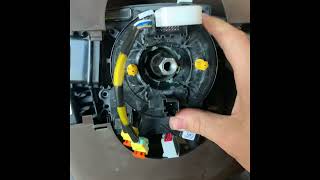
- Faulty clock spring (spiral cable) (Less Common) — In some vehicles, the pretensioner circuit routes through the steering column clock spring. The internal ribbon cables fatigue and break from steering wheel rotation, causing an open circuit that often disables steering wheel controls simultaneously.
- Faulty Battery Safety Terminal (BST) (Primarily BMW) (Uncommon) — On BMWs and select European vehicles, the positive battery terminal contains an explosive charge (BST) to sever starter power during an accident. A resistance fault in the BST triggers multiple SRS codes, including pretensioner faults.
- Previous improper repair or use of incorrect parts (Uncommon) — Repairing SRS wiring with incorrect methods (e.g., twisting wires, non-insulated connectors) creates high resistance. Installing a used, previously deployed, or incompatible pretensioner from a salvage yard guarantees this code.
- Faulty Sensing and Diagnostic Module (SRS/Airbag Control Module) (Rare) — A failed driver circuit within the control module prevents it from reading pretensioner resistance correctly. Consider this only after definitively ruling out all wiring and the pretensioner unit.
Symptoms
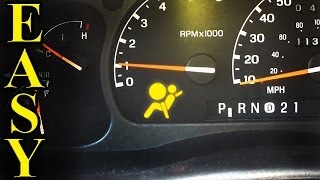
- Airbag warning light and dashboard message — The primary symptom is a constantly illuminated airbag/SRS icon on the dashboard, often accompanied by a 'Service Airbag System' text message in the driver information center.
- Audible chime or beep on startup — Certain vehicles emit a repetitive chime shortly after startup, providing an audible alert of a critical SRS fault.
- Seatbelt fails to retract or lock correctly — An internal mechanical failure within the pretensioner assembly sometimes interferes with the seatbelt retractor mechanism, causing it to jam or retract sluggishly.
- Airbag system is completely disabled (scan-tool only — no driver-felt sign) — The SDM disables the entire SRS system as a safety precaution. No airbags or pretensioners will deploy in a crash until the fault is repaired and cleared. 🎬 Watch: How to diagnose and fix a flashing airbag light
Diagnostic Flowchart
Tap your situation to follow the diagnostic path that matches what you're seeing on this code.
Common Fixes & Costs
- Repairing broken wires under the seat or in the door jamb — Parts: $5-$25, Labor: $125-$350, ~1.0 hr book time (Intermediate)
- Replacing the driver's side seatbelt pretensioner/retractor assembly
— Parts: $200-$550, Labor: $150-$300, ~1.5 hr book time
(Professional)
Chevrolet Colorado / GMC Canyon (2004-2012, Extended Cab): OEM 19181887 (Alt: N/A (OEM recommended due to pyrotechnic component)) - Replacing the clock spring (spiral cable)
— Parts: $70-$500, Labor: $150-$300, ~1.5 hr book time
(Professional)
Ford F-150 (2009-2014): OEM GL3Z-14A664-A (Alt: Dorman 525-211, Standard Motor Products CSP196) - Resetting the SRS Airbag Control Module (after collision) — Parts: $50-$150, Labor: $75-$150, ~1.0 hr book time (DIY)
- Replacing the SRS Airbag Control Module — Parts: $250-$800, Labor: $150-$400, ~2.0 hr book time (Professional)
Used vs. New Parts: Buying Guide
When a used part is worth it: Buying used pyrotechnic SRS components is NEVER recommended and is illegal in many jurisdictions. The only acceptable non-new option is a professionally rebuilt unit from a certified specialist who replaces the pyrotechnic charge.
Donor quality checklist:
- Never purchase a used pretensioner from a junkyard or private seller.
- For professional rebuild services, verify they use OEM components and offer a warranty.
- Ensure part numbers match exactly; SRS components are not interchangeable.
Decision logic:
- If The component is a pyrotechnic device (airbag, pretensioner) → Buy new OEM or use a certified rebuild service. Do not buy used.
- If The component is non-pyrotechnic (wiring harness, connector) → A used part from a non-crashed vehicle is acceptable, but new is safer.
Warranty tradeoff: Used parts carry high safety risks and no warranty. Professional rebuilds offer limited warranties. New OEM parts carry full manufacturer warranties and guarantee safety.
Worst-case if a used part fails: $300-$800 (repeat labor + new part cost + failure to deploy in a crash).
What Happens If You Wait — Timeline
- Immediate (0 seconds): The SRS module detects the fault, illuminates the warning light, and disables the entire SRS system. (MPG impact: 0%% · Added cost: $0)
- Next vehicle inspection: The vehicle automatically fails state safety inspections, preventing registration renewal. (MPG impact: 0%% · Added cost: $20-$50 (inspection fee) + loss of vehicle use.)
- Long-Term (6+ months): An unfixed short circuit potentially damages the driver circuit within the main SRS control module. (MPG impact: 0%% · Added cost: $400-$1200 (cost of a new SRS module).)
- In case of a collision: The disabled SRS system fails to deploy, leading to a drastically higher probability of severe injury or death. (MPG impact: 0%% · Added cost: Incalculable.)
Cost of Not Fixing It
- Immediate: Complete deactivation of the Supplemental Restraint System (SRS). No airbags or pretensioners will deploy. (Added cost: $0)
- In case of a collision: Drastically increased risk of severe injury or death. Frontal airbags save over 50,000 lives historically. (Added cost: Incalculable (medical bills, loss of life).)
- Next vehicle inspection: Guaranteed failure of state-mandated vehicle safety inspections, preventing registration renewal. (Added cost: $20-$50 (inspection fee) + required repair costs.)
Diagnosis Steps
- Safety Protocol: System De-energizing
Disconnect the negative battery terminal and wait exactly 15 minutes before proceeding. This discharges the SRS module's backup power capacitors, preventing accidental deployment of pyrotechnic devices that cause severe injury.
Tools: 10mm wrench or socket (Beginner) - Visual Inspection: Under-Seat and Door Jamb Wiring
Inspect the yellow wiring loom under the driver's seat for pinched, frayed, or cut wires. On extended-cab trucks or coupes, peel back the flexible rubber boot in the door jamb and inspect each wire for breaks caused by repetitive door motion.
Tools: Flashlight, trim removal tool (Beginner) - Connector Integrity Check
With the system de-energized, disconnect the yellow connector under the seat. Examine pins for green/white corrosion or damage. Clean meticulously with electrical contact cleaner and a small brush. Apply a thin layer of dielectric grease to the seal before reconnecting.
Tools: Electrical contact cleaner, small wire brush, dielectric grease (Intermediate) - [PRO TIP] Resistance Test of the Pretensioner
Using a digital multimeter set to Ohms (Ω), measure resistance across the two pins on the pretensioner side of the connector. A healthy pretensioner reads 2.0 to 3.0 Ohms. 'OL' indicates an open circuit; near zero indicates a short. WARNING: Never use an analog meter or power probe.
Tools: High-impedance digital multimeter (Advanced) - [ADVANCED] Circuit Load Testing with a Resistor
Plug a 2.2 to 2.7 Ohm SRS-approved resistor into the vehicle harness connector in place of the pretensioner. Reconnect the battery, turn the ignition on, and scan the vehicle. If B0062 clears, the wiring and module are good, proving the pretensioner itself is faulty.
Tools: SRS-approved resistor set (2.2-2.7 Ohms), professional scan tool (Advanced) - [PRO TIP] Component Swapping for Diagnosis
If the vehicle has an identical passenger-side pretensioner, swap the connections. Connect the driver's harness to the passenger pretensioner. Clear codes and re-scan. If the code changes to B0063, the driver's pretensioner is definitively faulty. If B0062 remains, the fault is in the wiring or module.
Tools: Socket set, trim removal tools, scan tool (Advanced) - [ADVANCED] Harness-Side Resistance Test
Disconnect the harness from the SRS control module (system de-energized). Measure the resistance of each wire from the module connector to the pretensioner connector. Each wire must read under 1.0 Ohm. Measure between the two wires; it must read 'OL' (no short).
Tools: High-impedance digital multimeter, vehicle-specific wiring diagram (Advanced) - [PROFESSIONAL] Live Data Stream Analysis
Using a bi-directional scan tool, view the SRS module's live data for 'Driver Pretensioner Resistance'. Wiggle the harness under the seat and in the door jamb. A sudden spike, drop, or 'Open' reading pinpoints the exact location of an intermittent wiring fault.
Tools: Bi-directional scan tool with SRS live data capability (Professional) - Scan, Repair, and Re-Scan
After repairing a wire or replacing a component, reconnect the battery. Use an SRS-capable OBD-II scanner to clear the B0062 code. The airbag light will NOT turn off automatically. If the light returns immediately, the fault persists.
Tools: OBD-II scanner with SRS/Airbag capability (Intermediate)
When This Code Triggers (Freeze-Frame Conditions)
- System Self-Test: Active (The SRS module performs a self-test every time the ignition turns to the 'ON' position.)
- Ignition Status: ON (The code sets within seconds of starting the car if the fault is present.)
- Pretensioner Circuit Resistance: Outside 2.0-3.0 Ohms (The module logs this code when resistance is too high (open circuit) or too low (short circuit).)
- Battery Voltage: 9-16 Volts (Low battery voltage generates erroneous SRS codes on sensitive systems.)
Related Codes
- B0063 — The direct counterpart to B0062, indicating an identical electrical fault in the 'Right Front Seatbelt Pretensioner' (passenger side) circuit.
- B0064 / B0065 — These specify the B0062 fault. B0064 indicates 'Resistance Low' (short circuit). B0065 indicates 'Resistance High' (open circuit, broken wire, or unplugged connector).
- B0057 / B0058 — On GM extended cab trucks, a single damaged rear door harness severs multiple circuits, triggering front (B0062) and rear (B0058) pretensioner codes simultaneously.
- U0170 — Indicates 'Lost Communication With Restraints System Sensor A'. Paired with B0062, it points to a severed communication wire or a failed SRS module.
Climate & Environmental Factors
- High Humidity / Water Intrusion: Accelerates corrosion on SRS wiring connectors under the seats and carpeting, creating the high resistance that triggers B0062 and B0065.
- Cold Weather: Causes wires and plastic connector housings to become brittle, increasing the likelihood of cracking in high-flex areas like door jambs.
- Road Salt (Salt Belt Regions): Melted snow tracked into the vehicle saturates carpets, leading to aggressive, rapid corrosion of floor-mounted SRS connectors.
How to Talk to a Mechanic About This Code
Say this: "I have an airbag light on and my scanner shows a B0062 code for the left front seatbelt pretensioner. Before replacing any parts, I'd like you to inspect the wiring harness under the driver's seat and in the door jamb, as I understand this is a common failure point."
Directs the technician to the most likely and cheapest cause first, preventing them from immediately quoting an expensive pretensioner replacement.
Avoid saying:
- 'My airbag light is on, can you fix it?' (Too vague; invites high quotes.)
- 'Just replace the seatbelt.' (The problem is often a simple broken wire.)
- 'Do whatever you think is best.' (Gives up control over diagnostic direction.)
Questions to ask before authorizing the repair:
- Did you find the fault in the wiring or in the pretensioner itself?
- What was the resistance reading from the pretensioner? Was it open, shorted, or within spec?
- Can you guarantee this part replacement will fix the issue permanently?
- What is the warranty on both parts and labor for this repair?
Where to Take It: Dealer vs Independent vs Chain
- Dealer:
Best for: Vehicles under the 5-year/60,000-mile federal Safety Restraint Warranty., Diagnosing manufacturer-specific quirks like the BMW BST., Recalls and Special Coverage Adjustments.
Downsides: Highest labor rates., May default to replacing entire assemblies instead of repairing wires. (Typical cost: +50% vs. baseline) - Independent Shop:
Best fit for most situations. A reputable independent shop handles B0062 effectively and affordably.
Best for: Out-of-warranty vehicles where cost is a major factor., Diagnosing common failures like broken under-seat wires., Getting a second opinion on a high dealership quote.
Downsides: Experience with SRS systems varies; look for ASE certifications., May lack OEM software for very new vehicles. (Typical cost: +0% vs. baseline) - Chain Shop:
AVOID. SRS repair is a safety-critical task requiring specialized knowledge.
Best for: Simple maintenance, not complex diagnostics.
Downsides: Technicians are rarely SRS specialists., Lack advanced scan tools required for SRS live data., High potential for misdiagnosis. (Typical cost: -10% vs. baseline)
When to Walk Away From the Repair
If the estimated SRS repair cost exceeds 40-50% of your car's private-party value, carefully consider your options.
- Car worth $4000, fix is $2200: Walk away. The repair exceeds 50% of the car's value.
- Car worth $12000, fix is $800: Fix it. The repair restores a critical safety feature and the vehicle's full value.
- Car worth $2500, fix is $350: Fix it. Even on a low-value car, this inexpensive repair is worth it to pass inspection.
What Scan Tool You Need for This Code
Minimum: A scanner that reads and clears 'B' (Body) codes for the SRS/Airbag module. Basic engine-only readers will not work.
Standard $20 scanners only communicate with the Engine Control Module. You need a tool that accesses the separate SRS module to read or clear B0062.
Budget: Autel AutoLink AL619 / ML629 (~$80) — Reads and clears SRS codes, allowing you to turn off the light after a successful repair.
Mid-range: Foxwell NT630 Plus / Innova 5610 (~$150) — Displays live data for the pretensioner circuit, allowing you to watch resistance values change while wiggling wires to pinpoint faults.
Professional: Autel MaxiCOM MK808 / MK808BT (~$500) — Offers full bidirectional control, OEM-level diagnostics, and module reset capabilities.
Rent vs buy: Most free rental scanners lack SRS capabilities. Buying a budget pick like the Autel AL619 pays for itself after one use.
How to Clear the Code After You Fix It
- Ensure the underlying electrical fault is fully repaired.
- Reconnect the vehicle battery.
- Use an OBD-II scan tool with SRS/Airbag capability to access the Restraint Control Module.
- Select 'Clear DTCs' or 'Erase Faults' within the SRS menu.
- Cycle the ignition off and on to verify the airbag light performs its 7-second self-check and turns off permanently.
Drive cycle (~1 minutes): An SRS drive cycle is not required. The system performs a complete self-test upon every ignition cycle. If the repair is successful, the light stays off immediately.
Readiness monitors affected: None. SRS codes do not affect powertrain emissions readiness monitors.
Watch out for:
- Using a basic $20 OBD-II scanner fails; it cannot communicate with 'B' (body) control modules.
- Disconnecting the battery does not clear B0062 or turn off the airbag light.
- If the light returns instantly after clearing, the root physical fault remains unfixed.
Will This Fail Emissions / State Inspection?
Yes — this code typically fails an OBD-II emissions inspection.
- California: An airbag light does not fail the emissions (smog) check, but renders the vehicle legally unsafe to operate.
- New York: While officially an advisement, most inspection stations fail the vehicle during the safety portion for a disabled SRS system.
- Texas: An illuminated airbag light is an automatic failure for the safety inspection. The vehicle cannot be registered until repaired.
Most Commonly Affected Vehicles
- Chevrolet / GMC Colorado / Canyon (Extended Cab) (2004-2012) — Extremely common due to wires breaking inside the flexible rubber boot of the rear suicide door. GM issued Special Coverage Adjustment #14609 for this exact issue.
- Ford F-150 (2009-2014) — Clock spring failure is a known issue, presenting with an airbag light and loss of steering wheel controls. Covered under Ford's 5-year/60,000-mile Safety Restraint Warranty.
- Honda Accord / Civic / Pilot (2008-2017) — Highly sensitive to low battery voltage, which sets random SRS codes. Faults in the seat belt buckle switch and under-seat connectors are also frequent culprits.
- Hyundai Sonata / Elantra (2011-2018) — Under-seat wiring harnesses frequently become loose or damaged. Wait a strict 30 minutes after battery disconnection before servicing Hyundai SRS systems.
- Nissan Titan / Frontier / Xterra (2005-2015) — Issues frequently stem from the main SRS module harness connector behind the glove box. Nissans feature a manual ignition-cycle SRS light reset procedure.
- BMW 3-Series (E90) / 5-Series (E60) (2005-2013) — Often related to the Battery Safety Terminal (BST) on the positive battery cable. A BMW-specific scanner (ISTA/D) is required for accurate diagnosis.
- Subaru Outback / Legacy (2020-2022) — Subject to a major recall (NHTSA 24V227000) for ODS sensor shorts. While typically passenger-side, it highlights a pattern of SRS electrical issues requiring under-seat inspection.
Manufacturer-Specific Notes
- General Motors (Chevrolet/GMC): On 2004-2012 Colorado/Canyon extended cabs, B0062 is almost invariably caused by broken wires in the rear door jamb harness. Check this location before replacing any parts.
- Ford: A faulty clock spring is the prime suspect for driver-side SRS codes. Simultaneous failure of the horn, cruise control, or radio buttons confirms this diagnosis.
- Nissan: Nissan models feature a built-in SRS diagnostic and reset function involving a specific sequence of turning the ignition key from 'OFF' to 'ON'.
- Honda: Honda SRS systems generate spurious fault codes if battery voltage drops below 12.0V. Ensure the battery and charging system are perfectly healthy before diagnosing SRS codes.
Real Owner Stories
2008 Chevy Colorado, 155K miles - The Obvious Fix
Airbag light stayed on with codes B0062 and B0065 (high resistance).
Outcome: Found two broken wires inside the rubber door jamb boot. Spliced the wires using solder and heat shrink. Cleared codes, and the light stayed off. Total cost: $10.
Lesson: On GM extended cab trucks, the rear door harness causes this code over 90% of the time. Check here before buying parts.
2011 Ford F-150, 120K miles - A Case of Misdiagnosis
Airbag light on with code B0062. Owner assumed a bad seatbelt pretensioner.
Outcome: Noticed the horn and steering wheel radio controls were also dead. Replaced the clock spring ($150), which resolved the airbag light and restored steering wheel functions.
Lesson: If an airbag light pairs with steering wheel control failures on a Ford, the clock spring is the primary suspect.
2012 Honda CR-V, 95K miles - The Simple (and Free) Fix
Airbag light appeared suddenly after adjusting the driver's seat.
Outcome: A water bottle had rolled under the seat, partially unseating the yellow SRS connector. Disconnected the battery, re-seated the connector, and the light cleared permanently.
Lesson: Always perform a visual inspection first. Recent seat adjustments or loose items often disturb delicate SRS wiring.
2007 BMW 328i, 140K miles - The European Quirk
Minor parking lot bump triggered the airbag light and a no-start condition, though interior lights worked.
Outcome: The impact triggered the Battery Safety Terminal (BST), severing starter power. Replaced the BST terminal ($35) and cleared codes with a BMW scanner, restoring starting function.
Lesson: On BMWs, a no-start condition with an airbag light after an impact points directly to a blown Battery Safety Terminal (BST).
How to Prevent This Code From Triggering
- Avoid storing items under the front seats (Daily habit) — Loose items roll into and damage the delicate SRS wiring harness and connector, causing open or short circuits.
- Apply dielectric grease to connector seals (During any related repair) — A thin layer of dielectric grease on rubber seals blocks moisture ingress, preventing pin corrosion.
- Periodically inspect visible SRS wiring (Every 15,000 miles) — Visual checks spot pinched or chafing wires before they break, allowing for simple re-routing.
- Address cabin water leaks immediately (As needed) — Clogged sunroof drains saturate carpets, causing severe corrosion to floor-mounted SRS connectors.
Frequently Asked Questions
Can I just clear the B0062 code to turn off the airbag light?
You can clear the code with an SRS-capable scanner, but if the electrical fault remains, the SRS module detects it instantly and re-illuminates the light. The system is fail-safe; the light stays on until the physical problem is fixed.
I replaced the seatbelt, but the airbag light is still on. What did I do wrong?
If the light returns after clearing the code, the original fault is likely in the wiring harness, not the pretensioner unit. Re-inspect the under-seat and door jamb wiring for breaks or corrosion. If the vehicle was in a prior collision, the SRS module itself stores 'crash data' requiring professional reset or replacement.
Is it safe to work on the airbag system myself?
Pretensioners contain explosive pyrotechnic charges, making DIY repairs dangerous if proper procedures are ignored. Always disconnect the negative battery terminal and wait 15 minutes for the system to discharge before touching any yellow SRS connector. If you lack electrical diagnostic experience, take the vehicle to a certified SRS technician.
Can I use a seatbelt pretensioner from a junkyard?
No, using a salvaged pretensioner is illegal in many jurisdictions and incredibly unsafe. SRS components are single-use devices; a junkyard part is often deployed, damaged, or has incorrect internal resistance. Always install a new, OEM-specified part to ensure functionality in a crash.
Why are airbag system connectors and wires always yellow?
The bright yellow color is a universal warning indicating the wiring belongs to the Supplemental Restraint System (SRS). It signals that special safety precautions are mandatory to prevent triggering an explosive charge. Never probe or apply external voltage to yellow circuits.
Can a bad battery cause the B0062 code?
Yes, especially on makes like Honda. A battery with low or fluctuating voltage causes the sensitive SRS control module to generate spurious fault codes. Always test and confirm your battery is healthy before beginning complex SRS diagnostics.
Will a B0062 code cause my vehicle to fail a safety inspection?
Yes. In all jurisdictions with vehicle safety inspections, an illuminated airbag warning light results in an automatic failure. The SRS system must be fully functional to be considered road-legal.
Key Takeaways
- Code B0062 completely disables your vehicle's airbag and seatbelt pretensioner system, leaving occupants unprotected in a crash.
- Over 70% of B0062 codes stem from a broken wire or loose connector under the driver's seat or inside the door jamb, costing under $25 in parts to fix.
- Always disconnect the negative battery terminal and wait 15 minutes before touching any yellow SRS connectors to prevent accidental, explosive airbag deployment.
- Driving with an active B0062 code increases the risk of severe injury in a frontal collision by up to 50% and guarantees a failed state safety inspection.
Helpful Videos

The information in this article is provided for general reference and educational purposes only. Vehicle specifications, procedures, and part compatibility can vary by production date, trim level, and region. Always consult your vehicle's factory service manual and verify part numbers before purchasing or performing repairs. Safety-critical components such as airbags, seat belts, and braking systems should be installed by a qualified professional.
- 🎬 Helpful Videos
- What Does B0062 Mean?
- Can I Drive With B0062?
- Common Causes
- Symptoms
- Diagnostic Flowchart
- Common Fixes & Costs
- Used vs. New Parts: Buying Guide
- What Happens If You Wait — Timeline
- Cost of Not Fixing It
- Diagnosis Steps
- When This Code Triggers (Freeze-Frame Conditions)
- Related Codes
- Climate & Environmental Factors
- How to Talk to a Mechanic About This Code
- Where to Take It: Dealer vs Independent vs Chain
- When to Walk Away From the Repair
- What Scan Tool You Need for This Code
- How to Clear the Code After You Fix It
- Will This Fail Emissions / State Inspection?
- Most Commonly Affected Vehicles
- Manufacturer-Specific Notes
- Real Owner Stories
- 2008 Chevy Colorado, 155K miles - The Obvious Fix
- 2011 Ford F-150, 120K miles - A Case of Misdiagnosis
- 2012 Honda CR-V, 95K miles - The Simple (and Free) Fix
- 2007 BMW 328i, 140K miles - The European Quirk
- How to Prevent This Code From Triggering
- Frequently Asked Questions
- Can I just clear the B0062 code to turn off the airbag light?
- I replaced the seatbelt, but the airbag light is still on. What did I do wrong?
- Is it safe to work on the airbag system myself?
- Can I use a seatbelt pretensioner from a junkyard?
- Why are airbag system connectors and wires always yellow?
- Can a bad battery cause the B0062 code?
- Will a B0062 code cause my vehicle to fail a safety inspection?
- Key Takeaways
- 🎟️ Get 5% Off