

OBD-II Code B0057: A Pro's Guide to 2nd Row Pretensioner & 3rd Row Sensor Faults
What B0057 means, why it triggers, and how to fix it for good
- Code B0057 disables the affected seat's safety system, indicating either a shorted 2nd-row right pretensioner or a failed 3rd-row center buckle sensor.
- Stop driving with this code active, as the disabled pretensioner or airbag increases the risk of fatal injury by up to 60% in a collision.
- Inspect the yellow SRS wiring harness directly under the affected seat first, as loose or corroded connectors cause over 70% of B0057 faults.
- Verify a healthy pretensioner by testing its resistance with a multimeter; a functional unit reads strictly between 2.0 and 3.0 Ohms.
- Clear this 'hard code' manually using an SRS-compatible OBD-II scanner, as the airbag light will never turn off on its own even after a perfect repair.
What Does B0057 Mean?
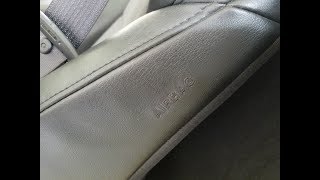
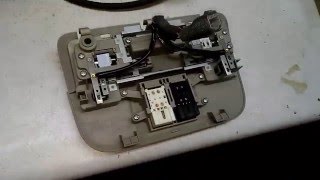
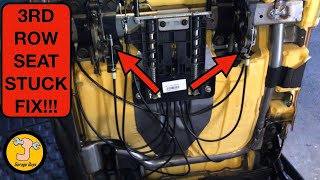
Code B0057 is a dual-meaning code that varies by manufacturer. For GM, Saab, and others, it indicates a fault in the '2nd Row Right Seatbelt Pretensioner Deployment Control' circuit. This means the Restraint Control Module (RCM) detects low resistance or a short circuit in the wiring to the explosive charge that tightens the seatbelt in a crash. For three-row vehicles like the Chevrolet Tahoe and Cadillac Escalade, B0057 points to a fault with the 'Third Row Center Seatbelt Sensor'. 🎬 Watch: Accessing and fixing third row seatbelt components. This refers to the buckle switch detecting if the seatbelt is latched. In either case, the SRS warning light illuminates, and the safety device for that position is disabled.
Technical definition: The official SAE/ISO definition is either "2nd Row Right Seatbelt Pretensioner Deployment Control Subfault" or "Third Row Center Seatbelt Sensor (Subfault)". The 'Pretensioner' definition signifies the control circuit's resistance is too low (under 1.5 Ohms), indicating a short. The 'Sensor' definition means the Body Control Module (BCM) does not see the expected voltage change from the buckle switch when the belt is latched.
Can I Drive With B0057?
No — Do Not Drive. While the vehicle drives normally, this code indicates a critical Supplemental Restraint System (SRS) failure. In a collision, the airbag and seatbelt pretensioner for the affected seat will NOT deploy, dramatically increasing the risk of serious injury. The NHTSA states seat belts reduce fatal injury risk by 45-60%, making driving with a disabled safety system an unacceptable risk.
Common Causes
- Damaged, loose, or corroded under-seat wiring harness (Very Common) — The yellow SRS wiring harness under the seats is the primary culprit. It gets damaged by stored items, passengers' feet, or moving the seat to its limits. Spilled liquids also cause corrosion on the connector pins, altering circuit resistance.
- Debris blocking the seatbelt buckle switch (Common) — Coins, food crumbs, and lint fall into the buckle mechanism, preventing the latch from fully engaging or blocking the internal switch from making electrical contact.
- Faulty seatbelt pretensioner or buckle assembly (Common) — The pretensioner (the pyrotechnic device) or the buckle switch (the latch sensor) fails internally over time, requiring replacement of the entire seatbelt retractor or buckle assembly.
- Cracked solder joints on overhead console (Subaru) (Very Common For Subaru) — In 2005-2009 Subaru Outback and Legacy models, the airbag light is frequently caused by cracked solder joints on the passenger airbag indicator light board in the overhead console, mimicking a seatbelt issue.
- Low vehicle battery voltage (Ford) (Less Common) — On Ford vehicles, a weak battery causes random SRS fault codes to store during engine cranking. Clearing the codes after charging or replacing the battery resolves the issue.
- Electronic devices on passenger seat (BMW) (Less Common) — BMW seat occupancy sensors are highly sensitive. Placing a charging laptop, phone, or wet bag on the passenger seat interferes with the system and triggers SRS faults.
- Faulty Restraint Control Module (RCM) (Rare) — The control module rarely fails, but water damage or internal shorting causes it to log permanent hardware faults. Suspect this only after thoroughly testing all wiring and sensors.
Symptoms
- Airbag or SRS warning light is on — The primary symptom. The light remains illuminated on the dashboard as long as the fault is active.
- Seatbelt warning light and chime persist — For the 'Third Row Sensor' fault, the seatbelt warning light and audible chime stay on even when the belt is buckled.
- Message on the instrument cluster — The vehicle displays a specific message such as "Service Airbag System," "Check Restraint System," or "Airbag Disabled."
- Failed safety inspection — An active SRS/airbag light is an automatic failure for vehicle safety inspections in most jurisdictions.
- Passenger airbag indicator shows 'OFF' — The SRS system defaults to turning the passenger airbags off as a precaution, indicated on the status light.
Diagnostic Flowchart
Tap your situation to follow the diagnostic path that matches what you're seeing on this code.
Common Fixes & Costs
- Securing loose connector or repairing damaged wiring — Parts: $0-$20, Labor: $120-$250, ~1.5 hr book time (DIY)
- Replacing the seatbelt buckle/pretensioner assembly
— Parts: $80-$400, Labor: $150-$250, ~1.2 hr book time
(Intermediate)
2005-2013 Chevrolet Corvette (C6): OEM GM 19151074 (Driver Side Receiver w/ Pretensioner) (Alt: Dorman offers solutions. OEM is typically $150-$250.)
2007-2014 Chevrolet Suburban/Tahoe (3rd Row Center Buckle): OEM GM 19300350 (supersedes 19258485) (Alt: ACDelco. OEM is typically $90-$130.)
2005-2009 Subaru Outback/Legacy: OEM Subaru 64621AL01BWM (Front Left), 64681AJ10AWJ (Center) (Alt: OEM assemblies range from $90 to $280 depending on position.) - Repairing solder joints on Subaru overhead console — Parts: $0, Labor: $150-$300, ~1.5 hr book time (DIY)
- Resetting the Airbag Control Module — Parts: $50-$150, Labor: $0, ~1 hr book time (DIY)
- Replacing the Restraint Control Module (RCM) — Parts: $400-$1,200, Labor: $150-$300, ~1.5 hr book time (Professional)
Used vs. New Parts: Buying Guide
When a used part is worth it: For the Airbag Control Module, having your ORIGINAL module reset by a professional service is always better than buying a used one. It is cheaper and avoids VIN mismatch issues. Used seatbelt assemblies are risky and strictly not recommended.
Donor-vehicle mileage cap: roughly under 50000 miles for the part to have meaningful remaining life.
Donor quality checklist:
- For modules, only consider resetting your original unit unless it is physically destroyed.
- Never buy seatbelt assemblies from a vehicle that was in a collision.
- Match part numbers exactly. For SRS components, 'close enough' is unacceptable.
- Avoid buying used pyrotechnic devices (pretensioners) due to safety and shipping regulations.
Decision logic:
- If Airbag light is on after a collision and module has stored crash data → Send original module for a professional reset service. It is safe, cost-effective, and plug-and-play.
- If Seatbelt buckle or pretensioner fails a resistance/continuity test → Buy a new OEM or high-quality aftermarket part. The safety risk of a used part is not worth the savings.
- If Airbag Control Module is physically damaged (water, fire, cracked case) → Buy a new module from the dealer. A used module is a last resort due to costly programming requirements.
Warranty tradeoff: Used parts: Minimal to no warranty. Aftermarket New: 1-year to limited lifetime warranty. OEM New: 12-month/12,000-mile warranty. Professional Module Reset: Often includes a lifetime warranty on the service.
Worst-case if a used part fails: $1500-2500 if a faulty used part leads to a failed diagnosis or fails to protect an occupant in a subsequent collision.
What Happens If You Wait — Timeline
- Immediate: Code B0057 is set, SRS warning light illuminates. The safety device for the specific seat is immediately disabled by the RCM. The vehicle is unsafe for an occupant in that seat. (MPG impact: 0%% · Added cost: $0)
- 1-3 months: An intermittent fault caused by a loose pin or early corrosion becomes a 'hard' fault. A simple connector reseat no longer works. The cost of repair is confined to labor for diagnosis. (MPG impact: 0%% · Added cost: $0-$250)
- 3-12 months: Corrosion permanently damages the connector pins or terminals, requiring a new connector pigtail to be spliced in. The repair cost increases. (MPG impact: 0%% · Added cost: $250-$500 (harness/connector repair))
- 12+ months: Severe corrosion wicks up the copper wiring harness, damaging a larger section of the harness or the pins on the RCM itself. This turns a simple fix into an expensive module replacement. (MPG impact: 0%% · Added cost: $500-$1800+ (harness replacement or module replacement))
Cost of Not Fixing It
- Immediate: The airbag and seatbelt pretensioner for the affected seat are disabled. In a collision, they will not deploy, drastically increasing the risk of serious injury or death. (Added cost: N/A)
- During next state inspection: Automatic failure of the vehicle's safety inspection in many states, preventing legal registration or renewal. (Added cost: $20-$50 (re-inspection fee) + cost of the eventual repair.)
- Long-term: Ignoring a minor moisture intrusion fault allows corrosion to spread, permanently damaging the wiring harness or control module. (Added cost: $500-$1500+)
Diagnosis Steps
- Read Fault Codes with an SRS Scanner
Use an OBD-II scanner capable of reading SRS/Body codes. Confirm B0057 is active and check its specific definition (Pretensioner or Buckle Sensor). Note any low voltage codes, as they indicate a battery issue rather than a component failure.
Tools: OBD-II Scanner (SRS/Airbag compatible) (Beginner) - Inspect and Reseat Under-Seat Connectors
Locate the yellow SRS harness under the affected seat. Check for pinched wires or obvious damage. Disconnect the connector, inspect pins for corrosion, spray with contact cleaner, and reconnect firmly until it clicks. Secure it with a zip tie to prevent dragging.
Tools: Flashlight, Contact cleaner, Zip ties (Beginner) - Clear Codes and Re-scan
After reseating the connector, use your scanner to clear the SRS codes. Cycle the ignition off and on, then re-scan. If the code does not return, a loose connection was the cause. If it returns immediately, proceed to live data testing.
Tools: OBD-II Scanner (SRS/Airbag compatible) (Intermediate) - Wiggle Test with Live Data
Use your scan tool's live data function to monitor 'Seat Belt Buckle Switch' or 'Pretensioner Resistance'. Wiggle the wiring harness under the seat and operate the buckle. If the live data value flickers or resistance spikes, you have pinpointed the intermittent short.
Tools: Advanced OBD-II Scanner with Live Data (Intermediate) - Test Pretensioner Resistance (Advanced)
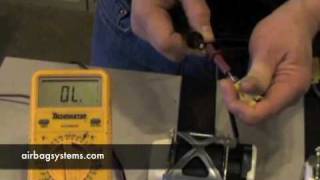
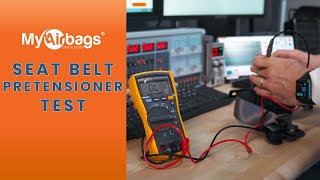
CAUTION: Disconnect the 12V battery for 30 minutes before proceeding. Disconnect the pretensioner connector. Use a multimeter set to Ohms (Ω) to measure resistance across the pretensioner's two pins. A functional unit reads between 2.0 and 3.0 Ohms. 🎬 See this guide on testing seatbelt pretensioner resistance. A reading near 0 Ω confirms a shorted pretensioner requiring replacement.
Tools: Multimeter, Basic hand tools (Advanced) - Test Buckle Switch Function (Advanced)
CAUTION: Disconnect the battery. Disconnect the buckle connector. Set a multimeter to continuity mode. Test the two pins on the buckle. You should have continuity (<1 Ω) when empty, and no continuity (OL) when the latch is inserted. If the switch doesn't change states, the buckle assembly is faulty.
Tools: Multimeter, Basic hand tools (Advanced) - Test the Wiring Harness (Advanced)
With the battery disconnected and both ends of the harness unplugged (at the seat and at the RCM), use a multimeter to check for continuity on each wire from end to end. Check for a short to ground on each wire and a short between the two wires.
Tools: Multimeter, Vehicle-specific wiring diagram (Advanced)
When This Code Triggers (Freeze-Frame Conditions)
- System Self-Check: Key On (The SRS module performs a self-check every time the ignition is turned to the 'ON' position.)
- Fault Detection Time: 2 seconds (The code sets if the module detects resistance below the specified threshold (e.g., < 1.5 Ohms) for a continuous 2-second period.)
- Battery Voltage: 9-16 Volts (The self-test runs under normal vehicle operating voltage. Out-of-range voltage during startup triggers false SRS codes.)
- Vehicle State: Stationary (The initial, most critical self-test that sets this hard code occurs before the vehicle is in motion.)
Related Codes
- B0058 — The direct counterpart to the 'Pretensioner' definition of B0057. B0057 indicates a short circuit (low resistance), while B0058 indicates an open circuit (high resistance).
- B0077 — This code is for the 'Third Row Center Seatbelt Pretensioner Deployment Control'. It is the pretensioner circuit fault equivalent for the same seating position where B0057 indicates a buckle switch fault.
- B0073 / B0074 / B0075 — These codes refer to the pretensioner deployment control for the Second Row Left (B0073), Center (B0074), and Right (B0075), indicating the same fault type for different seats.
- U0057 — A communication code for 'Vehicle Communication Bus D (+) Open'. It is unrelated to the SRS system and points to a network wiring issue between modules.
Climate & Environmental Factors
- High Humidity / Water Intrusion: Moisture is a primary enemy of SRS components. High humidity or cabin leaks cause corrosion on connector pins, increasing resistance or causing short circuits that directly trigger B0057.
- Extreme Cold: Cold temperatures cause plastic connectors and wire insulation to become brittle. This leads to loose connections or cracked wires in harnesses subject to movement under a seat.
- Road Salt: Salt-laden moisture tracked into the vehicle works its way into under-seat connectors. Salt accelerates corrosion far more than plain water, rapidly degrading electrical contacts.
How to Talk to a Mechanic About This Code
Say this: "I have an airbag light on and my scanner shows code B0057. My research indicates this is likely a '2nd Row Right Pretensioner' (or '3rd Row Buckle Sensor') circuit fault. I'd like to schedule a diagnostic to confirm the cause, focusing on the under-seat wiring and connector before considering any part replacement."
This signals you are an informed customer. It directs the technician to the most common and cheapest fix first (wiring), establishes that you know the specific fault, and sets the expectation that they should diagnose, not just replace parts.
Avoid saying:
- 'My airbag light is on, can you fix it?'
- 'Just do whatever it takes to turn the light off.'
- 'A friend said it might be the sensor, can you replace it?'
Questions to ask before authorizing the repair:
- Did you find the fault in the wiring, the connector, or the component itself?
- If it's the component, what resistance (in Ohms) did the pretensioner measure, or did the buckle switch fail its continuity test?
- Is the proposed repair to fix the wiring, or are you replacing the entire assembly?
- What is the warranty on this specific repair and the parts used?
Where to Take It: Dealer vs Independent vs Chain
- Dealer:
A safe but expensive option. Recommended if a known TSB applies to your vehicle or if you prefer the peace of mind of OEM parts and service.
Best for: Vehicles under warranty or covered by a specific recall/TSB for this issue., Complex electrical issues where a factory scanner and data are required., First-time diagnosis when you want a guaranteed, albeit expensive, fix.
Downsides: Highest labor rates and part markups., May be quick to replace an entire assembly rather than attempting a more nuanced wiring repair. (Typical cost: +50% vs. baseline) - Independent Shop:
Best fit for most owners. An experienced independent technician easily diagnoses and repairs this code, often at a significantly lower cost than a dealer. Ensure they are comfortable working on SRS systems.
Best for: Out-of-warranty vehicles where cost is a factor., Diagnosing common faults like B0057, which are well-known in the industry., Building a long-term relationship with a trusted mechanic.
Downsides: Shop quality and technician expertise vary greatly. Vet shops by looking for ASE certifications., May not have access to the very latest manufacturer-specific diagnostic software. (Typical cost: +0% vs. baseline) - Chain Shop:
AVOID. The safety-critical and specialized nature of an SRS repair is not well-suited to the chain shop model. The risk of misdiagnosis or improper handling of explosive components is too high.
Best for: Simple, routine maintenance like oil changes, tires, and brakes.
Downsides: Technician experience with complex diagnostics, especially safety-critical SRS systems, is limited., Business model encourages upselling unnecessary services. (Typical cost: -10% vs. baseline)
When to Walk Away From the Repair
If the total estimated repair cost for the B0057 fault exceeds 40-50% of your car's current private-party value, consider alternatives.
- Car worth $4000, fix is $350: Fix it. This is a relatively inexpensive repair that restores a critical safety feature and makes the car sellable.
- Car worth $4000, fix is $1800: Walk away. The repair cost is approaching half the vehicle's value. The fault is likely a rare module failure.
- Car worth $15000, fix is $1800: Fix it. While expensive, the repair cost is a small fraction of the car's value and is necessary for safety and resale.
What Scan Tool You Need for This Code
Minimum: A scanner that can read and clear Supplemental Restraint System (SRS) / Airbag codes. A basic engine-only code reader will NOT work.
A standard $20 code reader only communicates with the Engine Control Unit (ECU). Airbag faults are stored in a separate Restraint Control Module (RCM). You need a tool that specifically accesses this system to see and clear codes like B0057.
Budget: BlueDriver Pro (~$100) — Connects to your smartphone via Bluetooth. It reads and clears SRS codes for most major brands and provides repair reports suggesting common fixes for B0057.
Mid-range: Foxwell NT510 Elite / Autel MaxiCOM MK808 (~$150-350) — These handheld scanners offer SRS code reading/clearing plus crucial LIVE DATA. You view the pretensioner resistance or buckle switch status in real-time, making it easy to perform a 'wiggle test' to find intermittent wiring faults.
Professional: Autel MaxiCOM MK906BT / Launch X431 Series (~$500-1200) — Provides all midrange functions plus advanced features like bi-directional control to test components and ECU coding capabilities, necessary if you replace and program a new SRS control module.
Rent vs buy: Most auto parts store loaner tools are basic engine code readers and CANNOT access SRS codes. Buying a budget or midrange SRS-capable scanner is a worthwhile investment that saves money on the first use.
How to Clear the Code After You Fix It
- Ensure the physical fault (e.g., bad wiring, faulty part) is corrected.
- Reconnect all connectors and the vehicle's 12V battery.
- Use an SRS-compatible OBD-II scan tool to access the Restraint Control Module.
- Select the function to 'Clear Fault Codes' or 'Reset SRS Module'.
- Cycle the ignition off, then turn it back to 'ON'. The SRS light illuminates for a few seconds for a bulb check, then turns off permanently.
Drive cycle (~1 minutes): An SRS drive cycle is not required. The system resets and verifies the repair at the next key-on event. If the light stays off after the initial bulb check, the repair is successful.
Readiness monitors affected: None. SRS readiness is separate from emissions readiness monitors.
Watch out for:
- Using a basic OBD-II reader that cannot access the SRS/RCM module.
- Forgetting to clear the code after the repair. SRS codes are 'hard codes' and never clear themselves.
- The code returns immediately, indicating the root cause was not fixed or the repair failed.
Will This Fail Emissions / State Inspection?
No — by itself this code doesn't fail OBD inspection (but it can keep readiness monitors from setting, which causes a separate fail).
- California: Will NOT fail a smog check. California's inspection is primarily for emissions, and the SRS system is not part of that test.
- New York: WILL FAIL the safety inspection. An illuminated airbag warning light is grounds for an automatic failure per NYS Vehicle and Traffic Law.
- Texas: Likely to PASS. While inspectors check seatbelts, the airbag light itself is not listed as an automatic failure item in the standard Texas safety inspection.
Most Commonly Affected Vehicles
- Chevrolet Corvette (2005-2013) — The under-seat connector is dragged by the seat track, causing high resistance. GM Special Coverage Bulletin #15643A instructs technicians to solder the wires directly for a permanent fix.
- Cadillac XLR (2004-2009) — Built on the C6 Corvette platform and suffers from the identical under-seat wiring connector issue, also covered under GM Special Coverage #15643A.
- Chevrolet / GMC Tahoe, Suburban, Yukon, Escalade (2007-2014) — Code B0057 commonly refers to the 'Third Row Center Seatbelt Sensor' located in the buckle. The cause is a failed buckle switch or damaged wiring to the third row.
- GMC / Chevrolet Sierra / Silverado (2007-2014) — Under-seat wiring and connectors are a common failure point. A replacement buckle assembly from GM costs approximately $90-$130.
- Subaru Outback / Legacy (2005-2009) — Famous for a persistent airbag light caused by cracked solder joints on the passenger airbag indicator lights in the overhead console. Repairing these joints resolves the SRS light.
- Honda Pilot, Accord, Civic, CR-V, Odyssey (2020-2022) — A massive recall (24V064000) was issued for faulty front passenger seat weight sensors that crack and short circuit, causing SRS errors similar to B0057.
- BMW Multiple Series (X3, X5, 5-Series, etc.) (2010-2024) — Known for sensitive passenger seat occupancy sensor mats. Placing electronics or wet items on the seat triggers SRS faults. Rule this out before attempting repairs.
- Ford F-150, Explorer, Fusion (2009-2024) — Ford vehicles log SRS fault codes, including pretensioner circuit faults, when the main vehicle battery voltage is low. Ensure the battery is healthy before diagnosing SRS codes.
Manufacturer-Specific Notes
- General Motors (GM): GM's official solution for problematic under-seat SRS connectors on the Corvette and XLR is to remove the connector entirely and solder the wires directly, protecting them with heat shrink tubing.
- Subaru: The overhead console airbag indicator light is a notorious failure point. If the passenger airbag 'ON'/'OFF' lights are not working correctly, the issue is cracked solder joints on that circuit board.
- Ford: Ford's Restraint Control Modules are sensitive to low voltage and log false circuit codes during cranking. A simple battery replacement or recharge makes the code clearable.
- BMW: The passenger seat occupancy mat is the most common SRS failure point. If you get any passenger-side SRS code, remove all items from the seat to see if the fault clears.
Real Owner Stories
2011 Chevrolet Corvette Grand Sport with intermittent 'Service Airbag' light
The airbag light came on intermittently after hitting bumps. The owner could temporarily turn the light off by reaching under the seat and wiggling the yellow connector.
What they tried:
- Unbolted the seat, propped it up, and disconnected the yellow connector.
- Applied dielectric grease to the connector pins and reconnected it securely.
- Used zip-ties to hold the connector tightly together and secure the harness to the seat frame, preventing it from dragging on the carpet.
Outcome: The airbag light stayed off permanently. This avoided the official dealer fix (GM TSB #15643A), which involves cutting the connector off and soldering the wires directly.
Lesson: For intermittent SRS lights on C6 Corvettes, the under-seat connector is the prime suspect. A simple, no-cost fix of cleaning, applying dielectric grease, and securing the connector with zip-ties provides a permanent solution.
2007 Subaru Outback with persistent airbag light
Airbag light stayed on. A basic scan pointed to a general SRS fault. The car had around 120,000 miles.
What they tried:
- Inspected and cleaned under-seat connectors with no change.
- A forum search revealed the common failure of solder joints in the overhead console.
- Removed the overhead console, located the small circuit board for the passenger airbag indicator, and found hairline cracks in the solder on two resistor joints.
- Re-soldered the joints with a soldering iron.
Outcome: After reinstalling the console and clearing the codes, the airbag light went off and did not return. The fix cost $0 in parts.
Lesson: On 2005-2009 Subaru Outback/Legacy models, a persistent airbag light is frequently caused by cracked solder joints on the overhead console indicator light. Inspect these joints before spending money on sensors.
2008 Chevy Suburban with B0057 for 'Third Row Center Seatbelt Sensor'
The 'Service Airbag' message appeared, and an SRS scan confirmed code B0057 pointing to the 3rd-row center buckle switch. The seatbelt chime sounded even when buckled.
What they tried:
- Cleaned the buckle with compressed air and a pick, but the code remained.
- Followed the wiring from the buckle under the seat cushion and found no visible damage.
- Tested the buckle switch with a multimeter set to continuity. The switch did not change state when the latch was inserted, confirming an internal failure.
- Ordered a new OEM buckle assembly (GM Part #19300350) for $110.
Outcome: Replacing the third-row center buckle assembly and clearing the code resolved the issue. The repair took about an hour.
Lesson: On large GM SUVs, B0057 points specifically to the third-row buckle sensor. Testing the switch's continuity is a definitive way to confirm if the buckle assembly has failed before ordering parts.
How to Prevent This Code From Triggering
- Be mindful of under-seat storage (Always) — Never force items under powered seats. Water bottles or tools snag the yellow SRS harness, pulling connectors loose or severing wires. This is the #1 cause of this fault.
- Secure the under-seat connector (Once, during inspection) — On many cars, the SRS connector drags on the carpet. Use a zip-tie to firmly secure the connector and its wiring to a fixed part of the seat frame to prevent stress on the pins.
- Periodically clean seatbelt buckles (Every 1-2 years) — Food crumbs and spilled liquids gum up the buckle's internal switch. Blasts of compressed air followed by electronics-safe contact cleaner prevent sensor-related faults.
- Apply dielectric grease to connectors (When servicing or inspecting) — In humid climates, applying a small amount of dielectric grease to the inside of the connector seal blocks moisture and prevents pin corrosion.
- Use caution when moving seats (Daily habit) — Avoid slamming seats to their forward-most or rear-most travel limits. Repeated stress fatigues the wiring harness over time, leading to intermittent breaks.
Frequently Asked Questions
Can I fix a B0057 code myself?
Yes, simple fixes like securing a loose connector or cleaning debris from a buckle are very DIY-friendly. Stop DIY and take the vehicle to a certified shop if you lack an SRS-capable scanner or are uncomfortable handling pyrotechnic devices.
Will my airbags still work with a B0057 code?
No. When the RCM detects a critical fault like B0057, it disables that part of the system as a failsafe. The airbag and pretensioner for the affected seat will not deploy in an accident.
I fixed the wire, but the airbag light is still on. What now?
SRS codes are 'hard codes' and will not clear themselves. You must use an SRS-compatible OBD-II scanner to manually clear the fault from the Restraint Control Module after the repair is complete.
What's the difference between a pretensioner and a buckle switch?
A pretensioner is a pyrotechnic device that forcefully tightens the seatbelt in a crash. A buckle switch is a simple electronic sensor inside the buckle that tells the car's computer whether the metal latch is inserted.
Can I bypass or trick the seatbelt sensor to turn off the light?
While physically possible using resistors to fool the system, it is strongly discouraged and often illegal. Bypassing a safety sensor permanently disables that part of the SRS system, meaning it will not protect an occupant in a crash. It also guarantees a failed safety inspection.
What's the difference between replacing and resetting the airbag module?
Resetting your original module ($50-$150 mail-in service) clears stored crash data and is plug-and-play because it retains your VIN programming. Replacing the module costs $400-$1,200+ and requires expensive dealership programming. Resetting is always the better option if the module isn't physically damaged.
Why is the airbag wiring always in a yellow loom?
This is an industry-wide safety standard providing a clear visual warning to anyone working on the vehicle. The yellow color signifies the wires belong to the Supplemental Restraint System (SRS) and connect to explosive devices requiring extreme caution.
Key Takeaways
- Code B0057 disables the affected seat's safety system, indicating either a shorted 2nd-row right pretensioner or a failed 3rd-row center buckle sensor.
- Stop driving with this code active, as the disabled pretensioner or airbag increases the risk of fatal injury by up to 60% in a collision.
- Inspect the yellow SRS wiring harness directly under the affected seat first, as loose or corroded connectors cause over 70% of B0057 faults.
- Verify a healthy pretensioner by testing its resistance with a multimeter; a functional unit reads strictly between 2.0 and 3.0 Ohms.
- Clear this 'hard code' manually using an SRS-compatible OBD-II scanner, as the airbag light will never turn off on its own even after a perfect repair.
Helpful Videos

The information in this article is provided for general reference and educational purposes only. Vehicle specifications, procedures, and part compatibility can vary by production date, trim level, and region. Always consult your vehicle's factory service manual and verify part numbers before purchasing or performing repairs. Safety-critical components such as airbags, seat belts, and braking systems should be installed by a qualified professional.
- 🎬 Helpful Videos
- What Does B0057 Mean?
- Can I Drive With B0057?
- Common Causes
- Symptoms
- Diagnostic Flowchart
- Common Fixes & Costs
- Used vs. New Parts: Buying Guide
- What Happens If You Wait — Timeline
- Cost of Not Fixing It
- Diagnosis Steps
- When This Code Triggers (Freeze-Frame Conditions)
- Related Codes
- Climate & Environmental Factors
- How to Talk to a Mechanic About This Code
- Where to Take It: Dealer vs Independent vs Chain
- When to Walk Away From the Repair
- What Scan Tool You Need for This Code
- How to Clear the Code After You Fix It
- Will This Fail Emissions / State Inspection?
- Most Commonly Affected Vehicles
- Manufacturer-Specific Notes
- Real Owner Stories
- 2011 Chevrolet Corvette Grand Sport with intermittent 'Service Airbag' light
- 2007 Subaru Outback with persistent airbag light
- 2008 Chevy Suburban with B0057 for 'Third Row Center Seatbelt Sensor'
- How to Prevent This Code From Triggering
- Frequently Asked Questions
- Can I fix a B0057 code myself?
- Will my airbags still work with a B0057 code?
- I fixed the wire, but the airbag light is still on. What now?
- What's the difference between a pretensioner and a buckle switch?
- Can I bypass or trick the seatbelt sensor to turn off the light?
- What's the difference between replacing and resetting the airbag module?
- Why is the airbag wiring always in a yellow loom?
- Key Takeaways
- 🎟️ Get 5% Off