

B0044 on 2006-2013 Chevrolet Impala: Airbag Light Causes and Fixes
This code indicates an open circuit in the driver's front airbag (stage 2). The most common causes are a faulty clock spring or a bad connection at the steering column. Expect to spend $70-$200 on parts for a DIY repair.
- B0044 means there is a problem in the driver's airbag circuit, and the airbag may not work in a crash.
- The most likely cause is a failed clock spring behind the steering wheel.
- Before replacing parts, always check the yellow airbag connectors under the dash and at the SDM for a secure fit, as per a GM service bulletin.
- This is a critical safety system. If you are not experienced with airbag system repairs, professional service is highly recommended.
- After the repair, the code must be cleared from the airbag module with a capable scan tool to turn off the warning light.
What's Unique About the 2006-2013 Chevrolet IMPALA
For this generation of Impala and other contemporary GM vehicles, intermittent airbag faults are common. GM released a Technical Service Bulletin (TSB #08-09-41-002H) that directly includes code B0044, pointing technicians to inspect and replace a small plastic part called the Connector Position Assurance (CPA) retainer. This suggests that simple connection issues at the yellow airbag connectors are a known weak point in the system, often preceding the failure of more expensive components like the clock spring. These connection issues can occur at the base of the steering column, behind the kick panel, or at the SDM itself under the driver's seat.
Diagnostic Flowchart
Tap your situation to follow the diagnostic path that matches what you're seeing on this vehicle.
Symptoms You May Notice
- Airbag warning light is continuously illuminated on the dashboard.
- "Service Airbag" message on the driver information center.
- Replacing the driver's airbag module before thoroughly testing the clock spring and connectors. The clock spring is a far more common failure point.
- Replacing the clock spring without first checking for loose connections at the steering column base or SDM, which is a simpler and cheaper fix.
Most Likely Causes
- Faulty Clock Spring (Airbag Coil) 🔴 High Probability The clock spring contains a thin, flexible ribbon of wires that allows the steering wheel to turn while maintaining electrical contact for the airbag, horn, and steering wheel controls. Over many cycles of turning the wheel, these wires can fatigue and break, causing an open circuit.
How to confirm: After disconnecting the battery and waiting, disconnect the clock spring connectors. A professional would use a special tool to measure resistance. A DIY method involves using a multimeter to check for continuity through the clock spring's airbag circuit pins. An open circuit (infinite resistance) confirms failure. A more advanced method involves using a scan tool to monitor the resistance value of the deployment loop while turning the steering wheel lock-to-lock to see if the value spikes, indicating an intermittent open.
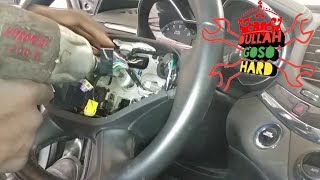
Typical fix: Replace the clock spring assembly located behind the steering wheel. This requires removing the driver's airbag and the steering wheel.
Est. part cost: $60-$150 - Poor Connection or Faulty CPA Retainer 🟡 Medium Probability As identified in GM TSB #08-09-41-002H, the Connector Position Assurance (CPA) retainer can fail, leading to a loose connection at the steering column base, airbag module, or other harness connectors. The CPA is a small plastic lock that ensures the connector halves stay fully seated and that internal shorting bars are disengaged. Vibration and thermal cycles can cause these connectors to loosen over time.
How to confirm: Visually inspect the yellow airbag connectors under the dash at the steering column, behind the driver-side kick panel (C221), and at the SDM under the driver's seat. Disconnect the battery, then disconnect and reconnect the connector, ensuring the CPA lock is fully seated and clicks into place. Check for any spread or corroded terminals.
Typical fix: Reseat the connector securely. If the CPA retainer is broken, replace it. If terminals are damaged, the connector pigtail may need to be replaced. Applying dielectric grease can help maintain a good connection.
Est. part cost: $5-$30 - Damaged Wiring Harness ⚪ Low Probability Wires in the steering column or leading to the Sensing and Diagnostic Module (SDM) can become chafed, pinched, or broken, though this is less common than component failure. This can happen from previous repairs, aftermarket accessory installation, or simple vibration over time.
How to confirm: Perform a continuity and resistance test on the specific wires for the stage 2 circuit (typically tan and white/pink wires) between the SDM and the clock spring connector. A visual inspection may reveal a pinched or broken wire, particularly at connector junctions or where the harness passes through panels.
Typical fix: Repair the specific section of damaged wire using approved splicing techniques. In some cases, a harness pigtail replacement is necessary.
Est. part cost: $1-$10
Rare But Worth Checking
- Faulty Driver's Airbag Module: The airbag inflator module itself can develop an internal open circuit. This is rare and should only be considered after the clock spring and wiring have been definitively ruled out. A professional diagnosis using a specific airbag simulator (resistor) can confirm this.
- Failed Sensing and Diagnostic Module (SDM): It is extremely rare for the airbag control module itself to fail in a way that isolates this specific code. This is the last component to suspect. A diagnostic scan tool that can communicate with the SDM can help determine if the module is functioning correctly.
Diagnosis Steps
- Safety First: Disconnect the negative battery terminal and wait at least 15 minutes for the airbag system's backup power to discharge completely.
- Scan for Codes: Confirm B0044 is the active or history code. Note any other SRS codes, especially B0026, which would strengthen the diagnosis of a clock spring or connector issue.
- Inspect Connectors: Locate the yellow airbag harness connectors at the base of the steering column. Visually inspect them for damage. Disconnect and reconnect them to ensure they are fully seated. Check that the CPA (Connector Position Assurance) clip is intact and engaged. Repeat this process for the connector behind the driver's kick panel and at the SDM under the driver's seat.
- Isolate the Fault (Professional Method): Using a set of calibrated airbag simulator resistors, a technician can disconnect a component (like the airbag) and plug in the resistor. If the code changes from 'open' to 'short' or disappears, it helps pinpoint the faulty part of the circuit. For example, connecting a resistor at the clock spring connector can determine if the fault is in the clock spring/airbag or in the wiring back to the SDM.
- Test the Clock Spring: Disconnect the clock spring from both the vehicle harness and the airbag. Using a multimeter set to resistance, carefully measure the resistance across the pins for the stage 2 circuit. Wiggling the steering wheel while testing can help identify an intermittent open. An infinite reading (OL) confirms a broken internal wire.
- Test the Harness: If the clock spring tests good, check for continuity on the harness wires running from the clock spring connector back to the SDM. Check for high resistance which could also set the code.
- Component Replacement: Based on test results, replace the faulty component (most often the clock spring or a connector pigtail).
- Clear Codes: After reassembly and reconnecting the battery, use a scan tool capable of accessing the SRS module to clear the B0044 code from the SDM. Verify the airbag light stays off after a drive cycle.
Parts You'll Likely Need
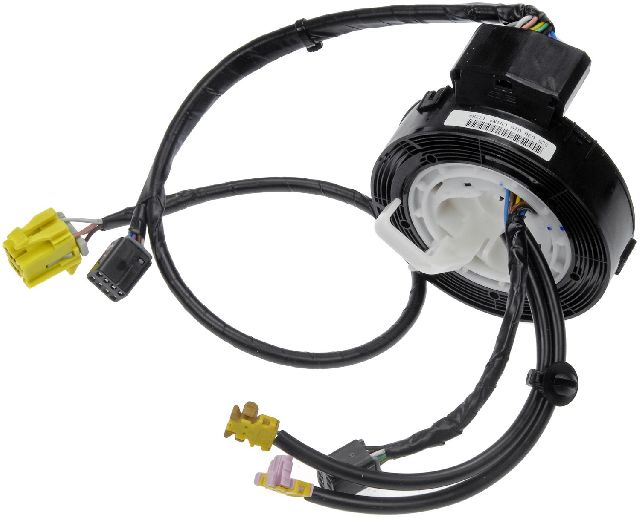
- Clock Spring (Airbag Coil)
(OEM #ACDelco 19418224 (Supersedes older numbers))— This is the most frequent point of failure for an open circuit in the steering wheel due to constant movement.
Trusted brands: ACDelco, Dorman (525-026), Standard Motor Products (CSP349)
OEM price range: $120-$200
Aftermarket price range: $60-$150 - Connector Position Assurance (CPA) Retainer — A known issue cited in a GM TSB for causing intermittent open circuits in the airbag system. [Bulletin #08-09-41-002H]
Trusted brands: ACDelco
OEM price range: $5-$15
Aftermarket price range: $5-$15
Related Codes That Often Appear With This One
- B0026 — This code indicates an open circuit in the Stage 1 driver's airbag loop. If both B0026 and B0044 are present, it strongly points to a shared failure point like the clock spring or its main connector, as both deployment stages run through it.
Technical Service Bulletins (TSBs) & Recalls
- 08-09-41-002H: Addresses an intermittent airbag light and lists DTC B0044 as one of the relevant codes, pointing to a faulty Connector Position Assurance (CPA) retainer. This TSB applies to a very wide range of GM vehicles from roughly 2005-2014, including the Impala.
Platform-Specific Known Issues
- A GM Technical Service Bulletin (#08-09-41-002H) was issued for intermittent airbag lights with code B0044 (among others), advising technicians to inspect and replace the Connector Position Assurance (CPA) retainer. This highlights that connection integrity is a known problem area for this system.
- Owners have reported success in resolving the B0044 code simply by disconnecting and reconnecting the main yellow airbag connector at the base of the steering column, sometimes adding dielectric grease to ensure a solid connection.
Mechanic-Grade Diagnostic Values
- Driver's Airbag Deployment Loop Resistance (Total) — expected: 1.3 - 4.8 ohms. Failure: A reading greater than 4.8 ohms will set DTC B0044 (Open/High Resistance). A reading less than 1.3 ohms will set DTC B0042 (Low Resistance).
- Driver's Airbag Module (Inflator) Resistance — expected: ~2.5 - 3.0 ohms. Failure: A reading significantly outside this range, or that is erratic when wiggled, indicates a faulty inflator module.
- SDM High Control Voltage — expected: Greater than 2.4 volts. Failure: Voltage less than 2.4 volts combined with a resistance of 6 ohms or greater can also trigger DTC B0044.
Hidden / Shadow Codes Worth Checking
- B0044 04: This symptom byte specifies an 'Open Circuit' condition for the driver frontal deployment loop stage 2. (see via A professional GM-specific scan tool like a Tech2 or GDS2 is required to view symptom bytes.)
- B0044 0D: This symptom byte indicates 'Resistance Above Threshold' for the driver frontal deployment loop stage 2. (see via A professional GM-specific scan tool like a Tech2 or GDS2 is required to view symptom bytes.)
Scan Tool Commands That Help
- Tech2/GDS2: Clear SRS Codes — This function is required after any repair to the SRS system. The airbag light will not turn off on its own; the SDM must be commanded to clear the fault code after the repair is complete and verified.
- Tech2/GDS2: Data Display > Deployment Loop Resistance — This allows the technician to view the live resistance value of the deployment loop as seen by the SDM. Wiggling wires or turning the steering wheel while monitoring this value can help pinpoint intermittent open circuits without invasive probing.
- Tech2/GDS2: Induce Fault Codes — A diagnostic strategy involves intentionally shorting the circuit at a connector. If the SDM is functioning correctly, it should set a 'Low Resistance' code (B0042) instead of the 'Open' code (B0044). If it does, this confirms the wiring from the connector back to the SDM is intact, and the fault lies upstream (in the clock spring or airbag).
Wiring & Ground Locations
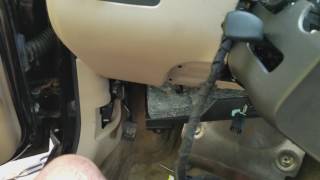
- C275 — The main yellow 4-way airbag connector located at the base of the steering column, under the driver's side dash.. This is the primary connection point between the body harness and the clock spring. It is the most common location for a poor connection to cause B0044. Reseating this connector often fixes the issue.
- C221 — A yellow airbag harness connector located behind the driver's side kick panel, near the door hinge.. This is an intermediate connector between the SDM and the steering column harness. High resistance at this connector is a known cause of B0044, as noted in some service bulletins and owner forums. It is often overlooked.
- SDM Connector — The main connector at the Sensing and Diagnostic Module (SDM), which is located under the driver's seat.. This is the final connection point. While less common, a poor connection here can cause B0044. The circuit wires are typically white and pink in the connector.
Real Owner Repair Stories
- Commenter on 'Pine Hollow Auto Diagnostics' YouTube Video (GM Truck (similar platform/wiring to Impala)) — Airbag light on with codes B0026 and B0044.
❌ Tried (didn't work) Reconnecting the yellow connector (C275) under the steering wheel cleared B0026 but B0044 remained., Resistance measured at C275 was 2.8 ohms (within spec).
✅ What actually fixed it The owner found high resistance (>3 ohms) between the SDM and C275. They located another yellow connector, C221, hidden behind the kick panel. After removing the kick panel, disconnecting C221, cleaning the terminals with alcohol, and applying dielectric grease, the B0044 code was resolved. - YouTube user 'Antonio Neto' (2006 Chevrolet Avalanche (similar platform)) — Airbag light on with code B0044.
❌ Tried (didn't work) Initial computer diagnosis pointed to the connection.
✅ What actually fixed it The user found that the connection at the steering column base (C275) was loose. Wiggling the wires would make the code go away temporarily. The final fix was securing the loose connector with a zip tie to ensure it remained fully seated.
OEM Part Supersession History
Various older GM part numbers→ACDelco 19418224— Part consolidation and potential design updates over the model years.
Model Year Variations Within This Range
- 2014-2016: The 8th generation Impala body style continued as the 'Impala Limited' for fleet sales from 2014-2016. These vehicles use the same clock spring (e.g., Dorman 525-026) and have the same SRS components and potential issues as the 2006-2013 models.
Helpful Videos
We Have This Part in Stock


The information in this article is provided for general reference and educational purposes only. Vehicle specifications, procedures, and part compatibility can vary by production date, trim level, and region. Always consult your vehicle's factory service manual and verify part numbers before purchasing or performing repairs. Safety-critical components such as airbags, seat belts, and braking systems should be installed by a qualified professional.
- Chevrolet IMPALA:
- 🎬 Helpful Videos
- 🛍️ Shop This Part
- What's Unique About the 2006-2013 Chevrolet IMPALA
- Diagnostic Flowchart
- Symptoms You May Notice
- Most Likely Causes
- Rare But Worth Checking
- Diagnosis Steps
- Parts You'll Likely Need
- Related Codes That Often Appear With This One
- Technical Service Bulletins (TSBs) & Recalls
- Platform-Specific Known Issues
- Mechanic-Grade Diagnostic Values
- Hidden / Shadow Codes Worth Checking
- Scan Tool Commands That Help
- Wiring & Ground Locations
- Real Owner Repair Stories
- OEM Part Supersession History
- Model Year Variations Within This Range
- 🎟️ Get 5% Off