

OBD-II Code B0036: Second Row Left Seatbelt Pretensioner Deployment Control
What B0036 means, why it triggers, and how to fix it
- Code B0036 instantly disables your entire airbag and seatbelt pretensioner system, requiring immediate repair before driving.
- On 1998-2005 GM trucks and SUVs, B0036 almost always indicates a failed left front impact sensor behind the bumper, not a seatbelt issue.
- Over 70% of B0036 codes stem from corroded or pinched wiring harnesses located under the front seats or behind the front bumper.
- Always disconnect the negative battery terminal and wait exactly 30 minutes before touching any yellow SRS connectors to prevent accidental airbag deployment.
- Replacing a faulty part will not clear the dashboard warning light; you must use an SRS-capable OBD-II scanner to manually reset the control module.
What Does B0036 Mean?
Code B0036 indicates the restraints control module (RCM) detected an electrical fault in the second-row left seatbelt pretensioner circuit. A pretensioner uses a small explosive charge to instantly tighten the seatbelt during a crash. This code means the circuit is open (broken wire), shorted, or has abnormal resistance, preventing deployment.
Technical definition: The formal SAE/OBD-II definition for B0036 is "Second Row Left Seatbelt Pretensioner Deployment Control." However, scan tools frequently misinterpret this code. On 1998-2005 General Motors trucks and SUVs, B0036 specifically means "Auxiliary Discriminating Sensor (ADS) Open, Missing, or Shorted to Battery"—a front impact sensor. The scan tool's specific definition dictates whether you inspect the interior seatbelt or the front bumper.
Can I Drive With B0036?
No — Do Not Drive. Do not drive the vehicle. A B0036 code indicates a critical fault within the Supplemental Restraint System (SRS). This disables the entire airbag and seatbelt pretensioner system as a fail-safe. In a collision, none of the airbags will deploy and the seatbelts will not tighten, drastically increasing the risk of serious injury or death. Ignoring the warning light also causes automatic failure of state safety inspections.
Common Causes
- Damaged or Corroded Wiring/Connectors (Very Common) — Moisture from clogged sunroof drains, floor pan rust, or spilled drinks wicks into the yellow SRS wiring harnesses under the seats. Frequently adjusting the seats also stretches or pinches these wires, causing open or short circuits.
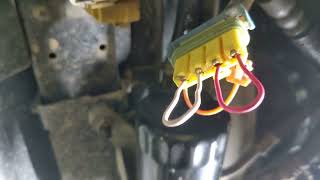
- Faulty Front Impact Sensor (GM-Specific) (Very Common) — On GM trucks like the S-10, Blazer, and Silverado, the front Auxiliary Discriminating Sensor (ADS) 🎬 Watch: Diagnosing an intermittent B0036 code on a GM truck. fails from internal corrosion due to its exposed location behind the front bumper.
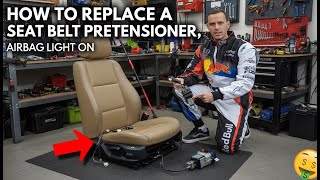
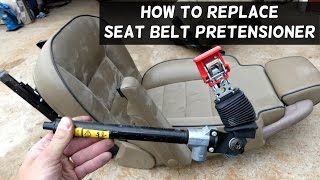
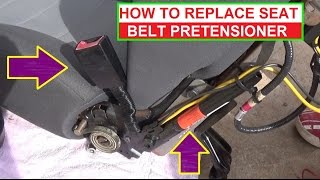
- Faulty Seatbelt Pretensioner Assembly (Common) — The pretensioner unit fails internally due to a short circuit or mechanical breakdown. This is a frequent failure point on many Ford and Hyundai models. 🎬 See how to replace a seatbelt pretensioner on a Ford.
- Previous Collision or Minor Impact (Common) — A minor accident, hitting a large pothole, or a hard bump triggers a fault in the sensitive SRS circuits or stores crash data in the control module, even if the airbags did not deploy.
- Low Battery Voltage or Improper Jump-Starting (Less Common) — A weak battery causes low voltage conditions that trigger spurious SRS fault codes. Improper jump-starting creates voltage spikes that permanently damage sensitive modules like the SDM.
- Faulty Restraints Control Module (RCM/SDM) (Rare) — The control module itself fails, but this is the least likely cause. You must eliminate all wiring and sensor faults before condemning the module.
Symptoms
- Illuminated Airbag Warning Light or Message — The dashboard SRS/Airbag light remains on constantly or flashes intermittently when hitting bumps or turning. A 'Service Airbag System' message also appears on the driver information center.
- Seatbelt Malfunction (Locked or Loose) — The affected seatbelt locks in a tightened position, fails to retract, or feels unusually loose against the passenger.
- Fault Code Stored in SRS Module (scan-tool only — no driver-felt sign) — The B0036 code is stored in the SRS control module's memory. This requires an SRS-capable scan tool to retrieve. 🎬 Watch: How to read and erase airbag trouble codes.
Diagnostic Flowchart
Tap your situation to follow the diagnostic path that matches what you're seeing on this code.
Common Fixes & Costs
- Repairing Damaged Wiring or Cleaning Connectors — Parts: $5-$30, Labor: $150-$300, ~1.5 hr book time (Intermediate)
- Front Impact Sensor (ADS) Replacement (GM Specific) — Parts: $70-$235, Labor: $100-$200, ~1.0 hr book time (Intermediate)
- Sending Pretensioner for Rebuild Service — Parts: $80-$150, Labor: $100-$200, ~1.5 hr book time (DIY)
- Seatbelt Pretensioner Assembly Replacement — Parts: $250-$600, Labor: $150-$300, ~1.5 hr book time (Professional)
- Restraints Control Module (RCM/SDM) Replacement — Parts: $500-$1200, Labor: $200-$400, ~2.0 hr book time (Professional)
Used vs. New Parts: Buying Guide
When a used part is worth it: For electronic sensors, a used part from a reputable salvage yard is a cost-effective option. For pyrotechnic components like seatbelt pretensioners, use a professional rebuild service for your original part rather than risking a used part with an unknown history.
Donor-vehicle mileage cap: roughly under 100000 miles for the part to have meaningful remaining life.
Donor quality checklist:
- Verify the donor vehicle was not involved in a collision, flood, or fire.
- Match the part number exactly.
- Avoid sensors from regions with heavy road salt use.
Decision logic:
- If The part contains a pyrotechnic charge (e.g., seatbelt pretensioner). → Buy new from OEM or use a certified rebuild service. Avoid used parts due to safety risks.
- If The part is an electronic sensor and the new OEM part is prohibitively expensive. → A used sensor is a calculated risk. Test the part with a multimeter before purchasing.
- If The part is the SRS control module. → Prioritize sending your original module for a reset service to avoid expensive dealer VIN-programming.
Warranty tradeoff: Used parts from a salvage yard typically have a 30-90 day warranty. Rebuild services often offer a lifetime warranty. New OEM parts carry a 12-month warranty.
Worst-case if a used part fails: $200-$500 if a used part is faulty, requiring you to pay for diagnostic and installation labor a second time.
What Happens If You Wait — Timeline
- Immediately: The airbag warning light illuminates. The SRS control module disables the entire passive restraint system. All airbags and seatbelt pretensioners will NOT deploy in a crash. (MPG impact: 0%% · Added cost: $0 (Immediate and total loss of safety systems))
- At next state inspection: The vehicle automatically fails the safety inspection in most jurisdictions, preventing legal registration renewal. (MPG impact: 0%% · Added cost: $50-$150 in failed inspection fees and wasted time.)
- 3-12+ months (if root cause is a water leak): Ignoring a water leak allows moisture to spread through the wiring harness, affecting power seats, CAN bus communication, and other modules. (MPG impact: 0%% · Added cost: $500 - $3000+ to diagnose and repair widespread harness damage.)
Cost of Not Fixing It
- Immediately: The entire SRS system is disabled. In a collision, no passive safety devices will deploy, drastically increasing the risk of serious injury or death. (Added cost: N/A (Safety Risk))
- At Next Inspection: The vehicle automatically fails the safety inspection in most states, preventing registration renewal. (Added cost: $50-$150)
- Long-Term: If caused by a water leak, ignoring it leads to widespread corrosion in other modules and wiring harnesses under the carpet. (Added cost: $500 - $3000+)
Diagnosis Steps
- Confirm the Code and Definition
Use an SRS-capable OBD-II scanner to confirm B0036. Note the exact definition. If it says 'Second Row Pretensioner', focus on the seatbelt. If it says 'Auxiliary Discriminating Sensor' (ADS), focus on the front bumper.
Tools: SRS-capable OBD-II Scanner (Beginner) - CRITICAL: Disconnect the Battery and Discharge the System
Disconnect the negative terminal of the car battery. Wait exactly 30 minutes before working on any SRS components. This ensures all system capacitors fully discharge, preventing accidental explosive deployment.
Tools: Wrench set (Beginner) - Perform a Visual Inspection
For a pretensioner code, look under the second-row left seat for the yellow connector. For an ADS code, look behind the front bumper on the driver's side. Check for pinched wires, green corrosion, or loose connections.
Tools: Flashlight (Beginner) - Inspect and Clean the Connector
Unplug the yellow connector for the component. Inspect the pins for green/white powder or damage. Clean corrosion with electrical contact cleaner and a small brush. Apply dielectric grease upon reassembly.
Tools: Electrical contact cleaner, small brush, dielectric grease (Intermediate) - Test Component Resistance
Use a multimeter on the Ohms setting. A good seatbelt pretensioner reads 2.0-3.5 ohms. For GM S-10/Blazer front impact sensors, the left sensor is a pass-through (near 0 ohms) and the right sensor is ~1,000 ohms. An 'OL' (open line) reading confirms a failed component.
Tools: Multimeter (Advanced) - Isolate the Fault with a Resistor or Jumper
Substitute the component with a specific resistor to test the wiring. Insert a 2.5 Ohm resistor into the harness-side connector to simulate a good pretensioner. Reconnect the battery and clear codes. If B0036 does not return, the wiring is good and the component is faulty.
Tools: 2.5 Ohm Resistor, SRS-capable OBD-II Scanner (Advanced) - Check for Wiring Faults to the SDM
If the component tests good, the fault is in the wiring. With the battery disconnected, use a multimeter to check for continuity (less than 1 ohm) on each wire from the component connector to the main SDM/RCM connector. Check for shorts to ground (infinite resistance).
Tools: Multimeter, vehicle-specific wiring diagram (Advanced) - Live Data Voltage Check
Use a pro-level scan tool to monitor the sensor circuit voltage live. Wiggle the harness while watching the data. A voltage spike confirms a short or loose connection in that specific area of the harness.
Tools: Advanced bi-directional scan tool (Professional)
When This Code Triggers (Freeze-Frame Conditions)
- Vehicle State: Key On, Engine Off (The SRS module performs a self-test every time the ignition turns on. Hard faults are detected during this initial 7-second check.)
- System Voltage: 9V - 16V (A fault triggers if system voltage drops too low (weak battery) or spikes too high. The code often sets during engine cranking.)
- Ambient Temperature: > 80°F (27°C) (For intermittent faults with GM front impact sensors, the code sets during hot weather, which causes the failing sensor's internal resistance to drift out of specification.)
- Event Trigger: Vibration or Physical Movement (Intermittent codes trigger when hitting a bump, turning a corner, or adjusting a seat, which momentarily breaks a loose or corroded connection.)
Related Codes
- B0035 — This code is for the 'Second Row Right Seatbelt Pretensioner.' Seeing both B0035 and B0036 together suggests a shared problem like a faulty main harness connector or a bad ground wire.
- B0065 — Indicates a fault in the driver's side front seatbelt pretensioner. It points to the same type of electrical problem but in a different location.
- B0091 — Relates to a front-end impact sensor. On many GM vehicles, B0036 is used for the left front sensor, making B0036 and B0091 functionally identical in that context.
- B00A0 — An 'Occupant Classification System (OCS)' fault common on Nissan vehicles. A B0036 fault triggers as a secondary result of a primary OCS failure.
Climate & Environmental Factors
- High Humidity and Rain: Moisture is a primary catalyst for corrosion. Water intrudes into the cabin through bad seals or clogged drains, settling under carpets and compromising SRS connectors.
- Road Salt (Winter Climates): Salt spray coats the Auxiliary Discriminating Sensor (ADS) behind the front bumper on GM trucks. This accelerates corrosion, leading to open circuits within the sensor.
- Extreme Temperature Swings: An intermittent airbag light in hot or cold weather is a classic symptom of a failing GM front impact sensor. Temperature changes cause the sensor's internal resistance to drift outside the acceptable range.
How to Talk to a Mechanic About This Code
Say this: "I have an airbag light on and my scanner shows code B0036. I know this means different things on different cars. I'd like to schedule a diagnostic to pinpoint the electrical fault. Can you verify if the fault is in the wiring, the sensor, or the pretensioner itself before recommending a major component replacement?"
This signals you understand the code's ambiguity. It directs the technician to perform a proper electrical diagnosis (checking for corrosion, opens, shorts) rather than immediately quoting an expensive control module.
Avoid saying:
- 'My airbag light is on, can you fix it?' (Too vague, invites expensive guesses.)
- 'Just replace the second-row seatbelt.' (You may be asking them to replace the wrong part, especially on a GM vehicle.)
- 'I think the airbag module is bad.' (The module is rarely the cause; suggesting it leads to an unnecessary $1,000+ repair.)
Questions to ask before authorizing the repair:
- What was the exact resistance reading on the component's circuit? Was it open, shorted, or just out of spec?
- Did you find any corrosion or damage on the connector pins or wiring harness?
- Can you confirm you checked the specific definition of B0036 for my vehicle's make and model?
- What is the warranty on this specific repair, including both parts and labor?
Where to Take It: Dealer vs Independent vs Chain
- Dealer:
A safe but expensive choice. Best for complex cases or if you require specific module recalibrations.
Best for: Vehicles under warranty., Complex, manufacturer-specific issues (like Nissan OCS resets)., When you want a guaranteed OEM parts-only repair.
Downsides: Highest labor rates and parts markups., Quick to replace an entire assembly when only a connector is bad. (Typical cost: +50% vs. baseline) - Independent Shop:
Best fit for most owners. An experienced independent technician easily diagnoses wiring and sensor faults at a much lower cost than a dealer.
Best for: Out-of-warranty vehicles where cost is a factor., Common, well-documented problems (like the GM front impact sensor)., Shops with strong reputations in electrical systems.
Downsides: Shop quality and diagnostic capabilities vary widely., May lack the latest manufacturer-specific software for programming. (Typical cost: +0% vs. baseline) - Chain Shop:
AVOID for this code. SRS system diagnosis is a safety-critical task that requires specialized tools not typically found at chain shops.
Best for: Simple, routine maintenance like oil changes or tires.
Downsides: Technician skill varies dramatically., Lack the advanced SRS-capable scan tools needed for accurate diagnosis., Business model pressures technicians to upsell. (Typical cost: -10% vs. baseline)
When to Walk Away From the Repair
If the total estimated repair cost for the B0036 code and any other known issues exceeds 50% of your car's private-party value, strongly consider selling or trading in the vehicle.
- Car worth $4000, fix is $2200: Walk away. The repair cost is over 50% of the car's value. It's not a sound financial decision.
- Car worth $12000, fix is $800: Fix it. The repair cost is well below the 50% threshold and restores a critical safety feature.
- Car worth $2500, fix is $1300: Walk away. At 52% of the vehicle's value, this repair is a significant investment in an older car that likely has other problems looming.
What Scan Tool You Need for This Code
Minimum: An OBD-II scanner that specifically reads and clears Supplemental Restraint System (SRS) codes. Basic engine code readers will NOT work.
A standard $20 scanner only reads 'P' (Powertrain) codes. It cannot communicate with the SRS module to see the B0036 code, leaving you completely unable to diagnose the problem.
Budget: Autel AutoLink AL619 (~$90) — Reads and clears codes from the Engine, ABS, and SRS modules. It tells you the B0036 code is present and allows you to clear it after a repair.
Mid-range: Innova 5610 or BlueDriver Pro (~$120-320) — Offers full-system scanning plus live data streaming. You can determine if the fault is intermittent by graphing sensor data while wiggling wires.
Professional: Autel MaxiCOM MK808 (~$450-600) — Provides full bidirectional control, comprehensive live data, and special service functions like module programming and zero-point resets.
Rent vs buy: Auto parts stores do NOT rent out SRS-capable scanners due to liability. Buying a budget-friendly tool like the Autel AL619 is your most cost-effective option.
How to Clear the Code After You Fix It
- Ensure the underlying electrical or mechanical fault is fully repaired.
- Reconnect the vehicle's battery.
- Turn the ignition to the 'ON' position without starting the engine.
- Connect an SRS-capable OBD-II scan tool and erase the fault codes from the SRS/Airbag module.
Drive cycle (~1 minutes): The SRS system does not require a drive cycle. After clearing the code, the system performs a self-test when the ignition turns on. If the light stays off, the repair is successful. If it returns immediately, the fault still exists.
Readiness monitors affected: None. SRS faults do not affect emissions readiness monitors.
Watch out for:
- Using a basic OBD-II scanner that cannot access the SRS module.
- Clearing the code without fixing the root cause, causing the light to return instantly.
- Believing that disconnecting the battery will clear the airbag light; it will not erase stored SRS codes.
Will This Fail Emissions / State Inspection?
No — by itself this code doesn't fail OBD inspection (but it can keep readiness monitors from setting, which causes a separate fail).
- California: An illuminated airbag warning light is an automatic failure of the mandatory state safety inspection.
- Texas: The airbag warning light is NOT listed as a required inspection item and legally passes the state safety inspection.
- New York: An illuminated airbag warning lamp is an advisement only. The inspector notes it on the report, but the vehicle passes.
Most Commonly Affected Vehicles
- Chevrolet S-10 / Blazer (1998-2005) — Extremely common for B0036 to be caused by a failed left front impact sensor (ADS) due to corrosion. The right-side sensor contains a 1k Ohm resistor, while the left side is a pass-through (0 Ohms), making them non-interchangeable.
- GMC Sonoma / Jimmy (1998-2005) — Shares the same platform and front impact sensor design as the S-10/Blazer. Diagnosis focuses on the front bumper area, not the interior.
- Hyundai / Kia Elantra, Sonata, Rio, Forte, Accent (2011-2023) — Often related to high resistance in the under-seat connectors for the seatbelt pretensioner. Several models were subject to safety recall 229 for pretensioners that explode during a crash.
- Nissan Rogue, Sentra, Altima, Versa (2013-2024) — SRS faults are frequently tied to the Occupant Classification System (OCS). A repair requires a dealer-level scan tool to perform a zero-point reset after part replacement.
- Ford F-150, Escape, Mustang (2005-2014) — Prone to high resistance codes in the seatbelt pretensioner circuits. The issue is often the connector under the seat or the pretensioner unit itself.
Manufacturer-Specific Notes
- General Motors (Chevrolet/GMC): On 1998-2005 trucks/SUVs, B0036 almost always means the left front impact sensor (ADS) is bad, not the seatbelt. An intermittent light in hot weather is a classic sign of the sensor's internal resistance drifting out of spec.
- Ford: Ford's RCM is extremely sensitive to resistance. A B0036 code sets from a minuscule amount of corrosion in a pretensioner connector that looks clean to the naked eye.
- Nissan: Many Nissan SRS faults link to the Occupant Classification System (OCS) sensor mat. After any repair, a 'Zero Point Reset' must be performed with a Nissan-specific scan tool, otherwise the airbag light remains on.
- Hyundai: Hyundai issued a major recall (NHTSA 22V-354) for exploding seatbelt pretensioners on 2019-2023 models. The free fix involves installing a protective cap.
Real Owner Stories
2003 Chevy S-10 with intermittent airbag light
Airbag light turned on and off, primarily in warmer weather. An SRS scanner pulled code B0036.
Outcome: The problem was a faulty left front impact sensor behind the bumper. The sensor's internal resistance changed with temperature, triggering the light. Replacing the sensor permanently resolved the issue.
Lesson: On GM trucks, B0036 almost always refers to the left front impact sensor, not the seatbelt. An intermittent light in hot weather is a classic symptom of this sensor failing.
2000 GMC Jimmy with persistent B0036 after junkyard part
Airbag light was on intermittently. The owner assumed the front impact sensor was bad and replaced it with a junkyard part, but the light remained.
Outcome: The original sensor failed, and the first replacement part was also bad. Installing a third, multimeter-tested sensor fixed the problem.
Lesson: When sourcing used SRS sensors, test them with a multimeter before installation. The GM left-side sensor must read near 0 ohms (continuity).
Hyundai Elantra with B0036 after interior detailing
Airbag light appeared after the carpets were shampooed. A B0036 code pointed to the second-row left seatbelt pretensioner.
Outcome: The owner cleaned the connector pins with electrical contact cleaner, let it dry, and applied dielectric grease. After clearing the code, the light stayed off.
Lesson: Moisture is the primary enemy of the SRS system. If the light appears after cleaning the interior or heavy rain, check under-seat connectors for corrosion first.
How to Prevent This Code From Triggering
- Apply dielectric grease to vulnerable connectors. (Once, during any related service.) — Applying dielectric grease seals metal pins from moisture and oxygen, preventing the corrosion that causes high-resistance faults.
- Clean sunroof drains and cowl vents. (Annually, before rainy seasons.) — Clogged drains cause rainwater to leak into the cabin, soaking carpets and corroding under-seat pretensioner connectors.
- Apply a protective coating to front impact sensors. (Annually, before winter in salt-belt regions.) — Spraying the sensor and connector with a wax-based rust inhibitor like Fluid Film creates a barrier against road salt, the leading cause of GM sensor failure.
- Secure objects under seats. (Regularly.) — Items rolling under seats snag, stretch, or unplug the yellow SRS harness. Keep the area clear to prevent physical damage to the wires.
Frequently Asked Questions
Is it safe to drive with code B0036?
No. A B0036 fault disables the entire airbag and seatbelt pretensioner system. You have no passive safety protection in an accident.
Will my airbags still work with a B0036 code?
No. Any active SRS fault that illuminates the airbag light disables the entire system as a safety precaution. This includes all airbags and pretensioners.
Can I fix a B0036 code myself?
You can perform simple fixes like cleaning a connector at home, provided you disconnect the battery and wait 30 minutes first. Leave component replacement to professionals due to the risk of accidental explosive deployment.
I replaced the part but the airbag light is still on. What now?
You either replaced the wrong part, the fault is in the wiring, or you failed to reset the SRS module. Replacing a part does not automatically clear the code; you must use an SRS-capable scanner.
Can a dead battery or jump-starting cause a B0036 code?
Yes. The SRS control module is highly sensitive to voltage fluctuations. A dying battery or an improper jump-start causes voltage spikes that trigger permanent fault codes.
Why is the airbag connector always yellow?
Automakers use bright yellow for all SRS wiring as a universal warning. It alerts technicians they are handling a hazardous system containing explosive devices.
Can I just clear the code to turn off the airbag light?
You can clear it with an SRS scanner, but if the electrical fault remains, the module detects it during the next startup. The light will return immediately.
What does an 'intermittent' B0036 code mean?
An intermittent code points to a physical problem like a loose connector, a chafed wire, or a failing sensor. The connection breaks momentarily when hitting bumps or during extreme temperature changes.
Key Takeaways
- Code B0036 instantly disables your entire airbag and seatbelt pretensioner system, requiring immediate repair before driving.
- On 1998-2005 GM trucks and SUVs, B0036 almost always indicates a failed left front impact sensor behind the bumper, not a seatbelt issue.
- Over 70% of B0036 codes stem from corroded or pinched wiring harnesses located under the front seats or behind the front bumper.
- Always disconnect the negative battery terminal and wait exactly 30 minutes before touching any yellow SRS connectors to prevent accidental airbag deployment.
- Replacing a faulty part will not clear the dashboard warning light; you must use an SRS-capable OBD-II scanner to manually reset the control module.
Helpful Videos
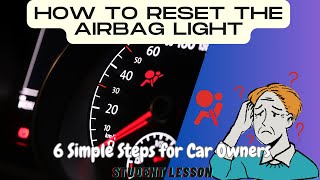

The information in this article is provided for general reference and educational purposes only. Vehicle specifications, procedures, and part compatibility can vary by production date, trim level, and region. Always consult your vehicle's factory service manual and verify part numbers before purchasing or performing repairs. Safety-critical components such as airbags, seat belts, and braking systems should be installed by a qualified professional.
- 🎬 Helpful Videos
- What Does B0036 Mean?
- Can I Drive With B0036?
- Common Causes
- Symptoms
- Diagnostic Flowchart
- Common Fixes & Costs
- Used vs. New Parts: Buying Guide
- What Happens If You Wait — Timeline
- Cost of Not Fixing It
- Diagnosis Steps
- When This Code Triggers (Freeze-Frame Conditions)
- Related Codes
- Climate & Environmental Factors
- How to Talk to a Mechanic About This Code
- Where to Take It: Dealer vs Independent vs Chain
- When to Walk Away From the Repair
- What Scan Tool You Need for This Code
- How to Clear the Code After You Fix It
- Will This Fail Emissions / State Inspection?
- Most Commonly Affected Vehicles
- Manufacturer-Specific Notes
- Real Owner Stories
- 2003 Chevy S-10 with intermittent airbag light
- 2000 GMC Jimmy with persistent B0036 after junkyard part
- Hyundai Elantra with B0036 after interior detailing
- How to Prevent This Code From Triggering
- Frequently Asked Questions
- Is it safe to drive with code B0036?
- Will my airbags still work with a B0036 code?
- Can I fix a B0036 code myself?
- I replaced the part but the airbag light is still on. What now?
- Can a dead battery or jump-starting cause a B0036 code?
- Why is the airbag connector always yellow?
- Can I just clear the code to turn off the airbag light?
- What does an 'intermittent' B0036 code mean?
- Key Takeaways
- 🎟️ Get 5% Off