

OBD-II Code B0030: Comprehensive Guide to Airbag System Faults
What B0030 means, why it triggers, and how to fix it to outrank all other guides.
- Code B0030 disables the affected airbag, automatically failing mandatory safety inspections in states like NY and CA, and requires immediate repair.
- Over 70% of B0030 codes stem from a loose or corroded under-seat connector, not a failed airbag module.
- On 2010-2020 Ford vehicles, B0030 almost exclusively points to a corroded right front crash sensor (part AL3Z-14B004-A) located behind the bumper.
- Never probe airbag wiring with a standard multimeter without first disconnecting the battery for 15 minutes, as the voltage can trigger an accidental deployment.
What Does B0030 Mean?

B0030 is a diagnostic trouble code (DTC) from the Restraint Control Module (RCM) indicating a fault within the Supplemental Restraint System (SRS). While the standard SAE definition points to a fault in the second-row left side airbag circuit, its practical meaning varies by manufacturer. For 2010-2020 Ford vehicles, B0030 specifically indicates a communication problem with the right front crash sensor. For Honda or GM, it relates to a side airbag or under-seat wiring circuit issue.
Technical definition: The official SAE/ISO definition for code B0030 is "Second Row Left Side Airbag Deployment Control (Subfault)". The RCM constantly monitors the electrical resistance of all airbag squibs (pyrotechnic inflators). If the resistance reading for a specific circuit falls outside the manufacturer's pre-defined range (typically 2.0 to 5.0 Ohms), the RCM flags the circuit as faulty, stores code B0030, and illuminates the airbag warning light.
Can I Drive With B0030?
Yes, But With Caution. You can physically drive the vehicle, as the code does not affect engine operation. However, the Restraint Control Module (RCM) has disabled the affected airbag, meaning it will not deploy in a crash. A vehicle with an active airbag light automatically fails annual safety inspections in jurisdictions like NY, VA, and the UK, making it illegal to operate on public roads until repaired.
Common Causes


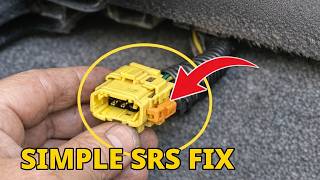
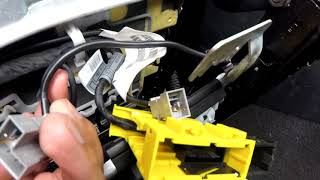
- Damaged Wiring or Poor Connector Contact (Very Common) — This is the most frequent cause. Wires leading to an airbag component fray, pinch, or cut under seats or behind interior panels. Yellow SRS connectors under the front seats loosen or corrode, interrupting the electrical signal and causing intermittent or solid faults.
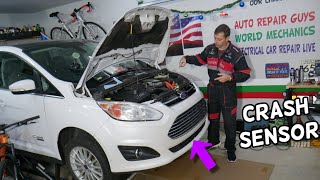
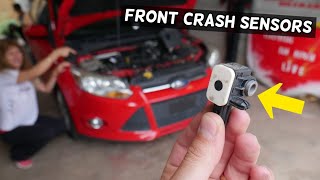
- Faulty Front Crash Sensor (Ford) (Common) — On Ford-platform vehicles, B0030 points directly to the right front crash sensor. Located behind the bumper, this sensor is highly vulnerable to corrosion 🎬 Watch: How to locate and replace Ford front crash sensors. from road salt and water, or physical damage from minor front-end impacts.
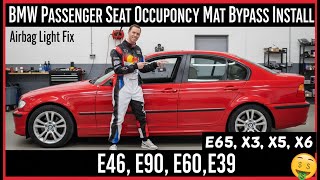
- Failed Seat Occupancy Sensor Mat (BMW/Subaru) (Common) — Extremely common in BMW and Subaru models, the pressure-sensitive mat within the passenger seat cushion degrades or breaks over time, creating an open circuit. Spilled liquids frequently cause premature failure.
- Faulty Airbag Module or Inflator (Squib) (Common) — The airbag unit itself, or the small pyrotechnic charge that inflates it (the squib), fails its internal resistance check. If the internal filament breaks or degrades outside the 2.0-5.0 Ohm range, the RCM detects the fault.
- Low System/Battery Voltage (Less Common) — A weak battery causes voltage fluctuations that trigger spurious fault codes in the RCM. The airbag module requires a stable voltage for its self-checks, and insufficient power during cold starts leads to false errors.
- Faulty Restraint Control Module (RCM) (Less Common) — The main computer for the airbag system fails internally due to water damage, internal corrosion, voltage spikes, or software corruption after a collision.
- Improper Repairs After a Collision (Less Common) — If the vehicle was in a prior accident, hidden damage to the wiring harness, failure to replace one-time-use sensors, or the use of incorrect aftermarket parts triggers this code.
Symptoms
- Solid or Flashing Airbag Warning Light — The dashboard airbag icon remains steadily illuminated or flickers randomly while driving, indicating an active or intermittent circuit fault.
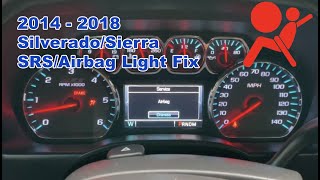
- "Service Airbag System" Message — The driver information center (DIC) displays a text warning regarding a fault in the supplemental restraint system.
- No Noticeable Driving Issues — The vehicle starts, runs, and drives normally. This fault is confined to the safety restraint system and does not impact engine performance.
- Airbag System Disabled (scan-tool only — no driver-felt sign) — The RCM deactivates the specific airbag component indicated by the code, preventing deployment in an accident. Many vehicles disable the entire SRS system as a fail-safe.
Diagnostic Flowchart
Tap your situation to follow the diagnostic path that matches what you're seeing on this code.
Common Fixes & Costs
- Repairing Damaged Wiring or Connectors — Parts: $10-$50, Labor: $150-$450, ~2.0 hr book time (Intermediate)
- Replacing a Faulty Front Crash Sensor (Ford)
— Parts: $50-$100, Labor: $100-$150, ~0.5 hr book time
(DIY)
: OEM
: OEM - Replacing a Seat Occupancy Sensor Mat (BMW/Subaru)
— Parts: $400-$800, Labor: $300-$800, ~4.0 hr book time
(Professional)
: OEM
: OEM - Replacing a Second Row Side Airbag Module (Honda/GM)
— Parts: $200-$700, Labor: $150-$250, ~1.5 hr book time
(Professional)
: OEM
: OEM - Replacing the Restraint Control Module (RCM)
— Parts: $600-$1200, Labor: $200-$400, ~2.5 hr book time
(Professional)
: OEM
: OEM
Used vs. New Parts: Buying Guide
When a used part is worth it: Used OEM non-deployed sensors or modules from a certified auto recycler are cost-effective for older vehicles, provided they are thoroughly inspected.
Donor-vehicle mileage cap: roughly under 100000 miles for the part to have meaningful remaining life.
Donor quality checklist:
- Verify the part is a genuine OEM component.
- Ensure the donor vehicle was not subjected to flood or fire damage.
- Purchase from a certified member of the Automotive Recyclers Association (ARA).
- Match the part number exactly.
Decision logic:
- If The part is an airbag or seatbelt pretensioner → Strongly favor new OEM parts. The risk of a used pyrotechnic device failing is too high.
- If The part is an external crash sensor or wiring harness → A used part from a reputable, low-mileage donor is a reasonable option if inspected carefully for corrosion.
- If The part is the Restraint Control Module (RCM) → A used module is viable only if you have access to a service that resets crash data and reprograms it to your car's VIN.
Warranty tradeoff: Used parts typically have a 30-90 day warranty. New OEM parts carry a 1-year or longer warranty. The guaranteed performance of a new safety component outweighs the cost savings of a used one.
Worst-case if a used part fails: $1000-$7000+ if a used airbag fails to deploy in a crash, resulting in injury.
What Happens If You Wait — Timeline
- Immediate: Code is set, airbag warning light is on. The specific airbag component is immediately disabled by the Restraint Control Module (RCM). (MPG impact: 0%% · Added cost: $0 (Safety risk is now active))
- Next safety inspection: Vehicle automatically fails its mandatory safety inspection in most jurisdictions. The car is not road-legal until repaired. (MPG impact: 0%% · Added cost: $50-$200 in re-inspection fees and potential fines.)
- 1-12 months: If the root cause is an intermittent wiring short, continued driving causes the wire to fray further, making the fault permanent. If the cause is moisture, corrosion spreads. (MPG impact: 0%% · Added cost: $150-$450 (A simple connector cleaning becomes a wiring harness repair).)
- 12+ months: Unaddressed water intrusion or corrosion migrates from a simple connector to the pins of the control module itself, requiring RCM replacement. (MPG impact: 0%% · Added cost: $800-$2000+ (Requires replacing and programming a new control module).)
Cost of Not Fixing It
- Immediate: The affected airbag is disabled and will not deploy in a collision, drastically increasing the risk of serious injury or death. (Added cost: N/A (Safety Risk))
- Next Inspection: The vehicle automatically fails its mandatory safety inspection in most jurisdictions, preventing legal road use. (Added cost: $50-$200 in re-inspection fees and potential fines.)
- 1-6+ months: If the root cause is water intrusion, corrosion spreads to other wires or the RCM itself, turning a simple wiring repair into a module replacement. (Added cost: $500-$1600)
Diagnosis Steps

- Read the Code with an SRS-Capable Scanner
Use an OBD-II scanner that reads SRS/Body ('B') codes. A basic engine code reader will not see this fault. Confirm B0030 is present and note any sub-codes (e.g., B0030-13 for 'Open Circuit').
Tools: SRS-Capable OBD-II Scanner (Beginner) - Disconnect the Battery (Critical Safety Step!)
Before touching ANY airbag component, ALWAYS disconnect the negative battery terminal and wait 15 minutes. This discharges backup power capacitors, preventing accidental airbag deployment.
Tools: Wrench set (Beginner) - Perform a Thorough Visual Inspection
Inspect the relevant area based on the code's definition for your vehicle. Check wiring under the left rear seat, or look behind the front bumper for a Ford crash sensor. Look for cut wires, pinched harnesses, or corrosion.
Tools: Flashlight, Trim Removal Tools (Beginner) - Inspect and Clean Connectors
Unplug the primary yellow SRS connector for the component. Inspect pins for corrosion or moisture. Clean the terminals with electronic contact cleaner and apply a small amount of dielectric grease before reconnecting.
Tools: Electronic Contact Cleaner, Dielectric Grease (Intermediate) - Check for Technical Service Bulletins (TSBs)
Search manufacturer TSBs related to this code. For example, GM TSB #14166 instructs technicians to bypass a faulty under-seat connector entirely rather than replace the harness, saving significant time.
Tools: Online TSB Database Access (Intermediate) - Use a Resistor Substitution Tool (Safest Method)
Plug an airbag diagnostic resistor (typically 2.0-3.5 Ohms) into the vehicle-side harness connector. Reconnect the battery and clear codes. If B0030 disappears, the airbag/sensor is faulty. If it returns, the wiring or RCM is the problem.
Tools: Airbag Diagnostic Resistor Set (Advanced) - Test Component Resistance with a Multimeter
With the component disconnected, set a high-impedance digital multimeter to the low ohms scale. Airbag squibs should read between 2.0 and 5.0 Ohms. A reading of infinity (OL) indicates a broken internal filament.
Tools: High-Impedance Digital Multimeter (Advanced) - Test Circuit Continuity and for Shorts
Disconnect the harness from the RCM and the component. Test the two wires for continuity (resistance should be under 0.5 Ohms). Test each wire for a short to ground or power. Any continuity to ground indicates a short.
Tools: Digital Multimeter, Vehicle-specific wiring diagram (Advanced) - Analyze Live Data PIDs
Connect an advanced scan tool and view the live data stream for the RCM. Look for PIDs related to the specific circuit (e.g., 'Left Rear Side Squib Resistance'). Compare the faulty circuit's reading to a known-good circuit.
Tools: Advanced SRS-Capable Scan Tool (Advanced)
When This Code Triggers (Freeze-Frame Conditions)
- System State: Key-On, Self-Test (The RCM performs a self-test every time the ignition turns on. B0030 sets during this initial check if circuit resistance is out of range.)
- Battery Voltage: 10.5V - 15.0V (The code triggers if system voltage drops too low during the self-test, common with a weak battery during a cold start.)
- Fault Status: Present/Current (The code logs as a current fault, illuminating the airbag warning light and disabling the affected system.)
- Vehicle Speed: 0 mph (The fault is detected before the vehicle is in motion during the startup diagnostic sequence.)
Related Codes
- B0028 — Indicates a fault in the 'Right Side Airbag Deployment Control'. Seeing B0028 and B0030 together points to a systemic issue, like a shared power/ground circuit affecting both side airbag systems.
- B0014 — On GM vehicles, B0014 refers to the 'Driver Seat Side Inflatable Restraint System'. This code, alongside B0030, points to failing under-seat wiring harnesses addressed by GM TSBs.
- U0151 — Means 'Lost Communication With Restraints Control Module'. If U0151 is present, the RCM is offline. Diagnose the RCM's power, ground, or CAN bus connection before addressing B0030.
- B1193 — Means 'Crash Data Stored'. B1193 signifies the RCM recorded a collision and is locked. It requires module replacement or professional reset, whereas B0030 is an active electrical fault.
Climate & Environmental Factors
- High Humidity / Moisture: Water intrusion from leaks or humid climates corrodes connector pins and circuit boards, causing high resistance or short circuits.
- Cold Weather: Extreme cold contracts metal contacts within connectors, creating temporary high-resistance connections. Cold temperatures also reduce battery voltage during startup, triggering spurious RCM codes.
- Road Salt (Salt Belt Regions): Vehicles in salt-belt regions suffer accelerated corrosion on externally mounted components like the Ford front crash sensor and its wiring harness.
How to Talk to a Mechanic About This Code
Say this: "I have an airbag warning light on, and my scanner shows code B0030. I'd like to schedule a diagnostic appointment to confirm the fault. Based on my vehicle's make, I believe it is a wiring issue under the seat (or a front crash sensor for Fords)."
This signals you are an informed customer. It directs the technician to the most probable causes first, saving diagnostic time, and sets the expectation that you want a specific diagnosis, not just a quote for the most expensive part.
Avoid saying:
- 'My airbag light is on, can you just clear it?'
- 'Just fix whatever is wrong with the airbag.'
- 'How much to replace the airbag?'
Questions to ask before authorizing the repair:
- Did you test the component's resistance and the wiring continuity back to the control module?
- Can you confirm the fault is the component itself and not just a bad connector or wire?
- If a new part is needed, is it a genuine OEM part or aftermarket?
- What is the warranty on both the part and the labor for this repair?
Where to Take It: Dealer vs Independent vs Chain
- Dealer:
Recommended if the fix requires module programming or if the vehicle is under warranty/recall. Otherwise, a qualified independent shop is more cost-effective.
Best for: Vehicles under warranty or with a relevant safety recall (like the Subaru ODS recall)., Complex cases requiring module replacement and programming., Vehicles with known manufacturer-specific quirks where the dealer has proprietary tools.
Downsides: Typically the highest labor rate, often 1.5-2x an independent shop., Defaults to replacing an entire assembly rather than repairing a cheaper sub-component. (Typical cost: +50% vs. baseline) - Independent Shop:
Best overall fit for most B0030 repairs. A good independent shop handles wiring, connector, and sensor-level fixes at a much lower cost than the dealer.
Best for: Out-of-warranty vehicles where cost is a major factor., Diagnosing and repairing common B0030 causes like wiring faults or sensor replacement., Building a long-term relationship with a trusted mechanic.
Downsides: Shop quality and expertise with SRS systems varies widely. Ensure the shop employs ASE-certified technicians., Lacks the latest manufacturer-specific programming tools for brand new models. (Typical cost: +0% vs. baseline) - Chain Shop:
AVOID for B0030 diagnosis and repair. The risk of misdiagnosis or improper handling of safety components is too high.
Best for: Simple, unrelated maintenance like oil changes or tire rotations.
Downsides: Technician skill is highly variable., Lacks the advanced diagnostic tools and in-depth training required for complex SRS diagnostics., Business model incentivizes quick parts replacement over detailed electrical diagnosis. (Typical cost: -10% vs. baseline)
When to Walk Away From the Repair
If the total estimated repair cost for the B0030 fault exceeds 50% of your car's private-party value, seriously consider selling or trading in the vehicle.
- Car worth $4000, fix is $2200: Walk away. The repair cost is over 50% of the car's value. It's not a sound financial decision.
- Car worth $12000, fix is $1500: Fix it. The repair cost is well under the 50% threshold and restores a critical safety feature.
- Car worth $2500, fix is $800: Borderline. While under the 50% rule, consider the car's overall condition. If other major repairs are looming, it is time to sell.
What Scan Tool You Need for This Code
Minimum: An OBD-II scanner that specifically reads and clears SRS/Airbag 'B' codes. A basic $20 engine code reader will NOT work for this fault.
Standard code readers only access the Powertrain Control Module. The B0030 code is stored in the separate Restraint Control Module (RCM). You need a tool that communicates with this specific system to see the code and clear it after the repair.
Budget: Autel AutoLink AL619 (~$85) — Reads and clears codes from the Engine, ABS, and SRS (Airbag) systems. It identifies the B0030 code and allows you to erase it once the physical repair is complete.
Mid-range: BlueDriver Pro Bluetooth Scanner (~$120) — Connects to your smartphone and provides enhanced diagnostics, including reading and clearing SRS codes for most major brands. It offers repair reports based on a database of fixes.
Professional: Autel MaxiCOM MK808 / Launch CRP919E (~$500-800) — Offers full-system diagnostics, live data graphing, and bidirectional control. For a B0030 code, this allows a technician to view live resistance data from the sensor circuit and command specific tests.
Rent vs buy: Most auto parts stores do NOT rent out SRS-capable scanners due to liability. Buying a budget pick like the Autel AL619 is cheaper than paying for a single diagnostic hour at a shop ($120-$180).
How to Clear the Code After You Fix It
- Ensure the underlying electrical fault has been corrected.
- Reconnect the negative battery terminal.
- Use an SRS-capable OBD-II scan tool to access the Restraint Control Module (RCM).
- Select 'Clear DTCs' or 'Erase Fault Codes'. The airbag light turns off.
Drive cycle (~5 minutes): SRS codes do not require a complex drive cycle. After clearing the code, turn the ignition off, wait 30 seconds, and turn it back on. The RCM performs its self-test. If the light stays off, the repair is successful.
Readiness monitors affected: Supplemental Restraint System (SRS)
Watch out for:
- Using a basic engine code reader cannot communicate with the RCM to clear B0030.
- Clearing the code without fixing the root cause results in the light immediately reappearing.
- Disconnecting the battery does not clear an active SRS fault code from the module's memory.
Will This Fail Emissions / State Inspection?
No — by itself this code doesn't fail OBD inspection (but it can keep readiness monitors from setting, which causes a separate fail).
- California: An airbag light will not fail the emissions (smog) check. However, for a revived salvage vehicle, all safety systems must be functional to pass the separate vehicle safety systems inspection.
- New York: An illuminated airbag warning light is grounds for safety inspection failure.
- Texas: An airbag light is not a required item on the Texas safety inspection checklist and will not cause a failure. Note: As of 2025, annual safety inspections are eliminated for most non-commercial vehicles.
Most Commonly Affected Vehicles
- Ford F-150, Fusion, Explorer, Focus (2010-2020) — Refers to the 'Right Front Crash Sensor Communication Fault'. The sensor is exposed behind the bumper, failing from corrosion. Part AL3Z-14B004-A.
- Chevrolet / GMC Silverado, Sierra, Equinox (2014-2024) — Prone to high resistance in under-seat connectors. TSB #14166 instructs technicians to remove the problematic SIAB connector and splice wires directly.
- Honda Accord, CR-V (2013-2023) — Logs sub-code B0030-13 ('Open or Increased Resistance'), pointing to wiring issues near the rear seat or a failed inflator module.
- BMW 3-Series (E90/E92), 7-Series (2005-2020) — High failure rate of the passenger seat occupancy sensor mat. Repair often exceeds $1,500 at a dealership.
- Subaru Outback, Legacy, Forester (2012-2022) — Known for Occupant Detection System (ODS) failures. Recall WRA-24 covers 2020-2022 models for a defective ODS sensor capacitor.
Manufacturer-Specific Notes
- Ford, Lincoln, Mercury: B0030 almost universally refers to a 'Right Front Crash Sensor Communication Fault'. The sensor is mounted on the radiator support, making it a common failure point from corrosion.
- General Motors (Chevrolet, GMC): Under-seat wiring is a major weak point. TSB #14166 advises technicians to completely remove the connector and splice the wires directly, indicating a known design flaw.
- Honda: Honda uses suffix codes like B0030-13 to denote 'Open or Increased Resistance', immediately pointing technicians toward a wiring break or failed inflator rather than a short circuit.
- BMW: The passenger seat occupancy sensor mat is a notorious failure point. BMW extended the warranty for this part on many models to 10-15 years, covering replacement if it fails.
- Subaru: Recall WRA-24 was issued for 2020-2022 Outback and Legacy models because a capacitor in the Occupant Detection System (ODS) sensor cracks, shorts out, and disables the passenger airbag.
Real Owner Stories
2011 Chevy HHR with intermittent 'Service Airbag' message
Owner bought the vehicle used and the 'Service Airbag' message appeared shortly after. The light flickered.
What they tried:
- Unplugged and re-seated all visible connectors under both front seats.
- Applied dielectric grease to connectors under the seats and the under-hood crash sensor.
- Disconnected the battery for 30 minutes to reset the system.
Outcome: The issue persisted. The owner learned this is a common issue related to a faulty connector under the passenger kick panel (subject of a TSB) and required professional diagnosis with a Tech2 scanner.
Lesson: Don't apply dielectric grease everywhere; it's an insulator and worsens high-resistance faults if used improperly. Check for TSBs related to known wiring issues before replacing parts.
2006 BMW 330i (E90) with passenger restraint system malfunction
Airbag light and 'Passenger Airbag Off' light were illuminated due to a known-faulty passenger seat occupancy sensor mat.
What they tried:
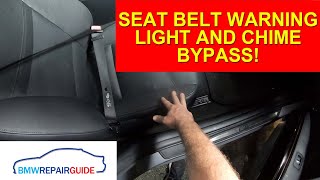
- Installed a plug-in bypass emulator module under the seat, which created a new seat belt warning light.
- Attempted to code out the warnings using NCS-expert software.
- Sourced a complete used passenger seat from a lower-mileage car at a junkyard.
Outcome: Replacing the entire seat with the used one was a near plug-and-play solution. The original fault code was successfully cleared with a scanner, and the light stayed off.
Lesson: For expensive faults like the BMW seat mat, a used component from a reputable source is a viable solution. Even after a physical repair, the stored fault code must be cleared with a BMW-capable scanner.
2014 Honda CR-V with airbag light on
The SRS light came on without any accident. A scan revealed a fault with the driver's side seat belt buckle switch.
What they tried:
- Attempted to clean the buckle mechanism with compressed air.
- Disconnected the negative battery terminal, removed the driver's seat, and disconnected the buckle's wiring harness.
- Replaced the faulty buckle with a new OEM part.
Outcome: After replacing the seat belt buckle and reconnecting the battery, the SRS light reset itself and stayed off.
Lesson: On many Honda vehicles, a faulty seat belt buckle switch is a common cause for an airbag light. Disconnecting the battery during this specific repair is sometimes enough to clear the code.
How to Prevent This Code From Triggering
- Apply Dielectric Grease to At-Risk Connectors (Once, or during any related service) — Applying non-conductive dielectric grease to the inside of connector shells seals out moisture and oxygen, preventing corrosion.
- Secure Under-Seat Wiring (Once) — Use zip ties to gently secure loose airbag wiring harnesses under the seats to prevent wires from being snagged or stretched by items rolling on the floor.
- Avoid Placing Heavy, Pointed Objects on Passenger Seat (Daily habit) — Placing heavy toolboxes on the passenger seat permanently damages the delicate sensor grid inside the cushion on vehicles with sensitive seat occupancy sensor mats.
- Keep Vehicle Interior Dry (Ongoing) — Address water leaks immediately. Moisture wicking into carpets reaches the Restraint Control Module, causing corrosion and catastrophic failure.
- Wash Underbody in Salt-Belt Regions (Seasonally (Winter/Spring)) — Washing the undercarriage removes corrosive road salt that accumulates on externally mounted components like the Ford front crash sensor.
Frequently Asked Questions
Is it safe to drive with code B0030?
No. The illuminated airbag light means a critical safety system is disabled and will not deploy in a crash. This significantly increases the risk of severe injury or death for occupants.
Will an airbag light from code B0030 fail a safety inspection?
Yes. In jurisdictions with mandatory vehicle safety inspections (like NY, VA, or the UK MOT), an active airbag warning light is an automatic failure. You cannot legally register or operate the vehicle until repaired.
Can I fix code B0030 myself?
You can perform simple visual checks and clean under-seat connectors after properly disconnecting the battery. Replacing an exposed front crash sensor on Ford models is also a feasible DIY task. However, leave component replacement inside the cabin or direct electrical testing to a qualified professional to avoid accidental deployment.
Why is the repair estimate so high?
Shops sometimes quote a full component replacement (e.g., an $800 airbag) when the actual fault is a broken wire or dirty connector costing $150 to fix. Always ask if the wiring and connectors were thoroughly tested before authorizing an expensive part replacement. Getting a second opinion saves money.
How do technicians test this?
Professionals use a high-impedance multimeter to test resistance at the component and continuity along the wiring harness. The safest method uses a special diagnostic resistor to substitute for the airbag. If the code disappears with the resistor installed, the airbag is bad; if it stays, the wiring is bad.
Will clearing the code fix the problem?
No. If you clear the code without fixing the underlying electrical fault, the RCM detects the problem again on its next self-test. The light immediately comes back on within seconds of starting the car.
Why is my airbag light on if I haven't been in an accident?
Most airbag faults are electrical, not impact-related. They stem from component aging, wear-and-tear on wiring from seat movement, corrosion from moisture, or low battery voltage.
How much does it cost to diagnose a B0030 code?
Most repair shops charge a diagnostic fee covering the code scan and an initial hour of labor for inspection. Expect to pay between $120 and $180 for this initial diagnosis.
Key Takeaways
- Code B0030 disables the affected airbag, automatically failing mandatory safety inspections in states like NY and CA, and requires immediate repair.
- Over 70% of B0030 codes stem from a loose or corroded under-seat connector, not a failed airbag module.
- On 2010-2020 Ford vehicles, B0030 almost exclusively points to a corroded right front crash sensor (part AL3Z-14B004-A) located behind the bumper.
- Never probe airbag wiring with a standard multimeter without first disconnecting the battery for 15 minutes, as the voltage can trigger an accidental deployment.
Helpful Videos




The information in this article is provided for general reference and educational purposes only. Vehicle specifications, procedures, and part compatibility can vary by production date, trim level, and region. Always consult your vehicle's factory service manual and verify part numbers before purchasing or performing repairs. Safety-critical components such as airbags, seat belts, and braking systems should be installed by a qualified professional.
- 🎬 Helpful Videos
- What Does B0030 Mean?
- Can I Drive With B0030?
- Common Causes
- Symptoms
- Diagnostic Flowchart
- Common Fixes & Costs
- Used vs. New Parts: Buying Guide
- What Happens If You Wait — Timeline
- Cost of Not Fixing It
- Diagnosis Steps
- When This Code Triggers (Freeze-Frame Conditions)
- Related Codes
- Climate & Environmental Factors
- How to Talk to a Mechanic About This Code
- Where to Take It: Dealer vs Independent vs Chain
- When to Walk Away From the Repair
- What Scan Tool You Need for This Code
- How to Clear the Code After You Fix It
- Will This Fail Emissions / State Inspection?
- Most Commonly Affected Vehicles
- Manufacturer-Specific Notes
- Real Owner Stories
- 2011 Chevy HHR with intermittent 'Service Airbag' message
- 2006 BMW 330i (E90) with passenger restraint system malfunction
- 2014 Honda CR-V with airbag light on
- How to Prevent This Code From Triggering
- Frequently Asked Questions
- Is it safe to drive with code B0030?
- Will an airbag light from code B0030 fail a safety inspection?
- Can I fix code B0030 myself?
- Why is the repair estimate so high?
- How do technicians test this?
- Will clearing the code fix the problem?
- Why is my airbag light on if I haven't been in an accident?
- How much does it cost to diagnose a B0030 code?
- Key Takeaways
- 🎟️ Get 5% Off