

OBD-II Code B0029: Right Curtain Airbag Deployment Control Fault
The Ultimate 2026 Guide: What B0029 means, why it triggers, and how to fix it for good.
- Code B0029 indicates a critical electrical fault in the right curtain airbag circuit, which automatically disables 100% of the vehicle's airbags.
- Do not drive with an active B0029 code, as zero airbags will deploy in a collision, drastically increasing fatality risk.
- Wiring chafing and corroded connectors cause the majority of B0029 codes, making a $200 wire repair far more likely than a $1,000 airbag replacement.
- Never probe airbag wiring with a standard multimeter, as the voltage triggers accidental deployment; always use a 2.0-3.0 ohm SRS load tool for testing.
What Does B0029 Mean?

Code B0029 means the vehicle's primary safety computer (SRS or ORC module) detected a critical electrical fault in the right-side curtain airbag deployment circuit. This airbag protects occupants' heads during side-impacts or rollovers. Because the system cannot guarantee the right curtain airbag will deploy correctly, it deactivates the entire airbag system.
Technical definition: The official SAE/OBD-II definition for B0029 is 'Right Curtain Deployment Control 1'. This specifies a malfunction in the electrical circuit designated for deploying the right curtain airbag. Manufacturers append suffixes (e.g., -11 for short to ground, -13 for open circuit, -1A for low resistance) to pinpoint the exact electrical failure.
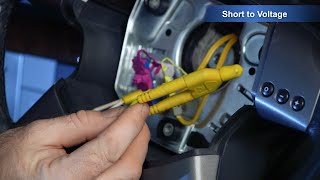
🎬 See how a short to voltage triggers SRS fault codes.Can I Drive With B0029?

No — Do Not Drive. Do not drive the vehicle. When the airbag warning light is on for a B0029 code, the entire Supplemental Restraint System (SRS) is disabled as a fail-safe. In a collision, NONE of the vehicle's airbags will deploy, creating a severe risk of injury or death.
Common Causes

- Damaged, Chafed, or Corroded Wiring (Very Common) — The curtain airbag wiring harness runs up the A-pillar, along the roofline, and down the C-pillar. This exposes it to damage from vibrations, rubbing against metal brackets, or pinching. Moisture from leaking windshields or sunroofs causes rapid corrosion and high resistance in these wires.
- Loose or Corroded Connectors (Common) — The SRS system uses distinctive yellow connectors. These loosen over time or corrode at the terminals, especially under seats or in pillars where moisture accumulates. A poor connection increases circuit resistance, instantly triggering the B0029 code.
- Faulty Right Curtain Airbag Module (Squib) (Common) — The airbag unit contains a pyrotechnic initiator (squib) that inflates the bag. This component has a strict internal resistance value, typically 2.0 to 3.0 ohms. If the squib develops an internal short or open, its resistance falls out of spec, setting the code.
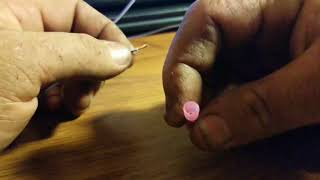
- Improper Repairs After a Collision (Common) — If the vehicle has collision history, improper repairs are a frequent cause. Using incorrect parts, failing to replace single-use SRS connectors, or poor wiring splices introduce permanent faults into the sensitive SRS circuit. 🎬 Learn the proper way to repair damaged airbag wiring harnesses.
- Faulty Airbag Control Module (SRS/ORC/SDM) (Less Common) — The main airbag control module occasionally fails. Internal hardware failures, software corruption, or damage from water intrusion or voltage spikes cause the module to set false deployment codes.
- Faulty Side Impact Sensor (Less Common) — Side impact sensors in the B or C pillars tell the SRS module when a collision occurs. While sensor failures usually set dedicated codes, an internal short related to the sensor sometimes manifests as a B0029 code.
- Low Vehicle Battery Voltage (Rare) — The SRS module is highly sensitive to voltage drops. A weak or failing battery causing low voltage during engine startup occasionally triggers a spurious B0029 code.
Symptoms
- Airbag Warning Light is On or Flashing — The dashboard airbag light (an icon of a person with an airbag or 'SRS') remains illuminated steadily or flashes, indicating an active fault.
- Complete Failure of Airbag System — The system disables itself entirely to prevent unpredictable deployments. No airbags will deploy in an accident.
- Service Message on Information Display — Modern vehicles display a text warning on the driver information center, such as 'Service Airbag System' or 'Service Restraint System'.
- Failed State Safety Inspection — An illuminated airbag light is an automatic failure for safety inspections in most jurisdictions, rendering the vehicle illegal to drive.
- Stored Fault Code in SRS Module (scan-tool only — no driver-felt sign) — The B0029 code is stored in the SRS control module's memory, accessible only via a specialized scan tool.
Diagnostic Flowchart
Tap your situation to follow the diagnostic path that matches what you're seeing on this code.
Common Fixes & Costs
- Repairing chafed wire, cleaning connector, or replacing pigtail — Parts: $10-$50, Labor: $200-$500, ~2.5 hr book time (Intermediate)
- Replacing the right curtain airbag module — Parts: $300-$1200, Labor: $200-$400, ~3.5 hr book time (Professional)
- Replacing the Airbag Control Module (SRS/ORC) — Parts: $400-$800, Labor: $150-$350, ~1.5 hr book time (Professional)
- Replacing a faulty side impact sensor — Parts: $50-$250, Labor: $100-$200, ~1.2 hr book time (Intermediate)
DIY vs Professional
- Repairing chafed wire, cleaning connector, or replacing pigtail — Beginner:
Tools: SRS-compatible scanner, multimeter, trim removal tools, depowering tools, OEM-approved crimpers. - Replacing the right curtain airbag module — Beginner:
Tools: SRS-compatible scanner, torque wrench, trim removal tools, depowering tools. - Replacing the Airbag Control Module (SRS/ORC) — Beginner:
Tools: Advanced SRS scan tool for programming, standard mechanic's tools.
Used vs. New Parts: Buying Guide
When a used part is worth it: Buying used SRS components is almost NEVER recommended and is illegal to sell in some states. The risk of acquiring a non-functional or previously deployed part is extreme. The only exception is a simple structural part like a connector pigtail from a reputable recycler.
Donor-vehicle mileage cap: roughly under 10000 miles for the part to have meaningful remaining life.
Donor quality checklist:
- Never buy a used airbag module (squib); it is a pyrotechnic device.
- Never buy a used SRS control module that has crash data stored. Resetting it requires professional service.
- Verify the part number exactly. SRS components are highly specific to year and model.
- Avoid parts from flood-damaged or high-impact collision vehicles.
Decision logic:
- If The part is a pyrotechnic device (airbag inflator/module) → Always buy new OEM. The safety risk is not worth the cost savings.
- If The part is the SRS Control Module → Buy a new OEM part or use a professional service to reset your original module after a collision.
- If The part is a wiring pigtail or connector → A used part from a trusted recycler is acceptable, but a new aftermarket pigtail is often inexpensive and more reliable.
Warranty tradeoff: Used SRS components typically have no warranty. New OEM parts carry a manufacturer's warranty. Professional module reset services often guarantee their work.
Worst-case if a used part fails: $3000-$7000+ if a faulty used part fails to deploy in an accident, leading to severe injury.
What Happens If You Wait — Timeline
- Immediate (Ignition Cycle 1): SRS module detects the electrical fault. The airbag warning light illuminates, code B0029 is stored, and the entire SRS system is disabled as a fail-safe. (MPG impact: 0%% · Added cost: $0)
- Driving with the light on: The vehicle operates normally, but with zero airbag protection. The risk of serious injury or death in a collision is significantly increased. (MPG impact: 0%% · Added cost: N/A (Safety Risk))
- 1 week - 6 months (Next Inspection): The vehicle automatically fails its state safety inspection, preventing legal registration renewal. (MPG impact: 0%% · Added cost: $50-$100 (Failed inspection fee + re-inspection fee))
- 6+ months (Ignored Corrosion): If the root cause was a water leak, ongoing corrosion spreads to other wires in the harness or damages pins on the SRS control module itself. (MPG impact: 0%% · Added cost: $500 - $2000+)
Cost of Not Fixing It
- Immediate: Total failure of the entire airbag system. In a collision, NO airbags will deploy, drastically increasing the risk of serious injury or death. (Added cost: N/A)
- Next state inspection: Guaranteed failure of the vehicle's safety inspection, preventing legal registration renewal. (Added cost: $20-$50 (for re-inspection fee) + cost of initial failed test.)
- Long-term: If caused by moisture, ongoing corrosion spreads to other wires or modules in the harness, leading to complex electrical failures. (Added cost: $500 - $2000+)
Diagnosis Steps

- Retrieve SRS Codes with a Capable Scan Tool
Use an OBD-II scanner designed to read Supplemental Restraint System (SRS) codes. A standard engine code reader will not work. Record the B0029 code and any suffixes (e.g., -11, -13, -1A) to guide the diagnosis.
Tools: SRS-compatible OBD-II Scanner (Beginner) - Research Technical Service Bulletins (TSBs)
Check for manufacturer TSBs related to B0029 for your specific vehicle. For example, TSB S2010000001 for 2019-2020 Ram HD trucks points directly to a chafed wire in the C-pillar.
Tools: Online TSB Database (Beginner) - Perform Safety Depowering Procedure
CRITICAL SAFETY STEP: Disconnect the negative battery terminal, followed by the positive terminal. Wait 15-30 minutes before touching SRS components. This discharges the backup capacitor, preventing accidental airbag deployment.
Tools: Wrench set, safety glasses (Intermediate) - Visual Inspection of Wiring and Connectors
With the system depowered, remove the right-side A-pillar and C-pillar trim. Inspect the yellow SRS harness for pinched wires, chafing against metal brackets, water intrusion, or green/white corrosion on connector pins.
Tools: Trim removal tools, flashlight (Intermediate) - Test with an Airbag Load Tool (Simulator)
Disconnect the right curtain airbag and plug in a calibrated SRS load tool (typically 2.2-3.3 ohms). Reconnect the battery, clear codes, and cycle the ignition. If the B0029 code stays away, the airbag module itself is faulty. If it returns, the fault is in the wiring or SRS module.
Tools: SRS Load Tool/Simulator, SRS-compatible OBD-II Scanner (Professional) - Advanced Step: Live Data Resistance Monitoring
For intermittent faults, connect an advanced scan tool and monitor the live resistance data for the right curtain airbag. Gently wiggle the harness at the pillars and under the seat. If the resistance spikes high or drops low, you have pinpointed the loose connection.
Tools: Advanced SRS Scan Tool with Live Data (Advanced) - Advanced Step: Circuit Resistance and Continuity Testing
With the battery and SRS module disconnected, use a multimeter to test the circuit. Check for continuity between the module and airbag connectors (should be <1.0 ohm). Check for shorts to ground (should be infinite/OL). NEVER use a multimeter to measure the airbag module itself.
Tools: Digital Multimeter, Vehicle-specific wiring diagram (Advanced) - Isolate the SRS Control Module
If the wiring tests perfectly and the code persists with a load tool installed, the SRS control module has failed. Module replacement requires vehicle-specific VIN programming and calibration.
Tools: Advanced SRS Scan Tool, Professional Diagnostic Equipment (Professional)
When This Code Triggers (Freeze-Frame Conditions)
- System Voltage: 11.5-14.5V (Normal operating voltage at time of fault detection.)
- Ignition Cycle Counter: Varies (Indicates how many times the vehicle has been started since the fault first occurred.)
- Fault Status: Active/Current (Shows whether the fault is present at the time of the scan or is a historical (stored) code.)
- Vehicle Speed: 0-100+ mph (SRS faults log at any speed, including at startup (0 mph), as the system performs a self-test.)
Related Codes
- B0029-11 — Indicates a 'Circuit Short to Ground'. The SRS module detects the deployment circuit's positive wire is electrically connected to the vehicle's chassis, often due to rubbed insulation.
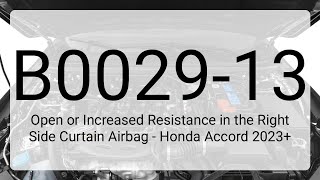
- B0029-13 — Indicates a 'Circuit Open' or high resistance (above ~3.5 ohms). This is commonly caused by a disconnected connector, a broken wire, or corrosion on connector pins.
- B0029-1A — Indicates 'Resistance Below Threshold'. The circuit resistance is lower than the minimum specification (below ~1.5 ohms), but not a direct short. Caused by moisture in a connector or a failing squib.
- B0029-2B — Indicates 'Circuit Wires Shorted Together'. The positive and negative wires leading to the airbag squib are touching each other, often caused by a pinched or melted harness.
- B0028 — This code is for 'Left Curtain Deployment Control 1'. It is the identical fault to B0029, but for the driver's side of the vehicle.
Climate & Environmental Factors
- High Humidity / Water Intrusion: Moisture from interior leaks (sunroof, windshield) seeps into SRS connectors. This corrodes pins and circuit boards, causing high resistance (Open Circuit) or short circuits.
- Road Salt (Winter Climates): Salt-laden moisture accelerates corrosion of electrical connectors and wiring, particularly those located in lower areas like under seats or in door sills.
- Extreme Temperature Cycles: Significant temperature swings cause plastic and metal connector components to expand and contract at different rates, leading to loose terminal connections and intermittent open circuits.
How to Talk to a Mechanic About This Code
Say this: "I have an airbag light on and my scanner shows a B0029 code. I'd like to schedule a diagnostic to pinpoint the cause. Since wiring is a common issue, could you please start by testing the circuit with a load tool before quoting a full airbag replacement?"
This signals you understand the common failure points. It directs the technician toward a proper diagnostic process (testing the circuit first) rather than jumping to the most expensive conclusion (replacing the airbag).
Avoid saying:
- 'My airbag light is on, can you fix it?' (Too vague, invites a high quote.)
- 'Just replace the airbag.' (You may ask for an expensive and unnecessary repair.)
- 'I have no idea what's wrong, just do whatever it takes.' (Gives the shop a blank check.)
Questions to ask before authorizing the repair:
- Did you use an SRS load tool to confirm if the fault is in the wiring or the airbag module itself?
- If the problem is the wiring, can you show me where the wire was chafed, broken, or corroded?
- What is the total cost including diagnostic time, parts, and labor?
- What is the warranty on this specific repair and the parts used?
Where to Take It: Dealer vs Independent vs Chain
- Dealer:
A safe, but expensive, choice. Best if your vehicle has a known TSB for B0029. Otherwise, consider an independent specialist first.
Best for: Vehicles under warranty, Vehicles with a known Technical Service Bulletin (TSB) for this specific code, Complex electrical issues where factory-specific tools are required
Downsides: Highest labor rates, typically 1.5-2x more than independent shops, May be quicker to recommend full component replacement over nuanced wire repair (Typical cost: +50% vs. baseline) - Independent Shop:
Best fit for most people. Find a well-reviewed independent shop that specializes in electrical diagnostics. An ASE-certified technician is a must for SRS work.
Best for: Out-of-warranty vehicles, Finding a technician with strong electrical diagnostic skills, Getting the best balance of expertise and cost
Downsides: Shop quality and technician skill vary greatly. You must vet the shop's reputation., May not have the very latest manufacturer-specific diagnostic software for brand new models. (Typical cost: +0% vs. baseline) - Chain Shop:
AVOID. Airbag system repair is safety-critical and requires expertise not typically found at a chain repair shop.
Best for: Simple, routine maintenance like oil changes and tires.
Downsides: Technicians often lack the specialized training and tools for SRS diagnosis., Business model often encourages upselling and may not handle the liability of airbag systems. (Typical cost: -10% vs. baseline)
When to Walk Away From the Repair
If the estimated repair cost for the B0029 code exceeds 50% of your car's private-party value, strongly consider alternatives. A car with an active airbag light sees its trade-in value drop by 20-40%.
- Car worth $3000, fix is $1800: Walk away. The repair cost is over half the car's value. Selling it 'as-is' to a specialized buyer or for scrap is the most economical option.
- Car worth $15000, fix is $500: Fix it. This is a relatively inexpensive repair on a valuable vehicle and is essential for safety and resale value.
- Car worth $5000, fix is $2200: Borderline. The repair is nearly 50% of the car's value. Get a second opinion to confirm it's not a cheaper wiring issue. If confirmed, selling as-is may be better.
What Scan Tool You Need for This Code
Minimum: A scanner that reads and clears codes from the Supplemental Restraint System (SRS) / Airbag module. A basic engine-only code reader will NOT work for a B0029 code.
A standard $20 OBD-II reader only communicates with the engine control unit (P-codes). It cannot see or interact with the SRS module where B-codes are stored.
Budget: BlueDriver Pro or Autel AutoLink AL619 (~$100-120) — These scanners read and clear SRS codes, which is the absolute minimum required. They confirm the B0029 code and allow you to clear the light after a repair.
Mid-range: Autel MaxiCOM MK808 or Foxwell NT630 Plus (~$250-400) — This is the recommended tier. These tools provide SRS Live Data, allowing you to see the airbag circuit's resistance in real-time. This is critical for performing a 'wiggle test' to find intermittent wiring faults.
Professional: Innova 5610 or Launch X431 Series (~$450-1200) — Offers full bidirectional control, allowing you to command modules and run self-tests. This level of functionality is usually more than needed for a B0029 diagnosis unless troubleshooting a faulty SRS control module.
How to Clear the Code After You Fix It
- Ensure the physical repair is complete.
- Reconnect the vehicle battery.
- Use an SRS-compatible OBD-II scan tool to access the Airbag/SRS control module.
- Select the 'Clear Codes' or 'Erase DTCs' function.
- Cycle the ignition off, then on, and verify the airbag warning light turns off after the initial 5-7 second self-check.
Drive cycle (~10 minutes): A specific drive cycle is not required for an SRS code. After clearing the code, a short 10-minute test drive confirms the warning light does not reappear.
Readiness monitors affected: None. Readiness monitors relate to the emissions system, not the SRS.
Watch out for:
- Using a basic engine code reader that cannot access the SRS module.
- Disconnecting the battery will NOT clear a B0029 code from the SRS module's memory.
- The code immediately returns if the underlying electrical fault is not properly fixed.
Will This Fail Emissions / State Inspection?
Yes — this code typically fails an OBD-II emissions inspection.
- California: An airbag light will not cause a failure of the emissions 'smog check' itself, but California is implementing broader vehicle safety inspections.
- New York: An illuminated airbag light is a direct cause for safety inspection failure.
- Texas: An illuminated airbag light causes a vehicle to fail the Texas state safety inspection.
Most Commonly Affected Vehicles
- Ram 2500/3500 (2019-2020) — Extremely common issue. TSB S2010000001 addresses code B0029-11 (short to ground). The cause is almost always a wiring harness in the passenger-side C-pillar chafing against a metal bracket.
- Ford F-Series Super Duty (F-250/F-350) (2012-2017) — Ford refers to the curtain airbag as the 'Safety Canopy®'. They frequently set B0029 with suffixes :11, :13, and :1A. Diagnosis requires monitoring Ford-specific PIDs for deployment loop resistance.
- Honda Accord (2023-2024) — Newer Accords show faults for B0029-13 and B0029-1A. The diagnostic procedure involves checking harness continuity. A resistance reading above 1.0 ohm indicates a fault.
- Chevrolet / GMC Silverado / Sierra, Tahoe / Suburban (2007-2018) — B0029 is frequently traced to wiring and connector issues, particularly the large connectors under the front passenger seat or where the harness passes into the doors.
- Nissan Altima / Maxima (2013-2018) — While shops may quote for a full airbag replacement, the issue is frequently a less expensive wiring or connector fault. Thorough diagnosis is required.
- Dodge Grand Caravan / Charger (2011-2019) — Dodge utilizes specific sub-codes to aid diagnosis: B0029-11 (short to ground), B0029-13 (open circuit), and B0029-2B (wires shorted together).
- Cadillac DTS / SRX (2006-2011) — Owners report intermittent B0029 codes related to the wiring harness in the A-pillar or along the roofline, often fluctuating with temperature changes.
- Chevrolet Malibu / Cruze / Equinox (2010-2018) — GM has issued TSBs regarding faulty connector terminal retainers in the SRS system. A loose terminal easily causes an intermittent open circuit and triggers a B0029 code.
Manufacturer-Specific Notes
- Ram: On 2019-2020 HD trucks, B0029-11 is almost certainly caused by the wire harness chafing inside the passenger C-pillar. TSB S2010000001 details the exact fault location.
- Ford: Ford refers to the system as the 'Safety Canopy®'. Diagnosis relies on monitoring specific PIDs to check resistance values (typically 1.7 to 2.78 ohms), which fluctuate with vibration.
- Honda: On 2023+ models, the system is highly sensitive to resistance changes. The harness wiring must have less than 1.0 ohm of resistance when tested end-to-end.
- General Motors: Intermittent B0029 codes frequently trace back to the large electrical connectors under the front seats. Aggressive vacuuming or shoving items under the seat disturbs these connections.
Real Owner Stories
2019 Ram 2500 with B0029-11
Airbag light appeared intermittently, then stayed on. Vehicle has 60,000 miles.
Outcome: Technician removed the passenger C-pillar trim and found the SRS wiring harness chafing against a metal bracket, per TSB S2010000001. The wire was repaired and protected. Labor cost was $280. The code was cleared and did not return.
Lesson: For specific vehicles like the 2019-2020 Ram HD trucks, a known TSB is the most likely cause. Mentioning the TSB saves diagnostic time and money.
2014 Chevy Silverado with intermittent B0029
Airbag light came on randomly, sometimes triggered by adjusting the passenger seat.
Outcome: A second technician monitored circuit resistance while wiggling wires. Resistance jumped to 'Open' when the large yellow connector under the passenger seat was disturbed. The connector was cleaned and secured. Total cost was one hour of diagnostic labor ($150).
Lesson: Intermittent faults are very often connector-related. Do not approve a major part replacement until a thorough wiring diagnosis is performed.
2023 Honda Accord after minor water leak
Airbag light came on a few weeks after noticing the passenger side floor was damp. Code was B0029-13.
Outcome: The mechanic discovered a clogged sunroof drain tube caused water to soak the A-pillar carpet. The water corroded an SRS connector. The mechanic replaced a small section of the harness and cleared the drain for $450.
Lesson: Address water leaks immediately. Water intrusion is a primary cause of complex SRS faults.
How to Prevent This Code From Triggering
- Promptly fix any water leaks (As needed) — Water from a leaking windshield, sunroof, or door seal is a primary cause of SRS connector corrosion. Clearing sunroof drains annually prevents expensive electrical damage.
- Be careful when cleaning or storing items under seats (Always) — Many SRS connectors are located under the front seats. Aggressive vacuuming or shoving items under the seat unplugs these critical connectors, causing an intermittent fault.
- Use dielectric grease on connectors during repairs (During any electrical repair) — Applying a small amount of non-conductive dielectric grease to the seal of an SRS connector keeps moisture out and prevents future corrosion.
- Ensure proper wire routing when installing accessories (During any DIY or professional installation) — When running wires for dash cams or speakers, never route them where they pinch or chafe against SRS wiring. Always run wires behind the airbag assembly.
Frequently Asked Questions
Is it safe to drive with a B0029 code?
No. A B0029 code disables the entire airbag system, meaning no airbags will deploy in a crash. This dramatically increases the risk of severe injury. Tow the vehicle or drive straight to a repair shop.
Can I fix a B0029 code myself?
DIY repair is highly discouraged. Airbag systems contain explosive charges that cause serious injury or death if accidentally deployed. Diagnosis and repair require professional depowering procedures and specialized load tools.
Will the airbag light go off by itself after repair?
No. B0029 is a 'hard code' stored in the SRS module's non-volatile memory. After the physical repair, you must manually clear the code using a professional-grade SRS scan tool.
My mechanic quoted $2,000 to replace the airbag. Could it be something simpler?
Yes. The most common causes are inexpensive wiring or connector issues, not a failed airbag module. Insist the shop uses an SRS load tool to prove the airbag is faulty before authorizing a replacement. Get a second opinion if they refuse.
What is the difference between clearing a code and resetting the module?
Clearing a code removes a 'soft code' after fixing a wire or sensor. Resetting a module is required after an accident when permanent 'crash data' is locked into the computer. Crash data cannot be cleared with a scanner and requires a specialized $50-$150 mail-in reset service.
Can a regular OBD-II scanner read or clear airbag codes?
No. Basic $20 code readers only communicate with the engine computer (P-codes). You need an advanced scanner capable of reading Body codes (B-codes) from the Supplemental Restraint System (SRS).
What is a 'squib'?
A squib is the small, electrically-ignited pyrotechnic device inside the airbag inflator. When the SRS module detects a crash, it sends current to the squib to ignite the propellant and inflate the bag. The B0029 code triggers when the squib's circuit resistance falls outside the normal 2.0-3.0 ohm range.
What should I do if the B0029 code is intermittent?
Intermittent faults are almost always caused by a loose connector or a partially broken wire. A technician finds these by monitoring the circuit's live resistance data on a scanner while wiggling the wiring harness. When the resistance spikes, the exact location of the bad connection is revealed.
Key Takeaways
- Code B0029 indicates a critical electrical fault in the right curtain airbag circuit, which automatically disables 100% of the vehicle's airbags.
- Do not drive with an active B0029 code, as zero airbags will deploy in a collision, drastically increasing fatality risk.
- Wiring chafing and corroded connectors cause the majority of B0029 codes, making a $200 wire repair far more likely than a $1,000 airbag replacement.
- Never probe airbag wiring with a standard multimeter, as the voltage triggers accidental deployment; always use a 2.0-3.0 ohm SRS load tool for testing.
Helpful Videos

The information in this article is provided for general reference and educational purposes only. Vehicle specifications, procedures, and part compatibility can vary by production date, trim level, and region. Always consult your vehicle's factory service manual and verify part numbers before purchasing or performing repairs. Safety-critical components such as airbags, seat belts, and braking systems should be installed by a qualified professional.
- 🎬 Helpful Videos
- What Does B0029 Mean?
- Can I Drive With B0029?
- Common Causes
- Symptoms
- Diagnostic Flowchart
- Common Fixes & Costs
- DIY vs Professional
- Used vs. New Parts: Buying Guide
- What Happens If You Wait — Timeline
- Cost of Not Fixing It
- Diagnosis Steps
- When This Code Triggers (Freeze-Frame Conditions)
- Related Codes
- Climate & Environmental Factors
- How to Talk to a Mechanic About This Code
- Where to Take It: Dealer vs Independent vs Chain
- When to Walk Away From the Repair
- What Scan Tool You Need for This Code
- How to Clear the Code After You Fix It
- Will This Fail Emissions / State Inspection?
- Most Commonly Affected Vehicles
- Manufacturer-Specific Notes
- Real Owner Stories
- 2019 Ram 2500 with B0029-11
- 2014 Chevy Silverado with intermittent B0029
- 2023 Honda Accord after minor water leak
- How to Prevent This Code From Triggering
- Frequently Asked Questions
- Is it safe to drive with a B0029 code?
- Can I fix a B0029 code myself?
- Will the airbag light go off by itself after repair?
- My mechanic quoted $2,000 to replace the airbag. Could it be something simpler?
- What is the difference between clearing a code and resetting the module?
- Can a regular OBD-II scanner read or clear airbag codes?
- What is a 'squib'?
- What should I do if the B0029 code is intermittent?
- Key Takeaways
- 🎟️ Get 5% Off