

OBD-II Code B0028: Right Side Airbag Deployment Control Fault
The Ultimate 2026 Guide: What B0028 means, why it triggers, and how to fix it for good
- Code B0028 completely disables your passenger-side airbag, increasing the risk of fatal injury in a frontal collision by 32%.
- Over 80% of B0028 codes stem from a loose or damaged yellow wiring connector under the front passenger seat.
- Disconnecting the battery will never clear a hard SRS code; you must use an SRS-capable OBD-II scanner to turn off the airbag light after repairs.
- Never replace a $500+ airbag module or SRS computer without first performing a live-data 'wiggle test' on the under-seat wiring harness.
- Check for Technical Service Bulletins (TSBs); Chrysler and Jeep have specific dealer fixes (like TSB #10-001-20) that replace failure-prone seat harnesses.
What Does B0028 Mean?

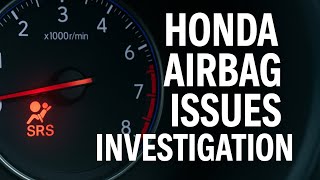
Trouble code B0028 means the Supplemental Restraint System (SRS) computer detected an electrical fault in the right front passenger-side airbag circuit. This circuit includes the airbag module in the seat or door, the control module, and the connecting wiring. The system immediately disables the passenger airbag and illuminates the dashboard warning light until the circuit is repaired and the code is cleared.
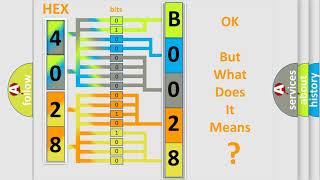
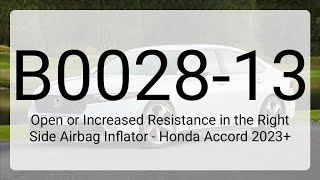
Technical definition: The SAE definition for B0028 is 'Right Side Airbag Deployment Control'. The Restraints Control Module (RCM) detected an abnormal electrical value—such as an open circuit, short to ground, or incorrect resistance—in the right-side airbag deployment loop. Sub-codes pinpoint the exact fault: B0028-13 indicates an open circuit (high resistance), while B0028-11 indicates a short to ground.
Can I Drive With B0028?
No — Do Not Drive. Code B0028 completely disables the passenger-side airbag. In a collision, it will not deploy. Frontal airbags reduce front-seat passenger fatalities by 32%. Disabling this system needlessly risks serious injury or death for your passenger.
Common Causes

- Faulty Wiring or Loose Connectors Under Seat (Very Common) — The yellow connectors under the passenger seat are frequently kicked, snagged, or loosened by seat movement. Pin tension degrades over time, interrupting the signal and triggering an open circuit code.
- Faulty Right-Side Airbag Module (Inflator) (Common) — The airbag unit contains a pyrotechnic squib with a specific internal resistance. If this component degrades or fails, it produces an incorrect resistance reading that triggers the code.
- Low Battery Voltage (Common) — The SRS system is highly sensitive to voltage drops. An aging battery or failing alternator causes unstable voltage during engine crank, forcing the SRS module to log spurious codes like B0028.
- Malfunctioning Connector Shorting Bar (Less Common) — Airbag connectors contain internal 'shorting bars' that bridge terminals when unplugged to prevent static discharge. If this bar breaks or sticks, it creates a short circuit even when fully plugged in.
- Faulty SRS Control Module (Less Common) — The main SRS computer fails due to age, water intrusion, or internal electronic faults. This requires replacing and reprogramming the module.
- Stored Crash Data (Rare) — If the vehicle was in a collision, the SRS module permanently stores crash data and disables the system, requiring a professional module reset.
Symptoms

- Solid or Flashing Airbag Warning Light — The SRS warning light stays illuminated on the instrument cluster. Some vehicles flash a specific pattern to indicate the fault type.
- Passenger Airbag Disabled Message — The dashboard displays 'SERVICE AIRBAG SYSTEM' or the 'PASSENGER AIRBAG OFF' indicator remains lit while the seat is occupied.
- DTC Appears After Seat Adjustment — The airbag light illuminates immediately after moving the passenger seat, confirming a stressed or loose wire underneath.
Diagnostic Flowchart
Tap your situation to follow the diagnostic path that matches what you're seeing on this code.
Common Fixes & Costs
- Securing Loose Connector or Repairing Under-Seat Wiring — Parts: $0-$25, Labor: $150-$250, ~1.5 hr book time (DIY)
- Installing a TSB Jumper Harness (Chrysler/Jeep) — Parts: $50-$100, Labor: $250-$450, ~2.0 hr book time (Intermediate)
- Soldering Wires to Bypass Faulty Connector (Nissan) — Parts: $0-$10, Labor: $150-$300, ~2.0 hr book time (Intermediate)
- Replacing the Side Airbag Module — Parts: $300-$1000, Labor: $150-$300, ~1.8 hr book time (Professional)
- Replacing the SRS Control Module — Parts: $400-$1200, Labor: $200-$350, ~2.2 hr book time (Professional)
- Resetting SRS Module with Crash Data — Parts: $50-$150, Labor: $100-$200, ~1.5 hr book time (Intermediate)
DIY vs Professional
- Securing Loose Connector or Repairing Under-Seat Wiring — Beginner:
Tools: Flashlight, 10mm wrench, zip ties. - Installing a TSB Jumper Harness (Chrysler/Jeep) — Beginner:
Tools: Socket set, wire cutters/strippers, crimping tool. - Soldering Wires to Bypass Faulty Connector (Nissan) — Beginner:
Tools: Soldering iron, solder, heat shrink tubing, wire strippers. - Replacing the Side Airbag Module — Beginner:
Tools: Extensive tool set for interior disassembly. - Replacing the SRS Control Module — Beginner:
Tools: Trim removal tools, professional-grade scan tool. - Resetting SRS Module with Crash Data — Beginner:
Tools: Basic hand tools to access and remove the module.
Used vs. New Parts: Buying Guide
When a used part is worth it: Buy a professionally reset original SRS Control Module or use a mail-in reset service to avoid VIN programming issues. Never buy a used airbag due to unknown history, flood damage, or prior deployment risks.
Donor-vehicle mileage cap: roughly under 50000 miles for the part to have meaningful remaining life.
Donor quality checklist:
- Verify the SRS Module part number matches EXACTLY.
- Ensure the used module is professionally reset and cleared of crash data.
- Reject parts from vehicles with flood or fire damage.
- Never buy a used airbag that looks repacked or has spliced wires.
Decision logic:
- If The part is a pyrotechnic airbag inflator/module → Buy new OEM. The safety risk of counterfeit or damaged used parts is too high.
- If The SRS Control Module has stored crash data but no physical damage → Use a mail-in reset service. This preserves your vehicle's original programming and saves hundreds of dollars.
- If The SRS Control Module has water damage or internal hardware failure → Buy a new OEM part to guarantee compatibility and secure a warranty, though it requires dealer programming.
Warranty tradeoff: Used parts offer 30-90 day warranties. New OEM parts carry a 12-month/12,000-mile warranty.
Worst-case if a used part fails: $300-$800 if a used SRS module is faulty, requiring removal, replacement, and dealer programming fees.
What Happens If You Wait — Timeline
- Immediate: Code B0028 is stored and the airbag warning light illuminates. The passenger airbag system is disabled and will not deploy in a collision. (MPG impact: 0%% · Added cost: $0)
- 0-12 months: The vehicle automatically fails state safety inspections, preventing registration renewal. Resale value drops by 20-40%. (MPG impact: 0%% · Added cost: $500-$2500 (in lost value))
- Ongoing (if caused by water leak): If caused by a water leak, ongoing moisture corrodes other electronics and leads to mold growth in the carpet. (MPG impact: 0%% · Added cost: $500-$3000+ (for mold remediation and module replacement))
- At time of sale: Selling the vehicle without disclosing the disabled airbag opens the seller to significant legal liability if an accident occurs. (MPG impact: 0%% · Added cost: Potentially thousands in legal fees.)
Cost of Not Fixing It
- Immediate: Passenger airbag system is disabled. In a collision, it will not deploy, drastically increasing the risk of serious injury or death. (Added cost: N/A)
- 0-12 months: Automatic failure of state safety inspections, preventing vehicle registration renewal. Vehicle resale value drops by 20-40%. (Added cost: $500-$2500 (in lost value))
- Ongoing: Legal liability if selling the vehicle without full, written disclosure of the non-functional safety system. (Added cost: Potentially thousands in legal fees or damages.)
Diagnosis Steps

- Read the Specific SRS Sub-Code
Use an SRS-capable OBD-II scanner to read the code. Record the suffix (e.g., -11, -13). B0028-13 means an open circuit (broken wire/loose plug), while B0028-11 means a short to ground. This dictates your entire diagnostic path.
Tools: SRS-capable OBD-II Scanner (Beginner) - Visually Inspect Under the Passenger Seat
Look for the yellow airbag wiring harness. Check for pinched wires, loose connections, or corrosion. Disconnect the negative battery terminal, wait 15 minutes, and firmly unplug and reconnect the main yellow connector to fix poor pin contact.
Tools: Flashlight, 10mm Wrench (for battery) (Beginner) - Check Battery and System Voltage
Test the battery voltage with the car off (should be ~12.6V) and running (13.7V - 14.7V). Replace the battery if it drops below 10V during cranking, as low voltage triggers false SRS codes.
Tools: Multimeter (Beginner) - Perform a Live Data 'Wiggle Test'
Connect an advanced scanner and view live SRS data for the right side airbag resistance (e.g., DEPLOY_13_R). Gently wiggle the wiring harness under the seat. If the resistance value fluctuates wildly, you have located the broken wire or loose pin.
Tools: Advanced Bi-Directional Scanner (Intermediate) - Perform a Jumper Wire Simulator Test
Disconnect the battery for 15 minutes. Unplug the airbag connector under the seat. Insert a 2-ohm airbag simulator tool into the vehicle harness side. Reconnect the battery and scan. If the code changes from 'open' to 'short' or clears, the wiring is good and the airbag module itself is faulty.
Tools: 2-ohm Airbag Simulator Resistor, SRS Scanner (Advanced) - Inspect the SRS Control Module
If wiring and simulator tests pass, locate the SRS control module (usually under the center console). Inspect the module and its connectors for water damage, corrosion, or burnt pins. Command a module self-test via the scanner.
Tools: Trim removal tools, Advanced Scanner (Advanced)
When This Code Triggers (Freeze-Frame Conditions)
- Ignition Cycle Counter: 1-255 (The SRS module runs a self-test every time the ignition turns on. This shows how many key cycles have occurred since the fault was first detected.)
- Fault Status: Active/Present (Indicates the electrical fault (open, short, high resistance) is currently happening. 'Intermittent' or 'Historic' means the fault was not present during the last self-test.)
- System Voltage: 11.8V - 14.8V (Records system voltage at the moment of the fault. A value below 12.0V indicates a weak battery or charging system issue triggered the code.)
- Resistance Value: Varies (e.g., > 4.0 Ohms) (Displays the actual resistance reading of the deployment loop. This directly proves if the circuit has high resistance (open) or low resistance (short).)
Related Codes
- B0020 — Identical fault but for the driver's side. If B0020 and B0028 appear together, it strongly suggests a faulty main SRS control module or stored crash data, not two separate wiring issues.
- B0029 — Points to the same Right Side Deployment Loop but indicates a different electrical fault. B0028 often signifies a short, while B0029 typically indicates high resistance or an open circuit.
- B00B5 / B00C5 — Codes for the Seat Track Position Sensor. Because this sensor's wiring is bundled with the airbag harness, a damaged under-seat harness triggers these alongside B0028.
- B00A0 — Relates to the Occupant Classification System. A problem in the passenger seat wiring triggers both B0028 and B00A0 simultaneously.
Climate & Environmental Factors
- High Humidity / Moisture: Water from clogged sunroof drains or spills penetrates connectors, causing pin corrosion. This increases resistance and directly triggers B0028.
- Extreme Cold: Cold temperatures cause plastic connectors and metal pins to contract at different rates, creating intermittent open circuits that disappear as the cabin warms up.
- Road Salt: Salt-laden moisture tracked into the vehicle accelerates the degradation of the under-seat wiring harness and connectors.
How to Talk to a Mechanic About This Code
Say this: "I have an airbag light on and my scanner shows code B0028. Please start by inspecting the yellow wiring harness and connectors under the passenger seat for loose pins or damage before quoting any module replacements."
This directs the technician to the most likely and cheapest fix first. It prevents them from immediately jumping to a high-cost quote for a new airbag module.
Avoid saying:
- 'My airbag light is on, can you just fix it?'
- 'I have a B0028 code, just replace whatever part is bad.'
- 'Do whatever you think is necessary.'
Questions to ask before authorizing the repair:
- Did you perform a 'wiggle test' on the under-seat harness while watching live data?
- What was the specific resistance reading from the passenger airbag deployment loop?
- Have you checked for any Technical Service Bulletins (TSBs) for my vehicle related to this code?
- Can you confirm the connector pins are clean and have good tension before replacing parts?
Where to Take It: Dealer vs Independent vs Chain
- Dealer:
Recommended only if a specific TSB applies or if a new SRS module needs programming. Otherwise, an independent shop is more cost-effective.
Best for: Vehicles under warranty., Repairs covered by a specific recall or TSB., Complex SRS module replacement requiring brand-specific programming.
Downsides: Highest labor rates, often $180-$250 per hour., May default to replacing entire assemblies instead of performing simple wiring repairs. (Typical cost: +50% vs. baseline) - Independent Shop:
Best fit for most B0028 scenarios. An experienced independent technician handles common wiring faults far more cheaply than a dealer.
Best for: Out-of-warranty vehicles where cost is a major concern., Diagnosing and repairing common wiring and connector faults., Removing and reinstalling an SRS module for a mail-in reset service.
Downsides: Shop quality varies. Vet shops based on reviews and ASE certifications., May lack the expensive tools to program a brand new SRS module. (Typical cost: +0% vs. baseline) - Chain Shop:
AVOID. Airbag system repairs are safety-critical and require expertise not typically found at chain shops.
Best for: Simple jobs like oil changes, tires, and brakes.
Downsides: Technicians lack specialized training for safety-critical SRS diagnostics., High pressure to upsell leads to misdiagnosis and unnecessary parts replacement., Not equipped for complex electrical or module-level work. (Typical cost: -10% vs. baseline)
When to Walk Away From the Repair
If the total estimated repair cost exceeds 50% of the car's private-party value, consider selling or trading in the vehicle.
- Car worth $5000, fix is $2200: Borderline. The repair is 44% of the car's value. Get a second opinion before proceeding.
- Car worth $15000, fix is $800: Fix it. The repair cost is low relative to the vehicle's value.
- Car worth $3000, fix is $1800: Walk away. The repair cost is 60% of the car's value. It is not a sound financial decision.
What Scan Tool You Need for This Code
Minimum: A scanner that reads and clears Supplemental Restraint System (SRS) codes. Standard engine-only code readers will not work.
A basic $20 code reader only communicates with the Engine Control Module. Airbag codes are stored in a separate SRS module. Without an SRS scanner, you cannot read the code or clear the light after the repair.
Budget: Autel AutoLink AL619 (~$80) — Reads and clears engine, ABS, and SRS codes. It confirms the B0028 code and allows you to clear the light after a repair.
Mid-range: Foxwell NT630 Plus (~$130) — Reads/clears SRS codes and displays live data for the airbag circuit. Crucial for performing a 'wiggle test' to find intermittent wiring faults.
Professional: Autel MaxiCOM MK808S (~$450) — Offers full-system, bi-directional diagnostics. Reads live resistance data and commands module self-tests needed if the SRS module is faulty.
Rent vs buy: Auto parts stores typically only lend basic engine code readers. For a one-time B0028 fix, buying a budget pick like the Autel AL619 is cheaper than paying a single diagnostic fee at a shop.
How to Clear the Code After You Fix It
- Ensure all repairs are complete and all yellow SRS connectors are securely fastened.
- Reconnect the vehicle's negative battery terminal.
- Turn the ignition to the 'ON' position without starting the engine.
- Connect an SRS-capable OBD-II scan tool and erase codes from the 'SRS' or 'Restraints' module.
- Cycle the ignition off, then on again, and verify the airbag warning light turns off after the 5-second self-check.
Drive cycle: No drive cycle is required. The SRS system self-tests immediately upon each ignition cycle.
Watch out for:
- Using a basic $20 engine code reader, which cannot access or clear SRS module codes.
- Assuming disconnecting the battery will clear a hard SRS fault code (it will not).
- Forgetting to plug the under-seat connector back in before reconnecting the battery, which instantly sets a new hard code.
Most Commonly Affected Vehicles
- Chrysler / Jeep 200, Cherokee (KL), Grand Cherokee (2014-2017) — Extremely common due to wiring stress under the seat. Chrysler issued TSB #10-001-20 recommending the installation of jumper harness #68395046AA.
- Honda Accord, Civic, CR-V (2016-2023) — Frequently appears as B0028-13 (Open Circuit). Diagnosis requires jumping the connector with a 2-ohm resistor to isolate the fault between the wiring and the inflator module.
- Nissan Altima, Maxima, Rogue (2015-2023) — Often related to faulty under-seat connectors. A common professional fix is to eliminate the connector entirely by soldering the wires directly.
- Ford F-150, F-250, Focus, Escape (2011-2018) — Ford's 'Pinpoint Test H' requires monitoring the DEPLOY_13_R resistance PID. The expected resistance is strictly between 1.7 and 2.78 ohms.
- Chevrolet / GMC Silverado, Suburban, Tahoe (2017-2018) — GM issued TSB #16-NA-246 advising technicians to perform a 'push/push' test on connectors to ensure they are fully seated before replacing parts.
- Land Rover Defender, Range Rover Evoque (2020-2023) — Presents as B0028-13 due to poor pin tension on the under-seat connector. Wiggle tests are highly effective for diagnosis.
- Subaru Outback, Forester (2009-2014) — Often associated with a faulty Occupant Detection System (ODS) sensor, which shares a harness with the side airbag.
- Toyota Camry, RAV4 (2012-2018) — Frequently caused by a wiring issue under the passenger seat. Check for objects jammed under the seat tracks.
Manufacturer-Specific Notes
- Chrysler/Jeep/Dodge: The wiring harness under power seats stretches and breaks. TSB #10-001-20 is the official fix, installing a robust jumper harness. Independent shops perform this much cheaper than dealers.
- Honda: Code B0028-13 is extremely common. The official diagnostic procedure requires using a 2-ohm simulator on the airbag connector to determine if the inflator or the wiring is at fault.
- Ford: Ford relies on live data 'Pinpoint Tests'. Technicians must monitor the DEPLOY_13_R PID to ensure resistance is between 1.7 and 2.78 ohms, preventing unnecessary parts replacement.
- General Motors: TSB #16-NA-246 highlights that airbag connectors may not be fully seated from the factory. Technicians must perform a 'push/push' test on the connector before diagnosing further.
- Nissan: The under-seat connector is a known failure point. Experienced technicians often cut out the connector entirely and solder the wires directly for a permanent fix.
Real Owner Stories
2015 Jeep Cherokee - The 'Wiggle' Fix
Airbag light stayed on with code B0028-13. The dealer quoted $2,611 to perform TSB 10-002-17 and replace the seat jumper harness.
What they tried:
- The owner declined the expensive dealer repair and researched the code.
Outcome: The owner wiggled the wires under the passenger seat, causing the light to turn off temporarily. This confirmed a loose connection was the sole cause, allowing them to fix the pin tension themselves for free.
Lesson: Before approving a multi-thousand dollar repair, perform a 'wiggle test' on the under-seat connectors. The problem is often a simple loose connection.
2017 Nissan Altima - The Misleading Battery
Code B0028 appeared. A week later, the car battery started dying repeatedly, and a separate code for 'battery voltage abnormal' surfaced.
What they tried:
- The owner suspected the dying battery was causing the airbag code.
Outcome: A mechanic confirmed that a failing battery causes unstable voltage, triggering sensitive SRS module faults. Replacing the old battery and clearing the codes resolved the airbag issue permanently.
Lesson: If B0028 appears alongside battery issues or slow cranking, test the battery first. It prevents costly misdiagnosis of the airbag system.
2018 Nissan Rogue - The DIY Cleaning Mistake
The owner removed the passenger seat for cleaning. After reinstalling it, the airbag light stayed on permanently.
What they tried:
- The owner purchased an SRS-capable OBD-II scanner to read the codes.
Outcome: The scanner revealed B0028-13 (side airbag open). The ignition was turned on while the seat was disconnected, setting a hard code. The owner used the scanner to clear the code, and the light stayed off.
Lesson: Always disconnect the vehicle's battery before unplugging airbag components. If you forget, you must use an SRS-capable scan tool to clear the resulting hard code.
How to Prevent This Code From Triggering
- Secure Under-Seat Wiring (Once, or after any seat service) — Use zip ties to secure the yellow airbag harness away from seat tracks. This prevents wires from stretching or snagging during seat movement.
- Clean Sunroof Drains Annually (Once per year) — Clogged sunroof drains cause water to leak into the cabin, dripping onto under-seat wiring and corroding SRS connectors.
- Avoid Storing Items Under the Seat (Daily habit) — Objects like water bottles or umbrellas roll around and strike sensitive airbag connectors, causing them to loosen or break.
- Apply Dielectric Grease to Connectors (During any related repair) — Applying dielectric grease to the connector seal blocks moisture and prevents pin corrosion.
Frequently Asked Questions
Is it safe to drive with code B0028?
No. The passenger-side airbag is disabled and will not deploy in an accident. This significantly increases the risk of severe injury or death for your passenger.
Can I fix code B0028 myself?
Yes, if the cause is a loose under-seat connector. Always disconnect the battery for 15 minutes before touching yellow airbag connectors to prevent accidental deployment. Leave module replacement to professionals.
Will the airbag light turn off automatically if I fix the problem?
No. The SRS system stores hard codes that remain even after fixing the electrical fault. You must clear the code using an SRS-capable OBD-II scanner.
How much does it cost to fix a B0028 code?
A simple connector repair at an independent shop costs $150-$250. Dealer TSB harness fixes run $400-$800. Replacing an airbag or SRS module costs $800-$1,500 or more.
Can a weak car battery cause the B0028 code?
Yes. The SRS module requires stable voltage to operate. A dying battery causes voltage drops during startup, triggering false SRS codes.
I removed my passenger seat and now the airbag light is on. Why?
You turned the ignition on while the seat was unplugged. The SRS module detected the missing circuit and stored a permanent B0028 code. Clear it with an SRS scanner.
What is the difference between B0028-13 and B0028-11?
B0028-13 indicates an open circuit, like a cut wire or unplugged connector. B0028-11 indicates a short to ground, meaning a bare power wire is touching the metal chassis.
Can I test an airbag with a multimeter?
No. Multimeters send a small electrical current that carries a risk of accidental airbag deployment. Always use a dedicated 2-ohm airbag simulator tool to test the circuit safely.
Key Takeaways
- Code B0028 completely disables your passenger-side airbag, increasing the risk of fatal injury in a frontal collision by 32%.
- Over 80% of B0028 codes stem from a loose or damaged yellow wiring connector under the front passenger seat.
- Disconnecting the battery will never clear a hard SRS code; you must use an SRS-capable OBD-II scanner to turn off the airbag light after repairs.
- Never replace a $500+ airbag module or SRS computer without first performing a live-data 'wiggle test' on the under-seat wiring harness.
- Check for Technical Service Bulletins (TSBs); Chrysler and Jeep have specific dealer fixes (like TSB #10-001-20) that replace failure-prone seat harnesses.
Helpful Videos

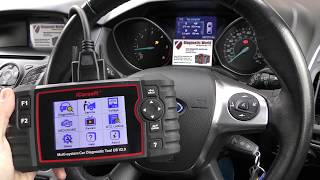
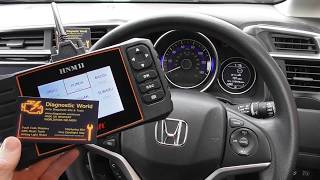

The information in this article is provided for general reference and educational purposes only. Vehicle specifications, procedures, and part compatibility can vary by production date, trim level, and region. Always consult your vehicle's factory service manual and verify part numbers before purchasing or performing repairs. Safety-critical components such as airbags, seat belts, and braking systems should be installed by a qualified professional.
- 🎬 Helpful Videos
- What Does B0028 Mean?
- Can I Drive With B0028?
- Common Causes
- Symptoms
- Diagnostic Flowchart
- Common Fixes & Costs
- DIY vs Professional
- Used vs. New Parts: Buying Guide
- What Happens If You Wait — Timeline
- Cost of Not Fixing It
- Diagnosis Steps
- When This Code Triggers (Freeze-Frame Conditions)
- Related Codes
- Climate & Environmental Factors
- How to Talk to a Mechanic About This Code
- Where to Take It: Dealer vs Independent vs Chain
- When to Walk Away From the Repair
- What Scan Tool You Need for This Code
- How to Clear the Code After You Fix It
- Most Commonly Affected Vehicles
- Manufacturer-Specific Notes
- Real Owner Stories
- 2015 Jeep Cherokee - The 'Wiggle' Fix
- 2017 Nissan Altima - The Misleading Battery
- 2018 Nissan Rogue - The DIY Cleaning Mistake
- How to Prevent This Code From Triggering
- Frequently Asked Questions
- Is it safe to drive with code B0028?
- Can I fix code B0028 myself?
- Will the airbag light turn off automatically if I fix the problem?
- How much does it cost to fix a B0028 code?
- Can a weak car battery cause the B0028 code?
- I removed my passenger seat and now the airbag light is on. Why?
- What is the difference between B0028-13 and B0028-11?
- Can I test an airbag with a multimeter?
- Key Takeaways
- 🎟️ Get 5% Off