

B0026 on 2008-2014 Cadillac CTS: Airbag Light Causes and Fixes
This code indicates high resistance or an open circuit in the driver's steering wheel airbag loop. The most common causes are a faulty clock spring or a poor connection at a wiring harness connector, often highlighted in a GM Technical Service Bulletin. This is a safety-critical issue that disables the driver's airbag.
- B0026 means the driver's airbag is disabled due to an electrical fault. This is a critical safety issue that needs immediate attention.
- Do not immediately assume an expensive part has failed. The most common causes are a worn-out clock spring in the steering column or a simple bad connection at a harness connector.
- A GM Technical Service Bulletin (08-09-41-002H) directly links this code to faulty connector retainers, making a thorough wiring inspection the first logical step.
- Due to the risk of accidental airbag deployment, this repair is best left to professional technicians who can safely disable and work on the SIR system.
What's Unique About the 2008-2014 Cadillac CTS
For the second-generation Cadillac CTS and a wide range of other GM vehicles from this era, the B0026 code is frequently linked to wiring and connector issues, not just a failed part. GM issued Technical Service Bulletin #08-09-41-002H that specifically includes B0026 and points to intermittent airbag lights caused by faulty Connector Position Assurance (CPA) retainers on the yellow airbag connectors. This suggests that before replacing expensive components like the clock spring or airbag module, a thorough inspection of the related wiring and connectors is crucial, as simply cleaning and re-seating a connector can often resolve the issue.
Diagnostic Flowchart
Tap your situation to follow the diagnostic path that matches what you're seeing on this vehicle.
Symptoms You May Notice
- Airbag warning light illuminated on the dashboard.
- "Service Air Bag" message on the Driver Information Center (DIC). 🎬 Watch: A quick overview of common causes for airbag warning lights.
- Horn and/or steering wheel-mounted controls may also stop working if the clock spring is the cause.
- Replacing the driver's airbag module when the fault is in the clock spring or a connector.
- Replacing the SDM (airbag control module) before thoroughly testing the entire deployment loop for opens or high resistance.
- Assuming the clock spring is bad without first checking the easily accessible harness connectors, as per TSB #08-09-41-002H.
Most Likely Causes
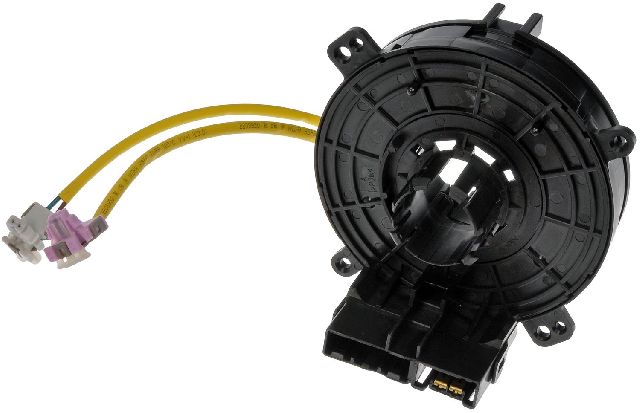
- Faulty Clock Spring (Spiral Cable) 🔴 High Probability The clock spring contains a flexible ribbon cable that allows the steering wheel to turn while maintaining an electrical connection for the airbag and steering wheel controls. Over time, this ribbon can fatigue and break from the millions of rotations, causing an open circuit. This is a common wear-and-tear item.
How to confirm: A technician can measure the resistance of the clock spring circuits with a multimeter (with the airbag module and battery safely disconnected). An open circuit (infinite resistance) or high resistance reading when flexing the cable confirms failure. If the clock spring rotates indefinitely without stopping, the internal ribbon is likely broken.
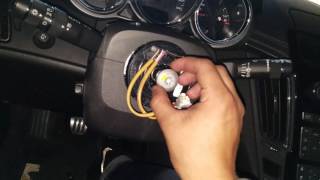
Typical fix: Replacement of the clock spring assembly. This requires removing the steering wheel. 🎬 Watch: Step-by-step guide to replacing the clock spring on this Cadillac.
Est. part cost: $50-$250 - Poor Connection at Wiring Harness Connector 🔴 High Probability As identified in TSB #08-09-41-002H, the Connector Position Assurance (CPA) retainers on airbag system connectors can fail, leading to intermittent or poor connections. Corrosion or backed-out pins in these connectors (often yellow in color) are also common, especially at connectors located in the driver's side kick panel area.
How to confirm: Visually inspect the yellow airbag connectors under the dash, at the base of the steering column, and behind the kick panels for any signs of damage, corrosion, or looseness. Disconnecting and reconnecting the connector (with the battery disconnected) can sometimes temporarily resolve the issue, confirming a connection problem. Wiggling the connector while monitoring resistance with a scan tool can also pinpoint a loose connection.
Typical fix: Clean the connector terminals with a contact cleaner, apply dielectric grease, and ensure a secure connection. Replace the CPA retainer or the connector pigtail if damaged.
Est. part cost: $10-$50
Rare But Worth Checking
- Faulty Driver Airbag Module: While less common than wiring or clock spring issues, the internal circuitry of the airbag module itself can fail, creating high resistance. This is often misdiagnosed when the clock spring is the real issue.
- Damaged Wiring: Wiring in the steering column or dash can become chafed or pinched from previous repairs or steering column adjustments, leading to an open or short circuit. This should be inspected after connectors and the clock spring are ruled out.
- Faulty Sensing and Diagnostic Module (SDM): The main airbag control module (SDM) can fail, but this is rare and should only be considered after all other possibilities in the circuit have been ruled out. A failed SDM usually presents with multiple, more widespread faults.
Diagnosis Steps
- SAFETY FIRST: Disconnect the negative terminal of the vehicle's battery and wait at least 10-15 minutes for the system's backup power to discharge before working on any airbag components.
- Scan the vehicle's SIR/SRS module with a scanner capable of reading B-codes to confirm B0026 is the active or historical code.
- Per TSB #08-09-41-002H, inspect the yellow airbag connectors under the driver's side dash and at the base of the steering column. Look for loose connections, backed-out pins, or corrosion. Pay close attention to the CPA clips. Disconnect, inspect, clean, and reconnect them firmly.
- If connectors look good, the next step is to test the clock spring. This requires removing the steering wheel airbag and the steering column covers.
- With the airbag and battery disconnected, use a dedicated airbag circuit simulator tool (typically a 2.2 to 3.3-ohm resistor) to substitute the airbag at the clock spring connector. If the code can be cleared and stays cleared, the fault is in the airbag module itself. If the code remains, the fault is upstream in the clock spring or wiring.
- Test the clock spring circuits for continuity and resistance using a multimeter. Resistance should be very low (under 1 ohm). Flex the clock spring by rotating it during testing to check for intermittent opens.
- If the clock spring tests good, inspect the wiring from the clock spring connector to the SDM for any damage, chafing, or pinched wires.
- If all wiring and components test good, the fault may lie with the SDM, but this is the least likely cause and should be the last component to be replaced.
Parts You'll Likely Need
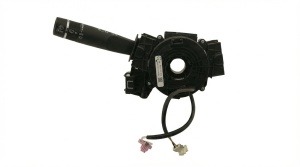
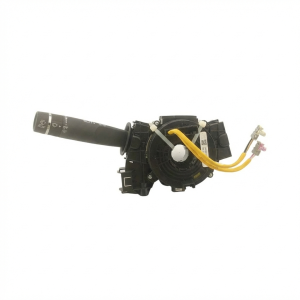
- Clock Spring / Spiral Cable
(OEM #23248442 (replaces 22770354), 20982802)— This part contains moving electrical contacts that wear out over time, causing the high resistance or open circuit that triggers B0026.
Trusted brands: ACDelco (OEM), Dorman (e.g., 525-033)
OEM price range: $120-$220
Aftermarket price range: $50-$150 - Airbag Connector Pigtail / CPA Retainer — As noted in TSB #08-09-41-002H, the connectors themselves are a common point of failure. Replacing the connector pigtail or just the retainer clip can be a permanent fix for a poor connection.
Trusted brands: ACDelco
OEM price range: $25-$50
Aftermarket price range: $10-$30
Related Codes That Often Appear With This One
- B0022 — This code indicates low resistance or a short in the same driver's airbag deployment loop. Seeing both could point to an intermittent wiring issue where a broken wire is sometimes touching ground or another wire.
- B0024 — This code indicates the deployment loop voltage is out of range. It often appears with B0026, pointing to a general electrical fault in the driver's airbag circuit.
Technical Service Bulletins (TSBs) & Recalls
- 08-09-41-002H: Inflatable Restraint (SIR) System, Intermittent AIR BAG Indicator/Lamp Illuminated with DTC(s) B0012, B0013, B0015, B0016, B0019, B0020, B0022, B0023, B0026, B0033, B0040, B0042 or B0044 Set (Inspect and Replace Connector Position Assurance (CPA) Retainer)
Platform-Specific Known Issues
- GM Technical Service Bulletin #08-09-41-002H specifically addresses intermittent airbag lights with DTC B0026 (among others) and points to inspecting and replacing the Connector Position Assurance (CPA) retainer as a potential fix. This TSB applies to a very wide range of GM vehicles from 2005-2014, including the CTS.
- A user on the LS1Tech forum detailed replacing a clock spring on a first-generation CTS-V after it was damaged during a steering rack replacement. They noted that a base CTS clock spring could be adapted but required repinning a ground wire for the traction control switch, highlighting the complexity and variation in harnesses.
Mechanic-Grade Diagnostic Values
- Driver Frontal Deployment Loop Resistance (Stage 1) — expected: 1.3 - 4.8 ohms. Failure: A resistance greater than 4.8 ohms for 500 milliseconds will set code B0026.
- Driver Frontal Deployment Loop Resistance (Stage 1) — expected: 1.3 - 6.0 ohms. Failure: A resistance greater than 6 ohms for 300-500 milliseconds can also set code B0026.
- Diagnostic Airbag Simulator Resistance — expected: 2.2 ohms. Failure: N/A - This is a tool used to bypass a component (like the airbag or clock spring) for testing. It simulates a known-good component.
Scan Tool Commands That Help
- Tech2 / GDS2: Clear DTCs — After a repair is completed, this function is used to clear the history code. The light will go out on its own after the fault is fixed, but the code will remain in history until cleared or after 255 malfunction-free ignition cycles.
- Tech2 / GDS2: SIR Data Display — To monitor the live resistance value of the driver deployment loop. Wiggling connectors or turning the steering wheel while watching this data can help pinpoint an intermittent open circuit.
Wiring & Ground Locations
- Sensing and Diagnostic Module (SDM) — Located underneath the vehicle carpet under the center console.. This is the control module that monitors the driver airbag circuit and sets code B0026. All related wiring ultimately terminates here.
- Body Control Module (BCM) — Located directly above the accelerator pedal, under the driver's side dashboard.. While not directly part of the SIR circuit, the BCM communicates with the SDM and other modules. A poor ground or connection here can cause various electrical issues.
- G103 / G200 — G103 is on the cowl, above the brake booster. G200 is in the left kick panel area. These are common interior ground points.. The SDM relies on a solid ground connection. A faulty ground at one of these locations can introduce high resistance or intermittent electrical problems for the entire SIR system.
- Yellow Airbag Connectors — Found at the base of the steering column, behind the driver's side kick panel, and connecting to the airbag module itself.. These connectors are a known point of failure due to high resistance, as noted in GM TSBs. They are a primary inspection point for B0026.
Real Owner Repair Stories
- Tahoe Yukon Forum user 'bke' (2002 Chevrolet Tahoe (similar GM platform and SIR system)) — Airbag light was on, scan tool showed code B0026.
❌ Tried (didn't work) Took the airbag off and checked for corrosion, but found none.
✅ What actually fixed it The user unplugged and replugged the airbag module. They then located the yellow connector under the dash and pushed it together more firmly. The light stayed off after ensuring the connector was secure. - CorvetteForum user (Chevrolet Corvette C5 (similar GM SIR logic)) — SRS light on with code B0026, horn only worked when the steering wheel was turned.
❌ Tried (didn't work) Initial inspection of the clock spring assembly seemed okay.
✅ What actually fixed it Upon further inspection of the wiring harness connected to the clock spring, a wire was found to be broken. Repairing the broken wire fixed the B0026 code and the airbag light went out.
OEM Part Supersession History
22770354→23248442— Updated part for clock spring assembly for models with a heated steering wheel.
Heads up: Part 23248442 is specified for vehicles WITH a heated steering wheel.15899023, 20952441, 20982802, 25811625, 25941116→23248441— Consolidated part number for clock spring assembly for models WITHOUT a heated steering wheel.
Heads up: Part 23248441 is specified for vehicles WITHOUT a heated steering wheel. It is critical to select the correct part based on the heated steering wheel option.
Helpful Videos
Used OEM Parts in Stock
New Aftermarket Parts Available


The information in this article is provided for general reference and educational purposes only. Vehicle specifications, procedures, and part compatibility can vary by production date, trim level, and region. Always consult your vehicle's factory service manual and verify part numbers before purchasing or performing repairs. Safety-critical components such as airbags, seat belts, and braking systems should be installed by a qualified professional.
- Cadillac CTS:
- 🎬 Helpful Videos
- 🛍️ Shop This Part
- What's Unique About the 2008-2014 Cadillac CTS
- Diagnostic Flowchart
- Symptoms You May Notice
- Most Likely Causes
- Rare But Worth Checking
- Diagnosis Steps
- Parts You'll Likely Need
- Related Codes That Often Appear With This One
- Technical Service Bulletins (TSBs) & Recalls
- Platform-Specific Known Issues
- Mechanic-Grade Diagnostic Values
- Scan Tool Commands That Help
- Wiring & Ground Locations
- Real Owner Repair Stories
- OEM Part Supersession History
- 🎟️ Get 5% Off