

OBD-II Code B0026: Driver-Side Airbag Circuit Fault
What B0026 means, why it triggers, and how to fix it
- Code B0026 disables your entire airbag system, meaning zero airbags will deploy in a collision.
- Over 70% of B0026 codes on GM vehicles stem from a loose or corroded C221 yellow connector under the driver's dash, not a failed airbag.
- Inspect and clean the primary wiring harness connectors before spending $250+ on a replacement clock spring or airbag module.
- Disconnect the negative battery terminal and wait 20 minutes before touching any yellow airbag wiring to prevent accidental deployment.
What Does B0026 Mean?

Code B0026 indicates the Sensing and Diagnostic Module (SDM) detected high electrical resistance or a broken connection in the driver's steering wheel airbag circuit. Because the computer cannot guarantee the airbag will deploy correctly, it illuminates the warning light and completely disables the airbag system.
Technical definition: The SAE/OBD-II definition is "Driver Frontal Stage 1 Deployment Control Open Circuit or High Resistance." The Sensing and Diagnostic Module (SDM) has detected resistance in the driver's airbag deployment loop exceeding the maximum threshold (typically 4.8 ohms) for a set period (often 500 milliseconds).
Can I Drive With B0026?
No — Do Not Drive. Do not drive the vehicle. Code B0026 disables the entire airbag system, meaning zero airbags will deploy in a crash. This dramatically increases the risk of serious injury or death in an otherwise survivable collision. Furthermore, an active airbag warning light automatically fails safety inspections in most jurisdictions.
Common Causes

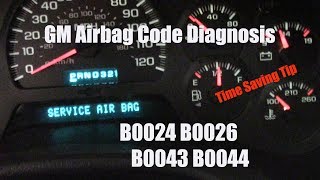
- Poor connection at a wiring harness connector (Very Common) — This is the most frequent cause, especially on GM vehicles. 🎬 Watch: Real-world diagnosis of B0026 on a GM truck. The yellow airbag connectors under the dashboard (like GM's C221) or at the steering column base loosen or suffer broken plastic locking clips (CPAs), creating high resistance.
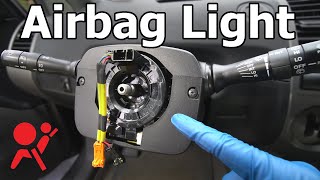
- Faulty clock spring (spiral cable) (Common) — The clock spring is a coiled ribbon of wires inside the steering column connecting the steering wheel to the airbag. Over time, this ribbon fatigues and breaks from turning stress, causing an open circuit.
- Damaged wiring (Less Common) — Wires in the steering column or under the dash get pinched, chafed, or broken, especially if recent interior work was performed.
- Corrosion or damage to under-seat components (Less Common) — Spilled liquids or items shoved under the driver's seat damage the airbag control module (SDM) or its connectors, triggering B0026.
- Improperly installed aftermarket accessories (Rare) — Aftermarket remote starters or alarms spliced into the wrong steering column wires introduce high resistance to sensitive airbag circuits.
- Hidden damage from a prior collision (Rare) — Previous accidents cause hidden damage to the airbag wiring harness or module, manifesting later as an open circuit.
- Faulty driver's airbag module (Very Rare) — The steering wheel airbag module (squib) fails internally. Rule out all wiring issues before replacing the airbag.
- Faulty Sensing and Diagnostic Module (SDM) (Very Rare) — The main airbag computer fails. This requires replacing the SDM only after exhausting all other diagnostic options.
Symptoms

- Airbag warning light and "Service Airbag" message — The dashboard airbag light remains illuminated constantly, often accompanied by a text warning on the driver information center.
- Intermittent airbag light (flickers on bumps or turns) — A light that flickers when turning the steering wheel strongly indicates a broken clock spring wire. A light that triggers over bumps points to a loose connector under the dash.
- Horn, cruise control, or steering wheel buttons fail — Because the clock spring provides the electrical connection for these features, its failure causes them to stop working simultaneously 🎬 See how to replace a faulty clock spring yourself. with the airbag light.
Diagnostic Flowchart

Tap your situation to follow the diagnostic path that matches what you're seeing on this code.
Common Fixes & Costs
- Reseating or cleaning harness connectors — Parts: $0 - $15, Labor: $100 - $200, ~0.5 hr book time (DIY)
- Replacing a connector pigtail or CPA clip
— Parts: $10 - $60, Labor: $150 - $300, ~1.2 hr book time
(Intermediate)
: OEM [{'make': 'GM', 'part_number': '88988974', 'price_range': '$5 - $15'}]
: OEM [{'make': 'ACDelco', 'part_number': 'PT1798', 'price_range': '$20 - $40'}] (Alt: {"brand": "Dorman", "part_number": "645-622", "price_range": "$15 - $30"}) - Replacing the clock spring
— Parts: $50 - $250, Labor: $150 - $450, ~1.5 hr book time
(Professional)
: OEM [{'make': 'GM (Silverado/Sierra 2007-14)', 'part_number': '25966966', 'price_range': '$150 - $250'}] (Alt: {"brand": "Dorman", "part_number": "525-032", "price_range": "$140 - $180"}) - Repair or Removal of Aftermarket Wiring — Parts: $0, Labor: $100 - $300, ~2.0 hr book time (Professional)
- Replacing the driver's airbag module
— Parts: $400 - $1200, Labor: $100 - $200, ~1.0 hr book time
(Professional)
: OEM [{'make': 'GM (Silverado/Sierra 2007-14)', 'part_number': 'Varies by VIN', 'price_range': '$700 - $1200'}]
Used vs. New Parts: Buying Guide
When a used part is worth it: For a clock spring, a used OEM part from a low-mileage vehicle is a cost-effective alternative. For the airbag module itself, used parts are NEVER recommended due to extreme safety risks. For the airbag control module (SDM), repairing your original unit is safer than buying a used one requiring reprogramming.
Donor-vehicle mileage cap: roughly under 60000 miles for the part to have meaningful remaining life.
Donor quality checklist:
- Verify the donor vehicle was not in a flood or frontal collision.
- Match the part number exactly.
- For clock springs, ensure the part is 'centered' and locked for shipping.
- Avoid buying used airbag inflator modules under any circumstances.
Decision logic:
- If The part is the airbag inflator module → Always buy new OEM from a dealer. There are no safe aftermarket or used options.
- If The part is the clock spring AND the budget is tight → A used OEM part from a reputable recycler is viable, but a new OEM or high-quality aftermarket part carries less risk.
- If The part is the Airbag Control Module (SDM) → Send your original module to a specialist for repair and resetting to avoid costly VIN reprogramming.
Warranty tradeoff: Used parts typically have a 30-90 day functional warranty. New aftermarket parts often carry a 1-year to limited lifetime warranty. New OEM parts usually have a 1-year warranty.
Worst-case if a used part fails: $200-500. Premature failure of a used clock spring requires repeat labor and a new part.
What Happens If You Wait — Timeline
- Immediate: The B0026 code sets, the airbag warning light illuminates, and the entire Supplemental Restraint System (SRS) is disabled. (MPG impact: 0%% · Added cost: $0. The immediate cost is an incalculable safety risk, as no airbags will deploy in a collision.)
- 1-3 months: An initially intermittent fault becomes a permanent warning light. The vehicle definitively fails state safety inspections. (MPG impact: 0%% · Added cost: $50-$200 in potential fines or inspection re-test fees.)
- 3-12 months: Minor corrosion on a single connector pin spreads to adjacent pins, requiring a connector pigtail replacement instead of a simple cleaning. (MPG impact: 0%% · Added cost: $75-$250 for a new connector pigtail and splicing labor.)
Cost of Not Fixing It
- Immediate: The entire Supplemental Restraint System (SRS) is disabled. In the event of a collision, zero airbags will deploy. (Added cost: Incalculable. The cost is a dramatically increased risk of serious injury or death.)
- 1-6 months: The vehicle fails mandatory safety inspections, preventing legal registration renewal. (Added cost: $50-$200 in potential fines or re-inspection fees.)
Diagnosis Steps
- Safety First: Disconnect the Battery
Disconnect the negative battery terminal and wait 20 minutes to discharge backup capacitors and prevent accidental airbag deployment.
Tools: Wrench set (Beginner) - Scan for Codes
Use an SRS-capable OBD-II scanner to confirm B0026 is active. Note if the code is 'current' or 'history' and check for related codes like B0022 or B0044.
Tools: SRS-capable OBD-II scanner (Beginner) - Inspect Primary Airbag Connectors
Visually inspect the bright yellow airbag connectors, especially the C221 connector behind the driver's side kick panel and the steering column base connector. Firmly reseat them and check for broken CPA locking clips.
Tools: Flashlight, trim removal tools (Intermediate) - Wiggle Test
Reconnect the battery. Have a helper watch the airbag light while you gently wiggle the wiring harness under the dash and steering column. A flickering light isolates the loose connection.
Tools: Safety glasses (Intermediate) - Advanced: Live Resistance Data Monitoring
Navigate to the SRS live data stream on a professional scan tool. Monitor 'Driver Deployment Loop Resistance' (normally 1.7-3.5 ohms). Wiggle the harness; spikes above 4.8 ohms pinpoint the fault.
Tools: Professional SRS scan tool (e.g., GM GDS2) (Professional) - Advanced: Test the Clock Spring Circuit
Disconnect the battery, then unplug the clock spring connectors. Use a multimeter to check continuity through each wire while turning the steering wheel lock-to-lock. An 'OL' reading confirms a broken clock spring.
Tools: Multimeter, vehicle-specific wiring diagram, basic hand tools (Advanced) - Professional: Isolate the Fault with a Diagnostic Resistor
Plug a 2.0-2.5 ohm diagnostic resistor into the steering column base connector. If the code clears, the fault is in the clock spring or airbag. If it remains, the fault is in the wiring to the SDM.
Tools: Airbag diagnostic resistor set (e.g., GM tool J-38522) (Professional) - Professional: Terminal Pin-Drag Test
Use a correctly sized male terminal to test the tension of the female connector pins. Loose pins cause high resistance and require replacing the terminal or connector pigtail.
Tools: Terminal test kit, SIR terminal repair kit (Professional)
When This Code Triggers (Freeze-Frame Conditions)
- System State: Active (The SRS module continuously monitors the circuit after the initial power-on self-test.)
- Driver Deployment Loop Resistance: > 4.8 ohms (The resistance in the circuit exceeded the maximum allowable threshold.)
- Fault Duration: > 500 milliseconds (The high resistance condition persisted long enough to be confirmed as a fault.)
- Ignition Cycle: Current (The fault was detected during the current key-on cycle.)
Related Codes
- B0022 — Indicates 'Driver Deployment Loop Resistance Low,' the opposite of B0026. An intermittent wire causes both codes to appear at different times.
- B0024 — Indicates the driver's airbag circuit is shorted to ground or voltage. B0024 is a voltage fault, whereas B0026 is a resistance fault.
- B0044 — Code for the 'Stage 2' deployment loop. If both B0026 and B0044 appear together, the fault is in a shared component like the clock spring or main C221 connector.
Climate & Environmental Factors
- Humidity and Moisture: High humidity or water intrusion causes corrosion on sensitive, gold-plated terminals within airbag connectors, increasing electrical resistance and triggering B0026.
- Temperature Cycles (Hot/Cold): Repeated heating and cooling cycles make plastic Connector Position Assurance (CPA) clips brittle, causing them to crack and loosen the connection.
How to Talk to a Mechanic About This Code
Say this: "I have an airbag light on and my scanner shows code B0026 for the driver-side airbag circuit. I'd like to schedule a diagnostic to pinpoint the cause. Based on my research, it's often a connector or clock spring issue, so I'd like you to start by inspecting the harness connectors before quoting a new airbag."
This signals you are an informed customer. It directs the technician to the most likely, and cheapest, failure points first (wiring/connectors) and prevents them from immediately quoting an expensive and unnecessary airbag module replacement.
Avoid saying:
- 'My airbag light is on, can you fix it?' (Too vague, invites a high quote for the worst-case scenario).
- 'I think I need a new airbag.' (Incorrectly diagnoses the problem and suggests the most expensive fix).
- 'Just replace whatever is broken.' (Gives the shop a blank check to replace parts without proper diagnosis).
Questions to ask before authorizing the repair:
- What was the resistance reading on the driver deployment loop? Did it change when you wiggled the harness?
- Did you inspect the main airbag connector in the driver's kick panel (C221 on GM vehicles)? Was there any corrosion?
- If you are recommending a clock spring, did you test the old one to confirm it has an open circuit?
- What is the warranty on the parts and labor for this specific repair?
Where to Take It: Dealer vs Independent vs Chain
- Dealer:
Recommended only if the vehicle is under warranty or if an independent shop has failed to diagnose the issue.
Best for: Vehicles under warranty or covered by a specific recall/special coverage campaign for this issue., Complex cases where a new SDM (airbag computer) needs to be programmed to the vehicle.
Downsides: Highest labor rates., May be quick to replace a component assembly (like a full harness) instead of repairing a single connector. (Typical cost: +50% vs. baseline) - Independent Shop:
Best fit. An experienced independent mechanic efficiently diagnoses and repairs the common wiring and component faults that cause B0026 at a fair price.
Best for: Out-of-warranty vehicles., Diagnosing and fixing the most common causes like bad connectors or replacing a clock spring.
Downsides: Shop quality and experience with SRS systems varies. Vet shops based on reviews and ASE certifications. (Typical cost: +0% vs. baseline) - Chain Shop:
AVOID. Airbag system repair is a safety-critical task requiring a higher level of expertise than is typically found at chain shops.
Best for: Simple, unrelated maintenance like oil changes or tires.
Downsides: Technicians often lack the specialized training for SRS diagnostics., High pressure to sell parts leads to incorrect recommendations., Generally not equipped for the detailed wiring and connector work this code requires. (Typical cost: -10% vs. baseline)
When to Walk Away From the Repair
If the estimated repair cost for the airbag system exceeds 40-50% of the car's private-party value, pause and consider your options. Unlike other repairs, this is a critical safety failure that must be fixed.
- Car worth $4000, fix is $800: Fix it. The cost is well within the threshold and restores a critical safety feature.
- Car worth $3000, fix is $1800: Walk away. The repair cost is over 50% of the car's value.
What Scan Tool You Need for This Code
Minimum: A scanner that can read and clear Supplemental Restraint System (SRS) / Airbag codes.
A standard $20-$50 OBD-II code reader only accesses check engine light codes. It cannot communicate with the SRS module to see the B0026 code or clear the airbag light after repair.
Budget: Autel AutoLink AL619 (~$60) — Reads and clears codes from the ABS and SRS/Airbag systems, allowing you to diagnose the B0026 fault and turn off the light after repair.
Mid-range: BlueDriver Pro (~$120) — Connects to a smartphone app and provides access to enhanced diagnostics for SRS/Airbag systems on many makes and models. It reads and clears the code and provides repair reports.
Professional: Autel MaxiCOM MK808S / Foxwell NT630 Plus (~$350-500) — These full-system scan tools provide professional-level diagnostics, allowing you to view live SRS data (like deployment loop resistance) to pinpoint intermittent wiring faults.
How to Clear the Code After You Fix It
- Ensure all components are correctly installed and connectors are secure.
- Reconnect the negative battery terminal.
- Use an SRS-capable OBD-II scan tool to access the airbag module and clear the B0026 code.
- Turn the ignition off, then on again, and verify the airbag warning light performs its self-check (on for ~7 seconds, then off) and does not return.
Drive cycle (~30 minutes): A specific drive cycle is not required for the airbag system, as it re-tests at every startup. However, if the battery was disconnected, a 30-minute mixed city/highway drive cycle is needed to reset the engine's emissions readiness monitors.
Readiness monitors affected: Catalyst Monitor, Evaporative System Monitor, O2 Sensor Monitor, O2 Sensor Heater Monitor
Before emissions retest: drive at least 50 miles to fully set monitors.
Watch out for:
- Using a basic code reader that cannot communicate with the SRS/airbag module to clear the code.
- Failing to fix the root cause of the high resistance, causing the code to return immediately.
- Assuming the airbag light turns off on its own; it is a 'hard code' requiring a scanner to clear.
Will This Fail Emissions / State Inspection?
No — by itself this code doesn't fail OBD inspection (but it can keep readiness monitors from setting, which causes a separate fail).
- California: Will NOT fail. California's smog check is an emissions test only. An illuminated airbag light is not a cause for failure.
- New York: Will NOT fail. An airbag warning light is an advisement only and not a cause for rejection during the safety inspection.
- Texas: Will NOT fail. The airbag system is not an inspected item for the Texas state safety inspection.
- Virginia: WILL FAIL. Virginia has a comprehensive annual safety inspection, and an illuminated airbag warning light is cause for rejection.
Most Commonly Affected Vehicles
- Chevrolet Silverado, Tahoe, Suburban (2003-2014) — Extremely common due to high resistance in the C221 connector behind the driver's kick panel. Documented in GM TSBs #05-09-41-001 and #08-09-41-002H.
- GMC Sierra, Yukon, Envoy, Acadia (2003-2014) — Shares the same platforms and wiring weaknesses as Chevrolet trucks. The fault is almost always related to connector C221 or its CPA retainer.
- Chevrolet Cobalt, HHR (2005-2011) — Prone to this code due to connector quality issues. The C221 connector behind the driver's kick panel is the most frequent point of failure.
- Pontiac G6, G5 (2005-2010) — Frequently experiences this code due to faulty Connector Position Assurance (CPAs) on the airbag harness connectors.
- Cadillac DTS, Escalade (2006-2014) — Often affected by B0026 due to poor connections at the yellow airbag connectors, addressed by GM TSB #08-09-41-002H.
- Chevrolet Express (2008-2014) — Included in GM TSB #08-09-41-002H, identifying the root cause as a poor connection at the C221 connector.
- Chevrolet Corvette (1997-2004) — The C5 generation is known for this code appearing due to clock spring failure. The airbag light flickers when the steering wheel turns.
- Saab 9-5, 9-7X (2003-2009) — The 9-7X (a rebadged GMC Envoy) is explicitly included in GM TSB #08-09-41-002H for connector issues.
Manufacturer-Specific Notes
- General Motors (Chevrolet, GMC, Pontiac, Buick, Cadillac): GM issued TSB #08-09-41-002H blaming faulty Connector Position Assurance (CPA) retainers on yellow airbag connectors. The fix is replacing the small plastic CPA clip (P/N 88988974) or the connector pigtail.
- Ford: The equivalent fault is indicated by a flashing airbag light code (e.g., flash code 32) or OBD-II codes like B1877 or B0001. The clock spring is a very common failure point.
- Toyota / Lexus: Toyota's equivalent code is typically B1801. A common failure point on models like the Sienna is the yellow connector located under the seat, which gets kicked or damaged.
- Honda / Acura: Honda uses a two-digit flashing code system. Codes 1-1 or 1-2 indicate an open circuit in the driver's airbag inflator, pointing to the same fault.
Real Owner Stories
2006 Chevrolet Silverado with intermittent B0026
Owner reported an intermittent 'Service Air Bag System' message with a history code B0026. They initially suspected the clock spring.
What they tried:
- Located connector C221 behind the driver's side kick panel based on a GM TSB.
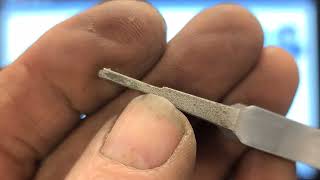
Outcome: Green corrosion was found on a terminal inside the C221 connector. Cleaning the terminals with a diamond file and applying contact enhancer permanently resolved the code.
Lesson: Always inspect and clean primary harness connectors like C221 before assuming a more expensive component like the clock spring failed.
2009 GMC Sierra with persistent B0026 after clock spring replacement
The airbag light was on with code B0026. The owner replaced the clock spring assembly, but the light remained.
What they tried:
- Replaced the clock spring assembly.
- Disassembled the main yellow connector at the base of the steering column.
Outcome: A tan wire had broken off its terminal pin inside the connector housing, invisible from the outside. Repairing this single wire resolved the code.
Lesson: A failed part replacement often means the fault hides in the connecting wiring. Breaks occur inside connector shells, requiring more than a visual exterior inspection.
How to Prevent This Code From Triggering
- Apply dielectric grease to airbag connectors during service. (Whenever a yellow airbag connector is disconnected.) — Grease seals out air and moisture, preventing corrosion on sensitive, low-voltage, gold-plated terminals.
- Inspect Connector Position Assurance (CPA) clips. (During any under-dash or steering column work.) — Replacing brittle CPA clips prevents connectors from vibrating loose and causing intermittent B0026 codes.
- Fix cabin water leaks promptly. (As needed.) — Water from a leaking windshield drips directly onto the C221 connector in the driver's kick panel, causing severe corrosion.
Frequently Asked Questions
Can I fix code B0026 myself?
Simple fixes like reseating a connector are safe for DIYers who disconnect the battery and wait 20 minutes first. However, repairs requiring steering wheel removal, like a clock spring replacement, carry a risk of accidental airbag deployment. Take the vehicle to a professional if the issue goes beyond basic under-dash wiring.
Will the other airbags still work if the light is on for B0026?
No. The airbag computer (SDM) disables the entire Supplemental Restraint System (SRS) when it detects a B0026 fault. Zero airbags will deploy in an accident until the code is cleared.
I replaced the clock spring and the light is still on. What now?
First, ensure you cleared the code with an SRS-capable scanner, as airbag codes will not clear themselves. If it returns, the problem is likely a poor connection in the wiring harness between the clock spring and the airbag control module. Inspect the yellow connectors, especially the main C221 connector behind the driver's kick panel.
Could a bad front impact sensor cause code B0026?
No. Code B0026 refers specifically to an electrical fault within the driver's steering wheel airbag loop. Front impact sensors have separate diagnostic trouble codes and will not trigger a B0026.
Does B0026 mean I need a new airbag?
It is highly unlikely. The airbag module itself is a robust component that rarely fails. The root cause is almost always a wiring or connection issue that costs significantly less to fix.
What is a CPA clip and why does it fail?
A Connector Position Assurance (CPA) clip is a small plastic lock on an electrical connector that prevents it from vibrating apart. They are critical on sensitive airbag circuits to maintain low electrical resistance. They fail because the plastic becomes brittle with age and heat cycles, cracking when disturbed.
Can I just reset the airbag light to fix B0026?
No. Resetting the light with a scan tool only removes it temporarily. Because B0026 indicates a physical hardware fault, the computer will detect the high resistance on the next startup and immediately turn the light back on.
Key Takeaways
- Code B0026 disables your entire airbag system, meaning zero airbags will deploy in a collision.
- Over 70% of B0026 codes on GM vehicles stem from a loose or corroded C221 yellow connector under the driver's dash, not a failed airbag.
- Inspect and clean the primary wiring harness connectors before spending $250+ on a replacement clock spring or airbag module.
- Disconnect the negative battery terminal and wait 20 minutes before touching any yellow airbag wiring to prevent accidental deployment.
Helpful Videos

The information in this article is provided for general reference and educational purposes only. Vehicle specifications, procedures, and part compatibility can vary by production date, trim level, and region. Always consult your vehicle's factory service manual and verify part numbers before purchasing or performing repairs. Safety-critical components such as airbags, seat belts, and braking systems should be installed by a qualified professional.
- 🎬 Helpful Videos
- What Does B0026 Mean?
- Can I Drive With B0026?
- Common Causes
- Symptoms
- Diagnostic Flowchart
- Common Fixes & Costs
- Used vs. New Parts: Buying Guide
- What Happens If You Wait — Timeline
- Cost of Not Fixing It
- Diagnosis Steps
- When This Code Triggers (Freeze-Frame Conditions)
- Related Codes
- Climate & Environmental Factors
- How to Talk to a Mechanic About This Code
- Where to Take It: Dealer vs Independent vs Chain
- When to Walk Away From the Repair
- What Scan Tool You Need for This Code
- How to Clear the Code After You Fix It
- Will This Fail Emissions / State Inspection?
- Most Commonly Affected Vehicles
- Manufacturer-Specific Notes
- Real Owner Stories
- 2006 Chevrolet Silverado with intermittent B0026
- 2009 GMC Sierra with persistent B0026 after clock spring replacement
- How to Prevent This Code From Triggering
- Frequently Asked Questions
- Can I fix code B0026 myself?
- Will the other airbags still work if the light is on for B0026?
- I replaced the clock spring and the light is still on. What now?
- Could a bad front impact sensor cause code B0026?
- Does B0026 mean I need a new airbag?
- What is a CPA clip and why does it fail?
- Can I just reset the airbag light to fix B0026?
- Key Takeaways
- 🎟️ Get 5% Off