

OBD-II Code B0020: Left Side Airbag Circuit Fault
The Ultimate 2026 Guide to Diagnosing and Fixing B0020
- Never touch yellow SRS connectors without first disconnecting the negative battery terminal and waiting exactly 15 minutes for the system capacitors to discharge.
- Do not replace a $500 airbag module until you test the circuit with a 2.0-ohm resistor to prove the wiring harness is not the actual culprit.
- Check for Technical Service Bulletins (TSBs) before starting repairs; for example, 2014-2017 Jeep Cherokees require a specific $30 jumper harness (P/N 68365479AA) to fix a known broken wire.
- If your horn and steering wheel buttons fail at the exact same time the B0020 code appears, the clock spring is broken and requires replacement.
What Does B0020 Mean?

Code B0020 means the Supplemental Restraint System (SRS) control module detected an electrical fault in the left-side airbag circuit. As a safety precaution, the computer disables that specific airbag to prevent accidental deployment.
Technical definition: The SAE/ISO definition is 'Left Side Airbag Deployment Control (Subfault)'. The Sensing and Diagnostic Module (SDM) detected an open circuit, short circuit, or abnormal resistance within the left-side airbag deployment loop. The system checks resistance during startup; expected resistance is typically between 1.5 and 3.5 ohms. Readings outside this range trigger the code.
Can I Drive With B0020?
Yes, But With Caution. The vehicle drives normally, but it is unsafe. The airbag warning light indicates the safety system has disabled a specific left-side airbag (driver's front, side seat, or curtain). It WILL NOT deploy in a crash, significantly increasing the risk of serious injury. Immediate repair is critical.
Common Causes

- Loose or Corroded Electrical Connector (Very Common) — The most frequent cause is a poor connection at an airbag module, often under a seat or behind the glove box. Vibrations loosen connectors, moisture causes corrosion, and micro-vibrations cause fretting corrosion. Broken Connector Position Assurance (CPA) clips also allow connectors to vibrate loose.
- Damaged Wiring Harness (Common) — Wires in the airbag circuit get pinched, chafed, or broken. This frequently happens under seats from constant movement, in door jambs, or in the steering column.
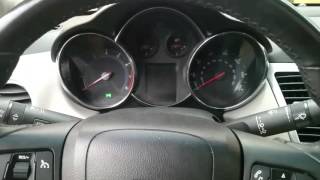
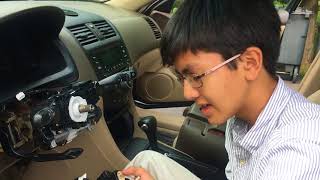
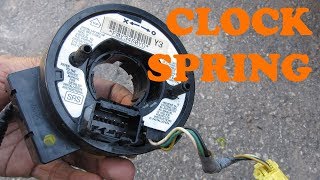
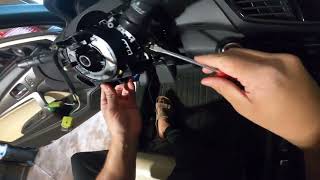
- Faulty Clock Spring (Common) — The clock spring is a rotary connector in the steering column maintaining the electrical connection for the driver's airbag. Internal wires break from constant steering wheel rotation, causing an open circuit. 🎬 See this walkthrough on how to replace a faulty clock spring.
- Water Damage to Connectors or Module (Uncommon) — Spilled drinks or water leaks seep under seats and corrode the airbag module or floor-mounted connectors.
- Improper Previous Collision Repair (Uncommon) — If the vehicle was in an accident, stretched or poorly routed replacement harnesses cause intermittent faults long after the repair.
- Faulty Airbag Control Module (SRS/SDM) (Rare) — The main SRS computer fails internally. Suspect this only after ruling out all wiring and sensor issues.
- Defective Airbag Module (Rare) — The airbag unit's internal igniter (squib) fails. This rarely happens without physical damage or deployment.
Symptoms

- Airbag Warning Light On & System Disabled — The dashboard airbag light stays lit while the engine runs. The affected airbag is disabled and will not deploy in an accident.
- Intermittent Airbag Light — The light turns on and off while driving, especially when turning, adjusting the seat, or hitting bumps. This indicates a loose connection or broken wire.
- Steering Wheel Controls Not Working — If a broken clock spring causes the code, you also lose function of the horn, cruise control, and steering wheel radio buttons.
- Failed Safety Inspection — An active airbag warning light causes an automatic failure in jurisdictions requiring safety inspections.
Diagnostic Flowchart

Tap your situation to follow the diagnostic path that matches what you're seeing on this code.
Common Fixes & Costs
- Clean and Re-seat Airbag Connector — Parts: $0-$15, Labor: $100-$200, ~1 hr book time (DIY)
- Repair Damaged Wiring or Install Jumper Harness
— Parts: $15-$120, Labor: $150-$400, ~2.5 hr book time
(Professional)
Jeep Cherokee/Chrysler 200 (2014-2017): OEM Mopar 68365479AA (Driver Side Jumper) (Alt: N/A)
GM Vehicles (Various): OEM GM 88988974 (CPA Retainer Clip) (Alt: N/A) - Replace Airbag Clock Spring
— Parts: $40-$400, Labor: $125-$250, ~1.5 hr book time
(Intermediate)
Jeep Cherokee (2014-2018): OEM Mopar 1NJ72DX9AK (Alt: Dorman 525-550, Standard Motor Products CSP459)
Chevy Traverse (2009-2017): OEM GM 23248441 (Alt: Dorman 525-033)
Honda Accord (2018-2020): OEM Honda 77900-TVA-A11 (Alt: Standard Motor Products CSP737) - Replace Side/Seat Airbag Module
— Parts: $200-$700, Labor: $150-$300, ~2 hr book time
(Professional)
Jeep Cherokee (2015, Driver Seat): OEM Mopar 5PD97JX9AA (Alt: Used OEM modules available)
Chevy Traverse (2012, Driver Seat): OEM GM 25896602 (Alt: Used OEM modules available)
Honda Accord (2018, Driver Seat): OEM Honda 04803-TVA-A00 (Alt: Used OEM modules available) - Replace SRS Airbag Control Module
— Parts: $250-$800, Labor: $150-$300, ~2 hr book time
(Professional)
Jeep Cherokee (2015): OEM Mopar 68244220AC (Alt: N/A (Module reset services available))
Chevy Traverse (2012): OEM ACDelco 22882343 (Alt: N/A (Module reset services available))
Honda Accord (2018): OEM Honda 77960-TVA-A46 (Alt: N/A (Module reset services available))
Used vs. New Parts: Buying Guide
When a used part is worth it: For a clock spring, a new aftermarket part is a better value than a used OEM part with unknown wear. A used SRS Control Module is an option if you use a service to reset your original module or have the used one professionally reprogrammed to your vehicle's VIN.
Donor-vehicle mileage cap: roughly under 60000 miles for the part to have meaningful remaining life.
Donor quality checklist:
- For clock springs, avoid parts from high-mileage vehicles as it is a wear item.
- For SRS control modules, ensure the part number matches exactly. Verify the donor vehicle was not in a flood.
- Never buy a used airbag inflator module; the risk of malfunction or previous damage is too high.
Decision logic:
- If The part is a clock spring and a new aftermarket version is available for under $150 → buy new aftermarket for a longer lifespan and warranty.
- If The part is the SRS Control Module → prioritize sending your original module for a reset service over buying a used one to avoid VIN mismatch issues.
Warranty tradeoff: Used parts typically have a 30-90 day warranty. New aftermarket parts carry a 1-year to limited lifetime warranty. New OEM parts carry a 12-month/12,000-mile warranty.
Worst-case if a used part fails: $300-$600 if a used clock spring or improperly reset module fails, requiring repeat labor costs plus the cost of another part.
What Happens If You Wait — Timeline
- 0-1 month: Airbag warning light is illuminated. The specific left-side airbag is disabled by the SRS module. The fault may be intermittent at first, triggered by bumps or seat movement. (MPG impact: 0%% · Added cost: $0)
- 1-6 months: The fault becomes permanent, and the airbag light stays on constantly. An intermittent wiring issue worsens due to vibration, becoming a hard open or short. The vehicle automatically fails state safety inspections. (MPG impact: 0%% · Added cost: $50-$200 in failed inspection fees and potential fines.)
- 6-12 months: Continued exposure to moisture on a corroded connector leads to further degradation of other pins in the same connector, potentially causing other SRS faults. A chafing wire continues to wear, increasing the risk of it shorting to ground. (MPG impact: 0%% · Added cost: $150-$300 in added diagnostic labor if the fault becomes more complex.)
- 12+ months: The primary risk remains constant: a critical safety system is non-functional. In the event of a collision where the airbag was needed, the consequence is a significantly higher risk of serious injury or death for the driver. (MPG impact: 0%% · Added cost: Catastrophic personal cost in an accident. There is no progressive mechanical damage to the car itself, only a persistent and critical safety failure.)
Cost of Not Fixing It
- Immediate (0-1 month): The left-side airbag is disabled and will not deploy in an accident, creating a critical safety risk. (Added cost: N/A)
- 1-12 months: Automatic failure of state safety inspection in many jurisdictions, preventing legal vehicle registration renewal. (Added cost: $50-$200 in re-inspection fees and potential fines.)
- 12+ months: Continued operation without a functional airbag system significantly increases the risk of serious injury or death for the driver in a collision. (Added cost: Potential for catastrophic personal cost in an accident.)
Diagnosis Steps
- Read Codes & Check TSBs
Use an SRS-capable OBD-II scanner to confirm B0020 and note any sub-codes (e.g., B0020-13). Search online for your vehicle's year/make/model and 'B0020 TSB' to find known manufacturer fixes.
Tools: SRS-capable OBD-II Scanner, Internet access (Beginner) - Visual Inspection & Connector Check
IMPORTANT: Disconnect the negative battery terminal and wait 15 minutes. Inspect wiring under seats, in door jambs, and around the steering column. Check yellow SRS connectors for corrosion, backed-out pins, or broken locks.
Tools: Socket set (for battery), Flashlight (Intermediate) - Perform a 'Wiggle' Test
With a professional scan tool graphing live resistance data for the B0020 circuit, carefully wiggle the wiring harness at common failure points. A sudden resistance spike pinpoints the exact fault location.
Tools: Professional scan tool with live data (Advanced) - Isolate the Fault with a Resistor
With the battery disconnected, unplug the airbag module. Jump the harness terminals with a 2.0-3.3 ohm SRS resistor. Reconnect the battery and scan. If the 'Open Circuit' code disappears, the airbag module is faulty. If it remains, the wiring or SRS module is bad.
Tools: 2-3 ohm SRS resistor, SRS-capable scanner (Advanced) - Test Clock Spring Continuity
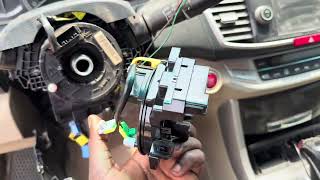
If the code points to the driver's front airbag, test the clock spring's internal wires using a multimeter while rotating the steering wheel. 🎬 Watch: DIY guide for replacing a clock spring on a Honda.
Tools: Multimeter, Trim removal tools, Socket set (Advanced) - Measure Circuit Resistance Values
Using a multimeter (battery disconnected), measure the suspect circuit. Normal resistance is 1.5-3.5 ohms. Readings over 3.9 ohms trigger 'Resistance High' codes. Continuity in the harness should be under 1.0 ohm.
Tools: High-impedance Multimeter, Wiring diagrams (Advanced)
When This Code Triggers (Freeze-Frame Conditions)
- System Voltage: 11.5-12.5V (Key On), 13.5-14.5V (Engine Running) (The SRS module performs a self-test at every key-on event; low voltage triggers false codes.)
- Vehicle Speed: 0 mph (Most B0020 codes are set during the initial startup self-check before the vehicle is moving.)
- Ignition Cycles Since Code Set: 0-1 (The code appears immediately after the fault is detected on a key cycle.)
- SRS Light Status: ON (The primary condition recorded is the command to illuminate the airbag warning light on the dashboard.)
Related Codes
- B0028 — This is the identical fault but for the right-side seat. On many Jeep and Chrysler vehicles, B0020 and B0028 appear together because the seat harnesses on both sides fail in the same way.
- B0019 — This code is for the Passenger Frontal Deployment Loop Stage 1. Since many airbags are dual-stage, a single bad connector affects both stages, causing B0019 and B0020 to appear together.
- B0021 — This code is for the Right Side Airbag Deployment Control. Seeing it with B0020 indicates a systemic issue like a faulty main SRS module or a problem with a common connector block serving both sides.
- B0020 with sub-codes (02, 04, 0D, 0E, 13, 1A) — Sub-codes provide critical diagnostic information. '0D' or '13' means 'Open Circuit', pointing to a broken wire. '0E' or '1A' means 'Resistance Below Threshold', indicating a short circuit.
Climate & Environmental Factors
- High Humidity / Moisture: Moisture and high ambient humidity accelerate corrosion on airbag connector pins and circuit boards. Spilled drinks or water leaks that get under the seats are common culprits for damaging connectors.
- Temperature Extremes: Extreme temperature changes cause electrical connectors to expand and contract, loosening them over time. This worsens fretting corrosion, a micro-abrasion between vibrating connector terminals.
- Road Salt: In regions using road salt, salt-laden moisture tracked into the vehicle on footwear severely corrodes wiring and connectors located under the seats and carpets.
How to Talk to a Mechanic About This Code
Say this: "I have an airbag warning light on, and my scanner shows code B0020, a left side circuit fault. Based on my research, the cause is often a wiring or connector issue under the driver's seat or the clock spring. Can you please start by checking for any relevant TSBs and inspecting the wiring and connectors for that circuit before recommending any major part replacements?"
This directs the technician to diagnose the most common and least expensive potential failures first (wiring, connectors) instead of immediately quoting a costly airbag replacement. Mentioning TSBs prompts them to check for known issues with a documented fix.
Avoid saying:
- 'My airbag light is on, can you just fix it?'
- 'I think I need a new airbag.'
- 'Just do whatever it takes to turn the light off.'
Questions to ask before authorizing the repair:
- Did you find a specific Technical Service Bulletin (TSB) for this issue on my vehicle?
- Can you show me where the wiring or connector is damaged?
- Did you perform a 'wiggle test' on the harness or use a resistor to isolate the fault between the wiring and the airbag module itself?
- If a module needs to be replaced, does the new one require programming to my vehicle's VIN?
Where to Take It: Dealer vs Independent vs Chain
- Dealer:
A safe but expensive choice. Best if you suspect a new control module is needed or if the issue is a known TSB fix.
Best for: Vehicles under warranty., Complex repairs requiring programming of a new SRS control module., Well-documented issues covered by a specific TSB or recall.
Downsides: Highest labor rates., Defaults to replacing entire components (like a full seat harness) instead of performing a targeted wire repair. (Typical cost: +50% vs. baseline) - Independent Shop:
Best fit for most B0020 scenarios. An experienced independent technician traces and fixes a bad wire or connector, providing the best value.
Best for: Out-of-warranty vehicles where cost is a major factor., Diagnosing and repairing common wiring and connector faults., Shops with ASE-certified technicians specializing in electrical diagnostics.
Downsides: Quality varies widely; vetting is crucial., Lacks the expensive, manufacturer-specific software to program a new SRS module if one is required. (Typical cost: +0% vs. baseline) - Chain Shop:
AVOID. Airbag system repair is a safety-critical task requiring specialized expertise beyond the scope of most chain shops.
Best for: Simple, routine maintenance like oil changes and tires.
Downsides: Technicians lack specialized training and diagnostic tools for complex SRS/airbag systems., High risk of misdiagnosis, leading to unnecessary part replacements. (Typical cost: -10% vs. baseline)
When to Walk Away From the Repair
If the estimated repair cost for the airbag system exceeds 40-50% of your car's private-party value, seriously consider selling the car as-is or trading it in.
- Car worth $5000, fix is $2200: Walk away. A repair cost of this magnitude on a $5,000 car is not a good investment. The car's value will not increase by the amount you spend on the repair.
- Car worth $15000, fix is $650: Fix it. This cost is well within a reasonable threshold and restores a critical safety feature, preserving the vehicle's value.
- Car worth $3000, fix is $1200: Borderline. Get a second opinion to confirm no cheaper fix (like a simple connector cleaning) is possible before authorizing. If the cost is firm, sell as-is.
What Scan Tool You Need for This Code
Minimum: A scanner that reads and clears Supplemental Restraint System (SRS) / Airbag codes. Standard engine-only code readers will not work.
A basic $20 OBD-II scanner only reads powertrain codes (P-codes) from the engine computer. It cannot communicate with the SRS module to see 'B-codes' like B0020.
Budget: Autel AutoLink AL619 / ML629 (~$80) — Reads and clears codes from the SRS, ABS, Engine, and Transmission modules. It confirms B0020 is the active code and clears it after a repair.
Mid-range: BlueDriver Pro Bluetooth Scanner (~$120) — Reads/clears SRS codes and displays live data from the airbag circuit. This is crucial for performing a 'wiggle test' to find the exact location of a bad wire by watching the resistance value change in real-time.
Professional: Autel MaxiCOM MK808 / Launch CRP129E (~$450-600) — Offers full-system diagnostics including live data graphing and bidirectional controls. Essential for professional-level diagnosis and necessary if a new SRS control module needs programming.
Rent vs buy: Auto parts stores loan basic engine code readers for free, but DO NOT loan out advanced SRS-capable scanners. You must purchase your own SRS-capable scanner or pay a shop for the initial diagnosis.
How to Clear the Code After You Fix It
- Ensure the negative battery terminal is reconnected.
- Use an SRS-capable OBD-II scan tool to access the Supplemental Restraint System.
- Select the function to 'Clear Fault Codes' or 'Reset Module'.
- Turn the ignition off, then turn it back on and observe the airbag light.
Drive cycle (~1 minutes): No complex drive cycle is needed. The SRS module performs a complete self-test for about 7 seconds after the ignition is turned on. If the repair is successful, the airbag light turns on briefly and then goes out. If the light stays on, the fault remains.
Readiness monitors affected: None
Watch out for:
- Using a basic OBD-II scanner that cannot read or clear SRS codes.
- Failing to fix the underlying electrical fault, causing the code to return instantly upon the next key cycle.
- Not waiting long enough after reconnecting the battery for the system to stabilize before clearing codes.
Will This Fail Emissions / State Inspection?
No — by itself this code doesn't fail OBD inspection (but it can keep readiness monitors from setting, which causes a separate fail).
- California: Will NOT fail a smog check. Emissions inspections in California are separate from safety and do not check SRS functionality.
- New York: An illuminated airbag warning light causes a vehicle to FAIL the annual safety inspection.
- Texas: Will FAIL the safety inspection. The airbag warning light must illuminate briefly at startup and then turn off. If it stays on, the vehicle fails.
- Virginia: Will FAIL the safety inspection. Any illuminated airbag warning light is cause for rejection.
Most Commonly Affected Vehicles
- Jeep / Chrysler Cherokee (KL), 200 (UF) (2014-2017) — Code B0020-13 is extremely common and almost always caused by a broken wire in the driver's seat wiring harness. The official fix is installing a jumper harness (Mopar Part No. 68365479AA) per TSB #10-001-20.
- Chevrolet / GMC / Buick Traverse, Acadia, Enclave, Suburban, Tahoe, Avalanche (2007-2014) — Prone to a loose passenger airbag connector or broken CPA retainer behind the glove box, documented in GM TSB #08-09-41-002H. Recall #14V118 addressed connector corrosion under the front seats.
- Chevrolet HHR, Cobalt, Cruze (2006-2012) — Known for poor connections at the passenger airbag connector (X211 on HHR/Cobalt) or the passenger knee airbag connector (Cruze). Often fixed by re-seating the connector.
- Honda Accord, CR-V (2018-2020) — Code B0020-13 is often caused by a faulty wiring sub-harness or clock spring, addressed in Honda TSB #ATI&07282021901. The 2019 CR-V was recalled (NHTSA ID: 19V383000) because metal burrs severed clock spring wiring.
- Ford F-150 (2011-2014) — Often caused by chafed or broken wires in the wiring harness running through the driver's seat. Wiggling the harness behind the driver's seat shows a change in resistance on a scan tool.
- Nissan Altima, Rogue, Titan (2013-2017) — Frequently linked to a failing clock spring in the steering column or loose connectors under the driver's seat for the side airbag module.
- Subaru Outback, Forester, Impreza (2008-2014) — B0020 often appears alongside codes for the Occupant Detection System (ODS) or belt tensioner sensor, pointing to an issue with the complex system under the passenger seat.
- Jaguar / Land Rover Various Models (2010-2018) — The connector for the side airbag in the seat becomes loose or has weak pin tension, causing an intermittent or constant B0020 fault. The fix involves securing the connector or re-tensioning the internal pins.
Manufacturer-Specific Notes
- General Motors (Chevrolet, GMC, Buick): Many GM trucks and SUVs from the mid-2000s to mid-2010s have a known issue with a poor connection at the passenger airbag. The fix is re-seating the connector and replacing a small plastic locking clip (CPA retainer) per TSB #08-09-41-002H.
- Jeep / Chrysler: On the Cherokee (KL) and 200 (UF) platforms, B0020-13 is almost always a broken wire in the driver's seat harness. TSB 10-001-20 advises installing a specific jumper harness (P/N 68365479AA) rather than repairing the fragile wires.
- Honda: On 2018-2020 Accords and 2019-2020 CR-Vs, code B0020-13 is a known issue addressed by TSB #ATI&07282021901. For the 2019 CR-V, check for recall NHTSA ID: 19V383000 regarding metal burrs damaging the clock spring.
- Nissan: On models like the Altima and Rogue, code B0020 is frequently linked to a failing clock spring in the steering column, which also causes the horn and steering wheel buttons to stop working.
- Ford: On F-150 trucks (2011-2014), the driver's side airbag wiring harness chafes and breaks where it passes the seat frame pivot bolt. A 'wiggle test' of this harness quickly confirms the fault location.
Real Owner Stories
2015 Jeep Cherokee with B0020-13
Airbag light came on intermittently at first, then stayed on solid. Scanning the code revealed B0020-13, pointing to an open circuit in the driver's side seat airbag.
Outcome: The owner found TSB 10-001-20 describing a broken wire in the seat harness. A shop installed the official Mopar jumper harness (P/N 68365479AA) to bypass the broken section. The total repair cost was $350, and the code was permanently cleared.
Lesson: For specific, well-documented issues, always check for a TSB first. It saves hours of diagnostic time and prevents unnecessary part replacements.
2010 Chevy Traverse with B0020
The 'Service Airbag' message appeared on the dash of a recently purchased used Traverse. The airbag light was constantly on.
Outcome: The fault was traced to the passenger airbag connector behind the glove box. The plastic Connector Position Assurance (CPA) clip was broken, allowing the connector to vibrate loose. Following GM TSB #08-09-41-002H, the technician secured the connector and replaced the CPA clip (P/N 88988974). The light went out.
2012 Ford F-150 with intermittent B0020
The airbag light came on and off randomly, but sometimes when the driver's seat was adjusted. The code was a generic B0020.
Outcome: The owner learned the harness chafes against the seat frame. Upon closer inspection, they found a wire with its insulation rubbed through where it passed a metal pivot bolt. They repaired the wire using a proper crimp connector and protected the harness with split-loom tubing. The total cost was under $10.
Lesson: An intermittent light strongly points to a wiring issue. Before replacing expensive components, perform a thorough visual inspection of the entire harness path for signs of chafing or pinching.
2008 Nissan Altima with B0020 and no horn
The airbag light came on, and at the same time, the horn and all steering wheel-mounted radio/cruise control buttons stopped working.
Outcome: The diagnosis correctly identified a failed clock spring in the steering column. Replacing the clock spring restored function to all three systems and cleared the B0020 code.
Lesson: Pay attention to secondary symptoms. If other functions located on the steering wheel fail at the same time as the airbag light appears, the clock spring is the most likely culprit.
How to Prevent This Code From Triggering
- Secure Under-Seat Harnesses (Once, or after any seat adjustment) — Prevents the wiring from getting snagged, stretched, or pinched by seat movement or items stored under the seat. Use zip ties to gently secure slack in the harness to the seat frame.
- Apply Dielectric Grease to Connectors (During any related repair) — Seals out moisture and oxygen, preventing the pin corrosion and fretting that leads to high resistance faults. Use a very small amount, as the grease itself is non-conductive.
- Install Protective Wire Loom (Once, on vulnerable sections) — Adds a physical barrier against abrasion and chafing where wires pass near sharp metal edges, like seat pivot bolts or brackets. Split-loom tubing is inexpensive and easy to install.
- Keep Vehicle Interior Dry (Ongoing habit) — Prevents water from leaking into the cabin and reaching low-lying electrical components like the SRS module or floor connectors, which is a primary cause of terminal corrosion.
- Be Mindful of Objects Under Seats (Daily habit) — Prevents items like water bottles, umbrellas, or tools from rolling under the seat and damaging the delicate airbag connectors or snagging on the wiring harness.
Frequently Asked Questions
Is it safe to drive with code B0020?
The vehicle drives normally, but it is unsafe. The disabled left-side airbag will not deploy in a crash, significantly increasing injury risk.
Can a low battery cause code B0020?
Yes, a weak battery or voltage fluctuation causes the SRS module to log false fault codes during startup self-checks. Clear the code after charging the battery to see if it returns.
Can I reset the airbag light myself?
You can clear the code with an SRS-capable scanner. However, if the underlying electrical problem remains, the light returns instantly during the next startup self-test.
Will my other airbags still work?
In most vehicles, a fault disables only the specific airbag affected by the code. However, some manufacturers disable the entire SRS system as a precaution, so assume the whole system is compromised.
The dealer quoted thousands to fix code B0020. Is that right?
Dealers often quote full airbag or seat replacements for liability reasons. B0020 is usually a simple wiring or connector issue, so get a second opinion from an independent shop specializing in electrical diagnostics.
Can I fix B0020 by just cleaning a connector?
Yes. Disconnecting the battery, unplugging the affected connector, cleaning the pins with electrical contact cleaner, and re-seating it firmly permanently fixes many loose connection issues.
What is the difference between B0020 and B0028?
Both indicate the exact same electrical fault, but B0020 is for the left-side airbag and B0028 is for the right-side. They often appear together on vehicles with identical wiring flaws on both front seats.
Key Takeaways
- Never touch yellow SRS connectors without first disconnecting the negative battery terminal and waiting exactly 15 minutes for the system capacitors to discharge.
- Do not replace a $500 airbag module until you test the circuit with a 2.0-ohm resistor to prove the wiring harness is not the actual culprit.
- Check for Technical Service Bulletins (TSBs) before starting repairs; for example, 2014-2017 Jeep Cherokees require a specific $30 jumper harness (P/N 68365479AA) to fix a known broken wire.
- If your horn and steering wheel buttons fail at the exact same time the B0020 code appears, the clock spring is broken and requires replacement.
Helpful Videos

The information in this article is provided for general reference and educational purposes only. Vehicle specifications, procedures, and part compatibility can vary by production date, trim level, and region. Always consult your vehicle's factory service manual and verify part numbers before purchasing or performing repairs. Safety-critical components such as airbags, seat belts, and braking systems should be installed by a qualified professional.
- 🎬 Helpful Videos
- What Does B0020 Mean?
- Can I Drive With B0020?
- Common Causes
- Symptoms
- Diagnostic Flowchart
- Common Fixes & Costs
- Used vs. New Parts: Buying Guide
- What Happens If You Wait — Timeline
- Cost of Not Fixing It
- Diagnosis Steps
- When This Code Triggers (Freeze-Frame Conditions)
- Related Codes
- Climate & Environmental Factors
- How to Talk to a Mechanic About This Code
- Where to Take It: Dealer vs Independent vs Chain
- When to Walk Away From the Repair
- What Scan Tool You Need for This Code
- How to Clear the Code After You Fix It
- Will This Fail Emissions / State Inspection?
- Most Commonly Affected Vehicles
- Manufacturer-Specific Notes
- Real Owner Stories
- 2015 Jeep Cherokee with B0020-13
- 2010 Chevy Traverse with B0020
- 2012 Ford F-150 with intermittent B0020
- 2008 Nissan Altima with B0020 and no horn
- How to Prevent This Code From Triggering
- Frequently Asked Questions
- Is it safe to drive with code B0020?
- Can a low battery cause code B0020?
- Can I reset the airbag light myself?
- Will my other airbags still work?
- The dealer quoted thousands to fix code B0020. Is that right?
- Can I fix B0020 by just cleaning a connector?
- What is the difference between B0020 and B0028?
- Key Takeaways
- 🎟️ Get 5% Off