

OBD-II Code B0014: Driver-Side Airbag Circuit Fault
What B0014 means, why it triggers, and how to fix it
- Code B0014 completely disables the vehicle's airbag system, meaning zero airbags will deploy in the event of a crash.
- Over 80% of B0014 faults stem from a loose, damaged, or corroded yellow connector located directly under the driver's seat.
- Diagnose the exact failure point by wiggling the under-seat harness while watching live resistance data on an SRS-capable scan tool.
- Never probe airbag wiring with a multimeter while the battery is connected; wait 15 minutes after disconnection to prevent accidental deployment.
- Check for manufacturer Technical Service Bulletins (TSBs) first, as GM has issued multiple bulletins (like #PI1469) for this exact wiring flaw.
What Does B0014 Mean?

OBD-II code B0014 indicates the Sensing and Diagnostic Module (SDM) detected an open circuit or high resistance in the driver's side impact airbag wiring. As a safety measure, the SDM illuminates the airbag warning light and disables the entire airbag system.
Technical definition: The SAE/ISO definition is 'Driver Seat Side Air Bag Deployment Loop Open Circuit' or 'Resistance Above Threshold'. The SDM detected resistance outside the normal 1.1 to 3.9 ohms range for at least 120 milliseconds. Symptom bytes identify the exact fault: :04 (Open), :0D (High Resistance), or :0E (Low Resistance).
Can I Drive With B0014?
No — Do Not Drive. While the vehicle physically drives, do not drive it. Code B0014 disables the entire Supplemental Restraint System (SRS). In an accident, zero airbags will deploy, significantly increasing the risk of fatal injury. The risk is a critical failure of the primary safety system.
Common Causes

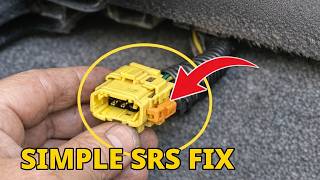
- Damaged, loose, or corroded under-seat connector (Very Common) — This is the primary cause. Constant seat movement, stored items, or spilled liquids damage the yellow wiring harness and connectors under the driver's seat, creating an open or high-resistance circuit.
- Wiring harness chafing inside the seat back (Common) — On newer GM models like the Chevrolet Bolt, the airbag wiring harness rubs against the seat foam or frame. This friction wears through the insulation, causing a short or open circuit.
- Failed previous wiring repair (Common) — If a previous technician used crimp-on butt connectors instead of soldering and heat-shrinking the wires, the connections corrode or loosen over time, reintroducing high resistance.
- Incorrectly installed aftermarket seats (Uncommon) — Swapping original seats for aftermarket or different-trim seats causes a circuit mismatch. If the new seats lack side airbags but the vehicle expects them, the SDM detects an open circuit.
- Faulty side airbag module (Less Common) — The airbag module inside the driver's seat fails internally. Suspect this only after ruling out all wiring and connection issues.
- Faulty airbag clock spring (Less Common) — A broken ribbon cable inside the steering column's clock spring disrupts SRS communication. While B0014 points to the side airbag, clock spring failures often trigger multiple erratic SRS codes.
- Interference from aftermarket 12V accessories (Rare) — Electromagnetic interference from low-quality aftermarket devices plugged into 12V power outlets causes resistance fluctuations in sensitive airbag circuits, intermittently triggering B0014.
- Faulty Sensing and Diagnostic Module (SDM) (Rare) — The main airbag computer rarely fails unless exposed to water damage, internal shorts, or uncleared crash data from a previous accident.
Symptoms

- Airbag warning light is on — The light illuminates solid red or amber, or shows a flashing airbag icon on the dashboard.
- "Service Airbag System" message — Modern vehicles display a text warning on the driver information center alongside the airbag light.
- Intermittent airbag light — The light illuminates only when the driver's seat moves or hits a bump, indicating a loose connection or chafing wire.
- Horn or steering wheel controls fail — If a faulty clock spring causes the code, the horn and steering wheel buttons stop working simultaneously.
- Airbags will not deploy (scan-tool only — no driver-felt sign) — The entire SRS system deactivates as a safety precaution and fails to function in a crash.
Diagnostic Flowchart

Tap your situation to follow the diagnostic path that matches what you're seeing on this code.
Common Fixes & Costs
- Repairing or bypassing the under-seat wiring connector
— Parts: $10-$50, Labor: $150-$300 (1-2 hours), ~1.5 hr book time
(Intermediate)
GM Trucks/SUVs (2003-2014): OEM - Replacing the driver's side airbag module (or seat foam)
— Parts: $300-$800, Labor: $150-$250 (1-1.5 hours), ~1.2 hr book time
(Professional)
Chevrolet Bolt EV/EUV (2022-2023): OEM - Replacing the airbag clock spring
— Parts: $100-$400, Labor: $150-$250 (1-1.5 hours), ~1.5 hr book time
(Professional)
Chevrolet Silverado/GMC Sierra (2015-2019): OEM - Replacing the Sensing and Diagnostic Module (SDM) — Parts: $200-$700, Labor: $200-$400, ~2.0 hr book time (Professional)
Used vs. New Parts: Buying Guide
When a used part is worth it: Never buy used pyrotechnic SRS components (airbags, pretensioners). The risk of failure during a crash outweighs any cost savings. Used parts only make sense for non-electronic items like seat frames.
Donor-vehicle mileage cap: roughly under 40000 miles for the part to have meaningful remaining life.
Donor quality checklist:
- Verify the donor vehicle was not in a flood or fire; moisture and heat destroy SRS components.
- For a clock spring, ensure it comes from a low-mileage vehicle without a frontal collision.
- For a control module (SDM), it must be professionally reset, cleared of crash data, and reprogrammed to your VIN.
Decision logic:
- If The part is a pyrotechnic device (airbag, pretensioner) → Buy new OEM. The risk of a used part failing to deploy is too high.
- If The part is the clock spring → Favor new OEM or a top-tier aftermarket part. A used part's remaining rotational life is unknown.
- If The part is the SDM (control module) → Have your original module professionally reset and repaired rather than buying a used one that requires reprogramming.
Warranty tradeoff: Used SRS parts from a salvage yard typically have a 30-day warranty. New aftermarket parts carry a 1-year warranty. New OEM parts carry a 12-month/12,000-mile warranty.
Worst-case if a used part fails: $3000+ in repeat labor, replacement parts, and severe injury if the part fails in a crash.
What Happens If You Wait — Timeline
- 0-3 months: Intermittent Fault. The airbag light illuminates only when the seat moves. The system is disabled only when the light is on, indicating a loose connector pin. (MPG impact: 0%% · Added cost: $0. The fix is re-seating the connector or securing the harness.)
- 3-6 months: Hard Fault. The light stays on permanently. The intermittent connection fails completely, creating a permanent open circuit. The SRS system is always disabled. (MPG impact: 0%% · Added cost: $0-$150. A chafing wire breaks completely, requiring soldering rather than just re-seating.)
- 6-12 months: Compounded Faults. A chafing wire shorts to another wire or the seat frame, triggering low-resistance codes and complicating diagnosis. (MPG impact: 0%% · Added cost: $150-$400. A simple wire repair escalates to a harness section replacement.)
- 12+ months: Module Damage. Moisture wicks up the harness and damages the pins on the main Sensing and Diagnostic Module (SDM). (MPG impact: 0%% · Added cost: $500-$1500+. The repair escalates to replacing and reprogramming the main airbag computer.)
Cost of Not Fixing It
- Immediate: The entire Supplemental Restraint System (SRS) is disabled. Zero airbags will deploy in a crash. (Added cost: N/A)
- 0-12 months: Significantly increased risk of serious or fatal injury to occupants in any accident. (Added cost: High risk of severe injury or death.)
- At next inspection: Vehicle fails mandatory state safety inspections, leading to an inability to legally register or operate the vehicle. (Added cost: $50-$200 in failed inspection fees and fines.)
- At time of sale: Significant reduction in vehicle resale value and potential legal liability if the non-functional safety system is not disclosed. (Added cost: $500-$2000+ reduction in value.)
Diagnosis Steps
- Read Codes and Live Resistance Data
Use an SRS-capable OBD-II scanner to confirm B0014 and note the symptom byte (e.g., :04, :0D). Pull up live data for 'Driver Seat Side Air Bag Deployment Loop Resistance'. Normal resistance is 1.1 to 3.9 ohms.
Tools: OBD-II Scanner (with live data SRS capability) (Beginner) - Check for Technical Service Bulletins (TSBs)
Search for B0014 TSBs specific to your VIN. Manufacturers like GM have issued numerous bulletins (e.g., #PI1469, #23-NA-030) with exact repair procedures that bypass hours of manual testing.
Tools: Internet access (Beginner) - Perform a Live Data "Wiggle Test"
With the scanner displaying live resistance, move the driver's seat fully forward and backward. Wiggle the yellow connector under the seat. If the resistance spikes to 'OL' (Over Limit) or drops out, you found the exact location of the intermittent fault.
Tools: OBD-II Scanner (with live data SRS capability) (Intermediate) - Disconnect Battery and Inspect Connector
Disconnect the negative battery terminal and wait 15 minutes for the backup power to discharge. Unplug the yellow connector under the seat and inspect for pushed-out pins, broken wires, or green corrosion.
Tools: Wrench set, flashlight (Intermediate) - Isolate the Fault with a Load Tool
Plug an airbag load tool (simulator) into the vehicle harness under the seat, substituting the airbag. Reconnect the battery and scan. If the code clears, the airbag module is faulty. If it remains, the wiring or SDM is the issue.
Tools: Airbag load tool/simulator (Professional) - Test Circuit Integrity
With the battery and all SRS components disconnected, use a multimeter to check continuity between the SDM connector and the under-seat connector (must be <2.0 ohms). Test for shorts to ground (must be OL). Never probe an airbag module directly.
Tools: Multimeter, wiring diagrams, terminal release tools (Advanced)
When This Code Triggers (Freeze-Frame Conditions)
- Ignition Status: ON (The SRS module performs a self-test every time the ignition turns on.)
- System Voltage: 9-16 Volts (The fault logs when the vehicle's electrical system is within normal operating voltage.)
- Fault Duration: 120 milliseconds (The electrical fault (open, short, high/low resistance) must be present for a specific, brief period to set the code.)
- DTC Status: Current / Active (SRS faults are hard faults that remain active as long as the physical circuit issue exists.)
Related Codes
- B0015 — B0014 points to the driver's side seat airbag. B0015 points to the driver's seat belt pretensioner. Both share the under-seat wiring harness but require different component testing.
- B0021 — B0021 is the exact equivalent of B0014, but for the passenger side. Seeing both codes simultaneously indicates a systemic issue or a TSB affecting both front seats.
- B001E — A general 'Driver Side Restraints Sensor' fault often listed alongside B0014 in GM service bulletins. If they appear together, the fault is isolated to the driver's seat wiring.
Climate & Environmental Factors
- High Humidity / Water Ingress: High humidity or direct water intrusion from spills accelerates corrosion on the under-seat connector terminals. This corrosion increases circuit resistance, directly causing B0014:0D faults.
- Extreme Cold: Cold weather causes materials to contract, forcing marginal electrical connections to temporarily open. This triggers the airbag light on cold starts, which often turns off after the interior warms up.
How to Talk to a Mechanic About This Code
Say this: "My scanner shows code B0014 for the driver's side seat airbag. Since this is usually a wiring issue under the seat, please inspect the yellow connector and harness before quoting any major part replacements."
This directs the technician to perform the most likely diagnostic step first, preventing them from immediately quoting an expensive airbag module. Mentioning the code proves you are informed.
Avoid saying:
- 'My airbag light is on, can you fix it?'
- 'Just do whatever it takes to turn the light off.'
- 'I heard it might be the clock spring, can you replace it?'
Questions to ask before authorizing the repair:
- Did you find a Technical Service Bulletin (TSB) for this code on my vehicle?
- Were you able to see the fault by wiggling the under-seat connector while watching live data?
- What was the resistance reading on the deployment loop circuit? Was it open, high, or low?
- Before I approve a new airbag module, did you use a load tool to confirm the fault is in the module and not the wiring harness?
- If a wire is broken, will you solder the repair or use crimp connectors?
Where to Take It: Dealer vs Independent vs Chain
- Dealer:
Recommended for warranty work. Otherwise, a good second choice if a trusted independent shop isn't available.
Best for: Vehicles under warranty., Complex cases where an independent shop failed to find the issue., Owners who prefer OEM parts and factory-trained technicians.
Downsides: Highest labor rate., Quick to replace a larger assembly when a smaller repair is possible. (Typical cost: +50% vs. baseline) - Independent Shop:
Best fit for most situations. A competent independent technician with an SRS-capable scan tool diagnoses and repairs this effectively.
Best for: Most out-of-warranty vehicles., Diagnosing common, well-documented issues like the under-seat connector., Cost-conscious owners seeking a balance of expertise and value.
Downsides: Quality varies widely. Must find a shop with an experienced diagnostician., May lack specialized tools for brand-new models. (Typical cost: +0% vs. baseline) - Chain Shop:
AVOID. Airbag system repair is safety-critical and requires diagnostic precision not typically found at chain shops.
Best for: Simple, non-safety-related jobs like tires and oil changes.
Downsides: Lacks diagnostic expertise for SRS systems., High pressure to meet sales targets leads to misdiagnosis., Fails to follow critical safety procedures for airbag systems. (Typical cost: -10% vs. baseline)
When to Walk Away From the Repair
If the estimated repair cost exceeds 50% of the car's private-party value, weigh the cost against selling the vehicle as-is. An active airbag light reduces trade-in value by 20-40%.
- Car worth $4000, fix is $250: Fix it. This small investment restores a critical safety feature and significantly increases the vehicle's salability.
- Car worth $12000, fix is $1100: Fix it. The repair cost is less than 10% of the vehicle's value and prevents a massive loss in resale value.
- Car worth $2500, fix is $1500: Walk away. The repair cost is over half the car's value. Sell the vehicle 'as-is' with full disclosure.
What Scan Tool You Need for This Code
Minimum: A scanner that reads Body (B-prefix) or SRS/Airbag codes AND displays live resistance data for the deployment loops.
A standard $20 engine code reader cannot communicate with the airbag control module. It will not see the B0014 code.
Budget: Autel MaxiAP AP200 (~$60) — This Bluetooth dongle reads SRS codes and displays live data for the airbag deployment loop resistance, enabling the wiggle test.
Mid-range: Foxwell NT510 Elite (~$180) — A handheld scanner providing OE-level diagnostics for a specific brand. It reads SRS codes and shows live resistance data with graphing.
Professional: Autel MaxiCOM MK808 (~$450) — A tablet-style tool offering full-system diagnostics, fast scanning, detailed live data graphing, and a full suite of service functions.
Rent vs buy: Auto parts store rental scanners lack SRS capability. Buy a budget pick like the AP200 or pay a shop's diagnostic fee.
How to Clear the Code After You Fix It
- Ensure the physical fault (e.g., broken wire, bad connector) is properly repaired.
- Reconnect the negative battery terminal.
- Use an OBD-II scan tool with SRS/Airbag capabilities to access the Sensing and Diagnostic Module (SDM).
- Select the 'Clear Codes' or 'Erase DTCs' function within the SRS module menu.
- Turn the ignition off, then back on, and verify the airbag warning light performs its self-test and stays off.
Drive cycle (~1 minutes): An SRS code does not require a drive cycle. After clearing the code, a simple ignition cycle (turning the car off and on) forces the SRS module to run its internal self-test. If the repair was successful, the light remains off.
Readiness monitors affected: None. SRS codes do not affect emissions readiness monitors.
Watch out for:
- Disconnecting the battery does not clear SRS codes; they are stored in non-volatile memory.
- Basic $20 OBD-II scanners only read engine codes and cannot communicate with the SRS module.
- Clearing the code without performing the physical repair causes the light to return immediately upon the next ignition cycle.
Will This Fail Emissions / State Inspection?
No — by itself this code doesn't fail OBD inspection (but it can keep readiness monitors from setting, which causes a separate fail).
- California: Passes emissions testing. The airbag system is separate from emissions controls.
- New York: Passes inspection. The inspector notes the airbag light as an advisement, but it is not a reason for rejection.
- Texas: Passes safety inspection. The airbag system is not a required inspection item under Texas DPS regulations.
- Virginia / Pennsylvania: Fails safety inspection automatically. These states require a fully functional SRS system.
Most Commonly Affected Vehicles
- Chevrolet Bolt EV / Bolt EUV (2022-2023) — TSB #23-NA-030 addresses side airbag harness chafing against the seat back foam. The fix replaces the seat back foam pad with a redesigned part.
- Chevrolet / GMC Silverado, Sierra, Suburban, Tahoe (2014-2015) — TSB #PI1469 addresses high resistance in the side impact airbag connectors under the seat. The fix installs a jumper harness or solders the wires.
- Buick / GMC / Chevrolet Enclave, Acadia, Traverse (2014-2015) — TSB #PI1357 addresses high resistance in the front seat connectors. The repair solders the female terminals at the crimp.
- Chevrolet Malibu (2010-2012) — Prone to issues with the yellow connector under the driver's seat. Bypassing the connector by soldering the wires directly is the standard permanent repair.
- Chevrolet Volt (2011-2011) — Special coverage program 15306 addresses increased resistance from loose terminal crimps in the side-impact airbag wiring harness connectors.
- Dodge / Ram Ram 1500 / 2500 / 3500 (2009-2018) — Known for issues with the under-seat wiring and connectors for the seat airbags becoming damaged or loose over time.
- Nissan Altima (2013-2018) — Issues trace back to a dirty or loose connector under the driver's seat. Re-seating the connector often resolves the issue.
- Subaru Outback, Legacy (2005-2009) — The harness under the seat stretches or snags due to seat movement, leading to an open or high-resistance fault.
- Opel / Vauxhall Corsa D (2006-2014) — The under-seat wiring rubs against a sharp edge of the seat frame, requiring repair and re-routing of the harness.
Manufacturer-Specific Notes
- General Motors (Chevrolet, GMC, Cadillac, Buick): GM relies heavily on soldering to fix B0014. TSBs frequently instruct technicians to cut out the factory under-seat connector entirely and solder the wires to eliminate resistance fluctuations.
- Opel / Vauxhall: A loose or unplugged main connector under the driver's seat is the primary cause. The wiring harness also frequently rubs on a sharp metal edge of the seat frame.
- Nissan: B0014 is frequently caused by a slightly corroded connector under the driver's seat. Disconnecting, cleaning, and firmly reconnecting this plug is the mandatory first diagnostic step.
- Subaru: The wiring harness itself is often the culprit. The harness pulls taut during seat movement, causing a wire to break internally or a pin to pull out of the connector.
Real Owner Stories
2010 Chevy Malibu - The Permanent Solder Fix
Airbag light stayed on constantly with code B0014. A previous repair used crimp-on butt connectors under the driver's seat.
What they tried:
- Wiggling the connector temporarily turned the light off, confirming the fault location.
Outcome: The owner cut out the faulty butt connectors and soldered the wires directly, covering the repair with heat shrink tubing. This permanently eliminated the high-resistance failure point for the cost of solder and an hour of labor.
Lesson: Bypassing the under-seat connector by soldering the wires is a permanent fix for GM vehicles. Never use butt connectors on SRS wiring.
2022 Chevy Bolt EV - A Known Design Flaw
A low-mileage vehicle displayed a 'Service Restraint System' message with code B0014:0D.
What they tried:
- Visual inspection under the seat showed no obvious damage.
Outcome: The dealer identified TSB #23-NA-030. The wiring harness inside the seat chafed against the seat foam. The repair replaced the seat back foam pad and was covered under warranty.
Lesson: Always check for TSBs. A known design flaw has a specific repair procedure that saves diagnostic time and money.
2014 Chevy Silverado - The Intermittent Wiggle
Airbag light illuminated randomly, usually after adjusting the driver's seat.
What they tried:
- The owner reached under the seat and wiggled the main yellow connector, causing the light to change state.
Outcome: The owner disconnected the battery, waited 15 minutes, and firmly re-seated the connector. This simple action resolved the intermittent connection issue at zero cost.
Lesson: For intermittent airbag lights that correlate with seat movement, a loose primary connector is the most likely culprit. A wiggle test is a valid first diagnostic step.
DIY Seat Swap - The Unexpected Mismatch
An owner installed upgraded seats from a higher trim level. The airbag light immediately illuminated with codes B0014 and B0021.
What they tried:
- Scanned the codes and found they indicated 'low resistance'.
Outcome: The base model vehicle lacked wiring for the side airbags present in the new seats. The computer saw the airbag resistance as a short circuit. Unplugging the airbag connector from the new seat cleared the codes.
Lesson: The SRS system must match the vehicle's programming. Installing seats with airbags into a car that didn't have them triggers a fault.
How to Prevent This Code From Triggering
- Keep the area under the driver's seat completely clear of objects. (Daily habit) — Water bottles, umbrellas, or tools roll around and snag, damage, or unplug the critical yellow airbag connector.
- Be mindful when vacuuming or cleaning. (During cleaning) — Aggressively jamming a vacuum nozzle under the seat dislodges the connector or damages the wires.
- Secure wiring after any seat movement. (After seat removal/repair) — Ensure the wiring harness is secured to its original clips and has enough slack for full seat travel to prevent broken wires.
- Apply dielectric grease to connector pins in humid climates. (Once, proactively) — Applying dielectric grease to the connector pins prevents corrosion, a primary cause of high-resistance faults.
- Wrap vulnerable sections of the harness in protective tape. (Once, proactively) — Wrapping the harness with automotive cloth tape prevents wires from chafing against sharp metal seat frames.
Frequently Asked Questions
Can I just clear the B0014 code?
You can clear the code with a capable scanner, but it returns immediately if the physical fault remains. This is a hard fault in a critical safety system, not a temporary glitch. The light stays on until circuit integrity is restored.
Is it safe to work on airbag wiring myself?
Working on airbag wiring without proper training is extremely dangerous due to the risk of accidental deployment. Always disconnect the negative battery terminal and wait 15 minutes before touching any SRS components. If you lack electrical experience, leave this to a professional.
Why is the airbag connector under the seat yellow?
Automakers use yellow wiring and connectors universally to identify the Supplemental Restraint System (SRS). This warns technicians they are handling a critical, pyrotechnic safety circuit requiring special handling.
Can something I put under my seat cause this code?
Yes. Storing items like water bottles, umbrellas, or tools under the driver's seat frequently snags, unplugs, or damages the sensitive yellow airbag wiring, triggering code B0014.
What are the most common misdiagnosis mistakes for B0014?
The biggest mistake is replacing the expensive airbag module or clock spring before thoroughly inspecting the under-seat wiring. Another error is using crimp-style butt connectors for wire repairs. SRS circuits require soldered and heat-shrunk connections to prevent high-resistance faults.
Can a phone charger really cause the airbag light to come on?
Yes. Low-quality aftermarket accessories plugged into 12-volt outlets create electromagnetic interference. This electrical noise causes the SDM to read erratic resistance in the airbag loops, setting false codes. Unplug all accessories and clear the code before starting complex repairs.
I swapped my seats and now the airbag light is on. Why?
The SRS system must match the SDM's programming. If you install seats with side airbags into a car not wired for them, the computer detects an open circuit. The same applies if you remove factory airbag seats and install aftermarket racing seats.
What does the symptom byte :0D or :04 mean with B0014?
Symptom bytes pinpoint the exact electrical failure. B0014:0D means 'Resistance Above Threshold,' indicating a corroded or loose connection. B0014:04 means 'Open Circuit,' pointing to a completely unplugged connector or severed wire.
Key Takeaways
- Code B0014 completely disables the vehicle's airbag system, meaning zero airbags will deploy in the event of a crash.
- Over 80% of B0014 faults stem from a loose, damaged, or corroded yellow connector located directly under the driver's seat.
- Diagnose the exact failure point by wiggling the under-seat harness while watching live resistance data on an SRS-capable scan tool.
- Never probe airbag wiring with a multimeter while the battery is connected; wait 15 minutes after disconnection to prevent accidental deployment.
- Check for manufacturer Technical Service Bulletins (TSBs) first, as GM has issued multiple bulletins (like #PI1469) for this exact wiring flaw.
Helpful Videos


The information in this article is provided for general reference and educational purposes only. Vehicle specifications, procedures, and part compatibility can vary by production date, trim level, and region. Always consult your vehicle's factory service manual and verify part numbers before purchasing or performing repairs. Safety-critical components such as airbags, seat belts, and braking systems should be installed by a qualified professional.
- 🎬 Helpful Videos
- What Does B0014 Mean?
- Can I Drive With B0014?
- Common Causes
- Symptoms
- Diagnostic Flowchart
- Common Fixes & Costs
- Used vs. New Parts: Buying Guide
- What Happens If You Wait — Timeline
- Cost of Not Fixing It
- Diagnosis Steps
- When This Code Triggers (Freeze-Frame Conditions)
- Related Codes
- Climate & Environmental Factors
- How to Talk to a Mechanic About This Code
- Where to Take It: Dealer vs Independent vs Chain
- When to Walk Away From the Repair
- What Scan Tool You Need for This Code
- How to Clear the Code After You Fix It
- Will This Fail Emissions / State Inspection?
- Most Commonly Affected Vehicles
- Manufacturer-Specific Notes
- Real Owner Stories
- 2010 Chevy Malibu - The Permanent Solder Fix
- 2022 Chevy Bolt EV - A Known Design Flaw
- 2014 Chevy Silverado - The Intermittent Wiggle
- DIY Seat Swap - The Unexpected Mismatch
- How to Prevent This Code From Triggering
- Frequently Asked Questions
- Can I just clear the B0014 code?
- Is it safe to work on airbag wiring myself?
- Why is the airbag connector under the seat yellow?
- Can something I put under my seat cause this code?
- What are the most common misdiagnosis mistakes for B0014?
- Can a phone charger really cause the airbag light to come on?
- I swapped my seats and now the airbag light is on. Why?
- What does the symptom byte :0D or :04 mean with B0014?
- Key Takeaways
- 🎟️ Get 5% Off