

B0012 on 2006-2013 Chevrolet Impala: Airbag Light Causes and Fixes
On a 2006-2013 Impala, code B0012 almost always points to a problem in the driver's steering wheel airbag circuit. The most common cause is a poor connection, often due to a broken or missing plastic Connector Position Assurance (CPA) clip on the airbag module itself. This is a simple and inexpensive part to replace. Other causes include a faulty clock spring or chafed wiring in the steering column.
- B0012 means there is a problem in the driver's steering wheel airbag circuit, and the airbag will not deploy in an accident.
- Before buying any parts, safely disconnect the battery and inspect the connectors on the back of the driver's airbag. A broken yellow or white plastic clip (CPA) is the most common and cheapest fix.
- This is a safety-critical system. If you are not 100% comfortable with the procedure, professional service is strongly recommended.
- Do not clear the code without fixing the underlying issue; it will return immediately.
- A standard OBD-II code reader cannot read or clear airbag (SIR/SRS) codes; a more advanced scan tool is required.
What's Unique About the 2006-2013 Chevrolet IMPALA
The ninth-generation Impala, built on the GM W-body platform, along with many other GM vehicles from this era, is particularly known for Supplemental Inflatable Restraint (SIR) system connector issues. A specific and widely referenced GM Technical Service Bulletin (TSB #08-09-41-002H) points to problems with the Connector Position Assurance (CPA) retainers, which are small plastic clips that ensure the wiring connectors are fully seated. These clips can become brittle and break, leading to intermittent connections and fault codes like B0012. 🎬 Watch: How to diagnose and fix B0012 airbag codes. This issue is so common that it affects a vast range of GM models from the mid-2000s to early 2010s.
Diagnostic Flowchart
Tap your situation to follow the diagnostic path that matches what you're seeing on this vehicle.
Symptoms You May Notice
- Airbag warning light is illuminated on the instrument cluster.
- A "Service Airbag" message may appear on the driver information center.
- Replacing the entire driver's airbag module when only the small, inexpensive CPA connector clip was broken or missing.
- Replacing the clock spring when the actual issue was a loose connector or poor terminal tension at the clock spring, which could be fixed by re-seating the connector or replacing a pigtail.
Most Likely Causes
- Broken or Missing Connector Position Assurance (CPA) Retainer 🔴 High Probability As cited in GM TSB #08-09-41-002H, the plastic CPA clips on SIR connectors become brittle over time and can break during service or from vibration, causing a loose connection at the steering wheel airbag module. This is the most widely reported cause for this code on this platform.
How to confirm: After disabling the SIR system, remove the driver's airbag module. The CPA is a small (often orange or yellow) plastic clip on the main airbag electrical connector. Inspect it to see if it's cracked, has broken tabs, or is missing entirely. A loose CPA will prevent the main connector from staying fully seated, causing an intermittent open or high resistance fault.
Typical fix: Replace the broken CPA retainer. This is a small, inexpensive plastic part. Ensure the main connector is fully seated, then insert the new CPA until it clicks. The part number for the connector pigtail kit which includes a new CPA is often cited as 13580115, though just the clip may be available separately.
Est. part cost: $5-$20 - Poor Terminal Tension or Chafed Wiring at Clock Spring Connector 🟡 Medium Probability The wiring harness inside the steering column rotates with the wheel. Over time, this can lead to poor pin tension in connectors or chafed wires, especially where the harness connects to the clock spring (also called the SIR coil). This can cause intermittent high or low resistance readings as the wheel is turned.
How to confirm: Inspect the wiring and connector between the airbag module and the clock spring for any signs of damage, chafing, or corrosion. A technician can test the terminal tension with a special tool (J-35616). One owner on a forum resolved a B0012-0E code by carefully cleaning the contacts and slightly bending them to increase tension in the 4-wire plug at the coil.
Typical fix: Repair the wiring or replace the connector pigtail if terminal tension is poor. GM service information sometimes recommends replacing the pigtail connector (P/N 13580115) if poor tension is found. In some cases, the clock spring itself may need replacement.
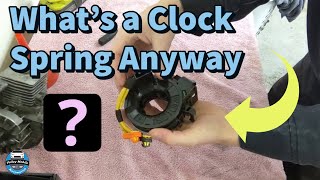
Est. part cost: $15-$150 - Faulty Clock Spring (SIR Coil) ⚪ Low Probability The clock spring contains a coiled ribbon of wires that can break from the constant turning of the steering wheel over many years, causing an open circuit (B0012-04) or high resistance (B0012-0D).
How to confirm: With a professional scan tool, monitor the resistance of the driver deployment loop while turning the steering wheel from lock to lock. The resistance should be stable, typically between 2.2 and 2.7 ohms. If the resistance value spikes, drops out, or becomes erratic, the clock spring is faulty.
Typical fix: Replace the clock spring assembly. This part is also responsible for the horn and steering wheel controls, so a failure of those functions can also point to a bad clock spring.
Est. part cost: $50-$200
Rare But Worth Checking
- Faulty Driver Airbag Module: The internal resistance of the airbag inflator itself can fall out of specification. This is less common than a wiring or connector issue and should be suspected after wiring, connectors, and the clock spring are confirmed to be good.
- Faulty Sensing and Diagnostic Module (SDM): This is the airbag control computer, located under the passenger seat in the Impala. It should only be considered after all other possibilities (wiring, connectors, clock spring, and airbag module) have been exhaustively tested and ruled out. A failure here is very rare.
- Radio Frequency Interference (RFI) from Aftermarket Devices: A GM Preliminary Information Bulletin (PIT5564A) notes that aftermarket USB chargers or phone chargers plugged into the 12-volt power outlets can cause electrical interference. This interference can make the airbag deployment loop resistance fluctuate wildly, setting both high (0D) and low (0E) resistance codes. The fix is to unplug the device and see if the code can be cleared and stays cleared.
Diagnosis Steps
- SAFETY FIRST: Disconnect the vehicle's negative battery terminal and wait at least 10-15 minutes to allow the SIR system's backup power to discharge completely before working on any components.
- Scan the SIR system with a capable scan tool to confirm B0012 is the active fault and note any suffix codes (e.g., 04, 0D, 0E).
- Check for any aftermarket devices (phone chargers, USB adapters) plugged into the 12V power outlets. Unplug them, clear the codes, and see if the fault returns. If it does not, the aftermarket device was the cause.
- Carefully remove the driver's airbag module from the steering wheel. This is typically done by inserting a small screwdriver into access holes on the side or back of the steering wheel to release retaining clips.
- Inspect the airbag connectors. Look closely at the plastic Connector Position Assurance (CPA) clips. If they are broken, cracked, or missing, this is the most likely cause. Replace the CPA and ensure the connector is fully seated.
- If the CPAs are intact, disconnect the airbag connectors. Inspect the terminals for corrosion, contamination, or damage. The terminals are gold-plated for low-energy circuits and require special care.
- Inspect the wiring harness between the airbag and the clock spring for any signs of chafing or damage.
- If no visual faults are found, a professional technician would use a scan tool to monitor the deployment loop resistance in real-time. A normal reading is typically between 2.2 and 2.7 ohms, but should be compared to the specific failure thresholds. Turn the steering wheel lock-to-lock. If the resistance reading fluctuates wildly or goes out of range, the clock spring is defective.
- If resistance is stable, the issue may be poor terminal tension. A technician can use a special tool (J-35616-65B) to test the pin fit at the clock spring connector.
- If all wiring and connectors test good, the fault may be with the airbag module itself or, in very rare cases, the Sensing and Diagnostic Module (SDM).
Parts You'll Likely Need
- Connector Position Assurance (CPA) Retainer
(OEM #13580115)— This is the most frequent failure point for this code on this platform, as identified in GM TSB #08-09-41-002H. The plastic becomes brittle and breaks, causing a poor connection. Note: 13580115 is technically a connector kit that includes the CPA.
Trusted brands: ACDelco, Dorman
OEM price range: $10-$20
Aftermarket price range: $5-$15 - Clock Spring (SIR Coil)
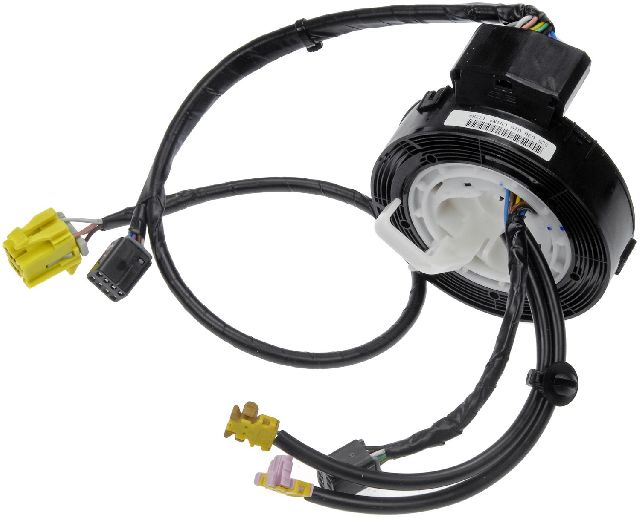
(OEM #23103878 (supercedes multiple older numbers like 19179708, 19258035))— This part contains wiring that flexes with steering wheel rotation and can break internally over time, causing an open or high-resistance circuit.
Trusted brands: ACDelco, Standard Motor Products (CSP349), Dorman (525-026)
OEM price range: $65-$100
Aftermarket price range: $55-$180
Related Codes That Often Appear With This One
- B0013 — B0013 refers to the 'Driver Frontal Deployment Loop Stage 2'. Since both Stage 1 and Stage 2 circuits run through the same clock spring and connectors, a fault in this area (like a bad clock spring or loose connector) can often trigger both codes simultaneously.
Technical Service Bulletins (TSBs) & Recalls
- 08-09-41-002H: Addresses intermittent AIR BAG lamp illumination with various SIR codes, including B0012, and points to inspecting and replacing the Connector Position Assurance (CPA) Retainer. This TSB applies to a very wide range of GM vehicles from 2005-2014.
- PI1474: While for a newer Cadillac, this PI details the diagnostic process for B0012 caused by poor terminal tension in the clock spring connector, a relevant issue for the Impala. It provides the part number for the test probe (J-35616-65B) and the replacement connector pigtail (13580115).
Platform-Specific Known Issues
- TSB #08-09-41-002H: The Definitive Guide: Technical Service Bulletin #08-09-41-002H is the primary document for this issue. It explicitly calls out DTC B0012 and instructs technicians to inspect for a loose, missing, or damaged Connector Position Assurance (CPA) retainer at the SIR module connector as the likely cause across a vast range of GM vehicles, including the 2006-2013 Impala.
- Gold-Plated Terminals: GM notes that the terminals in the SIR system are specially plated (gold) to ensure integrity for the sensitive, low-energy circuits. Technicians are warned not to use standard test probes on them as this can cause damage.
Mechanic-Grade Diagnostic Values
- Driver Frontal Deployment Loop 1 Resistance — expected: 1.3 - 5.1 ohms. Failure: A reading less than 1.3 ohms (sets B0012 0E) or greater than 5.1 ohms (sets B0012 0D) for 120 milliseconds.
- Driver Frontal Deployment Loop 1 Resistance (Alternate Spec) — expected: 1.7 - 4.4 ohms. Failure: A reading less than 1.7 ohms (sets B0012 0E) or greater than 4.4 ohms (sets B0012 0D) for 2 seconds.
- Continuity test of wiring harness segments — expected: < 1.0 ohm. Failure: Resistance higher than 1.0 ohm indicates an open or high resistance in the wire being tested.
- Short to Ground Test — expected: Infinite resistance (OL). Failure: Any reading less than infinite resistance indicates a short to ground in the circuit.
Hidden / Shadow Codes Worth Checking
- B0012 01: Driver Frontal Deployment Loop Stage 1 Short to Battery (see via Professional scan tool (like a Tech 2 or equivalent) capable of reading GM-specific SIR system codes.)
- B0012 02: Driver Frontal Deployment Loop Stage 1 Short to Ground (see via Professional scan tool (like a Tech 2 or equivalent) capable of reading GM-specific SIR system codes.)
- B0012 04: Driver Frontal Deployment Loop Stage 1 Open Circuit (see via Professional scan tool (like a Tech 2 or equivalent) capable of reading GM-specific SIR system codes.)
- B0012 0D: Driver Frontal Deployment Loop Stage 1 Resistance Above Threshold (see via Professional scan tool (like a Tech 2 or equivalent) capable of reading GM-specific SIR system codes.)
- B0012 0E: Driver Frontal Deployment Loop Stage 1 Resistance Below Threshold (see via Professional scan tool (like a Tech 2 or equivalent) capable of reading GM-specific SIR system codes.)
Scan Tool Commands That Help
- Tech 2 / GDS2: View Live Data - SIR Deployment Loop Resistance — This is the primary diagnostic step to confirm the fault. Monitoring the resistance value in real-time while wiggling wires or turning the steering wheel can help isolate intermittent issues in the clock spring or connectors.
- Tech 2 / GDS2: Clear DTCs — After a repair is completed, a professional scan tool is required to clear the fault code from the Sensing and Diagnostic Module (SDM). Standard OBD-II code readers cannot access or clear SIR system codes.
Wiring & Ground Locations
- Sensing and Diagnostic Module (SDM) — Underneath the front passenger seat, below the vehicle carpet.. This is the control unit for the entire airbag system. All deployment loop circuits, including the one for B0012, terminate here. Final diagnostic checks often involve testing continuity back to the SDM connector.
- Inflatable Restraint Steering Wheel Module Coil (Clock Spring) Connector — Inside the steering column, connecting the vehicle harness to the clock spring assembly.. This is a common point of failure due to poor terminal tension. GM issued a bulletin (PIT5564A) related to testing terminal tension at this connector before replacing the clock spring.
- G301 — On the floor, to the left of the driver's seat.. This is a major interior ground point. While not directly in the deployment loop, a poor ground connection here can cause a variety of unpredictable electrical issues in interior modules.
- G302 — On the floor, to the right of the front passenger's seat.. This is another major interior ground point, located near the SDM. A poor ground here could potentially affect the SDM's operation.
Real Owner Repair Stories
- Chevrolet Forum user 'maxs' (Unknown year Chevrolet) — Initially had B0012-04 (open circuit), replaced clock spring. Then got B0012-0E and B0013-0E (low resistance).
❌ Tried (didn't work) Replacing the clock spring (which fixed the initial open circuit but led to a new code).
✅ What actually fixed it The 4-wire plug at the clock spring was not making a good connection. The user cleaned the contacts with a needle and slightly bent the copper contacts on the connector down to increase tension. This resolved the low resistance codes and the airbag light went out.
OEM Part Supersession History
19179708, 19258035→23103878— Part consolidation and potential design updates over the vehicle's production run.
Heads up: The latest part number, 23103878, is generally backward compatible with vehicles that used the older numbers. Always verify fitment with a VIN before purchasing.
Helpful Videos



We Have This Part in Stock


The information in this article is provided for general reference and educational purposes only. Vehicle specifications, procedures, and part compatibility can vary by production date, trim level, and region. Always consult your vehicle's factory service manual and verify part numbers before purchasing or performing repairs. Safety-critical components such as airbags, seat belts, and braking systems should be installed by a qualified professional.
- Chevrolet IMPALA:
- 🎬 Helpful Videos
- 🛍️ Shop This Part
- What's Unique About the 2006-2013 Chevrolet IMPALA
- Diagnostic Flowchart
- Symptoms You May Notice
- Most Likely Causes
- Rare But Worth Checking
- Diagnosis Steps
- Parts You'll Likely Need
- Related Codes That Often Appear With This One
- Technical Service Bulletins (TSBs) & Recalls
- Platform-Specific Known Issues
- Mechanic-Grade Diagnostic Values
- Hidden / Shadow Codes Worth Checking
- Scan Tool Commands That Help
- Wiring & Ground Locations
- Real Owner Repair Stories
- OEM Part Supersession History
- 🎟️ Get 5% Off