

OBD-II Code B0007: Driver Seat Position Sensor Circuit
What B0007 means, why it triggers, and how to fix it
- Code B0007 disables the entire airbag system, meaning zero airbags will deploy in a collision until the fault is repaired.
- Inspect the yellow wiring harness under the driver's seat first; over 80% of B0007 codes stem from stretched wires or loose connectors rather than a failed sensor.
- Never probe yellow airbag connectors with a multimeter without disconnecting the battery and waiting 10 minutes to prevent accidental deployment.
- Replacing the seat sensor on brands like Hyundai and Kia requires a mandatory Occupant Classification System (OCS) recalibration using a professional $400+ scan tool.
What Does B0007 Mean?

Code B0007 indicates the airbag control module (SRS or SDM) detects an electrical fault in the driver's seat position sensor circuit. This sensor tells the system how close the driver is to the steering wheel, determining the deployment force of the airbag. When this circuit fails, the system disables the airbags as a failsafe and illuminates the dashboard warning light.
Technical definition: The SAE/ISO definition for B0007 is 'ISO/SAE Reserved,' meaning manufacturers define it differently. While most use it for a 'Driver Seat Position Sensor Circuit' fault, Isuzu and Opel use it for an 'Immobilizer Control Module Communication Error,' and some GM vehicles use it for a 'Park Switch Circuit' issue. Always verify the code definition for your specific VIN.
Can I Drive With B0007?

No — Do Not Drive. It is not safe to drive with an active B0007 code. The airbag control module disables the entire Supplemental Restraint System (SRS) to prevent accidental deployment. No airbags will deploy in a crash, significantly increasing the risk of serious injury.
Common Causes

- Damaged or frayed wiring under the driver's seat (Very Common) — The wires for the seat position sensor sit under the seat and are easily stretched, pinched, or severed by items stored there or by repeated seat movement.
- Poor electrical connection or corroded connector (Common) — The main yellow connector plug under the seat loosens over time, or the metal pins inside corrode from moisture, interrupting the electrical signal.
- Object lodged under the seat (Common) — A water bottle, tool, or umbrella rolling under the seat presses against the sensor, its wiring, or the main connector, forcing an open circuit.
- Faulty driver seat position sensor (Less Common) — The magnetic Hall-effect sensor or contact switch fails internally over time, sending incorrect signals or no signal at all.
- Bad ground connection for the SRS module (Rare) — A corroded ground strap for the supplemental restraint system introduces voltage drops, leading to various SRS communication errors.
- Faulty Occupant Classification System (OCS) Module (Rare) — In vehicles where seat position data routes through an OCS sub-module, an internal module failure triggers codes for its related sensors.
Symptoms
- Airbag or SRS warning light remains illuminated — The dashboard light depicting a person with an airbag (or the letters 'SRS') stays on continuously after the initial startup check.
- Message on the instrument cluster — The driver information center displays a text warning such as 'Service Airbag System' or 'Restraint System Fault'.
- Power seat functions disabled — The vehicle's body control module disables power seat adjustment features as a precaution when it detects a seat-related sensor fault.
- Code B0007 stored in the system (scan-tool only — no driver-felt sign) — The B0007 code appears when scanning the vehicle with an OBD-II tool capable of reading Body ('B') codes.
Diagnostic Flowchart

Tap your situation to follow the diagnostic path that matches what you're seeing on this code.
Common Fixes & Costs
- Repairing damaged wiring under the seat — Parts: $10-$30, Labor: $120-$300, ~1.5 hr book time (Intermediate)
- Cleaning or repairing the electrical connector — Parts: $0-$25, Labor: $100-$200, ~0.8 hr book time (DIY)
- Replacing the driver's seat position sensor — Parts: $70-$350, Labor: $150-$350, ~1.2 hr book time (Intermediate)
- Replacing the entire seat cushion/track assembly — Parts: $500-$1500, Labor: $200-$400, ~2 hr book time (Professional)
- Replacing the Airbag Control Module — Parts: $250-$800, Labor: $150-$350, ~2.5 hr book time (Professional)
DIY vs Professional
- Inspecting and Cleaning Connectors — Beginner:
- Repairing Damaged Wiring — Beginner:
- Replacing the Seat Position Sensor — Beginner:
- Replacing the Airbag Control Module — Beginner:
Used vs. New Parts: Buying Guide
When a used part is worth it: A used sensor from a reputable recycler is cost-effective if the new part is expensive. Ensure the donor vehicle did not have a front-end collision or water damage.
Donor-vehicle mileage cap: roughly under 100000 miles for the part to have meaningful remaining life.
Donor quality checklist:
- Verify the donor vehicle was not scrapped due to a collision that damaged the seat electronics.
- Match the part number exactly, as connectors change mid-generation.
- Inspect the part for physical damage, cut wires, or corrosion.
Decision logic:
- If The new OEM or quality aftermarket sensor costs less than $100 → Buy new. The small savings on a used part isn't worth the risk of premature failure.
- If The vehicle has over 150K miles and the new part exceeds $250 → A used part from a low-mileage donor is an acceptable risk.
- If The sensor is integrated into a larger assembly like the seat track → Favor a new part. Replacing the entire assembly is labor-intensive, making repeat labor costly if a used part fails.
Warranty tradeoff: Salvage yards offer 30-90 day warranties covering only the part. New aftermarket parts offer 1-year to lifetime warranties. New OEM parts carry a 1-year/12,000-mile warranty.
Worst-case if a used part fails: $150-$350 if a used sensor fails, requiring a new part plus repeat labor.
What Happens If You Wait — Timeline
- 0 Seconds: The SRS module detects the circuit fault, illuminates the airbag warning light, and disables the entire airbag system. (MPG impact: 0%% · Added cost: $0)
- Ongoing: The vehicle operates normally, but the primary safety system remains inactive. (MPG impact: 0%% · Added cost: $0)
- Next State Inspection: The vehicle fails its annual safety inspection, preventing registration renewal. (MPG impact: 0%% · Added cost: $35-$70 in failed inspection fees.)
- In an Accident: A collision occurs, and no airbags deploy. The risk of severe injury or death increases dramatically. (MPG impact: 0%% · Added cost: Infinite.)
Cost of Not Fixing It
- Immediately: Complete deactivation of the Supplemental Restraint System (SRS). No airbags deploy for any occupant in any collision. (Added cost: N/A - This is a severe safety risk.)
- Next State Inspection: Guaranteed failure of the vehicle's safety inspection in states like NY, PA, VA, and TX, preventing registration renewal. (Added cost: $35-$70 for the failed inspection fee, plus the repair cost.)
- In Case of an Accident: Massively increased risk of serious injury or death. Potential for insurance claim denial due to operating a vehicle with a known safety system fault. (Added cost: Infinite.)
Diagnosis Steps
- Read the Full Diagnostic Report
Use an OBD-II scanner capable of reading Body (B) codes to confirm B0007 is the active code. Note any communication codes (like U0007), as they indicate a network failure rather than a sensor failure.
Tools: OBD-II Scanner (with SRS/Body code capability) (Beginner) - Visually Inspect Under the Driver's Seat
Look for objects pressing against wires or connectors. Inspect the yellow wiring loom for cuts, pinches, frayed insulation, or stretched sections caused by seat movement.
Tools: Flashlight (Beginner) - Inspect the Sensor Connector
Disconnect the battery and wait 10 minutes for the SRS system to discharge. Unplug the main yellow electrical connector under the seat. Check for corrosion, bent pins, or loose wires. Re-seat the connector firmly.
Tools: Flashlight, Socket Set (for battery) (Intermediate) - Analyze Live Sensor Data
Use a professional scan tool to view the live data stream for the Driver Seat Position Sensor. The data must change state (e.g., 'Forward' to 'Rearward') as you slide the seat. If the data remains stuck, the issue is isolated to the sensor, wiring, or connector.
Tools: Advanced OBD-II Scanner with Live Data (Advanced) - Test the Circuit Wiring
Using a multimeter and wiring diagram, check for continuity on the signal and ground wires between the sensor connector and the SRS module. A reading under 1.0 ohm indicates good continuity. Test for a short to ground (should read Open Line) and a short to power (should read 0V).
Tools: Digital Multimeter, Vehicle-specific wiring diagram (Advanced) - Test the Seat Position Sensor
If wiring is intact, test the sensor. For a two-wire switch, check for continuity (Open Line in one position, under 5 ohms in the other). For a three-wire Hall-effect sensor, verify it receives a 5V reference and ground, then monitor the signal wire voltage toggle as the seat moves.
Tools: Digital Multimeter, Repair manual (Advanced) - Clear Codes and Verify Repair
Reconnect the battery, clear the B0007 code with the scanner, and turn the ignition on. Move the seat fully forward and backward several times to ensure the code does not return.
Tools: OBD-II Scanner (Beginner)
When This Code Triggers (Freeze-Frame Conditions)
- SRS Warning Lamp Status: ON (The code was set and the warning light was commanded on.)
- System Voltage: 11.5-14.5V (The fault occurred during normal vehicle operation, not during a low-voltage event.)
- Ignition Cycle Counter at Fault: 1-255 (Indicates how many times the car has been started since the fault was first detected.)
- Fault Type: Open/High Resistance, Short to Ground, or Short to Power (Specifies the electrical nature of the fault detected by the SRS module.)
Related Codes
- B0008 — The direct counterpart to B0007, indicating a fault in the passenger-side seat position sensor circuit.
- B0012 — Indicates a fault in the driver's side seat belt pretensioner. If both B0007 and B0012 are present, the shared main connector under the seat is the likely culprit.
- B0081 — Refers to a fault in the Passenger Occupant Classification System (OCS) sensor. A fault in the main under-seat connector triggers codes for both systems.
- U0007 — A high-speed CAN communication bus error. If a 'U' code appears with B0007, diagnose the 'U' code first, as the B0007 is a symptom of the network failure.
Climate & Environmental Factors
- High Humidity / Water Intrusion: Moisture from rain, snow, or high ambient humidity enters under-seat connectors, causing pin corrosion and failed electrical signals.
- Extreme Cold: Freezing temperatures make plastic connectors and wire insulation brittle. Metal pins contract, leading to intermittent connections.
- Road Salt: Salt-laden moisture tracked into the vehicle accelerates corrosion on exposed electrical terminals and ground points under the seat.
How to Talk to a Mechanic About This Code
Say this: "I have an airbag warning light on, and my scanner shows code B0007 for the driver's seat position sensor circuit. Since the most common cause is wiring, please start by inspecting the harness and connector under the driver's seat before quoting a new sensor."
This directs the technician to the most likely and least expensive failure point first, preventing them from immediately quoting a costly sensor replacement.
Avoid saying:
- 'My airbag light is on, can you just fix it?'
- 'I need a new airbag sensor.'
- 'Just do whatever it takes to turn the light off.'
Questions to ask before authorizing the repair:
- Did you find damage to the wiring or connector, or did you test the sensor itself?
- If the wiring is bad, will you use solder-seal connectors for the repair?
- If the sensor needs replacement, does my vehicle require a recalibration procedure afterward?
- What is the warranty on this specific repair?
Where to Take It: Dealer vs Independent vs Chain
- Dealer:
Recommended if your vehicle requires mandatory recalibration or if the fault is traced to a complex internal module.
Best for: Vehicles under warranty or covered by a recall., Complex cases requiring mandatory recalibration (e.g., Hyundai/Kia)., Known manufacturer-specific quirks.
Downsides: Highest labor rates., May default to replacing an entire expensive assembly instead of attempting a wiring repair. (Typical cost: +50% vs. baseline) - Independent Shop:
Best fit for most B0007 scenarios. A reputable independent shop with ASE-certified technicians handles common wiring faults cost-effectively.
Best for: Most out-of-warranty vehicles., Diagnosing and repairing common wiring and connector issues., Simple sensor replacements.
Downsides: Expertise with SRS systems varies; look for ASE certifications., May lack the specific tools required for recalibration on certain models. (Typical cost: +0% vs. baseline) - Chain Shop:
AVOID. Airbag system repair is a safety-critical task beyond the scope of chain shops.
Best for: Simple maintenance like oil changes and tires.
Downsides: Technicians lack specialized training for SRS diagnostics., High pressure to sell parts leads to misdiagnosis., Not equipped to work on safety restraint systems. (Typical cost: -10% vs. baseline)
When to Walk Away From the Repair
If the estimated repair cost exceeds 40-50% of the car's private-party value, consider selling it as-is or trading it in.
- Car worth $4000, fix is $1500: Borderline. Get a second opinion, as a wiring fix is much cheaper.
- Car worth $15000, fix is $450: Fix it. This is a low-cost repair for a critical safety feature.
- Car worth $2500, fix is $1500: Walk away. The vehicle's value is too low to justify an expensive safety system repair.
What Scan Tool You Need for This Code
Minimum: A scanner that reads and clears Supplemental Restraint System (SRS) or Body (B) fault codes.
A standard $20 OBD-II reader only accesses Powertrain (P) codes. It cannot communicate with the SRS module to see B0007 or turn off the airbag light.
Budget: BlueDriver Pro or Autel AutoLink AL619 (~$60-100) — Reads and clears SRS codes, shows freeze-frame data, and provides live data streams to watch the sensor's status as you move the seat.
Mid-range: Foxwell NT630 Plus or Innova 5610 (~$150-350) — Offers budget features plus enhanced diagnostics. Some models offer the 'zero point calibration' function required for Toyota, Hyundai, and Kia.
Professional: Autel MaxiCOM MK808/MK900-series or XTOOL D7/D8 (~$450-800) — Provides full bidirectional control and guaranteed access to the SRS/OCS recalibration procedures needed for modern vehicles.
Rent vs buy: Auto parts stores do NOT rent out scanners with SRS capabilities due to liability. Buying a budget or midrange SRS-capable scanner is necessary for DIY diagnosis.
How to Clear the Code After You Fix It
- Ensure the physical fault (broken wire, bad sensor) is repaired.
- Reconnect the battery.
- Use an OBD-II scan tool with SRS/Airbag capability to access the SRS module.
- Select 'Clear Fault Codes' or 'Erase DTCs'.
- Cycle the ignition off, then back on. The airbag light illuminates for a 6-second self-test and then turns off.
Drive cycle: No drive cycle is required. The SRS system performs a self-test every time the ignition turns on. If the fault is fixed and cleared, the light stays off.
Readiness monitors affected: None directly. However, disconnecting the battery resets all emissions-related readiness monitors, requiring a separate drive cycle to pass an emissions test.
Watch out for:
- Using a basic engine-only code reader that cannot communicate with the SRS module.
- Assuming disconnecting the battery clears the airbag code.
- Clearing the code without fixing the physical problem, causing the light to return immediately.
Will This Fail Emissions / State Inspection?
No — by itself this code doesn't fail OBD inspection (but it can keep readiness monitors from setting, which causes a separate fail).
- California: An airbag light does NOT cause a failure of the California Smog Check, but the vehicle remains unsafe.
- New York: An illuminated airbag warning light is an automatic failure of the annual safety inspection.
- Pennsylvania: The vehicle fails its annual safety inspection if the SRS/airbag warning light is on.
- Texas: An illuminated airbag light causes the vehicle to fail the annual safety inspection.
- Virginia: An active airbag warning light is cause for rejection during the state safety inspection.
Most Commonly Affected Vehicles
- Chevrolet Silverado (2007-2014) — Extremely common due to the wiring harness under the seat stretching. Check for updated pigtail connector part numbers.
- GMC Sierra (2007-2014) — Shares the same platform and wiring design as the Silverado. The main under-seat connector is a frequent failure point.
- Nissan Altima (2013-2018) — Known for Occupant Classification System (OCS) sensor failures. Dealers often quote replacing the entire seat bottom assembly because the sensor is integrated.
- Ford F-150 (2009-2014) — Inspect the large multi-pin connector block under the seat for pushed-out pins or corrosion where the seat harness connects to the body harness.
- Chrysler/Dodge Grand Caravan, Town & Country (2008-2016) — The wiring harness for seat-related sensors gets pinched or severed by the seat recline mechanism.
- Hyundai Elantra, Santa Fe (2014-2018) — Replacing any seat component requires a mandatory 'zero point reset' and recalibration procedure using a compatible scan tool.
- Subaru Outback, Legacy (2005-2009) — A cracked solder joint on the overhead console's passenger airbag status indicator light board causes a general SRS fault, mimicking a seat sensor issue.
- Toyota Camry (2007-2017) — A 'B' code triggers from a communication fault with the immobilizer system. Check all stored DTCs, not just B0007.
Manufacturer-Specific Notes
- General Motors (Chevrolet/GMC): B0007 sometimes indicates 'Park Switch Circuit Low Voltage' related to the gear shifter. GM service bulletin #08-09-41-002H addresses intermittent airbag lights caused by poor terminal connections in under-seat SRS connectors.
- Isuzu / Opel / Vauxhall: B0007 means 'Immobilizer Control Module/ECM Communication Error - No ECM Signal'. This is a security issue unrelated to the airbag system and causes a no-start condition.
- Hyundai / Kia: Requires a mandatory Occupant Classification System (OCS) recalibration with a scan tool anytime a seat sensor or cushion is replaced. Skipping this guarantees the airbag light returns.
- Ford: Ford's standard Safety Restraint System warranty covers sensors and wiring for 5 years or 60,000 miles. Check your warranty status before paying out of pocket.
- Nissan: NHTSA Campaign #16V244000 recalled millions of vehicles for faulty OCS systems that misclassified adults. The fix involves software reprogramming or replacing the OCS ECU.
Real Owner Stories
2007 Chevy Silverado, 200K miles - The Classic Wiring Fix
Owner reported a constant 'Service Air Bag' message on the dash.
Outcome: The owner disconnected the battery, cleaned the connector, re-seated it, and added slack to the wiring with a zip tie. The code cleared and did not return. Cost: $0.
Lesson: Always check the physical wiring and connectors under the seat first. This is the most common cause on GM trucks.
2013 Nissan Altima - The Misdiagnosis and Expensive Repair
Airbag light came on intermittently, then stayed on with code B0007.
Outcome: A dealer diagnosed a failed Occupant Classification System (OCS) control unit integrated into the seat cushion. The entire seat bottom required replacement, costing over $1,200.
Lesson: On Nissan models, the seat position sensor is part of a complex OCS assembly. If a wiring fix fails, suspect the integrated module before buying individual parts.
2008 Subaru Outback - The Unusual Root Cause
Airbag light was on with code B0007. The owner found no issues with the under-seat wiring.
Outcome: The owner found a cracked solder joint on the circuit board, re-soldered it, and the airbag light went out. Cost: $0.
Lesson: Research manufacturer-specific quirks. For 2005-2009 Subarus, a general SRS fault stems from a bad solder joint in the overhead console.
How to Prevent This Code From Triggering
- Never store items under the front seats (Daily habit) — Objects roll and snag, stretch, or crush the delicate SRS wiring and connectors, causing open or short circuits.
- Secure loose wiring with zip ties (Once per vehicle) — Securing excess factory wiring away from the seat track prevents it from getting pinched or stretched during seat movement.
- Be careful when vacuuming (Every cleaning) — Aggressively shoving a vacuum nozzle under the seat dislodges connectors or damages brittle wires.
- Periodically inspect under-seat connectors (Once per year) — A quick visual check catches corrosion early. Cleaning it with electrical contact cleaner prevents future fault codes.
Frequently Asked Questions
Can I fix the B0007 code myself?
Simple fixes like removing objects or inspecting connectors are DIY-friendly. Working on airbag wiring carries a risk of accidental deployment. If you lack electrical diagnostic experience, take the vehicle to a professional.
Will my airbags still deploy with a B0007 code?
No. The SRS control module disables the entire airbag system when it detects a critical fault like B0007. Assume no airbags will deploy in an accident until the light is off.
Why did the airbag light come on after I moved my seat?
Moving the seat tugs on damaged or frayed wires in the sensor circuit underneath. This movement causes a momentary short or open circuit, triggering the B0007 code. This is a classic symptom of a wiring problem.
What is a common misdiagnosis for code B0007?
A common mistake is replacing the seat position sensor without testing the wiring first. Since damaged wiring under the seat is the most frequent cause, a new sensor rarely fixes the problem. Always verify wire continuity before buying parts.
Do I need to recalibrate the seat sensor after replacing it?
On many modern vehicles, especially Hyundai and Kia, yes. The Occupant Classification System (OCS) requires a recalibration procedure using a professional scan tool after replacing seat components. Failing to do this causes the code to return immediately.
How much does it cost to diagnose a B0007 code?
A professional diagnostic scan and circuit test typically costs between $100 and $200. Shops often apply this diagnostic fee toward the final repair cost if you authorize the work.
Is a B0007 code the same as a P0007 code?
No. B0007 is a Body code indicating a safety system fault. P0007 is a Powertrain code for a fuel shutoff valve circuit issue.
Will disconnecting the battery clear an airbag code?
No. SRS fault codes are stored in non-volatile memory and survive battery disconnects. You must use a specialized OBD-II scanner capable of communicating with the SRS module to clear the code.
Is B0007 a serious code?
Yes. It indicates your vehicle's primary safety system is disabled. In a collision, the airbags will not deploy, leading to severe injury or death.
What color is the wiring for the airbag system?
Industry-standard wiring and connectors for the Supplemental Restraint System (SRS) are bright yellow or orange. This visually warns technicians they are handling a sensitive, potentially dangerous circuit. Never probe yellow connectors without disconnecting the battery first.
Key Takeaways
- Code B0007 disables the entire airbag system, meaning zero airbags will deploy in a collision until the fault is repaired.
- Inspect the yellow wiring harness under the driver's seat first; over 80% of B0007 codes stem from stretched wires or loose connectors rather than a failed sensor.
- Never probe yellow airbag connectors with a multimeter without disconnecting the battery and waiting 10 minutes to prevent accidental deployment.
- Replacing the seat sensor on brands like Hyundai and Kia requires a mandatory Occupant Classification System (OCS) recalibration using a professional $400+ scan tool.
Helpful Videos
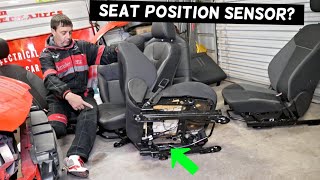
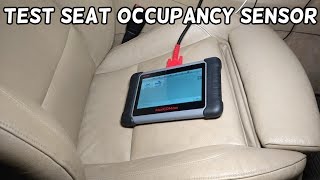

The information in this article is provided for general reference and educational purposes only. Vehicle specifications, procedures, and part compatibility can vary by production date, trim level, and region. Always consult your vehicle's factory service manual and verify part numbers before purchasing or performing repairs. Safety-critical components such as airbags, seat belts, and braking systems should be installed by a qualified professional.
- 🎬 Helpful Videos
- What Does B0007 Mean?
- Can I Drive With B0007?
- Common Causes
- Symptoms
- Diagnostic Flowchart
- Common Fixes & Costs
- DIY vs Professional
- Used vs. New Parts: Buying Guide
- What Happens If You Wait — Timeline
- Cost of Not Fixing It
- Diagnosis Steps
- When This Code Triggers (Freeze-Frame Conditions)
- Related Codes
- Climate & Environmental Factors
- How to Talk to a Mechanic About This Code
- Where to Take It: Dealer vs Independent vs Chain
- When to Walk Away From the Repair
- What Scan Tool You Need for This Code
- How to Clear the Code After You Fix It
- Will This Fail Emissions / State Inspection?
- Most Commonly Affected Vehicles
- Manufacturer-Specific Notes
- Real Owner Stories
- 2007 Chevy Silverado, 200K miles - The Classic Wiring Fix
- 2013 Nissan Altima - The Misdiagnosis and Expensive Repair
- 2008 Subaru Outback - The Unusual Root Cause
- How to Prevent This Code From Triggering
- Frequently Asked Questions
- Can I fix the B0007 code myself?
- Will my airbags still deploy with a B0007 code?
- Why did the airbag light come on after I moved my seat?
- What is a common misdiagnosis for code B0007?
- Do I need to recalibrate the seat sensor after replacing it?
- How much does it cost to diagnose a B0007 code?
- Is a B0007 code the same as a P0007 code?
- Will disconnecting the battery clear an airbag code?
- Is B0007 a serious code?
- What color is the wiring for the airbag system?
- Key Takeaways
- 🎟️ Get 5% Off