

OBD-II Code B0006: Driver-Side Airbag Firing Circuit Problem
What B0006 means, why it triggers, and how to fix it
- Code B0006 disables the driver's airbag entirely, meaning it will not deploy in a crash; do not drive the vehicle.
- A failed clock spring causes over 80% of B0006 codes and typically disables the horn and steering wheel buttons simultaneously.
- Inspect connector C221 on 2003-2014 GM trucks before buying parts, and check for the 15-year extended clock spring warranty on 2007-2018 Jeep Wranglers.
- Disconnecting the battery will not clear a B0006 code; you must use an SRS-capable scan tool to reset the hard fault after completing the physical repair.
What Does B0006 Mean?
Code B0006 signifies that the vehicle's Supplemental Restraint System (SRS) module has detected an open circuit or high resistance in the driver's frontal airbag deployment loop (Loop 1). This prevents the airbag from receiving the electrical signal needed to deploy during a collision. As a safety measure, the SRS module illuminates the airbag warning light and disables the entire system until the fault is repaired.
Technical definition: The official SAE/ISO definition for B0006 is "Driver Frontal Deployment Loop Open." This DTC sets when the Sensing and Diagnostic Module (SDM) detects that resistance in the driver's steering wheel airbag deployment circuit (Squib 1) exceeds a specified threshold (typically over 4.0-5.0 ohms) for a calibrated period (e.g., 500 milliseconds).
Can I Drive With B0006?
No — Do Not Drive. Do not drive the vehicle. The B0006 code indicates the driver's airbag is disabled and will not deploy in a crash. According to the NHTSA, frontal airbags reduce driver fatalities by up to 31% in purely frontal crashes. Driving with this fault removes a critical safety layer and significantly increases the risk of severe injury or death.
Common Causes
- Faulty Clock Spring (Spiral Cable) (Very Common) — The clock spring is a coiled ribbon cable behind the steering wheel that maintains electrical contact for the airbag, horn, and steering wheel controls. Constant flexing fatigues and breaks the internal wires, creating an open circuit that triggers code B0006.
- Damaged or Corroded Wiring/Connectors (Common) — Airbag system connectors (typically yellow) become loose, corroded, or accidentally dislodged during unrelated maintenance. Wires also pinch or chafe. On 2003-2014 GM trucks, connector C221 behind the driver's kick panel is a notorious failure point.
- Faulty Driver's Airbag Module (Inflator/Squib) (Less Common) — The airbag unit contains a small initiator called a squib, which relies on an internal filament. This filament breaks over time, creating an open circuit directly within the module.
- Post-Accident 'Crash Data' Lockout (Uncommon) — If the vehicle experiences a collision—even a minor one where airbags do not deploy—the SRS module stores permanent 'crash data.' This disables the system and requires the module to be professionally reset or replaced.
- Faulty Supplemental Restraint System (SRS) Control Module (Rare) — The main computer controlling the airbag system fails internally. Suspect the SRS module only after definitively ruling out the wiring, connectors, clock spring, and airbag module.
- Low Vehicle Battery Voltage (Rare) — The SRS module is highly sensitive to system voltage. A failing battery, a recent jump-start, or disconnecting the battery for service sets a temporary 'latching' fault code requiring an SRS-capable scan tool to clear. 🎬 Watch: How to read and erase airbag trouble codes
- Improperly Installed Aftermarket Components (Rare) — Installing an aftermarket steering wheel, stereo, or remote start system triggers a B0006 code if the airbag wiring is damaged, left disconnected, or bypassed with an incorrect resistor.
Symptoms
- Illuminated or Flashing Airbag Warning Light — The primary symptom. The dashboard airbag icon remains solid red or amber. On some models (like Ford), it flashes a specific diagnostic sequence before staying on permanently.
- Horn, Cruise Control, or Radio Buttons Not Working — Because the clock spring houses wiring for multiple steering wheel components, the simultaneous failure of the horn or steering wheel controls alongside the airbag light confirms a bad clock spring.
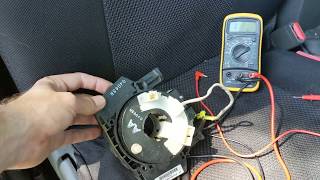
- Intermittent Airbag Light with Steering Wheel Movement — If the wire inside the clock spring is frayed but not completely severed, the airbag light flickers on and off as you turn the steering wheel, matching the moments the circuit opens and closes. 🎬 See how to diagnose a faulty airbag clock spring
- Noise from Steering Column — A physically broken clock spring creates a rubbing, grinding, clicking, or scraping sound when the steering wheel is turned.
Diagnostic Flowchart
Tap your situation to follow the diagnostic path that matches what you're seeing on this code.
Common Fixes & Costs
- Replace Clock Spring
— Parts: $70-$450, Labor: $130-$250, ~1.5 hr book time
(Intermediate)
: OEM
: OEM
: OEM - Repair or Clean Wiring Connector
— Parts: $10-$50, Labor: $100-$200, ~1 hr book time
(Intermediate)
: OEM - SRS Module Crash Data Reset — Parts: $50-$100, Labor: $50-$100, ~1 hr book time (Intermediate)
- Replace Driver's Airbag Module — Parts: $700-$2000, Labor: $100-$150, ~1 hr book time (Professional)
- Replace SRS Control Module — Parts: $200-$1200, Labor: $100-$300, ~1.5 hr book time (Professional)
Used vs. New Parts: Buying Guide
When a used part is worth it: Buying a used clock spring is strongly discouraged. It is a wear-and-tear part, and a used unit has an unknown history and limited remaining lifespan. Given the critical safety function, the modest cost savings do not justify the risk. Consider a used part only for an older, low-value vehicle where a new part is unavailable.
Donor-vehicle mileage cap: roughly under 50000 miles for the part to have meaningful remaining life.
Donor quality checklist:
- Verify the exact OEM part number matches; slight variations are not compatible.
- Ensure the used part comes with a return policy or functional warranty.
- Avoid parts from vehicles with flood or fire damage, as moisture compromises internal electronics.
Decision logic:
- If The part is a clock spring. → Purchase a new OEM or high-quality aftermarket part (e.g., Dorman, SMP) due to its wear-and-tear nature and safety-critical role.
- If The part is an airbag module or SRS computer. → New is safest. A used module is viable ONLY if sourced from a reputable recycler, guaranteed free of crash data, and programmed to your vehicle's VIN by a professional.
- If Budget is the absolute primary concern on a high-mileage vehicle. → A low-mileage used clock spring is a possibility, but accept the risk of premature failure and repeated labor costs.
Warranty tradeoff: Used clock springs offer a 30-90 day warranty at best. New aftermarket parts carry a 1-year to limited lifetime warranty. New OEM parts carry a 1-year warranty.
Worst-case if a used part fails: $200-$400 if a used clock spring fails shortly after installation, requiring repeat labor costs plus the cost of another part.
What Happens If You Wait — Timeline
- Instant (First Key-On with Fault): The SRS module detects the open circuit during its self-test. The airbag warning light illuminates and stays on. The driver's airbag is immediately disabled and will not deploy. (MPG impact: 0%% · Added cost: $0)
- Ongoing: The primary safety risk is constant. The vehicle fails any state safety inspection that checks for an active airbag light, leading to fines or registration issues. (MPG impact: 0%% · Added cost: $50-$200 in potential fines and re-inspection fees.)
- 1-6+ Months (If Caused by Fraying Wire): If the cause is a frayed wire in the clock spring, continued steering causes it to short against other wires in the steering column. This blows the horn fuse or sends stray voltage that damages the SRS control module. (MPG impact: 0%% · Added cost: $5 (fuse) to $1500 (SRS module replacement and programming).)
- At the time of an accident: A frontal collision occurs. The driver's airbag does not deploy. The driver is at a significantly higher risk of severe or fatal head and chest injury. A potential personal injury lawsuit is compromised if it's proven you knowingly drove with a disabled safety system. (MPG impact: 0%% · Added cost: Potentially thousands in medical bills and reduced legal settlement value.)
Cost of Not Fixing It
- Immediate: Total loss of driver's airbag functionality. In a frontal collision, the airbag will not deploy, significantly increasing the risk of severe head and chest injuries or death. (Added cost: N/A)
- Ongoing: Automatic failure of state safety inspections in jurisdictions that mandate them, leading to an inability to legally register the vehicle. (Added cost: $50-$200 in fines and re-inspection fees.)
- Long-Term: A frayed wire in a failing clock spring shorts to another circuit in the steering column, causing further electrical issues or damaging the SRS control module itself. (Added cost: $300-$1500 if the SRS module is damaged.)
Diagnosis Steps
- Retrieve SRS Fault Codes
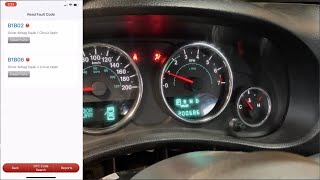
Use an OBD-II scanner capable of accessing the SRS/Restraint Control Module. Confirm B0006 is the primary code and document related codes (e.g., B0005, B0022, B0044) to pinpoint the fault.
Tools: SRS-capable OBD-II Scanner (Beginner) - Perform a Functional Check
Test the horn, cruise control, and all steering wheel-mounted buttons. If any of these are inoperative, the clock spring is the definitive cause.
Tools: None (Beginner) - Monitor Live Data
Using an advanced scan tool, view live data for 'Driver Squib Circuit Resistance'. Slowly turn the steering wheel lock-to-lock. If the resistance spikes above 4.5-5.0 ohms, reads 'Open', or reads 'High', the clock spring is faulty.
Tools: Advanced SRS-capable OBD-II Scanner (Intermediate) - Visually Inspect Wiring
Inspect all accessible yellow airbag wiring harnesses under the driver's seat and at the base of the steering column. Look for loose connectors, chafed wires, or corrosion. On GM trucks, specifically check connector C221 behind the driver's kick panel.
Tools: Flashlight, Trim Removal Tools (Intermediate) - PRO TIP: Isolate with a Diagnostic Resistor
Disconnect the battery and wait 30 minutes. Plug a 2.0-3.0 ohm airbag diagnostic resistor into the main vehicle harness connector at the base of the steering column, bypassing the clock spring. Reconnect the battery and clear codes. If B0006 disappears, the fault is in the clock spring or airbag module.
Tools: Airbag Diagnostic Resistor Set, SRS-capable OBD-II Scanner (Advanced) - PRO TIP: Pinpoint Resistance Testing (Battery Disconnected)
SAFETY PRECAUTION: Disconnect the negative battery terminal and wait 30 minutes. Disconnect the airbag connector at the base of the steering column. Measure the resistance of the two pins leading up through the clock spring. A reading of 'OL' (Over Limit) confirms an open circuit in the clock spring.
Tools: Socket Set, Digital Multimeter (Advanced) - Test the Airbag Module Resistance (Professional Only)
EXTREME CAUTION: Stop DIY and tow to a shop if you reach this step. Professionals will disconnect the connector directly at the driver's airbag module and measure resistance across the squib pins. An 'OL' reading indicates a faulty airbag module.
Tools: Digital Multimeter (Professional) - PRO TIP: Waveform Analysis with Oscilloscope
For intermittent faults, back-probe the deployment loop wires at the SRS module connector. Monitor the voltage pattern while turning the steering wheel. A failing clock spring shows a sudden spike or dropout in the waveform.
Tools: Automotive Oscilloscope, Back-probe Pins (Professional)
When This Code Triggers (Freeze-Frame Conditions)
- Fault Status: Present, Confirmed (Fault is actively detected during the key-on self-test.)
- System Voltage: 11.5-14.5V (Fault occurred under normal battery/charging system voltage.)
- Ignition Cycles Since Fault: 0 (Indicates the fault was detected on the current drive cycle.)
- Driver Squib Resistance: > 5.0 Ohms or 'OPEN' (The direct data parameter that triggered the fault code.)
Related Codes
- B0005 — This code, 'Driver Deployment Loop Resistance Low', is the direct opposite of B0006. It indicates a short circuit. A failing clock spring has wires that fray and touch each other, causing resistance to drop and trigger B0005, sometimes intermittently with B0006.
- B0022 — This code indicates a short circuit in the driver's airbag deployment loop. An intermittent wiring fault or failing clock spring causes the circuit to alternate between open (B0006) and shorted (B0022).
- B0044 — This is the 'open circuit' code for the Stage 2 (dual-stage) driver's airbag. Since both Stage 1 and Stage 2 circuits pass through the same clock spring, a single faulty component triggers both B0006 and B0044.
- B0024 — This code means the circuit voltage is out of range (short to voltage). It appears with B0006 if a frayed wire in the clock spring intermittently makes contact with a power source within the steering column.
Climate & Environmental Factors
- High Humidity / Moisture: Moisture and salt-laden air in coastal regions accelerate corrosion on the sensitive, gold-plated terminals of airbag system connectors. This corrosion increases resistance, leading to open circuit faults like B0006.
- Extreme Cold: In very cold weather, plastics and wires become brittle. The internal ribbon cable of a clock spring is highly susceptible to cracking and breaking during steering wheel movement. Cold also causes electrical connections to contract and loosen.
How to Talk to a Mechanic About This Code
Say this: "I have an airbag light on and my scanner shows code B0006, which points to an open in the driver's deployment loop. My horn and steering wheel controls are also not working. I'd like to schedule a diagnostic to confirm if the clock spring has failed."
This signals you've done your research and understand the most likely cause. It focuses the technician on a specific, testable component (the clock spring) and its related symptoms, preventing them from starting a broad, expensive diagnostic from scratch.
Avoid saying:
- 'My airbag light is on, can you just reset it?'
- 'Just fix whatever is wrong with the airbag.'
- 'I think I need a new airbag.'
Questions to ask before authorizing the repair:
- Did you test the clock spring's resistance through its range of motion with a scan tool or multimeter to confirm it's open?
- If it's not the clock spring, did you check the resistance of the airbag squib itself and inspect the connectors, like C221 on a GM truck?
- If you are recommending an airbag module replacement, have you ruled out crash data being stored in the SRS module?
- What is the warranty on the parts and labor for this repair?
Where to Take It: Dealer vs Independent vs Chain
- Dealer:
Recommended if you suspect a warranty claim or if an independent shop has failed to diagnose the issue. Always call with your VIN first to check for coverage.
Best for: Vehicles under warranty or with a potential extended warranty for the clock spring (e.g., Jeep, Chrysler)., Complex cases where SRS module replacement and VIN programming are required., Confirming eligibility for recalls or technical service bulletins (TSBs).
Downsides: Highest labor rates and part costs., Less willing to perform simpler connector repairs, preferring to replace entire components. (Typical cost: +50% vs. baseline) - Independent Shop:
Best fit for most B0006 repairs. A reputable independent shop with good reviews and ASE-certified technicians handles this common repair effectively and affordably.
Best for: Out-of-warranty vehicles where the cause is likely a common failure like a clock spring or connector., Cost-conscious owners seeking a balance of expertise and value.
Downsides: Shop must have an SRS-capable scan tool and technicians comfortable with airbag system procedures., Lacks access to dealer-level programming for module replacement. (Typical cost: +0% vs. baseline) - Chain Shop:
AVOID for B0006 diagnosis and repair. The risk of misdiagnosis or improper handling of safety components is too high. This is not a simple parts-swap job.
Best for: Not generally recommended for SRS system diagnostics.
Downsides: Technician skill with complex electrical and safety systems varies dramatically., Lacks the advanced scan tools needed for SRS diagnostics and resets., High pressure to sell parts leads to incorrect diagnoses. (Typical cost: -10% vs. baseline)
When to Walk Away From the Repair
If the estimated repair cost exceeds 40-50% of the car's private-party value, and the car has other pending issues, seriously consider selling it as-is or trading it in. An airbag light reduces trade-in value by 20-40%.
- Car worth $4000, fix is $600: Fix it. The repair cost is significantly less than the drop in value from the airbag light being on.
- Car worth $3000, fix is $1800: Walk away. The repair cost is over half the car's value. You will not recoup this cost on resale.
- Car worth $15000, fix is $700: Fix it. This is a routine repair cost for a modern vehicle and is necessary to maintain its safety and value.
What Scan Tool You Need for This Code
Minimum: An OBD-II scanner that specifically reads and clears SRS/Airbag codes. A basic, engine-only code reader will not see the B0006 code.
A standard $20 scanner only accesses the Powertrain Control Module (PCM). The B0006 code is stored in the Supplemental Restraint System (SRS) module. You need a tool that communicates with the SRS system to diagnose or clear it.
Budget: BlueDriver Pro (~$90) — Reads and clears SRS/Airbag codes for most major brands. Provides live data, which is crucial for watching the 'Driver Squib Resistance' while turning the steering wheel to confirm a bad clock spring.
Mid-range: Foxwell NT510 Elite / NT809 (~$180) — Offers manufacturer-specific diagnostics for deeper analysis. Accesses live data and provides robust support for reading and clearing SRS faults across a wide range of vehicles.
Professional: Autel MaxiCOM MK808 (~$500) — Provides full, bi-directional, dealer-level diagnostics. Reads and clears codes, views live data, and performs system resets and some programming functions required after module replacement.
Rent vs buy: Most auto parts stores (like AutoZone) do NOT rent out SRS-capable scanners due to liability. If you are a DIYer, buying a budget pick like the BlueDriver is a worthwhile investment, as it also diagnoses ABS and TPMS.
How to Clear the Code After You Fix It
- Perform physical repair of the open circuit (e.g., replace clock spring).
- Reconnect the negative battery terminal.
- Use an SRS-capable OBD-II scanner to access the Airbag/SRS module.
- Select the function to 'Clear DTCs' or 'Reset Codes'.
- Cycle the ignition off, then on, and confirm the airbag light performs its self-check (on for ~6 seconds, then off) and stays off.
Drive cycle (~10 minutes): An SRS fault does not require a complex drive cycle. The system performs a complete self-diagnostic check every time the ignition is turned on. After clearing the code, a 5-10 minute test drive confirms the light does not return.
Readiness monitors affected: Evaporative System, Catalyst, O2 Sensor
Before emissions retest: drive at least 50 miles to fully set monitors.
Watch out for:
- Using a basic OBD-II scanner that cannot communicate with the SRS module.
- Failing to clear the 'hard fault' from the SRS module after the repair; the light stays on even if the part is fixed.
- Not waiting at least 30 minutes after disconnecting the battery before starting work, risking accidental deployment.
Will This Fail Emissions / State Inspection?
No — by itself this code doesn't fail OBD inspection (but it can keep readiness monitors from setting, which causes a separate fail).
- California: An airbag light does NOT cause a failure of the California smog check, which is strictly an emissions inspection.
- New York: An illuminated airbag warning light is an automatic failure of the annual New York State safety inspection.
- Texas: As of 2024, an airbag light is NOT a cause for failure in a Texas safety inspection. Starting in 2025, safety inspections are eliminated for non-commercial vehicles in most counties.
Most Commonly Affected Vehicles
- Chevrolet Silverado (2003-2014) — Highly prone to high resistance in connector C221 behind the driver's kick panel, as detailed in GM TSB #08-09-41-002H. Clock spring replacement is also common.
- GMC Sierra (2003-2014) — Shares the same platform and wiring as the Chevrolet Silverado, making it susceptible to the same C221 connector issues per TSB #08-09-41-002H.
- Jeep Wrangler (JK) (2007-2018) — Clock spring failure is extremely common. Chrysler extended the warranty on this part to 15 years/unlimited miles for many JK models under campaign X56. Check with a dealer for coverage before paying for a repair.
- Ford Focus (2005-2018) — Clock spring failure is a widely reported problem. Some models were also part of recalls related to the steering column.
- Subaru Outback, Legacy, Forester (2005-2014) — These models are known for clock spring (roll connector) failures, leading to recall WVR-28.
- Hyundai Elantra, Sonata (2006-2016) — Frequently experiences clock spring failure, often triggering manufacturer-specific codes like B1346 (Driver Airbag Resistance Too High) which is equivalent to B0006.
- Dodge/Ram 1500/2500 (2006-2018) — Clock spring failures are common, particularly on trucks that see heavy use or have tilt steering columns that are frequently adjusted.
- Nissan Titan, Frontier, Xterra (2004-2015) — These models have a well-documented issue with clock spring failure, often leading to B0006 and loss of steering wheel controls.
Manufacturer-Specific Notes
- General Motors (Chevrolet/GMC): GM issued TSB #08-09-41-002H for its trucks and SUVs, specifically identifying high resistance at connector C221 (a large yellow connector behind the driver's side kick panel) as a primary cause. Technicians must inspect, clean, and replace the Connector Position Assurance (CPA) retainer before considering part replacement.
- Chrysler/Jeep/Dodge: Due to the high failure rate of clock springs on models like the Jeep Wrangler (JK) and Dodge Grand Caravan, Chrysler extended the part's warranty under campaign X56 to 15 years with unlimited mileage. Always check for active warranty extensions with a dealer.
- Subaru: While known for clock spring issues (Recall WVR-28), Subaru has also had recalls on newer models (2020-2022 Outback/Legacy, Recall WRA-24) for faulty Occupant Detection System (ODS) sensors on the passenger side, indicating a pattern of sensitivity in their SRS systems.
- Ford: On some Focus and Escape models, the clock spring is sold as an assembly that includes the turn signal and wiper stalks. This increases the part cost and complexity of the replacement compared to other makes where the clock spring is a standalone part.
Real Owner Stories
2011 Jeep Wrangler at 115K miles
Airbag light came on, and horn and steering wheel controls stopped working simultaneously.
Outcome: The owner called a dealership, mentioned the 'X68 Extended Warranty', and confirmed their VIN was covered. The dealer replaced the clock spring for free under the 15-year/unlimited mileage warranty.
Lesson: For Jeep/Dodge/Chrysler vehicles, always check for secret extended warranties or 'customer satisfaction campaigns' before paying for a common failure like a clock spring. A phone call to a dealer with your VIN saves hundreds of dollars.
2008 Chevy Silverado at 140K miles
Intermittent 'Service Airbag' message on the dash, code B0006 present.
Outcome: The owner located connector C221 behind the driver's side kick panel. They disconnected it, cleaned the pins, applied a small amount of dielectric grease, and reconnected it securely. The code was cleared and did not return. Total cost was under $10 for supplies.
Lesson: On GM trucks, the C221 connector is a known point of failure that mimics a bad clock spring. Always inspect and clean this connector before committing to a costly clock spring replacement.
2012 Honda Civic after minor accident
Vehicle was in a minor front-end collision where airbags did not deploy. After repairs, the airbag light was on with code B0006.
Outcome: The fault was ultimately traced to the main SRS module, which had stored 'crash data'. Even though the airbags didn't deploy, the module permanently locked itself as a safety measure. The module had to be sent to a specialist service for a $50 reset. After reinstalling the reset module, the light cleared.
Lesson: If code B0006 appears after any level of collision, suspect 'crash data' in the SRS module. Do not replace expensive parts until the module has been professionally cleared or replaced, as no new part fixes a locked module.
How to Prevent This Code From Triggering
- Apply Dielectric Grease to Connectors (During any related service) — When servicing components near airbag connectors, applying a very small amount of dielectric grease to the connector seal prevents moisture intrusion and corrosion. Warning: Do not get grease on the electrical pins themselves, as it is an insulator.
- Avoid Full-Lock Steering Holds (Daily habit) — Holding the steering wheel at its absolute maximum rotation (full lock) puts the most stress on the clock spring's internal ribbon cable. Minimizing the time spent at full lock reduces cumulative stress and extends its life.
- Secure Connectors During Service (During any unrelated repairs) — Technicians working on other systems inadvertently bump or dislodge SRS connectors. Using zip ties to secure loose-hanging connectors away from foot traffic or moving parts prevents accidental disconnection.
- Use a Steering Wheel Lock During Alignment/Suspension Work (During specific maintenance) — When performing a wheel alignment or front-end work involving disconnected steering linkage, lock the steering wheel in the straight-ahead position. If the wheel spins freely while disconnected, it over-rotates and instantly snaps the internal clock spring ribbon.
Frequently Asked Questions
Is it safe to drive with code B0006?
No. The code confirms the driver's airbag is inactive and will not deploy in an accident. This removes a critical safety system and significantly increases your risk of injury.
Can I fix code B0006 myself?
DIY repair is only recommended for those with advanced automotive electrical experience. Replacing parts like a clock spring requires strict safety procedures, including disconnecting the battery for 30 minutes to prevent accidental airbag deployment. Professional repair is strongly advised.
Will disconnecting the battery clear the airbag light for B0006?
No. B0006 is a 'hard fault' stored in the SRS module. The code must be cleared with an SRS-capable scan tool after the physical repair is completed.
My horn and cruise control also stopped working. Is that related?
Yes, this is a classic symptom of a failed clock spring. The wiring for the horn, steering wheel controls, and the airbag are all bundled together in the clock spring. When they fail simultaneously, the clock spring is almost certainly the culprit.
How much does it cost to fix code B0006?
A simple connector repair costs $150-$300. The most common fix, a clock spring replacement, typically costs between $200 and $700 depending on the vehicle. A new airbag module is the most expensive repair, often exceeding $1,000.
What is an airbag diagnostic resistor and can I use one to pass inspection?
An airbag resistor is a diagnostic tool used to simulate a good airbag or clock spring to isolate a fault. Using a resistor to turn off the light and pass a safety inspection is illegal and extremely dangerous.
Will my car fail inspection with the airbag light on?
In almost all jurisdictions that mandate vehicle safety inspections, an illuminated airbag warning light is an automatic failure.
What's the difference between an 'open circuit' and a 'short circuit' airbag code?
An open circuit (B0006) means there is a break in the wire, resulting in infinite resistance and no electrical signal. A short circuit (B0005) means the wire is touching ground or another wire, causing low resistance. Both conditions disable the airbag.
Key Takeaways
- Code B0006 disables the driver's airbag entirely, meaning it will not deploy in a crash; do not drive the vehicle.
- A failed clock spring causes over 80% of B0006 codes and typically disables the horn and steering wheel buttons simultaneously.
- Inspect connector C221 on 2003-2014 GM trucks before buying parts, and check for the 15-year extended clock spring warranty on 2007-2018 Jeep Wranglers.
- Disconnecting the battery will not clear a B0006 code; you must use an SRS-capable scan tool to reset the hard fault after completing the physical repair.
Helpful Videos

The information in this article is provided for general reference and educational purposes only. Vehicle specifications, procedures, and part compatibility can vary by production date, trim level, and region. Always consult your vehicle's factory service manual and verify part numbers before purchasing or performing repairs. Safety-critical components such as airbags, seat belts, and braking systems should be installed by a qualified professional.
- 🎬 Helpful Videos
- What Does B0006 Mean?
- Can I Drive With B0006?
- Common Causes
- Symptoms
- Diagnostic Flowchart
- Common Fixes & Costs
- Used vs. New Parts: Buying Guide
- What Happens If You Wait — Timeline
- Cost of Not Fixing It
- Diagnosis Steps
- When This Code Triggers (Freeze-Frame Conditions)
- Related Codes
- Climate & Environmental Factors
- How to Talk to a Mechanic About This Code
- Where to Take It: Dealer vs Independent vs Chain
- When to Walk Away From the Repair
- What Scan Tool You Need for This Code
- How to Clear the Code After You Fix It
- Will This Fail Emissions / State Inspection?
- Most Commonly Affected Vehicles
- Manufacturer-Specific Notes
- Real Owner Stories
- 2011 Jeep Wrangler at 115K miles
- 2008 Chevy Silverado at 140K miles
- 2012 Honda Civic after minor accident
- How to Prevent This Code From Triggering
- Frequently Asked Questions
- Is it safe to drive with code B0006?
- Can I fix code B0006 myself?
- Will disconnecting the battery clear the airbag light for B0006?
- My horn and cruise control also stopped working. Is that related?
- How much does it cost to fix code B0006?
- What is an airbag diagnostic resistor and can I use one to pass inspection?
- Will my car fail inspection with the airbag light on?
- What's the difference between an 'open circuit' and a 'short circuit' airbag code?
- Key Takeaways
- 🎟️ Get 5% Off