

Ultimate Guide to OBD-II Code B0005: Collapsible Steering Column Deployment Control
The Most In-Depth B0005 Resource: Meaning, Pro-Level Diagnosis, and Complete Fixes
- Code B0005 completely disables your Supplemental Restraint System (SRS), guaranteeing your airbags will not deploy in a crash.
- A broken clock spring ribbon cable or a deployed pyrotechnic sensor from a previous accident causes over 80% of B0005 faults.
- On 2007-2020 GM trucks and SUVs, code B0005 actually indicates a faulty transmission range sensor ('In Park Signal Circuit'), not a steering column issue.
- Live data resistance readings above 10 ohms confirm an open circuit, requiring a $200-$500 replacement of the collapsible column actuator or clock spring.
What Does B0005 Mean?

Code B0005 indicates your vehicle's Restraint Control Module (RCM) detected a fault in the electrical circuit for the collapsible steering column's pyrotechnic actuator. This actuator is a small explosive device designed to shorten the steering column during a severe frontal collision, creating space and reducing impact forces on the driver. When the RCM detects an issue in this circuit, it disables the entire SRS as a failsafe and triggers the airbag warning light.
Technical definition: The official SAE/OBD-II definition is "Collapsible Steering Column Deployment Control." This code sets when the RCM monitors the resistance of the deployment circuit (the 'squib' circuit) and finds it outside the manufacturer's specified range (typically 2.0 to 5.0 ohms). This indicates an open circuit (high resistance), a short to ground, or a short to voltage.
Can I Drive With B0005?
No — Do Not Drive. Do not drive the vehicle. Code B0005 completely disables the Supplemental Restraint System (SRS), including all airbags and seatbelt pretensioners. In a crash, these safety devices will not deploy, drastically increasing the risk of severe injury or death. While the vehicle operates mechanically, the safety system is compromised.
Common Causes

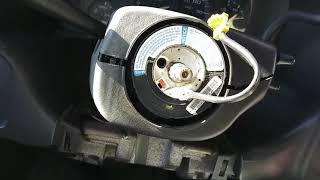
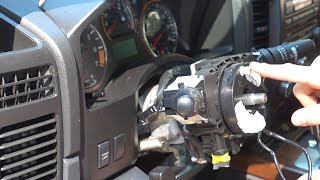
- Faulty Clock Spring (Spiral Cable) (Very Common) — The clock spring is a coiled ribbon of wires maintaining electrical contact for steering wheel components while it turns. Constant mechanical stress breaks the internal ribbon, causing an open circuit for the airbag, horn, and the collapsible column actuator.
- Faulty Collapsible Column Actuator/Sensor (Very Common) — The pyrotechnic actuator fails internally due to age, vibration, or an internal short circuit. A hard jolt damages the sensor, causing a permanent fault code requiring replacement.
- Previous Accident (Deployed Sensor) (Common) — During a front-end collision, the pyrotechnic charge in the steering column deploys. If this one-time-use sensor is not replaced or the module is not properly reset after the accident, code B0005 remains permanently stored.
- Damaged Wiring or Corroded Connectors (Common) — Wires in the steering column harness, especially the yellow SRS loom, become frayed, pinched, or stretched from steering wheel adjustments. Connectors accumulate moisture and corrode, leading to high resistance.
- Faulty or Unconfigured Restraint Control Module (RCM) (Less Common) — The RCM fails due to internal circuit board issues or water damage. Additionally, if an RCM is replaced but not programmed with the vehicle's specific VIN and safety configuration, it falsely reports a B0005 fault.
- Blown Fuse or Power/Ground Issue (Less Common) — The SRS system requires a stable power supply. A blown fuse, a corroded ground strap, or unstable voltage from a failing alternator causes the RCM to malfunction and set spurious codes.
Symptoms

- Airbag / SRS Warning Light On — The primary symptom. The airbag light on the instrument panel remains illuminated or flashes continuously after the initial startup self-test, often accompanied by a 'Service Restraint System' message.
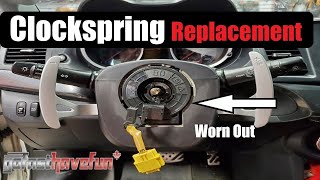
- Steering Wheel Controls Not Working — If a faulty clock spring is the root cause, you lose function of the horn, cruise control buttons, and audio controls located on the steering wheel. 🎬 See this walkthrough on replacing a faulty clock spring.
- Vehicle Will Not Start — On specific GM models, a critical SRS fault like B0005 triggers a 'no-start' condition as a safety measure to force immediate repair.
- Disabled Driver-Assist Functions (also visible on scanner) — Modern vehicles enter a 'limp-SRS' mode, disabling related driver-assist systems that rely on steering angle or stability control inputs networked with the SRS.
Diagnostic Flowchart
Tap your situation to follow the diagnostic path that matches what you're seeing on this code.
Common Fixes & Costs
- Replacing the Clock Spring — Parts: $75-$300, Labor: $150-$250, ~1.5 hr book time (Intermediate)
- Replacing the Collapsible Column Actuator/Sensor — Parts: $75-$250, Labor: $150-$250, ~1.2 hr book time (Intermediate)
- Repairing Damaged Wiring or Connectors — Parts: $10-$30, Labor: $120-$250, ~1.5 hr book time (Advanced)
- Resetting a 'Crash Data Stored' RCM — Parts: $0, Labor: $50-$150, ~0.5 hr book time (Professional)
- Replacing and Programming the RCM — Parts: $800-$1200, Labor: $200-$300, ~1.5 hr book time (Professional)
Used vs. New Parts: Buying Guide
When a used part is worth it: For a clock spring, a used OEM part from a low-mileage vehicle is a cost-effective alternative to expensive new OEM parts. For the collapsible column sensor, a used part is often the only option if dealers refuse to sell it separately from the full steering column.
Donor-vehicle mileage cap: roughly under 80000 miles for the part to have meaningful remaining life.
Donor quality checklist:
- Verify the donor vehicle was not involved in a flood or front-end collision.
- Ensure connectors are not cut or damaged.
- For clock springs, ensure the part is locked in the centered position to prevent ribbon damage during shipping.
- Purchase exclusively from certified automotive recyclers who guarantee the part.
Decision logic:
- If The part is a clock spring and a new OEM part is under $200 → Buy new OEM for maximum reliability.
- If The part is a clock spring and new OEM is over $400 → Buy a new aftermarket part from a major brand (Dorman, SMP) or a used OEM part from a reputable recycler.
- If The part is a pyrotechnic sensor or an airbag module → Never buy from an individual. Only use certified ARA recyclers who guarantee non-deployed status, or utilize a professional mail-in reset service for your original module.
Warranty tradeoff: Used parts carry a 30 to 90-day warranty. New aftermarket parts offer 1-year to lifetime warranties. Labor costs are never covered by used part warranties.
Worst-case if a used part fails: $200-$500 if a used clock spring or sensor fails, requiring repeat labor and a second part.
What Happens If You Wait — Timeline
- Immediate (Ignition On): The RCM detects the circuit fault during its self-test. The airbag warning light illuminates. The entire SRS is disabled. (MPG impact: 0%% · Added cost: $0)
- 0-6 Months: The vehicle fails state safety inspections. The driver operates the vehicle without airbag protection. (MPG impact: 0%% · Added cost: $50-$200 in fines or inspection fees.)
- 6+ Months (if caused by water leak): Moisture continues attacking electronics. Corrosion spreads to the Body Control Module (BCM) or instrument cluster connectors. (MPG impact: 0%% · Added cost: $500-$2500 to replace secondary electronic modules.)
- In an accident: Airbags and seatbelt pretensioners fail to deploy. The collapsible steering column fails to activate. Risk of fatal injury drastically increases. (MPG impact: N/A% · Added cost: N/A - Critical safety failure.)
Cost of Not Fixing It
- Immediate: Complete failure of the Supplemental Restraint System (SRS). Airbags and seatbelt pretensioners will not deploy in a collision. (Added cost: N/A - This is a critical safety failure risking severe injury or death.)
- 0-6 Months: Guaranteed failure of state safety inspection. The vehicle is illegal to operate on public roads in many jurisdictions. (Added cost: $50-$200 in fines and re-inspection fees.)
- 6+ Months: If the root cause is water intrusion, continued exposure corrodes other expensive electronic modules (e.g., BCM, instrument cluster). (Added cost: $500-$2500 to replace secondary modules destroyed by water damage.)
Diagnosis Steps
- Read SRS Codes and Live Data
Use an advanced OBD-II scanner to access the SRS/RCM module. Record the exact B0005 sub-type (e.g., B0005:13-8B). Navigate to the live data screen and check 'Deployment Loop Resistance'. Normal resistance is 1.7 to 4.4 ohms. Readings >10 ohms indicate an open circuit; readings near 0 ohms indicate a short.
Tools: SRS-capable OBD-II Scanner with Live Data (Beginner) - Check SRS Fuses and Battery Health
Inspect all SRS-related fuses. Use a multimeter to confirm battery voltage is stable between 12.0-12.8V with the engine off. Voltage below 11.5V causes spurious electronic faults.
Tools: Fuse Puller, Multimeter (Beginner) - Perform Visual Inspection and Wiggle Test
Inspect the yellow-sheathed SRS wiring harness around the steering column for chafing or disconnected connectors. While monitoring live resistance data on your scanner, gently wiggle the connectors at the steering column base. Wildly fluctuating resistance confirms a loose connection.
Tools: Flashlight, Trim Removal Tools, SRS Scanner (Intermediate) - Test Clock Spring Circuits
Disconnect the battery and wait 10 minutes. Disconnect the clock spring connectors. Use a multimeter to check for continuity on each pin through the clock spring as you slowly rotate it. Infinite resistance or high fluctuations confirm a broken internal ribbon.
Tools: Multimeter, Vehicle-Specific Service Manual (Advanced) - Measure Collapsible Column Actuator Resistance
Disconnect the actuator connector. Use a high-impedance multimeter to measure resistance across the actuator's two pins. Expected value is 2.0 to 5.0 ohms. A reading of 'OL' (Open Loop) means the actuator deployed or failed internally and requires replacement.
Tools: High-Impedance Multimeter, Service Manual (Advanced) - [PRO TIP] Test Circuit from the RCM Connector
Disconnect the main connector at the Restraint Control Module. Identify the two pins leading to the collapsible column actuator using a wiring diagram. Measure resistance between these pins. If you get an open circuit here but the actuator tests good, the wiring harness is broken.
Tools: High-Impedance Multimeter, Wiring Diagram (Professional) - [PRO TIP] Use a Resistor for Circuit Simulation
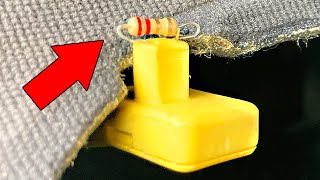
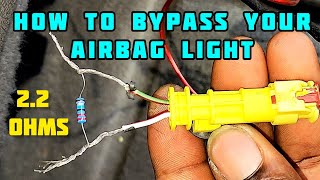
Plug a 2.2-ohm to 3.3-ohm airbag diagnostic resistor into the harness connector in place of the actuator. Clear the codes. If B0005 stays away, the RCM and wiring are perfect, proving the actuator is the sole point of failure. Remove the resistor and install a new actuator.
Tools: SRS Diagnostic Resistor Kit (2.2-3.3 Ohms), SRS Scanner (Professional)
When This Code Triggers (Freeze-Frame Conditions)
- Ignition Status: ON (The SRS module performs a self-test every time the ignition turns on. The fault is detected during this startup check.)
- System Voltage: 9V - 16V (The code sets if system voltage falls outside the normal operating range, as the module requires stable power to measure circuit resistance accurately.)
- Fault Status: Active/Current (Unlike intermittent engine codes, B0005 is a 'hard fault' present continuously from startup, indicating a constant open or short circuit.)
- Crash Event Data: Stored/Locked (If freeze frame data indicates a crash event is 'Stored', the B0005 code cannot be cleared until the module is professionally reset or replaced.)
Related Codes
- B0001 — Indicates 'Driver Frontal Stage 1 Deployment Control'. When present alongside B0005, it guarantees a failed clock spring, as both circuits route through this component.
- B0002 — Indicates 'Driver Frontal Stage 2 Deployment Control'. Seeing B0001, B0002, and B0005 together makes a broken clock spring ribbon cable the definitive diagnosis.
- B0020 — Indicates 'Left Front Side Airbag Deployment Control'. Triggered by a faulty clock spring on vehicles routing side airbag circuits through the steering column.
- U0151 — Means 'Lost Communication With Restraints Control Module'. The RCM is offline due to a power or network issue. You must fix this communication failure before diagnosing B0005.
Climate & Environmental Factors
- High Humidity / Water Intrusion: Moisture from rain or clogged sunroof drains penetrates unprotected connectors. This corrodes delicate SRS pins, increasing circuit resistance and triggering B0005.
- Extreme Cold: Plastic and metal components contract in freezing temperatures. This causes marginal electrical connectors to loosen, creating intermittent open circuits that disappear as the cabin warms.
- Road Salt: Salty mist infiltrates the engine bay and undercarriage, accelerating corrosion on exposed wiring, grounds, and sensors.
- Dust and Debris: Fine dust works into the clock spring assembly, increasing friction on the internal ribbon cable and causing it to snap prematurely (the cause of Ford recall 22V-337).
How to Talk to a Mechanic About This Code
Say this: "I have an airbag light on, and my scanner shows code B0005 for the collapsible steering column. I need a diagnostic to confirm the fault. Please test the resistance of the deployment loop and inspect the clock spring before recommending a major repair like a full column replacement."
This language directs the technician to the most likely, and cheapest, failure points first. It prevents them from immediately suggesting the most expensive fix (replacing the entire steering column) and forces them to prove the specific point of failure.
Avoid saying:
- 'My airbag light is on, can you fix it?' (Too vague; invites a costly diagnostic process.)
- 'I think I need a new airbag module.' (Never diagnose the part for them; you anchor them to a costly solution.)
- 'Just do whatever it takes to turn the light off.' (A blank check for unnecessary upsells.)
Questions to ask before authorizing the repair:
- What was the resistance reading on the B0005 circuit? Was it high (open) or low (short)?
- Did you test the clock spring for continuity and check for related codes like B0001?
- If recommending an actuator replacement, did you confirm the wiring harness to the RCM is good?
- Is this part available separately, or are you recommending a full steering column assembly? Why?
- What is the warranty on this specific SRS repair, including parts and labor?
Where to Take It: Dealer vs Independent vs Chain
- Dealer:
Recommended for RCM programming or newer vehicles. Be cautious of recommendations to replace entire assemblies without proof.
Best for: Vehicles under warranty or extended clock spring warranties., Complex software issues, like RCM programming., GM vehicles where B0005 means 'In Park Signal Circuit'.
Downsides: Highest labor rates., Defaults to replacing large assemblies (entire steering column) instead of individual sensors. (Typical cost: +50% vs. baseline) - Independent Shop:
Best fit for clock spring replacement or wiring repair. Ensure the shop is ASE-certified with SRS experience.
Best for: Out-of-warranty vehicles with common B0005 causes like a bad clock spring., Cost-conscious repairs on older vehicles.
Downsides: Shop must have an advanced SRS scanner and trained technicians., May lack access to dealer-only software for module programming. (Typical cost: +0% vs. baseline) - Chain Shop:
AVOID. SRS repairs are safety-critical and require specialized tools not found at chain shops.
Best for: Potentially getting a free code scan, though their scanners rarely read SRS codes.
Downsides: Technicians are not specialized in complex SRS diagnostics., High risk of misdiagnosis and unnecessary repairs. (Typical cost: -10% vs. baseline)
When to Walk Away From the Repair
If the estimated repair cost for the B0005 code exceeds 40-50% of your car's private-party value, walk away. An active airbag light significantly reduces resale value and makes the car fundamentally unsafe.
- Car worth $5000, fix is $2200: Walk away. The repair cost is nearly half the car's value. The car is unsafe to drive as-is.
- Car worth $15000, fix is $800: Fix it. This is a reasonable cost to restore a critical safety feature on a valuable vehicle.
- Car worth $2500, fix is $1800: Walk away. The repair cost is over 70% of the car's value. It is not economically viable.
What Scan Tool You Need for This Code

Minimum: An OBD-II scanner that reads and clears Supplemental Restraint System (SRS) codes. A basic $20 engine code reader will NOT work.
A standard scanner only talks to the engine control unit. The B0005 code lives in the Restraint Control Module (RCM). Without an SRS-capable scanner, you cannot see the code, view live resistance data, or clear the light.
Budget: BlueDriver Pro (~$119) — Reads and clears SRS codes on most major makes via Bluetooth. Displays live data for some SRS systems.
Mid-range: Foxwell NT604 Elite / Innova 5610 (~$150-250) — Dedicated handheld units reading Engine, ABS, Transmission, and SRS codes. The Innova 5610 offers bi-directional control for component testing.
Professional: Autel MaxiCOM MK808 (~$450-600) — Tablet-style scanner offering full-system diagnostics, extensive live data graphing for SRS circuits, and dealership-level bi-directional controls.
Rent vs buy: Auto parts stores do NOT rent out SRS-capable scanners due to liability. For a one-time B0005 fix, paying a shop a 1-hour diagnostic fee is more cost-effective than buying a mid-range scanner.
How to Clear the Code After You Fix It
- Perform the physical repair (e.g., replace clock spring).
- Reconnect the battery.
- Use an SRS-capable OBD-II scan tool to access the Restraint Control Module.
- Select the 'Clear Codes' or 'Erase DTCs' function.
- Turn the ignition off, then back on to confirm the airbag light performs its 6-second self-check and stays off.
Drive cycle (~5 minutes): SRS faults do not require a complex drive cycle. The RCM performs a complete self-test upon every ignition-on event. If the repair is successful, the code clears immediately and does not return.
Readiness monitors affected: None. SRS system status does not affect engine emissions readiness monitors.
Watch out for:
- Using a basic engine code reader that cannot communicate with the SRS module.
- Attempting to clear the code without fixing the hardware fault; the code returns instantly.
- Trying to clear 'Crash Data' with a standard scanner; this requires professional EEPROM reprogramming.
- Disconnecting the battery, which does not clear SRS codes in modern vehicles.
Will This Fail Emissions / State Inspection?
No — by itself this code doesn't fail OBD inspection (but it can keep readiness monitors from setting, which causes a separate fail).
- California: An illuminated airbag light fails the safety inspection. A vehicle cannot be legally operated or sold with a known SRS defect.
- New York: The NYS vehicle safety inspection explicitly checks the airbag warning light. If illuminated, the vehicle fails immediately.
- Texas: The SRS warning lamp is checked during the annual safety inspection. An active light results in an automatic failure.
Most Commonly Affected Vehicles
- Ford F-150, Explorer, Edge, Focus, Mustang (2011-2019) — Extremely common. The pyrotechnic actuator deploys in minor accidents. Dealers quote $2,000+ for a full steering column, but the sensor itself is serviceable.
- Chevrolet / GMC Colorado, Suburban, Sierra, Silverado (2007-2020) — CRITICAL: On these GM models, B0005 means 'In Park Signal Circuit', indicating a faulty transmission range sensor, not a steering column issue. A manufacturer-specific scanner is mandatory.
- Volvo XC60, XC90, S60, V60 (2009-2018) — Uses a pyrotechnic collapsible column sensor identical to Ford. The code appears after accidents and requires sensor replacement and a professional RCM reset.
- Lincoln MKX, MKZ, MKT, Nautilus (2010-2020) — Shares the Ford platform and vulnerable collapsible column sensor design, exhibiting identical failure patterns.
- Land Rover Range Rover Evoque, Range Rover Sport (2012-2019) — TSB #SSM74577 documents that replacing the RCM without running the proper configuration software falsely triggers code B0005.
- Dodge / Chrysler / Jeep Grand Caravan, Town & Country, Wrangler (2008-2016) — Notorious for clock spring failures causing an array of airbag codes. FCA issued extended warranty X56 for this part on many models.
- Hyundai / Kia Sonata, Elantra, Optima (2011-2018) — Clock spring failures are highly prevalent. Check TSBs TXXA and TXXJ for extended 15-year warranty coverage before paying for repairs.
Manufacturer-Specific Notes
- Ford / Lincoln / Volvo: The pyrotechnic actuator is a one-time-use device. After an accident, it stores a permanent 'deployed' status. You cannot clear the code until you physically replace the actuator and professionally reset the RCM.
- Chevrolet / GM: On many trucks and SUVs, B0005 means 'In Park Signal Circuit,' related to the transmission range sensor. Diagnosing this as a steering column issue is a costly mistake. Use a factory-level scan tool for accurate definitions.
- Land Rover: B0005 is often induced by software. If an RCM is replaced but not correctly configured to the vehicle's options, the module logs this code. Re-run the module configuration process to fix it.
- Hyundai / Kia: Clock spring failure is so prevalent that Hyundai issued extended warranties up to 15 years/unlimited miles. Always check with a dealer for warranty coverage before authorizing independent repairs.
Real Owner Stories
2015 Ford Explorer XLT with 112K miles, post-accident
After replacing a deployed driver airbag and seatbelt from a minor collision, the airbag light remained on with code B0005.
Outcome: The owner replaced the specific sensor located on the steering column. After installation and clearing codes, the airbag light went off, avoiding a $2,000 full steering column replacement.
Lesson: On Ford, Volvo, and Lincoln vehicles, a B0005 code after an accident guarantees the one-time-use collapsible column sensor deployed and requires replacement.
2011 Chevy HHR, airbag light on
Bought the car used and the 'Service Airbag' message was permanently on. No other symptoms were present.
Outcome: Forum members advised that applying dielectric grease to low-voltage SRS circuits insulates the connection and worsens the issue. The owner needed a high-level scanner to pull the exact manufacturer-specific sub-code.
Lesson: Never guess with SRS faults or apply grease blindly. Getting the exact manufacturer-specific code with a capable scanner is the mandatory first step.
2012 Ford Taurus with airbag light on
The airbag light was on, and a scan tool showed code B0005 with a live data reading of 65 ohms for the collapsible steering column circuit.
Outcome: A new collapsible column sensor was installed. Live data resistance read a normal 2.9 ohms, and the airbag light permanently turned off.
Lesson: A resistance reading over 10 ohms (often showing as 65 ohms or 'OL') confirms an open circuit. A professional diagnostic resistor safely pinpoints the exact failure point before ordering parts.
How to Prevent This Code From Triggering
- Periodically clean sunroof and cowl drains (Once per year, especially in the fall) — Prevents water from overflowing into the cabin, where it corrodes the RCM and other sensitive electronics.
- Avoid over-rotating the steering wheel during service (During front-end service (e.g., tie rod replacement)) — Turning the disconnected steering wheel past its normal limits snaps the delicate ribbon cable inside the clock spring, causing immediate failure.
- Be gentle with steering wheel tilt/telescope adjustments (Daily habit) — Aggressively moving the steering column chafes the wiring harness, eventually leading to a broken wire and a B0005 fault.
Frequently Asked Questions
Can I just reset the airbag light myself?
No. The RCM performs a self-test every time the ignition turns on. Because B0005 indicates a persistent electrical hardware fault, the code reappears instantly after being cleared. You must repair the underlying problem first.
Will code B0005 cause me to fail a safety inspection?
Yes. An illuminated airbag/SRS warning light is an automatic failure for safety inspections in all jurisdictions. The vehicle is legally unsafe for road use until you repair the fault and the light turns off.
What is a pyrotechnic squib?
A 'squib' is the small, electrically-fired explosive charge used in automotive safety systems to inflate airbags and retract seatbelts. For code B0005, it refers to the actuator that collapses the steering column during a crash.
What are the most common misdiagnosis mistakes for B0005?
The biggest mistake is misinterpreting the code on a GM vehicle and looking for a steering column fault when the issue is actually the gear shifter. Another major error is replacing the expensive RCM when the problem is a broken wire or a failed clock spring.
Can a bad battery cause a B0005 code?
Yes. The RCM is highly sensitive to voltage drops. A failing battery or alternator produces voltage spikes during startup that corrupt the RCM's self-test, causing it to store false codes. Always verify you have a stable 12.0V+ before diagnosing SRS faults.
Is the B0005 code serious?
Yes, it is a critical safety fault. It means your entire airbag system is offline and will not function in an accident. This places the driver and passengers at a significantly higher risk of fatal injury.
Why do dealers recommend replacing the whole steering column?
Some manufacturers do not sell the collapsible column actuator as a separate part, only as part of the complete steering column assembly. However, specialized aftermarket services often repair or replace just the faulty sensor. This alternative saves hundreds or thousands of dollars.
Can I use a used RCM from a junkyard?
No. An RCM from another vehicle is programmed with a different VIN and often contains locked crash data. Installing it creates software conflicts and prevents the vehicle from starting. You must use a new, VIN-matched module or professionally reset your original unit.
Key Takeaways
- Code B0005 completely disables your Supplemental Restraint System (SRS), guaranteeing your airbags will not deploy in a crash.
- A broken clock spring ribbon cable or a deployed pyrotechnic sensor from a previous accident causes over 80% of B0005 faults.
- On 2007-2020 GM trucks and SUVs, code B0005 actually indicates a faulty transmission range sensor ('In Park Signal Circuit'), not a steering column issue.
- Live data resistance readings above 10 ohms confirm an open circuit, requiring a $200-$500 replacement of the collapsible column actuator or clock spring.
Helpful Videos



The information in this article is provided for general reference and educational purposes only. Vehicle specifications, procedures, and part compatibility can vary by production date, trim level, and region. Always consult your vehicle's factory service manual and verify part numbers before purchasing or performing repairs. Safety-critical components such as airbags, seat belts, and braking systems should be installed by a qualified professional.
- 🎬 Helpful Videos
- What Does B0005 Mean?
- Can I Drive With B0005?
- Common Causes
- Symptoms
- Diagnostic Flowchart
- Common Fixes & Costs
- Used vs. New Parts: Buying Guide
- What Happens If You Wait — Timeline
- Cost of Not Fixing It
- Diagnosis Steps
- When This Code Triggers (Freeze-Frame Conditions)
- Related Codes
- Climate & Environmental Factors
- How to Talk to a Mechanic About This Code
- Where to Take It: Dealer vs Independent vs Chain
- When to Walk Away From the Repair
- What Scan Tool You Need for This Code
- How to Clear the Code After You Fix It
- Will This Fail Emissions / State Inspection?
- Most Commonly Affected Vehicles
- Manufacturer-Specific Notes
- Real Owner Stories
- 2015 Ford Explorer XLT with 112K miles, post-accident
- 2011 Chevy HHR, airbag light on
- 2012 Ford Taurus with airbag light on
- How to Prevent This Code From Triggering
- Frequently Asked Questions
- Can I just reset the airbag light myself?
- Will code B0005 cause me to fail a safety inspection?
- What is a pyrotechnic squib?
- What are the most common misdiagnosis mistakes for B0005?
- Can a bad battery cause a B0005 code?
- Is the B0005 code serious?
- Why do dealers recommend replacing the whole steering column?
- Can I use a used RCM from a junkyard?
- Key Takeaways
- 🎟️ Get 5% Off