

B0001 on 2020-2023 GMC Yukon: Driver Airbag Malfunction Causes and Fixes
On a 2020-2023 GMC Yukon, code B0001, especially with a -1B suffix, almost always indicates corrosion in the driver's airbag connector. The official GM fix, outlined in Technical Service Bulletin 21-NA-005, requires replacing both the driver's airbag module and the steering wheel wiring harness. This is a safety-critical repair that should be performed by a qualified professional as the driver's airbag will not deploy while the fault is active.
- Code B0001 on a 2020-2023 Yukon is a critical safety issue that disables the driver's airbag.
- The cause is almost certainly corrosion inside the airbag connector, a known issue documented by GM and investigated by the NHTSA.
- Do not misdiagnose the problem as a bad clock spring; the issue is at the airbag module itself.
- The correct repair is to replace both the driver's airbag module and its wiring harness.
- This repair is not a DIY job and must be performed by a qualified professional due to the dangers of working with airbag systems.
What's Unique About the 2020-2023 Gmc YUKON
This generation of GMC Yukon, along with its T1 platform siblings like the Chevrolet Tahoe/Suburban and Cadillac Escalade, is particularly susceptible to this specific failure. General Motors identified a design or manufacturing issue that allows rust particles or other contaminants to form within the driver's airbag connector. This corrosion increases electrical resistance, triggering the B0001-1B code. The problem became so widespread that it prompted an NHTSA investigation (PE21010) and a specific Technical Service Bulletin (TSB 21-NA-005) from GM outlining the unique repair procedure.
Diagnostic Flowchart
Tap your situation to follow the diagnostic path that matches what you're seeing on this vehicle.
Generation note: The 2020-2023 year range covers the end of the fourth generation (2020) and the fifth generation (2021-2023) of the GMC Yukon. The primary cause of code B0001, related to connector corrosion, is documented by GM's TSB #21-NA-005. Originally issued in March 2021 for 2020-2021 models, the bulletin has been revised multiple times, with the latest version from June 2023 expanding the affected model years to include 2022, 2023, and even 2024 models, indicating the issue persists across both generations.
Symptoms You May Notice
- Airbag warning light illuminated on the instrument cluster.
- "Service Safety Restraint System" message on the Driver Information Center (DIC).
- The warning light and message may be intermittent at first, turning on and off during drives.
- Replacing only the clock spring without first performing the TSB's diagnostic step of wiggling the airbag module to check for resistance spikes.
- Replacing only the airbag module without also replacing the steering wheel airbag harness, which can lead to a repeat failure.
- Attempting to clean the corroded connectors instead of replacing the components as instructed by the TSB.
- Replacing the SRS control module when the fault is located within the steering wheel wiring or airbag itself.
Most Likely Causes
- Corrosion in Driver's Airbag Connector 🔴 High Probability As documented in NHTSA investigation #PE21010 and GM TSB #21-NA-005, rust particles or other contaminants can accumulate in the connection terminal for the driver's airbag inflator, causing excessive resistance. This is a known widespread issue affecting many GM trucks and SUVs from this period.
How to confirm: A technician will use a scan tool to confirm code B0001-1B. Following the TSB, they will monitor the airbag circuit resistance while physically moving the airbag cover up, down, left, and right. If resistance spikes are observed during this movement, the cause is confirmed to be the airbag and/or its harness connector.
Typical fix: Replace both the steering wheel airbag module and the steering wheel airbag wiring harness as a set. This is the official GM-mandated repair to ensure a clean, corrosion-free connection.
Est. part cost: $500-$900 - Faulty Clock Spring (Steering Wheel Coil) ⚪ Low Probability The clock spring is a wear item in any vehicle, but for this specific code on these Yukons, it is a much less likely cause than connector corrosion. The TSB diagnostic procedure is designed to rule out the more common corrosion issue before condemning the clock spring.
How to confirm: If no resistance spikes are found when wiggling the airbag, the technician will then rotate the steering wheel from lock to lock while monitoring resistance. If spikes appear during rotation, the clock spring is the likely culprit, after first ensuring all connectors are properly seated.
Typical fix: Replace the clock spring assembly (also called the steering wheel airbag coil).
Est. part cost: $150-$300
Rare But Worth Checking
- Damaged Wiring Harness: Wiring between the SRS control module (SDM) and the clock spring could be pinched or damaged, though this is uncommon without other work having been performed in the steering column or dash.
- Faulty SRS Control Module (SDM): While possible, the main SRS control module is rarely the cause of a single-circuit fault like B0001. It should only be considered after all other circuit components have been ruled out.
Diagnosis Steps
- Confirm the presence of code B0001, preferably with a professional scan tool that can read the manufacturer-specific suffix code (e.g., -1B) and monitor live SRS data.
- Follow all safety procedures to disable the Supplemental Restraint System (SRS), which involves disconnecting the negative battery terminal and waiting for at least one hour for the system to discharge.
- Connect a resistance monitoring device or use the scan tool's live data function to view the driver airbag deployment loop resistance. The normal range is typically between 2.1 and 4.0 ohms.
- Per TSB 21-NA-005, physically move the airbag cover up, down, left, and right while watching for resistance spikes. If spikes are seen, the fault is in the airbag/harness connection.
- If no spikes are seen, proceed to rotate the steering wheel from lock to lock. If resistance spikes appear now, the fault is likely in the clock spring.
- If corrosion is confirmed or suspected as the cause, the official GM procedure is to replace both the airbag module and the steering wheel wiring harness. Do not attempt to clean the terminals.
- If the clock spring is confirmed as the cause, replace the clock spring assembly.
- After repairs are complete, reconnect the battery, use a scan tool to clear the code, and verify that the SRS system is functioning correctly and the warning light is off.
Parts You'll Likely Need
- Driver Steering Wheel Airbag Module
(OEM #VIN-specific (e.g., 85021808 - Black, 84823471 - Brown))— This is the primary component that must be replaced due to internal connector corrosion, as specified by GM's TSB. The TSB explicitly states to use the vehicle's VIN to find the correct part number in the electronic parts catalog.
Trusted brands: ACDelco, GM Genuine Parts
OEM price range: $400-$750
Aftermarket price range: Not Recommended - Steering Wheel Airbag Wiring Harness
(OEM #VIN-specific (e.g., 23156631))— This harness connects the clock spring to the airbag module and must be replaced along with the module to ensure a corrosion-free connection. The part number 23156631 is an example, but the correct part should be verified by VIN.
Trusted brands: ACDelco, GM Genuine Parts
OEM price range: $75-$150
Aftermarket price range: Not Recommended
Related Codes That Often Appear With This One
- B0012-0D — This code for the driver airbag deployment loop 2 is also mentioned in the NHTSA investigation and GM TSB as being caused by the same rust particle/corrosion issue at the inflator connector.
- B0002-1B — This code, related to the passenger side airbag, is also mentioned in some versions of TSB 21-NA-005 as potentially being caused by the same type of connector contamination issue.
Technical Service Bulletins (TSBs) & Recalls
- Bulletin #21-NA-005 (revised June 2023): Addresses airbag malfunction indicator illumination with DTC B0001-1B (and others) caused by corrosion/contamination. It provides a specific diagnostic procedure to differentiate between a connector fault and a clock spring fault, and instructs technicians to replace the driver's airbag and harness if the connector is the cause.
Platform-Specific Known Issues
- NHTSA ODI Investigation #PE21010 was opened to analyze airbag malfunctions on 2020-2021 GM trucks and SUVs, including the Yukon. It noted that "rust particles in the connection terminal interface of the driver air bag inflator housing" were a cause for DTC B0001-1B and directly referenced GM's corresponding TSB.
- General Motors issued Technical Service Bulletin #21-NA-005, which instructs technicians to "replace the air bag and air bag harness to correct a condition of Airbag Malfunction Warning... with DTC B0001-1B due to corrosion." The bulletin has been updated to include models up to the 2024 model year.
Mechanic-Grade Diagnostic Values
- Driver Airbag Deployment Loop Resistance — expected: 2.0 - 4.0 Ohms. Failure: A resistance reading significantly above 4.0 Ohms (triggers B0001-1B) or an open circuit (infinite resistance).
Hidden / Shadow Codes Worth Checking
- B0001-1B: This is a manufacturer-specific symptom byte. The '-1B' suffix indicates 'Circuit Resistance Above Threshold,' which is the specific fault condition caused by the corrosion noted in TSB 21-NA-005. (see via A professional-grade scan tool, such as the dealer's GM GDS2 software, is required to read the two-digit symptom byte. Basic OBD-II readers may only show 'B0001'.)
Scan Tool Commands That Help
- GM GDS2 (Global Diagnostic System 2): Data Display > SDM (Sensing and Diagnostic Module) — Used to monitor the live resistance value (in ohms) of the 'Driver Airbag Stage 1 Deployment Loop' while performing the wiggle tests described in TSB 21-NA-005. This is the primary method for confirming the fault location.
- GM GDS2 (Global Diagnostic System 2): Module Replacement/Setup > SDM — After replacing the Sensing and Diagnostic Module (SDM), a setup and configuration procedure must be performed. This function programs the new module to the vehicle's specific configuration. This is not typically required when only replacing the airbag and harness.
Wiring & Ground Locations
- SDM Ground (e.g., G103, G108) — GM typically designates grounds in the engine compartment with a 'G1xx' number. The ground for the Sensing and Diagnostic Module (SDM) is often located on the firewall or cowl, sometimes near the brake booster.. A poor ground connection to the SRS control module (SDM) can cause erratic behavior and false high-resistance codes. While not the common cause for this specific TSB-related issue, it's a critical check in any SRS diagnosis.
- Instrument Panel Grounds (e.g., G201, G202) — Grounds located behind the instrument panel, often near the A-pillars, are designated with 'G2xx' numbers.. These grounds serve various modules and components in the dash, including circuits related to the steering column and clock spring. A loose ground here could potentially affect the clock spring circuit.
Real Owner Repair Stories
- tahoeyukonforum.com user Trh913 (2021 Chevrolet Suburban) — "Service Safety Restraint System" message appeared shortly after purchase.
❌ Tried (didn't work) A dealer software/system update.
✅ What actually fixed it The dealer identified a service bulletin related to the driver's side seat harness. The harness was being pulled by seat movement, causing a connection issue. The fix was to reroute the harness and secure it with velcro per the bulletin's instructions. - Reddit user sir_bung_boi (2021 Chevrolet Tahoe High Country) — Intermittent "Service Safety Restraint System" message, happened more frequently when using one memory seat position over another.
❌ Tried (didn't work) Initial diagnosis was uncertain due to multiple possible causes.
✅ What actually fixed it The dealership identified the cause as a fault covered by TSB #21-NA-085 (published as NHTSA MC-10236071-0001), which pertains to a loose driver side-impact airbag connector in the seat, not the steering wheel airbag. The fix involved securing this connector. - Reddit user in a Chevy Bolt EV thread (Chevrolet Bolt EUV (year not specified)) — Intermittent "Service Safety Restraint System" message and airbag light.
❌ Tried (didn't work) First dealer visit could not replicate or find any codes.
✅ What actually fixed it On a second visit, the dealer captured the fault while their scan tool was connected. The issue was traced to a faulty sensor within the driver-side seat belt assembly (latch/buckle). The entire seat belt assembly was replaced under warranty to resolve the issue.
When the Usual Fixes Don't Work
- While TSB 21-NA-005 points to the steering wheel airbag and harness as the overwhelming cause for B0001-1B, it is not the only possibility for a 'Service Safety Restraint System' message on these vehicles. In a documented case on a 2021 Tahoe, the same warning was caused by a loose side-impact airbag connector in the driver's seat, a fix covered by a different TSB (21-NA-085). This is a critical distinction, as the symptom (warning message) is identical, but the root cause and repair are completely different. Technicians should avoid assuming the cause is the steering wheel airbag without performing the full diagnostic procedure to isolate the fault, which may lead to other SRS components like seat harnesses or even seat belt buckle sensors.
OEM Part Supersession History
84449047, 84631409, 84648254, 84750517, 85522843→85021808— GM frequently updates part numbers to reflect design revisions, manufacturing changes, or consolidation. While not explicitly stated, newer part numbers for this issue are intended to have better resistance to the corrosion problem.
Heads up: Always verify the correct part number using the vehicle's VIN in the official GM parts catalog. Color and specific vehicle options (e.g., Denali vs. AT4) affect the correct part number.
Model Year Variations Within This Range
- 2020-2023+: The 2020 model year is the last of the fourth-generation (K2XX platform) Yukon, while 2021-2023 models are the fifth-generation (T1 platform). Despite the major platform change, the underlying cause of code B0001-1B (connector corrosion) and the official fix (TSB 21-NA-005) are the same and apply to both generations within this range, as GM has expanded the TSB to cover newer models.
Helpful Videos
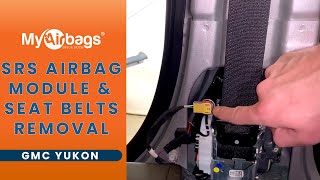
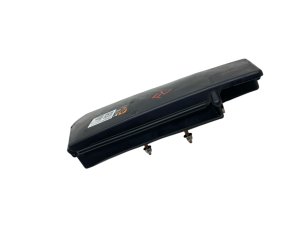
We Have This Part in Stock



The information in this article is provided for general reference and educational purposes only. Vehicle specifications, procedures, and part compatibility can vary by production date, trim level, and region. Always consult your vehicle's factory service manual and verify part numbers before purchasing or performing repairs. Safety-critical components such as airbags, seat belts, and braking systems should be installed by a qualified professional.
- Gmc YUKON:
- 🎬 Helpful Videos
- 🛍️ Shop This Part
- What's Unique About the 2020-2023 Gmc YUKON
- Diagnostic Flowchart
- Symptoms You May Notice
- Most Likely Causes
- Rare But Worth Checking
- Diagnosis Steps
- Parts You'll Likely Need
- Related Codes That Often Appear With This One
- Technical Service Bulletins (TSBs) & Recalls
- Platform-Specific Known Issues
- Mechanic-Grade Diagnostic Values
- Hidden / Shadow Codes Worth Checking
- Scan Tool Commands That Help
- Wiring & Ground Locations
- Real Owner Repair Stories
- When the Usual Fixes Don't Work
- OEM Part Supersession History
- Model Year Variations Within This Range
- 🎟️ Get 5% Off