

B0001 on 2019-2021 Ford Transit: Causes and Fixes for Driver Seat Cushion Suspension Mat Fault
Code B0001 on a 2019-2021 Ford Transit almost always points to a faulty driver's seat cushion suspension mat, which triggers the airbag warning light. This is a known issue covered by multiple Ford Technical Service Bulletins (TSBs), and the fix is to replace the mat assembly with a repair kit, part number LK4Z-61632A22-C.
- B0001 on a 2019-2021 Ford Transit is a serious safety code indicating a fault that has disabled the airbag system.
- The most frequent cause is a failed driver's seat cushion suspension mat, a known issue documented by Ford TSBs for vehicles built before Feb 2021.
- Key symptoms are an airbag warning light and a noticeably sagging driver's seat.
- Before buying parts, always disconnect the battery and check the yellow wiring connector under the driver's seat for a secure connection.
- The correct repair is using Ford's specific repair kit (LK4Z-61632A22-C), and the fault code must be cleared with a professional-grade scanner after the fix.
What's Unique About the 2019-2021 Ford TRANSIT

The 2019-2021 Ford Transit built on or before February 11, 2021, is uniquely prone to this specific code due to a well-documented issue with the driver's seat cushion suspension mat. The problem is so prevalent that Ford has issued multiple superseding Technical Service Bulletins (TSBs) for it. Unlike in many other vehicles where B0001 might lead to a complex electrical diagnosis of the clock spring or airbag module, on this specific Transit, the cause is very often a physical failure of the plastic seat mat, which causes the seat to sag and triggers the fault.
Diagnostic Flowchart

Tap your situation to follow the diagnostic path that matches what you're seeing on this vehicle.
Symptoms You May Notice

- Illuminated airbag warning light on the instrument cluster.
- Driver's seat cushion feels like it is sagging or has collapsed, often more pronounced on the left side from entry and exit.
- A 'popping' or 'crunching' sound may be heard from the seat base when sitting down or shifting weight.
- Replacing the entire driver's seat assembly when only the internal suspension mat repair kit is needed.
- Replacing the Restraints Control Module (RCM) before verifying the common seat mat failure.
- Replacing the passenger seat occupancy sensor, which is a separate system and would typically set a different code.
- Replacing the driver's airbag module or clock spring without first investigating the highly probable seat-related issue.
Most Likely Causes

- Damaged Driver Seat Cushion Suspension Mat 🔴 High Probability This is a known failure point for this specific vehicle and year range, as confirmed by multiple Ford TSBs (25-2182, 24-2394, 24-2053, 23-2235, 22-2263). The plastic suspension mat cracks under normal use, causing the seat to sag. This change in seat structure can affect the various sensors within the seat (position, occupant classification), leading the RCM to set a fault code.
How to confirm: Confirm the presence of DTC B0001 (and potentially B1408, B1405, B1407, B0010, and/or B1404) using an OBD-II scanner capable of reading the RCM. Visually and physically inspect the driver's seat for sagging. Owners on forums describe it as a noticeable drop, especially on the left side.
Typical fix: Replace the driver's seat cushion suspension mat assembly using the official Ford repair kit. 🎬 Watch: Step-by-step guide to replacing the seat springs and cushion. The TSB procedure involves removing the seat, taking off the cushion and cover, replacing the broken plastic mat, and installing two additional webbing strap assemblies to reinforce the frame.
Est. part cost: $75-$150 - Wiring or Connector Issue Under Driver's Seat 🟡 Medium Probability Wiring under any car seat is subject to stress from seat movement, debris, and items stored under the seat. The bright yellow SRS connectors are particularly sensitive to being tugged or partially disconnected, which creates a high-resistance fault.
How to confirm: Visually inspect all wiring harnesses and connectors under the driver's seat, especially the prominent yellow SRS connector. Ensure it is free of damage and securely latched; it should make an audible 'click' when fully seated. A Reddit user with an airbag light on a Transit after a seat swap confirmed the fix was simply tightening a loose connector under the seat.
Typical fix: With the battery disconnected, carefully unplug, inspect the pins for damage or corrosion, and securely reseat the connector. Ensure the wiring is properly routed and secured to prevent future damage.
Est. part cost: $0-$25 - Faulty Clock Spring ⚪ Low Probability
How to confirm: This would be suspected if other steering wheel-mounted controls (horn, cruise control, radio buttons) are also malfunctioning. Diagnosis involves using a scan tool to monitor the 'Driver Frontal Stage 1 Deployment Control Resistance' PID while turning the steering wheel. A stable reading that jumps to a high or open value (e.g., 65.5 ohms) when the wheel is turned indicates a break in the clock spring. The normal resistance range is approximately 1.3 to 4.5 ohms.
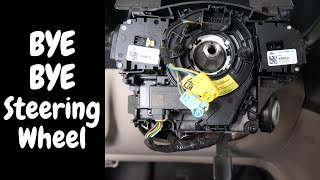
Typical fix: Replace the clock spring assembly in the steering column. This involves removing the airbag and steering wheel. 🎬 See this walkthrough for replacing the clock spring and steering sensor.
Est. part cost: $50-$150
Rare But Worth Checking
- Faulty Restraints Control Module (RCM): This is a rare cause and should only be considered after all other possibilities, including the TSB-specified seat mat and all related wiring, have been thoroughly ruled out. Replacing the RCM is expensive and requires programming by a dealer or qualified shop.
Diagnosis Steps
- Scan the Restraints Control Module (RCM) with a Ford-compatible OBD-II scanner to confirm B0001 is present and note any other codes listed in the TSBs (B1408, B1405, etc.). Note any suffix codes, such as B0001:13, which indicates an open circuit.
- Visually and physically inspect the driver's seat cushion for sagging. Compare it to the passenger seat. Sit in the seat and feel for a lack of support or a broken feeling, particularly on the left side.
- SAFETY FIRST: Disconnect the negative battery terminal and wait at least 10 minutes for the SRS system capacitors to discharge.
- Carefully inspect the wiring and electrical connectors under the driver's seat. Find the main yellow SRS connector, disconnect it, check for bent or corroded pins, and reconnect it firmly until it clicks.
- If the seat is sagging and DTC B0001 is present, the cause is almost certainly the seat cushion suspension mat. Obtain the repair kit and refer to the procedure in TSB 22-2263 or a newer superseding version.
- If the seat and wiring appear fine, proceed with more advanced diagnostics of the clock spring and RCM circuits, which is best left to a professional.
- After the repair, reconnect the battery. Use a bidirectional scan tool capable of communicating with the RCM to clear the 'hard fault' DTCs. The light will not turn off on its own.
- Cycle the ignition to confirm the airbag light performs its self-check and stays off.
Parts You'll Likely Need
- Front Seat Cushion Repair Kit
(OEM #LK4Z-61632A22-C)— This is the specific kit identified by Ford in TSB 22-2263 to fix the sagging seat and related SRS codes. It includes the redesigned suspension mat and reinforcing straps.
Trusted brands: Ford (Motorcraft)
OEM price range: $75-$150
Aftermarket price range: N/A
Related Codes That Often Appear With This One
- B1408 — Listed in the same TSBs; relates to the driver seat track position sensor circuit.
- B1405 — Listed in the same TSBs; relates to the driver seatbelt retractor pretensioner.
- B1407 — Listed in the same TSBs; relates to the driver seatbelt buckle switch circuit.
- B0010 — Listed in the same TSBs; relates to the passenger-side frontal restraint system, indicating the issue might sometimes be flagged alongside passenger side codes.
- B1404 — Listed in the same TSBs; relates to the driver seatbelt webbing sensor.
Technical Service Bulletins (TSBs) & Recalls
- TSB 25-2182: Supersedes previous versions to update the parts list, confirming the link between a sagging driver's seat, DTC B0001, and a damaged suspension mat assembly.
- TSB 24-2394: An earlier version also linking a sagging front seat cushion and DTC B0001 to a fault requiring mat replacement.
- TSB 24-2053: An even earlier version recommending replacing the suspension mat to correct a sagging seat cushion and an illuminated airbag warning light with DTC B0001.
- TSB 23-2235: Supersedes 22-2263, adding more DTCs to the list and including a potential seat airbag harness replacement.
- TSB 22-2263: Provides specific part numbers for the repair kit (LK4Z-61632A22-C) and additional straps (LK4Z-6162948-A), and notes the issue affects vehicles built on or before 11-Feb-2021.
Platform-Specific Known Issues
- Ford has issued multiple Technical Service Bulletins for the 2019-2021 Transit (built on or before 11-Feb-2021) due to a high failure rate of the driver's seat cushion suspension mat. This failure directly causes the airbag warning light to illuminate and stores DTC B0001 in the Restraints Control Module. The official fix adds reinforcing webbing straps in addition to replacing the mat itself.
Mechanic-Grade Diagnostic Values
- Driver Frontal Stage 1 Deployment Control Resistance — expected: 1.3 - 4.5 Ohms. Failure: A reading of 65.5 Ohms or 'OL' indicates an open circuit. A reading outside the normal range, or one that changes drastically when the steering wheel is turned, indicates a fault in the clockspring or wiring.
Hidden / Shadow Codes Worth Checking
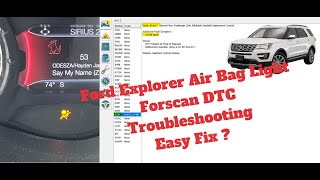
- B0001:13: Driver Frontal Stage 1 Deployment Control - Circuit Open. This is a more specific version of B0001 indicating the RCM has detected an open circuit or high resistance in the driver's airbag deployment loop. (see via A professional-level scan tool like Ford's IDS or a compatible aftermarket scanner (like FORScan) that can read manufacturer-specific DTCs from the Restraints Control Module (RCM).)
- B0001:1A: Driver Frontal Stage 1 Deployment Control - Resistance Out of Range. This indicates the circuit resistance is incorrect, but not necessarily a complete open or short. (see via A professional-level scan tool capable of reading Ford-specific RCM codes.)
Scan Tool Commands That Help
- Ford IDS, FORScan, or equivalent: Read Live Data PID: 'Driver Frontal Stage 1 Deployment Control Resistance' — Use this to diagnose a potential clock spring issue. Monitor the resistance value in real-time while turning the steering wheel from lock to lock. A stable reading is expected; if the value jumps to open-circuit (e.g., 65.5 ohms) at any point, the clock spring is likely faulty.
- Ford IDS, FORScan, or equivalent: Clear Faults / Erase DTCs from RCM — This is required after any physical repair to the SRS system. Airbag faults are stored as 'hard codes' and will not clear on their own or with a basic OBD-II reader. A bidirectional tool is needed to command the RCM to clear the code and turn off the warning light.
Wiring & Ground Locations
- Main Seat Connector (includes C311) — Under the driver's seat. It is a large connector block, often with a lever-lock mechanism, that consolidates all wiring for the seat (power, sensors, and the yellow-sheathed SRS wiring).. This is the primary interface between the body harness and all seat components. A loose connection here can cause B0001 and other seat-related codes. TSB 23-2235 adds a seat airbag harness (LK4Z-14A699-B) as a potential replacement part, indicating this harness can be a point of failure.
- G304 (or similar ground point) — Common Ford ground points are located on the chassis under the driver's seat or at the base of the B-pillar. The official location is specified in the Ford Body and Equipment Mounting Manual (BEMM).. The Restraints Control Module (RCM) and its associated sensors require a solid ground reference. A corroded or loose ground point can introduce electrical noise or resistance, potentially triggering fault codes.
Real Owner Repair Stories
- YouTube video by 'Ah Duuu' (2016 Ford F-550 Super Duty (similar Ford SRS architecture)) — Airbag light on, DTC B0001:13 (open circuit).
❌ Tried (didn't work) Initial scan confirmed the code.
✅ What actually fixed it The technician used a scan tool to monitor the driver airbag resistance PID. The reading was 65.5 ohms (open). When turning the steering wheel, the resistance would momentarily read a normal ~3.2 ohms before going open again. This pinpointed the failure to the clock spring. Replacing the clock spring and clearing the RCM codes resolved the issue.
OEM Part Supersession History
TSB 22-2263 Parts List→TSB 23-2235 Parts List— The list of required parts was updated to include a potential secondary failure.
Heads up: The updated TSB adds the 'Seat Airbag Harness' (LK4Z-14A699-B) and an updated 'Seat Track Assembly' (CK4Z-9961711-H) to the list of potential parts needed for the repair, in addition to the original repair kit. This suggests that in some cases, the original mat failure may cause collateral damage to the wiring harness within the seat.
Model Year Variations Within This Range
- 2019 - 11-Feb-2021: The TSBs for the sagging seat and associated B0001 code specifically apply to Ford Transits built on or before February 11, 2021. This strongly implies that vehicles built after this date received a redesigned seat cushion suspension mat from the factory that is not prone to this failure.
Helpful Videos

We Have This Part in Stock


The information in this article is provided for general reference and educational purposes only. Vehicle specifications, procedures, and part compatibility can vary by production date, trim level, and region. Always consult your vehicle's factory service manual and verify part numbers before purchasing or performing repairs. Safety-critical components such as airbags, seat belts, and braking systems should be installed by a qualified professional.
- Ford TRANSIT:
- 🎬 Helpful Videos
- 🛍️ Shop This Part
- What's Unique About the 2019-2021 Ford TRANSIT
- Diagnostic Flowchart
- Symptoms You May Notice
- Most Likely Causes
- Rare But Worth Checking
- Diagnosis Steps
- Parts You'll Likely Need
- Related Codes That Often Appear With This One
- Technical Service Bulletins (TSBs) & Recalls
- Platform-Specific Known Issues
- Mechanic-Grade Diagnostic Values
- Hidden / Shadow Codes Worth Checking
- Scan Tool Commands That Help
- Wiring & Ground Locations
- Real Owner Repair Stories
- OEM Part Supersession History
- Model Year Variations Within This Range
- 🎟️ Get 5% Off