

B0001 on 2020-2023 Cadillac Escalade ESV: Airbag Warning Causes and Fixes
On these Escalades, code B0001 almost always points to corrosion in the driver's side airbag connector, a known issue addressed by GM Technical Service Bulletin #21-NA-005. The official fix requires replacing both the driver's airbag module and its wiring harness, a job best left to professionals due to the safety risks involved.
- Code B0001 on a 2020-2023 Escalade ESV is a critical safety issue that disables the driver's airbag.
- The cause is almost certainly corrosion in the airbag's electrical connector, a known issue documented by GM in TSB #21-NA-005.
- Do not attempt a DIY repair. The fix requires replacing hazardous materials (the airbag module) and should be performed by a professional following the specific TSB.
- The official repair requires replacing BOTH the airbag module and the steering wheel harness; replacing only one may not solve the problem permanently.
What's Unique About the 2020-2023 Cadillac ESCALADE ESV
On this generation of GM full-size SUVs, including the Escalade, code B0001 is strongly linked to a specific manufacturing and design issue. The problem became so prevalent that it prompted GM to issue Technical Service Bulletin #21-NA-005 and an NHTSA investigation (PE21010). The root cause is not a random electrical failure but rather the accumulation of rust particles within the driver's airbag electrical connector, leading to a poor connection and high resistance. This issue is shared across several GM trucks and SUVs from the same period.
Diagnostic Flowchart
Tap your situation to follow the diagnostic path that matches what you're seeing on this vehicle.
Generation note: The 2020 model year is the last of the fourth generation (K2XX), while 2021-2023 models belong to the fifth generation (T1XX). However, GM's Technical Service Bulletin 21-NA-005, which addresses the primary cause of code B0001, applies to vehicles across this generation change, indicating a shared component design or issue. The TSB has been revised multiple times, with the latest versions expanding the model years covered.
Symptoms You May Notice
- Airbag warning light illuminated on the instrument cluster.
- "Service Safety Restraint System" or "Service Air Bag" message on the Driver Information Center (DIC).
- Airbag readiness monitor on the diagnostic display shows "Driver Frontal Airbag – Not Ready".
- Replacing only the airbag module without replacing the harness. The TSB explicitly calls for replacing both parts to ensure a permanent fix.
- Replacing the clock spring before thoroughly inspecting the airbag module and harness connectors for the corrosion specified in the TSB.
- Attempting to clean the connector terminals instead of replacing the components. This may provide a temporary fix, but the corrosion often returns.
Most Likely Causes
- Corrosion in Driver's Airbag Connector Terminals 🔴 High Probability Per GM TSB #21-NA-005 and NHTSA investigation #PE21010, rust particles or other contaminants can contaminate the connection terminal interface, causing excessive resistance. This is a widespread issue affecting numerous 2020-2023 GM trucks and SUVs. 🎬 Watch: How to fix this common GM airbag sensor problem.
How to confirm: After properly disabling the SRS system, a technician will visually inspect the driver's airbag connector terminals for rust or corrosion. The TSB procedure involves using a scan tool to monitor resistance while wiggling the airbag cover and turning the steering wheel lock-to-lock to see if resistance spikes occur, confirming a bad connection.
Typical fix: Replacement of both the driver's side airbag module and the steering wheel airbag wiring harness, as specified in TSB #21-NA-005. Cleaning the terminals is not the recommended permanent repair, as the corrosion is often internal to the connector components.
Est. part cost: $1200-$2600
Rare But Worth Checking
- Faulty Clock Spring (Airbag Spiral Cable): The clock spring is the electrical connection between the steering wheel components and the steering column. While less common than the connector issue on this vehicle, it can fail and cause an open or high resistance circuit. The TSB diagnostic procedure includes steps to isolate and test the clock spring by turning the wheel lock-to-lock while monitoring resistance.
- Damaged Wiring Elsewhere in the Circuit: A wire could be chafed, pinched, or broken somewhere between the airbag module and the control module. GM has other TSBs, like 21-NA-149, that address potential engine harness chafing issues on these platforms which can cause various electrical faults, though they are not the primary cause for B0001.
- Faulty Airbag Control Module (SDM): While it's possible for the main control module to fail, it is a rare cause for this specific code on this vehicle and should only be considered after all other possibilities are exhausted. Module failure is a more generic cause for this code on other vehicles.
Diagnosis Steps
- Safety Precaution: The technician must disable the airbag system before any inspection. This involves disconnecting the battery and waiting at least 10-15 minutes for the system's backup power to discharge completely.
- Scan the Supplemental Restraint System (SRS) with a professional-grade scan tool (like GM's GDS 2) to confirm code B0001 and its specific suffix (e.g., -1B).
- Follow the diagnostic procedure outlined in TSB #21-NA-005 (revised June 2023 or later).
- With the scan tool monitoring the driver airbag deployment loop resistance, move the airbag cover up/down and left/right. If resistance spikes are seen, the TSB directs replacement of the airbag and harness.
- If resistance is stable, rotate the steering wheel from lock to lock. If resistance spikes occur, the TSB directs to check connector seating first, then replace the airbag and harness if spikes persist.
- If no spikes are seen, the issue may be intermittent or related to another component like the clock spring or main SDM module.
- If corrosion is confirmed or the TSB procedure indicates replacement, gain access to the driver's airbag module in the steering wheel.
- Carefully disconnect and replace both the airbag module and the steering wheel wiring harness with new OEM parts.
- After the repair is complete, the new components are installed, the system is reconnected, and the fault codes are cleared from the SRS module.
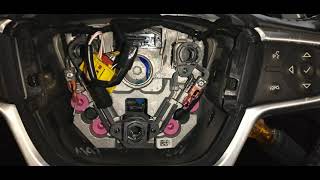
- A final system self-test is performed to verify the repair and ensure the airbag light goes out. 🎬 Watch: How to reset the airbag light on GM vehicles.
Parts You'll Likely Need
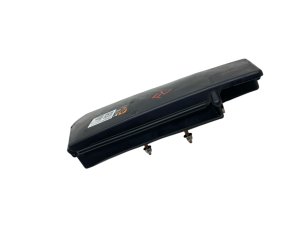
- Driver's Side Airbag Module
(OEM #Varies by VIN. Must be looked up in GM EPC. Example P/N: 84937964 (Note: This part number is for a suspension strut, not an airbag, and is incorrectly associated online. Correct part must be verified with VIN).)— This is the primary component that must be replaced due to internal connector corrosion, as per TSB #21-NA-005.
Trusted brands: ACDelco, GM Genuine
OEM price range: $1000-$2470 - Steering Wheel Airbag Wiring Harness
(OEM #Varies by VIN. Must be looked up in GM EPC. Example P/N: 84762828 (Note: This is a potential harness number but must be verified with VIN).)— This harness contains the other half of the corroded connector and must be replaced with the airbag module to ensure a clean, permanent connection.
Trusted brands: ACDelco, GM Genuine
OEM price range: $100-$150
Related Codes That Often Appear With This One
- B0012-0D — This code, for the passenger-side airbag, is mentioned alongside B0001 in NHTSA investigation #PE21010 and TSB #21-NA-005, suggesting a similar root cause of connector corrosion can affect both sides.
- B0002-1B — Mentioned in a revised version of TSB 21-NA-005, this code points to a fault in the second stage of the driver's airbag. The same root cause of connector corrosion can trigger this code as well.
Technical Service Bulletins (TSBs) & Recalls
- #21-NA-005: "Service Safety Restraint Message Displayed on the Driver Information Center (DIC), Airbag Malfunction Warning and Airbag Malfunction Indicator Lamp (MIL) Illuminated - DTC B0001-1B and/or B0002-1B Set or B0012-OD and/or B0013-OD Set". First issued March 2021, revised multiple times to add vehicles and update procedures. It identifies rust particles in the connector as the cause and mandates replacement of the airbag and harness.
Platform-Specific Known Issues
- A widespread and documented issue of corrosion forming in the driver's airbag connector is the primary cause for code B0001 on this vehicle. This is detailed in GM Technical Service Bulletin #21-NA-005 and was the subject of NHTSA Preliminary Evaluation #PE21010.
- The official GM correction requires replacing both the airbag module and the steering wheel harness to completely resolve the high resistance caused by rust particles.
- The NHTSA investigation noted 15 consumer complaints and six crashes with significant frontal damage where the driver's airbag failed to deploy on vehicles covered by this TSB.
Mechanic-Grade Diagnostic Values
- Driver Airbag Deployment Loop Resistance — expected: Between 2.1 and 4.0 Ω. Another GM document for a similar system specifies 1.74 – 3.41 ohms.. Failure: A resistance value greater than ~4.4-4.8 Ω will set a high resistance code (like B0001-1B). A value less than ~1.3-1.7 Ω will set a low resistance code.
Hidden / Shadow Codes Worth Checking
- B0001-1B: Driver Frontal Deployment Loop Stage 1 Resistance Above Threshold. This is the most common symptom byte for this issue, directly indicating high resistance. (see via Professional scan tool like GM GDS2, Autel, or Snap-on.)
- B0001-0D: Driver Frontal Deployment Loop Stage 1 Resistance Above Threshold. This is an alternative symptom byte for high resistance used on some GM platforms. (see via Professional scan tool like GM GDS2, Autel, or Snap-on.)
- B0001-0E: Driver Frontal Deployment Loop Stage 1 Resistance Below Threshold. This would indicate a short circuit, not the common corrosion issue. (see via Professional scan tool like GM GDS2, Autel, or Snap-on.)
- B0001-04: Driver Frontal Deployment Loop Stage 1 Open Circuit. This indicates a complete break in the circuit, which could be caused by a disconnected connector or broken wire. (see via Professional scan tool like GM GDS2, Autel, or Snap-on.)
Scan Tool Commands That Help
- GM GDS2: Module Diagnostics > K36 Restraints Control Module > Data Display > Deployment Loop 1-14 Resistance Data — This is the specific path used to monitor the live resistance of the airbag deployment loops while performing the wiggle tests described in TSB 21-NA-005.
- Autel / Snap-on: Special Functions > Setup SDM Primary Key in BCM — This function is required if the SDM (Airbag Module) or BCM (Body Control Module) is replaced. It establishes communication between the two modules. Failure to perform this reset will leave the airbag light on.
- Any professional scan tool: Service Mode Activation — On some newer GM vehicles (approx. 2024+), a special 'Service Mode' must be entered by holding the start button for about 6 seconds before the tool can successfully clear fault codes from modules like the SRS.
Wiring & Ground Locations
- K36 Restraints Control Module (SDM) — In most modern GM SUVs, the SDM is located under the center console, between the two front seats, bolted to the floor.. This is the computer that monitors the airbag circuits and sets code B0001. While rarely the cause of this specific code, all wiring for the driver's airbag circuit ultimately terminates here.
- F107 Steering Wheel Airbag — The airbag module itself, located in the center of the steering wheel.. This component contains one half of the connector interface that is prone to corrosion, as identified in TSB 21-NA-005.
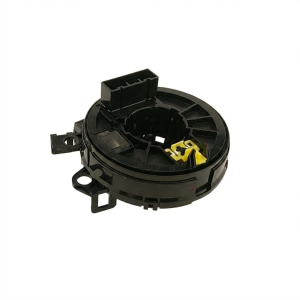
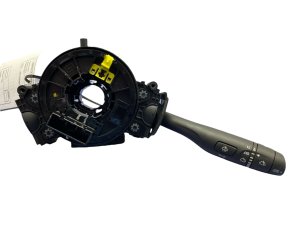
- X85 Steering Wheel Airbag Coil (Clock Spring) — Located in the steering column, behind the steering wheel.. The clock spring provides the electrical connection from the steering column to the rotating steering wheel. The harness from the airbag plugs into the clock spring. While the TSB focuses on the airbag-to-harness connection, a fault in the clock spring itself can also cause an open or high resistance circuit.
Model Year Variations Within This Range
- 2024+: Some 2024 and newer GM models require the vehicle to be put into a special 'Service Mode' before fault codes can be cleared with a scan tool. This is done by turning the ignition on (without starting the engine) and holding the start/stop button for approximately 6 seconds until the service mode message appears.
Helpful Videos

We Have This Part in Stock



The information in this article is provided for general reference and educational purposes only. Vehicle specifications, procedures, and part compatibility can vary by production date, trim level, and region. Always consult your vehicle's factory service manual and verify part numbers before purchasing or performing repairs. Safety-critical components such as airbags, seat belts, and braking systems should be installed by a qualified professional.
- Cadillac ESCALADE ESV:
- 🎬 Helpful Videos
- 🛍️ Shop This Part
- What's Unique About the 2020-2023 Cadillac ESCALADE ESV
- Diagnostic Flowchart
- Symptoms You May Notice
- Most Likely Causes
- Rare But Worth Checking
- Diagnosis Steps
- Parts You'll Likely Need
- Related Codes That Often Appear With This One
- Technical Service Bulletins (TSBs) & Recalls
- Platform-Specific Known Issues
- Mechanic-Grade Diagnostic Values
- Hidden / Shadow Codes Worth Checking
- Scan Tool Commands That Help
- Wiring & Ground Locations
- Model Year Variations Within This Range
- 🎟️ Get 5% Off