

2008 BMW 328i Negative Battery Cable & IBS: Solving Electrical Mysteries
This guide explains the critical role of the Intelligent Battery Sensor (IBS) on your 2008 BMW 328i's negative battery cable and how its failure can cause confusing electrical problems.
- The negative battery cable includes a critical Intelligent Battery Sensor (IBS) that manages charging and power.
- A faulty IBS can cause a wide range of confusing electrical issues, including no-start conditions and parasitic battery drain, often mistaken for a bad battery.
- There is a major recall for the POSITIVE battery cable on these cars, which is a separate issue from this NEGATIVE cable and sensor.
- After replacing the battery or this cable, it is ESSENTIAL to 'register' the new component with the car's computer using a diagnostic tool to ensure proper charging and longevity.
Symptoms of a Failing Negative Battery Cable or IBS
A failing Intelligent Battery Sensor (IBS) can create some of the most confusing and frustrating electrical problems for a 2008 BMW 328i owner. Because the IBS has authority over the car's power management, its failure often mimics other issues, like a bad battery or alternator.
- "Increased Battery Discharge" Warning: This is the most common symptom. You may see this message on the iDrive screen, especially after the car has been parked overnight. A faulty IBS can trigger this warning even if the battery is perfectly fine.
- Intermittent or No-Start Condition: The car may refuse to crank, even though the lights and radio work. This can happen because a bad sensor incorrectly tells the car the battery is too low to start, so it cuts power to the starter as a protective measure.
- Rapid or Premature Battery Death: If you find yourself replacing the battery every year or two, a faulty IBS is a likely suspect. It may not be telling the alternator to charge the battery correctly, or it could be overcharging and damaging it.
- Random Electrical "Ghosts": Since the IBS communicates on a data line (the BSD network) shared with other components like the alternator and water pump, a shorted IBS can cause bizarre issues. These can include flickering lights, the electric water pump running at full speed for no reason, or inaccurate oil level readings.
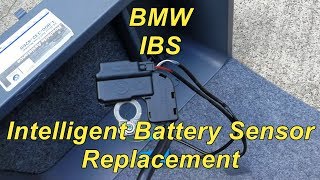
- Battery Draining While Parked: A faulty IBS can prevent the car's computer modules from going into "sleep mode," causing a significant parasitic draw that drains the battery overnight. 🎬 Watch: Learn how the IBS works and why it fails.
Known Issues, TSBs, and Recalls
It is important to distinguish between issues with the negative battery cable (with the IBS) and the more widely known recalls for the positive battery cable.
For the 2008 BMW 328i, there have been several significant recalls related to the positive battery cable connector at the fuse box. NHTSA Campaign ID 13V044000, for example, addresses how this connection can degrade over time, leading to a loss of electrical power and potential stalling. This is a separate part and problem from the negative battery cable and its integrated IBS. While searching for issues, you will find many references to this positive cable recall; be aware that this does not apply to the negative cable discussed in this article.
There are no specific recalls or widespread Technical Service Bulletins (TSBs) for the negative battery cable with IBS on the 2008 328i. However, its failure is a well-documented issue in owner forums and among BMW specialists.
Pro Tip: After replacing the battery or the negative battery cable with IBS, the new component must be registered with the vehicle's computer system. This tells the DME that a new battery or sensor is installed, resetting the stored battery history and ensuring the new battery is charged correctly. Failure to do this can lead to premature battery failure. 🎬 Watch: How to replace and register a BMW battery. This requires a compatible BMW diagnostic tool.
Buying a Used Negative Battery Cable with Sensor
A used OEM negative battery cable can be a cost-effective solution, but careful inspection is crucial.
- Inspect the IBS Module: The plastic housing of the IBS should be free of cracks, heat damage, or signs of corrosion. The sensor is sensitive to mechanical stress.
- Check the Connectors: Pay close attention to the small blue connector that plugs into the power distribution block and the main data connector. The pins should be straight and clean. Broken wires or damaged connectors are common failure points.
- Examine the Cable Itself: Look for any fraying, cuts, or corrosion along the length of the cable, especially at the battery terminal end and the chassis ground point. The cable also acts as a heat sink for the IBS, so its integrity is important.
- Verify Compatibility: Ensure the part number matches your vehicle's requirements. The primary OEM part number for this application is 61127616200. Several other part numbers have been superseded by this one.
- Why Used OEM is a Good Choice: For a complex electronic part like the IBS, a used OEM component is often more reliable than a new, cheap aftermarket version. The OEM sensor is designed to communicate perfectly with the BMW's DME, while aftermarket versions can sometimes cause communication errors or fail to function correctly.
Cost Comparison
| Part Type | Estimated Cost |
|---|---|
| New OEM (Dealer) | $260 - $320 |
| New Aftermarket (Hella OEM supplier) | $125 - $185 |
| Used OEM | $40 - $75 |
| Shop Labor for Installation | $100 - $150 |
Replacement Overview
Replacing the negative battery cable is a straightforward job located in the trunk.
- Access the Battery: In the trunk, remove the right-side trim panel to access the battery.
- Disconnect the Cable: Using a 10mm socket, loosen the nut on the negative terminal and remove the cable from the battery post.
- Disconnect the IBS Connector: Unplug the small data connector from the IBS sensor.
- Unbolt from Chassis: Follow the cable to where it bolts to the vehicle's chassis inside the trunk and remove the nut (typically 13mm).
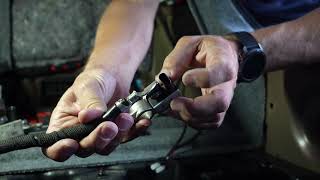
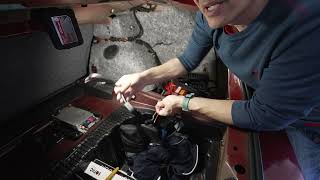
- Installation: Installation is the reverse of removal. Attach the new cable to the chassis first, then connect the data plug, and finally, connect the terminal to the battery post. 🎬 See this step-by-step IBS replacement walkthrough.
- Battery Registration: As mentioned, this final step is critical. Use a BMW-specific scan tool to register the new component with the vehicle.
Warning: The Intelligent Battery Sensor (IBS) is sensitive to mechanical and electrical stress. Never use it as a handle to lift the battery, and avoid jump-starting the car directly on the negative battery terminal. Use the designated jump-start posts in the engine bay.
Frequently Asked Questions (FAQ)
Do I have to replace the whole cable or can I just replace the sensor?
The Intelligent Battery Sensor (IBS) is serviced as a complete unit with the negative battery cable. It is not designed to be replaced separately.
What is the small blue plug connected to the negative terminal?
That small blue connector is part of the IBS wiring. It plugs into the power distribution block located on top of the battery and provides a power/data connection for the sensor.
My car has a recall for a battery cable. Is this the same part?
No. The well-known recalls (like NHTSA 13V044000) are for the positive battery cable connection at the fuse box, not the negative cable with the IBS sensor. This is a common point of confusion.
Why is my new battery dead again?
If you've replaced your battery but are still having issues with it dying, a faulty IBS is a primary suspect. The sensor may be causing a parasitic drain or preventing the new battery from charging correctly. You should also have the new battery registered to the car.
Helpful Videos
Technical Specifications
OEM Part Numbers: 61127616200 61129215952 61129184207 61129164352 61129134854 61129115498 61127891038 61127842638 61127841743 61127841134 61127838585 61127837411 61126970685 61126948336
Integrated Intelligent Battery Sensor (IBS) with microprocessor for monitoring voltage, current, and temperature. Communicates with DME via Bit Serial Data (BSD) line.
We Have This Part in Stock


The information in this article is provided for general reference and educational purposes only. Vehicle specifications, procedures, and part compatibility can vary by production date, trim level, and region. Always consult your vehicle's factory service manual and verify part numbers before purchasing or performing repairs. Safety-critical components such as airbags, seat belts, and braking systems should be installed by a qualified professional.
- BMW 328i: