

2018-2022 Mitsubishi Outlander PHEV Multi-Mode e-Transmission: Problems, Identification, and Used Replacement
Identify F1EKA transaxle failures, learn what kills the hybrid drivetrain, and know when to swap in a used OEM replacement assembly.
- This F1EKA transmission is exclusive to the 2018-2022 Outlander PHEV and is incompatible with gas-only models; always verify fitment using the VIN, charging port, and transmission code.
- Installation is a high-voltage procedure for experts only, requiring two different, specific fluids (Mitsubishi ATF SP-III and CVTF-J4) for its dual chambers.
- Mandatory post-installation programming with a dealer-level scan tool (MUT-III) is required for the vehicle to operate, including Resolver Sensor Calibration and Wet Clutch Engagement Learning.
- Before replacing the unit for drivability issues like hesitation, first ensure all software updates (like TSB-20-23-001) have been applied by a dealer, as this can often resolve the problem.
Vehicle Fitment and Part Identification

This article covers the Multi-Mode e-Transmission, also known as the F1EKA or F1EKA-1-A1Z, used exclusively in the 2018-2022 Mitsubishi Outlander Plug-in Hybrid (PHEV). This is a specialized single-speed direct-drive transaxle designed for a hybrid powertrain. It integrates a 60 kW front electric motor-generator (S61), a starter-generator, and a wet multi-plate parallel-mode clutch to manage power from the 2.0L or 2.4L gas engine and electric motors. Note that this unit drives the front wheels only; the rear wheels are driven by a completely separate F1E1A electric motor unit.
Warning: This transmission is NOT compatible with standard gasoline-only Mitsubishi Outlander or Outlander Sport models. Those vehicles use entirely different Continuously Variable Transmissions (CVTs), and the parts are not interchangeable in any way.
How to Confirm Your Vehicle's Transmission
Before purchasing a replacement, verify that your Outlander is a Plug-in Hybrid model and requires this specific unit. Look for these key identifiers:
- Charging Port: Your vehicle must have a charging port door on the passenger-side rear quarter panel.
- Badging: The vehicle should have 'PHEV' or 'Plug-in Hybrid' badges on the fenders and liftgate.
- VIN Number: The 8th digit of your Vehicle Identification Number (VIN) should be '5' for 2018-2020 models (2.0L engine) or '9' for 2021-2022 models (2.4L engine).
- Door Jamb Sticker: The vehicle information sticker inside the driver's door jamb should list a transmission code of 'F1EKA' or 'F1EKA-1-A1Z'.
Locating the ID Code on the Transmission
The transmission's identification code is the most reliable way to ensure a match. The code 'F1EKA' is typically found on a barcode sticker and may also be stamped directly onto the top/front of the transmission case, near where it bolts to the engine (the bellhousing area).
Common Failure Symptoms
When the Multi-Mode e-Transmission begins to fail, it can present a range of symptoms. Since it is deeply integrated with the hybrid system, problems can sometimes be mistaken for engine or battery issues. Common signs that point to the transmission include:
- Hesitation or Jerking: A noticeable delay, rough shifting, or jerky movements when the vehicle switches between electric and gasoline power, especially at lower speeds.
- Warning Lights: The 'Check Engine' light or a specific transmission warning light may illuminate on the dashboard.
- Strange Noises: Whining, humming, or clunking sounds that change with vehicle speed or during the transition between EV and gas modes can indicate internal mechanical problems.
- Loss of Drive Modes: Inability to select or stay in EV (electric-only) mode or other drive modes.
- Delayed Engagement: A noticeable pause when shifting from Park into Drive or Reverse before the vehicle begins to move.
- Complete Loss of Power: In severe cases, the transmission can fail completely, leaving the vehicle unable to move.
Diagnostic Flowchart

Known Issues, TSBs, and Recalls
While this transmission is generally robust, some issues have been documented by Mitsubishi. Always have a dealer check your VIN for any open recalls or applicable service bulletins.
Technical Service Bulletins (TSBs)
| TSB Number | Description | Applicable Models |
|---|---|---|
| TSB-20-23-001REV | Addresses corrected procedures for using special tools when replacing an oil seal on the transmission. | 2018-2022 |
| TSB-20-23-001 | Provides instructions for software updates to the PHEV Electronic Control Unit (ECU) to resolve certain drivability issues and problems with EV drive mode availability. | 2018-2022 |
Pro Tip: Many search results refer to TSBs for CVT transmissions in non-hybrid Outlanders (like TSB-20-23-001REV3 for the CVT-8). These do NOT apply to the PHEV's F1EKA transmission. Ensure any TSB specifically mentions the PHEV model.
Recalls
As of mid-2026, there are no major recalls specifically for the F1EKA transmission assembly itself. However, related recalls for the Outlander PHEV exist, such as one for liftgate gas springs (Recall SR-26-001), which affects 2018-2022 models. It is crucial to distinguish between recalls for the transmission and those for other vehicle components.
Replacement: What's Included in a Used Assembly
Understanding what parts come with a used F1EKA transmission is key to a successful repair. A used assembly, based on industry standards, typically includes:
- The main transaxle case, extension/tail housing, input shafts, and all internally lubricated parts.
- The integrated front electric motor-generator (traction motor, S61).
- The integrated generator assembly (starter-generator).
- The internal wet multi-plate parallel-mode clutch used for engaging the gasoline engine.
- The transmission oil pan.
Parts that are almost never included and must be transferred from your old unit or purchased separately are:
- The Power Drive Unit (PDU) or inverter, which controls the electric motors.
- External high-voltage wiring harnesses (the large orange cables) beyond integral motor connections.
- The Transmission Control Module (TCM) or main PHEV ECU.
- CV axles (axle shafts), transmission cooler, and associated lines.
- Shifter, linkage, and cables.
Pro Tip: This transmission does not use a traditional torque converter. It uses an internal wet clutch. If a seller mentions a torque converter, they may be confusing it with a different transmission type.
Installation and Programming Essentials

Installing this transmission is a complex job recommended only for expert technicians with hybrid vehicle experience. Shop labor is estimated at 6 to 11 hours, costing roughly $720 to $1,800.
Warning: This is a high-voltage component. Improper handling can result in severe injury or death. The high-voltage system must be fully de-energized by pulling the service plug and waiting at least 10 minutes before any work begins.
Installation Gotchas & Special Tools
Several critical steps must be followed to avoid catastrophic failure:
- Dual-Chamber Fluid Fill: The F1EKA has two completely separate fluid chambers requiring different fluids. One chamber for the gears and clutch takes Mitsubishi Genuine ATF SP-III, while the other for cooling the electric motor takes Mitsubishi Genuine CVTF-J4. Using the wrong fluid, mixing them, or failing to fill both chambers will destroy the unit.
- Mandatory Programming: The vehicle will not operate correctly without post-installation calibration.
- Special Tools: The job requires High-voltage insulated safety gloves (Class 0, rated for 1000V AC), a High-voltage multimeter (CAT III 1000V or CAT IV 600V), an engine support fixture/brace, and a transmission jack.
- Consumables: Always use a new drain plug crush washer (Part #MD000312) and fill plug crush washer (Part #MF660036).
- Cooling System Bleeding: All drained cooling circuits for the hybrid electronics and drivetrain must be properly refilled and bled to avoid overheating.
Mandatory Programming and Calibration
After the used transmission is installed, it must be electronically calibrated to the vehicle. This is not optional. The process requires a dealer-level scan tool (Mitsubishi MUT-III or an equivalent high-end bi-directional tool) to perform VIN-specific coding, Resolver Sensor Calibration (to synchronize the electric motor phases), and Wet Clutch Engagement Learning (to adapt the parallel-mode clutch).
What Fails at Every Mileage Band
Pro Tip: The following mileage bands describe used replacement units of that mileage. The checklists provided are things to do WHILE INSTALLING the purchased engine (or transmission), not maintenance for your current unit.
Under 60K Miles
Units in this range are generally very healthy. Failures at this stage are rare but can include software glitches in the hybrid control module causing hesitation, jerky movement, or abrupt shifting between power modes. Another known issue is a faulty transmission selector cable or connection causing incorrect signals to the transmission control unit, leading to rough shifts and slipping.
- Do during install (required): Ensure all required software updates and calibrations for the PHEV ECU are performed using a MUT-III tool.
- Do during install (required): Replace left and right front CV axle seals.
- Cheap insurance while the engine is out: Highly recommend replacing the engine rear main seal.
60K to 100K Miles
As mileage increases, there are more reports of hesitation and rough shifting if software updates have not been performed. Wear on the selector lever cable connection can cause incorrect signals and shifting problems. There are also reports of front passenger side CV boot and axle failures.
- Do during install (required): Perform a complete fluid service on the transaxle, replacing both the ATF SP-III and CVTF-J4 in their respective chambers.
- Do during install (required): Replace left and right front CV axle seals.
- Cheap insurance while the engine is out: Replace engine rear main seal.
- Cheap insurance while the engine is out: Inspect and consider replacing the selector lever cable if any wear is visible.
100K to 150K Miles
At this stage, reports of more significant transmission issues emerge, including clunking noises, harsh shifting, and sudden loss of drive. Internal wear or failure of mechanical components can lead to complete transmission failure requiring replacement.
- Do during install (required): Assume all seals are at the end of their service life; replace all external seals, including axle seals and input/output seals, as a matter of course.
- Do during install (required): Flush all related cooling lines for the transmission and power electronics.
- Cheap insurance while the engine is out: Replace engine rear main seal.
- Cheap insurance while the engine is out: Strongly consider replacing the separate rear electric motor unit (F1E1A) fluid at the same time.
Over 150K Miles
While many vehicles continue to run well, the risk of internal component failure increases significantly. The most common major issue cited at high mileage is transmission failure. With proper maintenance, the Mitsubishi Outlander PHEV is expected to last between 200,000 and 250,000 miles, with a design lifespan target of 300,000 km (~186,000 miles).
- Do during install (required): At this mileage, a used transmission should be installed with the expectation that it is a life-extending repair, not a final one. All 'do during install' recommendations from the 100-150K mile band apply.
- Do during install (required): Thoroughly inspect all high-voltage cable connections for any signs of degradation or corrosion.
- Do during install (recommended): Replace all accessible related cooling hoses and clamps, as rubber components are likely nearing the end of their life.
Real Owner Experiences
The following table highlights real-world experiences, quotes, and failures reported by Outlander owners.
| Source | Mileage | What Happened | Cost |
|---|---|---|---|
| outlander-forum.com | 30,000-60,000 miles | Hesitation and rough transitions between electric and gasoline power, especially at low speeds. The issue is sometimes intermittent and can be resolved by software updates or recalibration at the dealership. | Varies; may be covered by warranty or require a dealership diagnostic fee for software updates. |
| Reddit r/OutlanderPHEV | 51,000 km (~32,000 miles) | A dealership recommended a 'transmission flush' as a preventative service, not due to a specific failure. | Quoted at $185 CAD. |
| myoutlanderphev.com forum | 95,000 miles | A 2018 PHEV GT required replacement of the front passenger side CV boot & axle and a rear drive mount gasket, both under warranty. The vehicle was otherwise driving like new. | Covered by warranty. |
| Carly forum | 139,298 km (~86,500 miles) | A 2022 Outlander Hybrid experienced a check engine light with rough shifts and slipping gears. The issue was resolved by replacing a faulty transmission selector cable. | Not specified, but involved diagnosis and repair by a hybrid specialist. |
| outlander-forum.com | 100,000-125,000 miles | Some owners report transmission failures that begin with intermittent clunks or jerks and can progress to warning lights and a complete loss of drive, requiring a full replacement. | A used replacement unit is estimated to cost between $1,500 and $2,000, plus labor. |
| outlander-forum.com | 110,000 miles | Owner of a 2016 model reports no mechanical problems at this mileage. | N/A |
| outlander-forum.com | 159,000 miles | A 2020 model is reported to be 'still going strong' with no mention of transmission issues. | N/A |
| outlander-forum.com | 189,000 km (~117,000 miles) | Owner reports 'zero mechanical problems'. | N/A |
| outlander-forum.com | Nearing 300,000 miles | A posting from a US driver mentioned nearing this mileage, though no specific details on transmission health were provided. | N/A |
| reddit.com | 80000 | Owner was quoted by a transmission shop for a fix. The comments suggest taking it to a dealer to check for warranty coverage. The outcome is unknown. (2019 Non-PHEV) | Unknown |
| reddit.com | ~77000 | Owner was quoted nearly $20,000 by a dealer for a new CVT transmission ($16,000 for the part alone). Multiple independent shops could not offer a rebuild or remanufactured option. The owner sold the car to a junkyard. (2016 Non-PHEV) | N/A (vehicle sold) |
| reddit.com | 30000 | Owner was quoted $600 by a dealer for a preventative front and rear transaxle oil change and declined the service at the time. (2023 PHEV) | $0 |
Repair or Replace?
When facing transmission trouble, deciding between a repair and a full replacement comes down to the nature of the failure.
- External Fluid Leaks: If the issue is a minor seal or gasket leak caught early, repair makes sense. A transmission leak inspection typically costs between $61 and $90, and repairing a seal runs $150 to $500.
- External Component Failure: If a peripheral component like an oil cooler line fails, it is a standard repair. The average cost for a trans oil cooler line replacement is estimated between $299 and $379.
- Software or Calibration Issues: If drivability issues can be traced to software, a dealer can perform a re-flash or calibration using the MUT-III tool for $150 to $400. This should always be the first step for hesitation or erratic behavior.
When Replacement is Smarter: Replacement is the most likely outcome for any significant internal failure. This complex transaxle, which integrates electric motors and a generator, is not commonly rebuilt by independent shops in the US. If you experience symptoms like loud whining, grinding, clunking, or a total inability to engage EV or engine drive modes, a major internal failure is likely. In these cases, replacing the assembly with a low-mileage used unit or a new OEM unit is the most reliable and often only viable option.
Questions to Ask Your Installer
- Have you worked on a Mitsubishi Outlander PHEV transaxle before, and are you aware of the high-voltage safety procedures required?
- Can you confirm you have the correct, distinct fluids (Mitsubishi ATF SP-III and CVTF-J4) and understand this is a dual-chamber system that must be filled separately?
- Do you have a Mitsubishi MUT-III scan tool or an equivalent high-level bidirectional tool to perform the mandatory post-installation programming, specifically the Resolver Sensor Calibration and Wet Clutch Engagement Learning?
- Will the quoted price include a full flush of the transmission cooler and lines?
- What is the source and mileage of the used transmission, and what is the warranty provided on both the part and your labor?
- Can you provide a detailed, written estimate that breaks down the cost of the unit, labor hours, fluids, and any other necessary supplies?
Replacement Cost Estimates
Prices can vary based on supplier, part condition, and warranty. The following are typical cost ranges:
| Part or Service | Estimated Cost (USD) |
|---|---|
| New OEM | $3,900 - $16,000+ (part only) |
| Remanufactured | $3,500 - $5,000 |
| Used OEM | $1,500 - $4,500 |
| Shop Labor (6-11 hours) | $720 - $1,800 |
Freight & Delivery Reality

If you are purchasing a used F1EKA transmission online, understand that it will not arrive in a standard cardboard box. This assembly weighs approximately 176 lbs and measures roughly 24" x 20" x 18" before crating. It ships as LTL (Less Than Truckload) freight strapped to a pallet.
Because of its size and weight, delivery requires a commercial loading dock or a truck equipped with a liftgate. Always inspect the transmission thoroughly while it is still on the pallet before signing the delivery receipt. Look for any cracked housings, broken sensors, or damaged electrical connectors that may have occurred during transit. Finally, expect a pre-purchase verification interview from reputable sellers—this is an industry best practice to confirm your VIN, the 8th digit, and the F1EKA code to ensure you are not accidentally buying a unit for a standard gas-powered Outlander.
Frequently Asked Questions (FAQ)
Can I use this transmission in a regular gas-powered Outlander?
No. This Multi-Mode e-Transmission is designed specifically for the Plug-in Hybrid system. It is mechanically and electronically incompatible with the CVT used in gasoline-only Outlander models.
What are the most common mistakes when installing this transmission?
The top three mistakes are: 1) Failing to use proper high-voltage safety procedures. 2) Filling the two separate fluid chambers with the wrong type or amount of fluid. 3) Skipping the mandatory post-installation programming and calibration, which will prevent the vehicle from running correctly.
Why can't I find a torque converter for this transmission?
The F1EKA transaxle does not use a torque converter. Instead, it uses an internal, computer-controlled wet multi-plate parallel-mode clutch to engage and disengage power from the gasoline engine. This is a fundamental difference from conventional automatic or CVT designs.
How long does the Outlander PHEV transmission last?
With proper maintenance, the Mitsubishi Outlander PHEV as a whole is expected to last between 200,000 and 250,000 miles, with some sources citing a design lifespan target of 300,000 km (~186,000 miles). However, the transmission is often cited as the most common major problem at higher mileages, meaning its service life may be shorter if fluid changes are neglected.
What fluids does the F1EKA transmission take?
This is a dual-chamber system requiring two distinct fluids. The gear and clutch chamber requires Mitsubishi Genuine ATF SP-III. The front motor cooling chamber requires Mitsubishi Genuine CVTF-J4. Regularly changing these fluids—some schedules recommend every 30,000 miles under severe conditions—is critical for longevity.
Helpful Videos
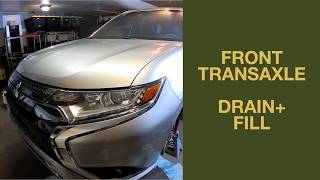
Technical Specifications
OEM Part Numbers: F1EKA F1EKA-1-A1Z
Name: Multi-Mode e-Transmission; Alternate Names: F1EKA, F1EKA-1-A1Z; Vehicle Application: 2018-2022 Mitsubishi Outlander Plug-in Hybrid (PHEV); Type: Single-speed direct-drive transaxle; Drive Wheels: Front wheels only; Integrated Front Motor: 60 kW (S61); Engine Compatibility: 2.0L (2018-2020), 2.4L (2021-2022); Clutch Type: Wet multi-plate parallel-mode clutch; Fluid 1 (Gears/Clutch): Mitsubishi Genuine ATF SP-III; Fluid 2 (Motor Cooling): Mitsubishi Genuine CVTF-J4; Weight: Approx. 176 lbs; Dimensions: Approx. 24" x 20" x 18"
We Have This Part in Stock


The information in this article is provided for general reference and educational purposes only. Vehicle specifications, procedures, and part compatibility can vary by production date, trim level, and region. Always consult your vehicle's factory service manual and verify part numbers before purchasing or performing repairs. Safety-critical components such as airbags, seat belts, and braking systems should be installed by a qualified professional.
- Mitsubishi Outlander:
- 🎬 Helpful Videos
- 🛍️ Shop This Part
- Vehicle Fitment and Part Identification
- How to Confirm Your Vehicle's Transmission
- Locating the ID Code on the Transmission
- Common Failure Symptoms
- Diagnostic Flowchart
- Known Issues, TSBs, and Recalls
- Technical Service Bulletins (TSBs)
- Recalls
- Replacement: What's Included in a Used Assembly
- Installation and Programming Essentials
- Installation Gotchas & Special Tools
- Mandatory Programming and Calibration
- What Fails at Every Mileage Band
- Under 60K Miles
- 60K to 100K Miles
- 100K to 150K Miles
- Over 150K Miles
- Real Owner Experiences
- Repair or Replace?
- Questions to Ask Your Installer
- Replacement Cost Estimates
- Freight & Delivery Reality
- Frequently Asked Questions (FAQ)
- 🎟️ Get 5% Off