

Tesla Model 3 & Y Glove Box Guide (2017-2024): Fixing a Stuck Latch and What to Check on a Used Part
Diagnose a rattling, stuck, or broken glove box in your 2017-2023 Tesla Model 3 or 2020-2024 Tesla Model Y and learn what to inspect when buying a used replacement.
- The most common failures are the glove box not opening or not staying closed, usually due to a fault in the electronic latch mechanism.
- A stuck glove box can often be opened manually by removing the side dashboard panel to access the latch.
- This part fits 2017-2023 Model 3 and 2020-2024 Model Y, but it is NOT compatible with the 2024+ 'Highland' Model 3.
- When buying a used part, physically check that the side latch plungers spring back out correctly and that the actuator arm is properly seated.
Symptoms of a Failing Glove Box

Because the glove box is electronically controlled, failures can be either mechanical or electrical. Here are the most common symptoms owners experience.
1. Glove Box Will Not Open
This is the most frequent complaint. You may hear a click, but the door remains shut. This can be caused by several issues:
- Jammed Latch: An object inside may be pressing against the door, preventing the latch from releasing.
- Misaligned or Stuck Mechanism: The actuator arm may have disconnected from the latch, or the latch pins themselves are stuck.
- Strong Magnets (Newer Models): Some newer vehicles have magnets that are too strong for the latch to overcome. A known fix for this is adding small shims to the rubber bumpers on the door to create more push-off force.
- Software Glitch: A temporary software bug can cause the touchscreen command to be unresponsive. A system restart often resolves this.
- Weak 12V Battery: The glove box actuator relies on the vehicle's 12-volt auxiliary battery. If this battery is weak or failing, the actuator may not have enough power to operate.
Pro Tip: If your glove box is stuck, try pressing the open button on the screen while simultaneously prying gently at the top edge of the door with your fingertips. For some owners, this is enough to get it open. You can also try opening the passenger door first, which has resolved the issue for some.
2. Glove Box Opens Randomly or Won't Stay Closed
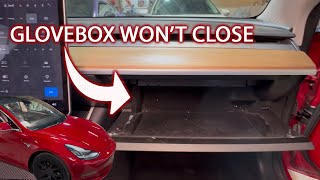
A glove box that pops open while driving or refuses to latch shut is another common problem. This is almost always a mechanical issue where the latch plunger (the pin that extends to hold the door) is not extending properly. This can be due to a disconnected actuator arm, a weak internal spring, or a degraded piece of foam inside the mechanism that is blocking movement.
3. Rattling or Creaking Noises
If you hear rattling from the glove box area, it could be a sign that the assembly is loose or misaligned. Creaking when opening or closing can point to worn hinge pins or a problem with the damper mechanism that controls the door's soft-opening action.
Known Issues, TSBs, and Recalls

While there are no major NHTSA safety recalls specifically for the glove box assembly itself, there are common, well-documented issues.
Service Bulletin for Strong Magnets
Tesla issued Service Bulletin SB-25-14-001 for some 2025 Model Y vehicles where the glove box fails to open. The cause was identified as the retention force of the door magnets being too strong. The official fix is to install small shims on the rubber stoppers of the glove box assembly, which increases the gap and provides more force to push the door open when the latch releases. While this TSB is for a newer model year, the principle may apply to earlier cars experiencing similar symptoms.
Manual Release Procedure
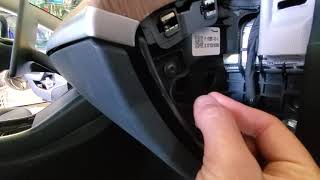
If the electronic release fails completely, there is a way to manually open the glove box. This involves prying off the side panel of the dashboard (next to the passenger door) to access a small opening. 🎬 Watch: Step-by-step manual opening demonstration By inserting a tool like a screwdriver or Allen key, you can manually trigger the latch mechanism. This can be tricky, but it allows you to retrieve important documents without waiting for a service appointment.
Warning: This part does NOT fit the refreshed 2024+ Tesla Model 3, known as the 'Highland' model. It is only compatible with pre-refresh 2017-2023 Model 3 vehicles and 2020-2024 Model Y vehicles.
Buying a Used Lower Glove Box: What to Check

A used OEM glove box is an excellent, cost-effective replacement. Because the failures are often minor and mechanical, you can easily inspect a recycled part to ensure you get a good one. Here’s what to look for:
- Inspect the Latch Plungers: Check the two latch plungers on the sides of the glove box door. Manually push them in and ensure they spring back out smoothly and fully. If they are sticky or don't extend all the way, the glove box may not stay closed.
- Check the Actuator Linkage: On the back of the assembly, look for the small arm that connects the electronic actuator motor to the latch mechanism. In some cases, this arm can pop out of its hole, causing the latch to fail. Ensure it is securely seated.
- Examine the Damper: Check the small hydraulic or spring-loaded damper arm, usually on the side of the assembly. This controls the soft-open feature. Make sure it is intact and not leaking fluid or broken.
- Physical and Cosmetic Condition: Check for cracks, deep scratches, or signs of warping. One owner reported a 'melted' glove box, so inspect for any heat damage. Also, check that the interior flocking material is not torn or peeling.
- Verify Part Number Revisions: Early Model 3s (e.g., 2018) used a hard plastic for the door, while later revisions switched to a soft-touch plastic. While functionally the same, this might matter for cosmetic matching. The various part number suffixes (-D, -F, -G, -H, -J, -K) represent these minor revisions over the years.
Cost of Replacement
Replacing a Tesla glove box can vary in cost depending on the failure and the source of the part.
| Part Source | Estimated Cost |
|---|---|
| New OEM (from Tesla) | $350 - $450 |
| New Aftermarket | Not commonly available |
| Used OEM (Recycled) | $100 - $175 |
| Shop Labor Cost | $100 - $200 |
Sometimes, a simple adjustment by a technician can fix the issue for the cost of a minimum labor charge, which could be as low as $40-$50.
Replacement Difficulty: 2/5

Replacing the entire glove box assembly is a feasible DIY project for someone with basic tools and patience. The official Tesla service procedure involves removing the passenger-side lower A-pillar trim, the main instrument panel decor trim, and the passenger footwell cover to access the mounting screws. The entire assembly is held by a few screws and clips. The most delicate part is disconnecting the three electrical connectors for the light, damper, and latch solenoid without damaging them. A full replacement can take a DIYer 1-2 hours. 🎬 Watch: Full glove box replacement walkthrough A simple fix, like re-seating the actuator arm, can be done in under 30 minutes.
Frequently Asked Questions (FAQ)
Why won't my Tesla glove box open with the touchscreen or voice command?
The most common reasons are a jammed latch from items inside, a software glitch (try a screen reboot), a weak 12V battery, or a failed electronic actuator. In some cases, the latch mechanism itself is misaligned or broken.
How can I manually open a stuck Tesla glove box?
You can manually open it by removing the passenger-side dashboard end panel. This exposes a small access hole where you can insert a thin tool to trip the latch mechanism from the inside. This is considered an emergency release method.
Is the glove box for the Tesla Model 3 and Model Y the same part?
Yes, the 2017-2023 Model 3 and 2020-2024 Model Y share the same glove box assembly. However, it is not compatible with the updated 2024+ 'Highland' Model 3.
My glove box pops open while I'm driving. How do I fix it?
This usually means the latch plunger is not extending fully to secure the door. This can be caused by a disconnected actuator arm, a weak spring, or an internal obstruction. A temporary fix is to manually pull the plunger out before closing the door. 🎬 See this quick fix for a glove box that won't close For a permanent fix, the assembly may need to be removed to inspect and repair the latch mechanism.
Helpful Videos
Technical Specifications
OEM Part Numbers: 1083340-00-D 1083340-00-F 1083340-00-G 1083340-00-H 1083340-00-J 1083340-01-K 1083340-S1-K
Electronically actuated latch, integrated puddle light, integrated USB-A port for Dashcam/Sentry Mode.

The information in this article is provided for general reference and educational purposes only. Vehicle specifications, procedures, and part compatibility can vary by production date, trim level, and region. Always consult your vehicle's factory service manual and verify part numbers before purchasing or performing repairs. Safety-critical components such as airbags, seat belts, and braking systems should be installed by a qualified professional.
- Tesla 3:
- Tesla Y:
- 🎬 Helpful Videos
- Symptoms of a Failing Glove Box
- 1. Glove Box Will Not Open
- 2. Glove Box Opens Randomly or Won't Stay Closed
- 3. Rattling or Creaking Noises
- Known Issues, TSBs, and Recalls
- Service Bulletin for Strong Magnets
- Manual Release Procedure
- Buying a Used Lower Glove Box: What to Check
- Cost of Replacement
- Replacement Difficulty: 2/5
- Frequently Asked Questions (FAQ)
- 🎟️ Get 5% Off