

2017-2023 Model 3 & 2020-2026 Model Y Rear Suspension: Fixing the Infamous Squeak
This guide focuses on the common failure of the rear upper aft control arm (camber link) that causes persistent squeaking and clunking noises in the Tesla Model 3 and Model Y.
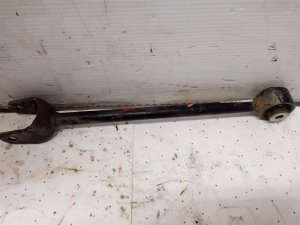
- The notorious rear suspension squeak on 2017-2023 Model 3s and 2020-2026 Model Ys is caused by the rear upper aft control arm (camber link), part #1044423-00-G.
- This is a known issue, and Tesla Service Centers often replace the parts as a 'goodwill' gesture for a reduced cost, even out of warranty, but this is not guaranteed.
- When buying a used part, the only thing that matters is the condition of the rubber boot on the ball joint; it must be free of any rips or tears.
- An alignment is absolutely required after replacing this part to prevent rapid tire wear.
Is Your Tesla Squeaking? The Rear Upper Control Arm is the Likely Culprit

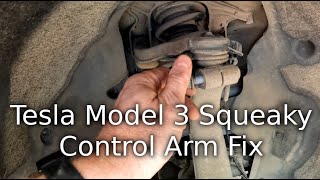
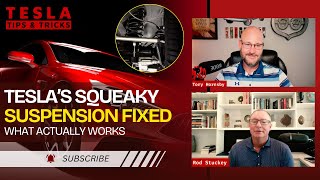
A loud, unmistakable squeak from the rear of your 2017-2023 Tesla Model 3 or 2020-2026 Tesla Model Y is one of the most common issues reported by owners. The sound, often compared to an old creaky door or a wooden ship, is most noticeable at low speeds, especially when going over bumps or up driveways. In the quiet cabin of an EV, this noise is impossible to ignore. 🎬 Watch: Hear the squeak and see what actually works The problem is almost always a failed ball joint in the rear upper aft control arm, also known as the camber link. This failure happens when the protective rubber boot on the arm's ball joint fails, allowing water and debris to enter. This contamination washes away the essential grease, leading to corrosion and metal-on-metal contact that creates the signature squeak.
Compatibility Warning: This guide and the parts mentioned apply to the 2017-2023 Tesla Model 3 and the 2020-2026 Tesla Model Y. The refreshed 2024+ Tesla Model 3, known as the 'Highland,' has a redesigned suspension. The control arms from earlier models are NOT compatible with the Highland version. Verify your vehicle's model year before purchasing parts.
Symptoms of a Failing Rear Upper Control Arm


A failing rear upper control arm will make its presence known through distinct noises and potential changes in handling.
- Squeaking or Creaking Noises: This is the most notorious symptom. It's a loud, high-pitched groan or squeak from the rear suspension, most prominent at low speeds when the suspension is articulating over bumps, speed bumps, or uneven driveways. The noise may worsen in wet or cold weather.
- Clunking or Knocking Sounds: As the joint wears out completely, the excessive play can result in a clunking or knocking sound. This indicates a more advanced stage of failure where metal components are making hard contact.
- Uneven Tire Wear: Since this arm controls the rear wheel's camber angle, a failed joint can allow the wheel alignment to shift. This often results in accelerated wear on the inner edge of the rear tires.
- Sloppy or Unstable Handling: In severe cases, you might notice the rear of the car feels less stable, especially during cornering or at highway speeds, as the wheel is no longer held firmly in its correct alignment.
Buying a Used Rear Upper Control Arm
For this part, a quality used OEM component is an excellent choice, often providing the same performance as a new part for a fraction of the price. Because the failure mode is so specific, you can easily inspect a used arm for viability.
- Inspect the Ball Joint Boot: This is the most critical step. The rubber boot on the ball joint at the end of the arm must be intact. Look for any rips, tears, or cracks. If the boot is damaged, the joint is likely contaminated and will fail soon, if it hasn't already. Do not buy an arm with a compromised boot.
- Check for Play: Hold the arm and try to move the ball joint stud by hand. It should be stiff and difficult to move. If it's loose, floppy, or makes any noise, the joint is worn out.
- Verify the Part Number: Ensure you are buying the correct part. The most common part number for this specific squeaking issue is 1044423-00-G. This part is typically interchangeable between the left and right sides.
- Mileage Isn't Everything: Failure of this part is more related to environmental exposure (water, road salt) than pure mileage. A low-mileage arm from a car in a wet or winter climate could be in worse shape than a high-mileage arm from a dry climate. The physical inspection of the boot is more important than the odometer reading.
Replacement and Installation

Replacing the rear upper aft control arm is a job that a confident DIY mechanic can perform. The labor time is relatively low, estimated at around 0.4 hours per side.
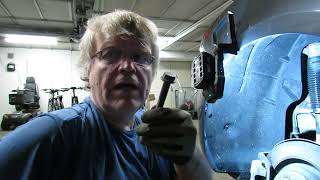
🎬 See this step-by-step rear upper control arm replacementTorque Specifications
Using correct torque specs is critical for suspension components. These are the official specs from Tesla's service manual.
| Fastener Description | Torque Value (Nm) | Torque Value (ft-lbs) | Notes |
|---|---|---|---|
| Bolt and nut attaching aft link to the knuckle | 134 Nm | 98.8 ft-lbs | This is the outer bolt connecting the arm to the wheel assembly. |
| Bolt and nut attaching aft link to the subframe | 134 Nm | 98.8 ft-lbs | Crucial: Must be tightened with the suspension at normal ride height. |
Pro Tip: To prevent premature failure of the new bushing, the inboard bolt (connecting the arm to the subframe) must only be fully torqued when the suspension is compressed to its normal ride height. You can achieve this by placing a jack under the lower control arm to lift the hub or by resting the car's weight on ramps. Tightening this bolt while the suspension is hanging down will twist the bushing, causing it to fail very quickly.
Post-Installation Alignment
An alignment is mandatory after this repair. Replacing this control arm directly affects the rear wheel's camber and toe settings. Failure to perform a four-wheel alignment will result in poor handling and rapid, uneven tire wear.
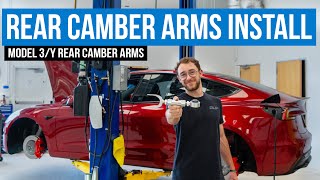
🎬 Watch: How to install adjustable rear camber armsCost of Replacement
The cost can vary significantly depending on whether you do it yourself, use an independent shop, or go to a Tesla Service Center.
| Item | Estimated Cost | Notes |
|---|---|---|
| New OEM Part (Tesla) | $90 - $120 per arm | Price for a single arm from a Tesla Service Center. |
| New Aftermarket Part | $25 - $100 per arm | Wide range of quality and price. |
| Used OEM Part | $40 - $80 per arm | A cost-effective option if the boot is in perfect condition. |
| Shop Labor (Independent) | $100 - $250 | Typically 1-1.5 hours of labor for a pair, plus alignment. |
| Tesla Service Center Repair | $200 - $700+ | This is a known issue. Many owners report Tesla charging only for parts (~$195 for a pair) as a 'goodwill' gesture, even out of warranty. However, this is not guaranteed and some have been quoted over $650. |
Known Issues, TSBs, and Recalls
While the squeaking rear upper control arm is a widespread and well-documented problem, there has been no official recall for it. Tesla Service Centers are very familiar with the issue and have often replaced the parts under 'goodwill' for customers outside of the basic warranty.
It is important not to confuse this with NHTSA Recall 21V-835 (Tesla bulletin SB-21-31-003). That recall was for potentially loose fasteners on the front suspension lateral links of some 2019-2021 Model 3 and 2020-2021 Model Y vehicles, which is a completely separate issue.
Frequently Asked Questions (FAQ)
Do I need to replace both the left and right arms at the same time?
It is highly recommended. Suspension components wear at similar rates. If one side has failed due to a design vulnerability, the other side is likely to fail soon. Replacing them in pairs ensures balanced handling and saves you a future repair trip.
Is it safe to inject grease into the old joint?
Some owners attempt to inject grease into the ball joint boot using a syringe as a temporary fix. While this may quiet the noise for a short time, it does not solve the root problem. The original seal is broken, and the joint has already been exposed to contaminants. The only permanent solution is to replace the arm. Using a penetrating oil like WD-40 is not recommended as it can degrade the rubber boot.
Will this part fit my 2024 Tesla Model 3 'Highland'?
No. The 2024 'Highland' refresh of the Model 3 features a new suspension design for improved ride comfort. The control arms and other components are different and not interchangeable with the earlier 2017-2023 models. Always verify fitment for your specific vehicle.
Why does this part fail so often?
The failure is attributed to the design of the ball joint's seal. Over time, the seal allows moisture to penetrate the joint. This water displaces the grease and causes the metal surfaces inside the joint to corrode and squeak. It's a common failure point on early Model 3 and Y vehicles.
Helpful Videos
Technical Specifications
OEM Part Numbers: 1044423-00-G 1188423-00-A
Knuckle to Arm Torque: 134 Nm (98.8 ft-lbs). Subframe to Arm Torque: 134 Nm (98.8 ft-lbs), tightened at ride height.
We Have This Part in Stock



The information in this article is provided for general reference and educational purposes only. Vehicle specifications, procedures, and part compatibility can vary by production date, trim level, and region. Always consult your vehicle's factory service manual and verify part numbers before purchasing or performing repairs. Safety-critical components such as airbags, seat belts, and braking systems should be installed by a qualified professional.
- Tesla 3:
- Tesla Y:
- 🎬 Helpful Videos
- 🛍️ Shop This Part
- Is Your Tesla Squeaking? The Rear Upper Control Arm is the Likely Culprit
- Symptoms of a Failing Rear Upper Control Arm
- Buying a Used Rear Upper Control Arm
- Replacement and Installation
- Torque Specifications
- Post-Installation Alignment
- Cost of Replacement
- Known Issues, TSBs, and Recalls
- Frequently Asked Questions (FAQ)
- 🎟️ Get 5% Off