

2000-2009 Honda S2000 Front Lower Control Arm: Clunks, Seized Bolts, and Bushing Failure
Diagnosing common clunking noises and vibrations, and what to know before replacing your S2000's front lower control arms.
- The biggest challenge is not the control arm, but the alignment bolts which often seize inside the bushings and require cutting for removal.
- Front lower control arms are interchangeable across all S2000 model years (2000-2009, AP1 & AP2).
- Symptoms like clunking and poor steering are caused by failed rubber bushings, not the metal arm itself. Bushings can be replaced independently using a press.
- A full four-wheel alignment is mandatory after replacement to ensure safety, proper handling, and to prevent rapid tire wear.
Symptoms of a Failing Front Lower Control Arm


On the Honda S2000, symptoms related to the front lower control arm are almost always caused by worn or failed rubber bushings, not the metal arm itself. The most common culprit is the large, vertically-oriented "compliance bushing" (also called the caster bush). Here’s what to look and listen for:
- Clunking or Knocking Noises: A distinct clunking sound from the front end when driving over bumps, during braking, or when turning is a classic sign of a bad bushing. This noise is caused by excessive movement in the arm as the worn bushing allows metal-on-metal contact.
- Steering Wheel Vibration: Worn bushings can lose their ability to dampen road vibrations, leading to a noticeable shake or vibration in the steering wheel, especially at higher speeds.
- Vague or Wandering Steering: If the bushings are significantly worn, they can allow the suspension geometry to shift dynamically while driving. This can make the steering feel loose, imprecise, or cause the car to pull to one side.
- Uneven Tire Wear: Failed bushings can lead to incorrect and inconsistent camber and caster angles. This causes tires to wear unevenly, often on the inside or outside edges.
- Visible Bushing Damage: The most definitive sign is a visual inspection. Torn, cracked, or degraded rubber on the compliance bushing is a common sight on higher-mileage S2000s. You can often see the cracks by turning the wheels and looking at the rear-most bushing on the lower control arm.
Warning: While the vehicle may still be drivable with worn bushings, severe failure can compromise steering control and vehicle stability, increasing the risk of an accident. It will also accelerate tire wear, costing you more in the long run.
The Infamous Seized Alignment Bolt Problem

The single biggest issue when replacing a Honda S2000 front lower control arm is not the part itself, but the hardware that holds it in. The caster and camber adjustment bolts pass through metal sleeves inside the rubber bushings. Over time, moisture and road salt cause these bolts to rust and seize solid inside the sleeves.
This creates two major problems:
- Alignment becomes impossible. If the bolts are seized, a technician cannot perform a proper front-end alignment because the adjusters won't move. This is often how the problem is first discovered.
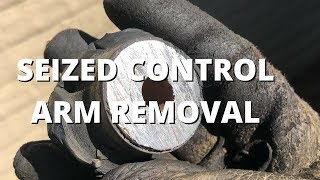
- Removal becomes extremely difficult. A simple unbolting job turns into a major project. The only way to remove the control arm is to cut the seized bolts on either side of the bushing using a reciprocating saw or angle grinder. 🎬 Watch this video guide on removing a control arm with seized adjusters This destroys the bolts and requires replacement hardware.
Pro Tip: If you are buying an S2000 or have just acquired one, it is highly recommended to have a mechanic attempt to loosen, grease, and retorque all the suspension alignment bolts as a preventative measure. This can save you from a very expensive and labor-intensive repair down the road.
Buying a Used S2000 Front Lower Control Arm
For the S2000, a high-quality used OEM control arm is often a better and more cost-effective choice than a cheap aftermarket replacement. The original Honda arms are made from high-quality steel, and their failure is almost always due to the replaceable bushings. Here’s what to inspect:
- Check for Bends and Cracks: Inspect the arm thoroughly for any signs of bending, twisting, or cracking. This indicates the part came from a vehicle that was in a significant accident. A straight, undamaged arm is a good candidate.
- Inspect the Bushings: Look closely at the two rubber bushings. Pay special attention to the large compliance bushing. Look for deep cracks, tearing, or separation of the rubber from the metal sleeve. While you can press in new bushings, the condition of the existing ones tells you about the part's history. A used arm with good-condition bushings is a great find.
- Verify Compatibility: The front lower control arms are the same for all Honda S2000 models from 2000 to 2009 (both AP1 and AP2). This gives you a wide range of donor vehicles.
- Mileage vs. Condition: For a control arm, the visual condition is more important than mileage. A part from a 100,000-mile car that lived in a dry climate may have pristine bushings, while one from a 50,000-mile car in the salt belt could be completely torn. Always inspect the part.
Replacement Overview & Torque Specs

Replacing the front lower control arm is a job for an experienced DIYer or a professional, primarily due to the high likelihood of seized bolts.
Key Steps & Procedures:
- Safely raise and support the vehicle on jack stands.
- Remove the wheel.
- Disconnect the sway bar end link, lower shock mount bolt, and the lower ball joint from the steering knuckle.
- Attempt to remove the camber bolt (front pivot) and the caster adjuster bolt (rear pivot).
- If bolts are seized: Use a reciprocating saw with a quality metal-cutting blade to cut the bolts between the subframe and the control arm bushing. This will destroy the bolts, so have new OEM hardware ready.
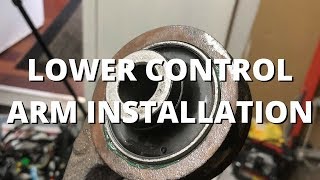
- Installation is the reverse of removal. 🎬 See how to properly install a new S2000 lower control arm Use anti-seize lubricant on the new alignment bolts to prevent future issues.
- CRITICAL STEP: Do not torque the pivot bolts until the suspension is loaded to its normal ride height. Use a floor jack to lift the control arm until the car just begins to lift off the jack stand. Then, torque all bolts to spec. Failure to do this will destroy the new bushings in a short time.
- A full four-wheel alignment is mandatory after this repair.
| Component | Torque (ft-lbs) |
|---|---|
| Lower Control Arm to Shock Fork Bolt | 47 ft-lbs |
| Camber and Caster Adjustment Bolts | 58 ft-lbs |
| Sway Bar End Link to Control Arm Nut | 22 ft-lbs |
| Lower Ball Joint Castle Nut | 43-51 ft-lbs |
Cost to Replace S2000 Front Lower Control Arms
Prices can vary significantly based on your approach. If bolts are seized, labor costs will be much higher, and you will need to purchase new alignment hardware.
| Item | Estimated Cost (per side) |
|---|---|
| New OEM Control Arm | $500 - $575 |
| New Aftermarket Control Arm | $230 - $300 |
| Used OEM Control Arm | $150 - $200 |
| Shop Labor (no seized bolts) | $150 - $250 |
| Shop Labor (with seized bolts) | $400 - $700+ (due to cutting) |
| Four-Wheel Alignment | $100 - $200 |
OEM Part Numbers and Interchangeability

The front lower control arms fit all 2000-2009 Honda S2000s. The part numbers have been superseded over the years; the latest version is typically the one sold. The final number in the part number, `-030`, is the most current revision.
| Side | Latest OEM Part Number | Supersedes |
|---|---|---|
| Right (Passenger) | 51350-S2A-030 | 51350-S2A-000, 51350-S2A-010, 51350-S2A-020 |
| Left (Driver) | 51360-S2A-030 | 51360-S2A-000, 51360-S2A-010, 51360-S2A-020 |
Recalls and Technical Service Bulletins (TSBs)
There are no recalls or major TSBs directly related to the front lower control arms on the 2000-2003 Honda S2000. One TSB from September 2004 mentions a popping sound from the upper control arm mount, but not the lower arm. The most significant issues—bushing wear and seized bolts—are considered wear-and-tear items by the manufacturer.
Frequently Asked Questions (FAQ)
Can I just replace the bushings instead of the whole control arm?
Yes. This is a very common and cost-effective repair. Honda does not sell the bushings separately, but many aftermarket companies like Mugen, Spoon, and Hardrace offer replacement bushings. You will need access to a hydraulic press to remove the old bushings and install the new ones. This is often the best route if your control arms are in good condition but the bushings are torn.
Is the front lower ball joint part of the control arm?
No. On the S2000, the lower ball joint is a separate component that is pressed into the steering knuckle, not the control arm. The control arm has a tapered hole that the ball joint's stud passes through, secured by a castle nut.
Do I really need an alignment after replacing the control arm?
Absolutely. It is mandatory. Replacing the control arm completely disturbs the camber and caster settings. Driving without a proper alignment will result in poor handling, unsafe driving characteristics, and rapid tire destruction.
What tools are needed to cut a seized alignment bolt?
A reciprocating saw (like a Sawzall) with several high-quality metal-cutting blades is the most effective tool. An angle grinder can also be used but may have difficulty reaching the tight spaces. This process generates significant sparks and metal dust, so proper personal protective equipment (safety glasses, gloves, respirator) is essential.
Helpful Videos
Technical Specifications
OEM Part Numbers: 51350-S2A-000 51350-S2A-010 51350-S2A-020 51350-S2A-030 51360-S2A-000 51360-S2A-010 51360-S2A-020 51360-S2A-030
Material: Steel. Includes two pre-installed rubber bushings. Designed for Honda's double-wishbone suspension system.

The information in this article is provided for general reference and educational purposes only. Vehicle specifications, procedures, and part compatibility can vary by production date, trim level, and region. Always consult your vehicle's factory service manual and verify part numbers before purchasing or performing repairs. Safety-critical components such as airbags, seat belts, and braking systems should be installed by a qualified professional.
- Honda S2000:
- 🎬 Helpful Videos
- Symptoms of a Failing Front Lower Control Arm
- The Infamous Seized Alignment Bolt Problem
- Buying a Used S2000 Front Lower Control Arm
- Replacement Overview & Torque Specs
- Cost to Replace S2000 Front Lower Control Arms
- OEM Part Numbers and Interchangeability
- Recalls and Technical Service Bulletins (TSBs)
- Frequently Asked Questions (FAQ)
- 🎟️ Get 5% Off