

2011-2020 Dodge Journey Front Lower Control Arm: Diagnosing Clunks and Steering Wander
This guide covers the common symptoms, known issues, and replacement costs for the front lower control arm on the 2011-2020 Dodge Journey.
- The most common symptom of failure is a clunking or knocking noise from the front suspension when going over bumps.
- A failing control arm will cause steering wander, pulling, and uneven tire wear. It is a safety-critical part.
- It is almost always better to replace the entire control arm assembly rather than trying to press in new bushings or a ball joint.
- A wheel alignment is mandatory after replacing a lower control arm to prevent unsafe handling and rapid tire wear.
Symptoms of a Failing Dodge Journey Control Arm

A failing lower control arm, or more commonly its bushings or ball joint, will produce noticeable symptoms. Ignoring these signs can lead to more significant suspension damage and unsafe driving conditions.
Clunking, Popping, or Knocking Noises
This is the most common sign of a worn control arm. You'll likely hear a clunking, knocking, or popping sound coming from the front suspension, especially when driving over bumps, potholes, or uneven road surfaces. The noise is caused by worn-out rubber bushings that allow metal-on-metal contact between the control arm and the vehicle's frame, or by a loose ball joint. Some owners also report a creaking noise when going over speed bumps.
Steering Issues and Instability
Worn control arm components can seriously affect your Journey's steering and handling. Common symptoms include:
- Steering Wander: The vehicle may feel like it's drifting or wandering on the road, requiring constant small steering corrections to keep it straight.
- Pulling to One Side: A bent control arm or severely worn bushings can throw off the wheel alignment, causing the vehicle to pull to the left or right.
- Loose or Vague Steering: The steering may feel less responsive or have excessive "play," making it feel disconnected from the road.
- Steering Wheel Vibration: Vibrations felt through the steering wheel, especially at higher speeds, can be caused by worn bushings that are no longer able to absorb road imperfections.
Uneven Tire Wear
Because a failing control arm affects wheel alignment, it often leads to premature and uneven tire wear. Inspect your front tires for excessive wear on the inner or outer edges. This is a classic sign that a suspension component, like the control arm, is no longer holding the wheel in its correct position.
Known Issues, Recalls, and TSBs for 2011-2020 Models

While there are no specific recalls for the front lower control arms on the 2011-2020 Dodge Journey, several recalls exist for other suspension and steering components that can cause similar symptoms. For example, a recall was issued for some 2011 models regarding power steering hoses that could rupture in cold weather, and another for 2012-2015 models where water could enter the ABS module, affecting stability control. It's important to distinguish control arm failure from these other potential issues. Forum discussions among Journey owners frequently mention clunking noises from the front end, often pointing towards worn sway bar links, sway bar bushings, or the control arms themselves as the likely culprits.
Pro Tip: When diagnosing a front-end clunk, don't forget to check the sway bar links and bushings. These are common failure points on the Journey and can produce noises very similar to a bad control arm. They are also less expensive to replace, so it's worth inspecting them first.
🎬 Watch this step-by-step video on replacing SUV sway bar bushingsBuying a Used Front Lower Control Arm: What to Inspect

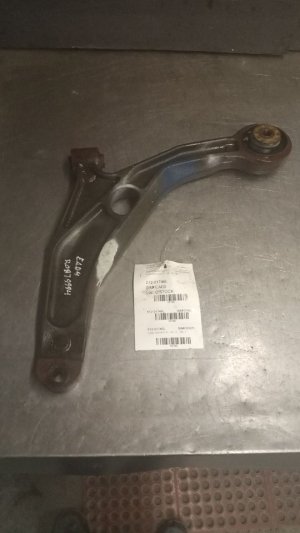
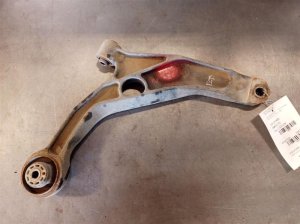
A used OEM control arm can be a cost-effective and reliable alternative to a new part, especially when compared to cheap aftermarket options. However, careful inspection is crucial to ensure you're getting a quality part.
Key Inspection Points:
- Bushings: The rubber bushings are the most common failure point. Inspect them closely for any signs of cracking, tearing, dry rot, or separation from the metal sleeve. The rubber should be firm and intact. If the bushings are leaking fluid (on fluid-filled types) or look collapsed, the arm is no good.
- Ball Joint: The ball joint is integrated into the control arm on the Journey. Check the rubber boot for any rips or tears; if the boot is damaged, the joint has likely been contaminated with dirt and water and will fail soon. Try to move the ball joint stud by hand. It should be stiff and have no noticeable play or looseness.
- Structural Integrity: Examine the arm itself for any signs of bending, cracking, or significant impact damage. Check for excessive rust that could compromise its strength. A part from a vehicle in a major collision should be avoided.
- Mileage and Source: Ask about the mileage of the donor vehicle if possible. Control arm bushings can start to show wear around 100,000 miles. A part from a low-mileage, accident-free vehicle is always the best choice.
Choosing a used OEM part often means you get the original factory quality for the bushings and ball joint, which can sometimes outperform and outlast new, non-OEM aftermarket parts.
Cost to Replace a Dodge Journey Lower Control Arm
The cost of replacement can vary significantly based on the parts you choose and whether you do the work yourself. An alignment is always recommended after replacing a control arm.
| Part/Service | Estimated Cost |
|---|---|
| New OEM (Mopar) | $180 - $250 per arm |
| New Aftermarket | $35 - $210 per arm |
| Used OEM | $50 - $100 per arm |
| Shop Labor (Part Replacement) | $146 - $215 per side |
| Wheel Alignment | $100 - $150 |
| Total Professional Replacement (One Side) | $526 - $594 (using new parts) |
Warning: Some shops may offer to replace only the bushings, which costs around $206-$286. However, this requires a hydraulic press and significant labor. Given the cost and the fact that the ball joint is not serviced, it is almost always more practical and cost-effective to replace the entire control arm assembly.
Replacement Guide: Key Steps and Torque Specs
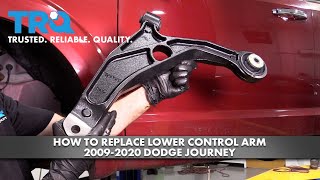
Replacing the lower control arm is a job that can be done by a skilled DIY mechanic, but it requires proper tools and attention to safety. 🎬 See how to replace a Dodge Journey lower control arm The vehicle must be safely lifted and supported on jack stands.
Key Torque Specifications:
Using a torque wrench is critical for a safe and proper installation. Torque specs can vary slightly by model year and source, so always try to verify with a service manual for your specific vehicle. The following are commonly cited values:
- Front Control Arm Bolt (to frame): 129 ft-lbs
- Rearward Control Arm Bolt (to frame): 107 ft-lbs
- Ball Joint Nut (to knuckle): 70 ft-lbs, then tighten to align cotter pin slot
- Sway Bar Link Nuts: 35 ft-lbs
- Axle Nut: 181 ft-lbs
- Lug Nuts: 100 ft-lbs
Pro Tip: For the final tightening of the main control arm bushing bolts, the vehicle's suspension should be loaded. This means the full weight of the vehicle should be resting on the suspension, either by placing the wheel on the ground or by supporting the knuckle with a jack. Tightening the bolts while the suspension is hanging can preload the bushings, causing them to tear and fail prematurely.
Frequently Asked Questions (FAQ)
Do I need to replace both left and right control arms at the same time?
It is highly recommended. Suspension components wear at similar rates. If one control arm has failed due to age or mileage, the other side is likely not far behind. Replacing them in pairs ensures balanced handling and saves you money on a second alignment down the road.
Is a wheel alignment necessary after replacing a lower control arm?
Yes, absolutely. The lower control arm is a key component in setting the vehicle's alignment. Replacing it will alter the camber and toe settings. Skipping the alignment will result in poor handling, unsafe driving characteristics, and rapid tire wear.
Can I just replace the ball joint or bushings instead of the whole arm?
On the Dodge Journey, the ball joint is integrated into the control arm and is not typically sold as a separate, replaceable part. While the bushings can be pressed out and replaced, it requires special tools and significant labor. In most cases, it is faster, easier, and more cost-effective to replace the entire control arm assembly which comes with new bushings and a new ball joint already installed.
What's the difference between the front and rear bolts on the control arm?
The control arm on the Journey has two mounting points to the vehicle's subframe or chassis. These are often referred to as the front (or forward) and rear (or rearward) mounting points. They use different bolts and have different torque specifications, so it's important to keep track of them during disassembly and reassembly.
Helpful Videos

Technical Specifications
OEM Part Numbers: 04766950AC 4766950AA 4766950AB 4766950AD 4766424AF
Torque Specs: Frame Bolts (107-129 ft-lbs), Ball Joint Nut (70 ft-lbs), Axle Nut (181 ft-lbs), Lug Nuts (100 ft-lbs).
We Have This Part in Stock

The information in this article is provided for general reference and educational purposes only. Vehicle specifications, procedures, and part compatibility can vary by production date, trim level, and region. Always consult your vehicle's factory service manual and verify part numbers before purchasing or performing repairs. Safety-critical components such as airbags, seat belts, and braking systems should be installed by a qualified professional.
- Dodge Journey:
- 🎬 Helpful Videos
- 🛍️ Shop This Part
- Symptoms of a Failing Dodge Journey Control Arm
- Clunking, Popping, or Knocking Noises
- Steering Issues and Instability
- Uneven Tire Wear
- Known Issues, Recalls, and TSBs for 2011-2020 Models
- Buying a Used Front Lower Control Arm: What to Inspect
- Key Inspection Points:
- Cost to Replace a Dodge Journey Lower Control Arm
- Replacement Guide: Key Steps and Torque Specs
- Key Torque Specifications:
- Frequently Asked Questions (FAQ)
- 🎟️ Get 5% Off