

2017-2020 Ford Edge Liftgate Module: Solving Failures and Programming a Replacement
This guide covers the common symptoms, part numbers, and critical programming steps for the Rear Gate Trunk Module (RGTM) in your Ford Edge.
- A replacement Liftgate Control Module (RGTM) MUST be programmed to the vehicle using a dealer's scan tool or advanced software like FORScan; it is not a plug-and-play part.
- Many common issues, like a dead battery or an inoperative liftgate, are caused by software glitches that can be fixed with a dealer-performed reprogram, as outlined in several Technical Service Bulletins (TSBs).
- Part numbers are critical and year-specific. 2017-2018 models use DG9Z-14B291-WV, while 2019-2020 models use a different series like KT4Z-14B291-G. Options like hands-free also affect the part number.
- Before replacing the module, always check the two related fuses: a 30A fuse under the main hood fuse box and a 5A fuse in the passenger kick panel fuse box.
Symptoms of a Failing Liftgate Control Module

When the liftgate control module begins to fail, it can cause a range of frustrating issues. Because the module controls the entire system, symptoms can sometimes be mistaken for a bad motor or latch. Here are the most common signs pointing to a faulty module:
- Power Liftgate is Completely Inoperative: The most obvious symptom. The liftgate does not respond to the key fob, interior button, or rear button. You may hear a click from the latch, but the motor does not engage to lift the gate.
- Erratic Liftgate Behavior: The liftgate may start to open or close and then stop partway, or it might reverse direction without encountering an obstacle. Some owners report it works when the vehicle is cool but fails after it has been running for a while.
- 'Liftgate Ajar' Warning Light: The dashboard displays a 'Liftgate Ajar' message even when the hatch is securely closed. This can be caused by a software glitch in the module keeping it awake.
- Parasitic Battery Drain: A faulty module can fail to go into 'sleep mode' when the vehicle is off, leading to a dead battery overnight or after a few days. This is a known issue addressed by a Technical Service Bulletin.
- Hands-Free System Not Working: For equipped models, the kick-to-open feature may stop responding entirely, even if other buttons still work.
Associated OBD-II Trouble Codes
A professional scan tool that can read Body Control Module (BCM) and RGTM codes is essential for diagnosis. Common codes associated with a failing liftgate module include:
- U0230: Lost Communication with Rear Gate Module. This often points to a power or ground issue, like a blown fuse, or a complete failure of the module.
- B144F:79: Motor of Tailgate/Liftgate Driver. While this code mentions the motor, a Ford TSB indicates the root cause is often the module's software, requiring a reprogram.
- U3000:49: Internal Electronic Failure. This code specifically points to an internal fault within the control module itself.
- B1495: Hands Free Liftgate Decklid Input Sensor.
- B12E8:11: Liftgate/Tailgate Control/Release Switch: Circuit Short to Ground.
Diagnosing the Problem: Module, Motor, or Fuse?

Before spending money on a new module, it's crucial to rule out simpler issues. A liftgate that won't open can be caused by several components in the system.
- Check the Fuses: The RGTM has two primary fuses. A blown fuse is a common cause for a completely dead liftgate and a U0230 code.
- Fuse #76 (30A J-Case): Located in the 'hidden' fuse box underneath the main under-hood fuse panel. You must unclip and flip the main fuse box over to access it. This is the main power for the liftgate motor.
- Fuse #10 (5A Micro): Located in the Body Control Module (BCM) fuse panel, behind the passenger side kick panel. 🎬 Watch this video to locate your power liftgate fuses This fuse powers the module's logic and communication circuits.
- Listen for Clicks and Whirs: When you press an open/close button, listen carefully. If you hear the latch click but the gate doesn't move, the problem is more likely the motor or the module's command to the motor. If you hear nothing at all, it points towards a fuse, switch, or total module failure.
- Scan for Codes: A simple OBD-II reader for engine codes won't work. You need a more advanced scan tool like FORScan or a professional-grade tool to read codes from the RGTM and BCM. The codes will often point you directly to the faulty component or confirm a software issue.
Known Issues, TSBs, and Recalls

There are no major recalls for this part, but Ford has issued several Technical Service Bulletins (TSBs) to address common software-related problems. In many cases, a simple reprogram at the dealer can fix the issue without replacing any parts.
- TSB 19-2104: Affects some 2019 Edge models built before November 14, 2018. Symptoms include a dead battery, erratic interior lights, or a 'Liftgate Ajar' message. The cause is a software calibration issue in the RGTM that keeps it awake. The fix is to reprogram the module with updated software.
- TSB 18-2042: For 2017-2018 Edge models, this addresses an intermittent 'bounce back' where the liftgate re-opens after being commanded to close. The procedure involves inspecting panel gaps, adjusting the striker, and reprogramming the RGTM.
- SSM 49267 (and similar TSBs): For 2019-2020 models, this addresses an inoperative power liftgate with DTC B144F:79. The bulletin explicitly states to reprogram the RGTM first and only replace the power lift strut if the code returns after the update.
- General Software Issues: Other service messages note that an inoperative liftgate, sometimes with code U3000:49, can be caused by RGTM software and is fixed by reprogramming. 🎬 Watch these helpful tips on resetting your Ford liftgate module
Important: If your vehicle is exhibiting symptoms described in a TSB, a dealer may be able to fix it with a simple software update. This is often much cheaper than replacing the module.
Programming and Installation: This is NOT Plug-and-Play
Replacing an electronic module in a modern vehicle is rarely a simple swap, and the Edge liftgate module is no exception.
A replacement module—whether new or used—absolutely must be programmed to function correctly. If you install a module without programming, you will likely experience symptoms like the liftgate not working at all, or only some buttons functioning.
The programming process, often called 'Programmable Module Installation' (PMI), does two things:
- It loads the vehicle's 'As-Built' data into the new module. This tells the module which features your specific vehicle has (e.g., hands-free sensors, trailer tow package).
- It performs an initialization routine. This teaches the module the fully open and fully closed positions of your specific liftgate, ensuring it operates smoothly and latches correctly.
Who Can Program the Module?
- Ford/Lincoln Dealership: This is the most straightforward option. They have the proprietary Integrated Diagnostic System (IDS) software required to perform the PMI and initialization.
- Independent Repair Shop: A well-equipped independent shop that subscribes to Ford's diagnostic software (FJDS) or has other high-end scan tools can often perform the programming.
- Advanced DIY with FORScan: It is possible for a DIY mechanic to program a replacement module using a laptop, a compatible OBD-II adapter, and FORScan software with an extended license. This involves downloading the vehicle's As-Built data and using FORScan's PMI and module initialization procedures. This is an advanced procedure and not recommended for beginners. 🎬 See this step-by-step tutorial on using FORScan
Pro Tip: Before taking your car to a shop, call ahead and confirm they have the capability to program a Ford RGTM. Some shops, and even some dealers, may be hesitant to program a used part they did not source themselves.
Buying a Used 2017-2020 Edge Liftgate Control Module

A used OEM module is an excellent, cost-effective alternative to an expensive new part, especially since aftermarket options are virtually nonexistent. Here’s what to look for:
Part Number is Key
Matching the part number is critical. There is a split between model years and options. Always match the part number from your original module.
- 2017-2018 Models: Look for part number DG9Z-14B291-WV. This number supersedes (replaces) DG9Z-14B291-WU.
- 2019-2020 Models: Look for part numbers like K2GT-14B673-AN, K2GT-14B673-BB, or KT4Z-14B291-G. The correct number will depend on whether your vehicle has the hands-free liftgate and/or a trailer tow package.
Part Number Warning: Many online listings incorrectly identify part number DG9T-14B531-EC as a liftgate module. This is typically a Voltage Stabilization Module for a different vehicle or system and will not work. Stick to the numbers listed above.
Physical Inspection
When your used part arrives, inspect it carefully:
- Check for Corrosion: The module is located in the rear quarter panel, an area that can sometimes be exposed to moisture. Look for any green or white crusty residue on the electrical pins or the connector housings.
- Inspect the Casing: Check for any cracks, signs of being pried open, or heat damage.
- Verify the Part Number: Double-check that the part number on the sticker matches what you ordered and what is required for your vehicle.
Replacement Cost Comparison
The cost of replacing the liftgate module can vary significantly depending on the parts and labor source.
| Item | Estimated Cost |
|---|---|
| New OEM Module | $150 - $475, depending on model year and features. |
| Used OEM Module | $75 - $150. |
| New Aftermarket Module | Not generally available as a standalone part. Full retrofit kits cost $500+. |
| Shop Labor (Installation) | $100 - $150 (approx. 1 hour to access and swap the module). |
| Shop Labor (Programming) | $90 - $200. This is often a flat fee or equivalent to one hour of diagnostic time. |
Frequently Asked Questions (FAQ)
Do I absolutely have to program a replacement liftgate module?
Yes, programming is mandatory. A non-programmed module will not know your vehicle's specific configuration (like whether you have hands-free sensors) and the liftgate will not operate correctly, if at all. The module must be configured with your vehicle's 'As-Built' data and then initialized.
Where is the liftgate control module located on a 2017-2020 Ford Edge?
The Liftgate Control Module (RGTM) is located in the rear cargo area, behind the driver's side interior trim panel (left quarter panel).
My liftgate won't open at all. Is it the module or the motor?
It could be either, but there are clues. First, check the fuses. If the fuses are good, use a scan tool to check for codes. A code like U3000:49 points directly to the module, while B144F:79 could be the module's software or the motor itself. If you hear no sounds at all when pressing the button, it's more likely an electrical issue (fuse, switch, or module). If you hear clicks or whirring but the gate doesn't move properly, the motor or latch could be the issue.
Can I add the hands-free (kick-to-open) feature by just installing a different module?
No. Adding the hands-free feature is a complex retrofit. In addition to the correct control module, you would also need to install the two kick sensors behind the rear bumper, the associated wiring harness, and then program both the RGTM and the BCM (Body Control Module) to recognize the new hardware.
Helpful Videos

Technical Specifications
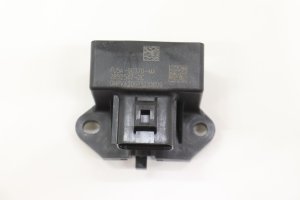
OEM Part Numbers: DG9Z-14B291-WV DG9Z-14B291-WU KT4Z-14B291-G K2GT-14B673-AN K2GT-14B673-BB K2GT-14B673-AK
Also known as the Rear Gate Trunk Module (RGTM). Located behind the driver's side rear quarter panel trim. Communicates on the vehicle's CAN bus network.
We Have This Part in Stock





The information in this article is provided for general reference and educational purposes only. Vehicle specifications, procedures, and part compatibility can vary by production date, trim level, and region. Always consult your vehicle's factory service manual and verify part numbers before purchasing or performing repairs. Safety-critical components such as airbags, seat belts, and braking systems should be installed by a qualified professional.
- Ford Edge:
- 🎬 Helpful Videos
- 🛍️ Shop This Part
- Symptoms of a Failing Liftgate Control Module
- Associated OBD-II Trouble Codes
- Diagnosing the Problem: Module, Motor, or Fuse?
- Known Issues, TSBs, and Recalls
- Programming and Installation: This is NOT Plug-and-Play
- Who Can Program the Module?
- Buying a Used 2017-2020 Edge Liftgate Control Module
- Part Number is Key
- Physical Inspection
- Replacement Cost Comparison
- Frequently Asked Questions (FAQ)
- 🎟️ Get 5% Off