

2021-2023 Ford F-150 LED Headlight Module: Failures, Programming, and Replacement
This guide covers common failures, OBD-II codes, and the critical programming steps required when replacing the LED headlight control module on your 2021-2023 F-150.
- Programming is mandatory for any replacement module, new or used. This can be done via FORScan software or by a dealer.
- A common failure symptom is the passenger-side vertical Daytime Running Light (DRL) going out.
- Look for OBD-II codes B1D00:15 (left) and B1D01:15 (right) to confirm a module fault.
- Buying a tested, used OEM module with a matching part number (ML34-13C148-AE) can save hundreds of dollars over a new part.
Symptoms of a Failing LED Headlight Control Module

When the LED headlight module begins to fail, it can cause a range of frustrating and potentially unsafe lighting issues. Unlike a simple burnt-out bulb, a bad module can produce intermittent problems that may seem random at first. Paying attention to these specific symptoms can help you diagnose a faulty module before it fails completely.
1. One Headlight or Daytime Running Light (DRL) is Out
The most common symptom is the failure of an entire headlight assembly or a specific part of it. A frequent complaint for 2021-2023 F-150s is the passenger-side vertical DRL bar going out while the rest of the headlight still works. This often points to a fault within the module that controls that specific LED array. Similarly, a low beam or high beam may fail to turn on, even though the LED elements themselves are designed to last for many years.
2. Flickering or Intermittent Operation
Your headlights or DRLs may flicker, turn on and off randomly, or only work some of the time. This can be triggered by bumps in the road, vibration, or temperature changes. This intermittent behavior is a classic sign of an internal electronic failure within the module.
3. 'Check Headlamp System' Warning on Dash
The F-150's onboard diagnostics will often detect a problem with the lighting system and display a "Check Headlamp System" message on the instrument cluster. This message is your cue to scan the vehicle for Diagnostic Trouble Codes (DTCs) to pinpoint the issue.
4. Associated OBD-II Diagnostic Trouble Codes (DTCs)
A scan tool can reveal specific codes stored in the Body Control Module (BCM) that point directly to a headlight module failure. Common codes include:
- B1D00:15 - Left Low Beam: Circuit Short To Battery Or Open: Indicates a fault in the circuit for the driver's side low beam.
- B1D01:15 - Right Low Beam: Circuit Short To Battery Or Open: Indicates a fault in the circuit for the passenger's side low beam.
- C1A05 - Left Rear Ride Height Sensor: This code may appear on trucks with auto-leveling headlights, as the headlight module uses this sensor to aim the beams. A fault in the sensor or its linkage can trigger a headlight system warning.
The BCM can disable the power output to a headlight when it detects a short, so the light will remain off until the fault is fixed and the codes are cleared.
Compatibility Warning: These modules are for F-150s equipped with factory LED headlights but without the high-end adaptive or "projector" style headlamps that have auto-leveling and cornering functions. While visually similar, the modules are different. Always verify your truck's specific headlight type and match the OEM part number before purchasing.
Known Issues, TSBs, and Recalls
While there are no widespread recalls specifically for this module on the 2021-2023 F-150, Ford has issued lighting-related service actions for similar models.
- Recall 22C22 / NHTSA 22V-796: Some 2022 F-150 models were recalled because the parking lamps could flicker. The fix involves a software update to either the Headlight Control Module (HCM) or the Body Control Module (BCM), performed by a dealer.
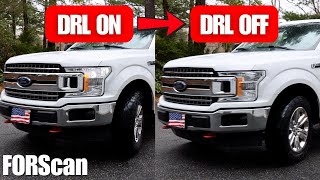
- Common DRL Failure: There is a widely reported issue of the passenger-side vertical Daytime Running Light (DRL) failing. This is often caused by a failure of the module attached to the headlight, not the LED itself. 🎬 See how to troubleshoot F-150 DRL issues
Programming and Calibration Requirements

This is the most critical part of the replacement process. You cannot simply swap a new or used module and expect it to work correctly. The module must be programmed to the truck's Vehicle Identification Number (VIN).
- Is Programming Required? Yes. A replacement module must be configured to the vehicle. If not programmed, it may work temporarily and then stop, or certain functions like the DRLs or high beams may not operate.
- Can I Do It Myself? Yes, if you are comfortable using a tool called FORScan. This is a software program that runs on a laptop and connects to the truck's OBD-II port with a specific adapter. Using FORScan, you can access the Headlight Control Module (HCM) configuration and write the truck's VIN to the new module. This process involves copying hexadecimal code from another module (like the IPMA) and writing it to the new HCM. 🎬 Watch: How to configure F-150 DRL settings using FORScan
- Is a Dealer Required? If you are not comfortable with FORScan, a Ford dealer or a well-equipped independent shop can perform the programming. They will use the Ford diagnostic tool (IDS) to perform the module configuration.
Pro Tip: When replacing a module, it's a good idea to use FORScan to save a backup of your truck's original module configuration files first. This "as-built data" can be restored later if needed and is a valuable safeguard during electronic repairs.
Buying a Used LED Headlight Control Module
Given the high cost of a new OEM module, a used unit from a reputable recycler is an excellent value. Since these are solid-state electronics with no moving parts, a tested, used OEM module is often just as reliable as a new one.
What to Look For:
- Match the Part Number Exactly: The most important step is to match the OEM part number. The primary numbers are ML34-13C148-AE and the earlier version, ML34-13C148-AD. Using a module with a different part number may result in compatibility issues.
- Inspect for Corrosion: The module is located on the bottom of the headlight, making it vulnerable to moisture if the headlight seal fails. Inspect the case and connector pins for any white or green crusty residue, which indicates water damage. Do not buy a module with any signs of corrosion.
- Check for Physical Damage: The module should be free of cracks, deep gouges, or broken mounting tabs. Ensure the connector port is clean and the pins are straight.
- Buy from a Tested Source: Purchase from a seller who guarantees the module was tested and is functional. Many online sellers on platforms like eBay will explicitly state the module was tested before removal.
Cost Comparison
The cost to fix a faulty headlight module can vary dramatically depending on the parts source and who does the labor.
| Part/Service | Estimated Cost | Notes |
|---|---|---|
| New OEM Module | $300 - $630 | Purchased from a Ford dealership or online OEM parts retailer. |
| New Aftermarket Module | $150 - $400 | Availability can be limited. Quality and programming compatibility may vary. |
| Used OEM Module | $50 - $100 | Best value. Ensure it's a tested unit with a matching part number. |
| Shop Labor (Replacement & Programming) | $250 - $500 | Assumes 2-3 hours of labor for headlight removal/reinstallation and module programming. Dealer rates may be higher. |
Frequently Asked Questions (FAQ)
Do I have to program a used headlight module?
Yes. Any replacement module, whether new or used, must be programmed to your truck's VIN using a tool like FORScan or by a dealer to ensure full functionality.
Can I replace the module without removing the whole headlight?
It is extremely difficult. While some owners have attempted to access the module by removing the fender liner, the space is very tight. The proper procedure involves removing the front grille and the entire headlight assembly to access the four screws holding the module to the bottom of the housing.
My DRL went out. Is it the bulb or the module?
In the 2021-2023 F-150, the LEDs are not separate bulbs. They are integrated arrays. If one of them goes out, particularly the common passenger-side vertical bar, 🎬 Watch this step-by-step ballast swap tutorial the fault is almost always the control module, not the LED itself.
Will a bad headlight module drain my battery?
It is possible, but not common. If the module has an internal short, it could potentially create a parasitic draw on the battery. However, the more likely symptoms are related to the lights not working correctly.
Helpful Videos
Technical Specifications
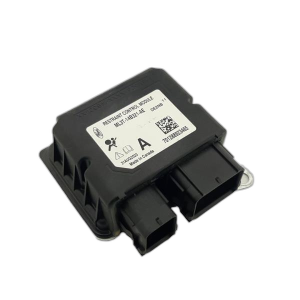
OEM Part Numbers: ML34-13C148-AE ML3413C148AD
Controls LED headlight functions for non-adaptive headlamp systems.
We Have This Part in Stock





The information in this article is provided for general reference and educational purposes only. Vehicle specifications, procedures, and part compatibility can vary by production date, trim level, and region. Always consult your vehicle's factory service manual and verify part numbers before purchasing or performing repairs. Safety-critical components such as airbags, seat belts, and braking systems should be installed by a qualified professional.
- Ford F-150:
- 🎬 Helpful Videos
- 🛍️ Shop This Part
- Symptoms of a Failing LED Headlight Control Module
- 1. One Headlight or Daytime Running Light (DRL) is Out
- 2. Flickering or Intermittent Operation
- 3. 'Check Headlamp System' Warning on Dash
- 4. Associated OBD-II Diagnostic Trouble Codes (DTCs)
- Known Issues, TSBs, and Recalls
- Programming and Calibration Requirements
- Buying a Used LED Headlight Control Module
- What to Look For:
- Cost Comparison
- Frequently Asked Questions (FAQ)
- 🎟️ Get 5% Off