

2020-2025 Audi A3, S3, RS3 & Q4 e-tron LED Headlight Module: Failures, Recalls, and Programming
This guide covers common failure symptoms, replacement costs, and the critical programming steps for the Matrix LED headlight control module in your Audi.
- This module is ONLY for vehicles with the optional Matrix-design LED headlights, not standard LEDs.
- Replacement requires mandatory programming by a dealer or specialist to remove 'Component Protection'; it is not a plug-and-play part.
- Common failure symptoms include one headlight being out, flickering, or a 'Headlight range control defective' dashboard warning.
- The same part number (e.g., 4K0941592BE) fits both the left and right headlights, allowing for side-to-side swapping for diagnosis.
Symptoms of a Failing LED Headlight Control Module


When an LED headlight control module begins to fail, it can cause a range of issues from annoying to dangerous. Because the module controls power and logic, symptoms are almost always electrical in nature.
- One Headlight is Out: The most common symptom is one headlight not working at all, while the other functions perfectly. This often points to a module failure for that specific side.
- Flickering or Dimming Headlights: You may notice one or both headlights flickering, pulsing, or appearing dimmer than usual. This can happen intermittently and may be more noticeable when the engine is under load.
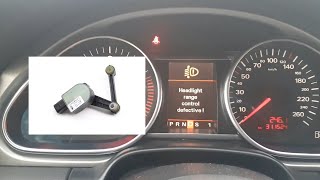
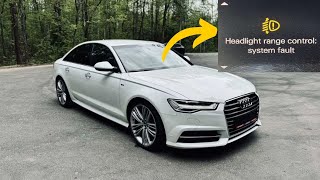
- Dashboard Warning Lights: A failure will often trigger a yellow warning message on the dashboard, such as "Headlight range control defective" or a 🎬 Watch: Understanding the headlight range control fault warning general headlight fault symbol. This indicates the system has detected a problem with the automatic leveling or adaptive functions.
- Turn Signal or DRL Malfunction: Since the module controls multiple lighting functions, you might experience issues with the turn signal or daytime running light on the affected side.
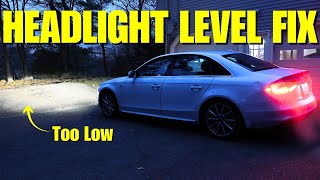
- Headlights Stuck in One Position: The adaptive or auto-leveling feature may stop working, causing the headlights to be stuck pointing too high or too low. 🎬 See how to fix a headlight range control sensor
Known Issues, Recalls, and Technical Service Bulletins (TSBs)
While widespread failures of this specific module on the A3/S3/RS3 are not heavily documented, the related Q4 e-tron models have a notable recall that owners should be aware of.
Recall 941L: Incorrect Headlight Software on Q4 e-tron
Audi issued a compliance recall (NHTSA ID: 24V361, Audi Code: 941L) for certain 2022-2024 Audi Q4 e-tron and Q4 e-tron Sportback models. The issue is that the headlight control modules were programmed with European-market software that does not comply with North American safety standards (FMVSS 108). This software can cause the parking light to behave incorrectly when the turn signal is active, potentially reducing the vehicle's visibility to others and increasing the risk of a crash. The fix involves a simple software update performed by an Audi dealer, free of charge. No hardware or parts are replaced for this recall.
Variant Differences: Standard LED vs. Matrix-Design LED

These Audi models were available with two main types of headlights, and it is critical to understand which your vehicle has before purchasing a control module.
- Standard LED Headlights: These are the base headlights. They provide excellent illumination but do not have advanced adaptive capabilities. They use different control modules.
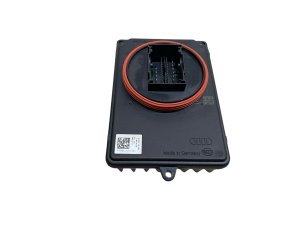
- Matrix-Design LED Headlights: This is an optional upgrade that uses a sophisticated array of individual LEDs. These headlights can selectively dim portions of the high beam to avoid dazzling other drivers while illuminating the rest of the road. This specific control module, part numbers 4K0941592BE and 4K0941592BL, is for vehicles equipped with these Matrix-design headlights.
Warning: This control module is NOT interchangeable with modules for standard LED or other types of headlights. Installing the wrong module will result in it not functioning.
Buying a Used LED Headlight Control Module: What to Look For
Purchasing a used OEM module can be a cost-effective solution, but careful inspection is key. Aftermarket modules are generally not recommended for this part, as they often cannot be programmed correctly to the vehicle and may lack the quality control of an OEM part.
- Verify the Part Number: Check the number on your original module. The most common part numbers for this application are 4K0941592BE and 4K0941592BL. Other compatible numbers may exist, such as 4K0941592BG which supersedes 4K0941592BC. Always match the part number exactly or confirm supersession with a reliable source.
- Inspect for Physical Damage: Look for cracks in the plastic housing or damage to the electrical connector pins. The module is often located on the bottom of the headlight assembly, making it vulnerable to moisture.
- Check for Corrosion: Examine the pins and the housing for any signs of water intrusion or corrosion. A module with any corrosion should be avoided, as it indicates internal damage.
- Understand the Programming Requirement: Be aware that a used module cannot be simply swapped in. It will require professional programming to work in your vehicle. Factor this additional cost into your budget.
Replacement and Programming Guide

Physically replacing the module is moderately difficult, but programming it requires specialized tools and knowledge.
Accessing and Replacing the Module
The control module is typically bolted to the underside or back of the headlight assembly. Access varies by model:
- On the Audi A3 (8Y), accessing the module often requires removing the front bumper and then unbolting the entire headlight assembly to reach the module. 🎬 Watch: Step-by-step Audi headlight removal tutorial While some guides for older models suggest access through the wheel well, the 8Y generation is more complex.
- The procedure for the Q4 e-tron is similar, generally requiring bumper removal for full access to the headlight housing screws.
Once the headlight assembly is removed from the vehicle, the module is typically held on by a few Torx screws. The swap itself is straightforward: unplug the electrical connectors, unscrew the old module, and bolt the new one in its place.
The Critical Programming Step: Component Protection
Warning: You cannot complete this repair at home without the proper tools. A used or new headlight control module will not function correctly until it is programmed to your vehicle.
Modern Audi vehicles use a security system called Component Protection (CP). This system links major electronic modules, like this one, to the car's unique Vehicle Identification Number (VIN). When you install a different module, the car detects a mismatch and puts the component into a limited-functionality mode. For a headlight module, this can mean the light stays dim, flickers, or won't turn on at all.
Removing Component Protection requires a tool called ODIS (Offboard Diagnostic Information System) which has a live online connection to Audi's servers in Germany. This procedure, sometimes called "online adaptation" or "parameterization," pairs the new module to your car. This service can only be performed by:
- An authorized Audi dealership.
- A qualified independent European auto repair shop that subscribes to the ODIS service.
Standard diagnostic tools like VCDS or OBDeleven cannot remove Component Protection.
Cost Comparison
| Part/Service | Estimated Cost |
|---|---|
| New OEM Module | $350 - $520 |
| New Aftermarket Module | Not commonly available/recommended |
| Used OEM Module | $100 - $250 |
| Shop Labor (Physical Swap) | $200 - $400 (approx. 2-3 hours) |
| Shop Labor (Programming/CP Removal) | $150 - $400 |
Frequently Asked Questions (FAQ)
Can I just swap the module from the left headlight to the right to test it?
Yes. The same part number is used for both the left and right headlights, so swapping them is a valid diagnostic step to confirm if the module is the source of the failure. If the problem moves to the other side, the module is faulty. If the problem stays on the same side, the issue is likely with the headlight wiring or the LED elements themselves.
What is "Component Protection" and why does it exist?
Component Protection is an anti-theft system used by Audi and other VW Group brands. It electronically links key modules to the car's VIN. If a module is replaced, the system locks its full functionality until an authorized technician with online access to Audi's servers can validate the new part and pair it to the car. This prevents stolen parts from being used in other vehicles.
Will a used module work at all without programming?
No, not correctly. When Component Protection is active, the headlight will either not turn on, remain very dim (around 30% brightness), or flicker, and you will have a persistent fault code on your dashboard. Full and safe operation is only possible after the module has been properly programmed to your vehicle.
My dashboard says "Headlight range control defective." Is this the module?
It could be, but this error message can also be caused by a failed or disconnected headlight level sensor on the front or rear suspension. These sensors tell the module how to aim the lights based on the vehicle's load. A diagnostic scan with a tool like VCDS or OBDeleven is needed to see if the fault code points to the module or one of the level sensors.
Helpful Videos
Technical Specifications
OEM Part Numbers: 4K0941592BE 4K0941592BL 4K0941592BG 4K0941592BC
Designed for Audi Matrix LED headlight systems. Controls power regulation, DRL, turn signal, and adaptive functions.
We Have This Part in Stock

The information in this article is provided for general reference and educational purposes only. Vehicle specifications, procedures, and part compatibility can vary by production date, trim level, and region. Always consult your vehicle's factory service manual and verify part numbers before purchasing or performing repairs. Safety-critical components such as airbags, seat belts, and braking systems should be installed by a qualified professional.
- Audi A3:
- Audi S3:
- Audi RS3:
- Audi Q4 e-tron:
- Audi Q4 e-tron Sportback:
- 🎬 Helpful Videos
- 🛍️ Shop This Part
- Symptoms of a Failing LED Headlight Control Module
- Known Issues, Recalls, and Technical Service Bulletins (TSBs)
- Recall 941L: Incorrect Headlight Software on Q4 e-tron
- Variant Differences: Standard LED vs. Matrix-Design LED
- Buying a Used LED Headlight Control Module: What to Look For
- Replacement and Programming Guide
- Accessing and Replacing the Module
- The Critical Programming Step: Component Protection
- Cost Comparison
- Frequently Asked Questions (FAQ)
- 🎟️ Get 5% Off