

1986-1995 Toyota 4Runner Front Knuckle & Spindle Guide: Failure Diagnosis and Compatibility
This guide covers the common failure points, compatibility issues (like ABS vs. non-ABS), and replacement costs for the front steering knuckle assembly on 1986-1995 Toyota 4Runners.
- The primary failure point is the wheel bearing inside the knuckle, not the knuckle itself. Symptoms include humming noises that increase with speed.
- Compatibility is critical: You must match the knuckle to your vehicle's ABS system (or lack thereof). Check for an ABS sensor port before buying.
- A major safety recall exists for the steering relay rod on 1990-1995 models, which can cause a total loss of steering. Verify this has been addressed.
- Replacement is a difficult job requiring a hydraulic press. Always replace the wheel bearing, seals, and consider replacing ball joints at the same time.
Symptoms of a Failing Front Knuckle or Wheel Bearing

The steering knuckle itself rarely fails unless it's subjected to a major impact. More often, the symptoms you'll notice are from a worn-out wheel bearing housed within the knuckle. Ignoring these signs can lead to a wheel separating from the vehicle, so it's critical to address them promptly.
Noises and Vibrations
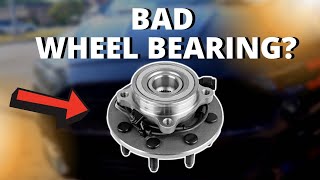
- Humming, Growling, or Whining: This is the most common sign of a bad wheel bearing. The noise typically starts as a faint hum and gets progressively louder with speed. 🎬 Watch this video on symptoms of a bad wheel bearing. It may change in pitch or disappear when turning, as the load shifts from one side to the other.
- Grinding or Grating: A more severe grinding noise, especially when turning, indicates the bearing has lost its internal lubrication and is destroying itself.
- Clicking or Snapping: These sounds, particularly when turning, can point to a severely worn bearing or a failing CV joint on the axle shaft.
- Vibration: A failing bearing can cause vibrations felt in the steering wheel or the floor of the vehicle. This vibration will worsen as the bearing deteriorates.
Steering and Handling Issues
- Loose Steering: The steering may feel vague or less responsive than usual.
- Pulling to One Side: A badly worn bearing can cause the vehicle to pull to the left or right.
- Uneven Tire Wear: Excessive play in the wheel hub can lead to accelerated and uneven tire wear patterns.
Diagnosing a Bad Wheel Bearing
You can perform a simple test to confirm a bad wheel bearing:
- Safely jack up the front of the vehicle and support it with jack stands.
- Grab the tire at the 12 o'clock and 6 o'clock positions and try to wiggle it. Any noticeable play or clunking indicates a worn wheel bearing.
- Grab the tire at the 3 o'clock and 9 o'clock positions and wiggle it. Play in this direction usually points to worn tie rod ends, but can also be a symptom of a very bad bearing.
- Spin the wheel by hand and listen for any grinding or roughness. A good bearing will spin smoothly and quietly. 🎬 Watch: Wheel bearing diagnosis and full DIY guide.
Known Issues, Recalls, and TSBs

While the knuckle itself is robust, there is a significant safety recall for a related steering component on these 4Runners.
Safety Recall: Steering Relay Rod (SSC 50N)
Toyota issued a safety recall for certain 1990-1995 4Runner models (both 2WD and 4WD) due to a defect in the steering relay rod. Under conditions of high steering effort, such as turning the wheels when the vehicle is stopped, a fatigue crack could develop in the rod. In the worst-case scenario, the rod could fracture, leading to a complete loss of steering control. Toyota dealers will replace the faulty relay rod with an improved part at no charge. Owners should contact a Toyota dealer with their Vehicle Identification Number (VIN) to see if their vehicle is affected and if the repair has been performed.
Warning: The steering relay rod recall is a serious safety issue. A failure can cause a complete loss of steering. Verify if this recall applies to your vehicle and has been completed.
Buying a Used 1986-1995 4Runner Front Knuckle

A used OEM steering knuckle is an excellent, cost-effective option, as the factory part is a high-quality, durable casting. The main concerns when buying used are compatibility and the condition of the associated parts.
Compatibility: The ABS Question
The single most important factor when buying a used knuckle for this generation of 4Runner is whether your vehicle is equipped with Anti-lock Brakes (ABS).
- Non-ABS Knuckles: These are smooth where the axle passes through and have no port for a sensor.
- ABS Knuckles: These have a machined port on the dust shield area where the wheel speed sensor is mounted.
You must match the knuckle to your vehicle's system. A non-ABS knuckle cannot be used on an ABS-equipped truck, and while an ABS knuckle can physically fit a non-ABS truck, it will leave an open port that can allow dirt and water to enter. Always verify if your vehicle has ABS before ordering.
Pro Tip: Look for the ABS actuator under the hood (a block with multiple brake lines going to it) or check for the ABS sensor wire running to the knuckle on your vehicle to confirm if you have ABS.
Physical Inspection
- Check for Cracks: Carefully inspect the entire knuckle for any hairline cracks, especially around the ball joint mounting points and where the bearing is pressed in.
- Inspect Threads: Ensure the threads for the caliper bolts and ball joint studs are clean and not stripped or damaged. A common reason for replacing a knuckle is a stripped caliper bolt.
- Assume the Bearing is Bad: Even if the knuckle comes from a low-mileage vehicle, it is always best practice to press out the old wheel bearing and install a new one. The cost of a new bearing is minimal compared to the labor of doing the job twice.
- Check the Spindle: Inspect the spindle shaft (the part the hub and bearings ride on) for scoring, heat discoloration (bluing), or excessive wear.
Cost Comparison
Replacing a steering knuckle assembly can vary widely in cost depending on the parts you choose and who performs the labor. The estimates below are for a single side.
| Part/Service | Estimated Cost | Notes |
|---|---|---|
| New OEM Knuckle (Bare) | $350 - $500+ | This is for the bare knuckle from Toyota. Prices for older models can be high. |
| New Aftermarket Knuckle | $240 - $440 | Available from brands like Dorman. Quality can vary. |
| Used OEM Knuckle | $75 - $150 | A cost-effective option, but you must verify compatibility (ABS) and plan to replace the bearing. |
| Wheel Bearing & Seal Kit | $50 - $100 | A required addition when replacing the knuckle. Use a quality brand like Koyo or Timken. |
| Shop Labor | $350 - $550 | Labor costs can be high due to the need for a hydraulic press to install the new bearing. |
Replacement Overview and Torque Specs

Replacing the steering knuckle is a labor-intensive job that requires special tools, including a hydraulic press for the wheel bearing and a large socket for the axle nut. While possible for an experienced DIY mechanic, it can be challenging.
Related Parts to Replace
When the knuckle is removed, you have easy access to several other wear items. It is highly recommended to replace these at the same time:
- Wheel Bearing and Seals: Non-negotiable. Always install a new bearing and inner/outer seals.
- Ball Joints: Both upper and lower ball joints connect to the knuckle. If they are original, replace them.
- Tie Rod End: Connects the steering linkage to the knuckle. Check for play and replace if needed.
- CV Axle: Inspect the boots for tears. If a boot is torn, it's often easiest to replace the entire axle shaft.
Key Torque Specs
Using correct torque specs is critical for safety. While specs for the 1986-1995 models can be difficult to find, these are common values for similar Toyota trucks. Always consult a factory service manual for your specific year if possible.
| Component | Torque (ft-lbs) | Notes |
|---|---|---|
| Tie Rod End Castle Nut | 67 ft-lbs | Tighten to spec, then continue tightening only enough to align the cotter pin hole. |
| Upper Ball Joint Castle Nut | 82 ft-lbs | Varies by manufacturer, check instructions for aftermarket parts. |
| Lower Ball Joint to Knuckle Bolts | 59 ft-lbs | Applies to the four bolts holding the lower ball joint to the knuckle. |
| Front Axle Hub Nut | 174 ft-lbs | This large nut holds the CV axle in the hub. Must be staked after torquing. |
| Brake Caliper Mounting Bolts | 90 ft-lbs | Ensure threads are clean before torquing. |
Frequently Asked Questions
What is the difference between a steering knuckle and a spindle?
On these 4Runner models with IFS, the two terms are often used to describe the same assembly. The knuckle is the main C-shaped casting, and the spindle is the shaft portion that the wheel hub and bearings mount onto. They are typically serviced or replaced as a single unit.
Do I need a wheel alignment after replacing the knuckle?
Yes, absolutely. Replacing the steering knuckle will affect your vehicle's camber, caster, and toe angles. A professional alignment is required to ensure proper handling, prevent tire wear, and ensure the vehicle drives straight.
Can I just replace the wheel bearing instead of the whole knuckle?
Yes. In fact, this is the most common repair. The knuckle itself is usually only replaced if it is cracked or has stripped threads. However, replacing the bearing requires removing the knuckle from the vehicle and using a hydraulic press to press the old bearing out and the new one in.
How do I know if my 1986-1995 4Runner has Independent Front Suspension (IFS)?
All 4Runners from 1986 onwards came standard with IFS. The previous solid front axle design was only used on 1984-1985 4Runners and some earlier pickups. If you have front CV axles instead of a solid tube axle housing, you have IFS.
Helpful Videos
Technical Specifications
OEM Part Numbers: 43201-35020 43201-35030 43201-35040 43201-35060 43201-35080 43201-35081 43202-35070 43211-35070 43211-35100 43211-35110 43211-35120 43211-35130 43212-35070 43212-35080 43212-35090 43202-35030
Fits 1986-1995 Toyota 4Runner models with 4-Wheel Drive and Independent Front Suspension (IFS). Variants exist for vehicles with and without Anti-lock Brakes (ABS).

The information in this article is provided for general reference and educational purposes only. Vehicle specifications, procedures, and part compatibility can vary by production date, trim level, and region. Always consult your vehicle's factory service manual and verify part numbers before purchasing or performing repairs. Safety-critical components such as airbags, seat belts, and braking systems should be installed by a qualified professional.
- Toyota 4Runner:
- 🎬 Helpful Videos
- Symptoms of a Failing Front Knuckle or Wheel Bearing
- Noises and Vibrations
- Steering and Handling Issues
- Diagnosing a Bad Wheel Bearing
- Known Issues, Recalls, and TSBs
- Safety Recall: Steering Relay Rod (SSC 50N)
- Buying a Used 1986-1995 4Runner Front Knuckle
- Compatibility: The ABS Question
- Physical Inspection
- Cost Comparison
- Replacement Overview and Torque Specs
- Related Parts to Replace
- Key Torque Specs
- Frequently Asked Questions
- 🎟️ Get 5% Off