

2000-2001 Subaru Impreza Front Knee, Knuckle, and Bearing Failures
A complete guide to diagnosing noises, understanding recalls, and replacing the front knee assembly on your first-generation Impreza.
- The primary failure is the wheel bearing inside the knuckle, causing grinding noises that change when turning.
- A critical safety recall (NHTSA 11V464000) exists for front lower control arm rust; inspect these arms during any suspension work.
- Compatibility hinges on ABS vs. Non-ABS models; ensure the replacement knuckle has the correct port for the wheel speed sensor.
- A professional alignment is mandatory after replacement to prevent poor handling and rapid tire wear.
What is a Front Knee Assembly?

In the auto parts world, the term 'knee' or 'knee assembly' refers to the front steering knuckle. This is a robust, single component that acts as the central hub for your vehicle's entire front wheel and suspension setup. The CV axle passes through its center, the wheel bearing is pressed inside it, and it has mounting points for the strut assembly, the lower control arm (via the ball joint), the brake caliper, and the outer tie rod end. When you turn the steering wheel, the tie rod pushes or pulls on an arm on the knuckle, causing it to pivot and steer the car. Because it's a solid piece of cast metal, the knuckle itself rarely fails unless it's damaged in a collision or a curb strike. More commonly, the wheel bearing housed inside it wears out, or related suspension parts fail.
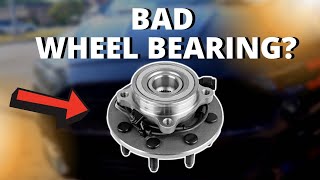
Symptoms of a Failing Front Knee or Wheel Bearing 🎬 Watch: How to identify symptoms of a bad wheel bearing

The most common failure associated with the front knee assembly is the wheel bearing. Most symptoms point to a worn-out bearing. Ignoring these signs can be dangerous, as a completely failed bearing can cause the wheel to wobble excessively or even separate from the vehicle.
Grinding, Roaring, or Humming Noise
This is the classic sign of a bad wheel bearing. The noise sounds like a deep growl or roar coming from one of the front wheels. It is directly related to vehicle speed—the faster you go, the louder it gets. A key diagnostic trick is to notice how the sound changes when you turn. If you steer to the right and the noise gets louder, the failing bearing is likely on the left side, as the turn puts more weight on it. The opposite is true if you turn left.
Clicking or Popping When Turning
While often associated with a bad CV axle, severe wear in a wheel bearing can also cause clicking or snapping sounds, especially during turns. This indicates significant internal damage to the bearing races or balls.
Steering Wheel Vibration or Wobble
As a wheel bearing wears, it develops excessive play or looseness. This allows the wheel to wobble slightly as it rotates, which you'll feel as a vibration in the steering wheel. This can also lead to uneven tire wear over time.
ABS Warning Light
The front knee assembly has a mounting point for the wheel speed sensor, which is part of the Anti-lock Braking System (ABS). Excessive play from a failing bearing can damage the sensor or cause the tone ring (which the sensor reads) to move out of position. This will trigger an ABS fault and illuminate the warning light on your dashboard.
Safety Recall Notice: While not directly part of the knee assembly, the front lower control arms on 2000-2001 Imprezas are subject to a major safety recall for severe rust. These arms can break without warning, causing a loss of vehicle control. Anyone working on the front suspension or replacing a knee assembly should inspect the control arms for rust perforation near the hanger brackets. The recall number is NHTSA Campaign ID 11V464000, also known as Subaru recall WVX-34.
Buyer's Guide: Inspecting a Used 2000-2001 Impreza Front Knee

Buying a used OEM knee assembly can be a cost-effective repair, especially since it can save you the difficult job of pressing out an old wheel bearing and pressing in a new one. Here’s what to look for.
The #1 Priority: ABS vs. Non-ABS
The most critical compatibility check is for the ABS sensor. Vehicles equipped with ABS have a small hole in the knuckle where the wheel speed sensor is mounted. Non-ABS knuckles do not have this provision. Before buying, visually confirm that the replacement part has the correct configuration for your vehicle. Using the wrong one will leave you with a non-functional ABS system or a part you can't install.
Physical Inspection Checklist
- Check for Cracks: Carefully inspect the entire knuckle for any hairline cracks, especially around the mounting points for the strut and ball joint. A cracked knuckle is unsafe and unusable.
- Inspect Mounting Threads: Ensure all threaded holes are clean and undamaged. Pay special attention to the two large holes for the strut bolts and the pinch bolt area for the ball joint.
- Verify Hub and Studs: Check that the hub flange (where the wheel bolts on) is flat and not bent. Make sure all wheel studs are present and their threads are in good condition.
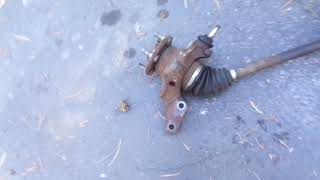
- Look for Seized Axle Remnants: On Subarus of this era, it's common for the CV axle to rust and become completely seized inside the hub. Make sure the splined hole in the center of the hub is empty and clean. If a piece of the old axle is broken off inside, the part is essentially useless without extensive machine shop work.
Checking the Included Wheel Bearing
A used knee assembly comes with a wheel bearing already pressed in. Its condition is a gamble. To check it, place the assembly on the ground and try to wiggle the hub flange from side to side and up and down. There should be zero play or movement. If you can feel any looseness or hear a clicking sound, the bearing is bad and will need to be replaced. Most wheel bearings have a lifespan of 75,000 to 150,000 miles. It's wise to assume any bearing in a used assembly with over 100,000 miles is near the end of its life.
Why a Used OEM Assembly Can Be a Smart Choice
The main advantage of buying a complete used knee assembly is avoiding the need for a hydraulic press. Replacing just the wheel bearing requires pressing the hub out of the knuckle, pressing the old bearing out, and then pressing the new bearing and hub back in. This is not feasible for most DIY mechanics. A good used assembly allows you to simply unbolt the old part and bolt in the new one, potentially saving hundreds in labor costs.
🎬 Watch: Step-by-step Subaru steering knuckle replacement videoReplacement Overview and Special Procedures
Replacing the front knee assembly is an advanced DIY job that requires heavy-duty tools. Seized bolts and components are common on a vehicle of this age.
Pro Tip: Before removing the two large bolts that connect the strut to the knuckle, use a paint marker or scribe to mark the position of the upper bolt's washer and the nut. This top bolt is an eccentric bolt used to adjust camber. Matching your marks during reassembly will get the alignment very close to where it was, but a professional alignment is still required.
Critical Related Parts to Replace
- Axle Nut: This is a one-time-use part and must be replaced with a new one. It should be staked or secured with a new cotter pin after being torqued to spec.
- Ball Joint: The ball joint connects the lower control arm to the bottom of the knuckle. They are often difficult to separate and are a common wear item. It's good practice to replace it at the same time. 🎬 See this guide on replacing stubborn Subaru ball joints
- Lower Control Arm: Given the safety recall for rust, this is the perfect time to replace the front lower control arms, especially on vehicles registered in the "salt belt."
Important Torque Specifications
Using a torque wrench is critical for safety and to prevent damage to the new parts. Always verify specs for your specific model, but these are common values:
| Component | Torque Spec (ft-lbs) | Notes |
|---|---|---|
| Front Axle Nut | 137 ft-lbs | Must use a new nut and stake it. |
| Strut-to-Knuckle Bolts | 97-120 ft-lbs | Mark alignment of top bolt before removal. |
| Ball Joint Pinch Bolt | 28-37 ft-lbs | This bolt is prone to breaking; be careful. |
| Ball Joint Castle Nut | ~29 ft-lbs | Always use a new cotter pin. |
| Tie Rod End Nut | 18-22 ft-lbs | Always use a new cotter pin. |
Warning: A professional four-wheel alignment is mandatory after replacing a steering knuckle or any major front suspension component. Failure to do so will result in poor handling, unsafe driving characteristics, and rapid, uneven tire wear.
Cost Comparison: 2000-2001 Impreza Front Knee Assembly
Prices can vary based on location and part condition. These are typical estimates:
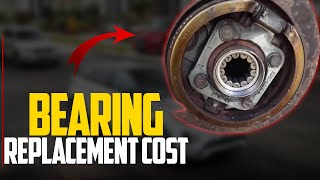
- New OEM (Subaru): $440 - $610 for the bare knuckle.
- New Aftermarket: $80 - $330 for the bare knuckle.
- Used OEM: $75 - $200 for a complete assembly including the hub and a used bearing.
- Shop Labor (Assembly Swap): $200 - $350 per side.
- Shop Labor (Bearing Press Only): $227 - $333 per side for labor, plus the cost of the bearing.
Frequently Asked Questions (FAQ)
What's the difference between a knee, a knuckle, and a spindle?
"Knee" is an industry term for the steering knuckle assembly. The steering knuckle is the main component that connects to the suspension. A spindle is technically the shaft that the wheel bearings ride on, which on this Impreza is part of the wheel hub that is pressed into the knuckle.
Do I need to replace the left and right sides at the same time?
It is not required. You only need to replace the side that has failed. However, since wheel bearings wear out based on mileage, if one side has failed due to age, the other side is likely not far behind.
Can I replace just the wheel bearing myself?
It is possible, but not recommended without a hydraulic shop press. Removing the old bearing and installing the new one requires many tons of force. Attempting to do it with hammers or other methods will almost certainly damage the new bearing or the knuckle itself. Buying a complete used knee assembly is often the better choice for a DIY repair.
Is an alignment really necessary after this repair?
Yes, it is absolutely essential. Replacing the knuckle directly affects the camber and toe alignment settings. Driving without an alignment will cause the car to handle poorly and destroy your front tires in a very short time.
Helpful Videos
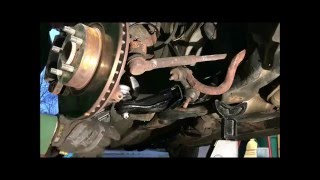
Technical Specifications
OEM Part Numbers: 20200AC200 20200AC200F 28012AA033 28012AC040 28012AC050 28012AC060 28012AC070 28012FC000 28012FC010 28012FC020 28012FC030 28012FC050 28313AE00A 28313AE01A 28313AE020
Front Axle Nut Torque: 137 ft-lbs (186 Nm). Strut-to-Knuckle Bolt Torque: 97-120 ft-lbs.

The information in this article is provided for general reference and educational purposes only. Vehicle specifications, procedures, and part compatibility can vary by production date, trim level, and region. Always consult your vehicle's factory service manual and verify part numbers before purchasing or performing repairs. Safety-critical components such as airbags, seat belts, and braking systems should be installed by a qualified professional.
- Subaru Impreza:
- 🎬 Helpful Videos
- What is a Front Knee Assembly?
- Symptoms of a Failing Front Knee or Wheel Bearing
- Grinding, Roaring, or Humming Noise
- Clicking or Popping When Turning
- Steering Wheel Vibration or Wobble
- ABS Warning Light
- Buyer's Guide: Inspecting a Used 2000-2001 Impreza Front Knee
- The #1 Priority: ABS vs. Non-ABS
- Physical Inspection Checklist
- Checking the Included Wheel Bearing
- Why a Used OEM Assembly Can Be a Smart Choice
- Replacement Overview and Special Procedures
- Critical Related Parts to Replace
- Important Torque Specifications
- Cost Comparison: 2000-2001 Impreza Front Knee Assembly
- Frequently Asked Questions (FAQ)
- 🎟️ Get 5% Off