

2003-2005 Subaru Forester Front Knee, Knuckle & Control Arm Guide
Diagnosing front-end noises and understanding the critical lower control arm rust recall affecting 2003-2005 Foresters.
- A major safety recall (NHTSA #11V464000) exists for front lower control arm rust, which can cause a total loss of steering. Inspect these parts carefully on any vehicle from a salt-belt state.
- A humming or roaring noise that changes when turning is the classic sign of a bad wheel bearing.
- Clunking over bumps is typically caused by worn control arm bushings or a bad ball joint.
- Replacing the wheel bearing requires a hydraulic press, making a complete used knuckle assembly a practical, time-saving alternative for DIY repair.
Symptoms of a Failing Front Knee Assembly

Problems in the front knee assembly can manifest as distinct noises, vibrations, or changes in steering feel. Because the assembly is made of several parts, the specific symptom can help you pinpoint the root cause.
1. Wheel Bearing Failure
The most common failure is the wheel bearing. The sound is often described as a humming, roaring, or grinding noise that starts subtly and gets louder with speed. Many drivers first notice it at highway speeds above 40-50 MPH. A key diagnostic clue is that the noise often changes pitch or volume when you turn; for example, a failing right-side bearing may get louder when turning left, as more load is placed on it.
2. Lower Control Arm or Bushing Failure
Worn control arm bushings or a failing ball joint typically cause a clunking or knocking sound, especially when driving over bumps or uneven roads at lower speeds. You might also feel looseness or 'slop' in the steering, causing the vehicle to wander on the highway. Visually inspecting the large rubber bushings on the control arm may reveal cracks or tearing, which is a clear sign of failure.
3. Ball Joint Failure
A worn ball joint, which connects the control arm to the knuckle, can produce a popping or clicking sound when turning the steering wheel. In severe cases, you can feel the looseness through the steering. A completely failed ball joint can cause the suspension to separate, leading to a total loss of control.
Diagnosis Tip: To differentiate between a bad wheel bearing and a bad ball joint, safely raise the front of the vehicle and support it on jack stands. Grab the tire at the 12 and 6 o'clock positions and try to wiggle it. Play in this direction often indicates a bad ball joint or worn control arm bushings. Play when grabbing the wheel at 3 and 9 o'clock usually points to a worn tie rod end, but can also be a sign of a very worn wheel bearing.
Critical Safety Recall: Front Lower Control Arm Corrosion (NHTSA #11V464000)

A crucial issue for all 2003-2008 Foresters is NHTSA campaign 11V464000 (Subaru recall code WVX-34). This recall was issued for vehicles sold or registered in salt-belt states due to severe corrosion of the stamped steel front lower control arms.
The control arm's hanger bracket can rust through, causing the arm to break away from the vehicle's frame. This results in an immediate and catastrophic loss of steering control, increasing the risk of a crash. The recall procedure involved dealers inspecting the arms and either applying a rust-proofing compound or replacing them entirely, free of charge.
Warning: Before purchasing a used 2003-2005 Forester or a used front knee assembly, it is essential to check if the vehicle was subject to this recall and if the repair was performed. You can check a vehicle's VIN on the NHTSA website. Any used control arm should be thoroughly inspected for significant rust, especially around the hanger brackets and welds.
Buying a Used 2003-2005 Forester Knee Assembly

A used OEM knee assembly can be a smart purchase, especially since the wheel bearings are a press-in design. Replacing just the bearing requires removing the entire knuckle and taking it to a shop with a hydraulic press. Buying a complete used knuckle with a good bearing can save significant time and labor. Here’s what to look for:
- Inspect the Control Arm: This is the most critical check. Look for heavy scaling rust, flaking metal, or any signs of previous repair or rust-proofing paint that might be hiding damage. Pay close attention to the rear bushing bracket area, as this is the primary failure point identified in the recall.
- Check the Wheel Bearing: With the assembly off the car, try to spin the hub by hand. It should spin smoothly and silently. Any grinding, roughness, or a gritty feeling indicates the bearing is bad. Check for any in-and-out play in the hub itself. There should be zero movement.
- Examine the Ball Joint: Inspect the rubber boot on the ball joint. If it's torn or missing, the joint is likely contaminated and will fail soon.
- Steel vs. Aluminum Arms: The original arms on these Foresters were stamped steel. Some aftermarket replacements are available in aluminum, which is lighter and more corrosion-resistant but may not be as durable against impacts. If you are only replacing one side, it is crucial to match the material of the existing arm on the other side to maintain balanced handling.
Cost of Replacement (2003-2005 Forester)
Costs can vary significantly based on the parts replaced and your location. A full alignment is required after any of these repairs, which typically costs an additional $150 - $200.
| Part / Service | Estimated Cost | Notes |
|---|---|---|
| New OEM Lower Control Arm | $250 - $385 (per side, part only) | Part number 20202SA002 (Right Side). Prices vary by dealer. |
| New Aftermarket Lower Control Arm | $70 - $150 (per side, part only) | Includes ball joint. Quality can vary widely. |
| Used OEM Knee Assembly | $100 - $250 (per side, part only) | Includes knuckle, hub/bearing, and control arm. Value depends heavily on condition. |
| Shop Labor (Control Arm Only) | $200 - $400 (per side) | Based on an estimated 2-3 hours of labor. |
| Shop Labor (Full Knee Assembly) | $300 - $550 (per side) | Slightly more labor to disconnect strut and axle. |
Frequently Asked Questions (FAQ)
Do I have to replace the whole knee assembly if just my wheel bearing is bad?
No, but it can be more efficient. The wheel bearings on this Forester model are a "press-in" style. This means the steering knuckle must be completely removed from the vehicle and taken to a machine shop to have the old bearing pressed out and a new one pressed in. For many DIY mechanics, it's faster and easier to replace the entire knuckle with a used unit that has a known-good bearing.
Is an alignment really necessary after replacing a control arm or knuckle?
Yes, absolutely. The control arm and knuckle are primary components that determine the vehicle's wheel alignment angles (camber, caster, and toe). Replacing them will alter these settings. Driving without a proper alignment will cause rapid and uneven tire wear, poor handling, and can be unsafe.
What is the difference between the steel and aluminum control arms?
The original equipment on the 2003-2005 Forester is a stamped steel control arm, which is strong and inexpensive but prone to rust in salt-heavy climates. Aftermarket aluminum arms are lighter, which can slightly improve suspension responsiveness, and they are highly resistant to corrosion. However, steel is generally considered more durable against hard impacts.
Can I drive with a bad wheel bearing or control arm?
It is not recommended. A noisy wheel bearing will eventually fail completely, which can cause the wheel to seize or separate from the vehicle. A corroded control arm can break without warning, leading to a complete loss of steering control. These are critical safety components and should be repaired as soon as symptoms appear.
Technical Specifications
OEM Part Numbers: 20202SA002 20202SA001 20202SA000 20202SA011 20202SA012 20202SA150 28313AE020 28313SA010 28313SA011
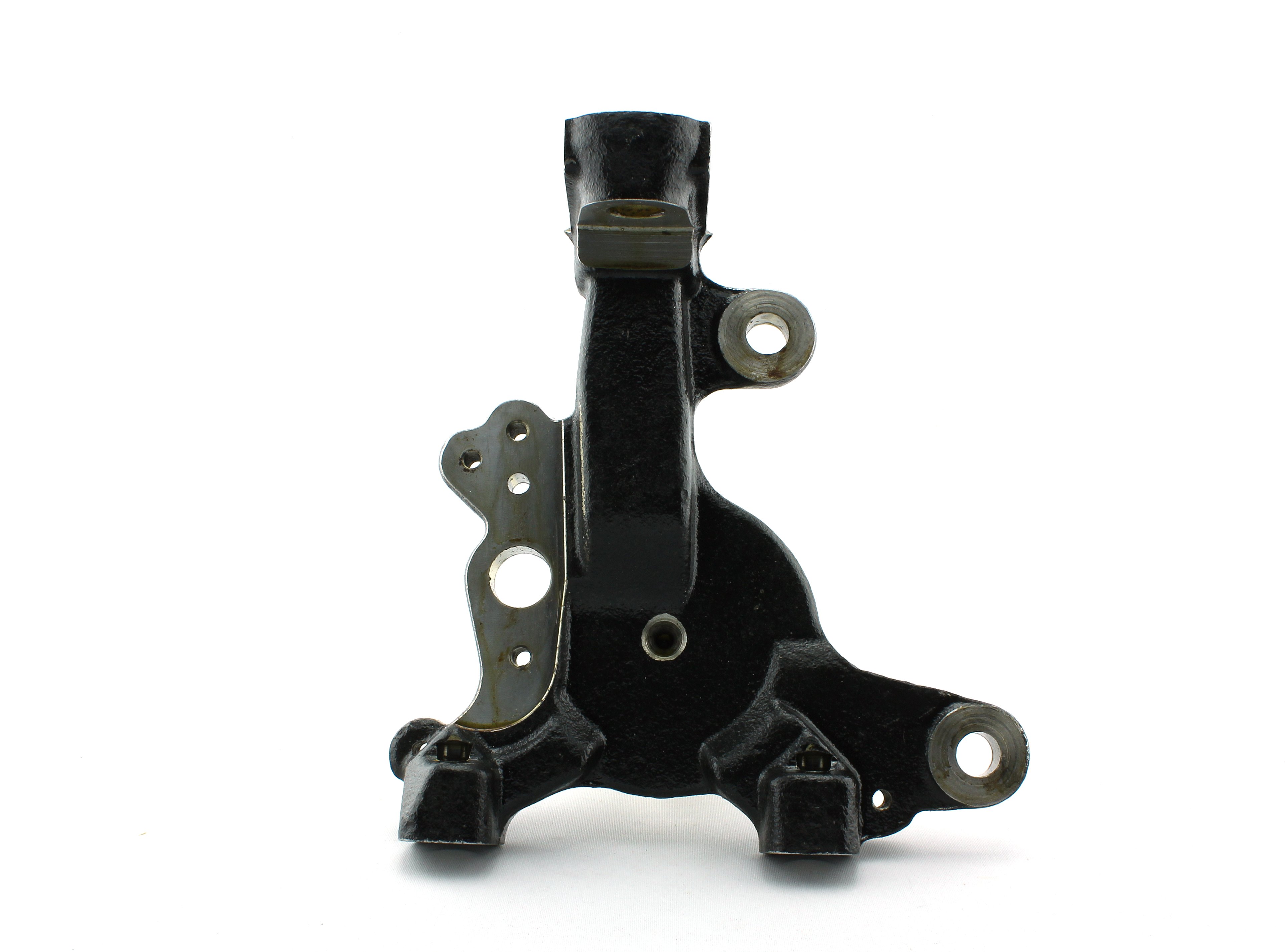
The front knee assembly consists of the steering knuckle, a press-in style wheel bearing/hub, and a stamped steel lower control arm. The axle nut is 32mm. An alignment is mandatory after replacement.
We Have This Part in Stock

The information in this article is provided for general reference and educational purposes only. Vehicle specifications, procedures, and part compatibility can vary by production date, trim level, and region. Always consult your vehicle's factory service manual and verify part numbers before purchasing or performing repairs. Safety-critical components such as airbags, seat belts, and braking systems should be installed by a qualified professional.
- Subaru Forester:
- 🛍️ Shop This Part
- Symptoms of a Failing Front Knee Assembly
- 1. Wheel Bearing Failure
- 2. Lower Control Arm or Bushing Failure
- 3. Ball Joint Failure
- Critical Safety Recall: Front Lower Control Arm Corrosion (NHTSA #11V464000)
- Buying a Used 2003-2005 Forester Knee Assembly
- Cost of Replacement (2003-2005 Forester)
- Frequently Asked Questions (FAQ)
- 🎟️ Get 5% Off