

2003-2006 Kia Sorento Front Knee Assembly: Noises, 4WD vs. 2WD, and ABS Faults
This guide covers how to diagnose a failing front knee, knuckle, or wheel bearing on your first-generation Kia Sorento and how to choose the correct used replacement part.
- The most critical factor when buying a replacement is matching it to your Sorento's drivetrain (2WD or 4WD) and ABS system.
- A roaring or grinding noise that gets louder with speed is the number one symptom of a failing wheel bearing within the assembly.
- Replacing the entire loaded knuckle assembly is often easier for a DIYer than pressing a new bearing, which requires a hydraulic press.
- A wheel alignment is mandatory after replacing the steering knuckle to prevent unsafe handling and premature tire wear.
Symptoms of a Failing Front Knee Assembly

A problem with the front knee assembly on a 2003-2006 Kia Sorento usually means one of its integrated components has failed, most commonly the wheel bearing. Here are the specific signs to watch and listen for.
1. Grinding, Roaring, or Humming Noise While Driving
This is the most common sign of a bad wheel bearing. The sound is often described as a low-pitched roar, hum, or grinding that gets louder with vehicle speed. To help pinpoint which side is failing, try turning the steering wheel gently from side to side while driving at a steady speed. If you turn right and the noise gets louder, the problem is likely on the left side, as more weight is transferred to the outside wheel. If you turn left and it gets louder, the right side bearing is the likely culprit.
2. Clicking or Popping Sounds
A clicking or popping sound, especially when turning, can sometimes be related to a worn wheel bearing, but it is more often a symptom of a failing CV (Constant Velocity) joint on 4WD models. Since the CV axle passes through the knee assembly, these parts are closely related. If the bearing has excessive play, it can put extra stress on the CV joint, causing both to fail.
3. Steering Wheel Vibration or Looseness
A worn-out wheel bearing can create excessive play, or "wobble," in the wheel. This can translate into a vibration you feel in the steering wheel, which may get worse as you accelerate. The steering might also feel loose or less responsive than usual. In severe cases, the entire vehicle may pull to one side.
4. ABS Warning Light
The Anti-lock Braking System (ABS) uses wheel speed sensors that mount to the steering knuckle. Excessive movement from a failed wheel bearing can damage the sensor or the tone ring it reads, triggering an ABS fault light on your dashboard. Sometimes, rust and debris can interfere with the sensor's reading, also causing a fault.
Pro Tip: To confirm a bad wheel bearing, safely jack up the front of the vehicle so the tire is off the ground. Place your hands at the 12 and 6 o'clock positions on the tire and try to wiggle it. If you feel any play or hear a clunking sound, the bearing is likely worn and needs replacement.
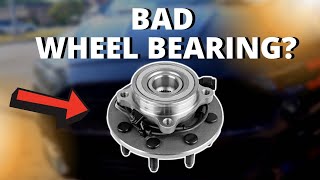
🎬 Watch: How to identify symptoms of a bad wheel bearingKnown Issues, Recalls, and TSBs

While there are no specific recalls for the front knee or steering knuckle on the 2003-2006 Kia Sorento, several related items are worth noting:
- Corrosion: Some owners have reported significant rust and corrosion on underbody components, including suspension brackets and axles, especially in salt-belt states. When inspecting your vehicle, check the knuckle for severe rust that could compromise its structural integrity.
- Stop Lamp Switch Recall: A widespread recall (NHTSA 09V130000) was issued for a faulty stop lamp switch. While not directly related to the knuckle, this issue can affect the Electronic Stability Control (ESC) system, which relies on wheel speed sensor data. Ensure this recall has been performed on your vehicle.
- TSBs: Technical Service Bulletin TSB-034 mentions erratic shifting or noises from the transfer case, which could be misdiagnosed as a front-end noise. Another TSB, #92, notes abnormal vibration or noise when shifting due to loose rear driveshaft bolts. It's important to rule out these other possibilities when diagnosing a front-end noise.
Buying a Used 2003-2006 Sorento Knee Assembly

A used OEM knee assembly can be an excellent value, providing a high-quality factory part for a fraction of the price of a new one. However, careful inspection and compatibility verification are essential.
Key Compatibility Checks
Warning: You must match your vehicle's drivetrain (2WD or 4WD) and ABS status. An incorrect part will not fit or function correctly.
- 2WD vs. 4WD: This is the most critical difference. 4WD knuckles have a large, splined opening in the center for the CV axle to pass through. 2WD knuckles have a solid spindle where the hub mounts. The easiest way to check your vehicle is to look behind the front wheel; if you see a rubber CV axle boot, you have a 4WD model.
- ABS vs. Non-ABS: Most Sorentos of this generation came with ABS. The knuckle for an ABS-equipped vehicle will have a small, threaded mounting hole for the wheel speed sensor. The hub assembly will also have a tone ring for the sensor to read. Always match this to your vehicle's configuration.
- Left vs. Right Side: Knuckles are side-specific. The steering arm, where the tie rod connects, will point in opposite directions. Ensure you are buying for the correct side (Driver/LH or Passenger/RH).
Physical Inspection Checklist
- Check the Hub/Bearing: Try to spin the wheel hub by hand. It should rotate smoothly and silently. Any grinding, roughness, or noise indicates the bearing is bad. While a used assembly's main value is the knuckle itself, a good bearing is a significant bonus.
- Inspect for Cracks: Carefully examine the entire knuckle, especially around the mounting points for the ball joints, strut, and tie rod. Look for any hairline cracks in the casting, which would render the part unsafe.
- Check for Rust: Surface rust is normal, but look for deep, flaking rust that could weaken the part. Pay close attention to the area where the bearing is pressed in and where the ABS sensor mounts.
- Verify Thread Condition: Check the threads for the caliper bracket bolts, ABS sensor bolt, and ball joint connections. Ensure they are not stripped or damaged.
Pro Tip: Even if the bearing on a used assembly feels good, its remaining lifespan is unknown. For maximum reliability, consider having a machine shop press out the old bearing and install a new one before you install the knuckle on your vehicle. This is much easier than doing it on the car.
Cost Comparison
Replacing the entire loaded knuckle assembly is often faster and easier than pressing a new bearing into the old knuckle, which requires special tools.
| Part | Estimated Cost |
|---|---|
| New OEM (Kia Dealer) | $330 - $490 (knuckle only) |
| New Aftermarket (Loaded Knuckle) | $150 - $250 |
| Used OEM (Recycled) | $75 - $150 |
| Shop Labor (Knuckle Replacement) | $200 - $350 |
| Shop Labor (Bearing Press Only) | $159 - $233 |
Replacement Overview & Torque Specs
Replacing the steering knuckle is a job for an experienced DIYer or a professional technician. It involves disassembling most of the front suspension. An alignment is required after replacement.
Key Steps:
- Safely lift and support the vehicle and remove the wheel.
- Remove the brake caliper and rotor. Hang the caliper securely to avoid straining the brake hose.
- Remove the axle nut (4WD models).
- Disconnect the tie rod end, lower ball joint, and upper control arm from the knuckle. A ball joint separator tool is often required.
- Remove the bolts connecting the strut to the knuckle.
- Remove the old knuckle assembly.
- Installation is the reverse of removal. Use new cotter pins for all castle nuts.
Important Torque Specifications:
Using a torque wrench is critical for safety. While specs can vary slightly, these are common values for the 2003-2006 Sorento:
| Component | Torque Spec | Source |
|---|---|---|
| Axle Shaft Lock Nut | 177 - 198 lb-ft (245 - 275 Nm) | |
| Lower Ball Joint to Knuckle Nut | 72 - 87 lb-ft (98 - 118 Nm) | |
| Tie Rod End Nut | 22 - 33 lb-ft (29 - 44 Nm) | |
| Wheel Lug Nuts | 65 - 80 lb-ft (88 - 108 Nm) |
Warning: Always get a professional wheel alignment after replacing a steering knuckle or any other major suspension component. Failure to do so will result in poor handling and rapid, uneven tire wear.
Frequently Asked Questions (FAQ)
Can I just replace the wheel bearing instead of the whole knee assembly?
Yes, but it requires specialized equipment. The wheel bearing is pressed into the steering knuckle with thousands of pounds of force. To replace it, the entire knuckle must be removed from the vehicle and taken to a shop with a hydraulic press. For many DIY mechanics, replacing the complete used or new loaded knuckle assembly is a much faster and simpler job.
What's the difference between a steering knuckle, a spindle, and a knee?
These terms are often used interchangeably. "Steering Knuckle" is the most technically correct term for the part that connects the wheel, steering, and suspension. On 2WD vehicles, the solid axle shaft that the wheel bearing rides on is called the "Spindle," and it's often integrated into the knuckle. "Knee" or "Knee Assembly" is an industry term for the complete assembly, typically including the knuckle, hub, and bearing.
How do I know for sure if I have a 2WD or 4WD Sorento?
The most reliable way is to look behind one of the front wheels. If you see a driveshaft (axle) with a rubber, ribbed boot coming out of the center of the wheel assembly, your Sorento is 4WD. If there is no axle shaft, it is 2WD.
Is it safe to drive with a bad wheel bearing?
It is not recommended. A slightly noisy bearing can be driven on for a short time, but it will only get worse. As the bearing deteriorates, it generates heat and can cause the wheel to wobble, affecting steering and braking. In a worst-case scenario, the bearing can completely seize or collapse, which could cause the wheel to detach from the vehicle.
Helpful Videos
Technical Specifications
OEM Part Numbers: 50251-3E201 50251-3E251 502513E100 502513E200 502513E201 502513E251 51251-3E100 51251-3E151 51251-3E200 51251-3E250 51251-3E251 512513E100 512513E101 512513E151 512513E200 512513E201
Axle Nut Torque: 177 - 198 lb-ft. Lower Ball Joint to Knuckle Torque: 72 - 87 lb-ft. Tie Rod End Torque: 22 - 33 lb-ft.

The information in this article is provided for general reference and educational purposes only. Vehicle specifications, procedures, and part compatibility can vary by production date, trim level, and region. Always consult your vehicle's factory service manual and verify part numbers before purchasing or performing repairs. Safety-critical components such as airbags, seat belts, and braking systems should be installed by a qualified professional.
- Kia Sorento:
- 🎬 Helpful Videos
- Symptoms of a Failing Front Knee Assembly
- 1. Grinding, Roaring, or Humming Noise While Driving
- 2. Clicking or Popping Sounds
- 3. Steering Wheel Vibration or Looseness
- 4. ABS Warning Light
- Known Issues, Recalls, and TSBs
- Buying a Used 2003-2006 Sorento Knee Assembly
- Key Compatibility Checks
- Physical Inspection Checklist
- Cost Comparison
- Replacement Overview & Torque Specs
- Key Steps:
- Important Torque Specifications:
- Frequently Asked Questions (FAQ)
- 🎟️ Get 5% Off