

2016-2019 BMW 750i Front Knuckle & Bearing: Diagnosing Humming Noises and RWD/xDrive Differences
This guide covers the common failure symptoms, known issues, and critical compatibility warnings for the front steering knuckle and wheel bearing assembly on the G11/G12 BMW 750i.
- The most common failure is the wheel bearing, which causes a humming/roaring noise that changes when turning; the knuckle itself is very durable.
- Compatibility is critical: Front knuckles for Rear-Wheel Drive (RWD) models are NOT interchangeable with xDrive (AWD) models.
- A specific 'clicking' noise at low speeds may be addressed by TSB SI B31 01 12 and might not require part replacement.
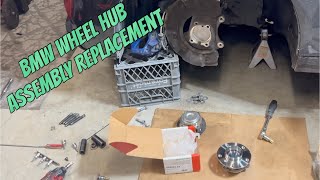
- Replacement is a complex job requiring special tools and new torque-to-yield bolts; a four-wheel alignment is mandatory afterward.
Symptoms of a Failing Front Knee Assembly
When you experience issues with the front "knee" or knuckle assembly on a 2016-2019 BMW 750i, the problem is almost always the bolt-on wheel bearing, not the knuckle itself. The symptoms are typically audible and get worse over time.
1. Humming, Roaring, or Growling Noise
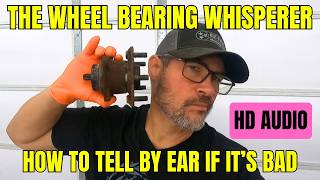
This is the most common sign of a bad wheel bearing. You'll hear a low-pitched humming or roaring sound that is tied to vehicle speed, not engine RPM. The noise often starts as a faint hum but will grow progressively louder as the bearing deteriorates. A key diagnostic clue is how the noise changes when you turn the steering wheel at speed. If the noise gets louder when you steer left, the failing bearing is likely on the right side, as weight transfers to the outside wheel. Conversely, if the noise increases during a right turn, the left wheel bearing is the likely culprit.
🎬 Listen to what a bad wheel bearing sounds like2. Steering Wheel Vibration or Looseness
As the bearing wears, it can develop excessive play. This can translate into a vibration you feel in the steering wheel, which also worsens with speed. In some cases, the steering may feel vague, less precise, or "loose" because the worn bearing allows for unwanted movement in the wheel assembly.
3. ABS or DSC Warning Lights
The front wheel bearing housing contains the wheel speed sensor for the ABS and DSC systems. When the bearing develops significant play, it can damage this sensor or create an inconsistent signal. This will trigger the ABS and/or DSC warning lights on your dashboard.
4. Clicking or Cracking Noise at Low Speeds (TSB SI B31 01 12)
A very specific noise may not indicate a failed bearing. BMW issued Technical Service Bulletin (TSB) SI B31 01 12 for a "cracking or clicking" sound from the front axle during low-speed maneuvers, like turning in a parking lot. This is caused by microscopic movement between the wheel bearing's contact surface and the steering knuckle. The official fix does not involve replacing the bearing, but rather removing it, cleaning both surfaces, and applying a special adhesive. It's important to distinguish this specific click from the constant hum of a worn bearing.
Pro Tip: To physically check for a bad bearing, safely raise the front of the car and secure it on a jack stand. Grab the tire at the 12 and 6 o'clock positions and try to rock it. Any noticeable play or clunking movement is a strong indicator of a failed wheel bearing that needs immediate replacement.
🎬 Watch how to perform the shake and spin testKnown Issues, TSBs, and Recalls
There are no active recalls for the steering knuckle or wheel bearing on the 2016-2019 BMW 750i. However, there are relevant service bulletins.
- TSB SI B31 01 12: Addresses a clicking/cracking noise from the front axle during low-speed turns. This is caused by friction between the bearing and knuckle surfaces, not necessarily a bad bearing.
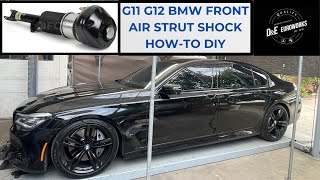
- TSB SIB 01 05 22: Pertains to the air suspension struts, which can leak or cause rattling noises. While part of the suspension, this is a separate issue from the knuckle and bearing assembly. 🎬 See how to replace the front air suspension struts
Buying a Used Front Knee Assembly
A used OEM knuckle assembly can be an excellent value, but careful inspection and verification are essential. The main benefit is getting a high-quality, factory-spec steering knuckle for a fraction of the new price, as the knuckle itself is a durable part.
1. CRITICAL: Verify RWD vs. xDrive
The single most important check is compatibility. The front knuckle and hub assembly for a Rear-Wheel Drive (RWD) 750i is NOT the same as the part for an xDrive (All-Wheel Drive) model. The xDrive knuckle has a provision for the front CV axle to pass through it. Always confirm the donor vehicle's drivetrain before purchasing.
2. Physical Inspection
When inspecting a used assembly, look for the following:
- No Cracks or Bending: Carefully examine the entire knuckle casting, especially around the mounting points for the control arms and ball joints. Any signs of cracking or deformation mean the part is junk, likely from a collision.
- Condition of Mounting Holes: Check that the threaded holes and mounting surfaces are clean and undamaged.
- The Wheel Bearing: Assume the used wheel bearing has a limited lifespan. Check for any roughness or noise by spinning the hub by hand. While you may get some life out of it, factor in the cost of a new wheel bearing hub assembly, which you will bolt to your used knuckle.
3. Mileage Considerations
While the knuckle itself isn't a high-wear part, the included bearing is. A bearing from a lower-mileage vehicle (under 80,000 miles) is more likely to be serviceable. However, given the cost of a new bearing and the difficulty of replacement, many buyers purchase a used knuckle and install a brand-new bearing hub assembly onto it from the start.
4. OEM vs. Aftermarket
For a critical structural part like a steering knuckle, a used OEM component is often superior to a new, cheap aftermarket one. OEM knuckles are made from high-quality cast aluminum with precise geometry. Poorly made aftermarket knuckles can have incorrect dimensions, leading to alignment problems and unsafe handling.
Replacement Procedure and Special Considerations
Replacing the front knuckle assembly is a complex and difficult job, rated 4 out of 5 for difficulty. It is not recommended for beginners.
- Special Tools: The job requires large E-Torx sockets, large hex sockets for the axle nut (if applicable), ball joint separators, and a high-torque wrench.
- One-Time-Use Bolts: Like most modern BMWs, this suspension uses torque-to-yield (stretch) bolts. The main bolts for the control arms, ball joints, and hub assembly should be replaced with new ones during installation.
- Torque Specs: Correct torque specifications are absolutely critical for safety and to prevent damage. These specs can be difficult to find and may vary. It is strongly recommended to source the latest torque specs from BMW's official Technical Information System (TIS/ISTA).
- Wheel Alignment: A full four-wheel alignment is mandatory after replacing a steering knuckle or any major suspension component. Skipping this step will result in poor handling, crooked steering, and rapid, uneven tire wear.
Warning: The bushings on the control arms (especially the large, fluid-filled tension strut bushing) must only be fully torqued when the car's full weight is on the suspension (i.e., on the ground or on a drive-on lift). Tightening these bolts with the suspension hanging in the air will preload the rubber and cause the new bushing to fail almost immediately.
Related Parts to Inspect
While the knuckle is removed, it is the perfect time to inspect other common wear items in the G11/G12 front suspension. A clunking or loose front end is often caused by these parts, not the bearing.
- Tension Struts (Forward Lower Control Arms): The large, fluid-filled rubber bushing on this arm is a very common failure point. It leaks and collapses, causing a steering wheel shimmy when braking and a clunking noise over bumps.
- Sway Bar End Links: These can wear out and cause a lighter, rattling or clunking sound over smaller, repetitive bumps.
- Tie Rod Ends: Worn inner or outer tie rod ends will cause steering looseness and uneven tire wear.
Cost Comparison
| Part | Estimated Cost |
|---|---|
| New OEM Knuckle & Hub Assembly | $900 - $1200+ |
| New OEM Hub Assembly Only | $350 - $500 |
| New Aftermarket Hub Assembly Only | $150 - $250 |
| Used OEM Knuckle & Hub Assembly | $150 - $350 |
| Shop Labor (Hub Replacement) | $250 - $450 |
Frequently Asked Questions (FAQ)
Can I use a front knuckle from an xDrive 750i on my RWD model?
No. The parts are completely different and not interchangeable. The xDrive knuckle is designed to accommodate a front drive axle, while the RWD version is not. You must use a part from a RWD vehicle.
I only hear a click when I turn in a parking lot. Is my wheel bearing bad?
Not necessarily. If you hear a distinct click or crackle only at low speeds, it may be the issue described in TSB SI B31 01 12, which is caused by movement between the bearing and knuckle. A bad bearing typically causes a constant humming or roaring noise that gets louder with speed.
Should I replace just the wheel bearing or the whole knuckle assembly?
Unless your knuckle was damaged in an accident, you typically only need to replace the bolt-on wheel bearing/hub assembly. However, buying a complete used knuckle assembly can be cost-effective, especially if you plan to press in a new bearing yourself, as you get the expensive knuckle casting for a low price.
Is an alignment really necessary after replacement?
Yes, it is absolutely required. Replacing the knuckle directly affects the camber, caster, and toe angles of your front suspension. Failure to perform a four-wheel alignment will lead to dangerous handling, a crooked steering wheel, and will destroy your front tires in a very short time.
Helpful Videos


Technical Specifications
OEM Part Numbers: 31206879170 6879170 31206879169 6879169
The assembly consists of a cast aluminum steering knuckle (swivel bearing) and a sealed, bolt-on wheel hub/bearing unit. Designed for Rear-Wheel Drive (RWD) models only.
We Have This Part in Stock



The information in this article is provided for general reference and educational purposes only. Vehicle specifications, procedures, and part compatibility can vary by production date, trim level, and region. Always consult your vehicle's factory service manual and verify part numbers before purchasing or performing repairs. Safety-critical components such as airbags, seat belts, and braking systems should be installed by a qualified professional.
- BMW 750i:
- 🎬 Helpful Videos
- 🛍️ Shop This Part
- Symptoms of a Failing Front Knee Assembly
- 1. Humming, Roaring, or Growling Noise
- 2. Steering Wheel Vibration or Looseness
- 3. ABS or DSC Warning Lights
- 4. Clicking or Cracking Noise at Low Speeds (TSB SI B31 01 12)
- Known Issues, TSBs, and Recalls
- Buying a Used Front Knee Assembly
- 1. CRITICAL: Verify RWD vs. xDrive
- 2. Physical Inspection
- 3. Mileage Considerations
- 4. OEM vs. Aftermarket
- Replacement Procedure and Special Considerations
- Related Parts to Inspect
- Cost Comparison
- Frequently Asked Questions (FAQ)
- 🎟️ Get 5% Off