

2017-2019 Porsche 718 Boxster & Cayman Intercooler: Heat Soak, Leaks, and Replacement Guide
This guide covers the common failure symptoms, replacement costs, and inspection points for the intercooler on 2017-2019 Porsche 718 Boxster and 718 Cayman models.
- The primary performance issue with the stock intercooler is heat soak during aggressive driving, which causes a temporary loss of power, not a permanent failure.
- A failing intercooler will typically cause a loss of boost, a hissing sound, and a P0299 error code.
- When buying a used unit, carefully inspect for cracks in the end tanks and major damage to the cooling fins.
- All 2017-2019 models are subject to a recall (AKA3) for a luggage compartment bracket that can cause a fuel leak in a crash; this should be checked regardless of intercooler status.
Vehicle Fitment and Key Information

This guide applies to all 2017, 2018, and 2019 Porsche 718 Boxster and Porsche 718 Cayman models equipped with the 2.0L or 2.5L 4-cylinder turbocharged engines. This includes Base, S, and GTS variants within this model year range. The primary function of the factory intercooler is sufficient for daily driving, but its main limitation is a susceptibility to heat soak during aggressive driving or in hot climates.
Known Issues and Performance Limitations

Engine Heat Soak
The most discussed issue with the stock 718 intercooler is not outright failure, but performance degradation due to heat soak. Heat soak occurs when the intercooler absorbs more heat from the engine bay and the compressed air than it can dissipate. When this happens, the intake air temperature rises, and the Engine Control Unit (ECU) protects the engine by reducing ignition timing and turbo boost. The driver experiences this as a noticeable loss of power or a sluggish throttle response, especially after repeated hard accelerations or when driving in stop-and-go traffic on a hot day. While this is a limitation of the OEM design, it is not a defect. Many owners who track their cars or have tuned engines choose to install larger, more efficient aftermarket intercoolers to combat this effect.
Pro Tip: Some owners have found that Porsche may install protective mesh grilles on the large side air intakes as part of a service campaign. These grilles help prevent road debris from damaging the intercooler and other radiators located in that area. It is worth inquiring with a dealer about this, especially if you live in an area with poor road conditions.
Symptoms of a Failing Intercooler

A failing intercooler typically develops a leak in its core or at the connections where the hoses attach. This allows pressurized air from the turbo to escape before it reaches the engine, leading to several distinct symptoms.
- Loss of Power and Acceleration: The most common symptom is a significant drop in engine power. The car will feel sluggish, and the turbocharger's kick will be noticeably weaker because the required boost pressure is not reaching the engine.
- Audible Hissing or Whistling: A leak in the intercooler or its hoses will often create a hissing or whistling sound from the engine bay that gets louder with engine RPM and turbo boost.
- Check Engine Light (CEL): A significant boost leak will likely trigger a Check Engine Light. The most common trouble code is P0299 (Turbocharger/Supercharger Underboost Condition), which is set when the engine's computer detects that the actual boost pressure is lower than the target pressure.
- Increased Fuel Consumption: With less air reaching the cylinders, the air-fuel mixture can become rich, leading to inefficient combustion and a noticeable decrease in fuel economy.
- Black Smoke from Exhaust: In some cases, a very rich fuel mixture caused by a major boost leak can result in black smoke from the exhaust, which is unburned fuel.
Buying a Used Intercooler: What to Check

A used OEM intercooler can be a cost-effective replacement, but a thorough inspection is essential to ensure you are getting a good part. The 718 intercooler is an air-to-water unit, which adds complexity compared to more common air-to-air coolers.
- Inspect the Core and Fins: Carefully examine the cooling fins on the front and back of the intercooler. A few bent fins are cosmetic and acceptable, but large areas of crushed or damaged fins will restrict airflow and reduce cooling efficiency. Reject any unit with major physical damage.
- Check for Cracks and Leaks: The end tanks are often made of plastic crimped to the aluminum core. Inspect these areas closely for any hairline cracks, especially around the inlet and outlet ports. Look for white, chalky residue, which can indicate a past coolant leak.
- Examine Hose Connections: Ensure the inlet and outlet ports are perfectly round and free of cracks or damage. A damaged port will not seal properly with the boost hoses, leading to leaks.
- Check for Oil Contamination: A light film of oil inside the intercooler is normal, as the PCV (Positive Crankcase Ventilation) system can route some oil vapor into the intake tract. However, a large amount of pooled oil inside suggests a failing turbocharger, and the intercooler may be heavily contaminated or clogged.
- Verify Mounting Points: Check that all mounting tabs and brackets are intact and not cracked or broken. Damaged mounting points can cause vibrations that lead to future leaks.
Official Recalls and Technical Service Bulletins (TSBs)
As of this writing, there are no specific recalls or TSBs for intercooler failure on the 2017-2019 Porsche 718 models. However, there is one important safety recall for these vehicles.
- NHTSA Recall #19V113000 (Porsche Campaign #AKA3): This recall affects approximately 14,400 model-year 2017-2019 718 Boxster and Cayman vehicles. The issue is that a crossmember for the luggage compartment bracket may detach during a crash, potentially causing a fuel leak and increasing the risk of a fire. The fix involves dealers securing the crossmember with additional rivets, free of charge.
Replacement Overview
Replacing the intercooler on a 718 Boxster or Cayman is a moderately difficult job that requires accessing the top of the engine. This involves removing several trim pieces from the rear trunk and inside the cabin behind the seats.
General Steps:
- Remove the rear trunk liner and plastic trim panels covering the top of the engine bay.
- From inside the cabin, remove the trim panels behind the seats and the upper carpeted engine cover to gain full access.
- Once the engine is exposed, the intercooler is visible on top. Disconnect the air inlet and outlet hoses, which are typically held by spring clamps.
- Disconnect any sensors and vacuum lines attached to the intercooler assembly.
- Unbolt the intercooler from its mounting brackets. There may be a hidden bolt that requires a swivel socket and extension to reach.
- Carefully lift the old intercooler out of the engine bay.
- Installation is the reverse of removal. Ensure all hose clamps are tight and that all electrical and vacuum lines are reconnected securely.
Warning: The cooling system will need to be partially drained and then properly refilled and bled of air after replacing the intercooler. Failure to properly bleed the system can lead to air pockets and overheating issues.
Cost Comparison
The cost to replace a 718 intercooler can vary significantly depending on the type of part used.
| Part Type | Estimated Cost |
|---|---|
| New OEM (Porsche) | $930 - $1,050 |
| New Aftermarket (Performance) | $1,350 - $2,000 |
| Used OEM | $350 - $550 |
| Shop Labor | $350 - $550 |
Frequently Asked Questions (FAQ)
Can I clean my intercooler instead of replacing it?
If the intercooler is clogged internally with oil or debris, it can sometimes be cleaned. However, if it is leaking from a crack in the core or end tanks, it must be replaced. Cleaning will not fix a leak.
Will a bad intercooler make my engine overheat?
No, a leaking intercooler will not cause the engine's coolant temperature to rise. It cools the intake air, not the engine coolant. However, the higher intake temperatures can put additional thermal stress on internal engine components over time.
Is an aftermarket intercooler a worthwhile upgrade?
For a stock vehicle used for daily driving, the OEM intercooler is adequate. However, for drivers who participate in track days, live in hot climates, or have tuned their engine for more power, a larger aftermarket intercooler is one of the most effective upgrades to prevent heat soak and maintain consistent performance.
What is the difference between the intercooler and the radiator?
Both are heat exchangers, but they cool different things. The radiator cools the engine's liquid coolant to keep the engine itself at a stable operating temperature. The intercooler cools the hot air coming from the turbocharger before it enters the engine.
Technical Specifications
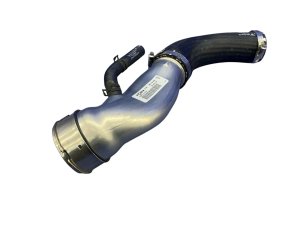
OEM Part Numbers: 982145621C 982145621B 982145621A 982145621 982129499 982129498
Air-to-water top-mount intercooler for 2.0L and 2.5L turbocharged 4-cylinder engines.
We Have This Part in Stock

The information in this article is provided for general reference and educational purposes only. Vehicle specifications, procedures, and part compatibility can vary by production date, trim level, and region. Always consult your vehicle's factory service manual and verify part numbers before purchasing or performing repairs. Safety-critical components such as airbags, seat belts, and braking systems should be installed by a qualified professional.
- Porsche Boxster:
- Porsche Cayman:
- 🛍️ Shop This Part
- Vehicle Fitment and Key Information
- Known Issues and Performance Limitations
- Engine Heat Soak
- Symptoms of a Failing Intercooler
- Buying a Used Intercooler: What to Check
- Official Recalls and Technical Service Bulletins (TSBs)
- Replacement Overview
- Cost Comparison
- Frequently Asked Questions (FAQ)
- 🎟️ Get 5% Off