

2017-2020 Porsche Panamera Intercooler Pipe Failure: Boost Leaks, Codes, and Replacement
This guide covers the common symptoms, diagnostic codes, part numbers, and replacement costs for failing intercooler pipes on 2017-2020 Porsche Panamera models.
- The most common failure is the factory plastic pipes cracking from heat and pressure, causing a boost leak.
- Key symptoms include a major loss of power, a hissing sound during acceleration, and a Check Engine Light with code P0299.
- Diagnosis is best confirmed with a smoke test to pinpoint the exact location of the leak.
- Used OEM pipes are a cost-effective solution, but must be carefully inspected for hairline cracks and intact mounting points before installation.
Symptoms of a Failing Intercooler Pipe
A leak in the intercooler pipe system, often called a "boost leak," will cause noticeable symptoms. The original pipes are made of plastic, which can become brittle over time from constant exposure to heat and pressure, leading to cracks or failures at the connection points.
- Significant Loss of Power: The most common symptom is a sudden and dramatic drop in engine power and acceleration. The car will feel sluggish, especially when you expect the turbos to engage.
- Audible Hissing or Whistling Sound: A distinct hissing or whooshing sound from the engine bay during acceleration is a tell-tale sign of escaping boost pressure.
- Check Engine Light: A boost leak will almost always trigger a Check Engine Light. The most common diagnostic trouble code (DTC) is P0299 - Turbo/Supercharger Underboost Condition. This code is set when the engine's computer detects that the actual boost pressure is significantly lower than what it expects.
- Poor Fuel Economy: The engine's air-fuel mixture will be incorrect due to the unmetered loss of air, causing the engine to run inefficiently and consume more fuel.
- Rough or Unstable Idle: In some cases, a large enough leak can disrupt the engine's ability to maintain a smooth idle.
Known Issues and Common Failure Points
While there are no official recalls or widespread Technical Service Bulletins (TSBs) specifically for intercooler pipe failure on the 971-generation Panamera, the issue of cracked plastic charge pipes is a well-known problem across many modern turbocharged vehicles. The constant cycling of heat and high pressure can cause the plastic to become brittle and fail.
- Cracked Pipe Body: Hairline cracks can develop along the seams or body of the plastic pipes.
- Failed Connection Points: The ends of the pipes that connect to the turbo, intercooler, or throttle body can break. A user on the Rennlist forums reported solving a P0299 underboost code by replacing a faulty O-ring on the intake tube near the throttle body, which is a common leak point.
- Damaged O-Rings and Seals: The rubber O-rings that seal the connections can dry out, tear, or become dislodged, creating a path for air to escape.
Diagnosing a Boost Leak
If you suspect a leaking intercooler pipe, diagnosis is straightforward for a qualified technician.
- Scan for Codes: Confirm the presence of underboost codes like P0299.
- Visual Inspection: Carefully inspect all visible charge pipes for obvious cracks, loose connections, or damage. Pay close attention to the pipe ends and mounting tabs.
- Smoke Test: The most effective method is to perform a smoke test. A technician will inject pressurized smoke into the intake system. The smoke will escape from any leaks, making even hairline cracks easy to spot.
Buying a Used Intercooler Pipe Set
Given the high cost of new OEM parts, a used intercooler pipe from a low-mileage vehicle is an excellent value. However, careful inspection is critical to ensure you're getting a good part.
- Inspect for Cracks: Meticulously examine the entire surface of the pipe, especially around the seams and connection points. Flex the pipe slightly to reveal any hidden hairline cracks.
- Check All Mounting Points: Ensure all plastic mounting tabs and brackets are intact and free of stress marks or cracks. A broken tab can cause the pipe to vibrate and fail prematurely.
- Verify Seal Integrity: Check the condition of the rubber O-rings or seals at the ends of the pipe. They should be soft and pliable, not dry, cracked, or flattened. It is often wise to install new seals regardless of the used part's condition.
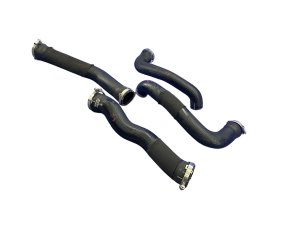
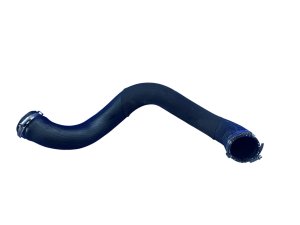
- Confirm Part Numbers: The Panamera uses different pipes for the V6 and V8 engines, as well as different pipes for upper/lower and left/right positions. Cross-reference the part number from your failed pipe to ensure you are buying a compatible replacement.
Pro Tip: When buying used, prioritize parts from newer, lower-mileage vehicles. A pipe from a 30,000-mile car has experienced significantly fewer heat cycles than one from a 100,000-mile car and is likely to last much longer.
Cost Comparison
Replacing a failed intercooler pipe can vary in cost depending on the specific pipe and the source of the replacement part.
| Part Source | Estimated Cost (Per Pipe) |
|---|---|
| New OEM | $110 - $215 |
| New Aftermarket | $80 - $150+ |
| Used OEM | $65 - $100 |
| Shop Labor | $160 - $235 |
Replacement Overview
Replacing an intercooler pipe on a 2017-2020 Panamera is a moderately difficult job. While it doesn't require engine removal, access is tight in the crowded engine bay. A skilled DIY mechanic can perform the job, but it requires patience and the right tools.
- Difficulty: 3/5
- Estimated Time: 1.5 - 2.5 hours
- Process: The general process involves removing the upper engine covers and potentially other components like the airbox or heat shields to gain access. The failed pipe is then disconnected from its mounting points (e.g., turbo outlet, intercooler inlet), the clamps are loosened, and the pipe is carefully maneuvered out. Installation is the reverse of removal, with new O-rings or gaskets recommended.
Warning: The plastic housings and connection points can be brittle. Be careful not to overtighten clamps or put excessive force on the components during installation, as this can cause the new or existing parts to crack.
Frequently Asked Questions (FAQ)
Can I drive my Panamera with a leaking intercooler pipe?
Yes, but it is not recommended for extended periods. The vehicle will have significantly reduced power, poor fuel economy, and the check engine light will be on. Driving with a major boost leak can also cause the turbochargers to over-speed as they try to compensate for the lost pressure, potentially leading to premature turbo failure.
Are aftermarket aluminum intercooler pipes a good upgrade?
For performance-tuned vehicles, aftermarket pipes made from aluminum can be a worthwhile upgrade. They are more durable than the stock plastic pipes and can withstand higher boost pressures without risk of cracking or expanding. For a stock vehicle, a quality used OEM pipe is often the most cost-effective solution.
My car has a P0299 code. Is it definitely a bad intercooler pipe?
Not necessarily. While a leaking intercooler pipe is a very common cause for a P0299 underboost code, the issue could also be a faulty diverter valve, a leak in a vacuum line controlling the turbo wastegate, or an issue with the turbocharger itself. A proper diagnosis, including a smoke test, is required to confirm the source of the leak.
How do I know which pipe is leaking?
A visual inspection may reveal an obvious crack, but the most reliable way to identify the exact location of the leak is with a smoke test. This will show precisely where the pressurized smoke is escaping from the system.
Technical Specifications & Part Numbers
Compatibility of intercooler pipes depends on the vehicle's engine (2.9L V6 or 4.0L V8) and the pipe's position. Always confirm fitment with the vehicle's VIN.
| Part Number | Engine | Position | Notes |
|---|---|---|---|
| 9A714567310 | 2.9L V6 | Left Upper | Connects to throttle body. |
| 9A714567410 | 2.9L V6 | Right Upper | Connects to throttle body. |
| 971145709AL | 2.9L V6 & 4.0L V8 | Left Upper | Replaces: 971145709, 971145709AK. |
| 971145708AB | 4.0L V8 | Right Lower | This is an older number, superseded by parts like 971145708BG. |
Technical Specifications
OEM Part Numbers: 971145708AB 971145709AL 9A714567310 9A714567410 971145708BG 971145709AK
Pipes are vehicle- and position-specific. Made primarily of molded plastic with rubber O-ring seals. Different parts are used for 2.9L V6 and 4.0L V8 engines.
We Have This Part in Stock

The information in this article is provided for general reference and educational purposes only. Vehicle specifications, procedures, and part compatibility can vary by production date, trim level, and region. Always consult your vehicle's factory service manual and verify part numbers before purchasing or performing repairs. Safety-critical components such as airbags, seat belts, and braking systems should be installed by a qualified professional.
- Porsche Panamera: