

Audi TT & RS3 Intercooler Pipe Failures (2017-2025): A Guide to Leaks, Symptoms & Used Parts
Diagnose boost leaks and power loss in your 2017-2025 Audi TT or 2017-2020 Audi RS3 and learn how to inspect a used intercooler pipe assembly before you buy.
- The most common symptoms of a failing intercooler pipe are a sudden loss of power and a hissing sound during acceleration.
- A common fault code is P0299 (Turbo/Supercharger Underboost), often accompanied by a Check Engine Light.
- When buying a used part, meticulously inspect all plastic for hairline cracks and ensure rubber couplers are pliable and undamaged.
- The pipes for the 2.0T TT and 2.5T RS3 are different; always verify part numbers before purchasing.
Symptoms of a Failing Intercooler Pipe Assembly
A failure in the intercooler pipe assembly creates a "boost leak," where pressurized air escapes before it reaches the engine. This can cause a range of noticeable problems, from subtle performance drops to loud noises and warning lights.
1. Sudden Loss of Power and Sluggish Acceleration
This is the most common symptom. If your Audi feels noticeably slower, struggles to accelerate, or the turbo seems to lag more than usual, you may have a boost leak. The engine's computer expects a certain amount of air, and when some of it escapes, the air-fuel mixture is thrown off, resulting in reduced power output. This is often most obvious when trying to merge onto a highway or climb a hill.
2. Hissing or Whistling Sounds from the Engine Bay
A distinct hissing, whooshing, or whistling sound that changes with acceleration is a classic sign of a boost leak. This is the sound of pressurized air escaping from a crack in a pipe or a loose connection. The sound will typically get louder as the turbo builds more boost (i.e., as you press the accelerator).
3. Check Engine Light and Fault Codes
A significant boost leak will often trigger a Check Engine Light (CEL) on your dashboard. The engine control module (ECU) monitors boost pressure, and if the actual pressure is lower than the requested pressure, it will store a fault code. A common code associated with this issue is P0299 - Turbo/Supercharger Underboost. You may also see messages like "Drive system: fault" in the instrument cluster.
4. Reduced Fuel Economy
When the engine management system detects a leak, it may try to compensate by injecting more fuel to correct the air-fuel ratio. This can lead to a noticeable decrease in your average miles per gallon (MPG). If you find yourself visiting the gas station more often without a change in your driving habits, a boost leak could be the culprit.
5. Black Smoke from the Exhaust
In some cases, a severe boost leak can cause the engine to run rich (too much fuel, not enough air), resulting in black smoke from the exhaust, especially during acceleration. This is unburnt fuel and can damage your catalytic converter over time.
Known Issues for 2017-2025 Audi TT & 2017-2020 Audi RS3
While there are no widespread recalls for the intercooler pipes on these specific models, the components are a known weak point, particularly on tuned vehicles. The factory pipes use a combination of plastic and aluminum with rubber couplers, which can fail in several ways:
- Cracked Plastic: The plastic sections of the pipes can become brittle from heat cycles and crack under pressure.
- Blown Couplers: The rubber or silicone couplers connecting the pipe sections can degrade or slip off their connections, especially if clamps are loose or the vehicle is running higher-than-stock boost.
- Heat Soak: The stock aluminum sections can absorb and retain heat from the engine bay, which can slightly increase intake air temperatures.
A Technical Service Bulletin (TSB 2067162) was issued for some Audi models for an underboost condition (P0299) caused by material accumulation inside a charge air pipe, though this TSB does not specifically name the TT or RS3, the symptom and cause are highly relevant.
Pro Tip: Many owners who tune their engines for more power choose to upgrade to full aftermarket silicone or aluminum charge pipe kits. These kits often have fewer connection points and use more durable materials to prevent leaks under high boost.
🎬 See: Upgrading to carbon charge pipes on an RS3Buying a Used Intercooler Pipe Assembly: What to Check
A used OEM intercooler pipe assembly can be a cost-effective solution, but a thorough inspection is crucial to avoid buying a part that is about to fail. Here’s what to look for:
- Inspect for Cracks: Carefully examine all plastic sections of the pipes. Look for hairline cracks, especially around mounting points and bends where stress is highest. Flex the pipes slightly to see if any hidden cracks open up.
- Check the Couplers and Seals: Inspect all rubber or silicone couplers. They should be pliable and free of cracks, splits, or mushy spots. Ensure any integrated O-rings or seals are present and in good condition.
- Look for Oil Residue: A light film of oil inside the pipes is normal due to the crankcase ventilation (CCV) system. However, excessive oil pooling inside or heavy oil residue on the outside of connections can indicate a leak from the turbo's seals or a past boost leak that pushed oil out.
- Verify All Mounting Points are Intact: Check that all plastic tabs, brackets, and mounting points are present and undamaged. Broken tabs can cause the pipes to vibrate and fail prematurely.
- Confirm Part Numbers: The Audi TT (with the 2.0T engine) and the RS3 (with the 2.5T engine) may use different pipe assemblies. Always match the OEM part number from your original part to the used one. Common part numbers include 5Q0145840 for the TT and numbers like 8V0145727, 07K129665, and 8S0145681 for the RS3. Double-check compatibility before purchasing.
Cost Breakdown
Prices can vary based on condition and source. Here is an estimated cost comparison:
| Part Type | Estimated Cost |
|---|---|
| New OEM | $150 - $450+ per section |
| New Aftermarket (Upgraded Kits) | $300 - $700+ |
| Used OEM | $50 - $150 |
| Shop Labor for Replacement | $150 - $300 |
Replacement Difficulty
- Difficulty: 2 out of 5 (DIY Feasible)
- Estimated Time: 1-2 hours
Replacing the intercooler pipes is generally straightforward for a DIY mechanic with basic tools. Access can be tight, especially for the lower connections near the intercooler and the turbo outlet. The job typically involves removing the engine undertray and possibly the front wheels and fender liners for better access. No special programming is required after installation.
🎬 Watch: DIY intercooler charge pipe removal and installWarning: When pressurizing the system to test for leaks, do not exceed 20-25 PSI. Over-pressurizing can damage seals or other components.
Frequently Asked Questions
How do I test for a boost leak?
You can perform a boost leak test by building a tester that connects to the turbo inlet. Pressurize the system with an air compressor to about 15-20 PSI and listen for hissing. Spraying soapy water on all connections and pipes will create bubbles where air is escaping, pinpointing the leak. 🎬 Watch: How to check your Audi for boost leaks Alternatively, a shop can perform a "smoke test" which fills the system with visible smoke to find leaks.
Will a failing intercooler pipe damage my engine?
While a minor leak is unlikely to cause immediate damage, it shouldn't be ignored. A significant leak forces your turbo to work harder to build pressure, which can cause premature wear. The incorrect air-fuel ratio can also lead to fouled spark plugs or a damaged catalytic converter over the long term.
Are the intercooler pipes for the Audi TT and RS3 the same?
No, they are generally not interchangeable. The 2017-2025 Audi TT typically uses the 2.0L TFSI engine, while the 2017-2020 RS3 uses the 2.5L 5-cylinder TFSI engine. The routing and part numbers are different. For example, part number 5Q0145840 is common for the TT, while the RS3 uses various parts like 8V0145727. Always verify the part number for your specific vehicle.
Is an aftermarket pipe kit better than OEM?
For a stock vehicle, a good condition OEM pipe is perfectly adequate. For tuned or high-performance applications, aftermarket kits made from mandrel-bent aluminum or multi-ply silicone are a worthwhile upgrade. They offer better airflow, durability, and resistance to heat and high boost pressures.
Helpful Videos


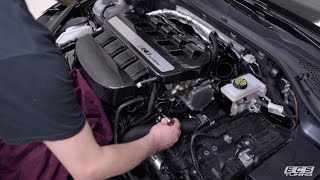

Technical Specifications
OEM Part Numbers: 5Q0145840 8V0145727 07K129665 8S0145681 8V0145746B 07K133359G
Material: Combination of plastic, aluminum, and rubber/silicone. Connects turbocharger, intercooler, and throttle body.
We Have This Part in Stock



The information in this article is provided for general reference and educational purposes only. Vehicle specifications, procedures, and part compatibility can vary by production date, trim level, and region. Always consult your vehicle's factory service manual and verify part numbers before purchasing or performing repairs. Safety-critical components such as airbags, seat belts, and braking systems should be installed by a qualified professional.
- Audi TT:
- Audi RS3:
- 🎬 Helpful Videos
- 🛍️ Shop This Part
- Symptoms of a Failing Intercooler Pipe Assembly
- 1. Sudden Loss of Power and Sluggish Acceleration
- 2. Hissing or Whistling Sounds from the Engine Bay
- 3. Check Engine Light and Fault Codes
- 4. Reduced Fuel Economy
- 5. Black Smoke from the Exhaust
- Known Issues for 2017-2025 Audi TT & 2017-2020 Audi RS3
- Buying a Used Intercooler Pipe Assembly: What to Check
- Cost Breakdown
- Replacement Difficulty
- Frequently Asked Questions
- 🎟️ Get 5% Off